
Where the Wild Guacamayas Still Fly Free
For years, since living in the Puerto Vallarta area, we’ve often heard about El Sanctuario de las Guacamayas (the Spanish word for macaw). And we’ve always wanted to visit this wild macaw sanctuary, but couldn’t quite figure out how, as it’s not open to the public, except with a private tour.
Ever since Heidi was a young girl and read a book about them, macaws have been one of her favorite birds. In fact, when she was about 10, her mom, Jean, asked what she wanted for her birthday, and she wanted a macaw! So Jean asked her to call around to several local pet stores in the Washington, D.C. area (which was a scary proposition as 10 year old!), only to find out they cost well over $500, and had a VERY long lifespan. Deal breaker—no pet macaw… However, Heidi’s first graphic design project in high school was making a screen print of macaws in a tree!
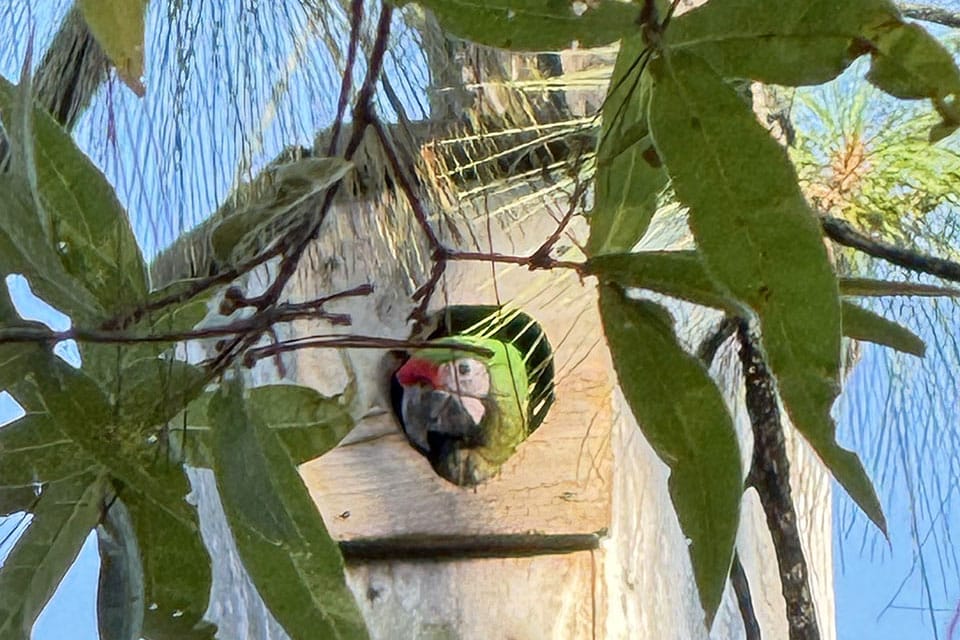
A baby macaw looking out from a nesting box
So when we were trying to decide how to celebrate Heidi’s recent birthday, she was determined visit the local macaw sanctuary. Luckily, we stumbled upon Authentik Tours and signed up with Jeanne. The tour was initially for 6 people, but in the end, it was just the two of us, which was fantastic!
There’s something unmistakable about the sound of macaws in the wild, before you ever see them — a shrill, echoing call that cuts through the jungle air and makes you stop mid-step, craning your neck to look up—maybe for a glimpse. Since they live in the rainforest, it’s often difficult to see them through the foliage. But if you are lucky enough to spot them in the wild (as we did recently in Yelapa), it’s a blur of color and motion: flashes of red, blue, green, and gold sweeping overhead in noisy pairs or groups. Seeing macaws in the wild is one of those breathtaking moments that is so unique—and we’d never experienced it until last fall in Yelapa.
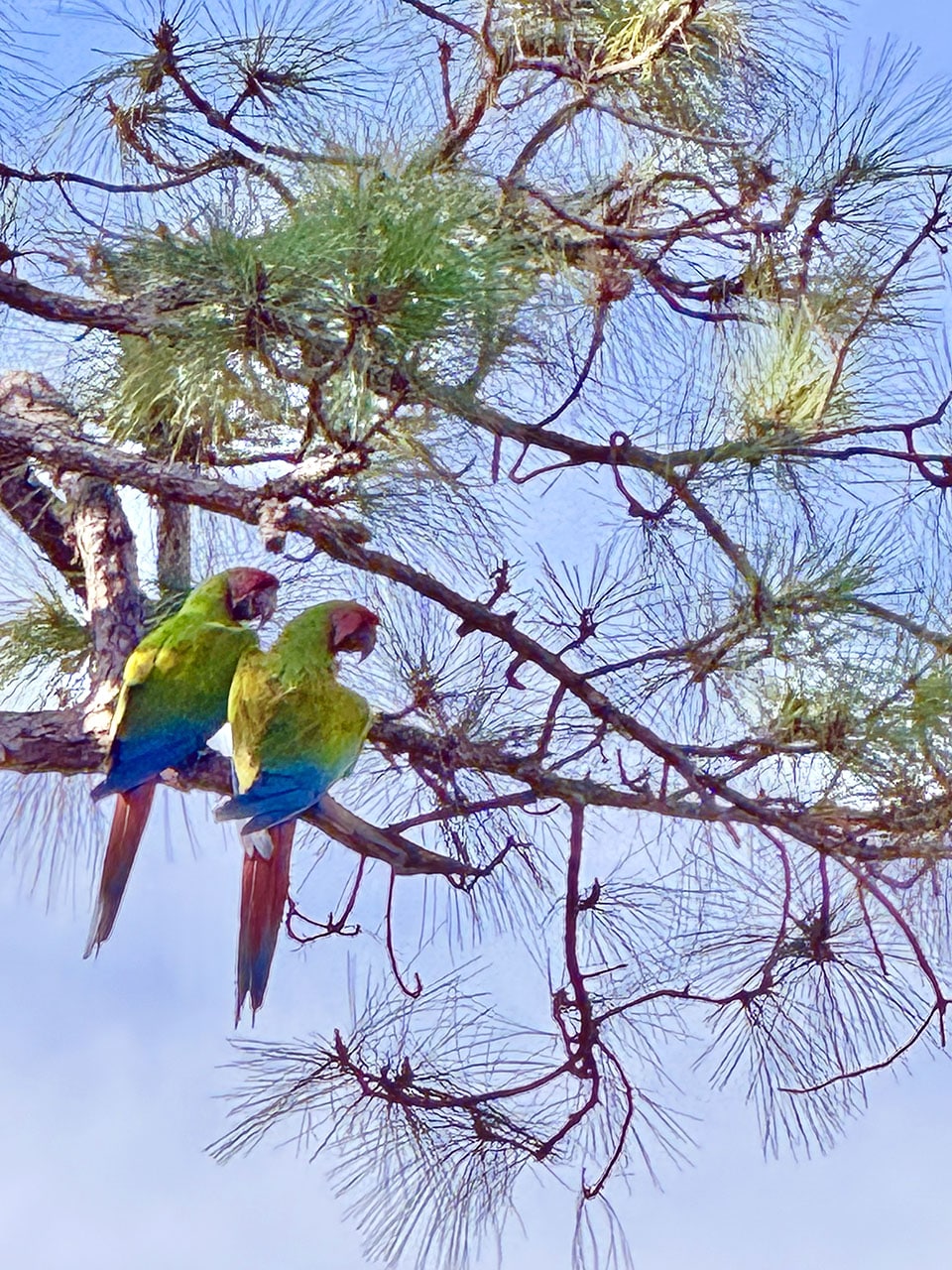
Mexico is home to two native macaw species. The most well-known is the Scarlet Macaw, with its iconic red, yellow, and blue feathers, primarily found in the southern jungles of Chiapas and parts of Oaxaca, after disappearing from much of its former range. Equally striking is the Military Macaw, one of the largest macaw species. It’s a deep green bird with bright red, turquoise, and gold plumage that inhabits drier forests and canyon areas along Mexico’s Pacific coast—local to the Sierra Madre mountains around Puerto Vallarta. Unfortunately, all species of macaws have been heavily impacted by habitat loss and the illegal bird trade, making sanctuaries—and the people behind them—far more important than most visitors realize.
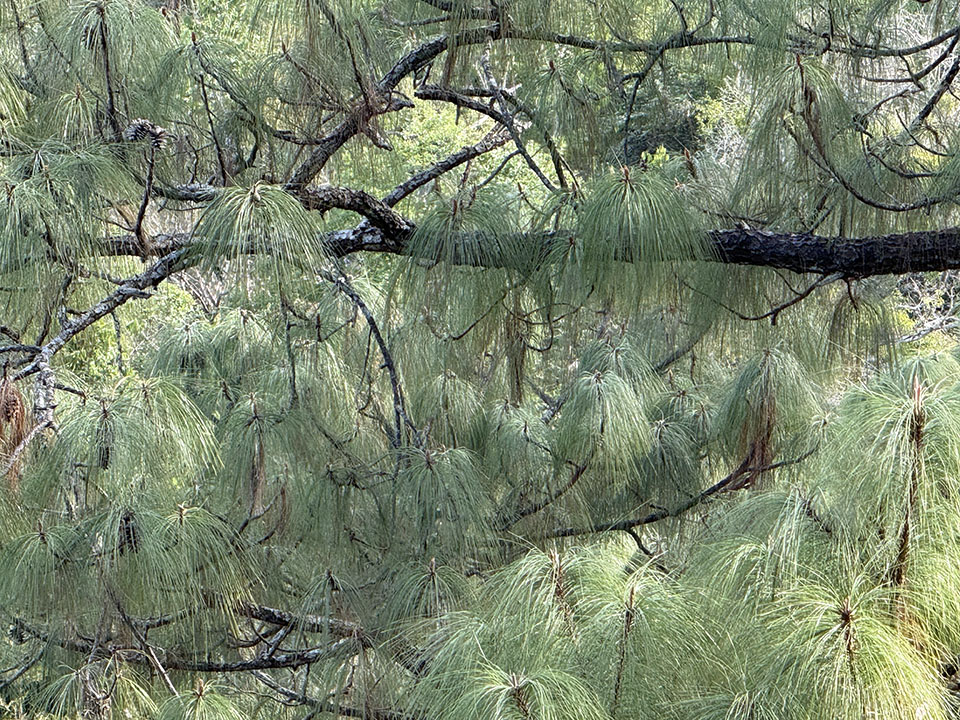
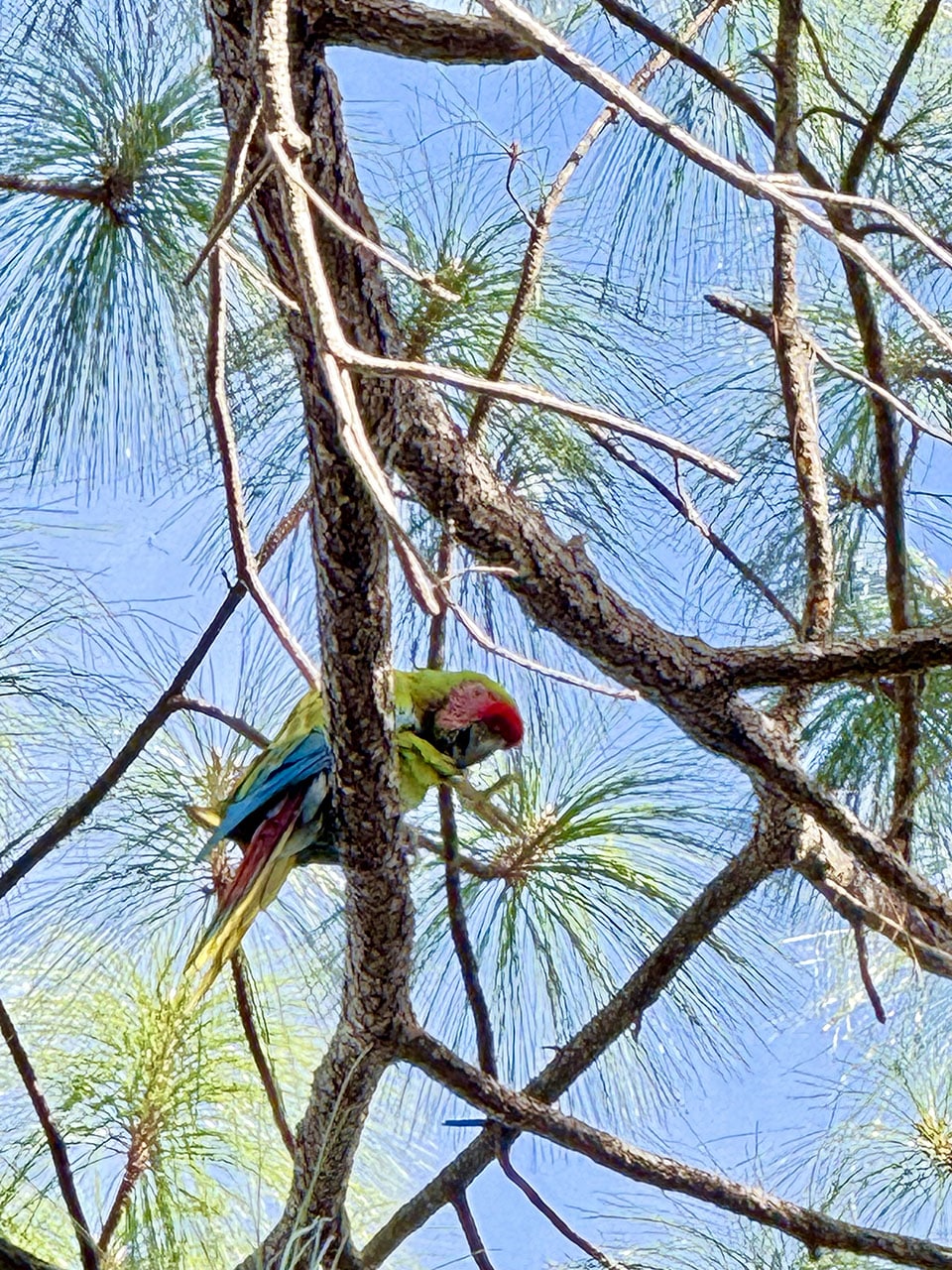
The pine forest habitat of the macaws
Macaw Facts:
- They are 27-33″ in length and weigh up to 2.5 lbs
- They mate for life, and if their partner dies, they don’t take another
- Highly intelligent and social, living in flocks of 10-40 birds
- Macaws live to be 40-60 years old in the wild, and up to 80-100 years old in captivity! (Thanks, Jean, for not letting Heidi get a macaw when she was 10! LOL!)
- They lay 1-3 eggs at a time, but may only raise one chick
- The chicks stay with them in the nest for 18 to 24 months
- They are “new world” birds; their habitat ranges throughout Mexico, Central, and South America
- They eat toxic seeds that are highly nutrient-dense, then eat clay to help neutralize the toxins
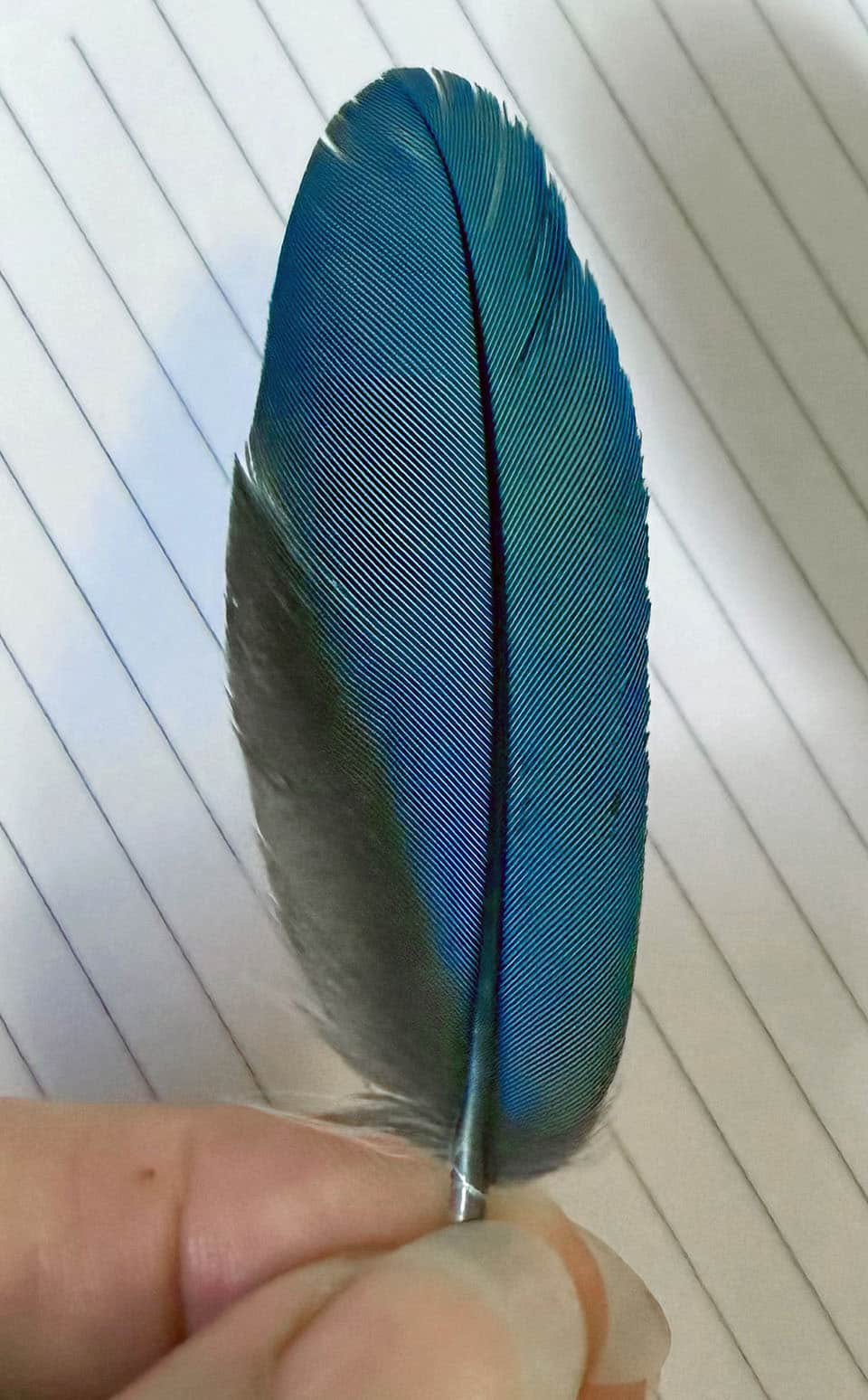
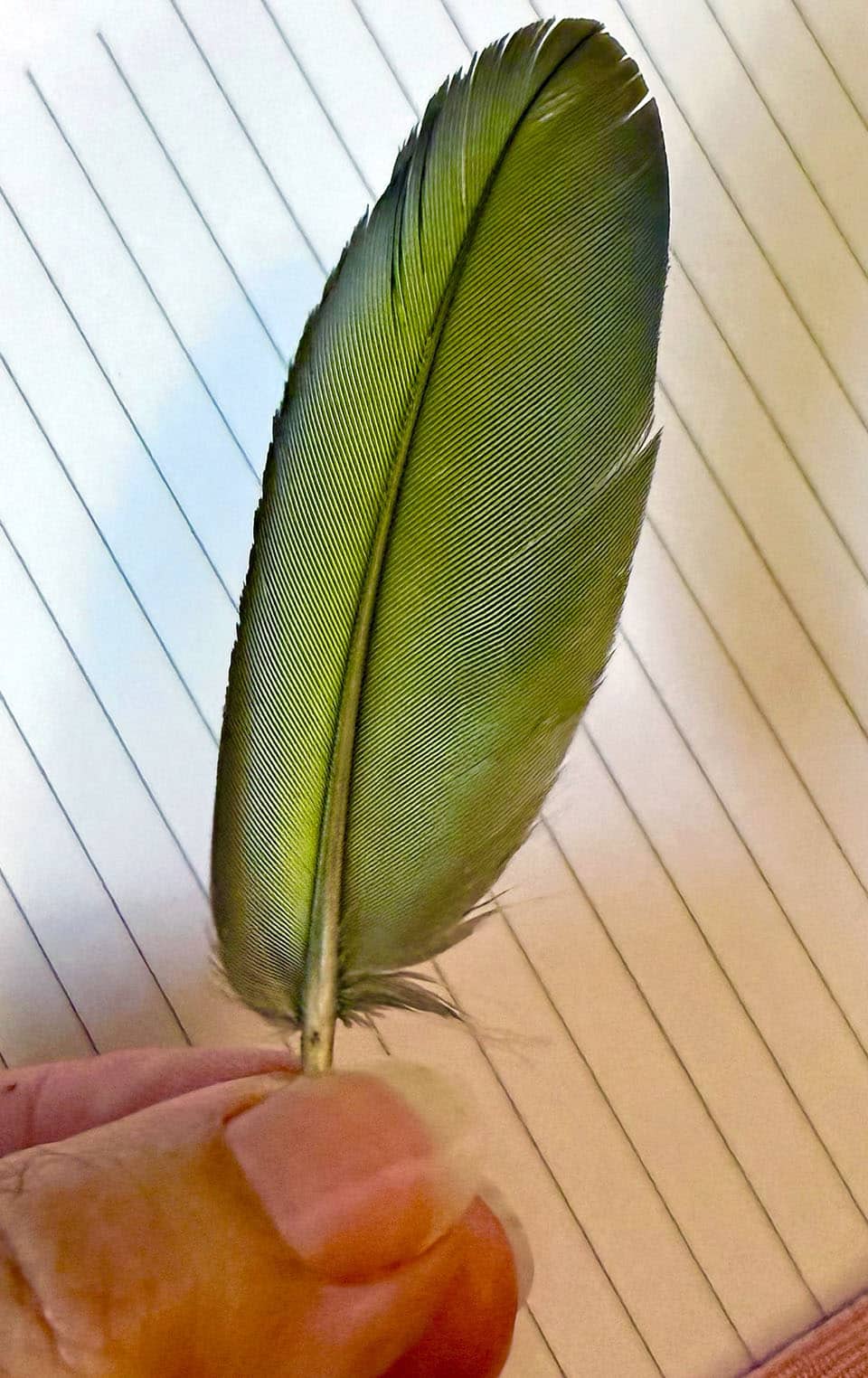
Two sides of the same pin feather, the top side is turquoise, the bottom is golden-yellow
On our recent visit to a macaw sanctuary, we learned what it takes to keep these birds safe and saw firsthand how much care and patience real conservation work demands. And it really changed the way we look at every macaw we see flying free. So we wanted to share what we learned.
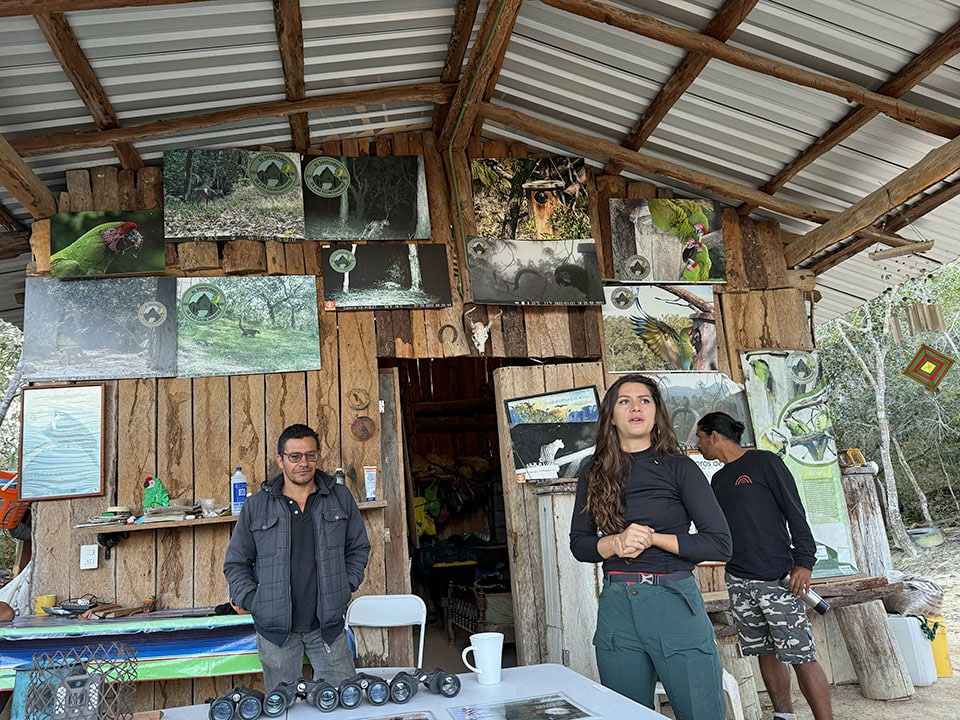
Owner/steward Francisco, guide Jeanne, and driver Sergio
El Sanctuario de las Guacamayas is located in Jalisco, Mexico, in the municipality of Cabo Corrientes, nestled between the Sierra Madre mountains and the Pacific Ocean. This area boasts a wealth of natural resources. Previously, we’d always thought of macaws as tropical birds, but as we just learned, they actually live in the higher elevation pine forests and fly to the jungle to forage for food. They can fly over 200 kilometers (around 125 miles) a day in search of food!
Cabo Corrientes has jungle covering just over 50% of its land area, while pine forests cover almost 40%. The climate is warm and sub-humid for most of the year, with the rainy season from June through November. This area is considered one of the most important birdwatching locations in Mexico, and we’re so grateful to live so close by!
Our early-morning tour started at 7 AM on the road heading south of Puerto Vallarta, meeting our tour guide, Jeanne (originally from Paris but living in PV for many years), and her driver, Sergio. We had a wonderful chat in Spanglish as we drove for about an hour up into the Sierra Madre mountains towards the macaw sanctuary. We’ve often driven this highway traveling between Puerto Vallarta and Barra de Navidad during the pandemic years. There is a distinct demarcation where the jungle and palm trees suddenly give way to pine trees. Little did we know back then that we had passed the macaw sanctuary many times!
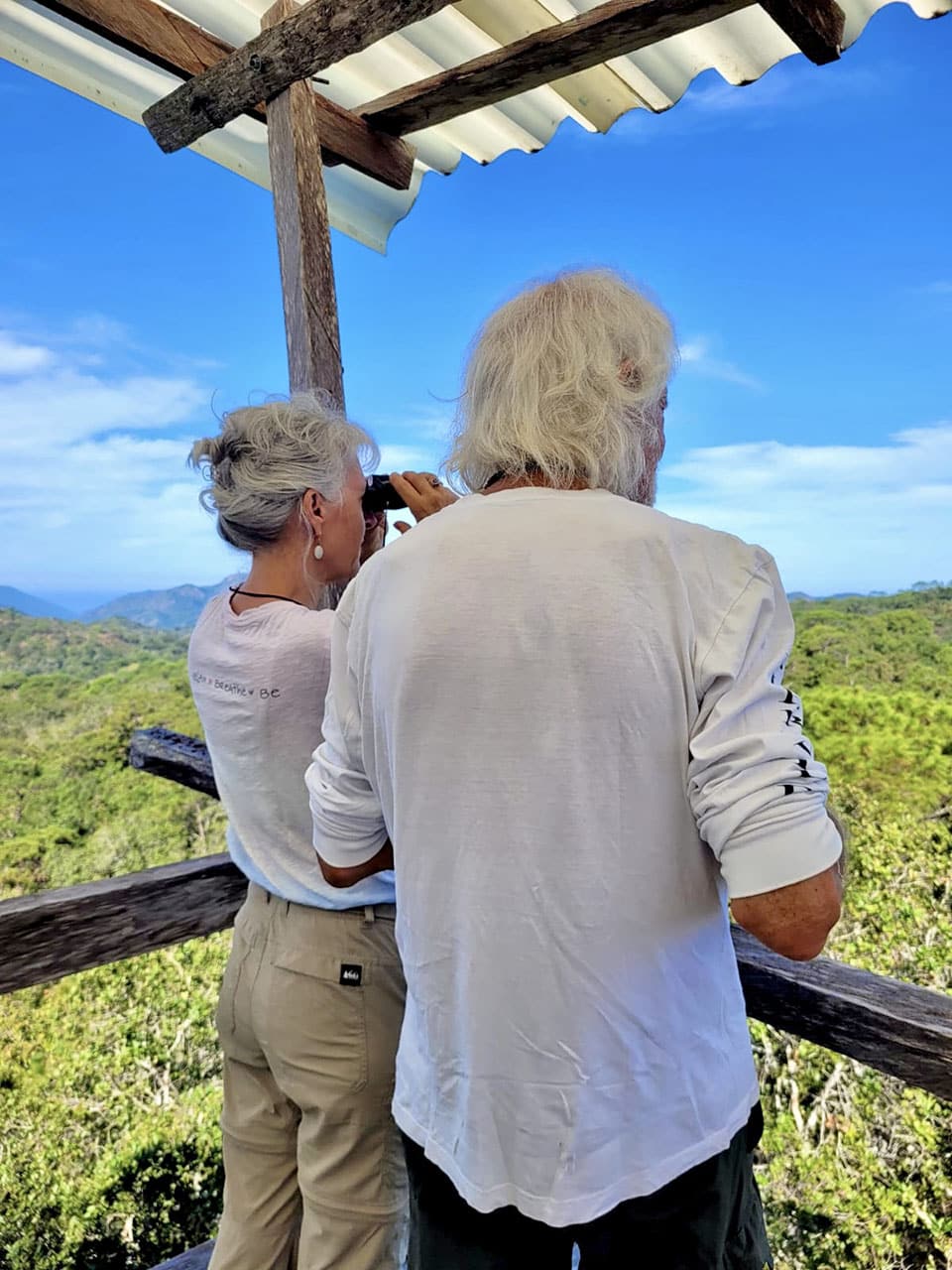
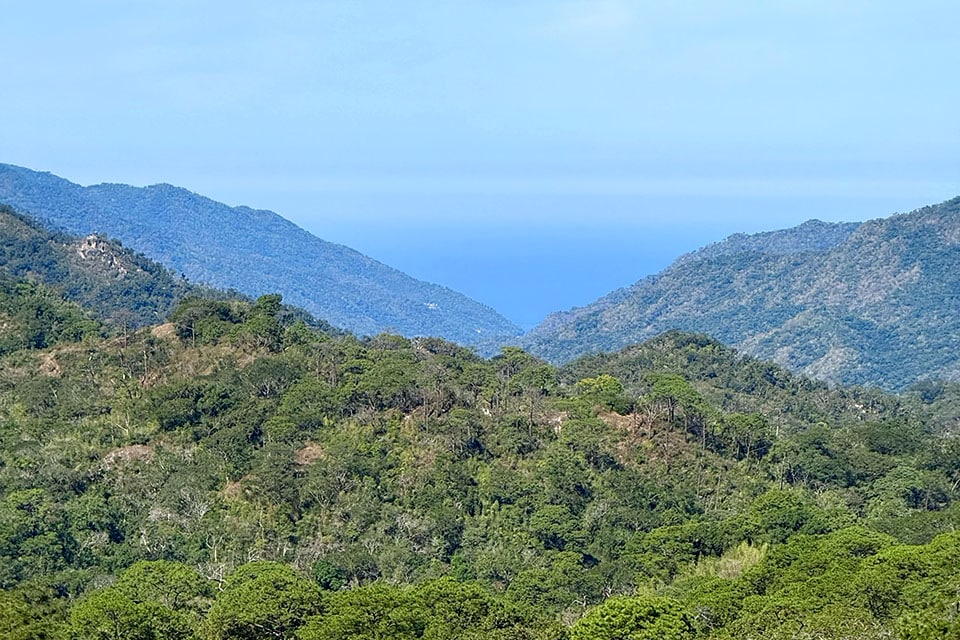
El Sanctuario de las Guacamayas is located in the Sierra Madre mountains, overlooking Yelapa (where the valley meets the Pacific Ocean far below). Heidi’s Dad, Verne, and Grandpa Oxy, both avid birders, would have been so happy to know that Heidi spent her birthday birding!
You may recall learning about ejido land in our recent Yelapa post. This is a uniquely Mexican system of communal ownership created in 1917, after the Mexican Revolution, to protect local and Indigenous communities. Rather than being privately owned, all the land in an ejido is held collectively by registered ejidatarios. This macaw sanctuary is on ejido land, which is supposed to be protected. But unfortunately, in the 1980s-90s, many of the ejido members got greedy and started selling off the trees for lumber, and letting bird poachers steal baby macaws from the nests.
Enter Francisco. He grew up in the nearby town of Las Juntas y Los Veranos and is a member of the local ejido there. He recognized that this illegal deforestation and loss of wildlife to poachers were detrimental to the locals. With his foresight and love of nature, he understood the need for long-term protection, not instant cash, and he did something about it. His grandfather was high up in the ejido council, and Francisco was able to make him understand that the land needed to be protected, locally and to set a precedent for all ejidos.
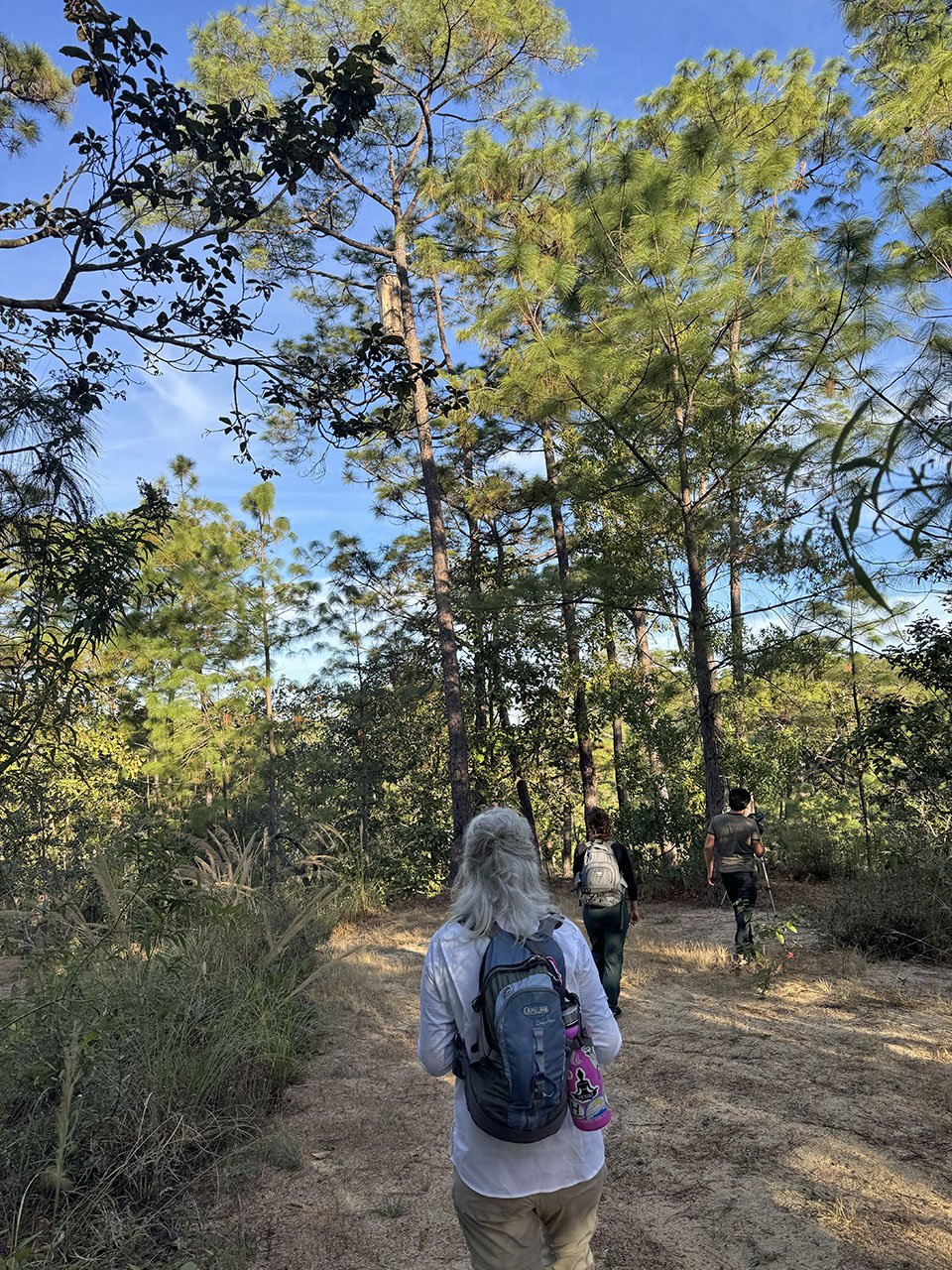
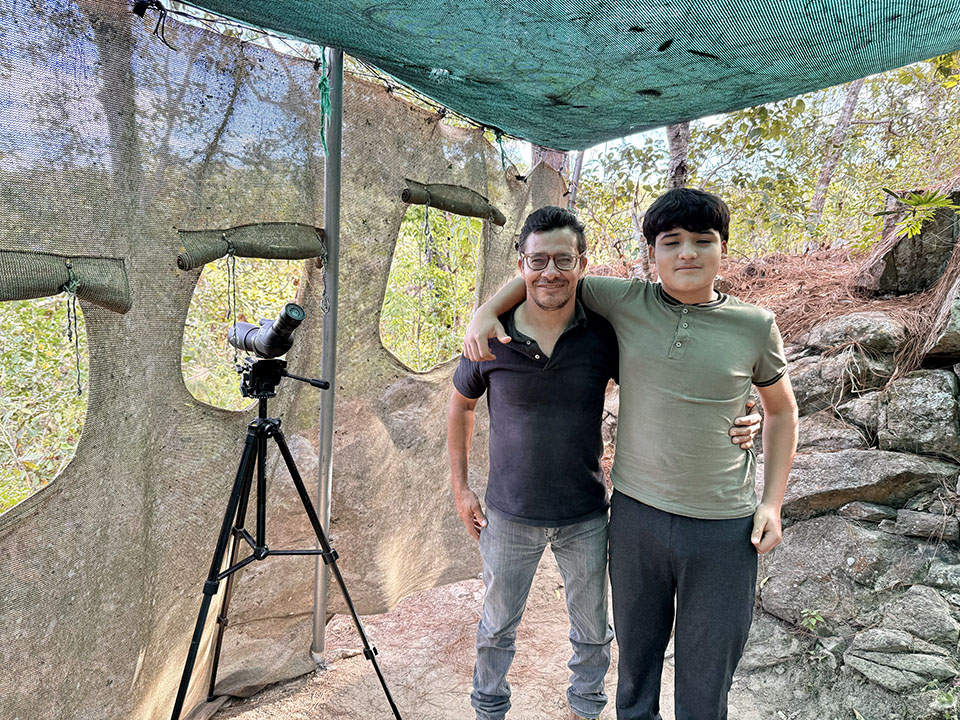
Hiking through the pine forest, and Francisco with his nephew, Rafael, in one of the bird blinds
Today, Francisco and his family are responsible for creating, preserving, and protecting this 70-hectare sanctuary. Sadly, illegal lumber and bird poachers are still trying to take over this area, so at least one of Francisco’s family members, plus dogs and horses, are on the premises at all times, day and night.
In the wild, macaws naturally peck large nests out of old, soft trees, where a branch has broken off, or a lightning strike has removed the bark. As you can imagine, it takes them a very long time to peck away at the wood, to make a 3′ deep nest hole inside the tree trunk. And those nests are still vulnerable to predators.
In creating this macaw sanctuary, Francisco’s family did several things to help ensure their survival rate. First, they created large artificial birdhouse-nest boxes, each about 3 feet tall, constructed from natural materials, and they installed over 30 of them in trees, more than 60 feet above the ground. Then they put tall metal bands around the bottoms of these trees to prevent predators (including wild cats like pumas, ocelots, and jaguarundis, or raccoons and coatimundis) from stealing the eggs or baby macaws. The wild macaws quickly adapted to these modern bird condos.
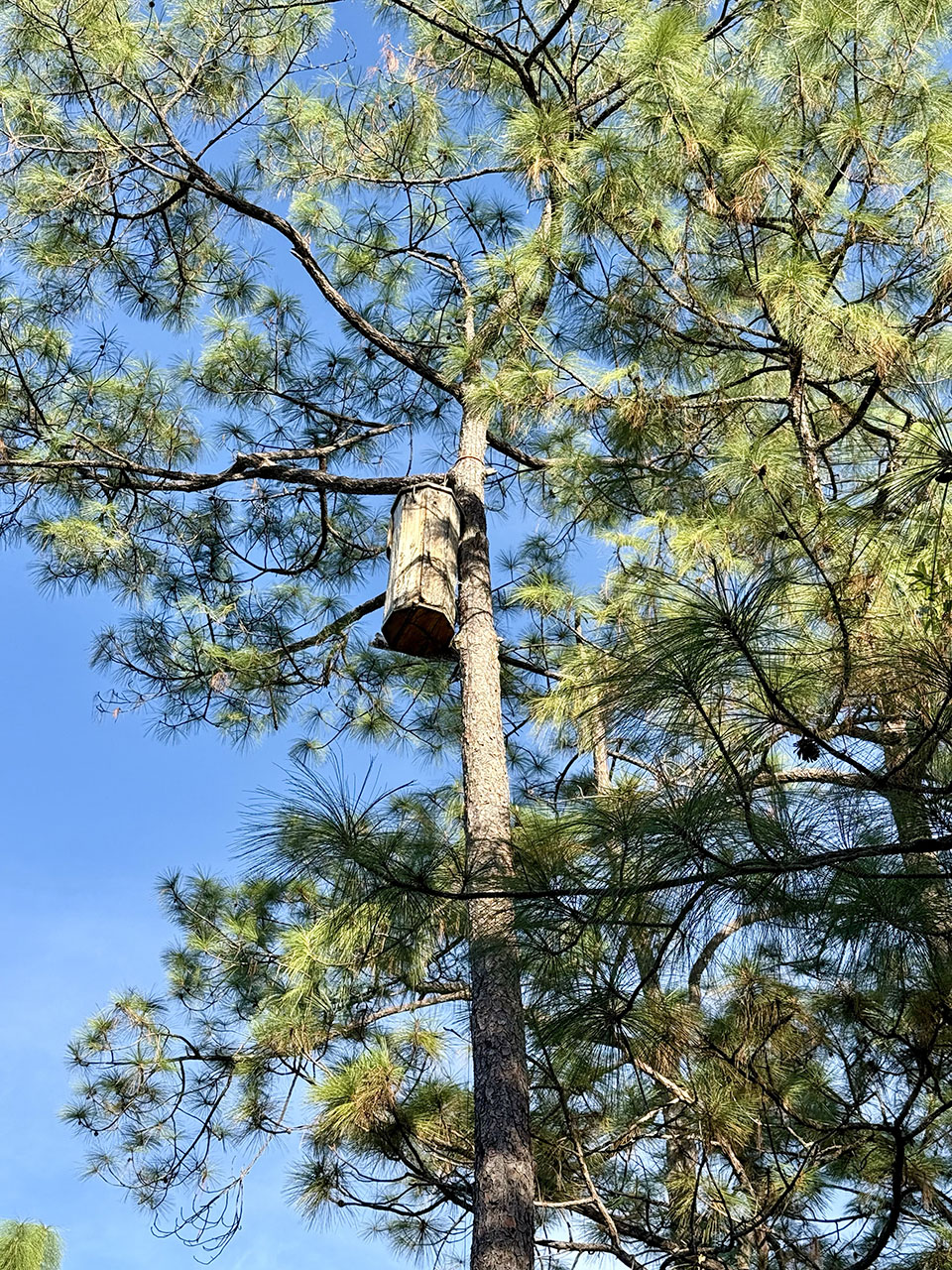
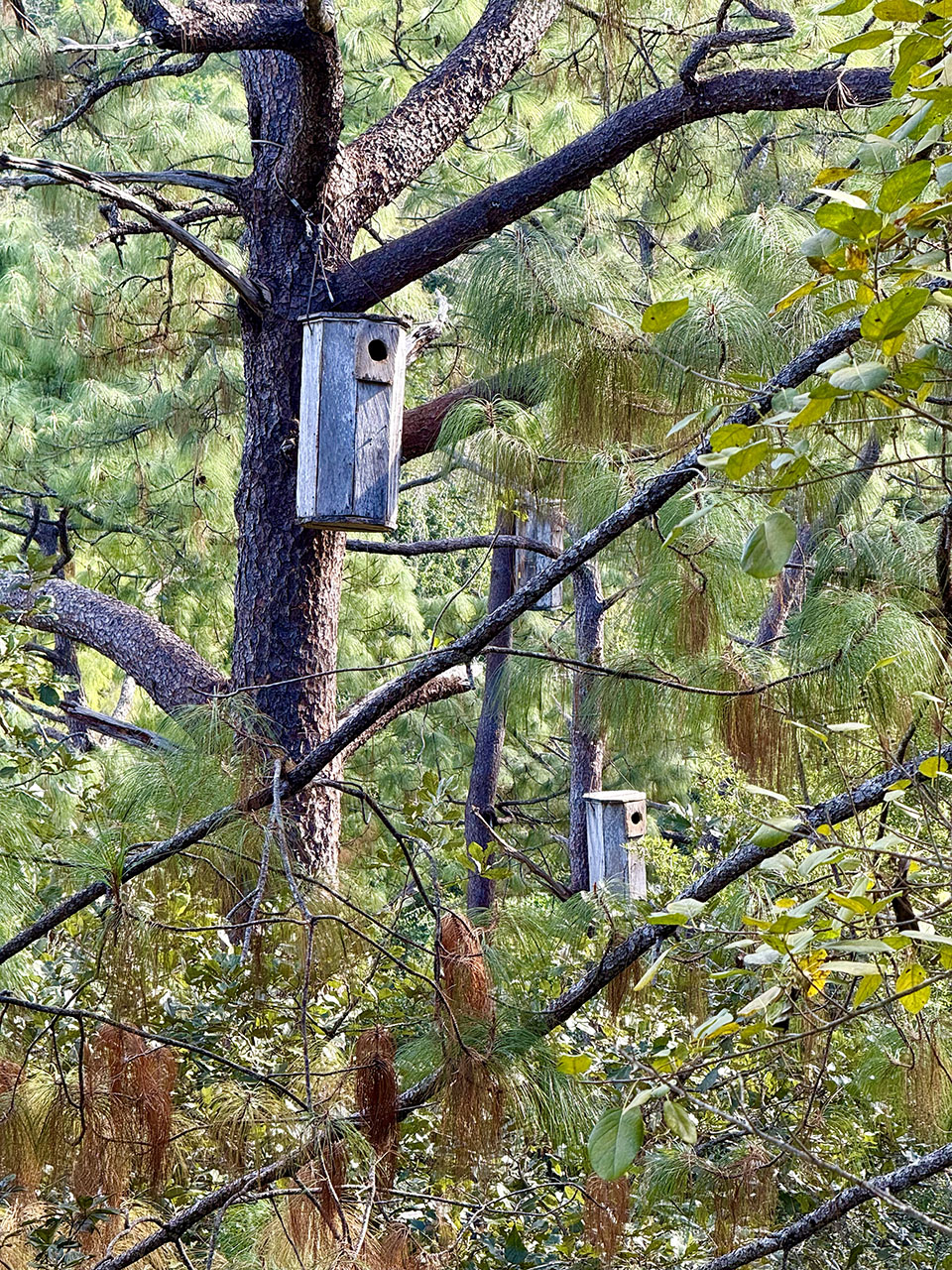
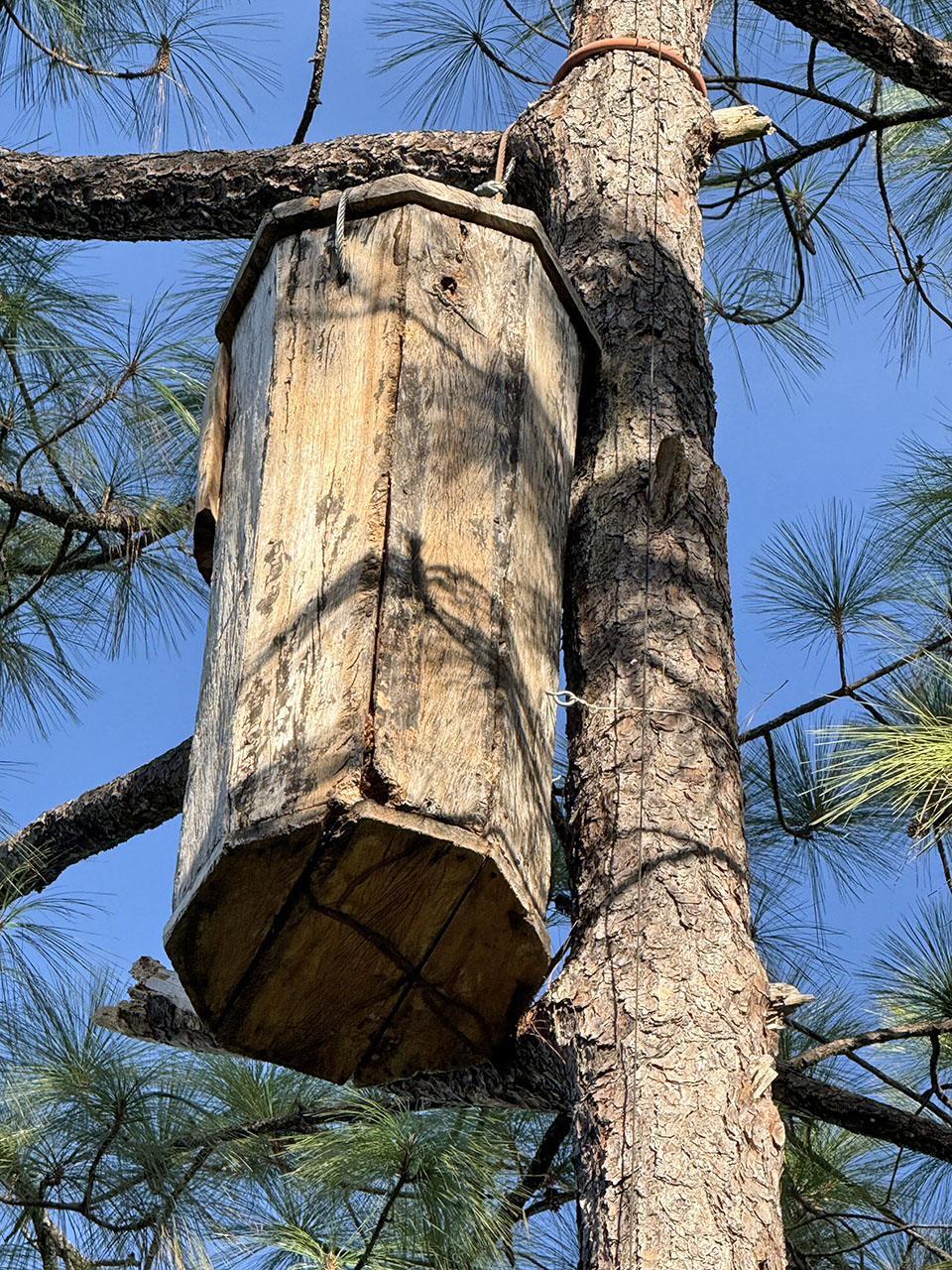
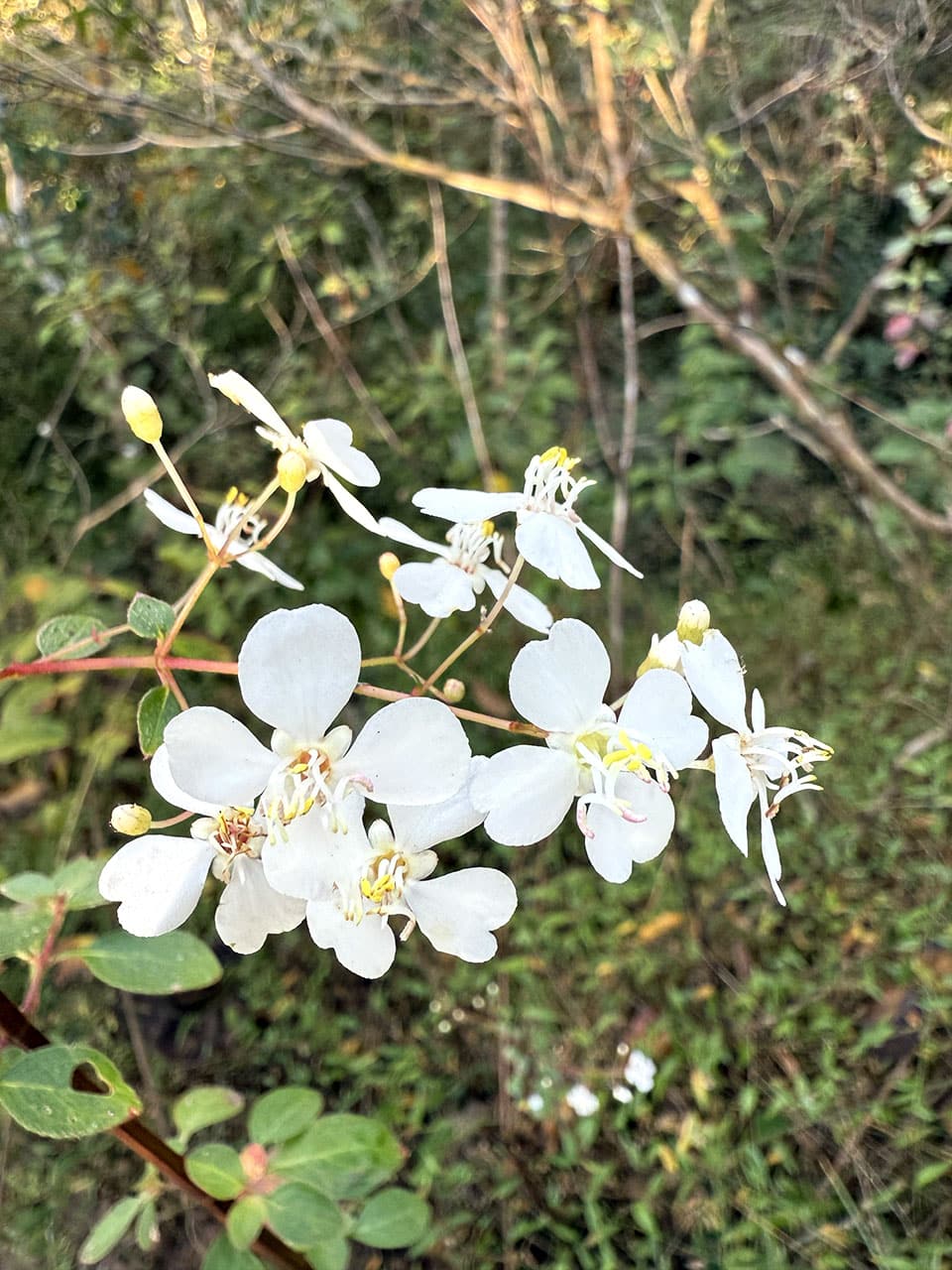
Large macaw nesting boxes high up in the pine trees, and wild orchids in the forest floor below
One of the most significant things they do on an ongoing, weekly basis is to help remove fly larvae from the chicks. These larvae burrow under the chick’s skin retarding or preventing feather growth. They do this by using climbing ropes and self ascenders to climb up to the nest boxes once a week, and check every chick. Over the past 20 years, the adult macaws have come to know Francisco and family, and actually let them remove the chicks from the nest (wearing gloves and staying up in the tree), while they remove any fly larvae, then quickly return the chicks to the nest. This allows the chicks to grow their full plumage and eventually learn to fly.
This conservation program for the Military Macaw (Ara militaris) officially began in 2008. Since that time, with the protection of Francisco and his family, the local guacamaya population has improved from a 16% chick survival rate to over 75% survival rate for the young macaws today.
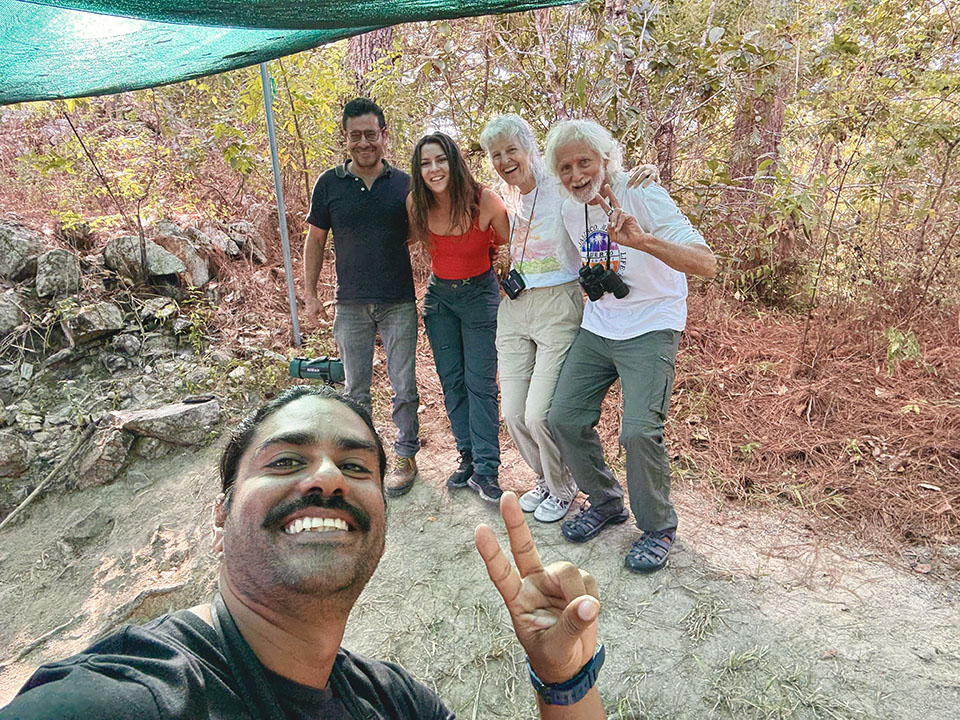
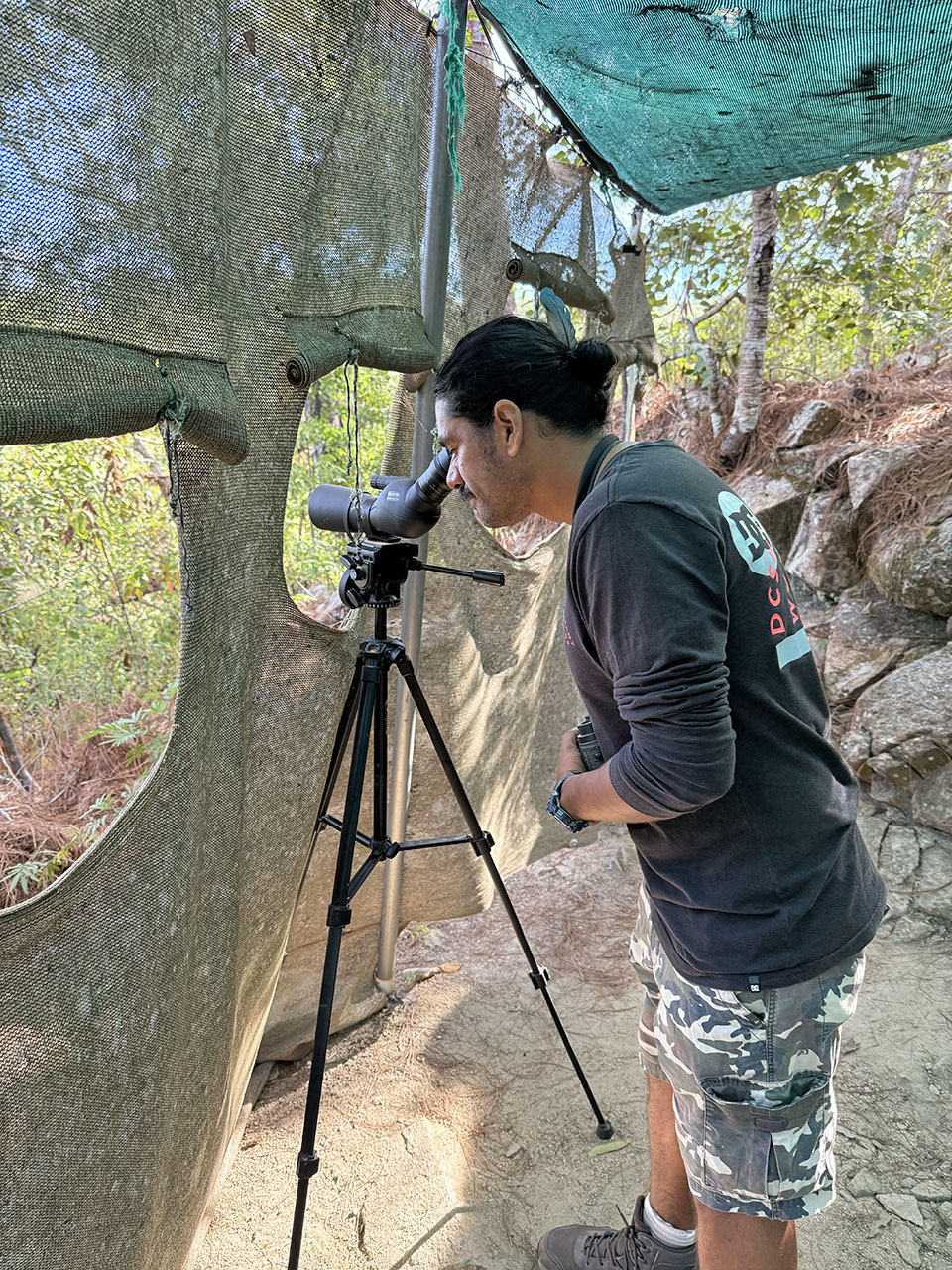
Our driver Sergio, taking a selfie with Francisco, Jeanne, Heidi & Kirk, and looking through the spotting scope
Jeanne was an amazing tour guide, translating much of the above info shared by Francisco. Though we’re getting much better with our Spanish and are quite transactional around town, we’re not yet up to speed in environmental conservation Spanish! We were also thoroughly impressed with Francisco’s 13-year-old nephew, Rafael, who would rather be out in the forest learning the family trade than in school or on a cell phone playing games. He spotted many of the wild macaws in trees for us and set up the spotting scope so we could see more clearly.
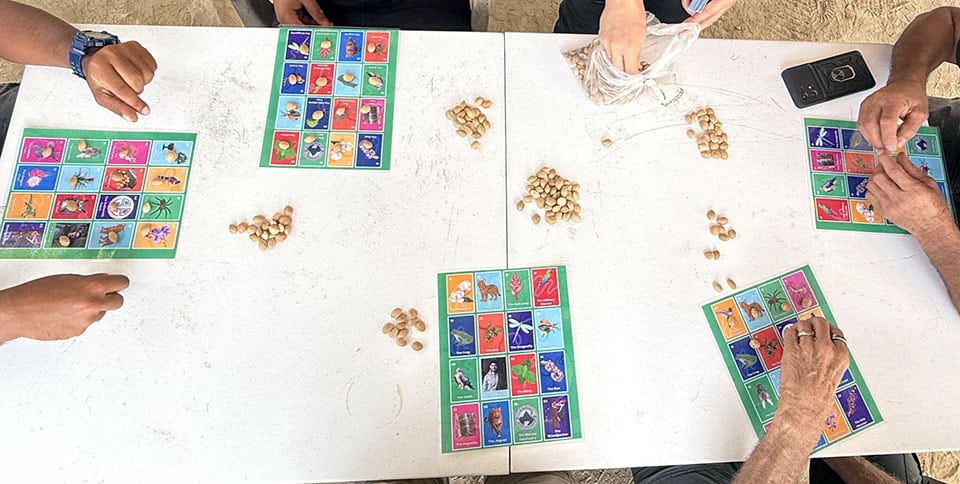
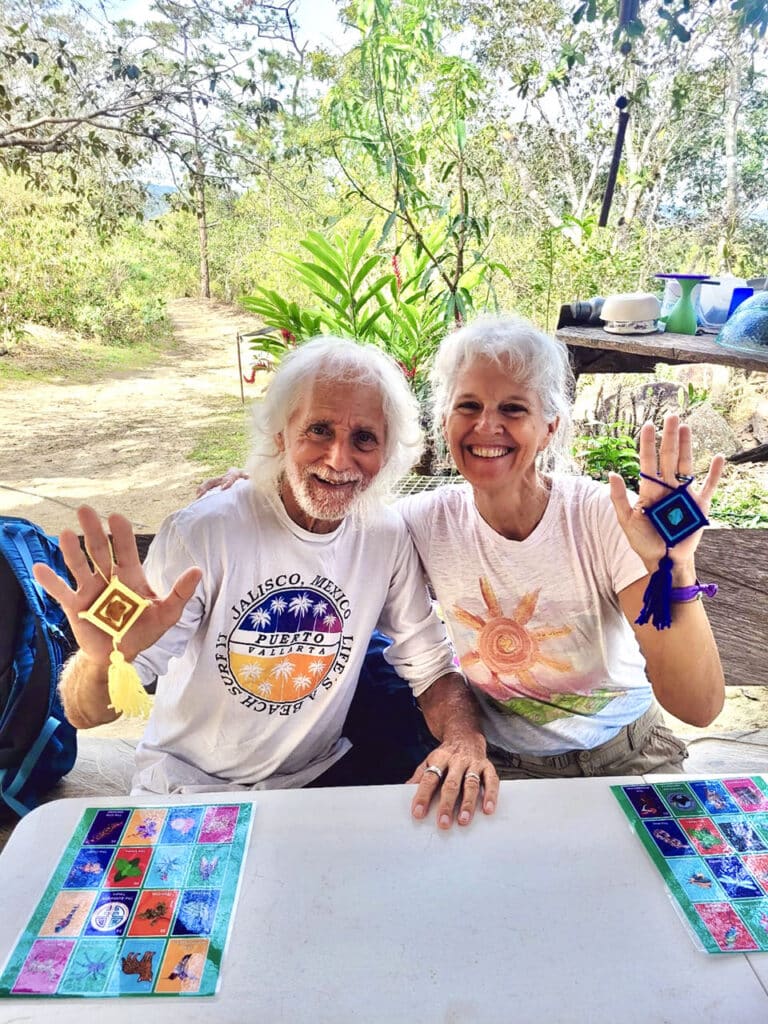
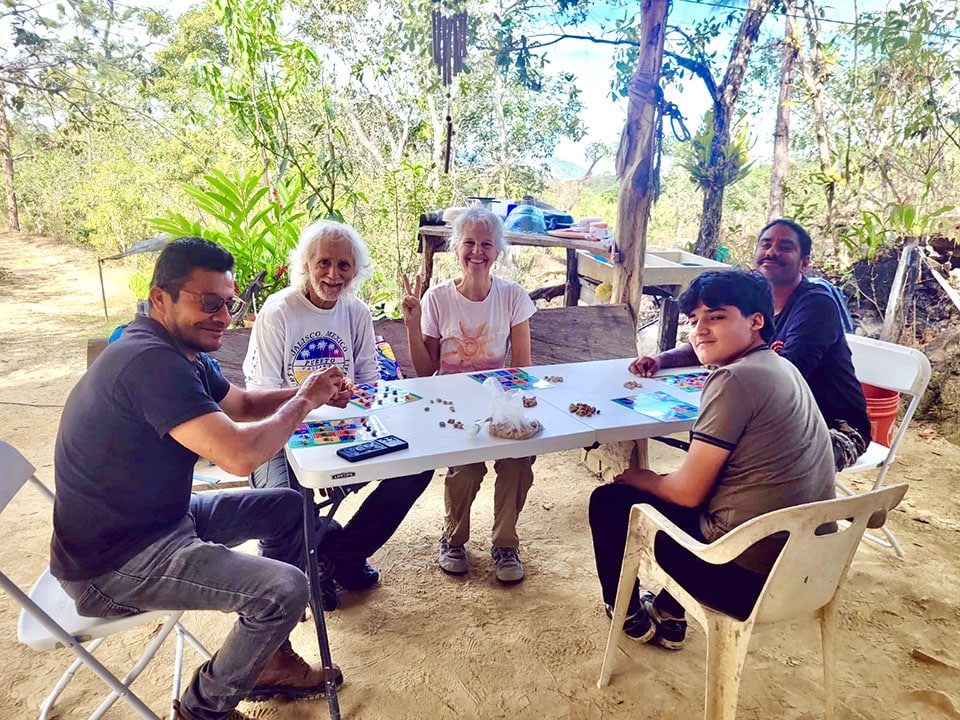
After several miles hiking around this hill-top preserve, and also seeing lots of wild orchids, other flowers, several varieties of lizards, and wild green parakeets, we ended the tour with a FUN game of Loteria (“Mexican bingo”)—where all of the objects were plants and animals we had seen on our tour. “Everyone’s a winner, baby, that’s the truth”—and we each won a beautiful handmade Ojo de Dios (“God’s eye”) made by members of the ejido.
We are so grateful for Jeanne’s fantastic tour, Sergio’s great driving, and most of all to Francisco, Rafa, and their family for preserving this habitat for the Military Macaws to thrive. We’ll be back again soon! And if you come to visit us in Vallarta, we will gladly take you there!
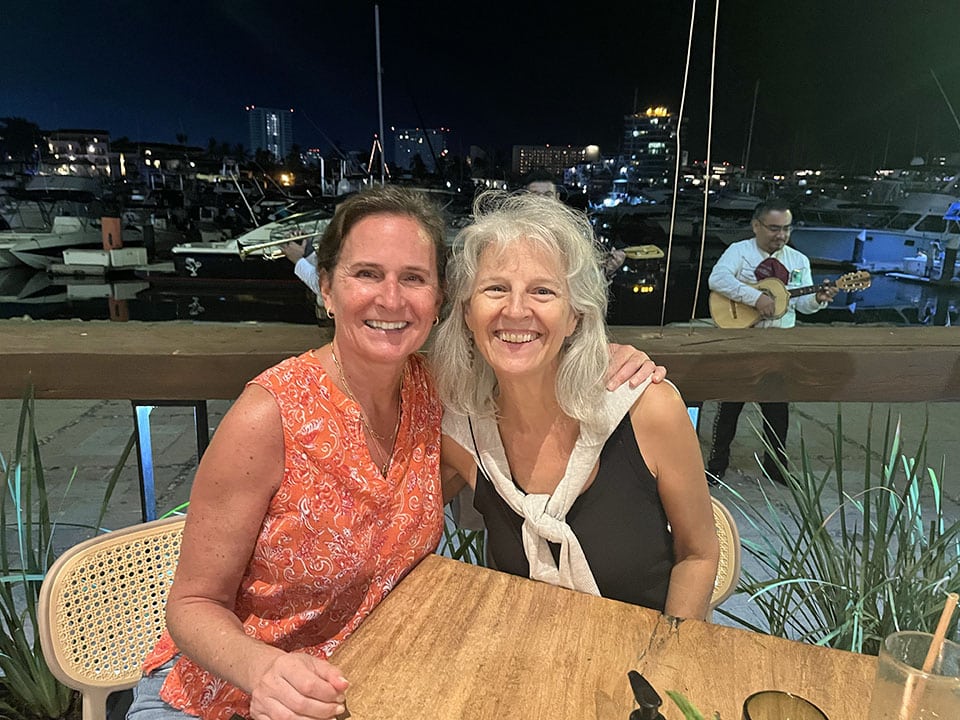
Heidi’s fun birthday was capped off by dinner with friends Keziah & Darren (below), including gluten-free chocolate muffins (cuz the “cupcake” part was lost in translation, LOL!), and an evening stroll down the Malecón, dancing with the locals (click photo or watch video here).

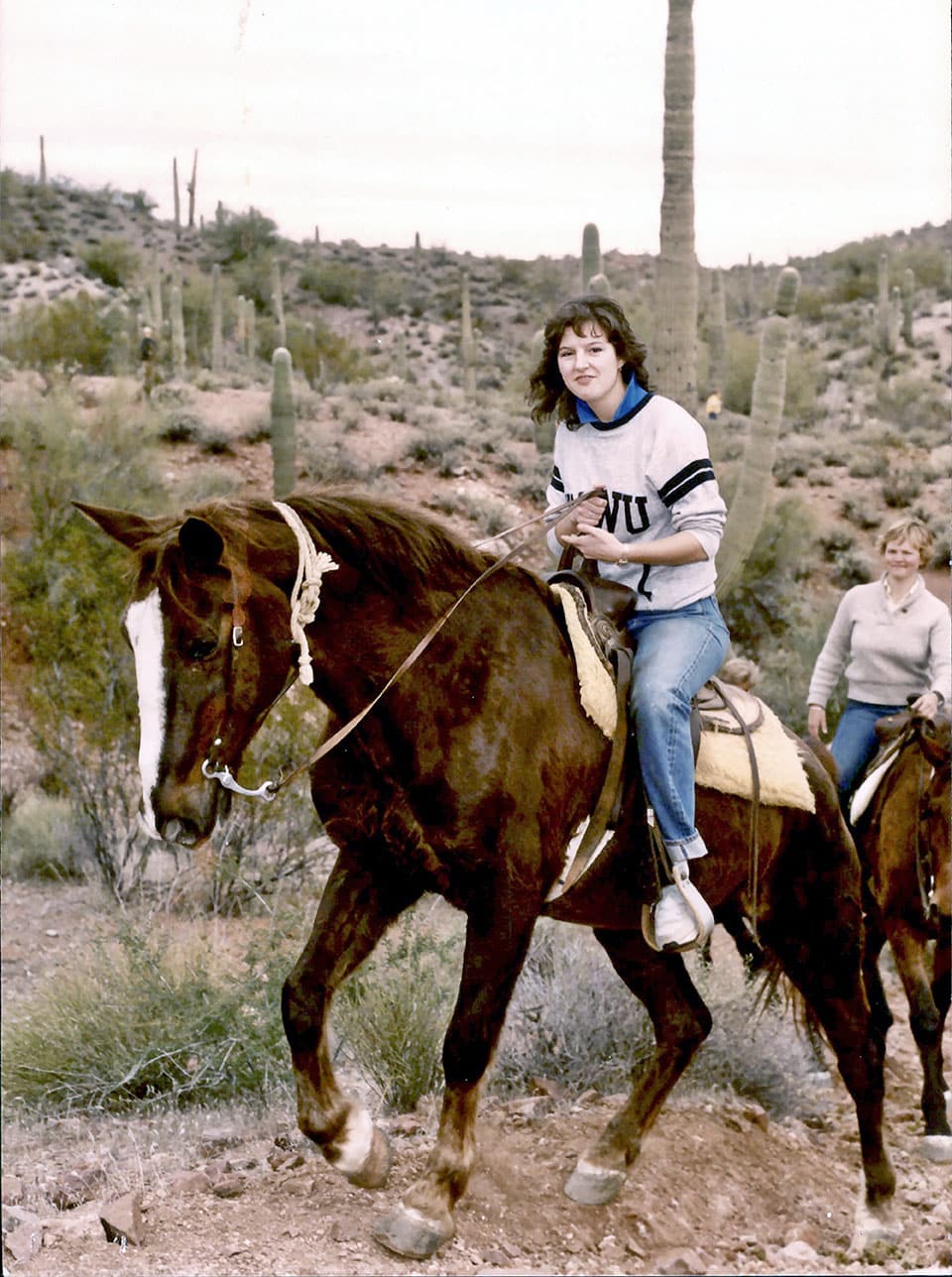
One other serendipitous birthday gift that Heidi received was randomly (or not so randomly—there are no coincidences!) running into her long-lost college roommate, Mary, on the street in Puerto Vallarta! Heidi is so astonished and grateful that somehow Mary recognized her 40+ years later. The photo below right is of Heidi (and her sister Kari) in her college days. Would you have recognized Heidi 40 years later!? We had so much fun reconnecting and meeting Mary’s partner, Michael too. FANTASTIC Birthday week!
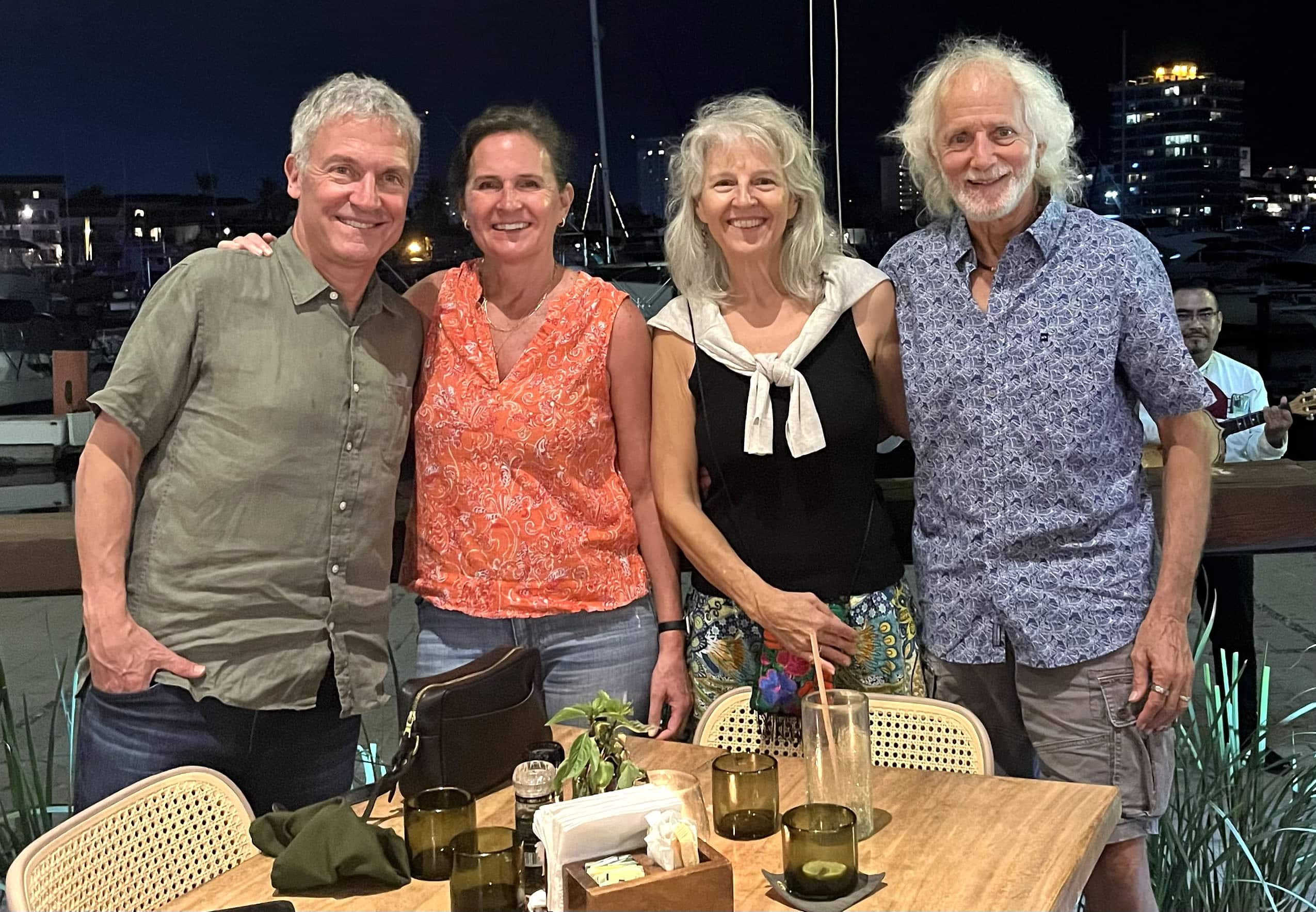
We also had a recent quick lunch and wonderful visit with Heidi’s longtime family friend, Jill, and her partner, Nani, from the Seattle area, as they were passing through PV. Always grateful to friends who make time to visit, even if just for a meal or a cup of coffee.
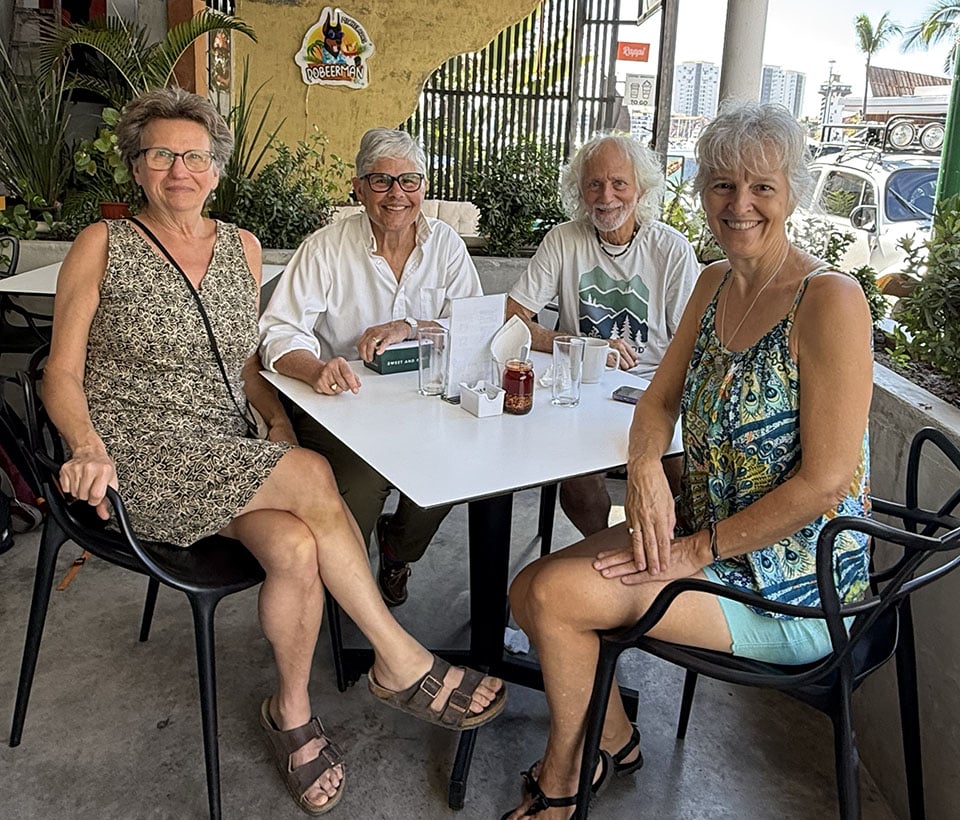
Nani, Jill, Kirk, and Heidi, great visit over lunch at Sweet & Fit
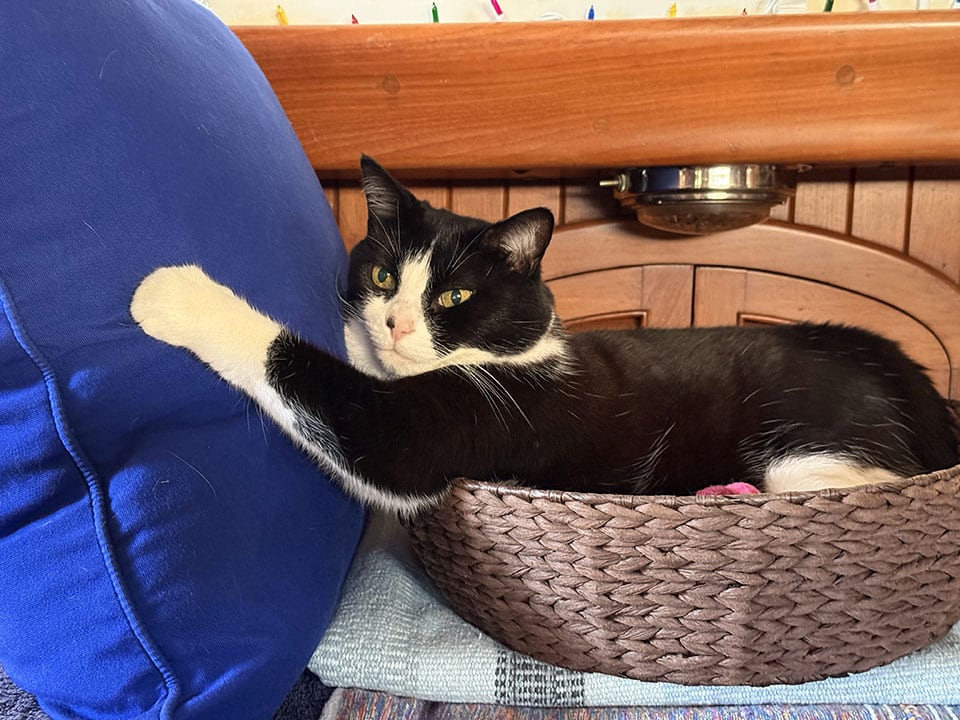
Last, but never least, Tikka sends much love and kitty kisses to all!
Wow what a great birthday adventure and gift of love. Thank you for bringing to life these magical birds from your backyard. Happy Birthday Heidi 🥰🎂
Thanks Andy, for being one of the family to inspire us to get out into nature more! XOXO
Hi Heidi and Kirk and belated Happy Birthday, Heidi!
Enjoyed reading your adventures at the Macaw Sanctuary and it made me remember a book I read that you might enjoy: “The Last Flight of the Scarlet Macaw: One Woman’s Fight to Save the World’s Most Beautiful Bird” by Bruce Barcott.
All is well here.
Thanks so much for the great recommendation Linda, we’ll look for that book!
Happy Happy Belated Birthday Heidi!
What an amazing and colorful Birthday adventure!
Thanks for the education on these beautiful macaws and the people who help to preserve them.
Hugs, Mary & Giff
Thanks Mary & Giff, it was truly beautiful!