
Jungle Love: Yelapa, Mexico
Over our last 10 years in Mexico (has it really been that long?!), we have had many opportunities to visit this beautiful location… but each time only as a day trip. And while a day trip to Yelapa can be fun and exciting, it paints a very incomplete picture of real-world Yelapa.
In fact, we had not been back since 2019, when it was badly affected by Tropical Storm Narda. Yelapa seemed like “been there, done that.” And if our memory serves, we didn’t find many great places to eat back then either. Clearly, we didn’t know or appreciate the REAL Yelapa then…and now we’ve discovered many great places to eat!
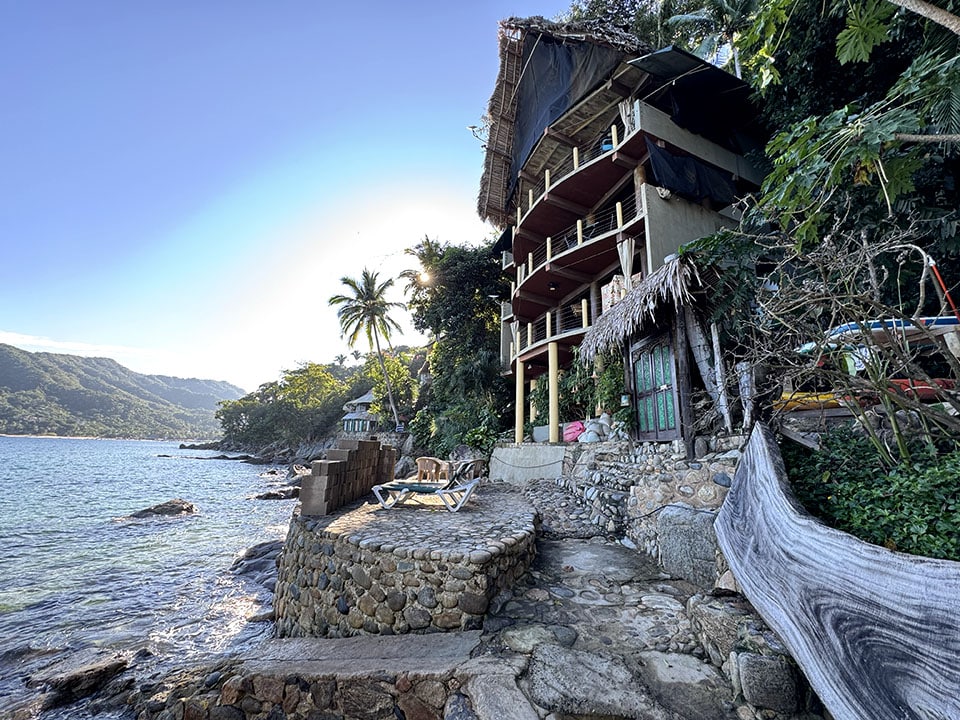
This past November, Heidi had the amazing opportunity to cohost a women’s retreat at Casa Isabel, in the jungles of Yelapa, perched on a hill overlooking the sea. This beautiful eco-friendly retreat center is off-grid, with solar power, solar hot water, and composting toilets. The open-air casitas (with mosquito netting over beds) are organically fused into the hillside, with giant boulders and trees creating parts of the walls. And Heidi came away with a whole new perspective of Yelapa as a place to visit and hang out. (She’ll be hosting another women’s wellness retreat in Yelapa next fall, you don’t want to miss it! Hop on the waitlist here.)
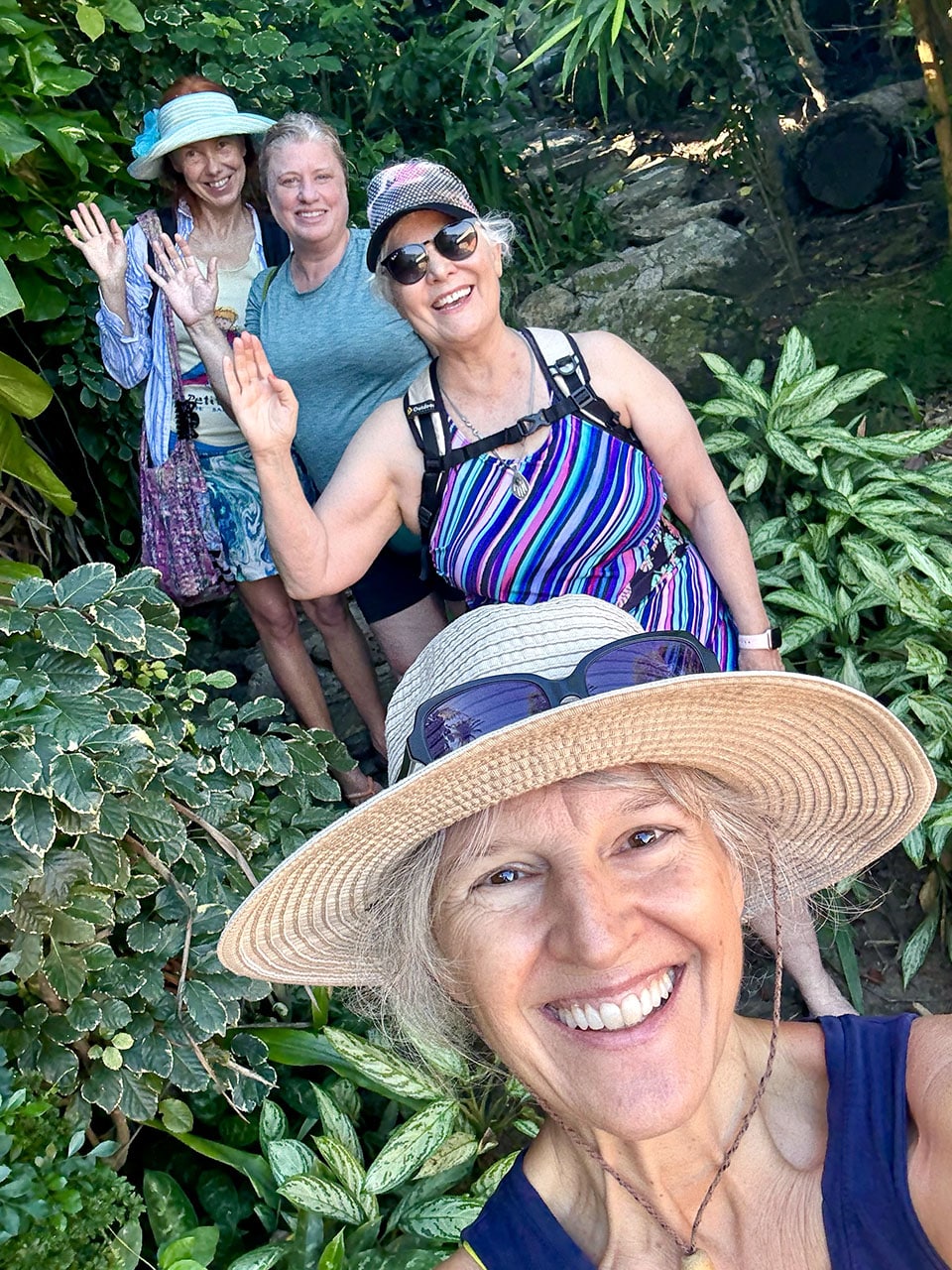
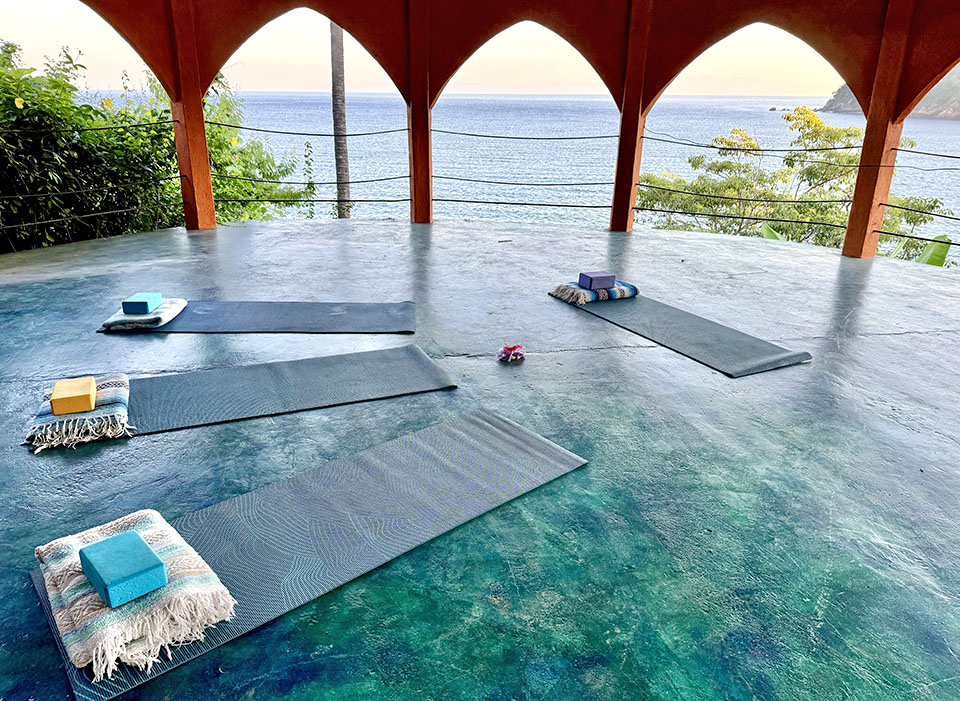
Heidi loved her week in Yelapa so much that she couldn’t wait to take Kirk back to share the experience a month later. We spent four lovely days in Yelapa the first week of December. (And Heidi will be going back again in early January for a 10-day continuing ed course there.) We have caught the Yelapa jungle fever!

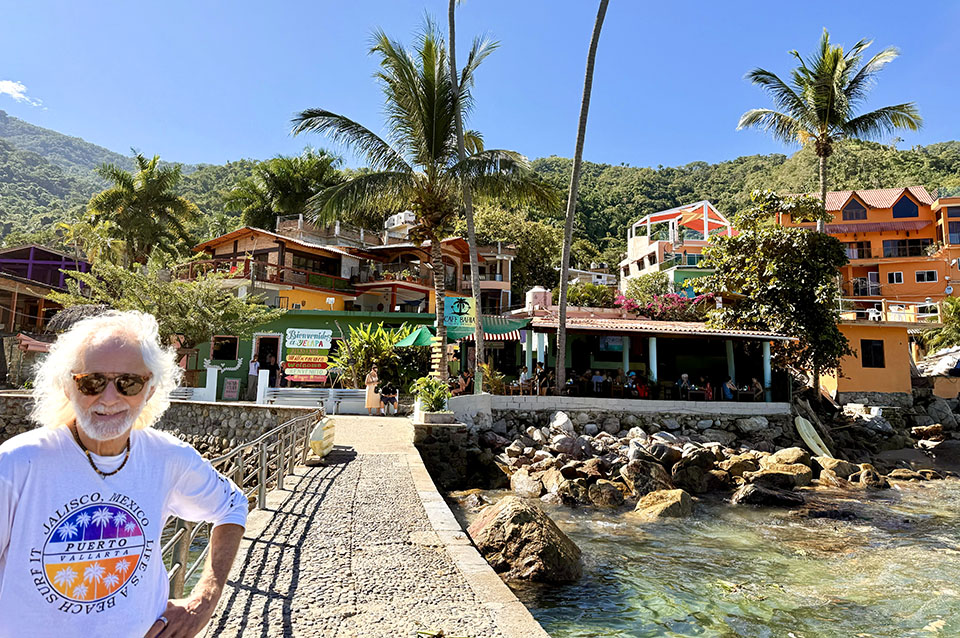
Yelapa, Mexico, is tucked into one of many quiet coves on the southern shore of Banderas Bay. It’s a small coastal fishing village along the El Tuito river, where jungle-covered hills meet the sea. Life still moves at a much slower, more organic pace in Yelapa. Not an island, however, due to the remote thick jungle mountains of the Sierra Madre, it’s accessible only by boat, and feels worlds away from nearby Puerto Vallarta.
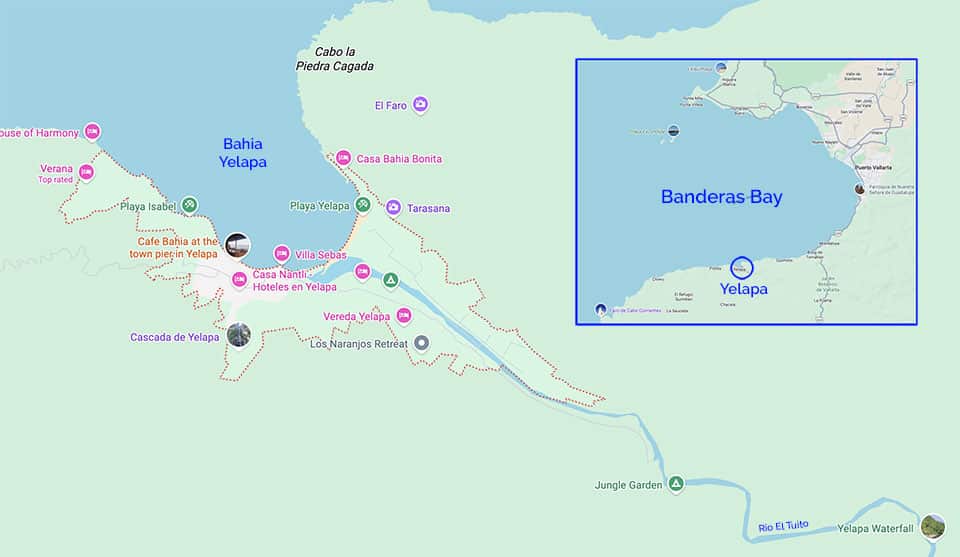
According to Yelapa.info, Yelapa is a comunidad indigena. This area shares, with a handful of others in Mexico, a unique status: it is a land grant or reservation, legally set aside and protected for the indigenous people who are recognized as having always lived there. The land is held collectively by the community as a whole. There is no private ownership of land by anyone, even its indigenous residents, though it is possible for families to occupy and claim land by using or cultivating it, and then by buying and selling it. Outsiders, however, may not buy or claim any land here at all. This unique place, therefore, is one to support and enjoy rather than to claim and own.
Because this land cannot be legally sold to extranjeros (foreigners), non-Mexicans typically lease land or hold use rights rather than purchasing it outright. These long-term arrangements are rooted in community agreements and trust rather than conventional property deeds, which explains Yelapa’s slow, organic development and why relationships and local respect matter as much as paperwork.
With its narrow sandy, cobblestone paths instead of roads, waterfall hikes instead of traffic, and a lifestyle shaped by tides, fishing boats, palapas, and sunsets, Yelapa’s beauty has multiple dimensions.
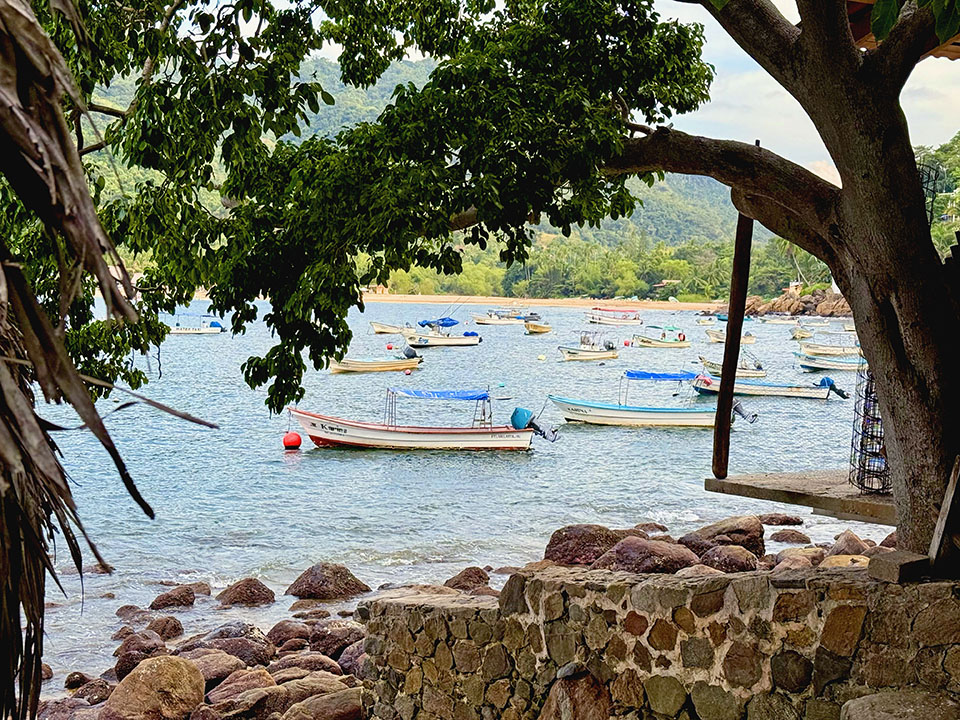
Long known as a hideaway for artists, hippies, and travelers seeking to escape the beaten track, Yelapa offers a rare blend of natural beauty, small village charm, beach life, and an off-grid feel that makes it easy to unplug.
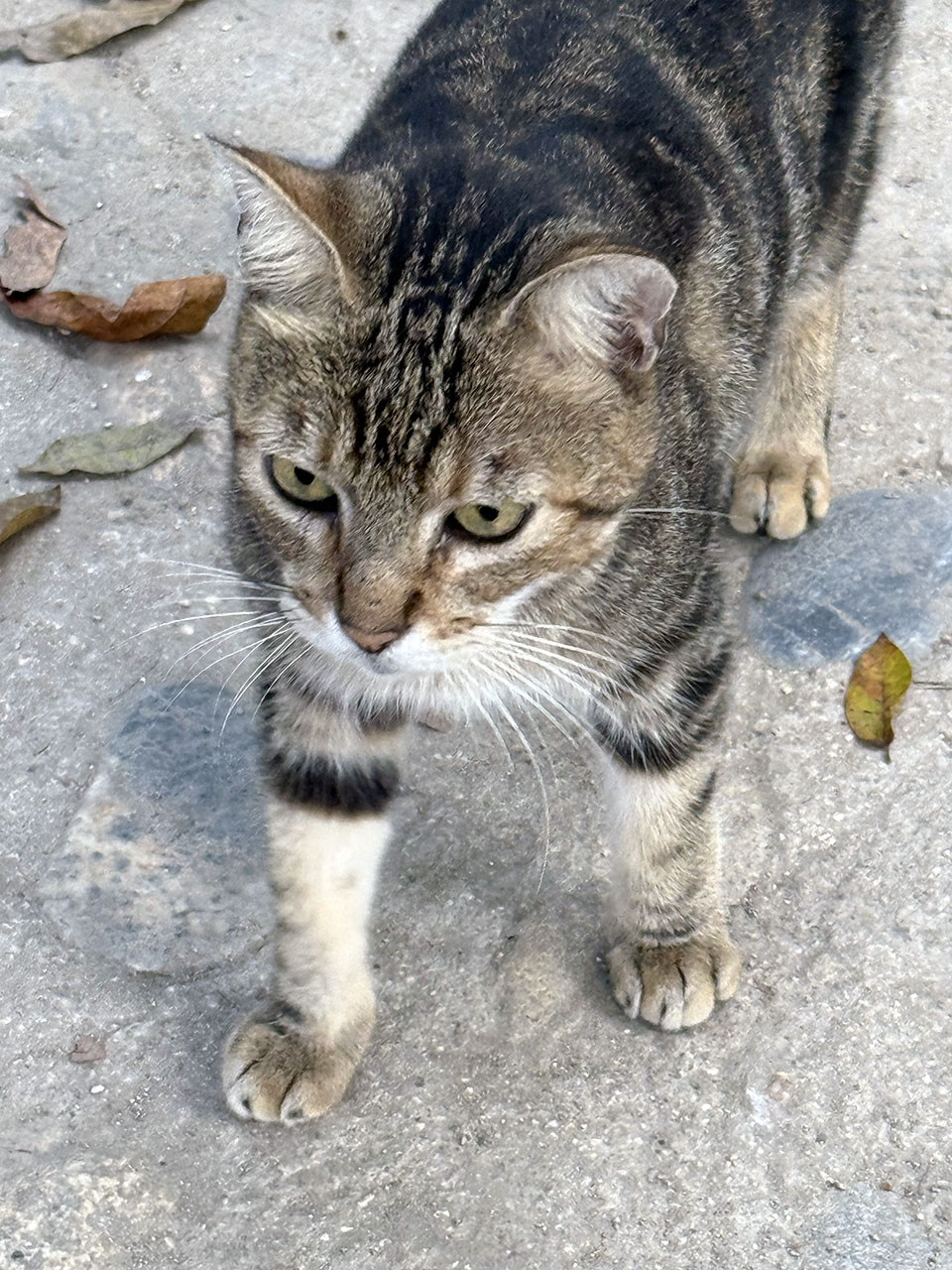
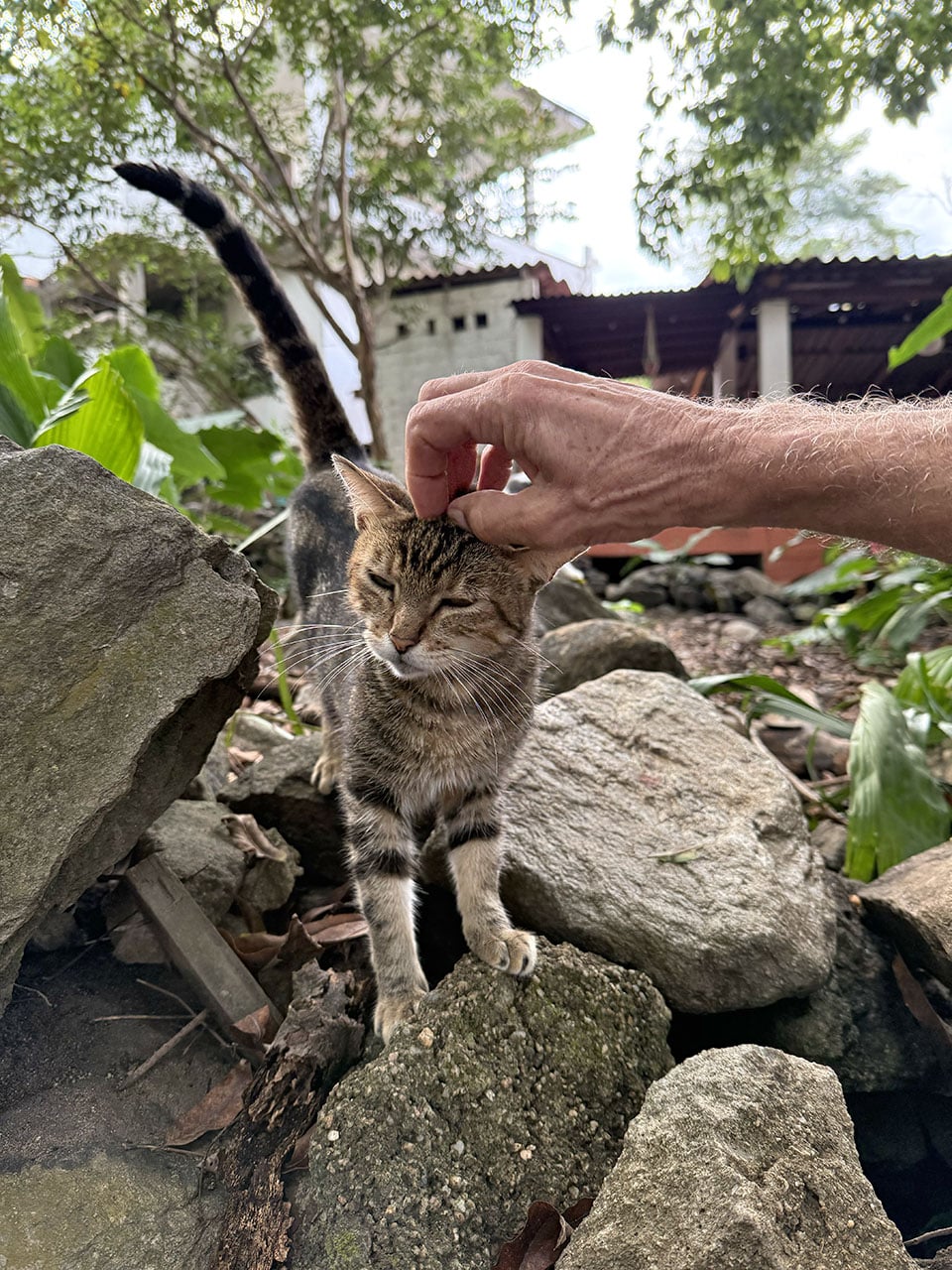
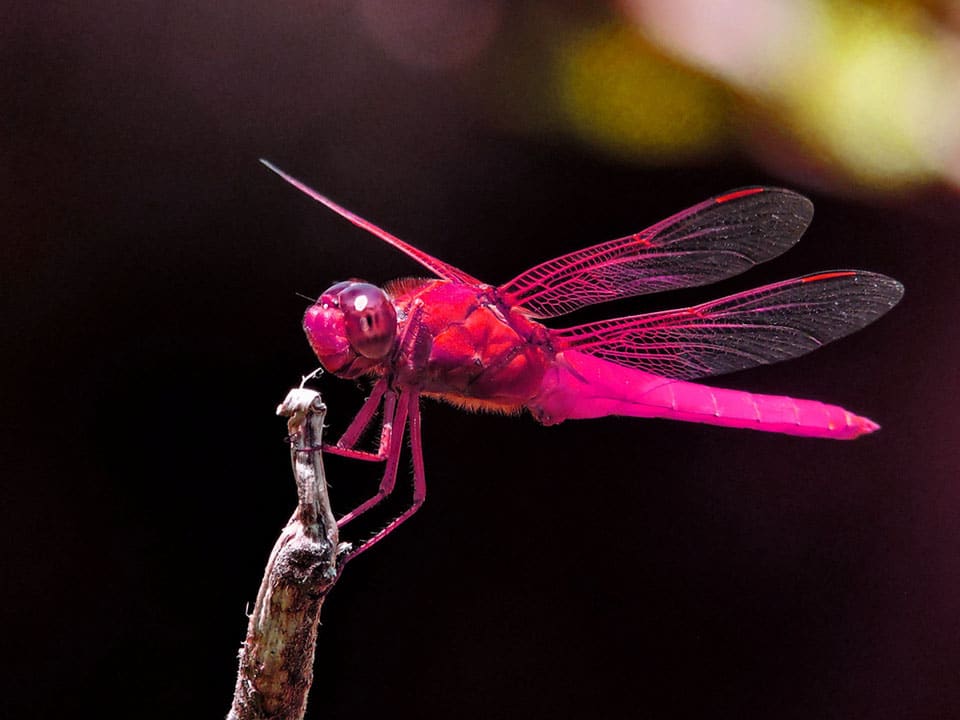
Yelapa is home to many “community” street cats that seem to be loved and fed by all. This street cat came to greet us every time we passed by, and reminded us so much of Tosh. We nearly snuck him in our backpack to bring him home. But we weren’t sure how Tikka would react (and honestly, not sure if it’s a male or female, and we don’t want another female cat!) We did not notice as many street dogs, but nearly every house had a dog or three. It’s also home to wild Guacamayas (military macaws), giant white morpho butterflies, hot-pink dragonflies, ocelots, and jaguars… “just because you didn’t see the jaguar doesn’t mean it didn’t see you.”
We laugh, because back in Seattle, we had friends who regularly visited Yelapa since the ‘80s, but they stopped going about 20 years ago because it had become “too overcrowded”! Today, the population is around 1,500. Far from what we view as overcrowded… but everyone’s ideas are different.
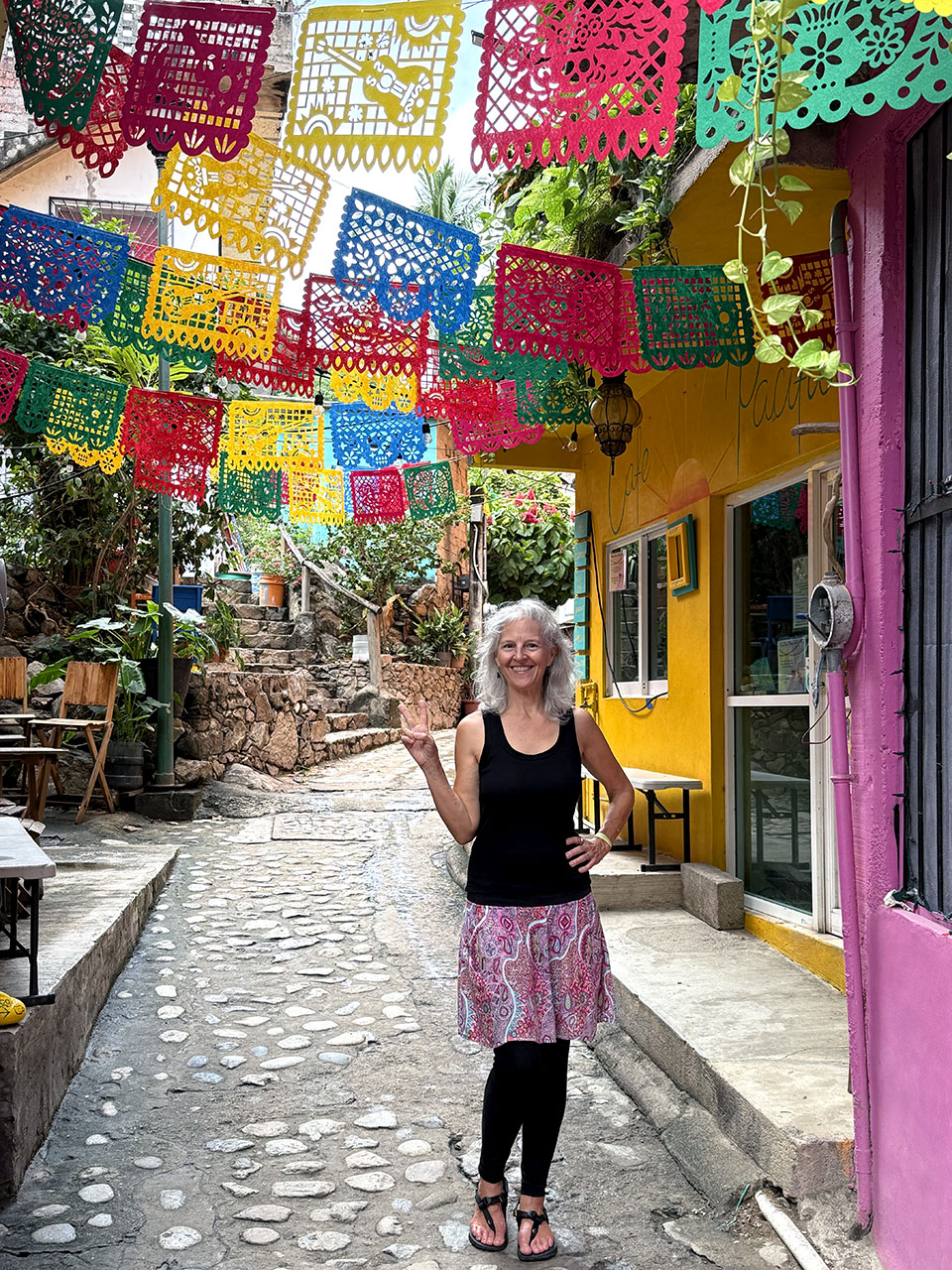
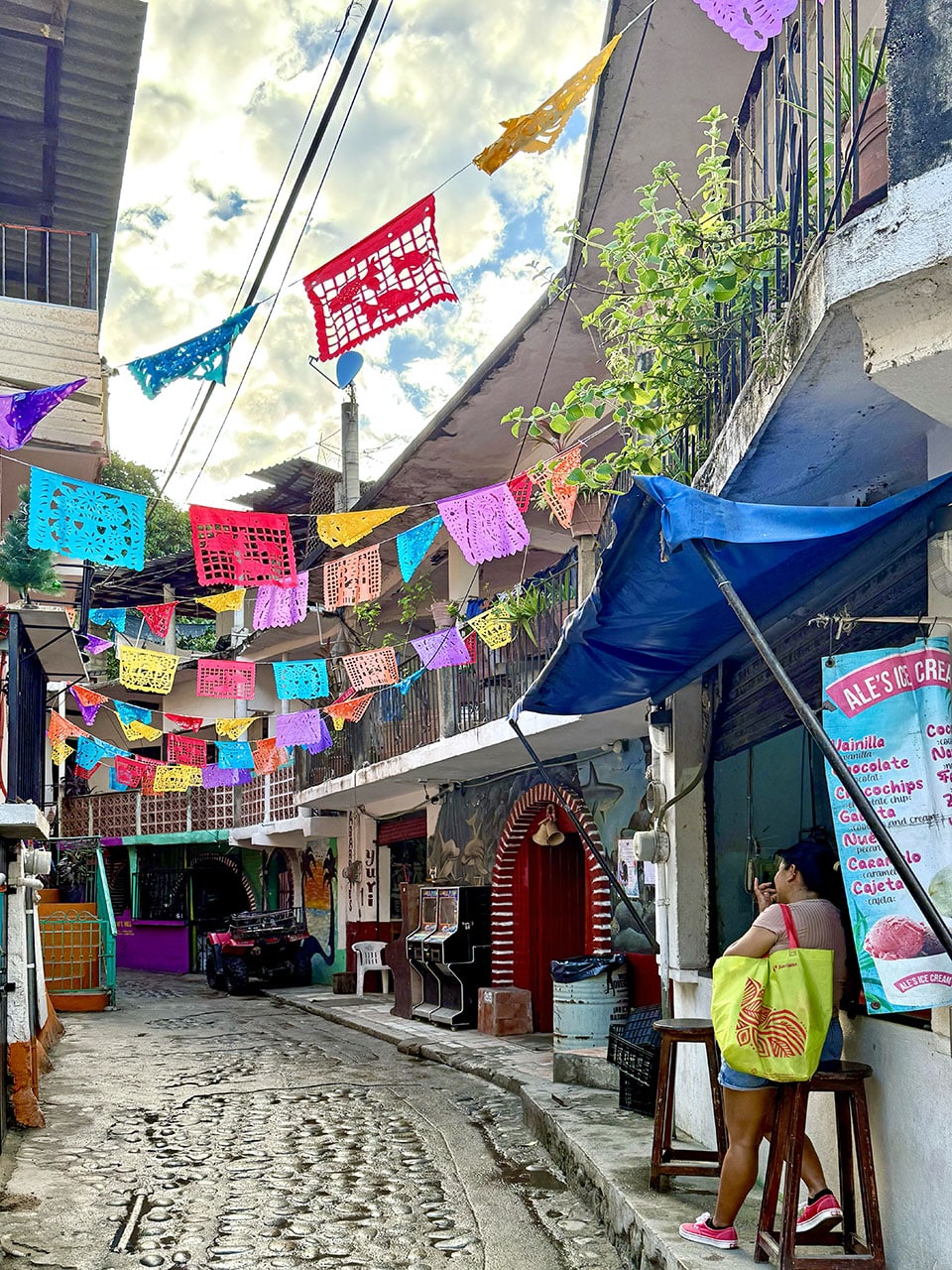
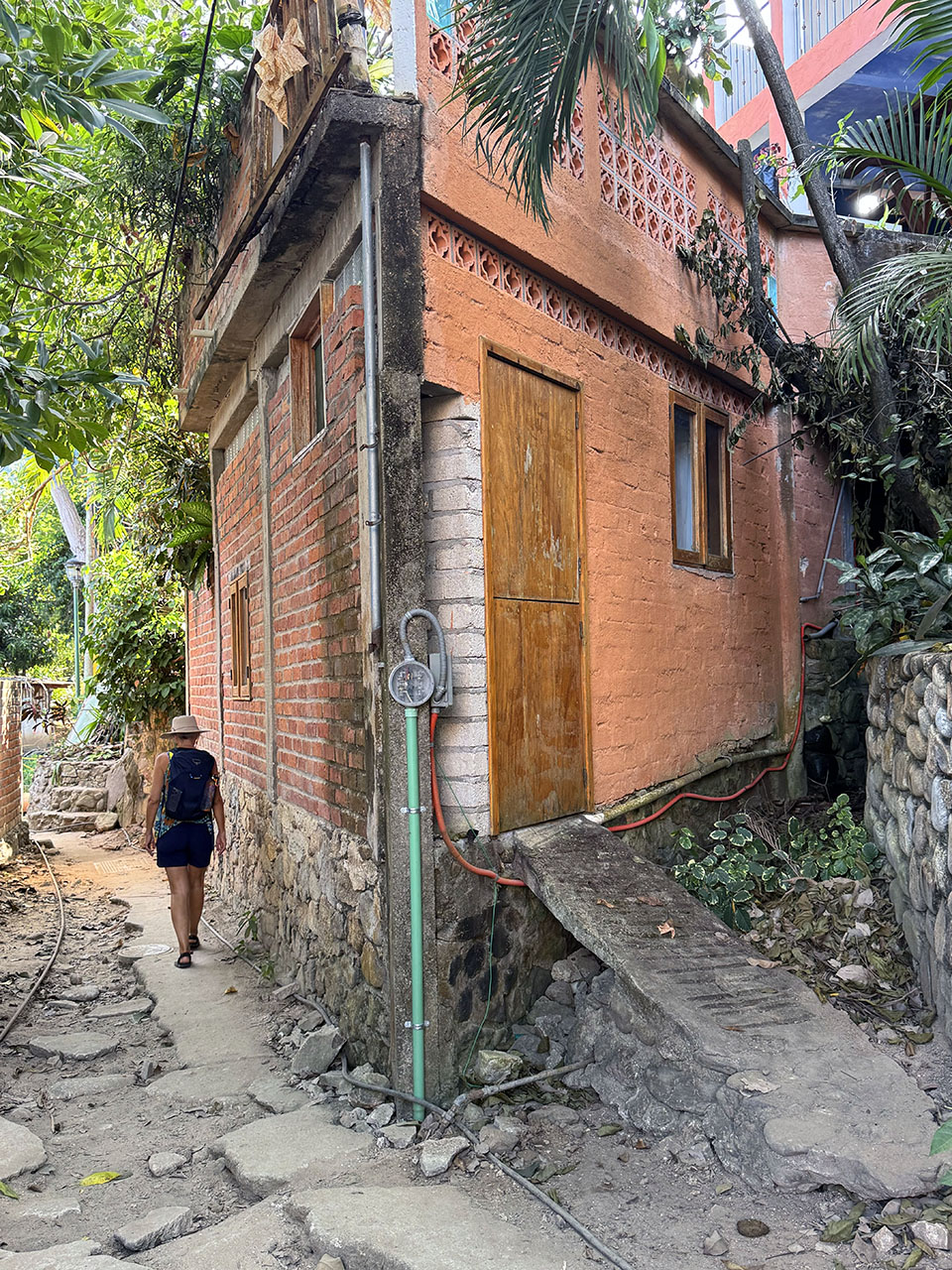
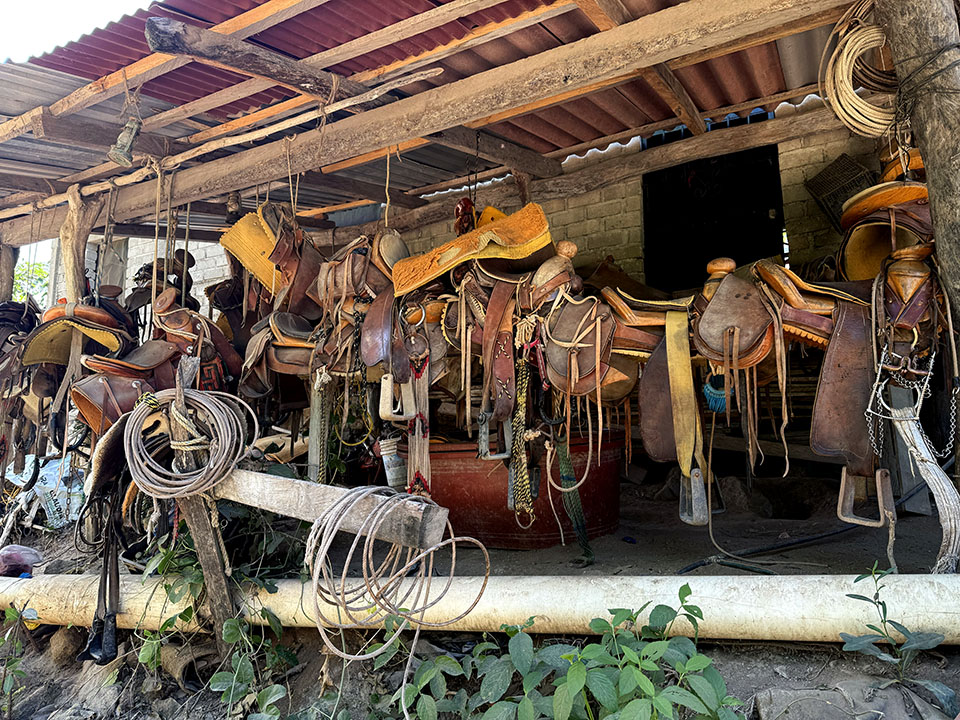
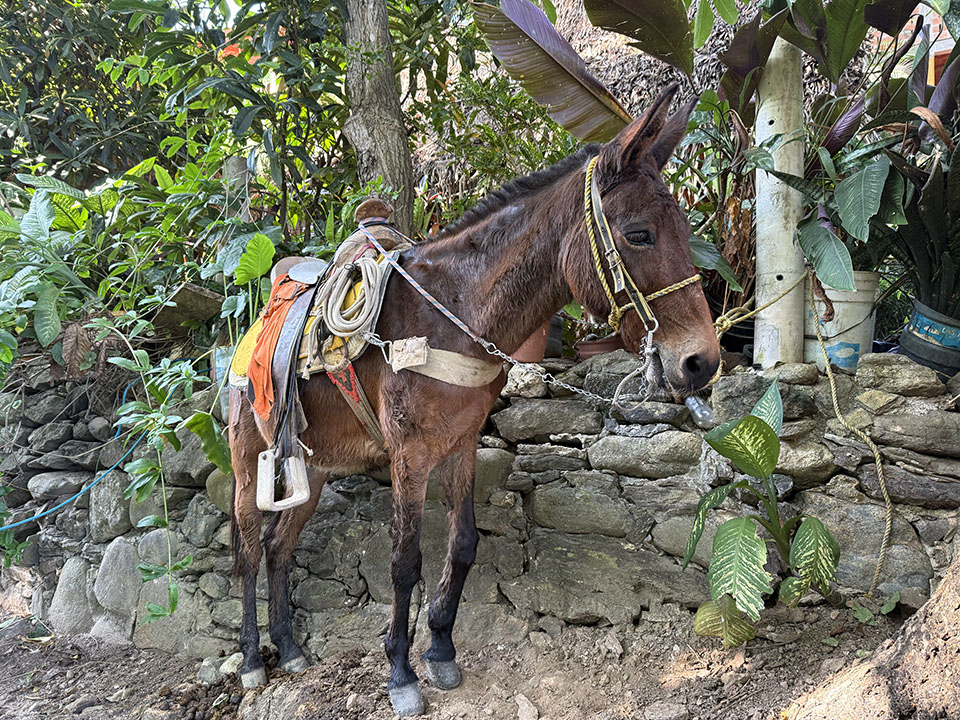
Granted, one big difference we noticed compared to our first visit in 2016 is far fewer burros and many more ATVs. However, the winding cobblestone streets are too narrow for cars, even if you could get one there. (Apparently, there is a dirt road through the mountains from El Tuito, with a parking lot outside of Yelapa, which is as far as the cars can go… we have yet to see that part of town. This two-to-three-hour drive on a rough dirt road from El Tuito is only used by some locals, not tourists.)
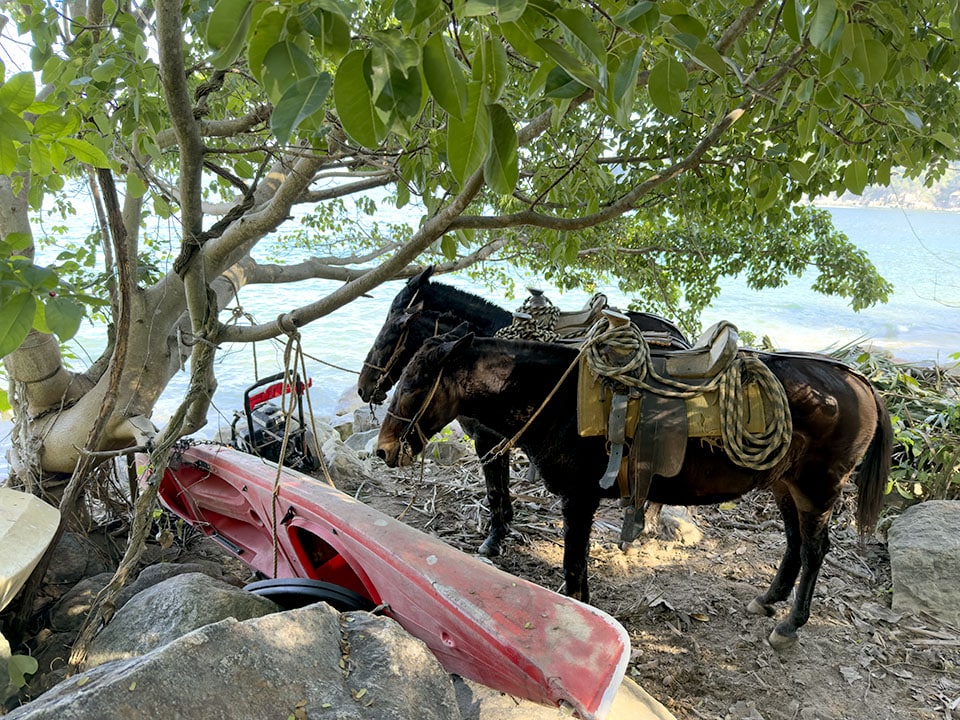
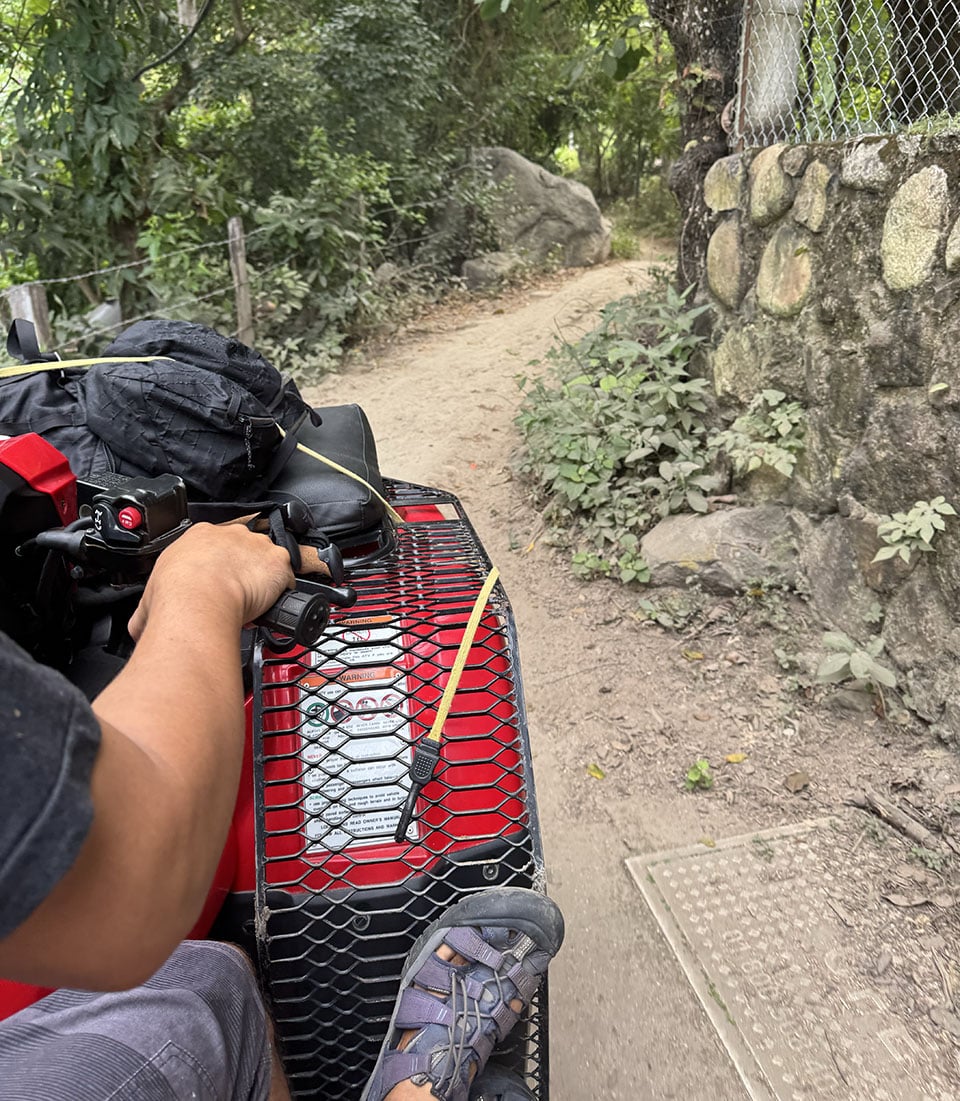
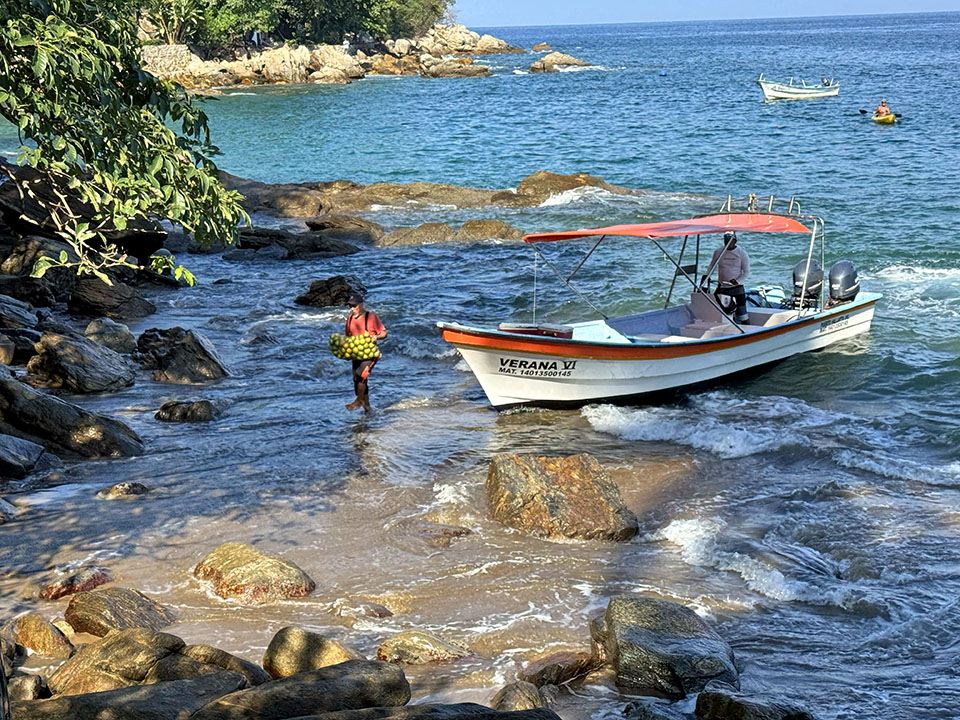
During daylight hours, water taxis run almost hourly between Boca de Tomatlán (25 minutes one way), on the coast highway south of Puerto Vallarta, and a couple of times a day from PV (45 minutes one way). A round-trip water taxi costs about $550 pesos (with today’s exchange rate, that is about $30 USD).
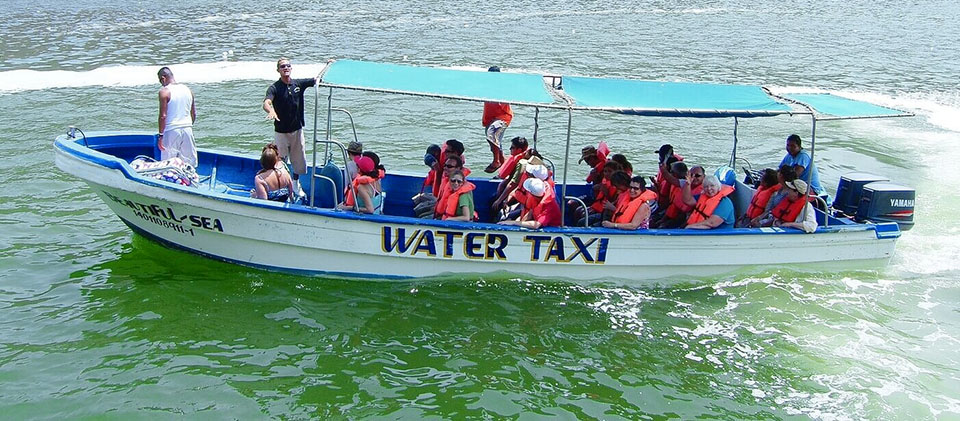
Image found online on several Yelapa websites
These water taxis are 25-foot pangas, with many bench seats that accommodate 20 to 30 people, plus luggage and more. Many of the restaurants and hotels in Yelapa shop at Costco or elsewhere in the big city of PV to supply everything for their customers and guests. It’s not uncommon to have boxes and bags of groceries piled high in the water taxi, along with people’s luggage. We have even heard of water taxis carrying horses, ATVs, and motorcycles!
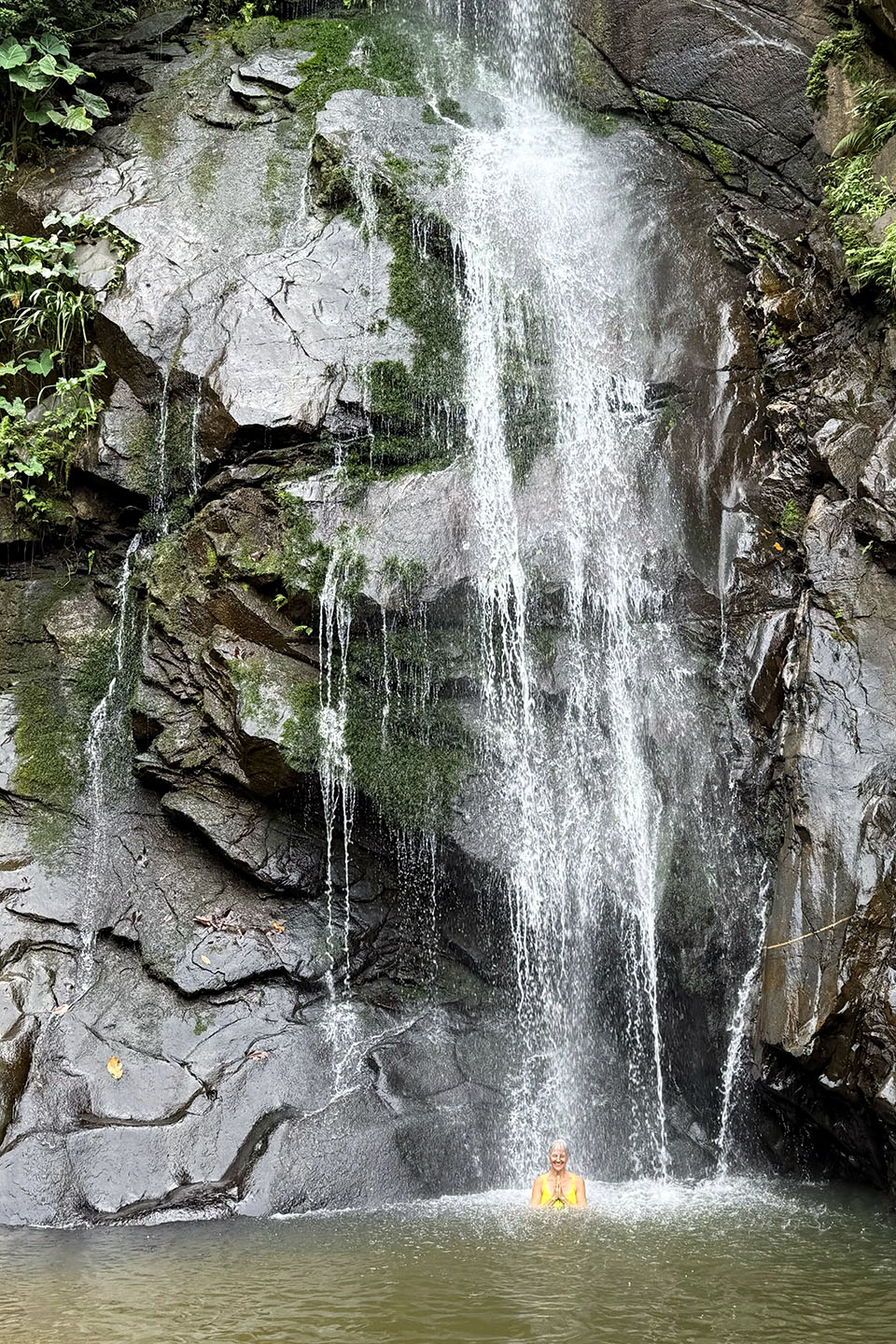

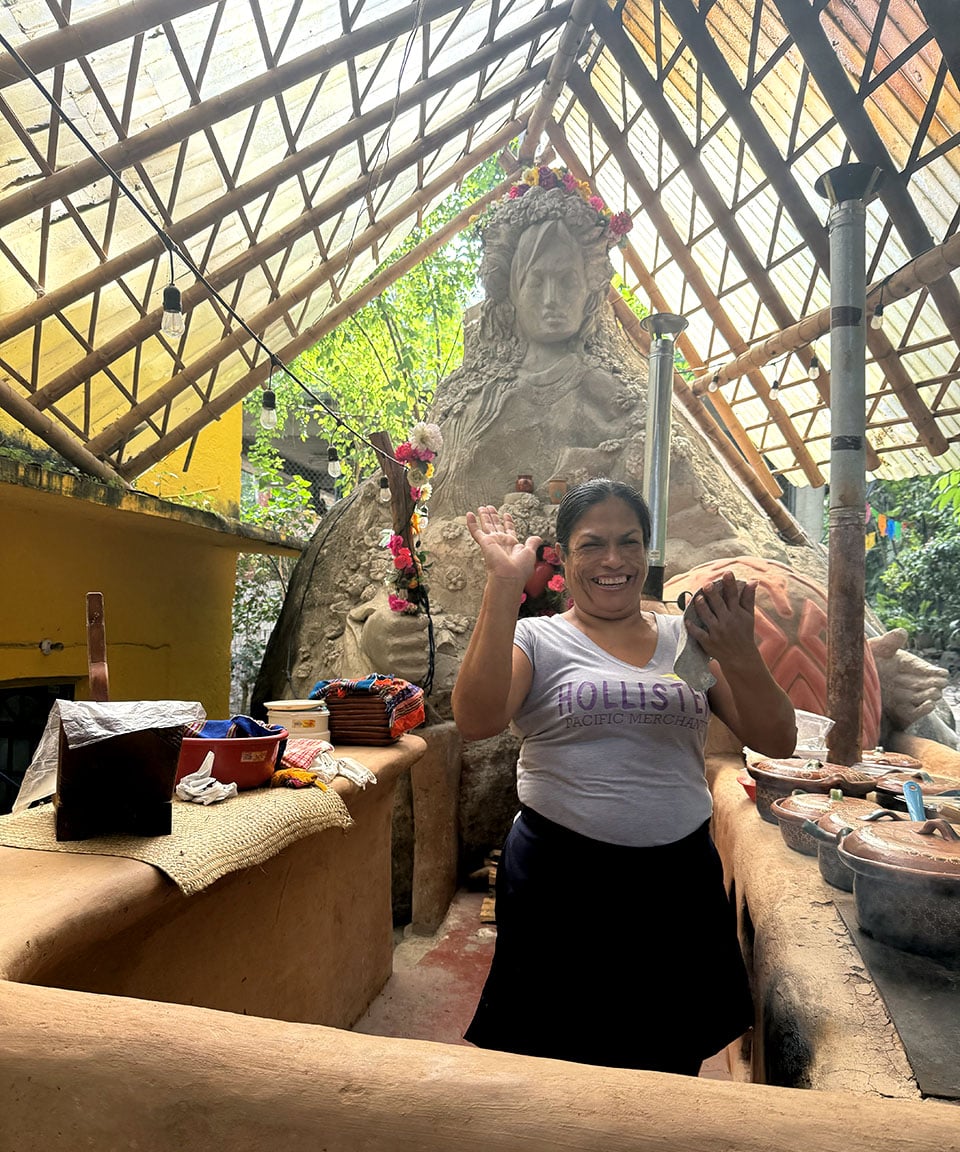
Yelapa Town Waterfall, and at El Nodo with their amazing chef, Laura.
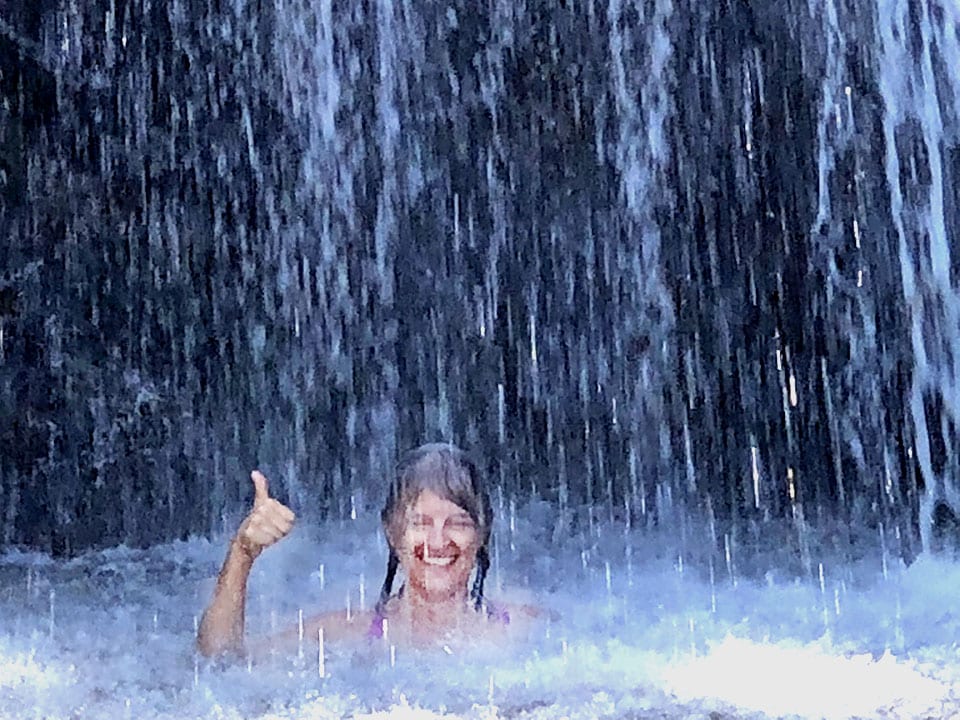
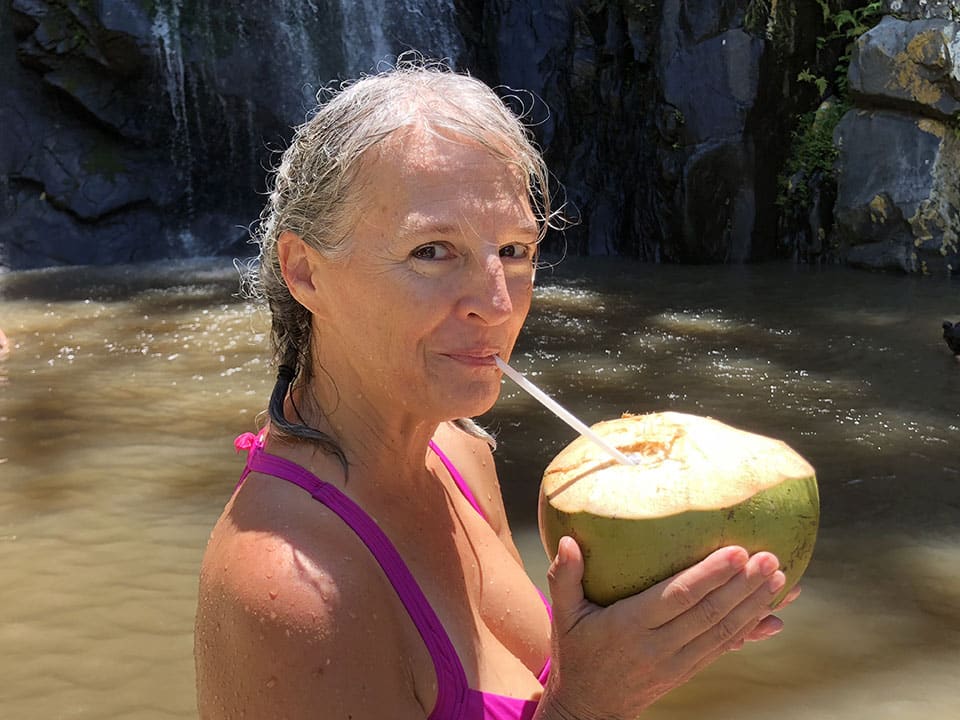
Besides the beach and the jungle, Yelapa is known for its many waterfalls. One cascada is right in town and accessible to everyone (including almost daily cruise ship tours from PV between 10 AM and 3 PM, so we definitely recommend avoiding town during peak hours, or go on days when there are no cruise ships!) You can also visit the town waterfall by horseback or ATV if you have difficulty walking. Be sure to stop at El Nodo for lunch; their chef, Laura, is amazing. We love her chicken mole and lentil pineapple stew.
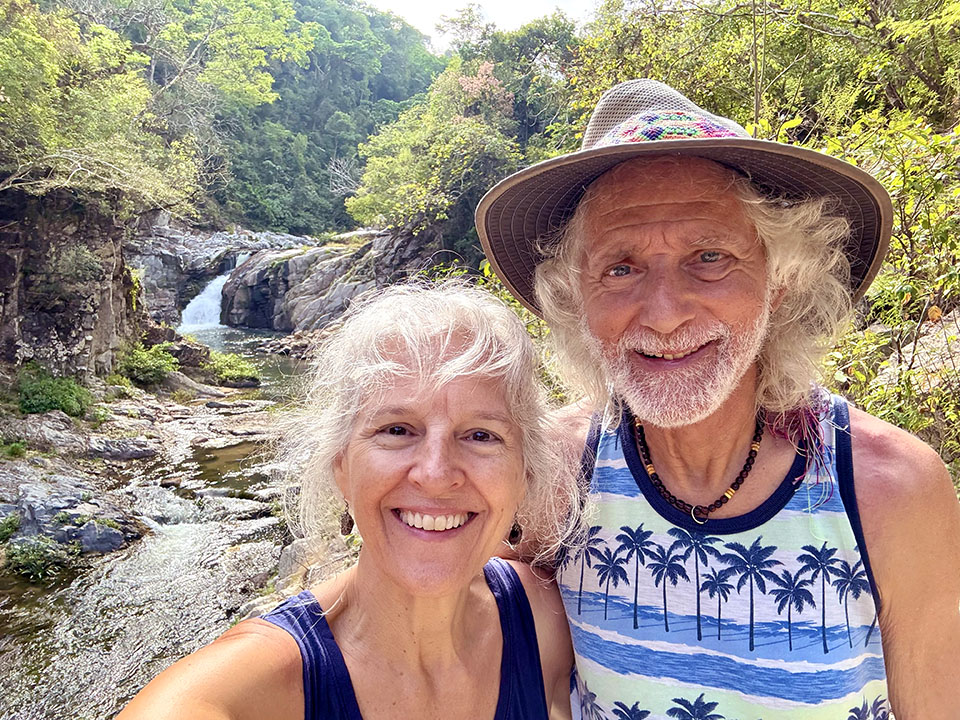
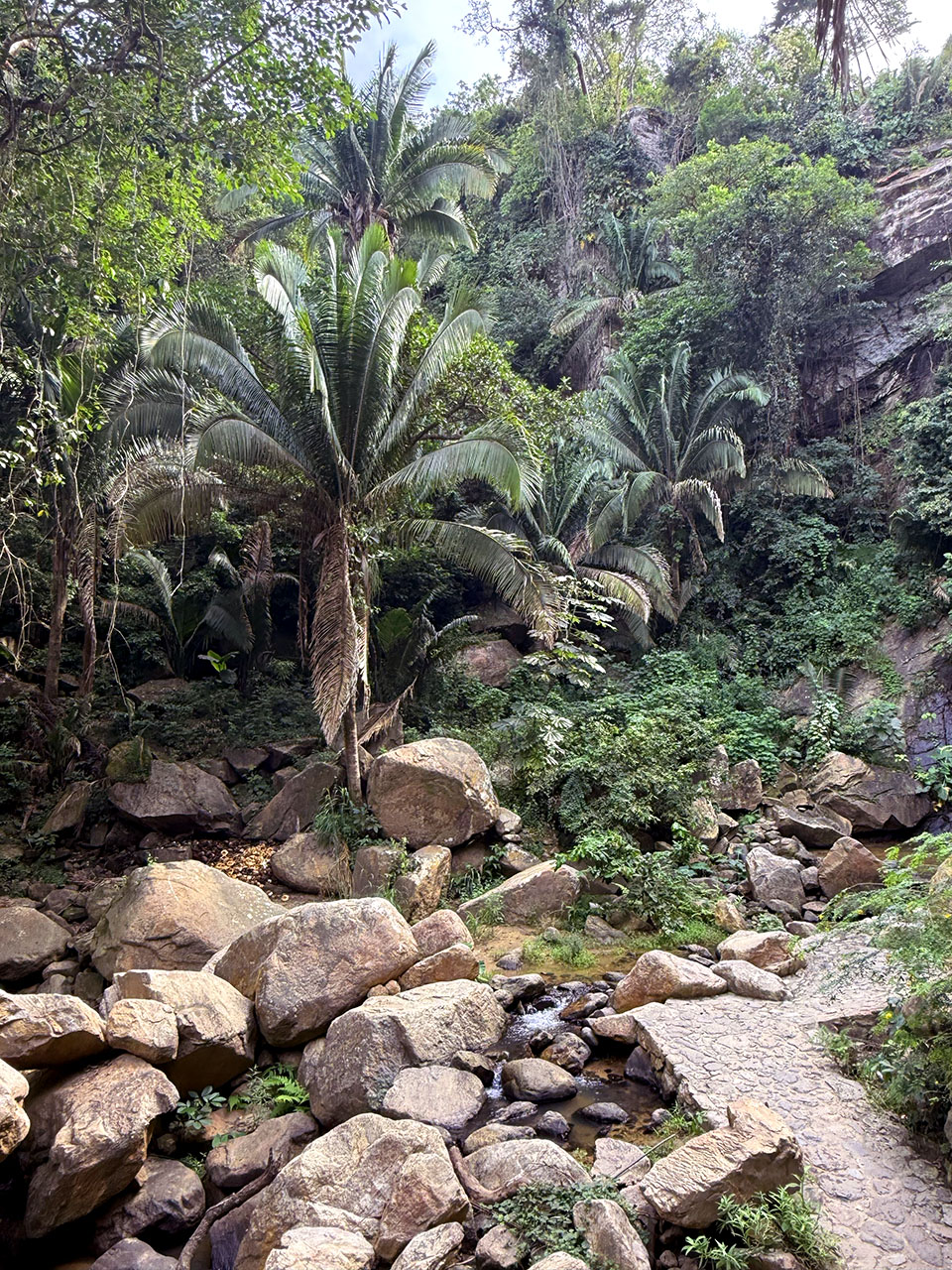
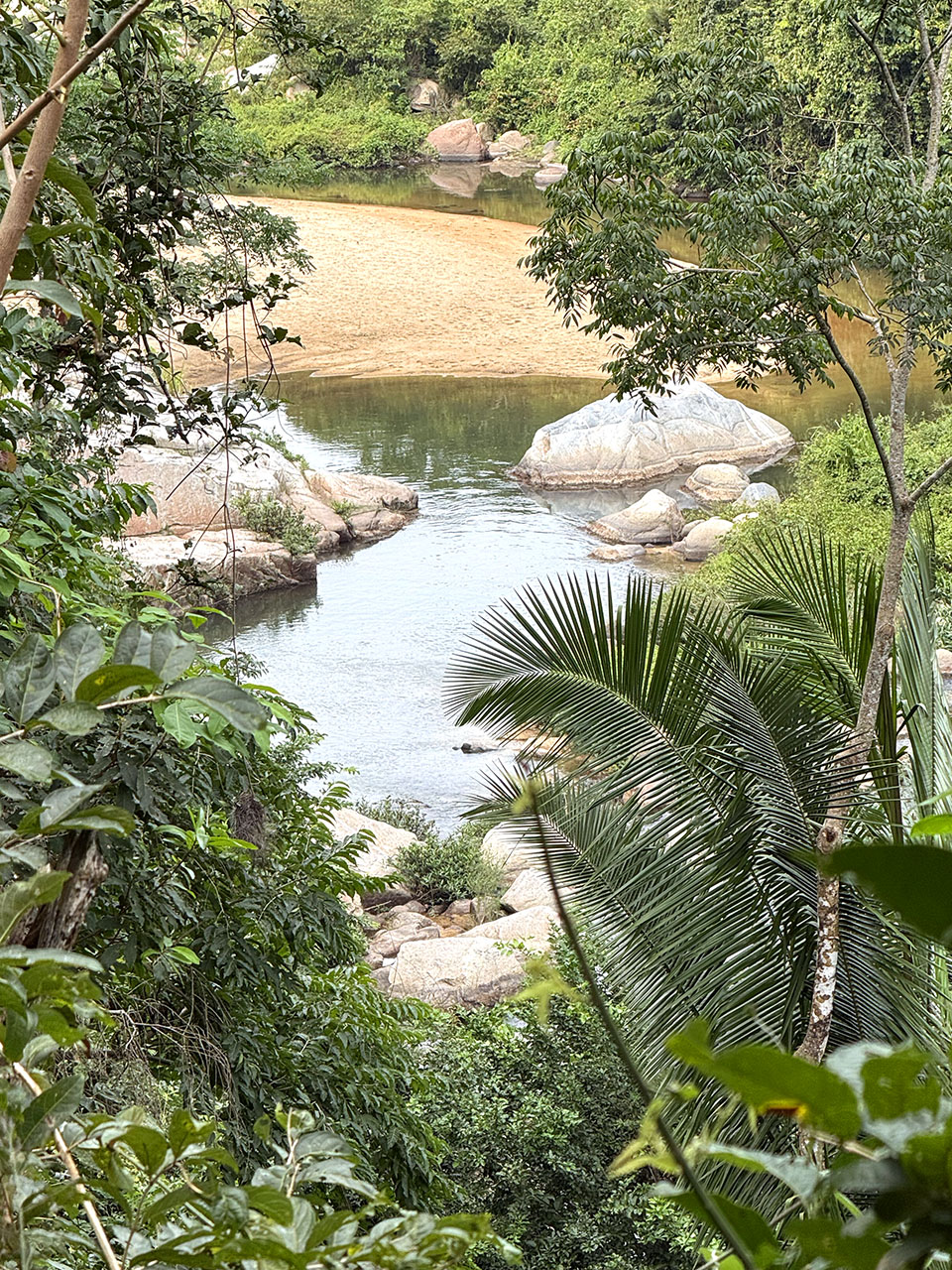
Another cascada is a 7-mile round-trip (mostly flat) hike from town. That waterfall is wider, but not as tall. And it’s a bit more rocky and difficult to get down to the actual waterfall, from the end of that trail—although someone has built concrete/rock stairs into the water—it’s still a rock scramble to get to them. (See top photo in post). And there are other waterfalls further away that we have yet to visit.

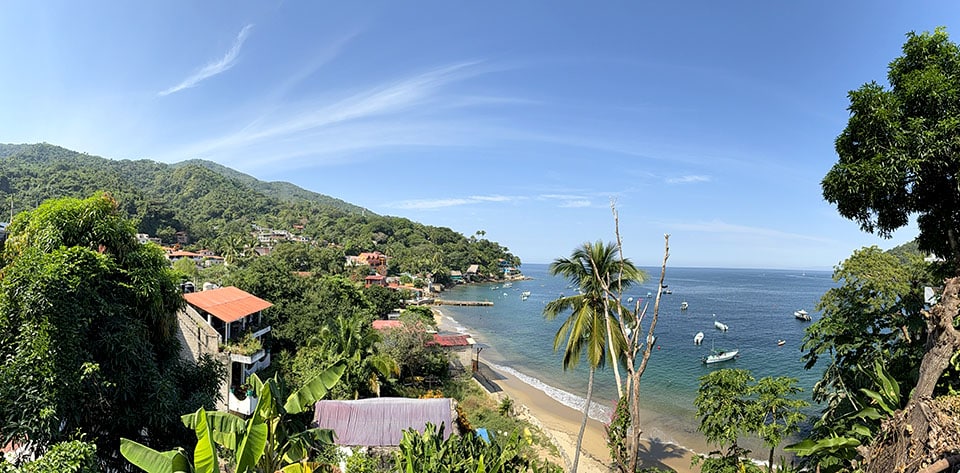
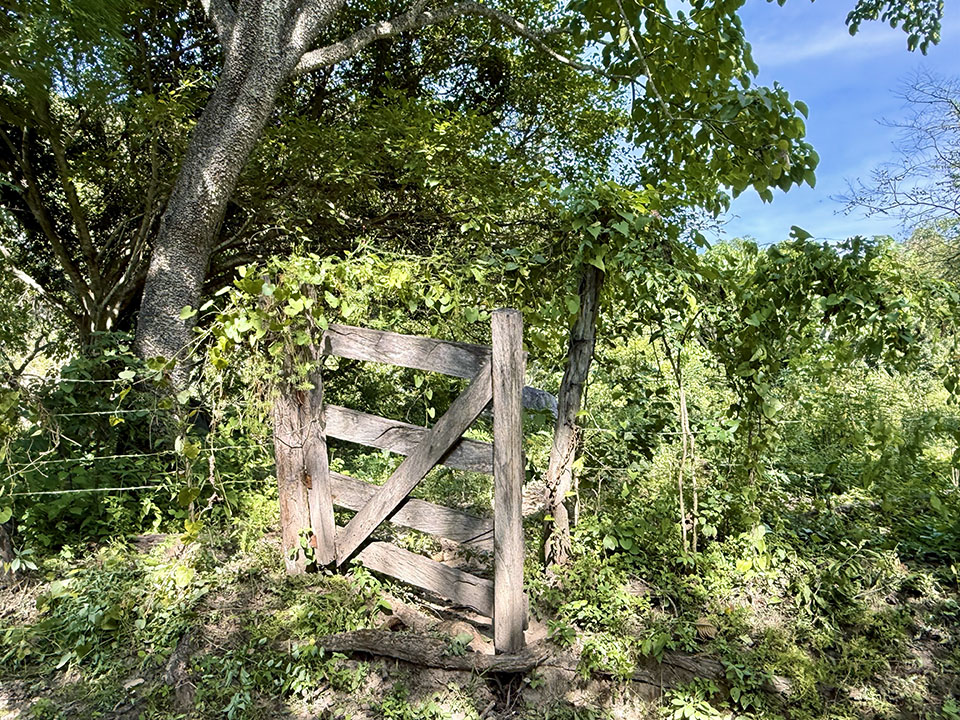
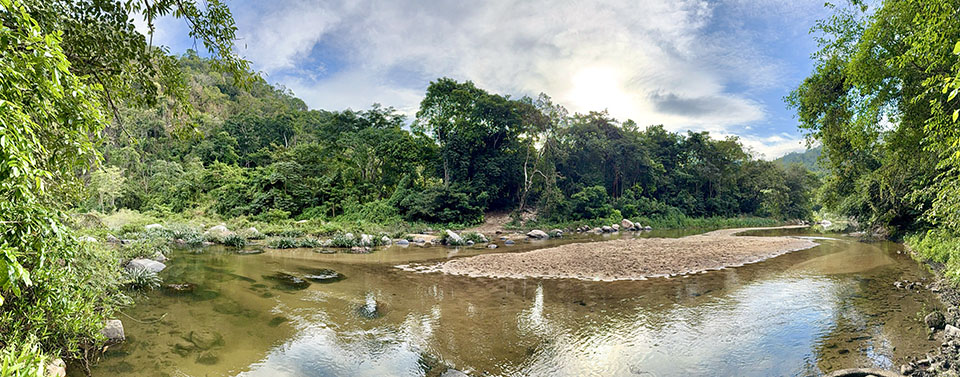
Both during Heidi‘s retreat in November and on our recent December adventure, we had the 7-mile round-trip trail nearly to ourselves, only seeing a handful of other small groups of two or three hikers at a time. You have to ford the El Tuito River twice on that hike (our REI hiking poles were invaluable!), which likely keeps some people away. You can also ride horses to some of the farther waterfalls, and we saw lots of evidence of them, but didn’t actually see any on the trail.

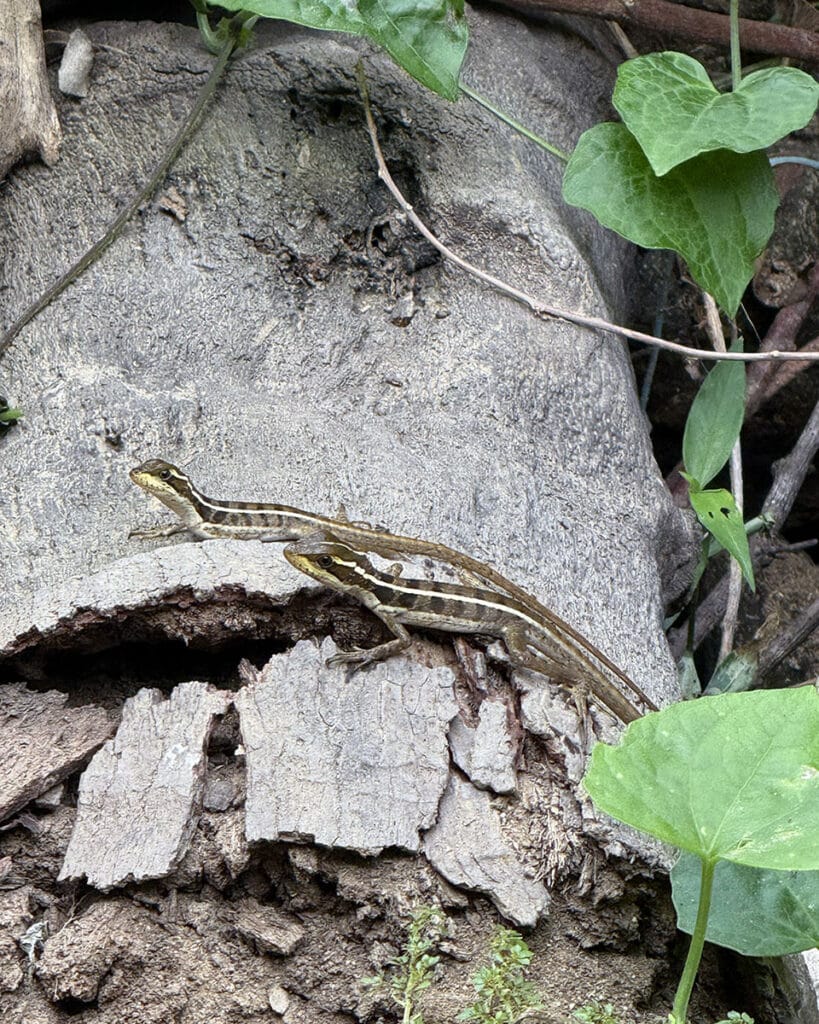
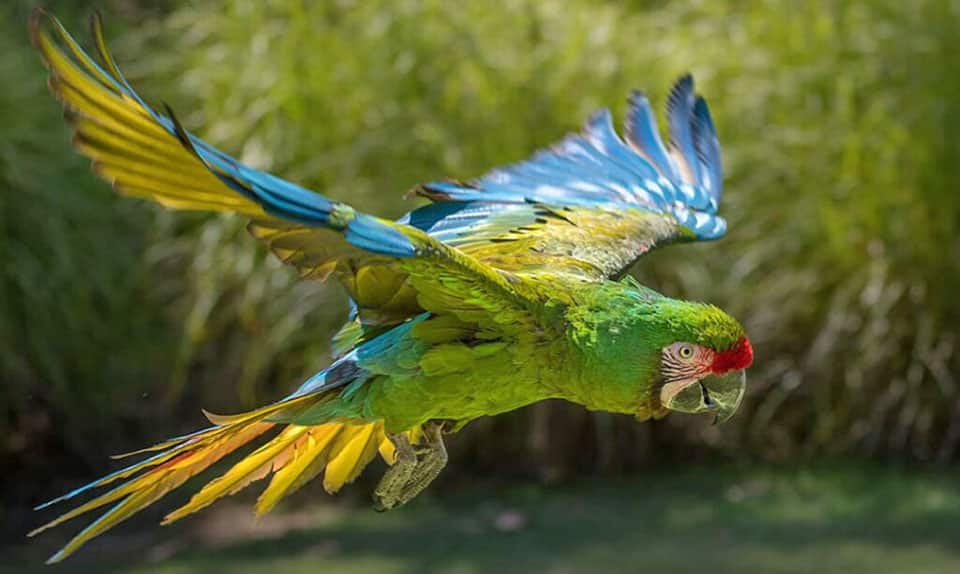
Two mobula rays under water, two striped basilisk lizards, and a military macaw (found online @LA Zoo— they fly so fast, our phone cameras couldn’t capture them this well!).
The jungle wildlife is astounding. So many colors and types of butterflies that we lost track of counting. Tons of different species of lizards and iguanas. Wild military Guacamaya’s in their turquoise blue, red, yellow, and green plumage, and wild green parakeets all fill the jungle air with their unique calls. Snorkeling and sea life are amazing in Yelapa, too. Unfortunately, the skies were overcast on our recent trip, so we didn’t get to snorkel, but we saw mobula rays jumping. And we didn’t see any whales or dolphins on these particular trips, but you can often see humpbacks and dolphins from Casa Isabel or the water taxi.

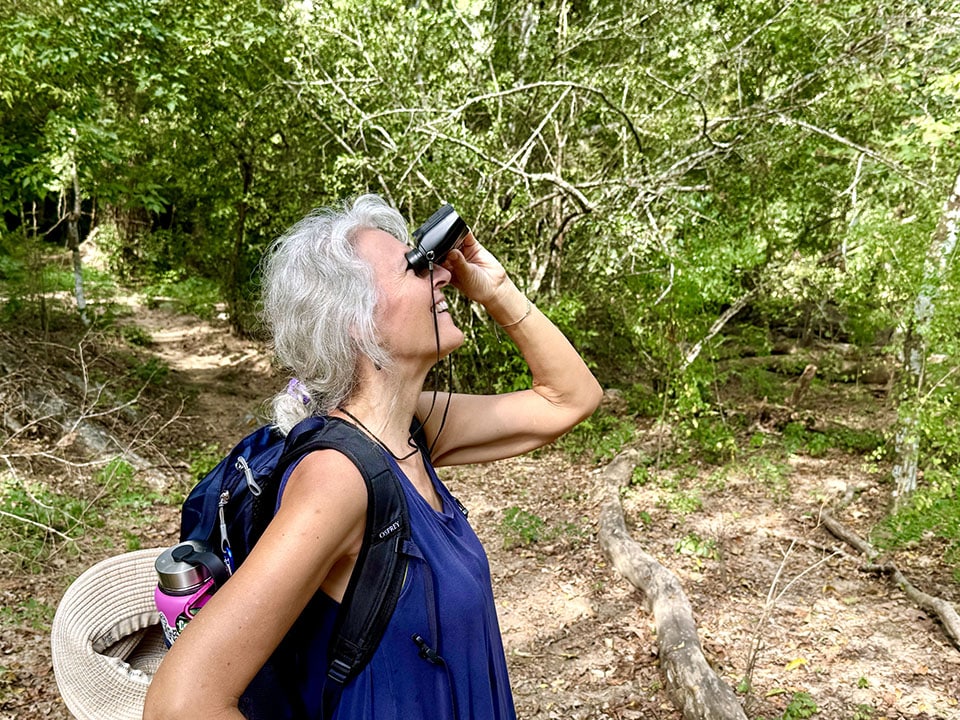
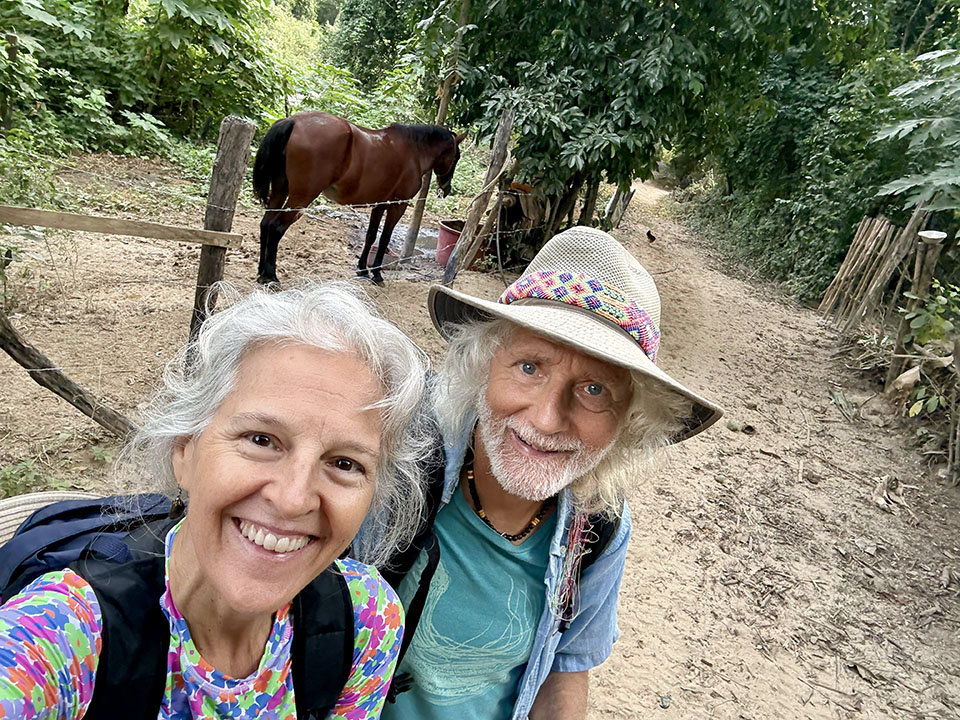
We also learned a big lesson on our latest jungle adventure. As sailors who have lived our lives by weather forecasts, we somehow neglected to check the weather before we headed out for four days in the jungles of Yelapa. The rainy season is usually predictable here, and between November and May, you rarely ever get a drop of rain. But that pesky little thing called “climate change” decided to rear its head. With two days of intermittent torrential rain in the jungle, we were woefully ill-prepared in this rainforest.
Because daytime temperatures are typically in the mid-80s and nighttime temperatures in the mid-70s, we did not bring much more than a cotton sweatshirt and rash guard/sun shirt for protection.
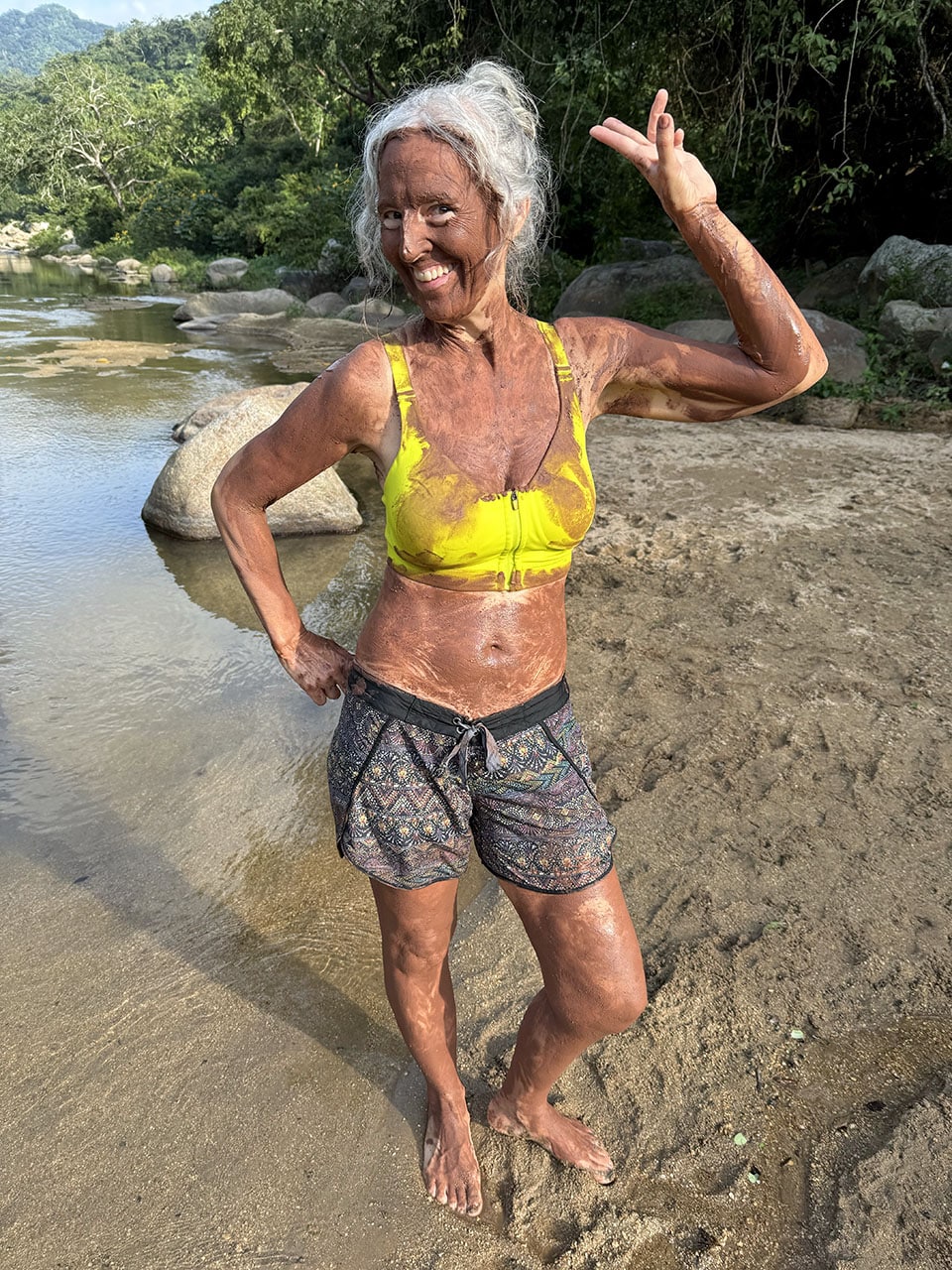
Our hike up to the waterfall had pleasant temperatures, with an overcast sky, and plentiful shade cover in the jungle. On our return from that long hike, the sun was out, and we stopped at the last river crossing to enjoy a clay/mud bath and soak in the cool water. As we finished rinsing off the clay, we were starting to feel a bit chilled from the river (plus, clay can pull inflammation out of the body). The skies were clouding up again, this time much darker. And we hadn’t brought towels on our hike because we would typically air-dry hiking after our mud bath.

Just as we exited the river to continue, our hike…plink, plink, plink… large raindrops started to fall. And we could almost hear the jungle plants saying “thank you, thank you, thank you!”
At first, we thought nothing of it because we were still wet from hanging out in the river. And most rainstorms around here don’t last very long. (It brought to mind a trip 30 years ago when we just finished scuba diving off the coast of Playa Del Carmen, Mexico. All the divers were back in the panga, and it started to pour rain. Everyone was freaking out and trying to get undercover except us…We were laughing so hard because we had literally just been 80 feet underwater, and we’re still soaking wet from our dive, what’s a little rain? Although there was an unnervingly close water spout with that storm!)
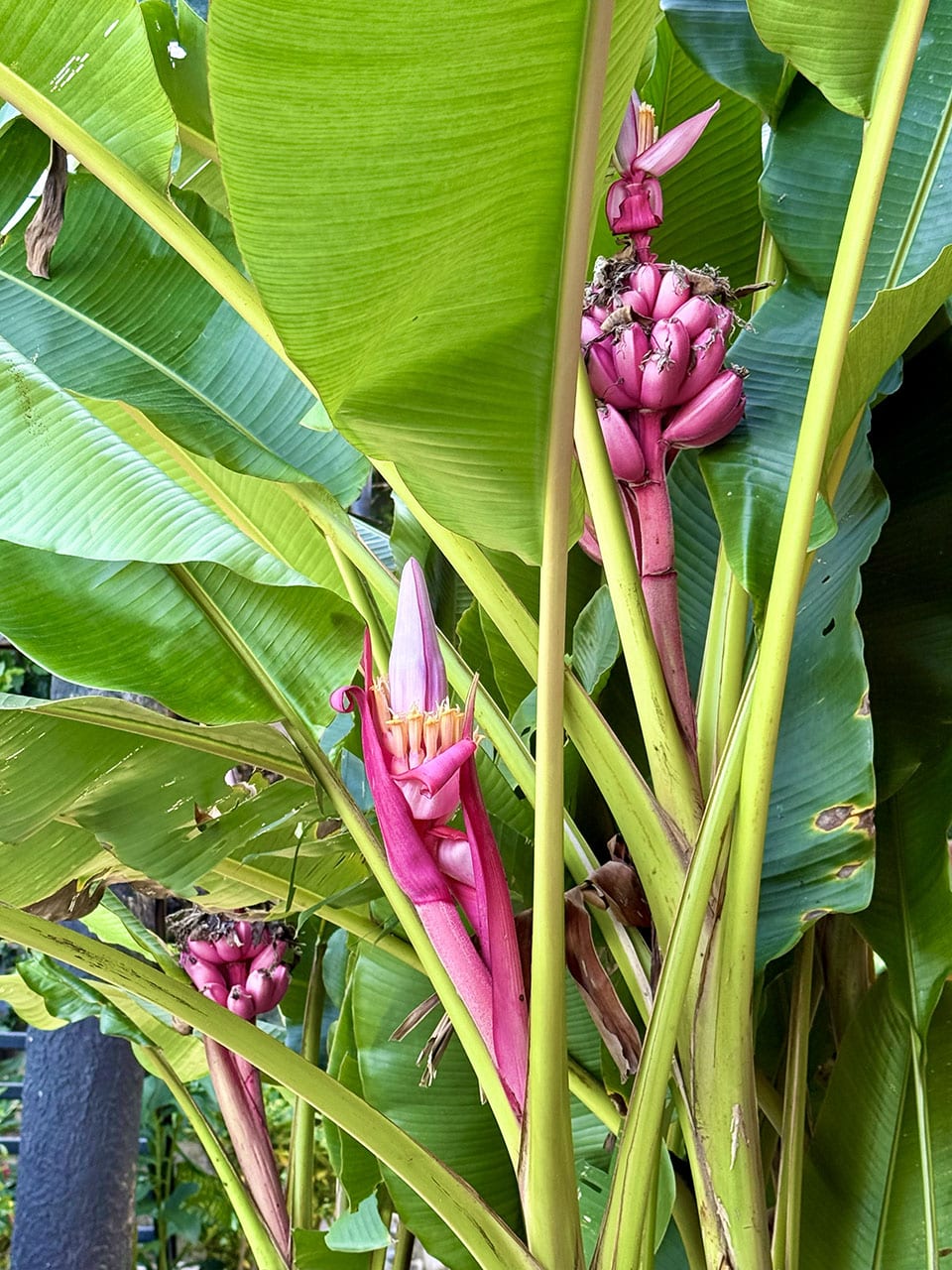
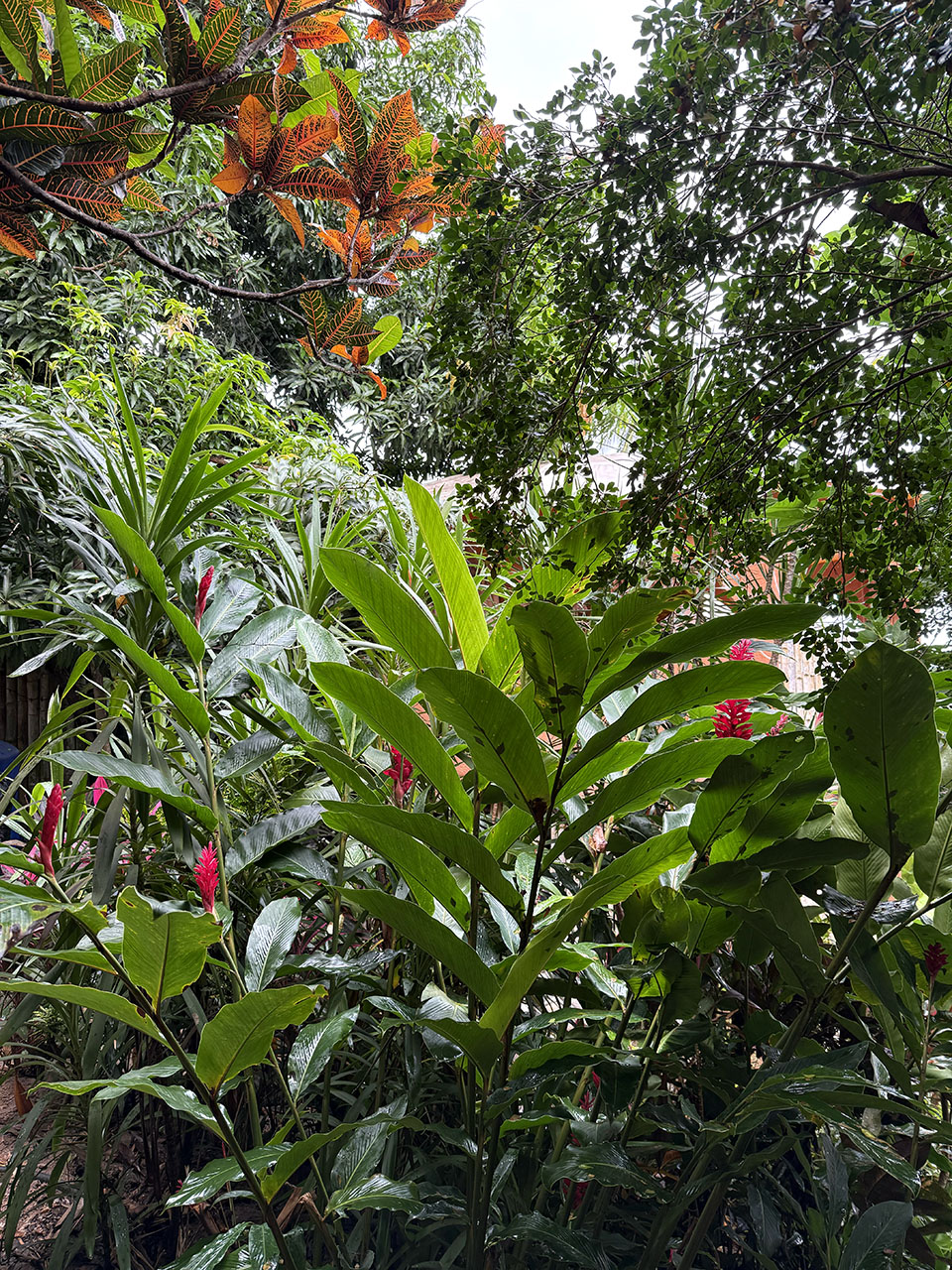
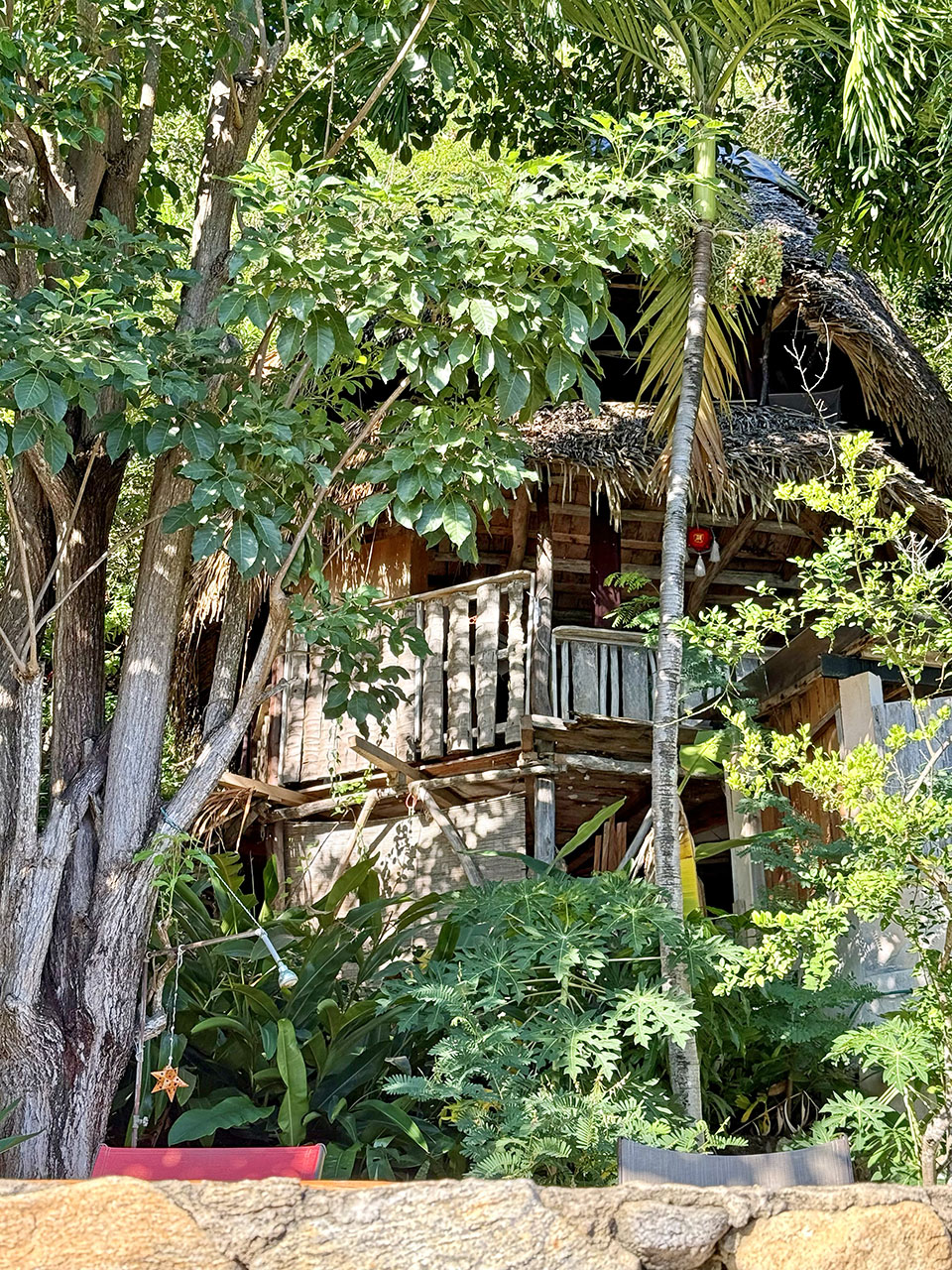
Back in the jungles of Yelapa, the temperature was rapidly dropping with the thickening gray clouds, and soon we were in a torrential downpour. Kirk’s lips were turning blue, and he was shivering. And Heidi wasn’t much warmer. We assessed our options standing under cover of a large tree with a dry space below it… But it didn’t stay dry for long. We didn’t have rain jackets or anything else warm or dry. (Completely forgetting we always carry spare garbage bags in our backpacks to pick up trash; we could have turned those into makeshift ponchos, had we remembered!)
Our only option was to keep hiking as fast as we could, to try to warm up. We could see how someone could potentially become hypothermic even in the jungle! Note to self: next time, check the weather before ANY outdoor adventure, and bring rain jackets, they don’t weigh much or take up too much space!
Thankfully, two miles before town, the little Jungle Garden Café was open, and dry under cover of their open-air palapa roof! Kirk got a hot coffee, and Heidi had a hot tea as we waited for the rain to abate. But with no sign of that happening anytime soon and the restaurant getting ready to close, we were not psyched about walking two more miles in the pouring rain.
So we did the next best thing. We messaged Emanuel, our trusty ATV driver friend, who picked us up and drove us into town. (Heidi had used his ATV services a couple of times during her retreat in November, and we were glad to have his number handy!)
Once back at Casa Isabel, we were grateful for the hot shower and a change of warmer, dry clothing. We had planned to head back into town that evening for dinner and to experience the community Christmas pageant put on by the elementary school, outdoors at the basketball court… sadly for the kids, the community, and us, that event was rained out.
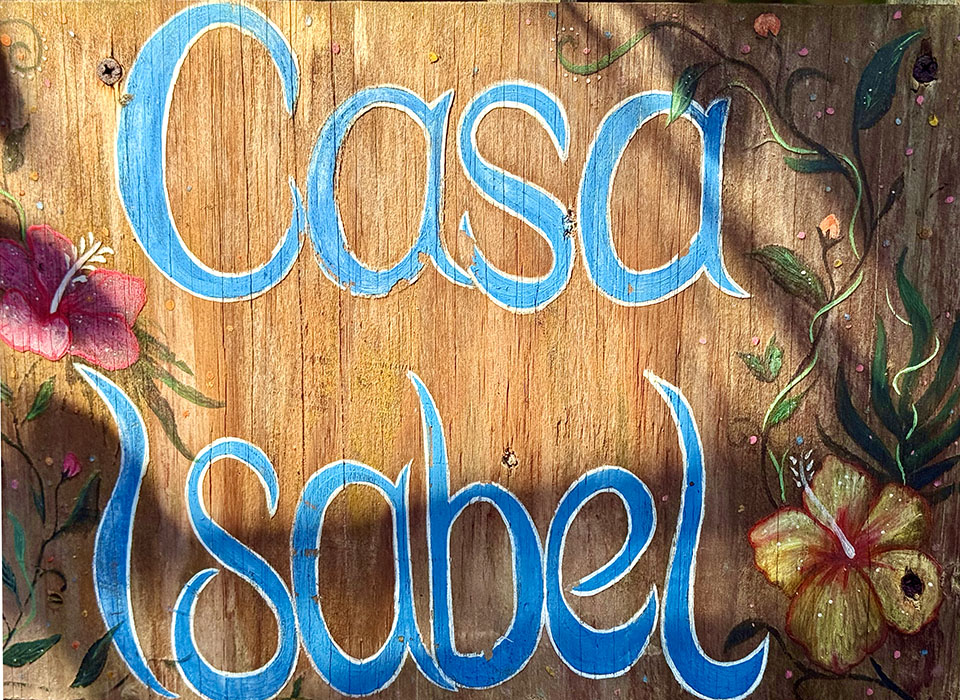
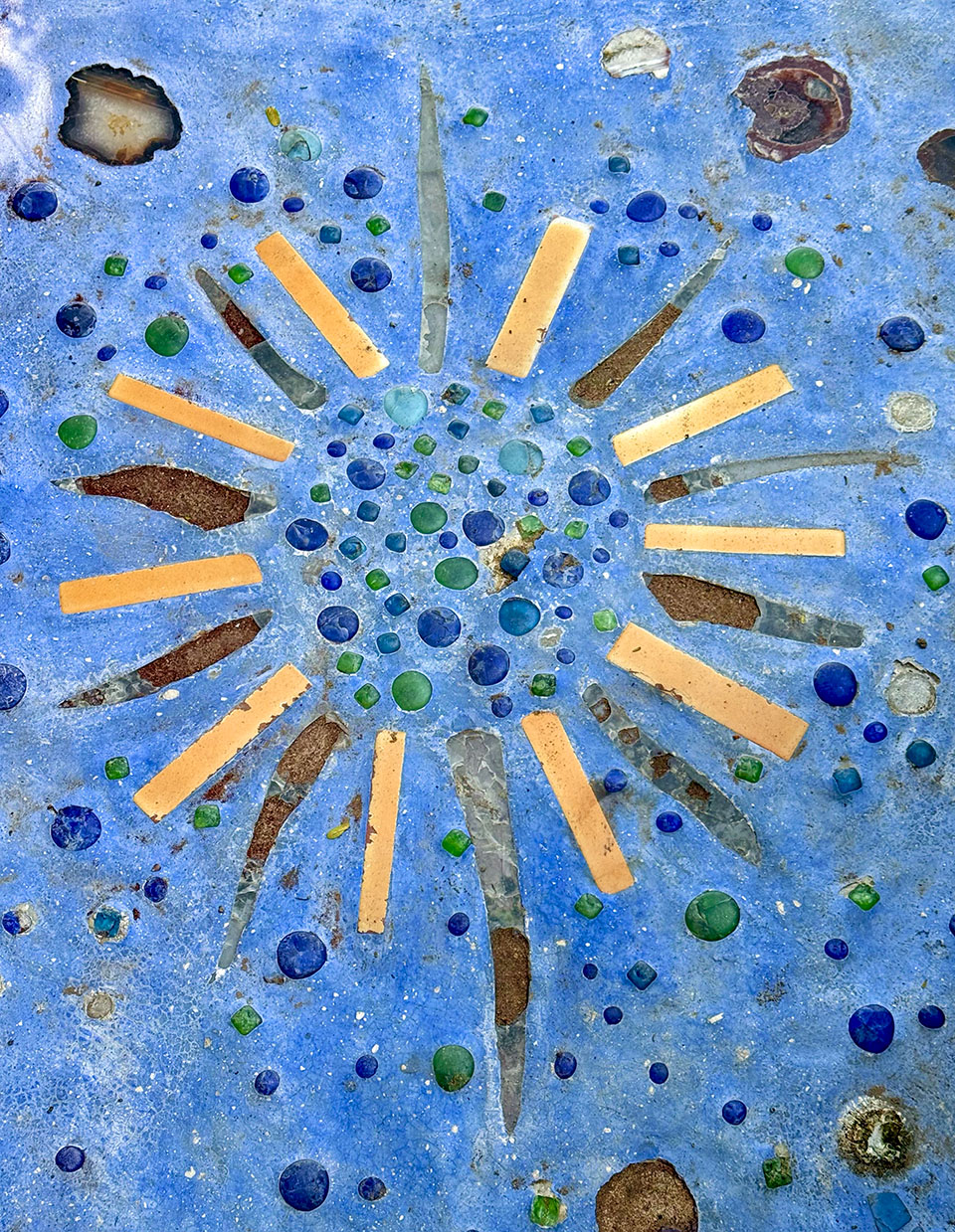
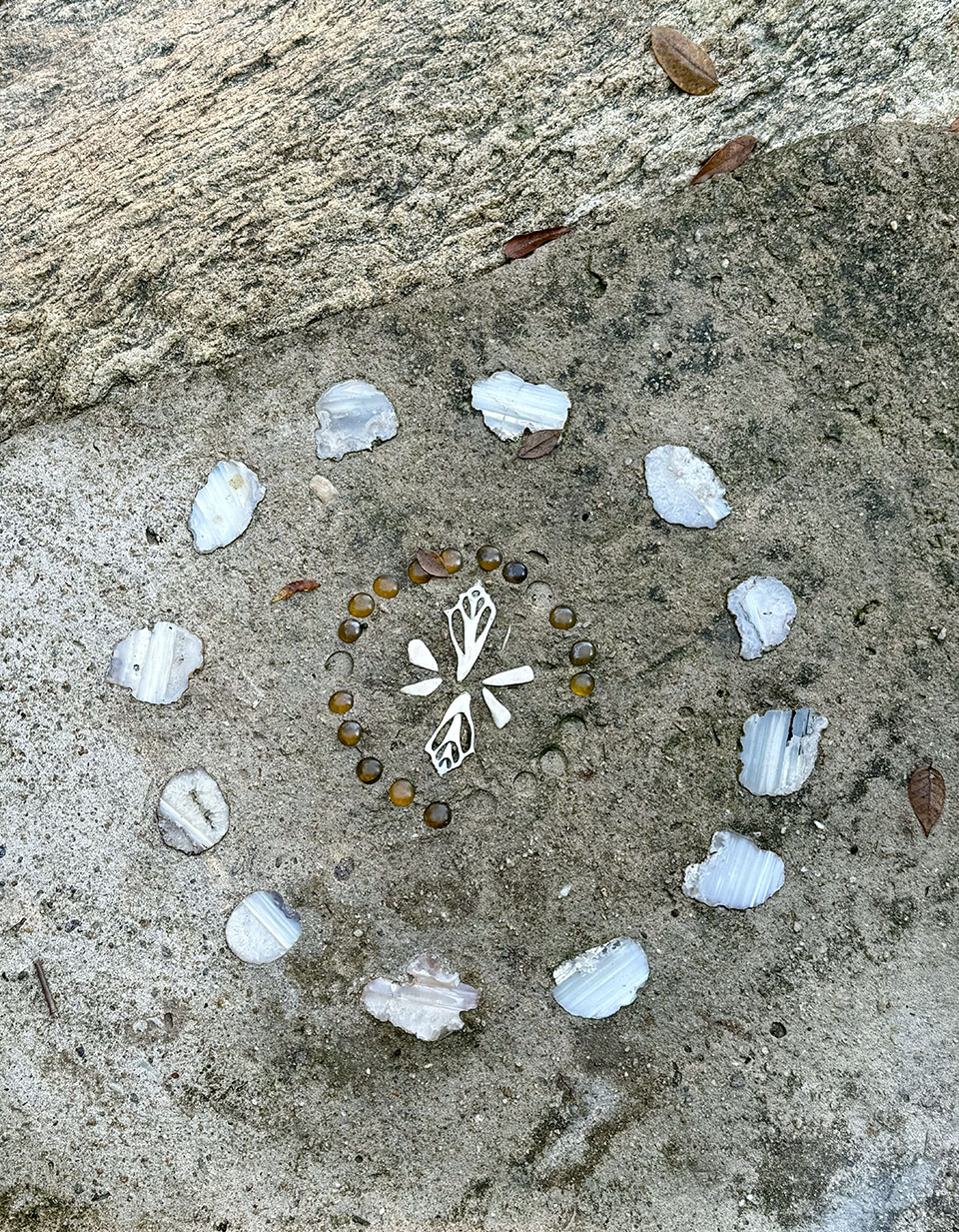
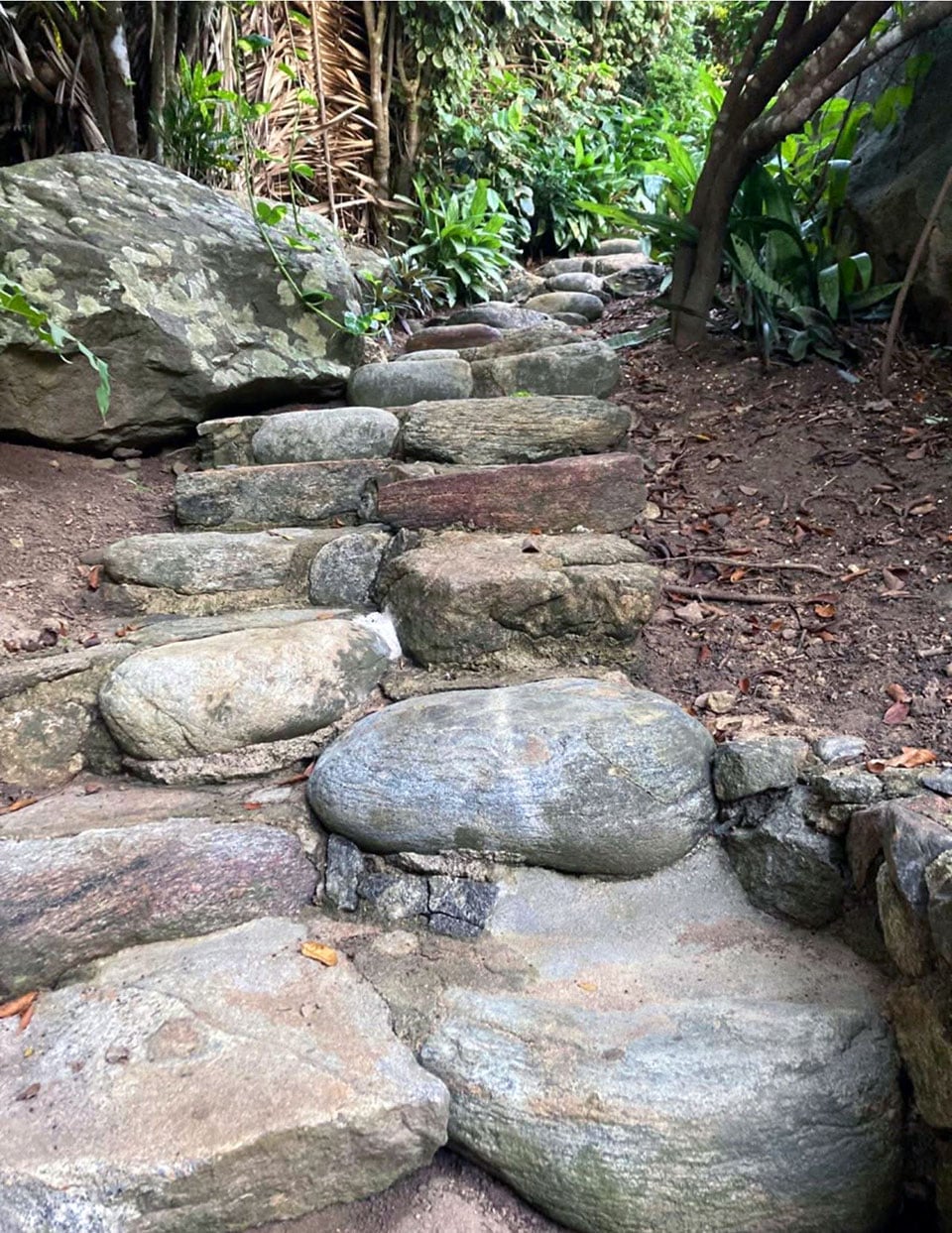


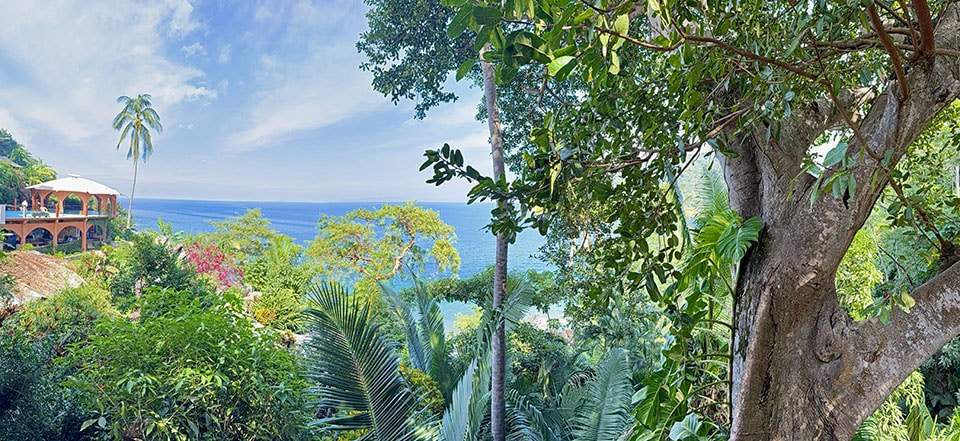
So instead, we shared a delicious meal and lively conversation with Beverly, the steward/owner of Casa Isabel. Beverly is also an amazing acupressurist—we both had wonderful treatments with her during our visit, and will be back for more.


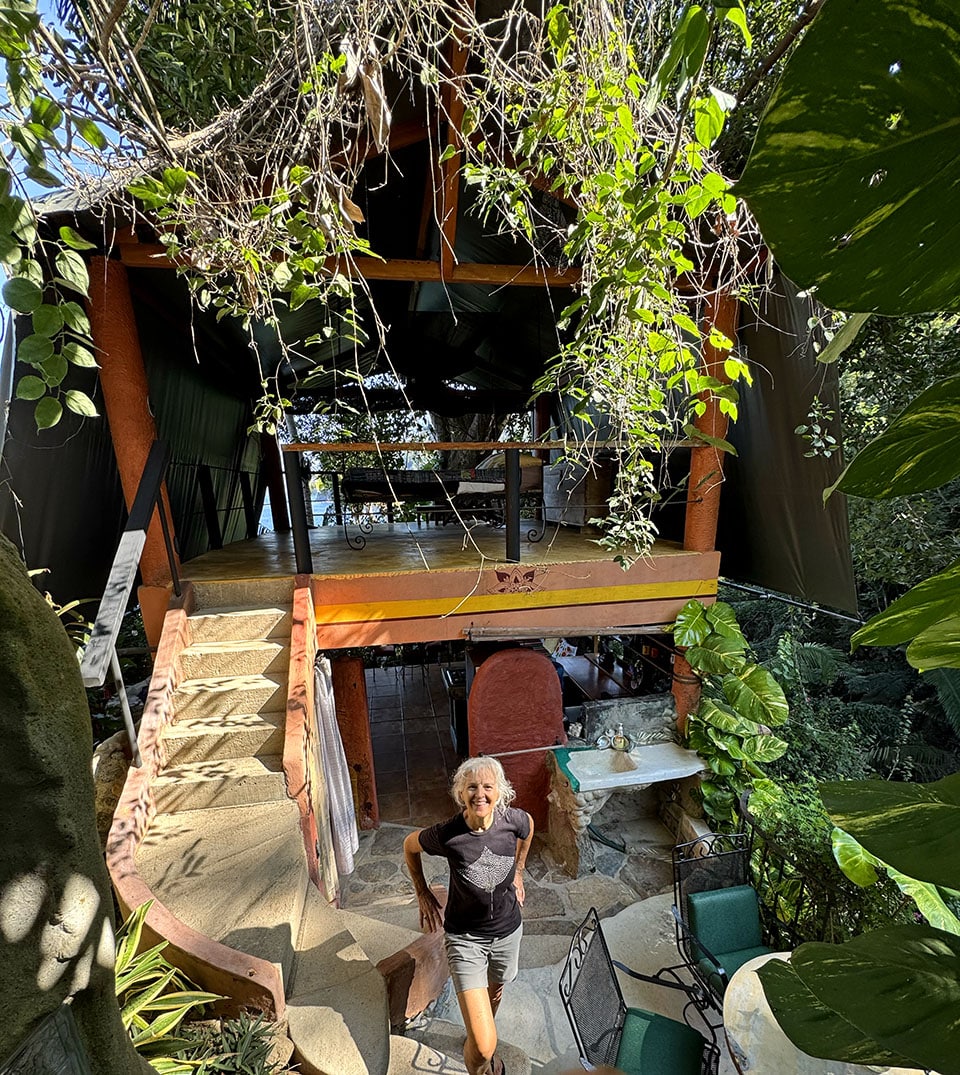
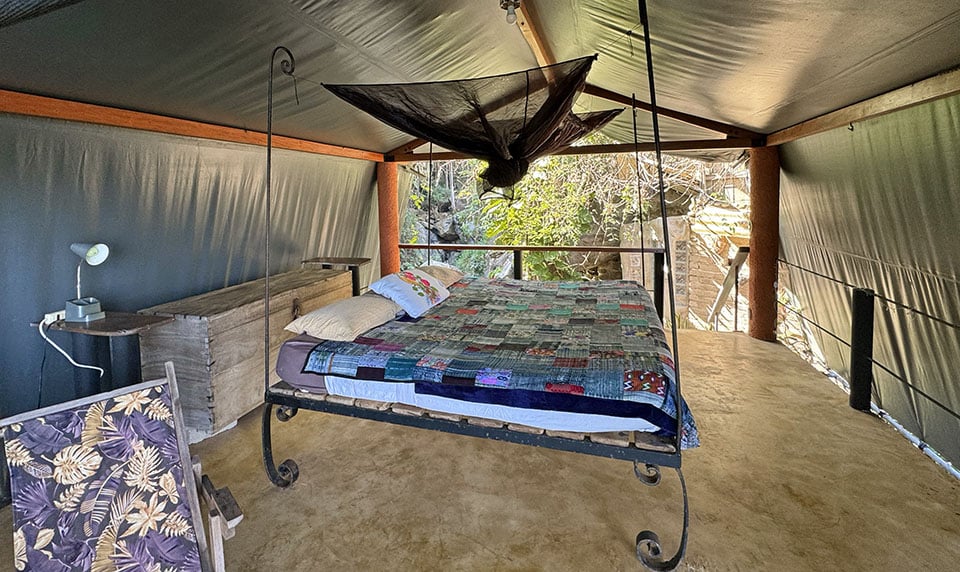
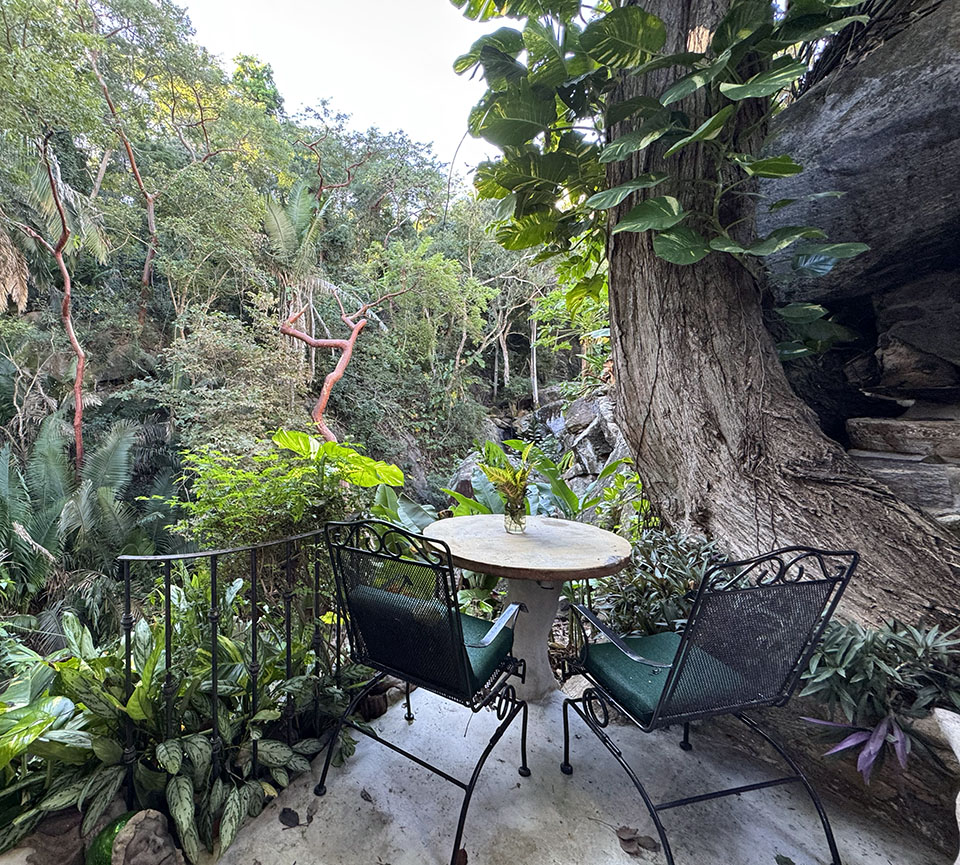
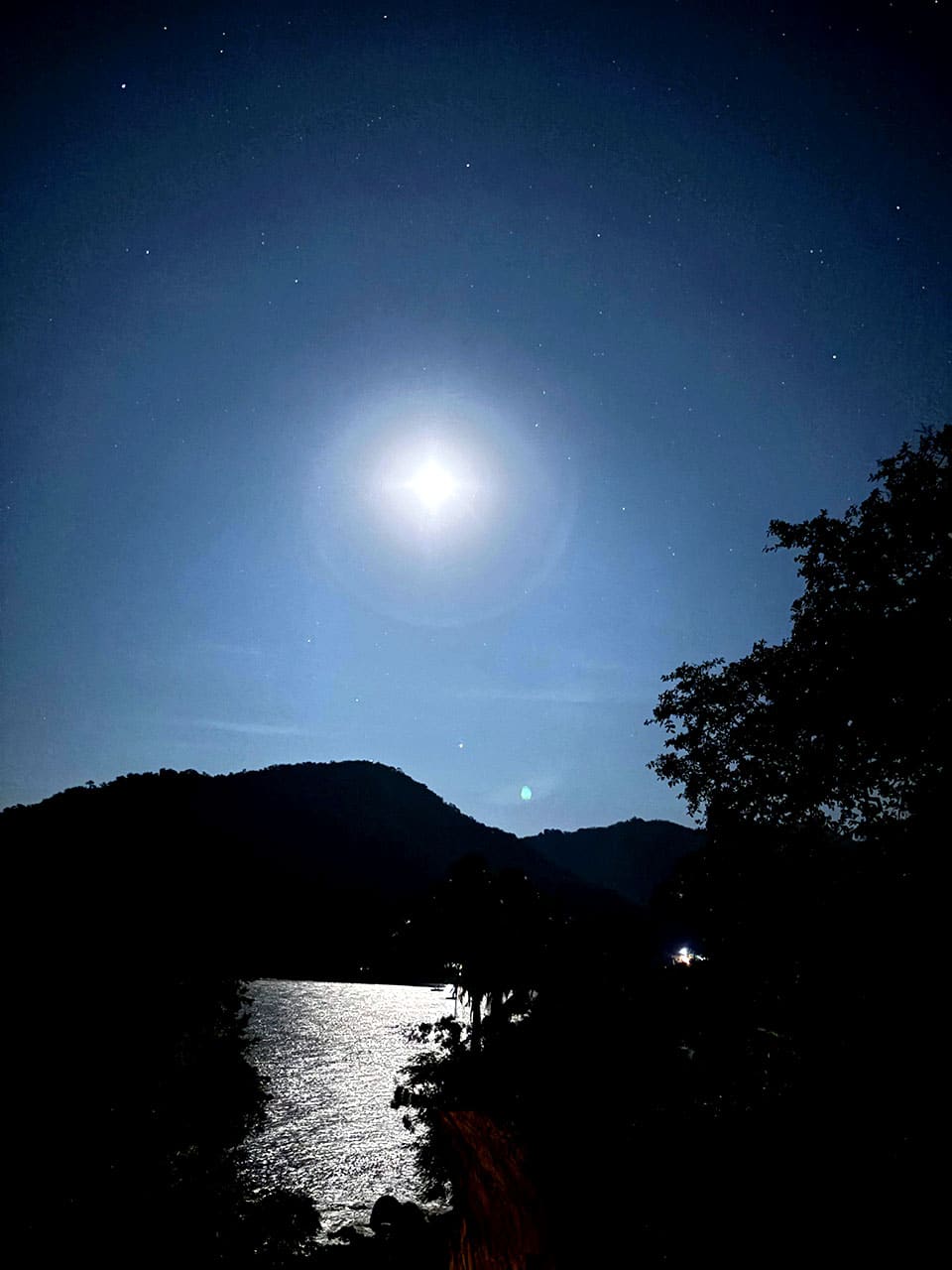

Beverly, our casita Yolocalli, and the spectacular views from Casa Isabel
The next day was still overcast, but not raining too much, so we trekked back into town to visit the Yelapa History Museum, which was fascinating. Photos were not allowed, so we don’t have any photos of the museum, but it was very nicely put together, and we learned a cool story about Yelapa, which has been permanently occupied for hundreds of years.
In the early 1600s, the brother or cousin of Hernan Cortez and his armada were arriving by sea. The people of the Yelapa valley—Indigenous residents who had already seen or heard of Spanish brutality elsewhere—knew that resistance would likely mean death.
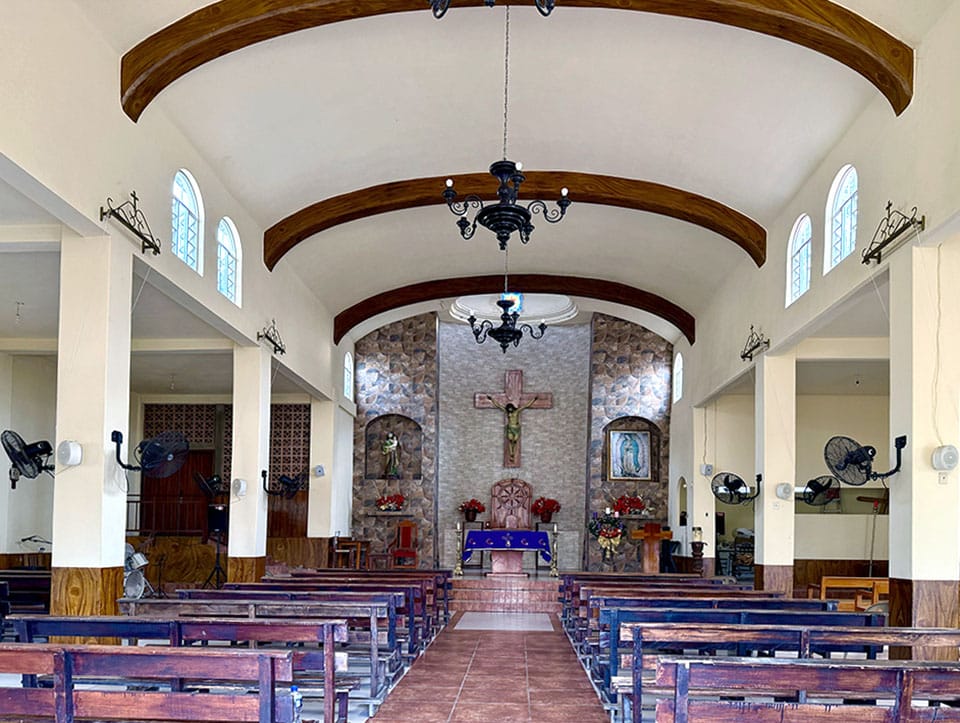
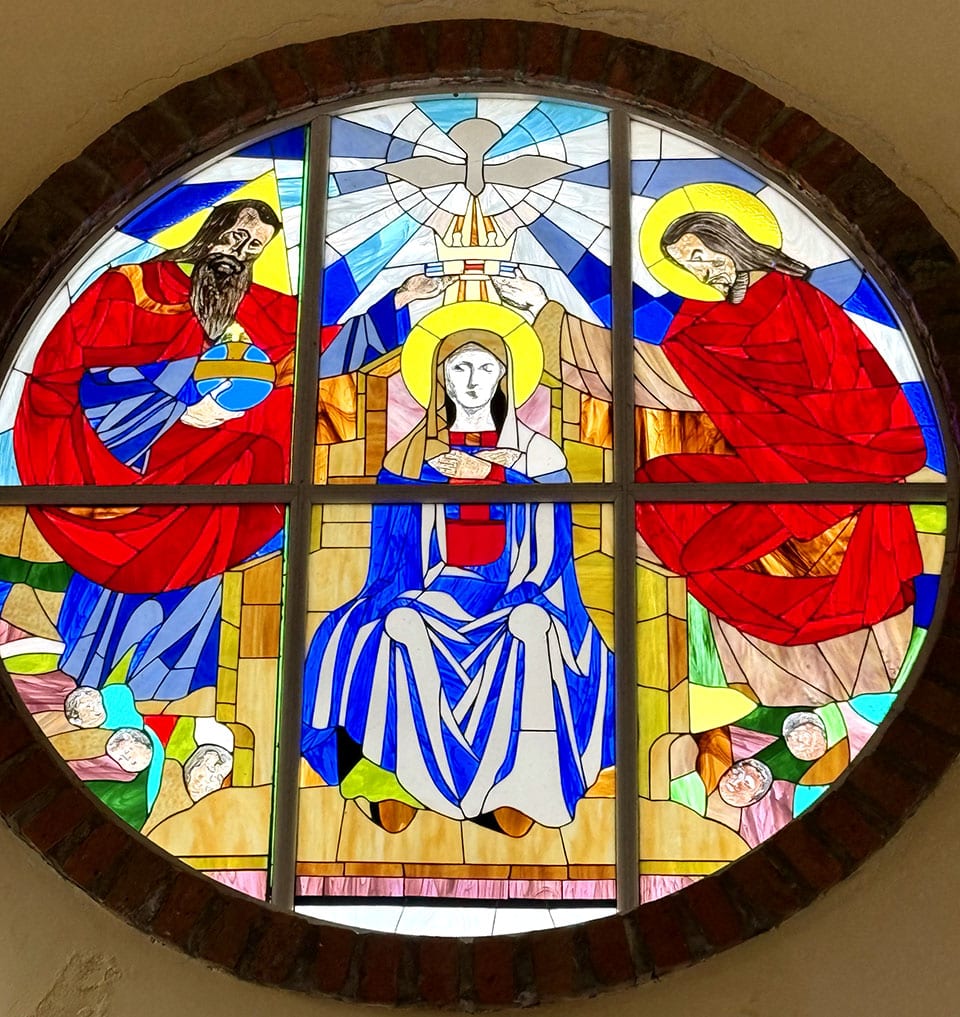
Iglesia de Yelapa
To protect themselves, they dressed in white and carried large wooden crosses, walking out to meet the conquistadors before they entered the village. Their message was clear and strategic: “We are already Christian. There is no need to punish or convert us.” Because of this display, the Spaniards did not massacre the village, and Yelapa was spared the kind of destruction that occurred in many other Mexican coastal and inland communities. Yelapa inhabitants today are descended from those ingenious indigenous people. Though they weren’t actually Catholic back then, most of them are today.

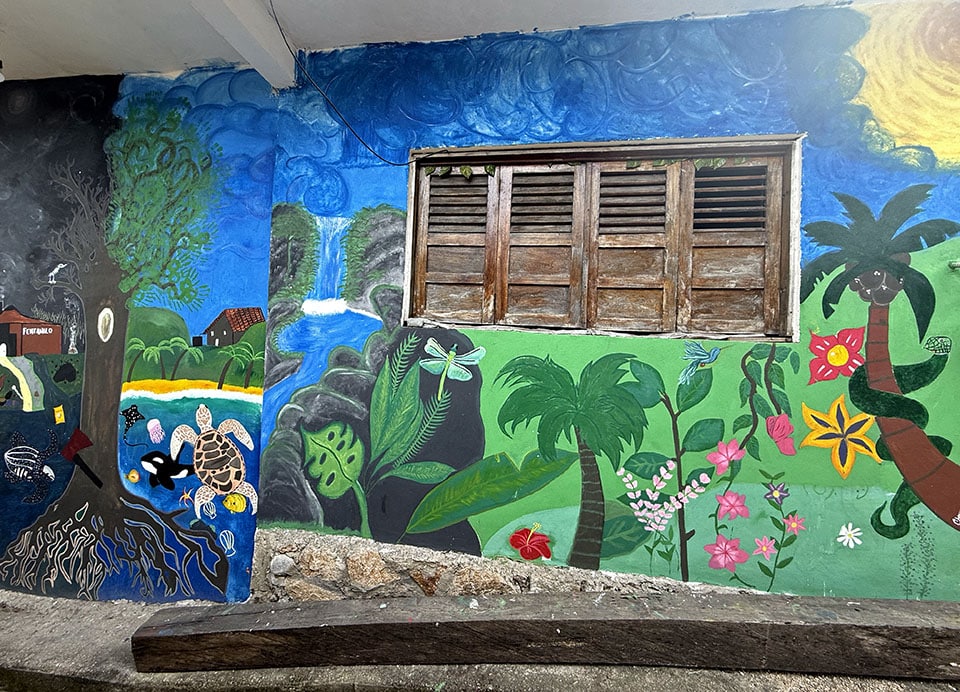
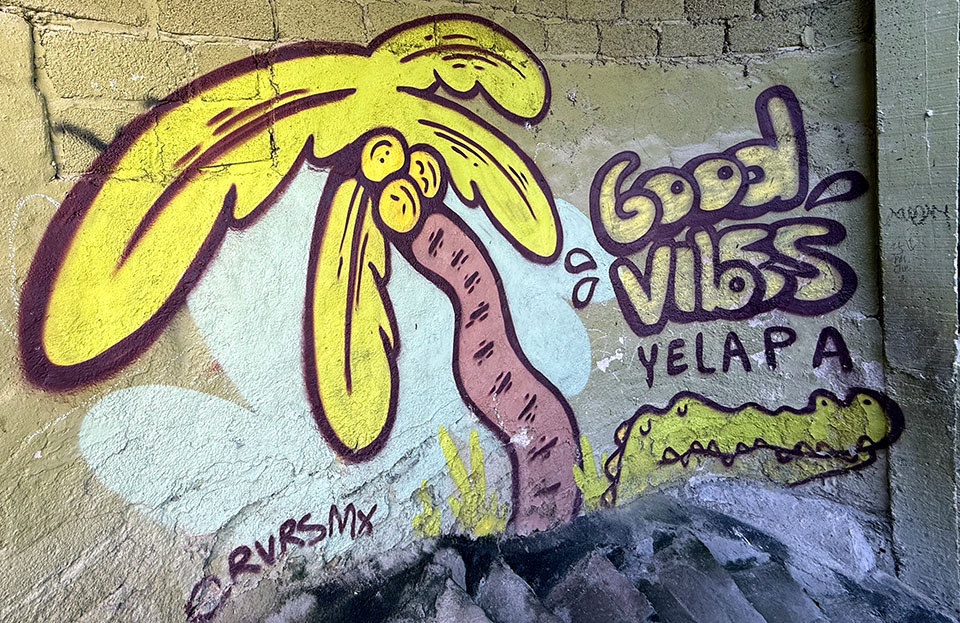

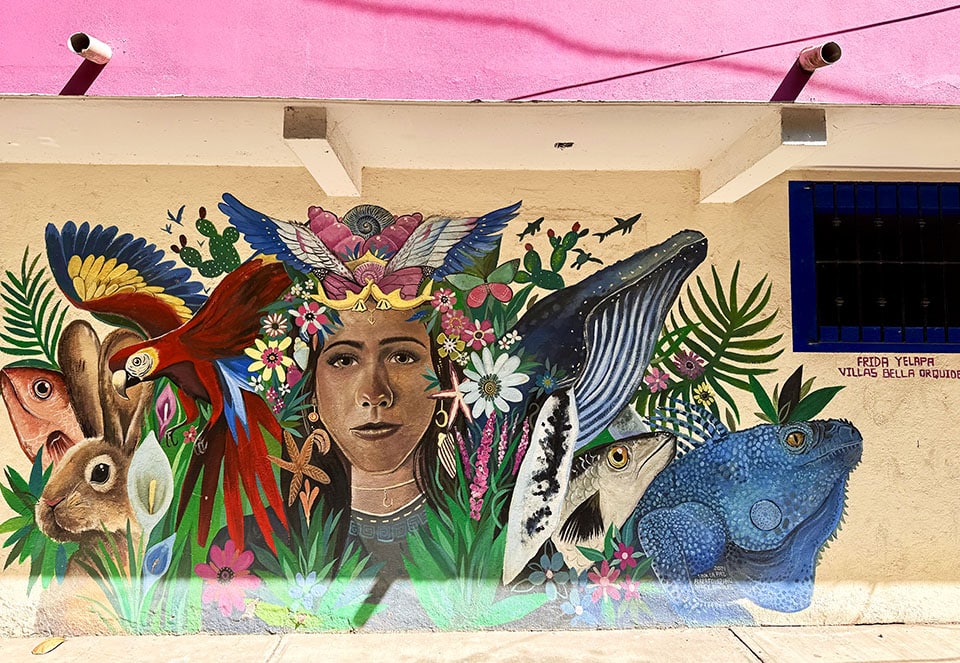

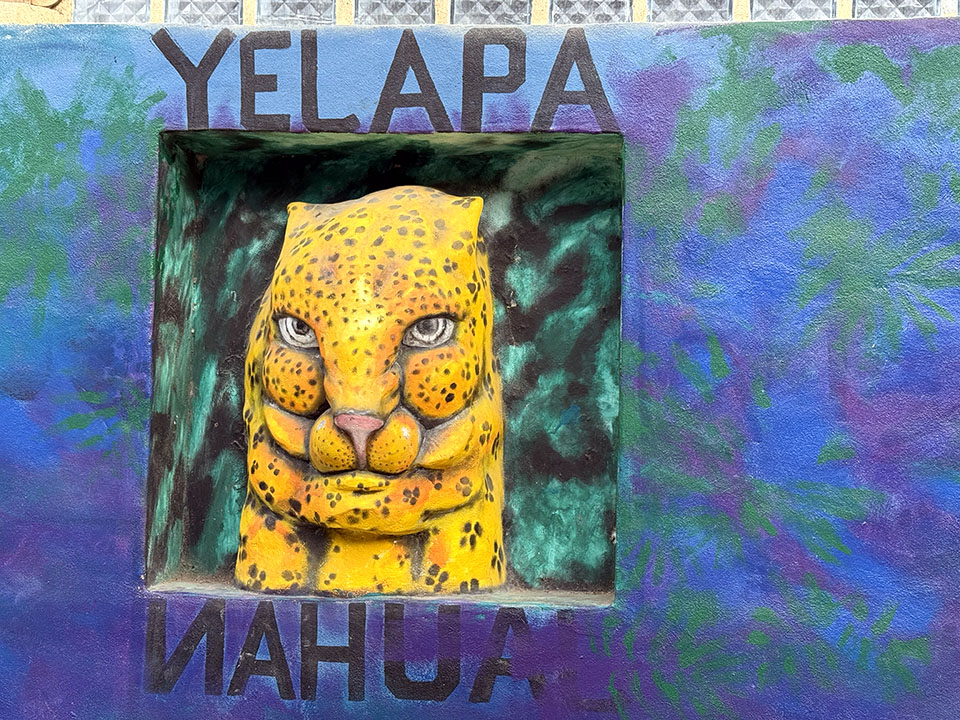
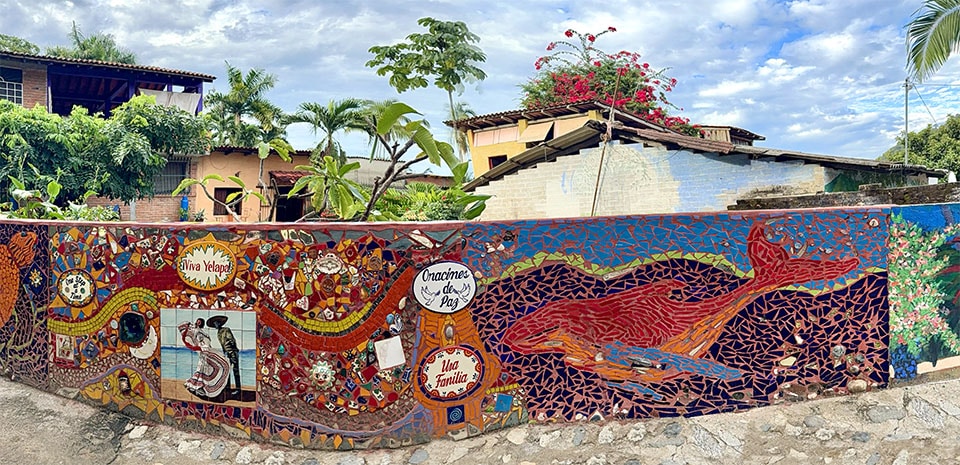
Yelapa is also full of myriad colors of dragonflies, butterflies, and beautiful street art and murals everywhere. By immersing ourselves for a few days, we both gained a much better appreciation of the lay of the land and how to navigate the zigzagging, crisscrossing pathways and alleyways through this wonderful pedestrian-oriented Pueblo. Even though ATVs and a few motorcycles are driving through town now, pedestrians still rule the road, and motorized vehicles pull over to accommodate people on foot, mule, or horseback.
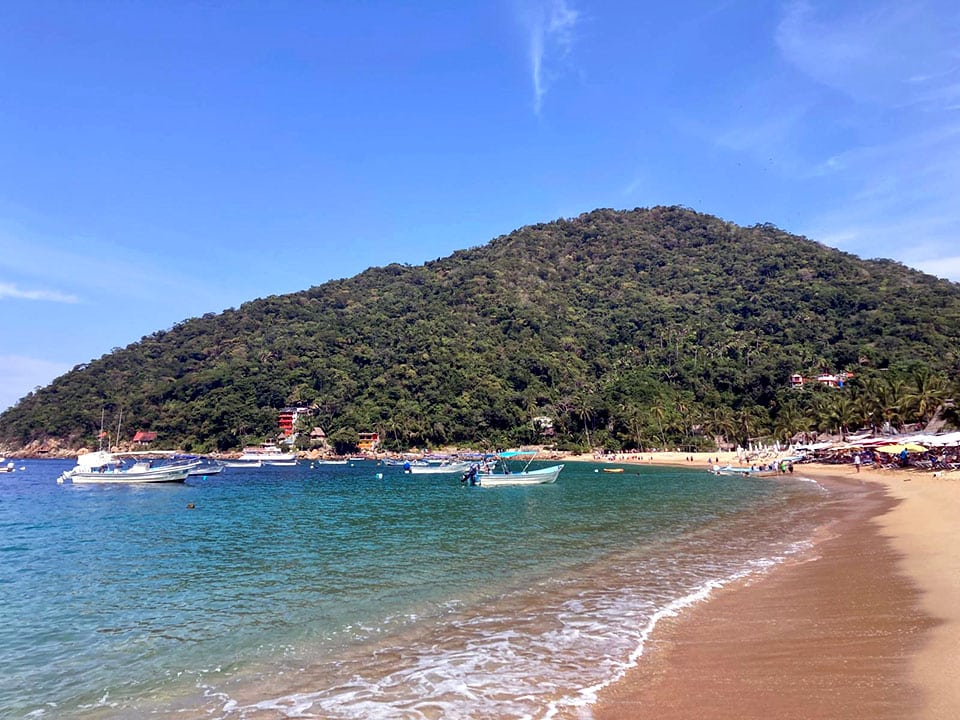
Due to the inclement weather, we did not make it to the beach side of Yelapa on this trip. Getting to the beach from town requires fording the knee-deep El Tuito River. During Heidi’s retreat, the women spent a day at the beach, which has many palapa seafood restaurants to choose from, and great swimming in the bathtub-like sea.
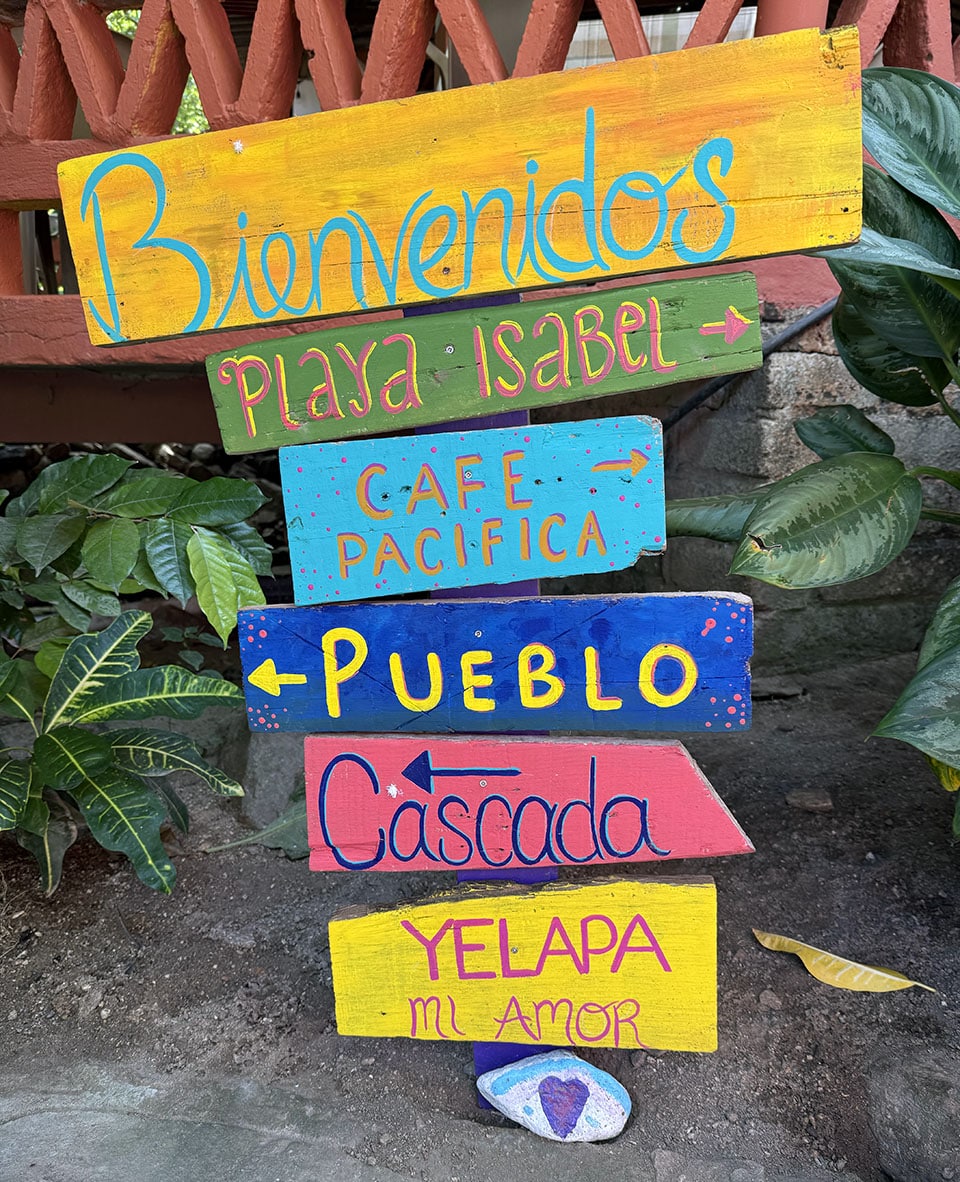
We had a few more amazing meals in Yelapa, at La Cabiñita, mondo burritos, and excellent shrimp salads, and at Tacos Los Abuelos, their green papaya shrimp salad and fish tacos were fantastic! Overall, the meals we ate in Yelapa were exceptional in quality, creativity, atmosphere, and value—half of Vallarta’s prices, and we would honestly take the water taxi back just for a great meal there! On your visit to Yelapa, be sure to stop at Cafe Pacifica, with gluten-free chocolate cake to die for!
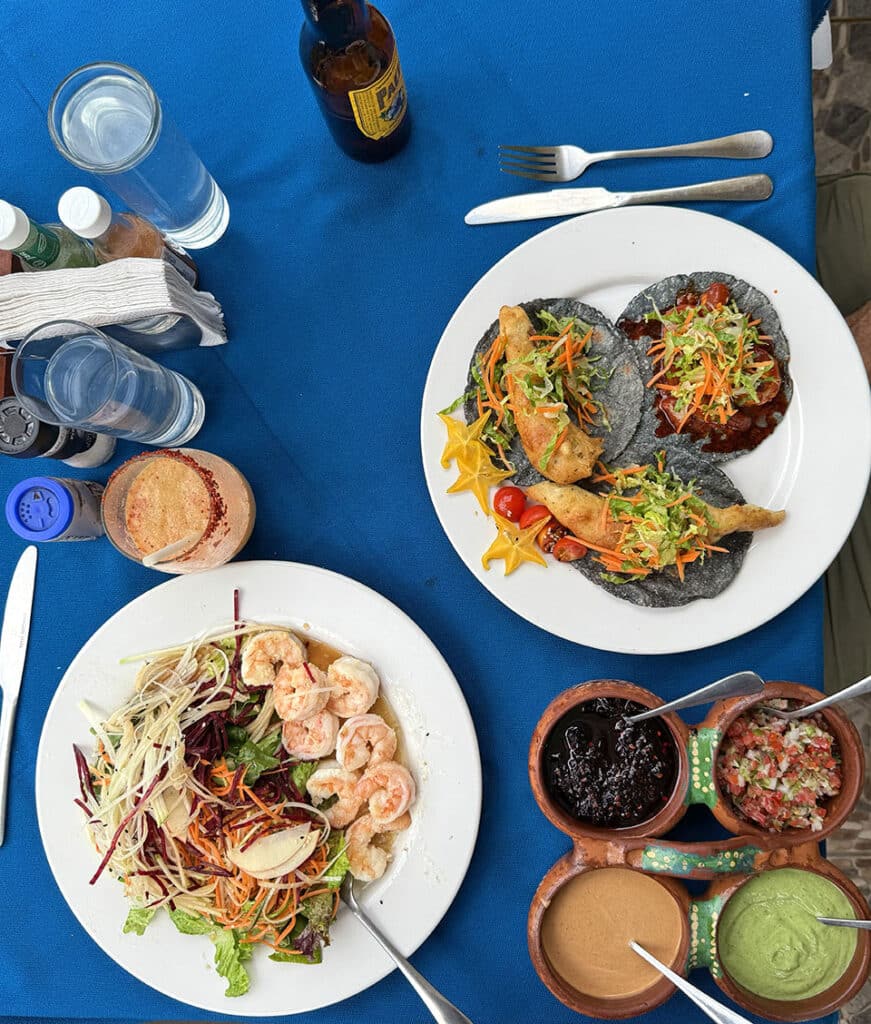

Dinner for two at Tacos Los Abuelos, including a beer and a passionfruit mocktail $350 pesos ($19 US), Caribbean-like view, priceless!
With a newfound love of this gem of a village, we plan to visit more often. And if you come to visit us, don’t be surprised if we take you to Yelapa, hiking in the jungle to experience mud baths, waterfalls, wild guacamayas, delicious food, and so much more.


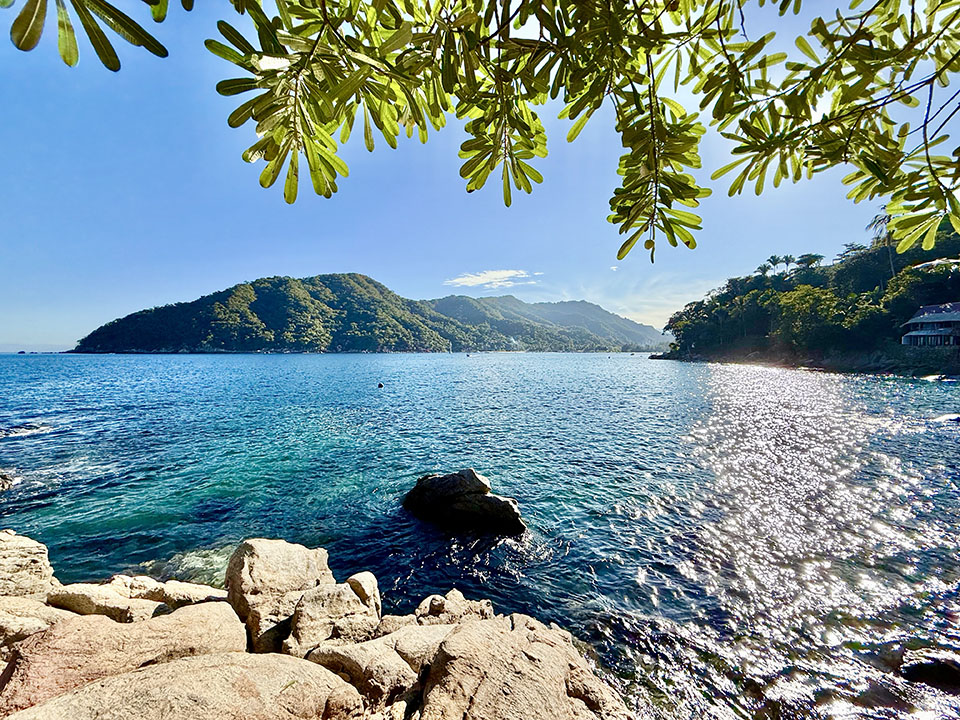
Most cruisers don’t choose to anchor in Yelapa as there is a lot of sunken debris on the bottom of the bay to snag anchors, and it can be quite rolly, open to the ocean. Apparently, there are also a couple of mooring buoys, but there remain questions about who really owns them, and if you take one, you may be required to pay multiple different people for the same buoy. Our ATV friend Emmanuel caretakes a sailboat on a permanent buoy there and can likely help us out with a spot if we decide to sail Due West to Yelapa. In which case, we would put out a stern hook to keep us pointed into the swell.
Speaking of Due West, we really hope to get off the dock within the next couple of weeks for some day sailing!! We have been trying to find someone to repair our starter motor (we think we finally found a guy this week!), and Kirk has been very busy replacing our battery charger (lots of boat yoga, running wires under the cockpit, and in tight spaces). Unfortunately, some of our instruments, including depth sounder and wind, are not currently working… and this may be due to a nearby lightning strike in our marina over the summer. So we are still troubleshooting all that, making sure everything is working before we head out sailing.

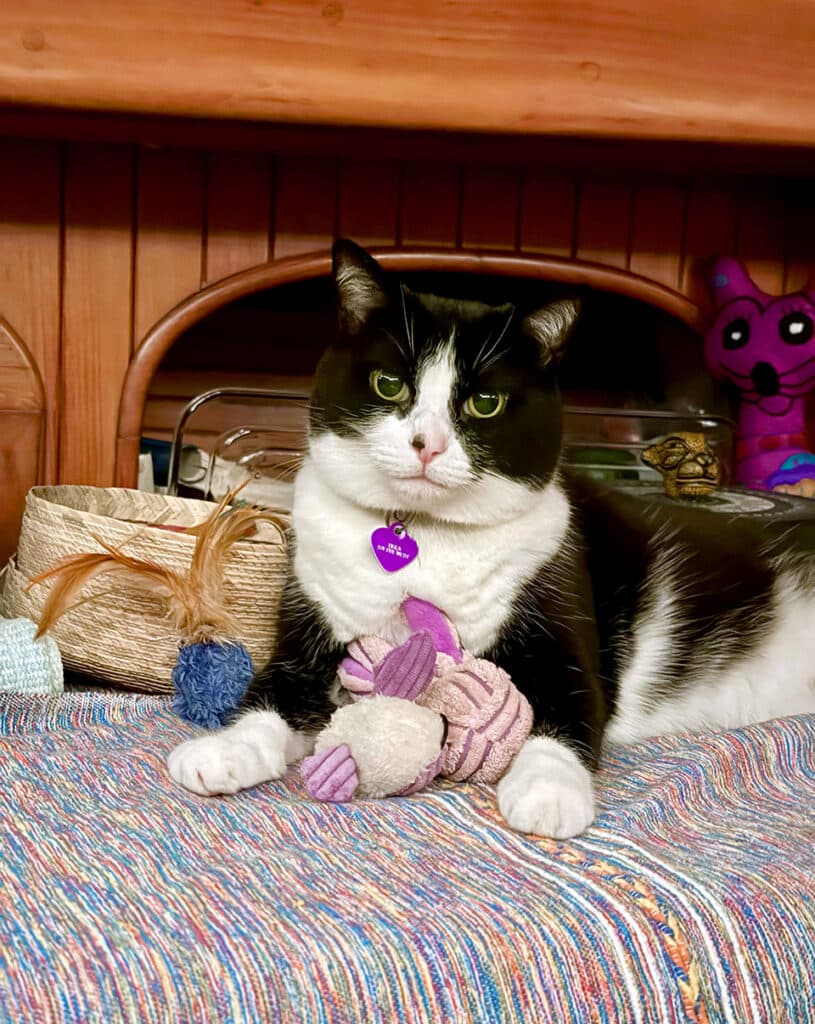
Tikka is warming back up to being aboard. She had a much harder time adjusting to returning to Due West this time. Maybe because she’s older (11.5 years!). It also probably didn’t help that Heidi left for her retreat within a few days of our moving back aboard, and everything wasn’t stowed away yet. So her life was a bit topsy-turvy there for a while. She has some arthritis in her hips, so we cut her cat-tree in half and are using it as a step for her to climb into our bed, which is nearly 3 feet tall. It works great!
Due West is now decked out in her holiday finest, which can be seen from most of the marina restaurants and condos. Once again, we seem to be the only sailboat in the Marina that is lit up for Christmas. (When we were in Seattle, it seemed like many boats were lit for the holiday boat parades. But there’s no boat parade here, so maybe that’s why.) We love spreading the holiday cheer around the marina with our lights… and it’s fun seeing people stop to comment and take photos of our pretty boat.
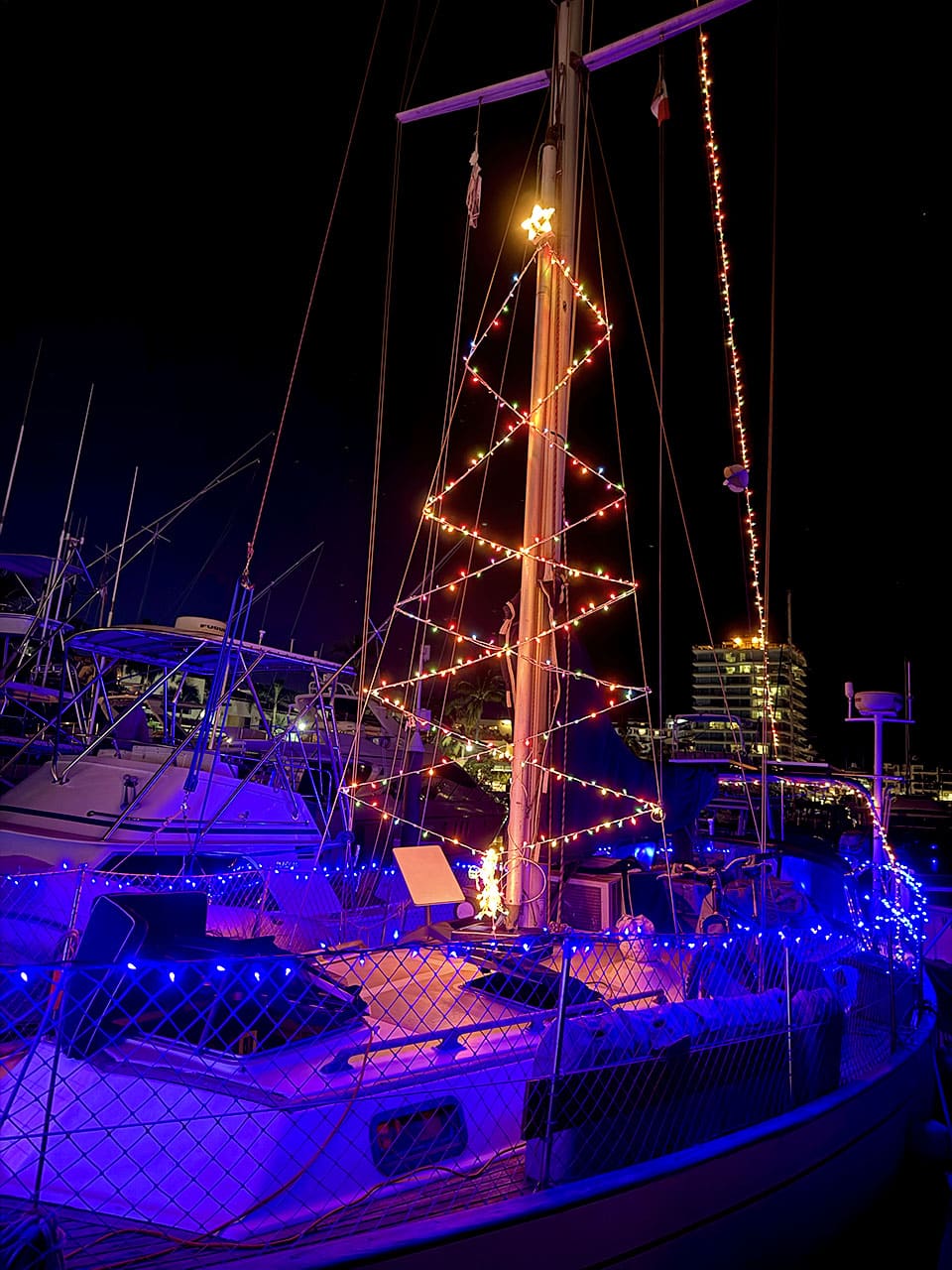
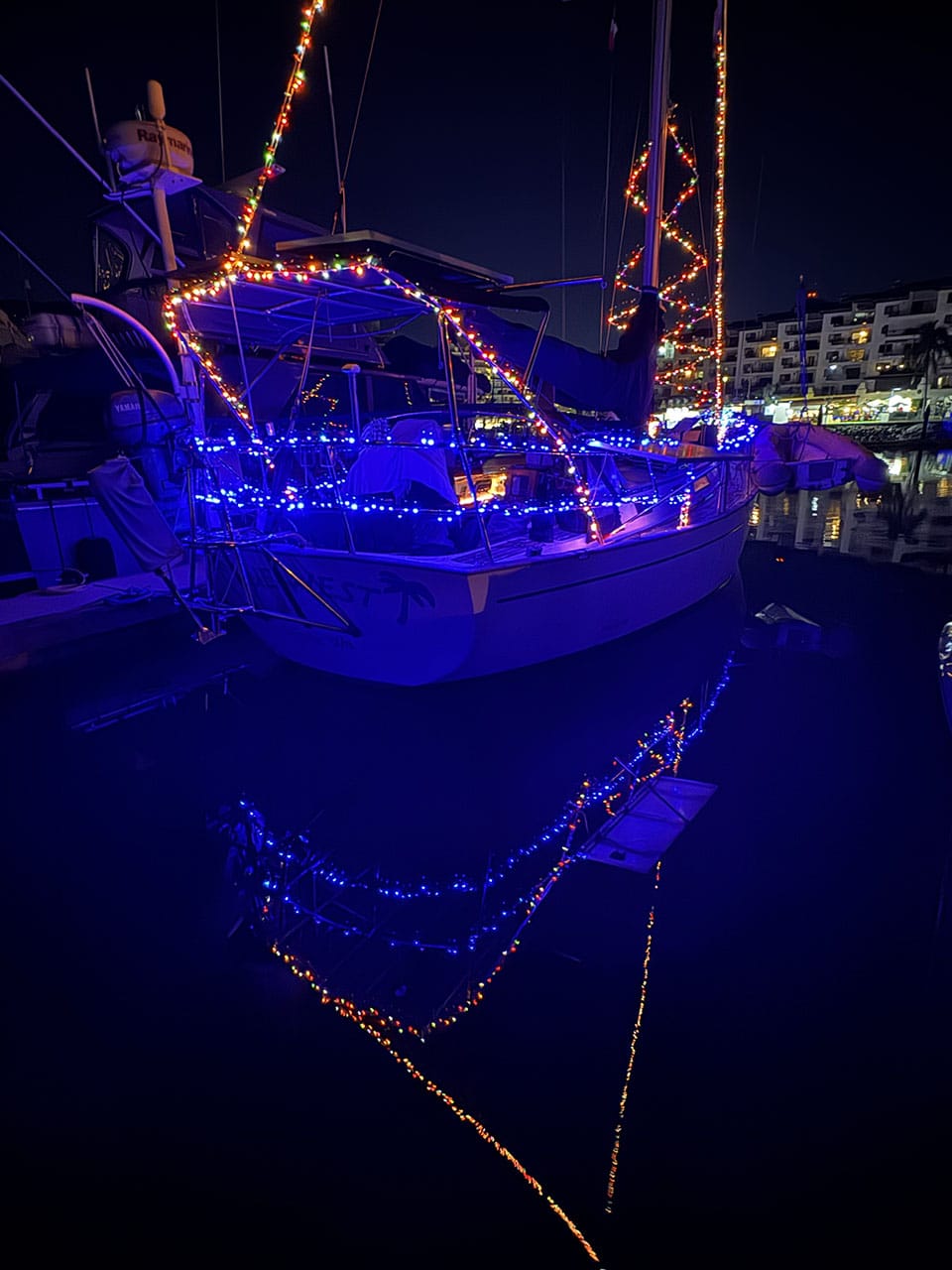
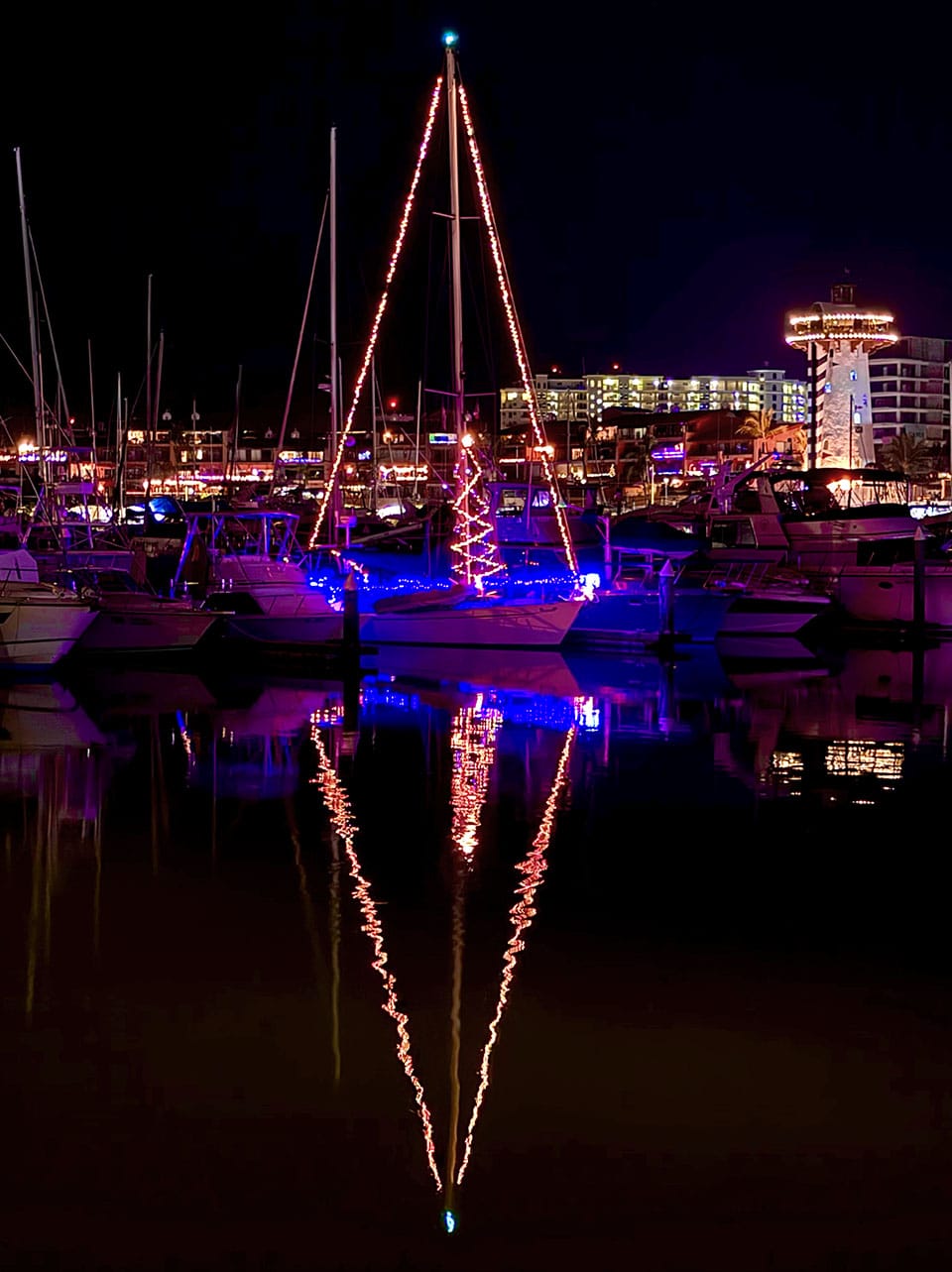
Wishing you all the joys of the holiday season, and much happiness and health in the new year.
*Thanks to Kat, Jacquie, and Bonnie for use of retreat photos.
Wonderful post Heidi! ❤️
Wonderful treat! and the Boat is beautiful. I wis you guys a wonderful Christmas and all the best for 2026! Sarah (Cooke)
What you’ve published about Yelapa being ejido land under the constitution of 1917 is untrue. Lease write by email and I’ll send you the interview with one if the elders interviewed for our local paper in Hola Amigo in 1991. It shows a copy of the Treaty land grant from 1581 from the King and Queen of Spain. There are many other stories of the original encounter of the nephew of Hernán Cortes and the “Friendly Indians of Autlan” in the mid 1500s, which led to this land grant. Fascinating story! Please do your research, and stop the spread of misinformation. I already wrote once a lengthy response which I do not see published here. Yesi888jean@ yahoo.ca
Thanks Jeannie, I appreciate your due diligence. It was not our intent to post miss information, and I’ve updated the post.