
Travels to India Part 2: Tamil Nadu, Temples, Rituals & the Road Between
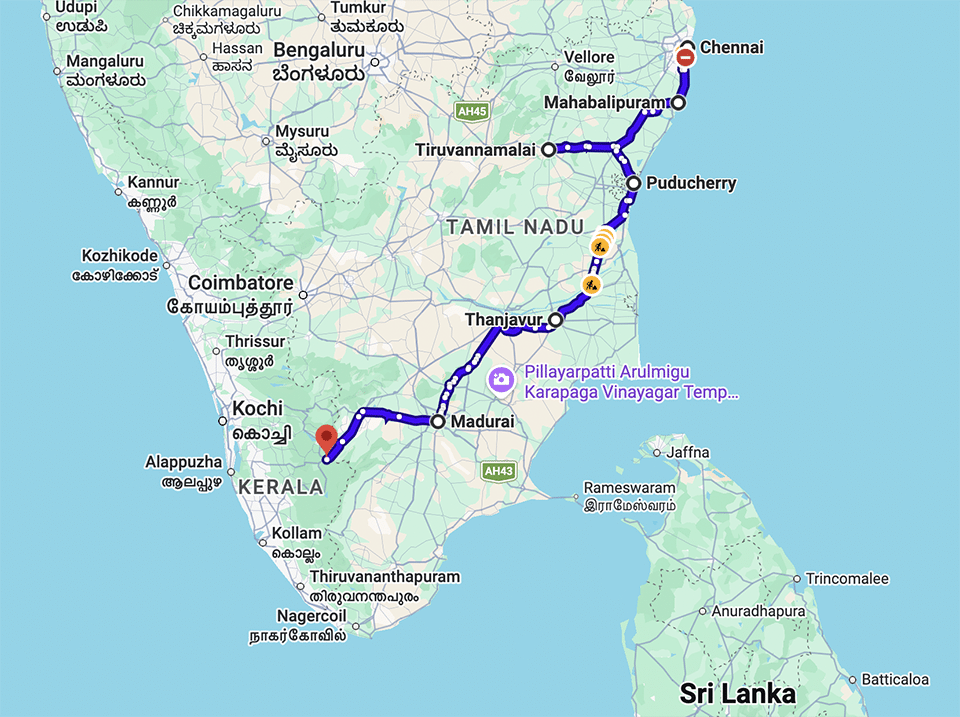
If you’re just joining us, check out Part 1: Why India? to learn how this adventure came about. Our two-week tour of South India took us through the states of Tamil Nadu and Kerala. There are so many beautiful temples, shrines, and experiences to show and tell through both states, so we decided to create one blog post for each state! We’ll start here with Tamil Nadu.
And because we visited and experienced a variety of spiritual sites and practices, we thought we’d give a quick primer here on the religions of India. We learned a LOT in our 5 weeks here, and are captivated by how Indians of all religions, for the most part, happily coexist as part of the fabric of India.
This post is a bit longer than usual, as we wanted to give meaningful context to the images. If you read to the end, we’d love to hear any new perspectives or insights you take away.

Coexist: The Tapestry of India
On our spirituality-focused journey through India, we explored the world’s wisdom traditions firsthand. Hinduism—the world’s oldest living religion—has been practiced continuously for over 4,000 years, and today more than 80% of Indians identify as Hindu, alongside Muslims, Christians, Sikhs, Buddhists, Jains, and others. What stood out most to us was the genuine respect people of different faiths show one another.
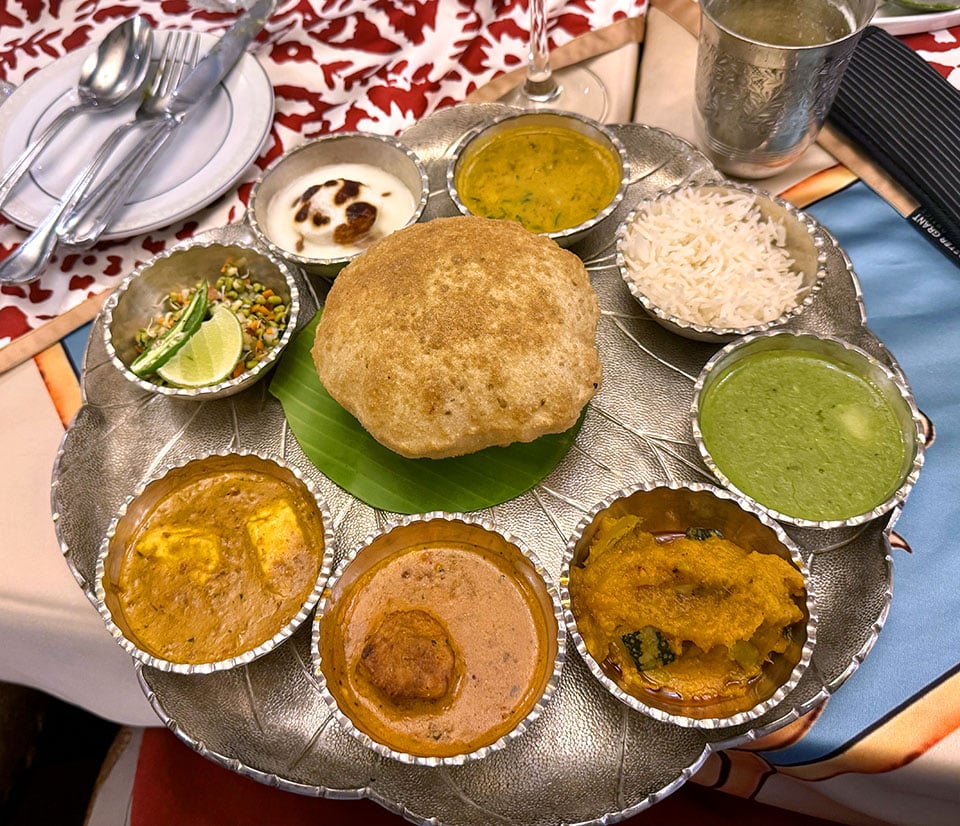
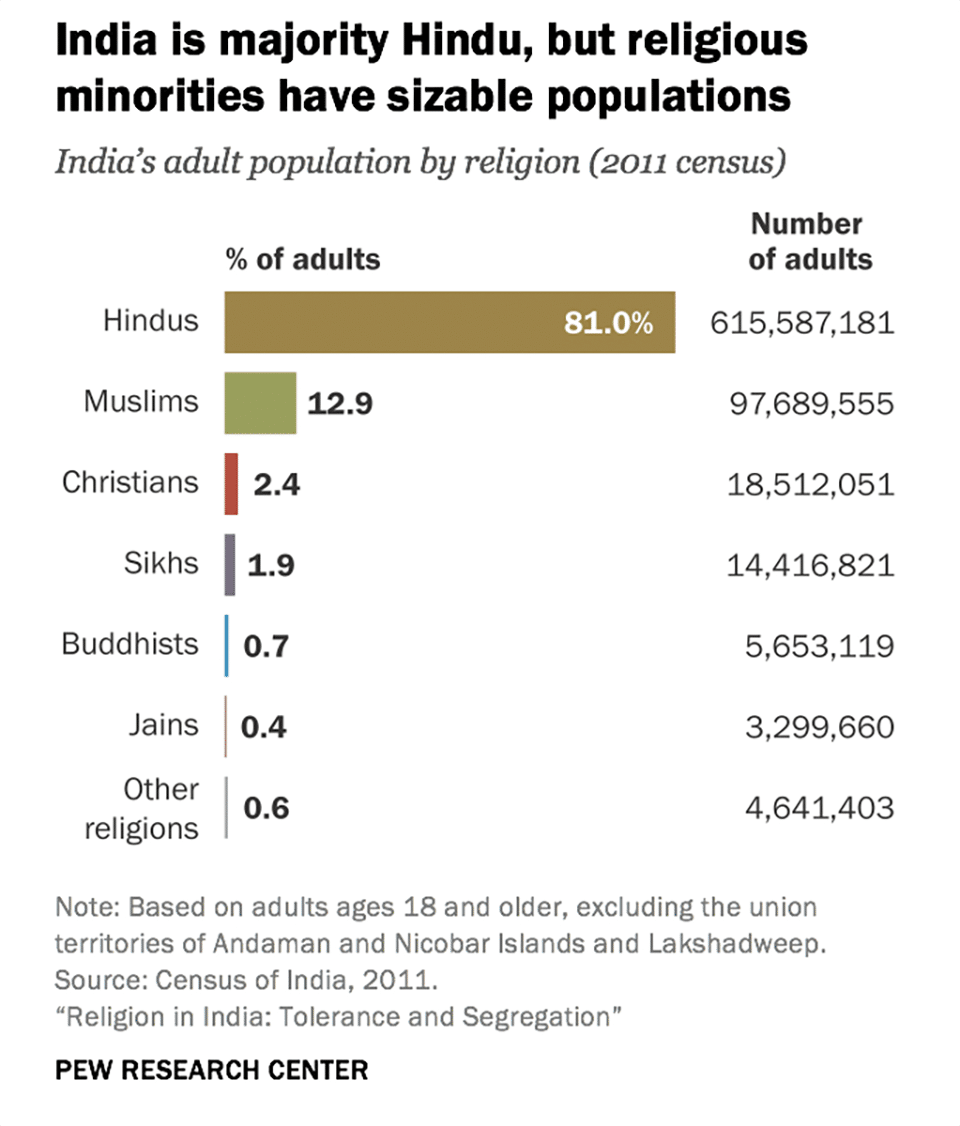
India is often described as a “patchwork quilt” or a thali—an Indian platter where distinct dishes sit side by side without blending. While many people marry within their own religion, there’s a strong shared belief in honoring others. In fact, research shows that over 85% of Indians see respecting other religions as essential to being “truly Indian.”
This coexistence goes beyond tolerance—it’s woven into daily life. It’s common to see Hindus at Sufi shrines, Christians celebrating the Hindu festival of Diwali, and communities coming together for national holidays.
We’re not religious ourselves, but we connect deeply with wisdom teachings from Buddhism and Hinduism—karma, personal responsibility, the Golden Rule (do unto others). We do our best to leave a lighter footprint, be gentler to the planet, and live in a way that benefits the greater good, not just ourselves.
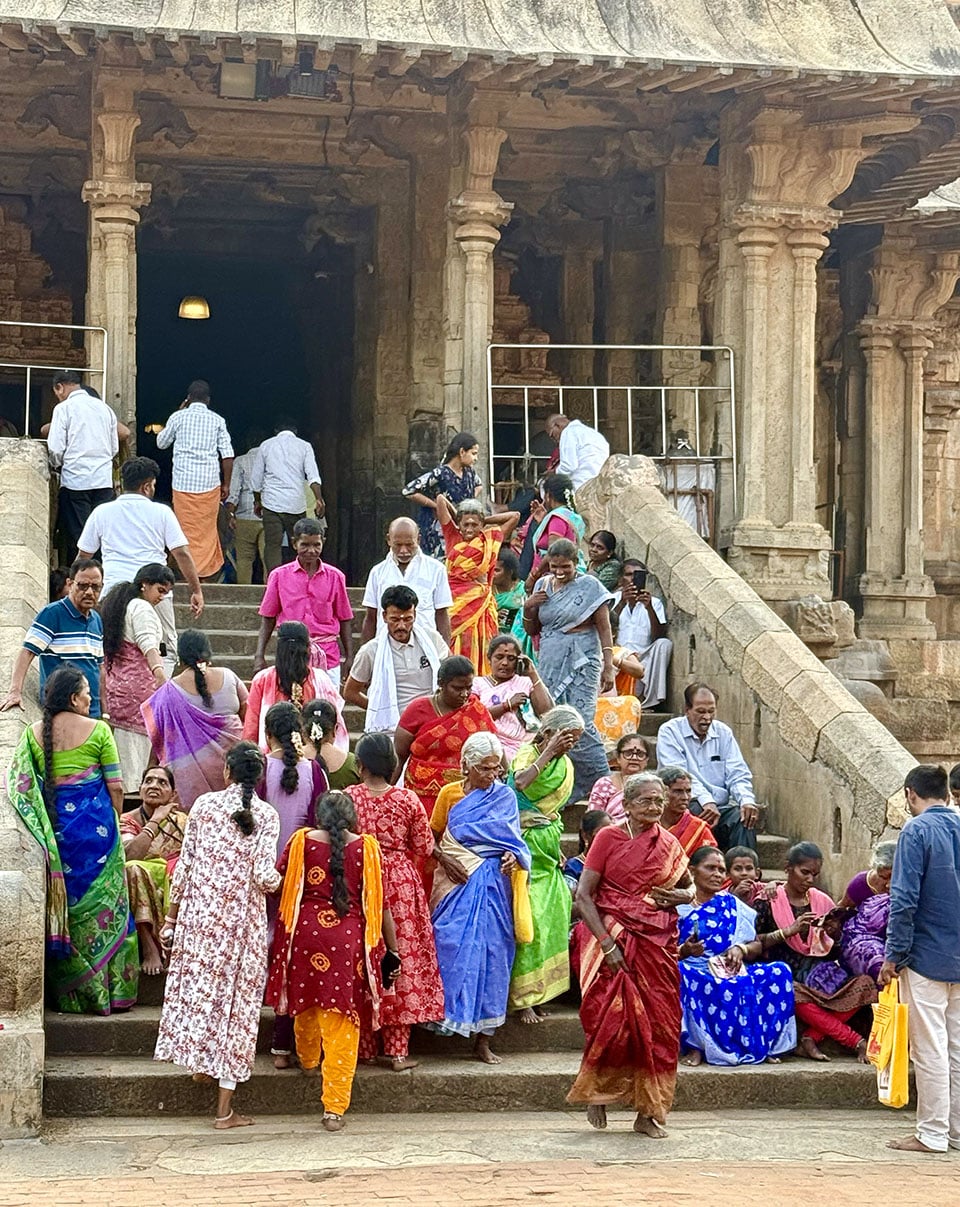
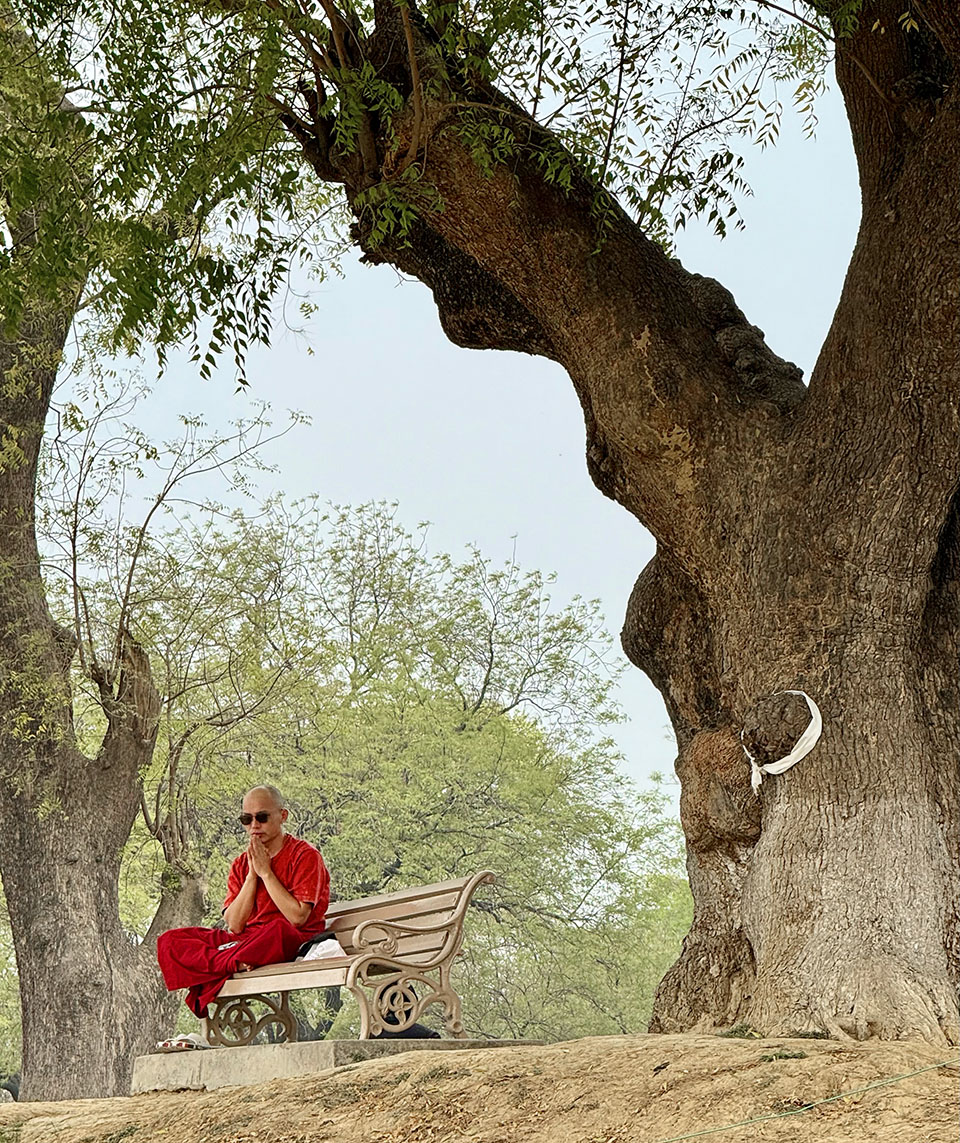
It impressed us that the world’s most populous country (1.45 billion people) may also be one of its most spiritually harmonious. Despite modern tensions, India remains a place where ancient traditions have coexisted for centuries—something the Dalai Lama has called a model for global religious harmony.
Hinduism, Jainism & Buddhism — a Quick Primer
Since these were the main religions we encountered in Tamil Nadu, we wanted to share a quick overview.
A shift in Indian spirituality began over 2,500 years ago with the Vedic tradition (the foundation of Hinduism), which emphasized cosmic order and fulfilling one’s duty (dharma). As cities grew, a “Seeker Revolution” (the Shramana movement) gave rise to Jainism and Buddhism as alternatives—shifting the focus from outer duty to inner liberation.
Hinduism includes thousands of gods and goddesses, each with their own stories—much like the mythologies of ancient Greece or Rome—but most temples, shrines, and even families focus on worshiping one primary god or goddess. While all these deities are distinct in personality and story, they’re also understood to be expressions of a single, underlying universal consciousness. And even though one may primarily worship a given deity, they most assuredly also worship the elephant-headed Ganesh (god of wisdom and remover of obstacles), as well as certain other deities for specific reasons. There are gods and goddesses for days of the week, months of the year, particular life situations, etc.
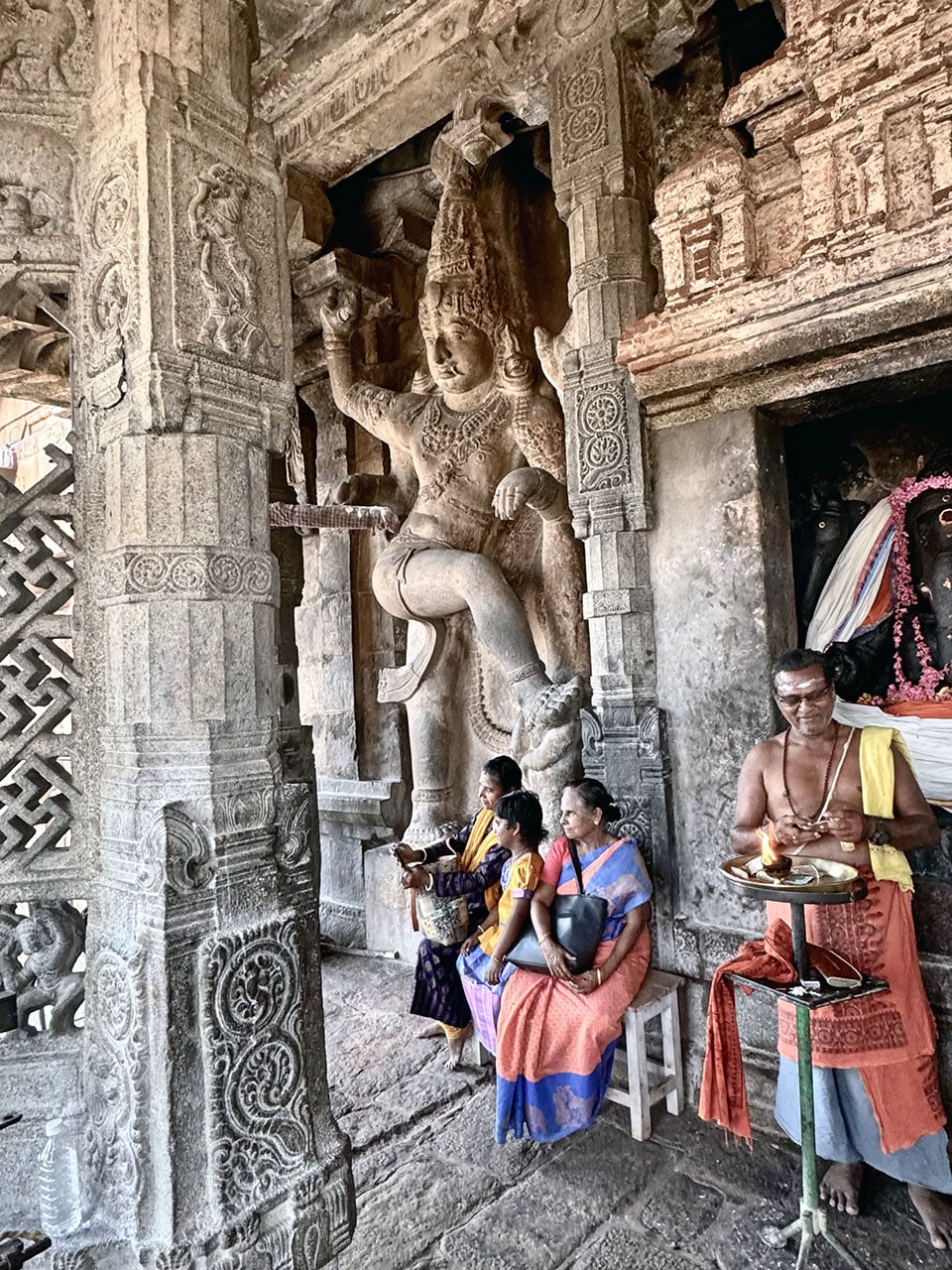
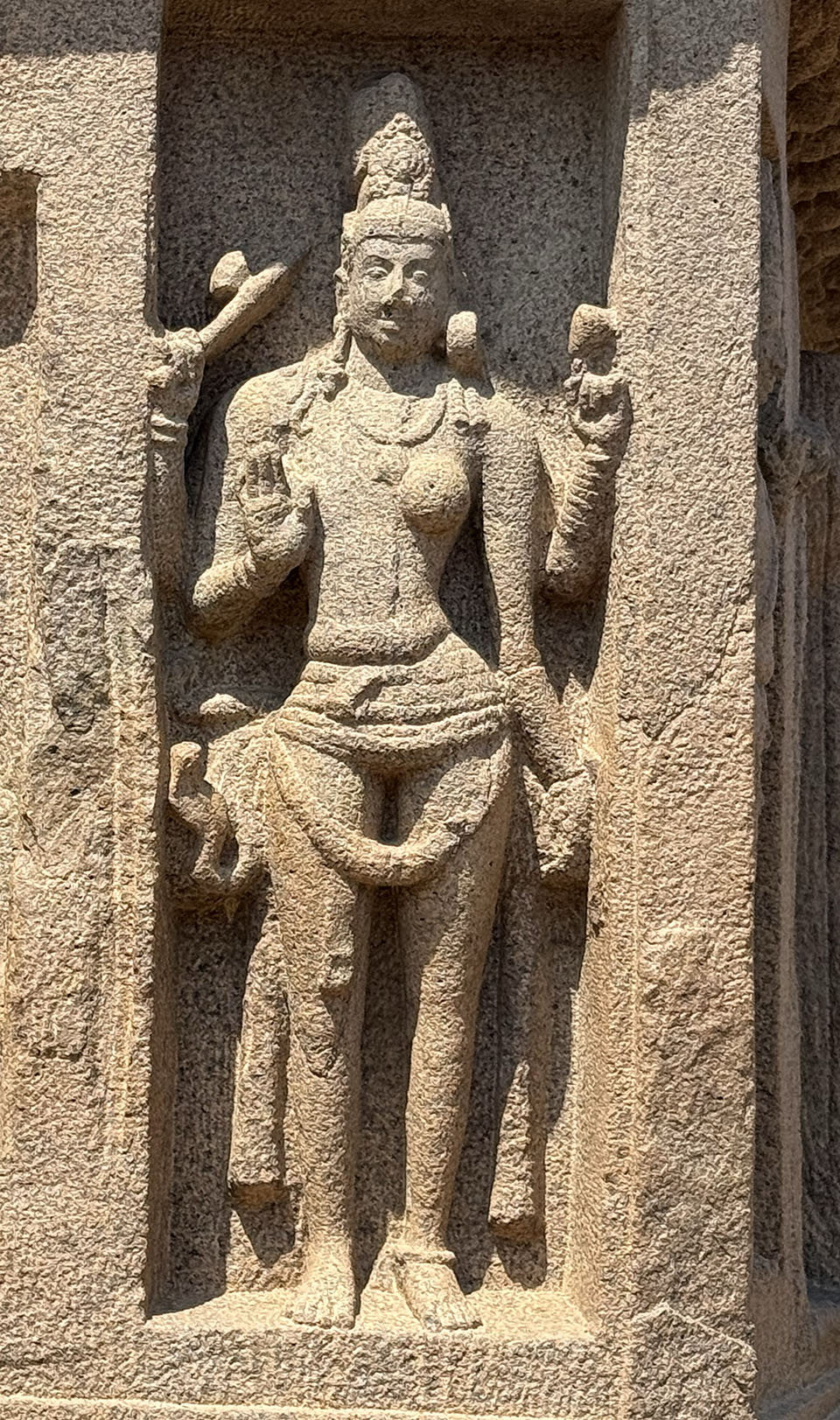
Left: Hindu deity Dwarapalaka, a guardian deity typically found at the entrance to Hindu temples, from the Brihadeeswarar Temple in Thanjavur. On the right is a sculpture from the 7th century at Mahabalipuram, about 7-8′ tall and carved from one piece of granite: half-Shiva (one of the principal Hindu deities, God of Destruction), half-Parvati (Shiva’s wife). You can see the left half of the image (right side of body) is more masculine in the hands, chest, hip, and leg/feet, whereas the right half (left side of body) is more feminine.
Jainism takes non-violence (ahimsa) to an extraordinary level in daily life. Some devout Jains (“Janes”) wear cloth masks to avoid inhaling insects, sweep the ground before walking to avoid stepping on insects, and follow strict vegan dietary practices—all rooted in the belief that every living being, no matter how small, has a soul worthy of protection.
Around the same time, Siddhartha Gautama (the Buddha) taught the “Middle Way”—a path to end suffering by releasing the ego and the illusion of a fixed self. Buddhism is often expressed through simple, mindful practices rather than strict rules. Many Buddhists meditate, follow ethical guidelines like non-harming and right speech, and cultivate awareness in daily life—all aimed at reducing suffering and developing compassion for all beings.
Buddhism later flourished in India (300 BCE–700 CE), supported by rulers like Ashoka and centered around large monastic universities. Its decline came between 700 and 1100 CE due to reduced support, a resurgence of Hinduism, and the destruction of monasteries during invasions.
Karma, Karma, Karma Cameleon…
All three traditions see karma as the law of cause and effect—but differ in how to work with it:
- Hinduism: Karma is often viewed like a moral bank account—your actions shape future experiences and rebirths, eventually leading toward union with the Divine.
- Jainism: Karma is seen as a kind of subtle “dust” that attaches to the soul; through strict discipline and non-violence, it can gradually be cleared away.
- Buddhism: Karma is rooted in intention; by shifting mental patterns and letting go of desire, the cycle of cause and effect can come to an end.
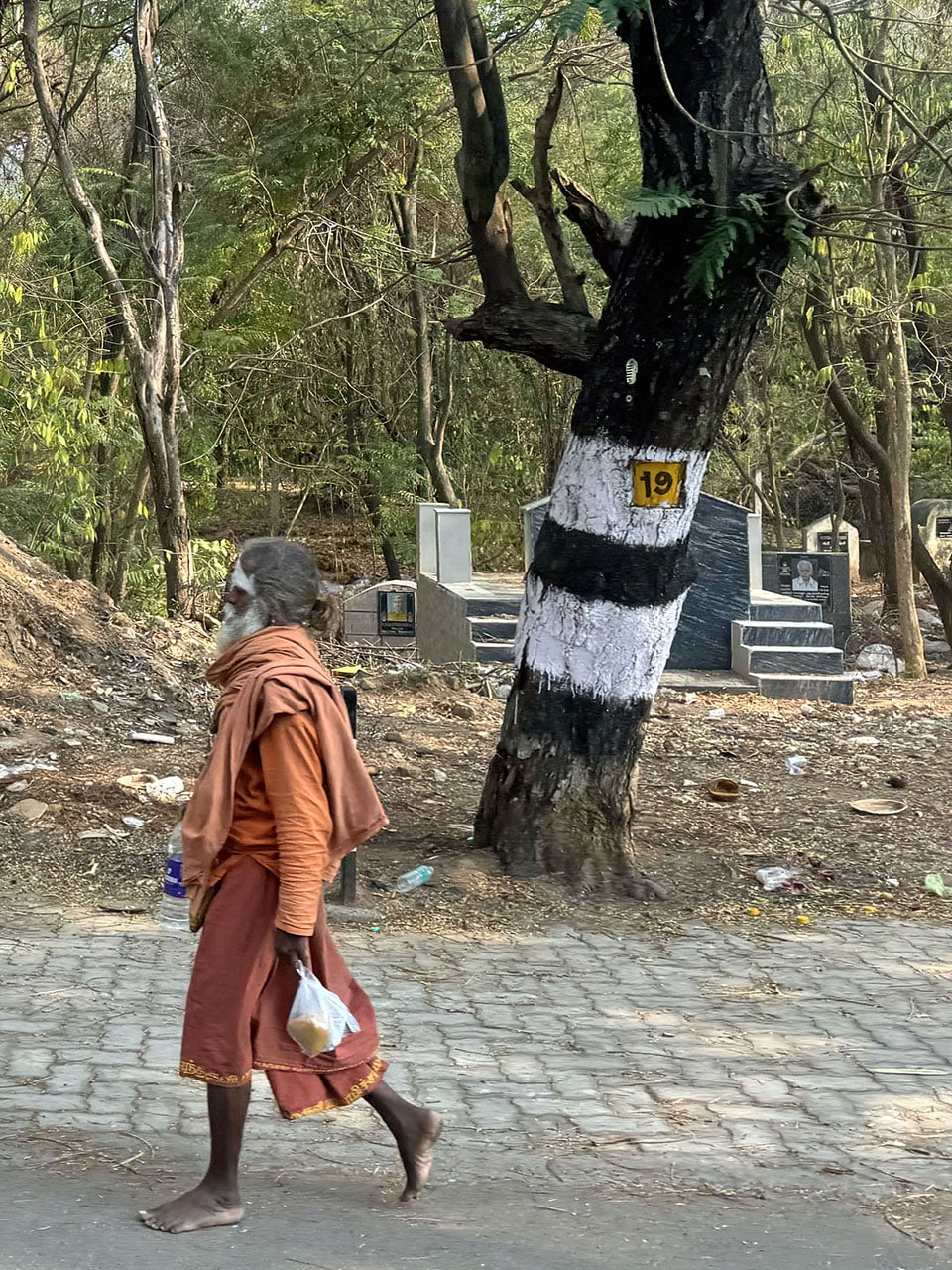
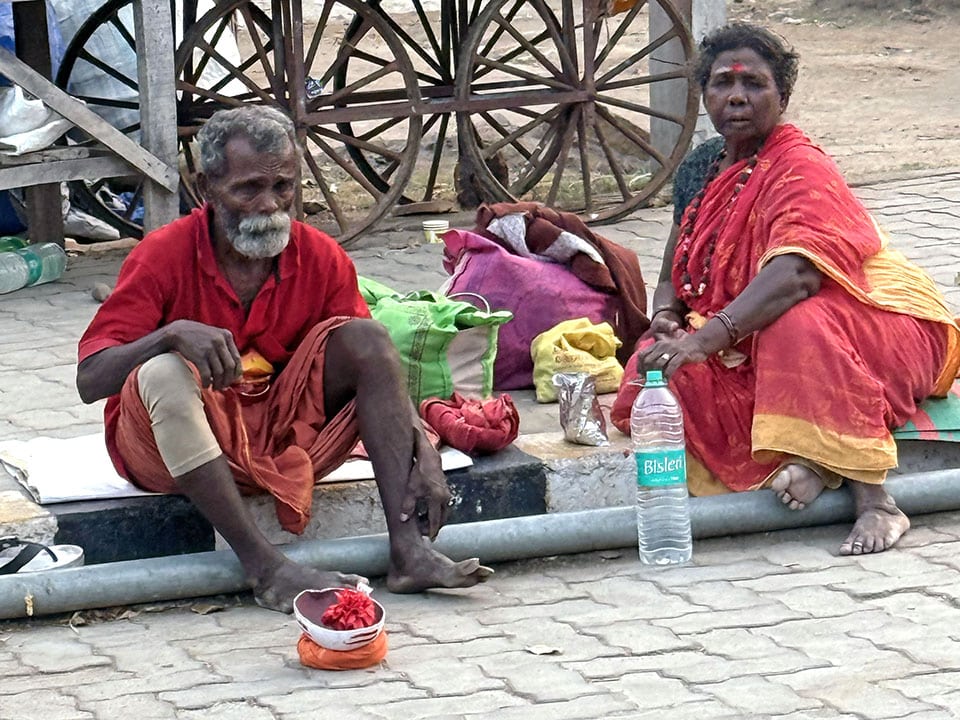
Pilgrims walking around the sacred Mt. Arunachala
A Hindu Pilgrimage
Performing a Tirthayatra—a pilgrimage—is considered a deeply virtuous act in Hinduism. Devotees journey to sacred mountains, holy rivers (like the Ganges), and ancient temples, often saving for years to make the trip, seeking spiritual merit along the way. During our time in India, we saw thousands of pilgrims at every stop, visiting temples, shrines, rivers, and mountains with unwavering devotion.
All of this may sound philosophical—but we saw it play out in real life, in everyday moments throughout our journey. Now, onto the experiences that brought it all to life for us.
Chennai
Our South India tour began in Chennai, the capital of Tamil Nadu (formerly known as Madras, where Madras plaid originated). We took a brief tour of Chennai in Part 1: Why India.
The native language here is Tamil—one of the oldest living languages in the world, with roots going back nearly 3,000 years. Its earliest literature, the Sangam texts, dates from around 500 BCE to 300 CE.
Tamil Nadu has been shaped by powerful dynasties like the Cholas, Pandyas, and Cheras, who left behind remarkable temples, art, and literature. The Cholas also launched naval expeditions across the Indian Ocean, using catamarans to trade and expand their empire, even conquering parts of Sri Lanka.
In fact, catamaran comes from Tamil: kattumaram, meaning “lashed wooden logs”— a form of seafaring vessel used throughout the South Pacific as well.
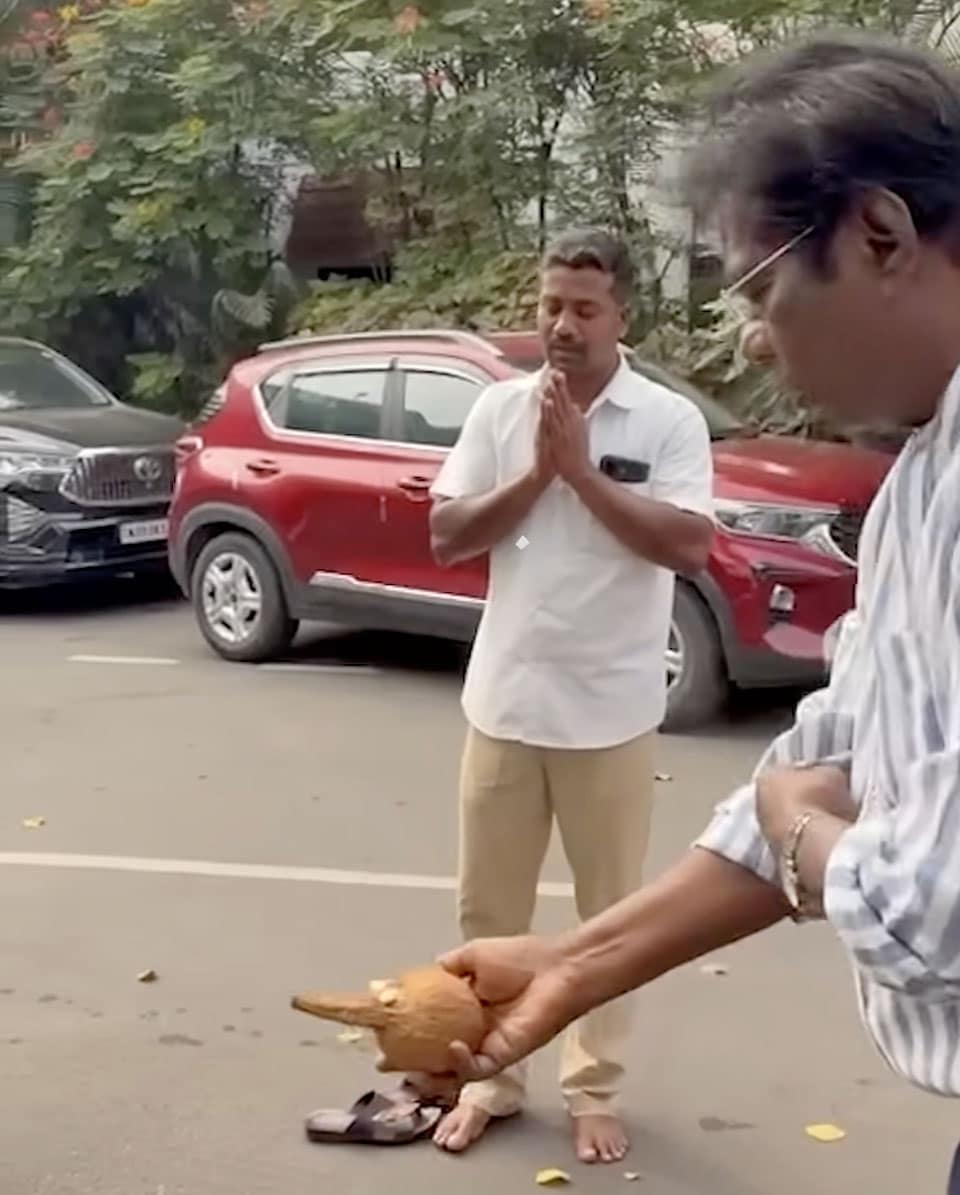
Before leaving the Trident Hotel in Chennai, our bus driver, Mani, and our guide Asoka performed a puja (blessing) for safe travels—cracking a coconut and burning camphor on it as an offering.
Click the image below to see the movie. Thanks to Drew!
Many of the ashrams and temples we visited didn’t allow photography. Where we couldn’t take our own photos, we’ve supplemented with images from Google or temple websites (as noted)—and a few from our tour mates. We were all sharing photos in a WhatsApp group, so it’s hard to remember who took what—thank you in advance if we’ve included yours!
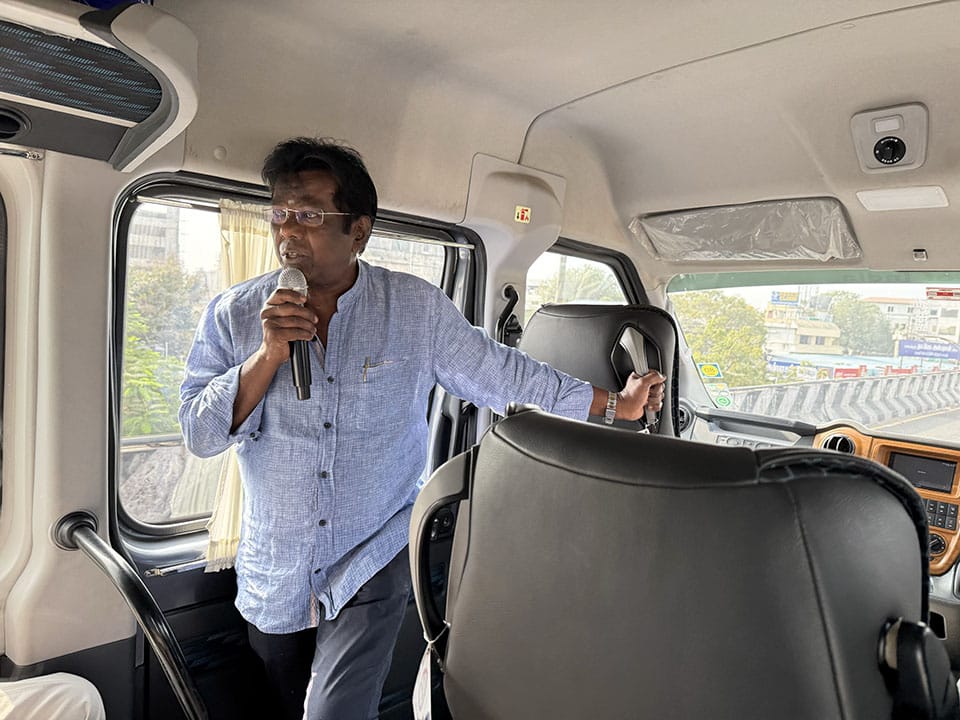
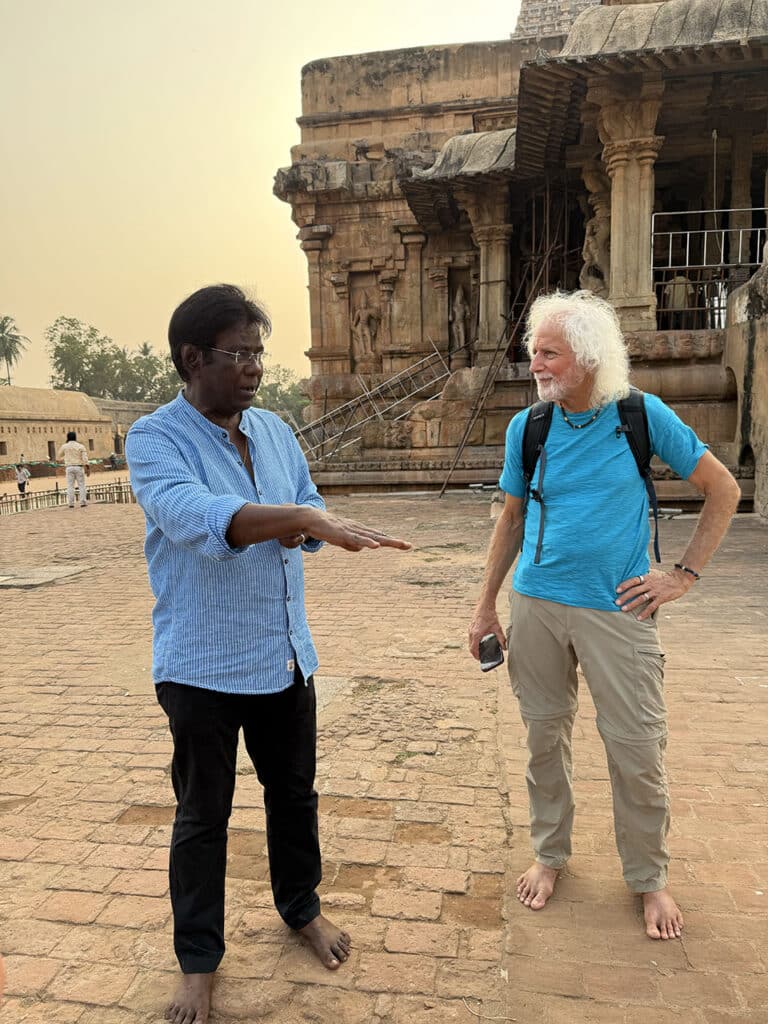
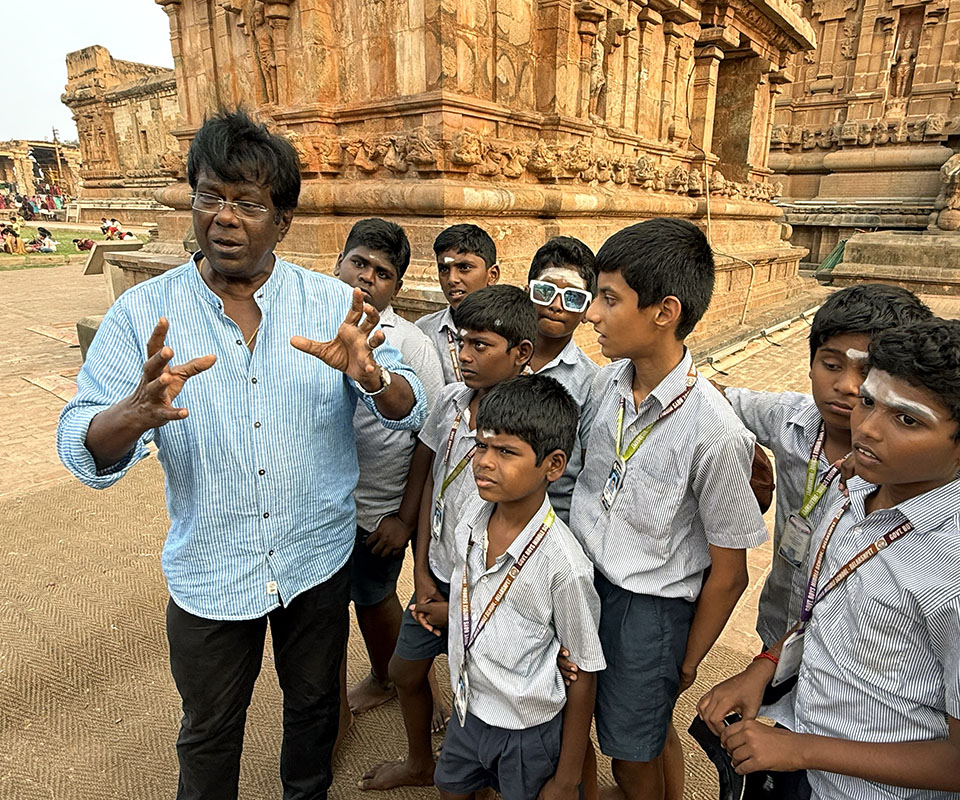
Much of what we’re sharing here came from our South India guide, Asoka (with the school kids at the top)—he was a lot of fun, incredibly knowledgeable—part professor, part friend. He took the time to get to know each of us and tailor what he pointed out along the way. Kirk asked a lot of questions, and Asoka liked to joke there’d be a final exam at the end of the tour—so we’d better pay attention. No surprise this fantastic guide is the president of South India’s National Tour Guide Association.
Anything we didn’t learn from Asoka, Mallika, or Roger came from filling in the gaps online—so apologies in advance if we got anything wrong. 8,000 years is a lot of history to comprehend! LOL
Our first stop on this two-week road trip was Mahabalipuram.
Mahabalipuram
This UNESCO World Heritage site showcases some of the earliest examples of Dravidian architecture, dating from the 6th to 9th centuries CE, when Mahabalipuram was a thriving port city. The two tall temples are dedicated to Shiva, and the short flat-roofed shrine in between is dedicated to Vishnu. Sculptures of Shiva’s bull Nandi surround the temples.
The Shore Temple (c. 725 CE) sits along India’s southeastern Coromandel Coast, overlooking the Bay of Bengal. It’s one of the oldest structurally carved stone block temples in South India—and a striking landmark right on the water.
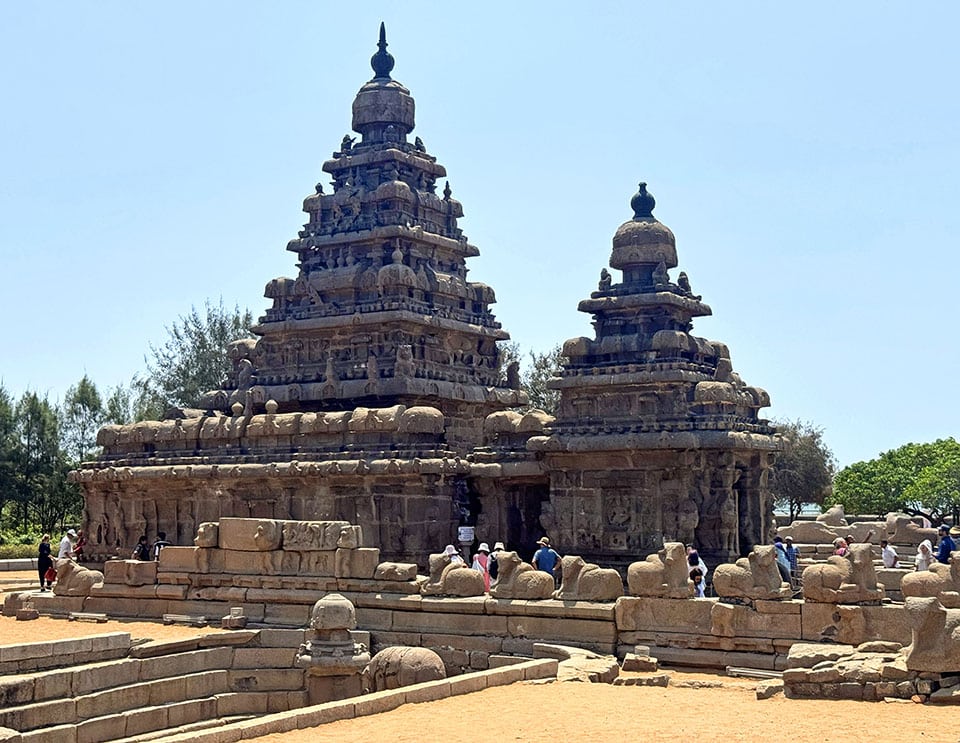
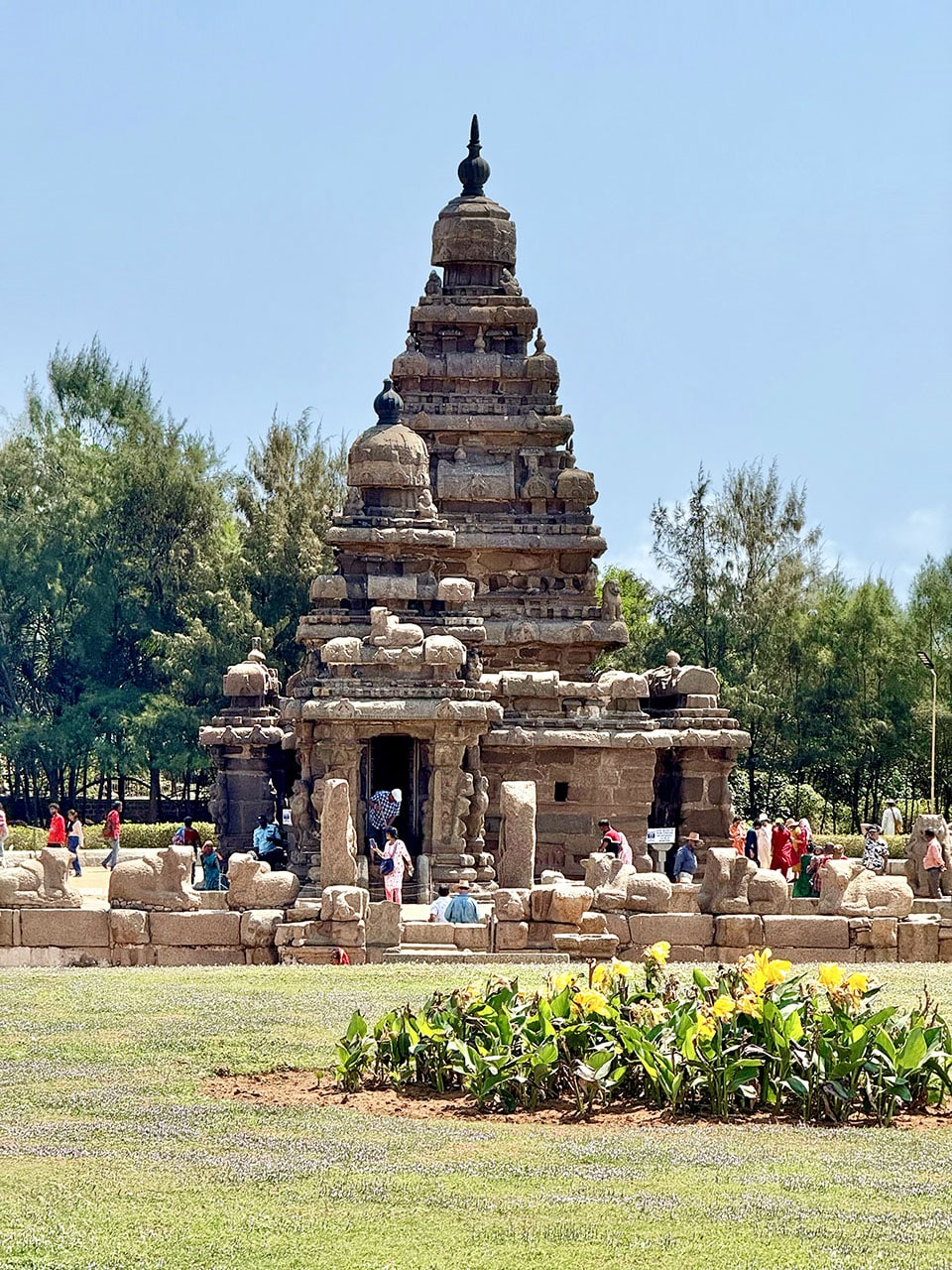
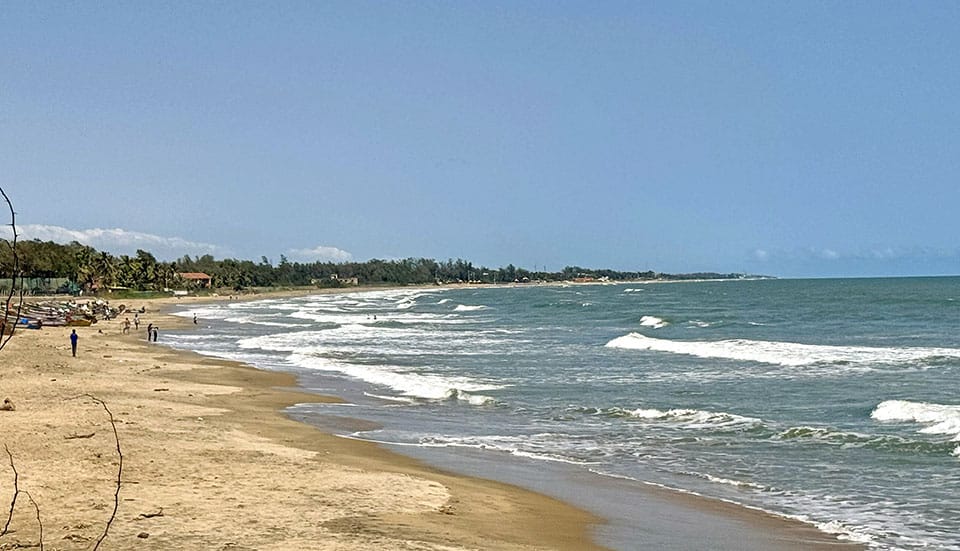
The 2004 tsunami briefly revealed submerged stone structures off the coast, adding intrigue to the long-standing legend of the “Seven Pagodas”—the idea that six temples were swallowed by the sea long ago, leaving only the Shore Temple visible today.
A short distance from the Shore Temple, the rock-cut monuments of Mahabalipuram date back to the 7th century, during the reign of the Pallava dynasty, and include monolithic temples, cave sanctuaries, and massive relief carvings. These structures were carved from single granite boulders, shaped from the top down—a remarkable feat of planning and craftsmanship.
The top of the left shrine was designed to resemble an elephant’s back—carvers first sculpted an elephant next to it, to use as a reference for shaping the shrine, reflecting the builders’ attention to natural forms and proportion.
Together, these monuments showcase the evolving architectural styles of three different rulers, all represented within a single site, offering a rare glimpse into a transitional period in South Indian temple design. Today, Mahabalipuram is celebrated for its artistry, scale, and innovation.
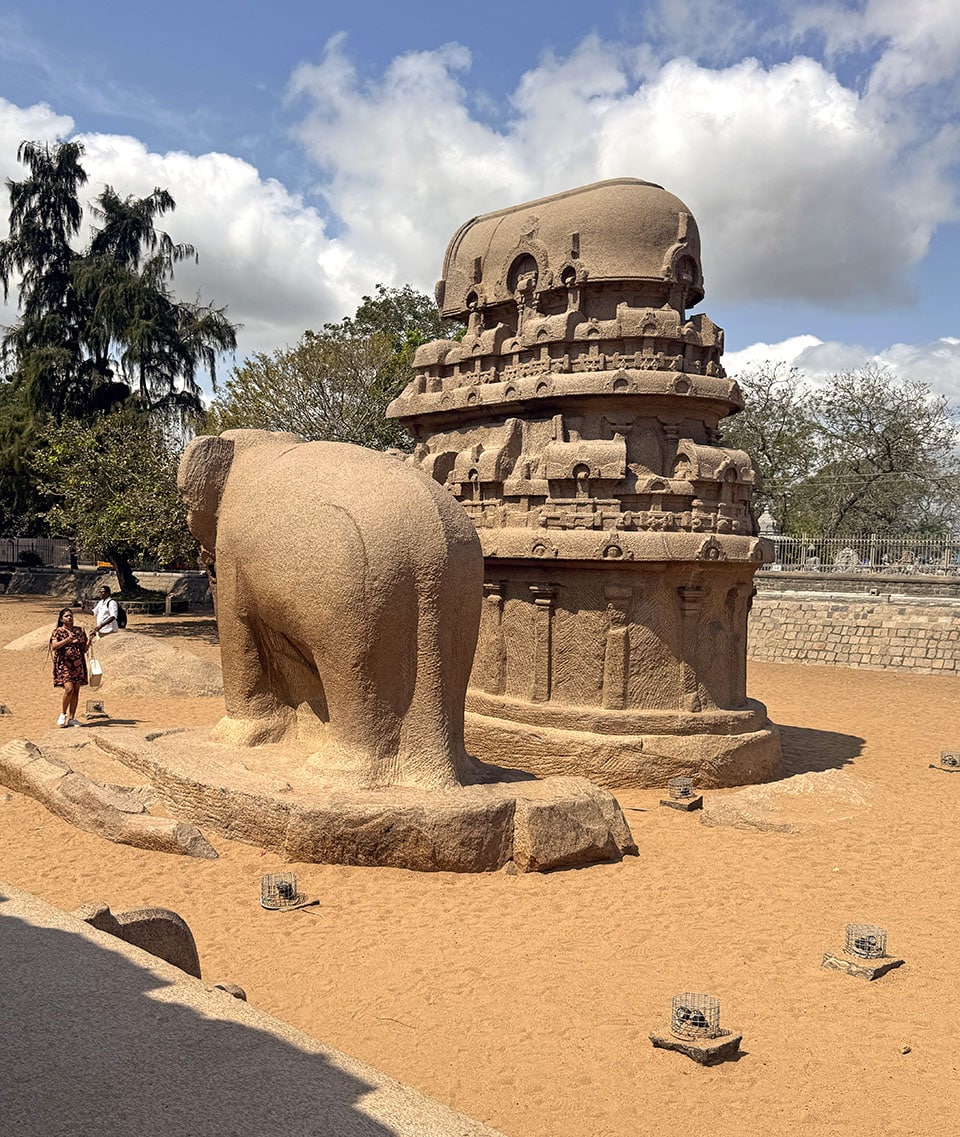
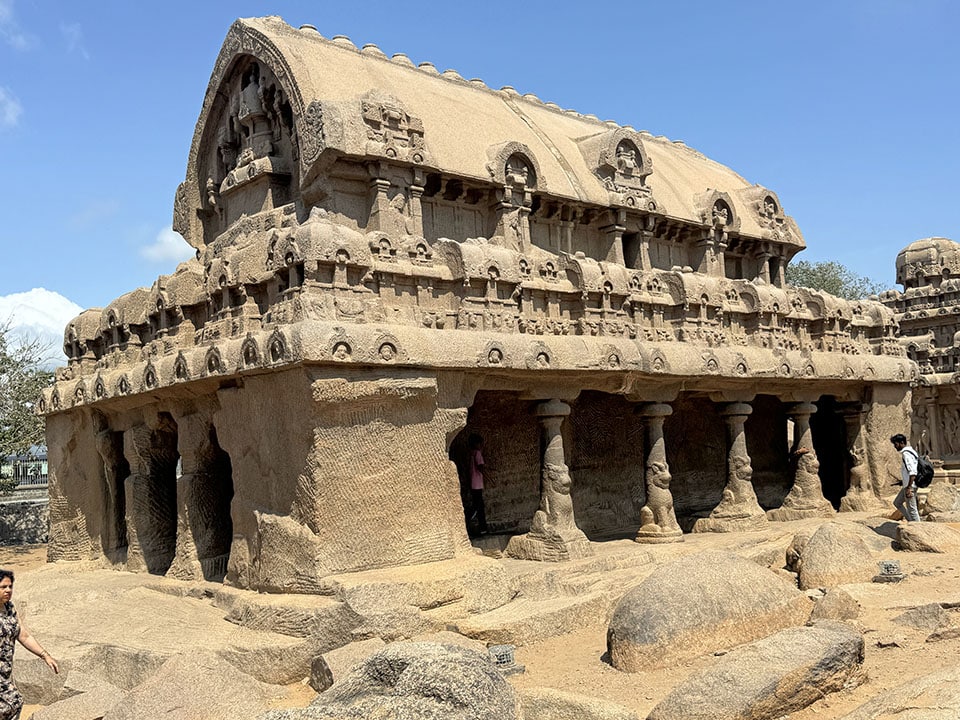
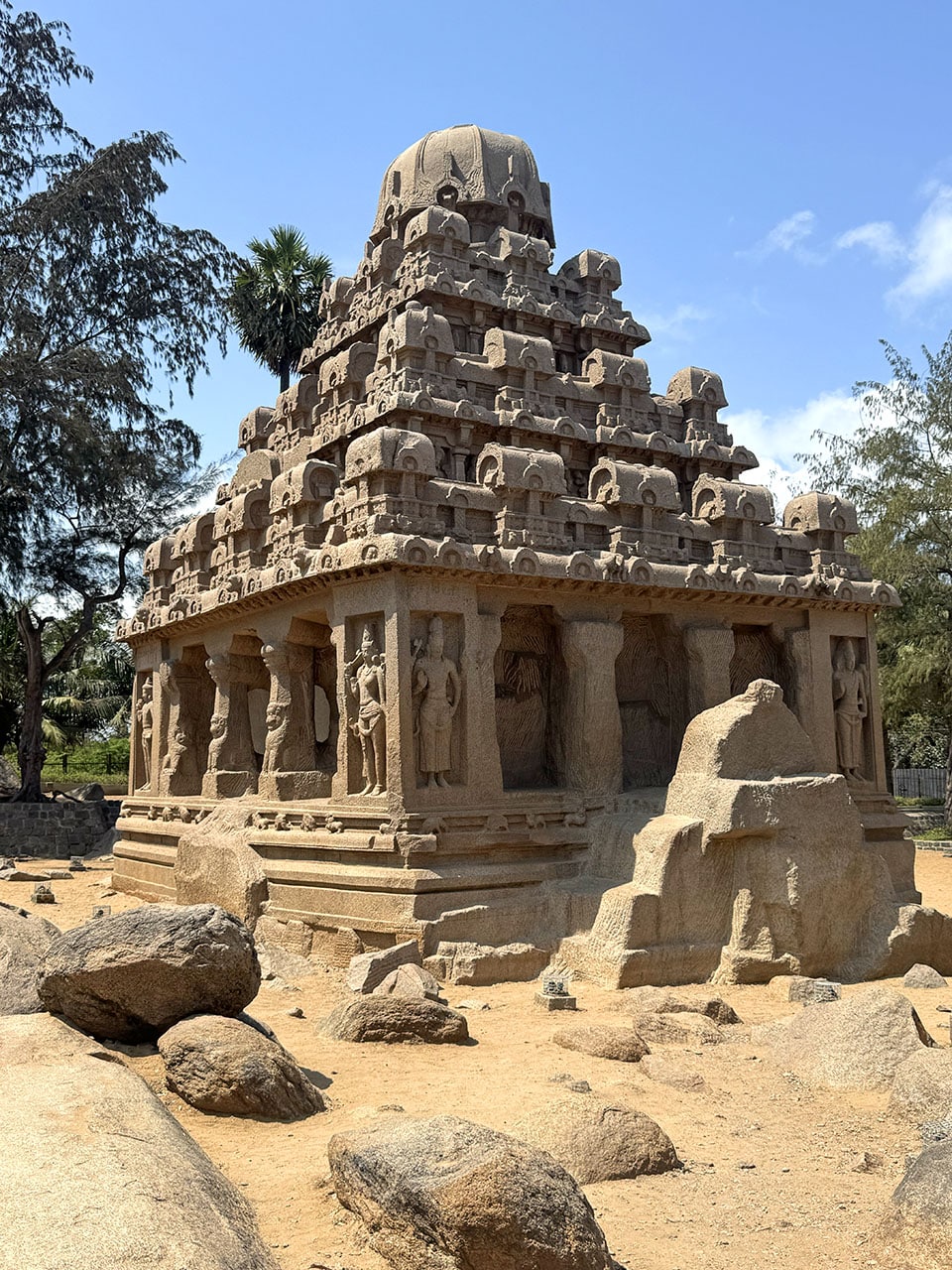
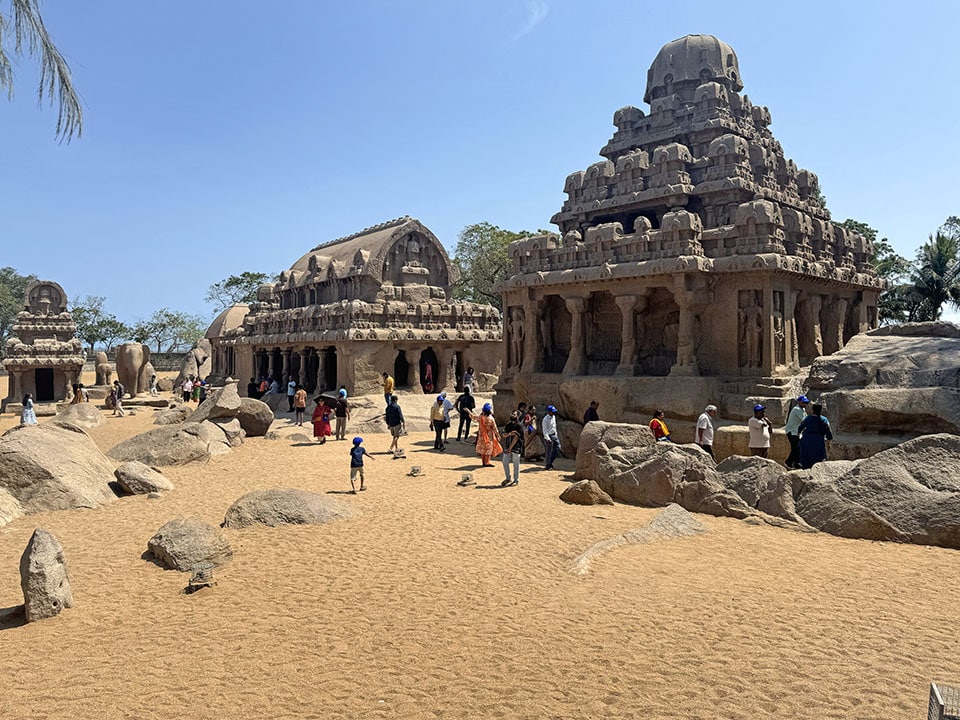
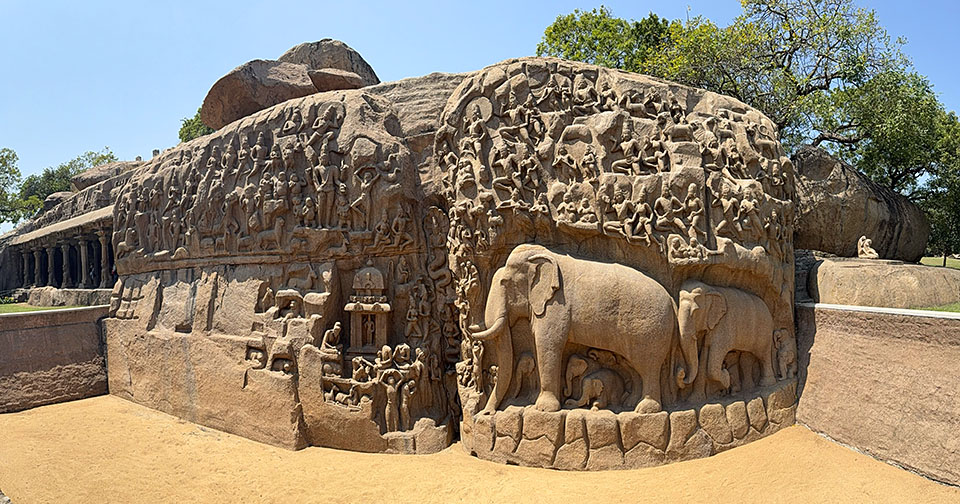
Most famously, Arjuna’s Penance (also called Descent of the Ganges), above, is considered one of the largest bas-reliefs in the world. Asoka shared with us that these carvings influenced temple art as far away as Bali, Indonesia, and Angkor Wat, Cambodia, which gives you a sense of how far-reaching the Hindu culture expanded, likely traveling via catamaran!
From Mahabalipuram, we continued for a brief visit to the DakshinaChitra Heritage Museum.
DakshinaChitra Heritage Museum
An open-air cultural center near Chennai that “rescues” historic South Indian homes (100–250 years old), dismantles them, and rebuilds them on its 10-acre campus. It offers a fascinating, immersive look at traditional life across Tamil Nadu, Kerala, Karnataka, and Andhra Pradesh/Telangana.
The homes—once belonging to merchants, farmers, traders, and priests—are primarily built from teakwood and reflect the region’s diverse architecture and lifestyles. Check out the spectacular teak joinery in the eaves, comparable to many Taiwanese-built sailboats! (Although we have heard that the teakwood in Taiwan came primarily from Burma/Myanmar.)
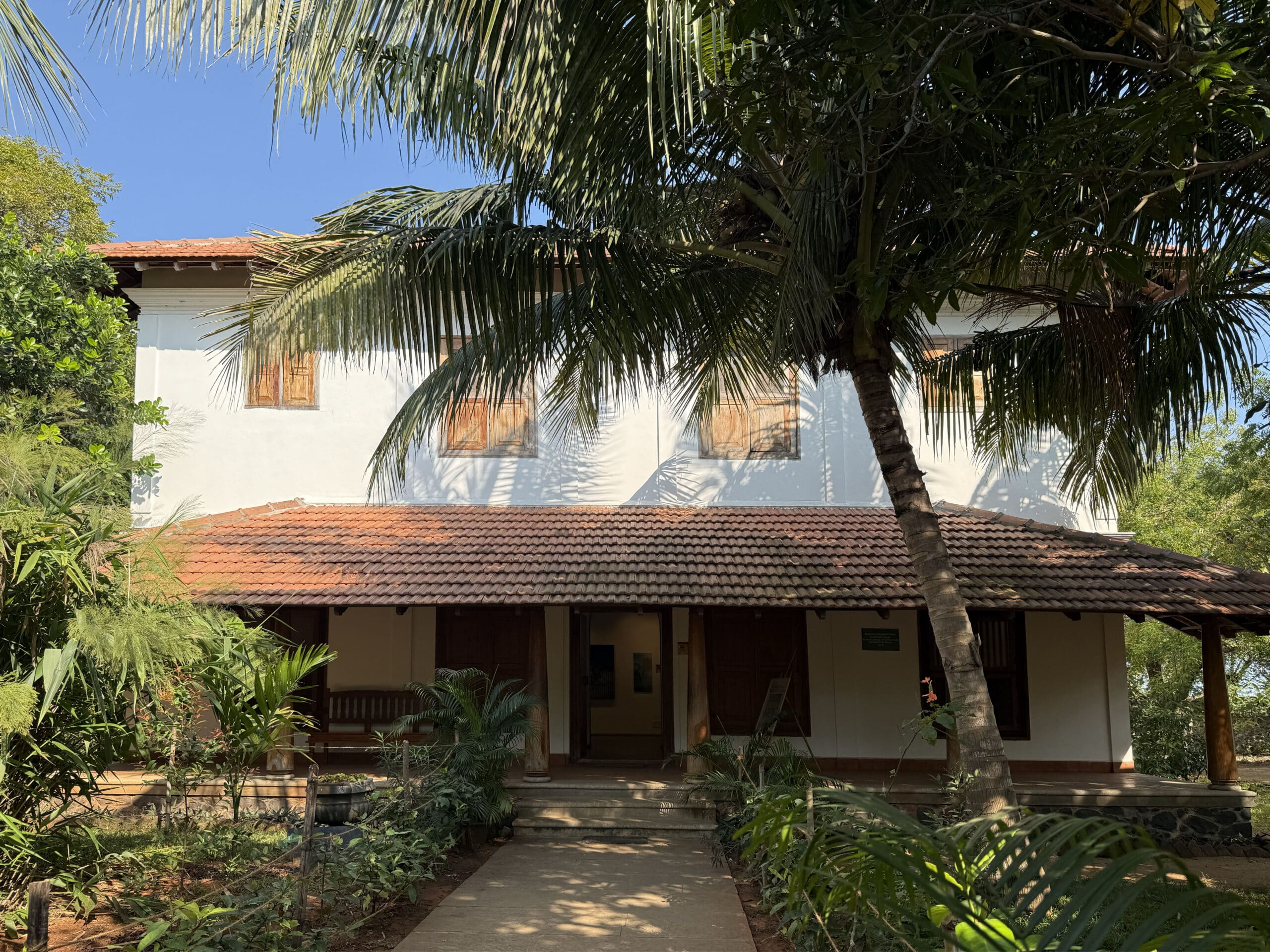
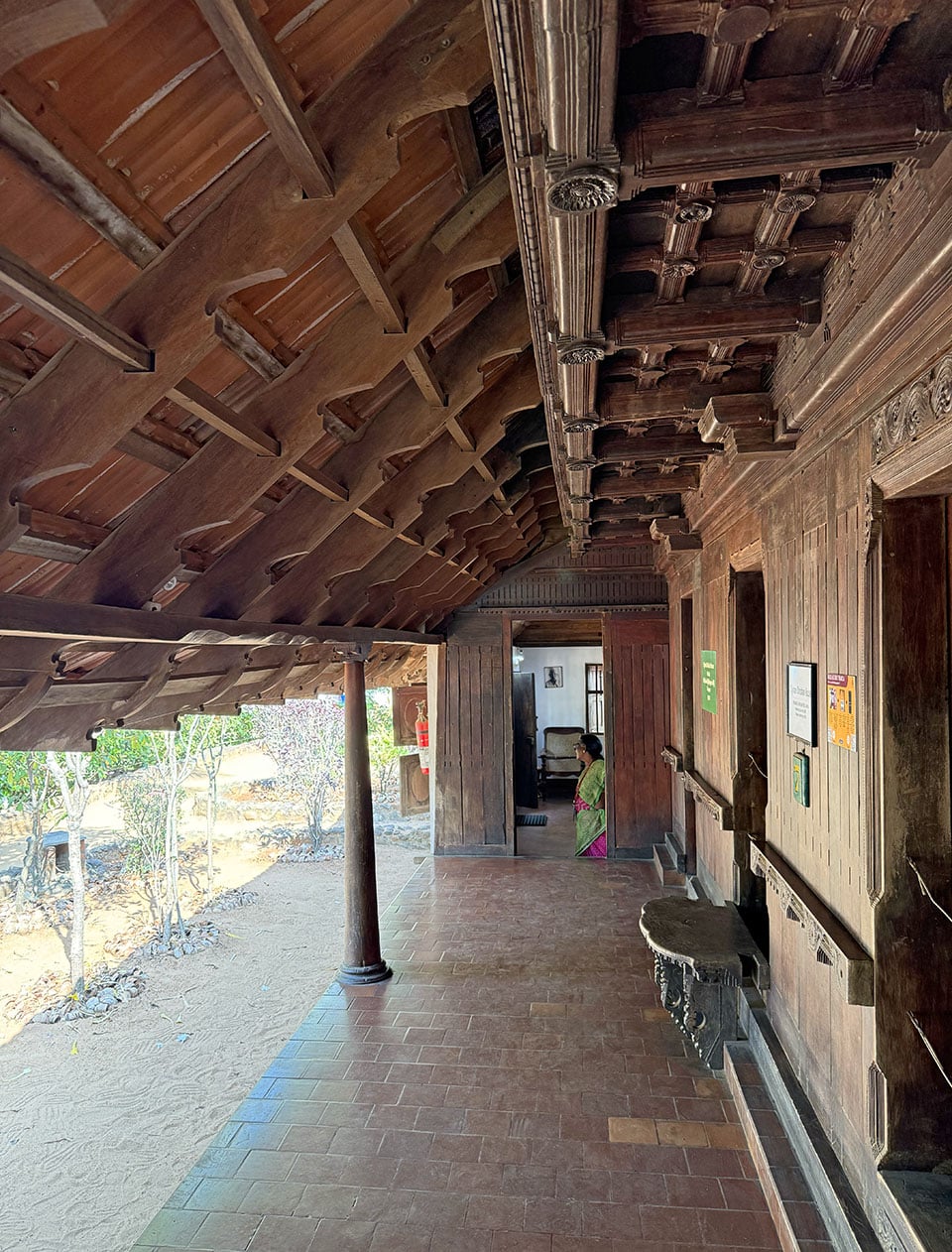
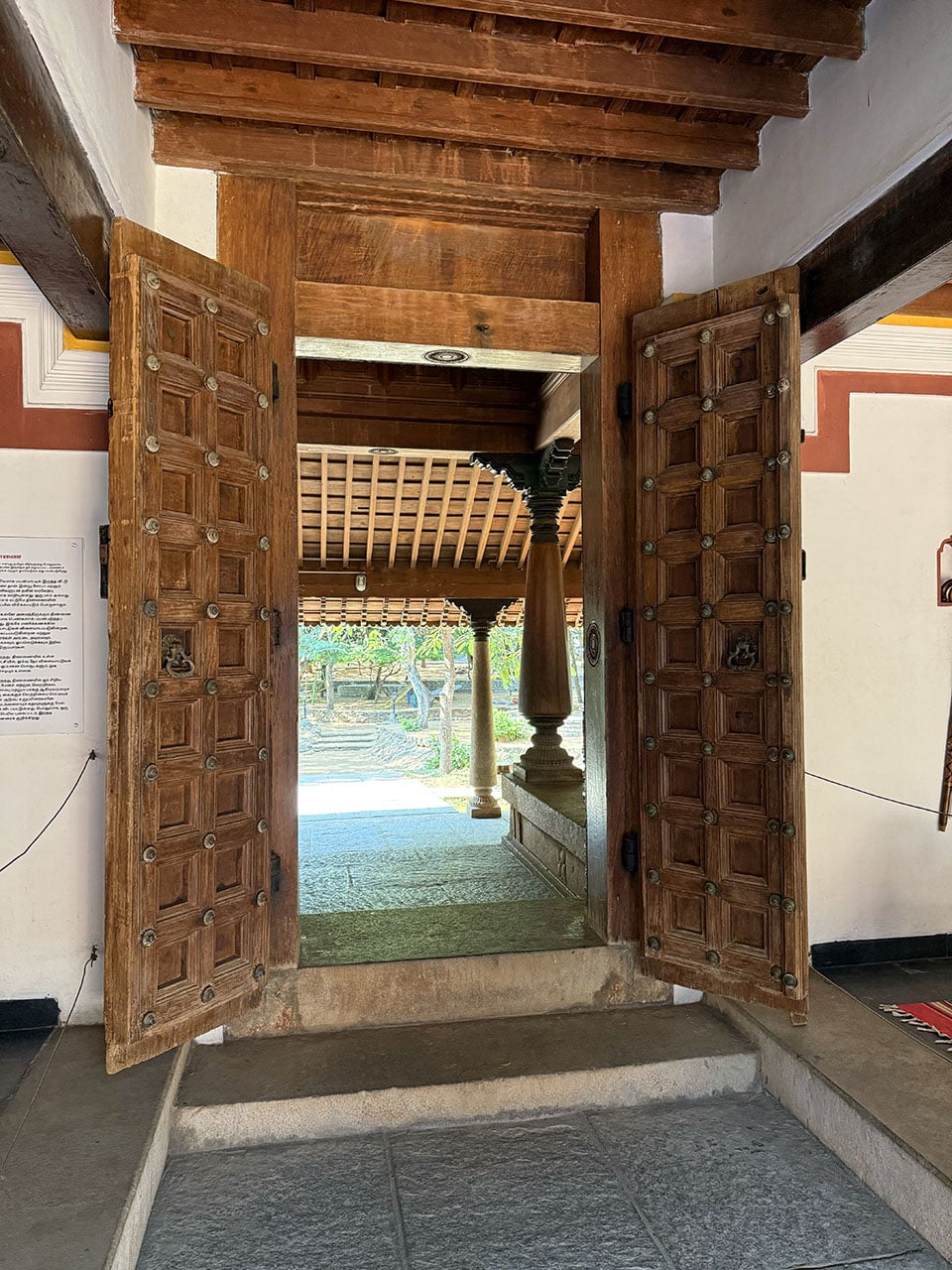
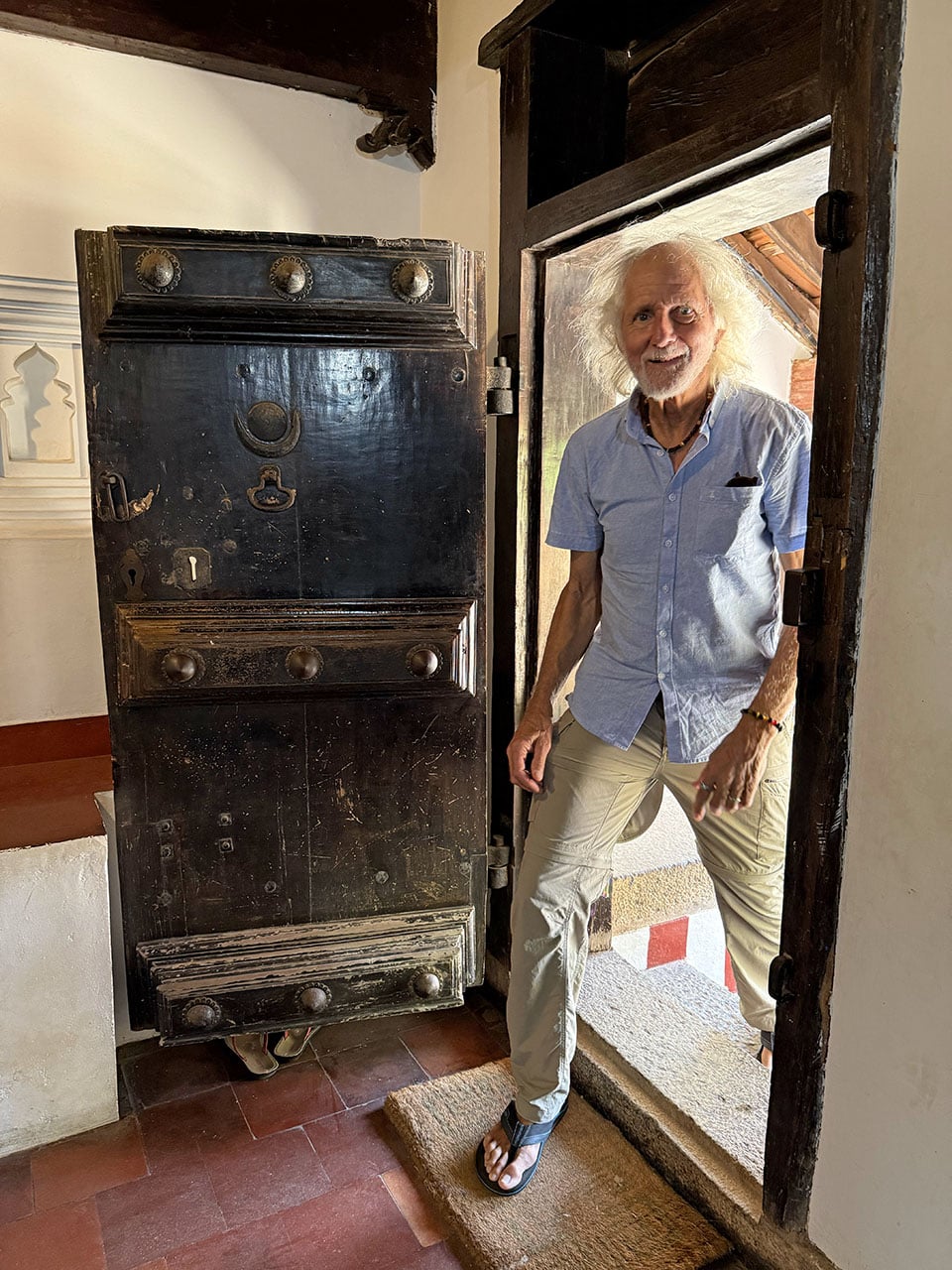
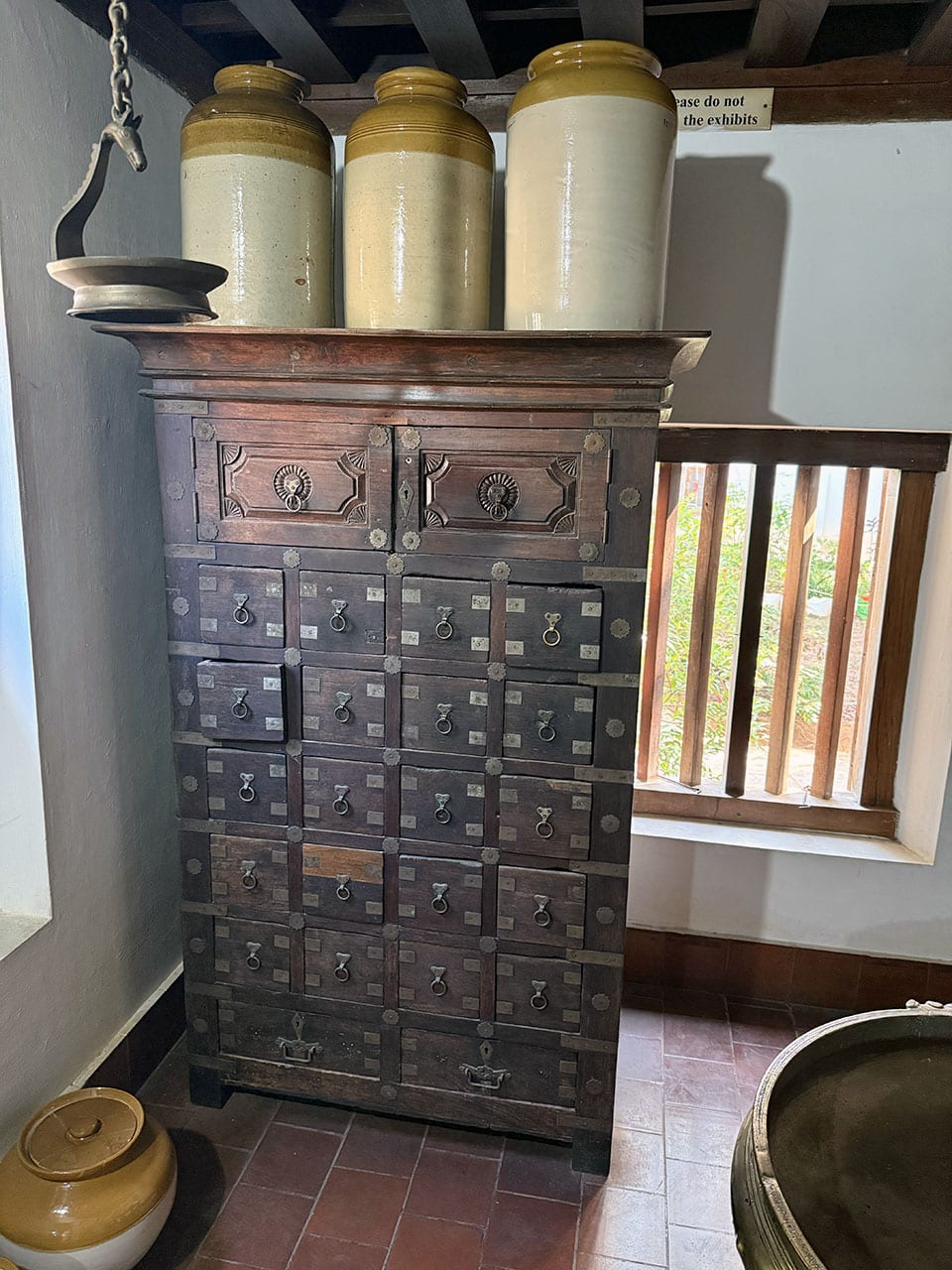
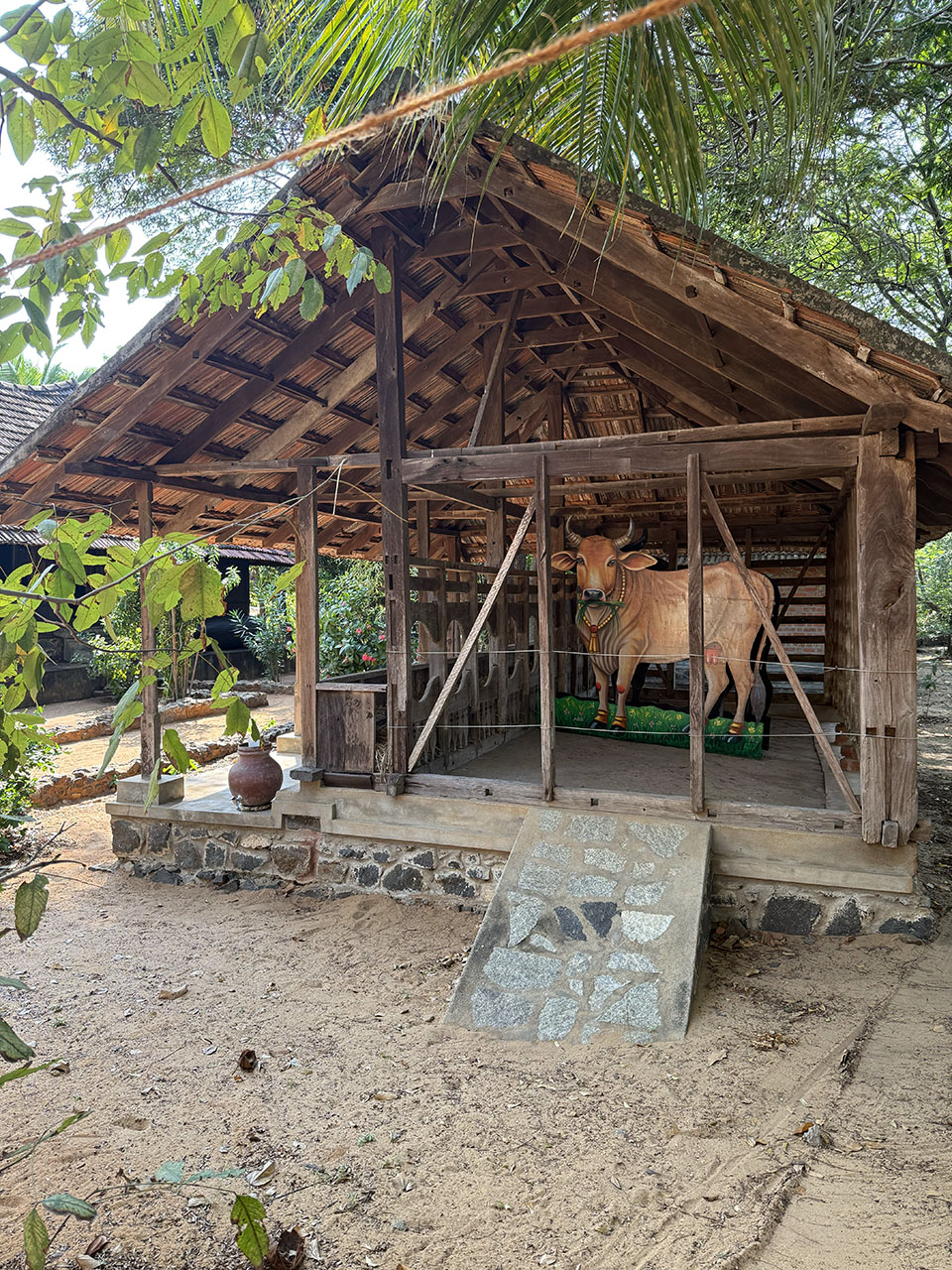
Top left/middle: Traditional Kerala House; Top right: front doors to a Tamil Nadu Merchant’s house, looking into an inner courtyard. Bottom left: Kirk walking through the front door of a Tamil Nadu Hindu Priest (notice the low door height; Kirk had to duck through all these doors!) Bottom middle: Hindu home herbal apothecary, bottom right: traditional Hindu barn.
Tiruvannamalai
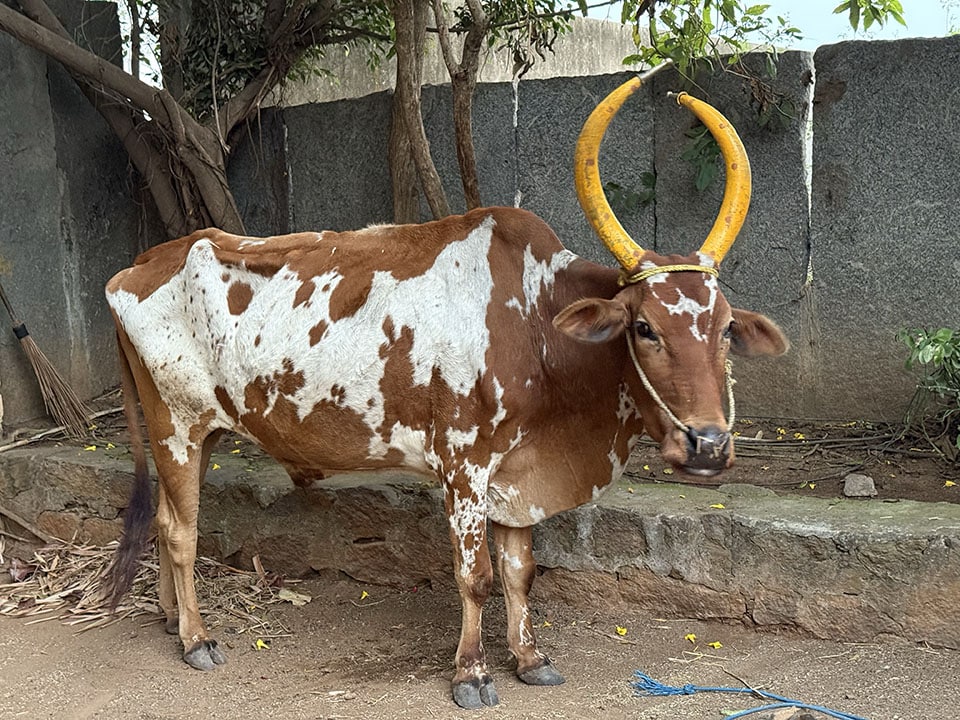
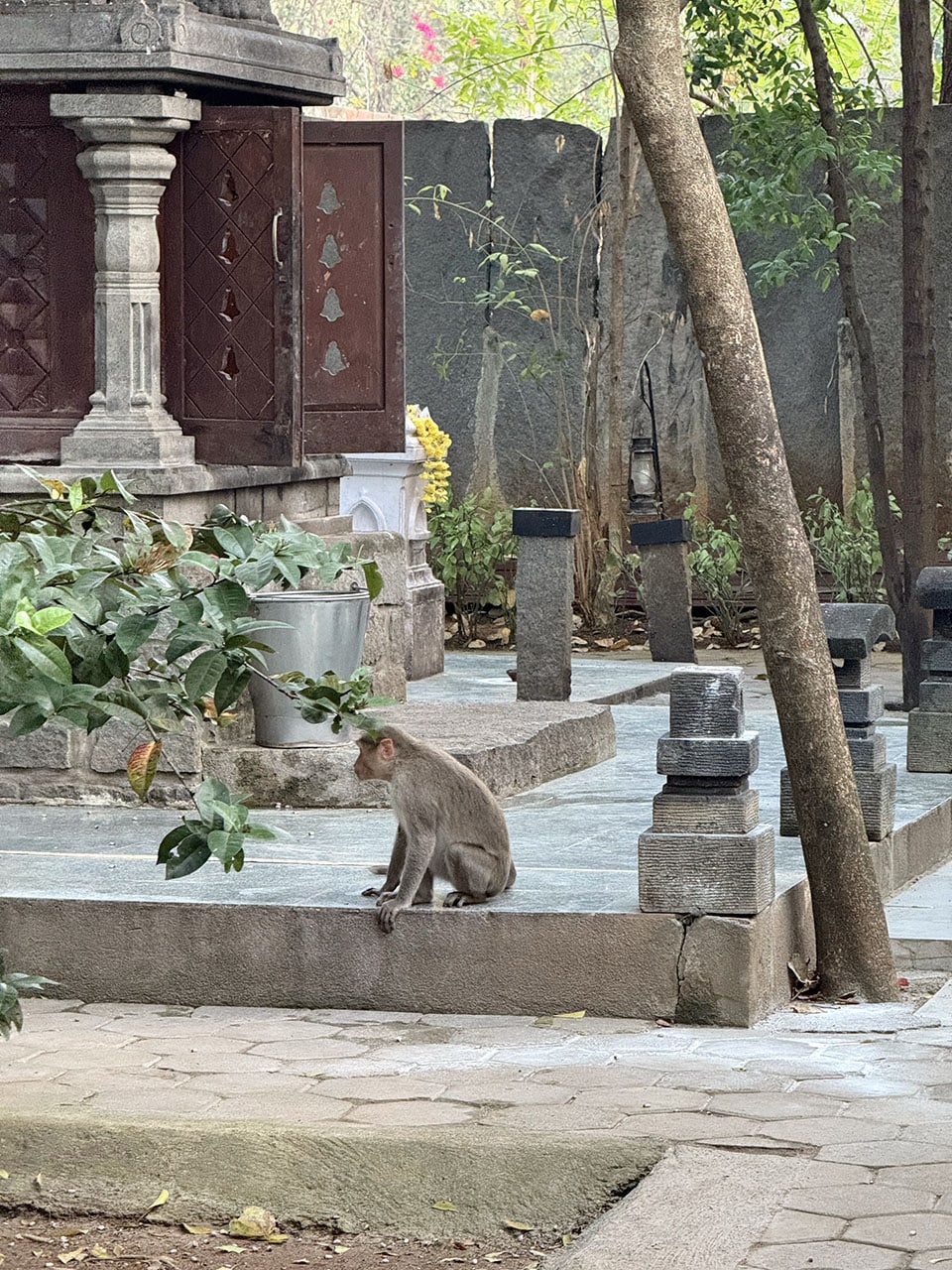
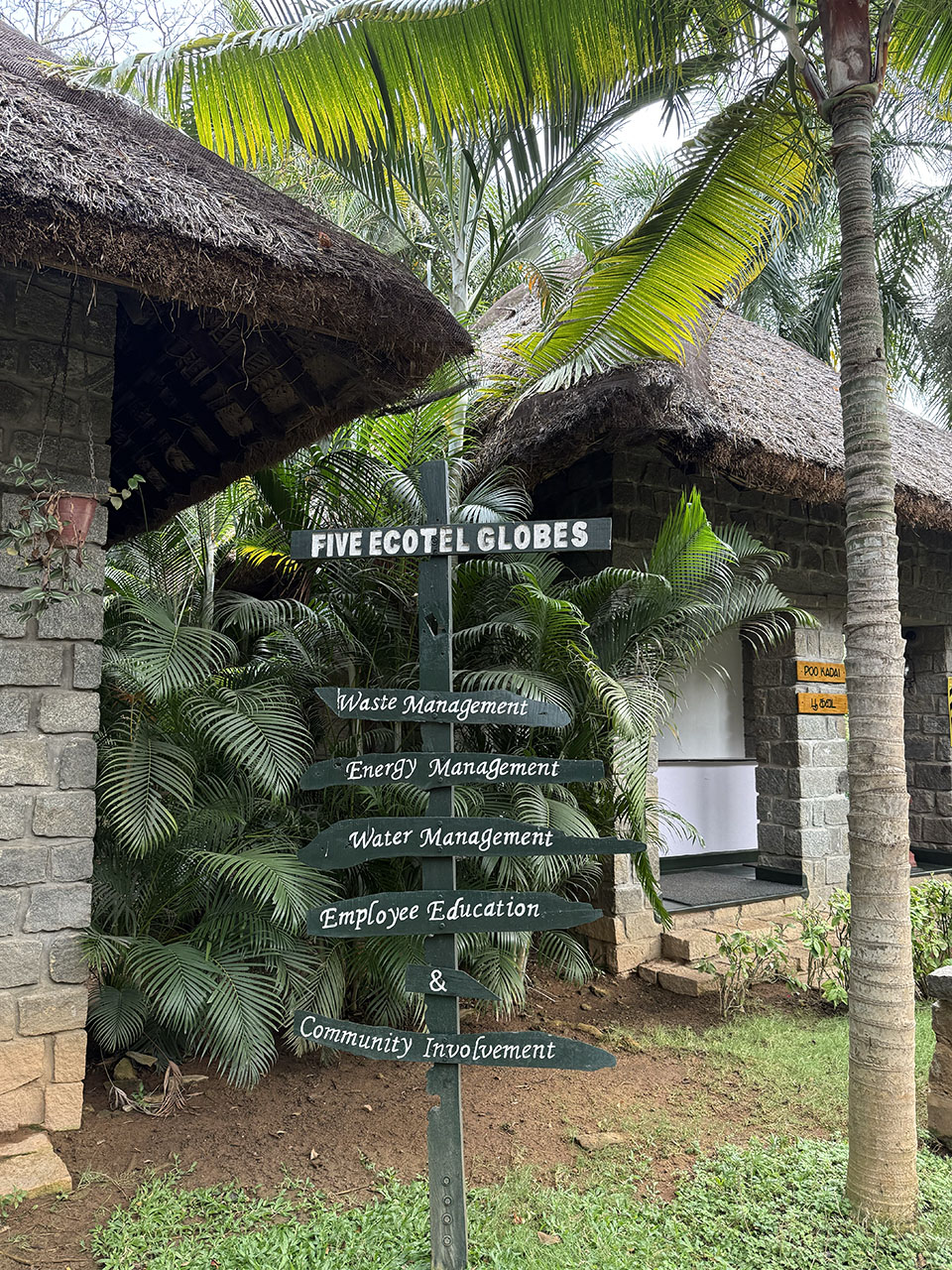
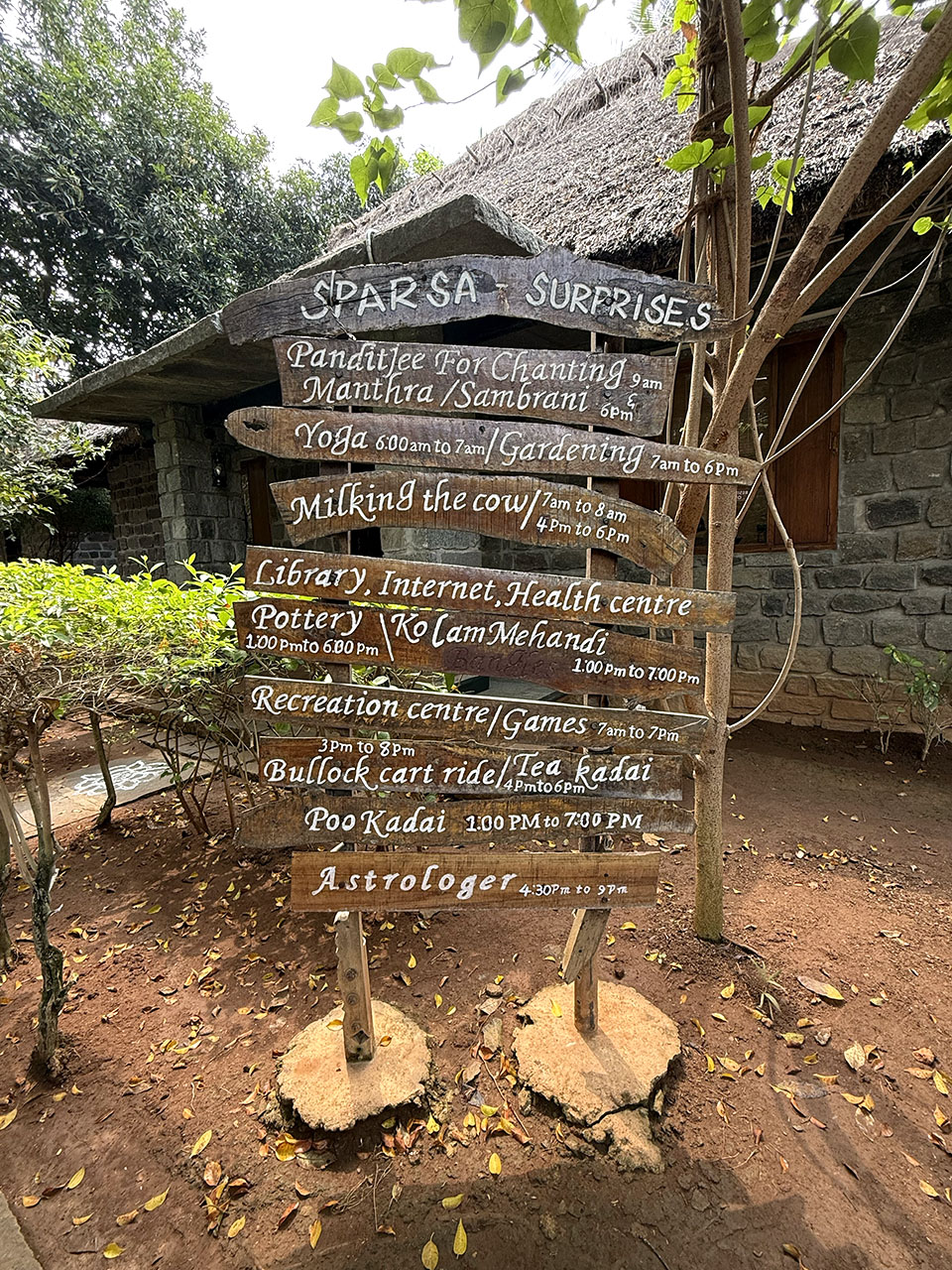
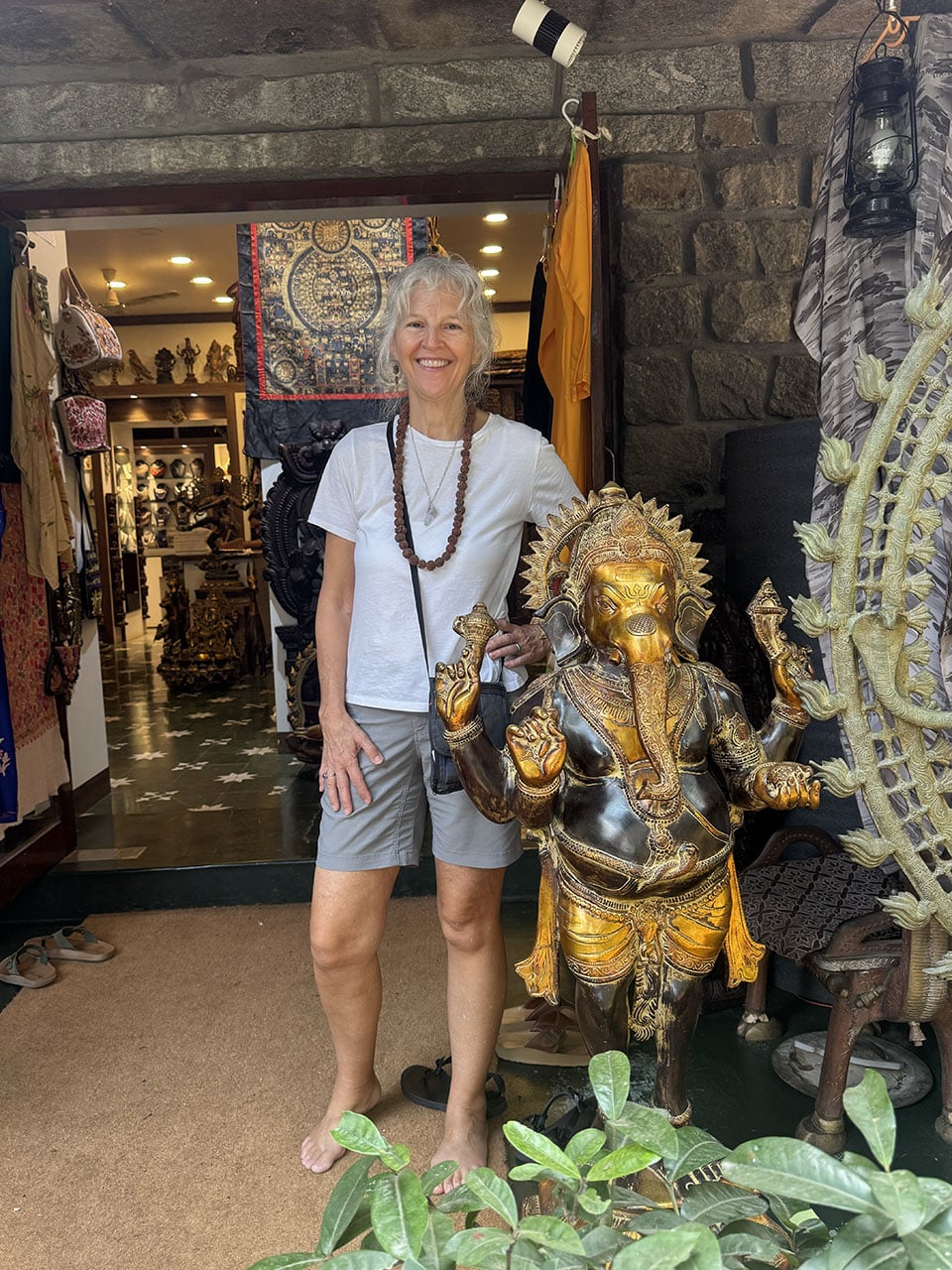
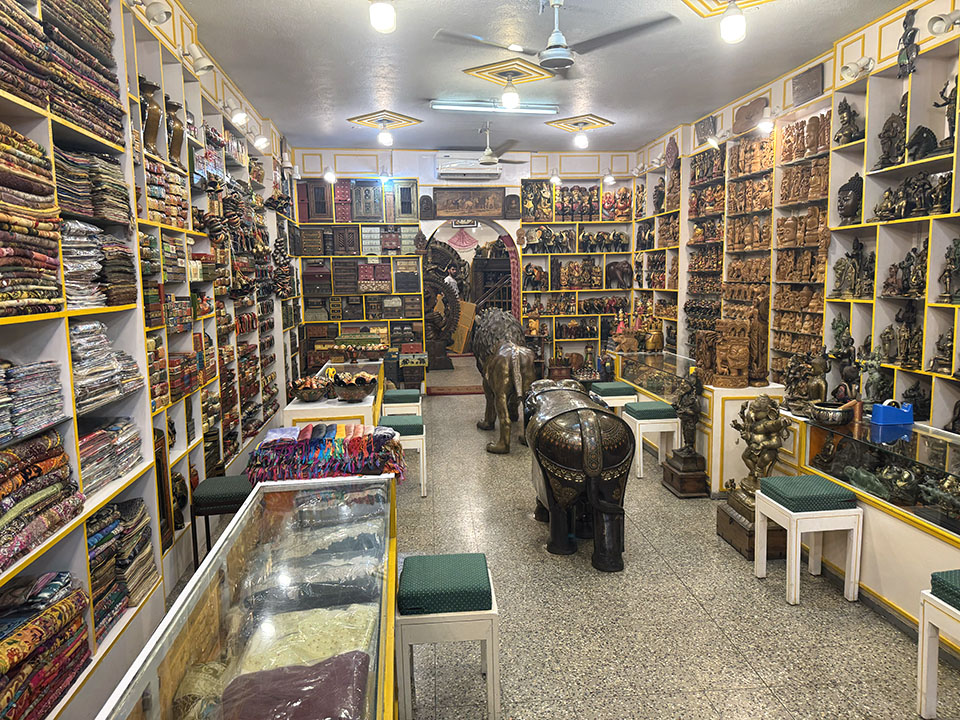
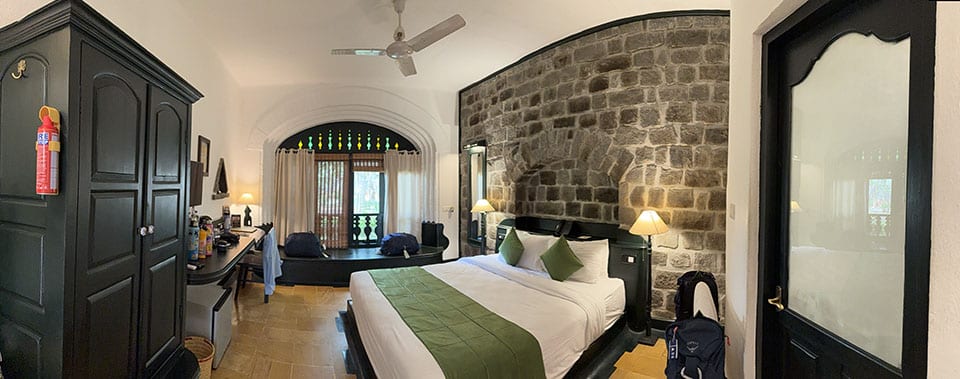
In Tiruvannamalai, we stayed at the beautiful eco-resort Sparsa, cows and monkeys included. These beautiful grounds had many reminders of ways to live more gently on planet Earth. They also had a wonderful gift shop with lots of treasures. As we quickly discovered at many hotels (and some ashrams), arrivals came with a warm welcome: a cool, often jasmine-scented face cloth, a non-alcoholic herbal drink (like tamarind, saffron, or kokum), a flower garland or mala beads made from rudraksha seeds, and a mark on the forehead called a tilak.
Tilaks
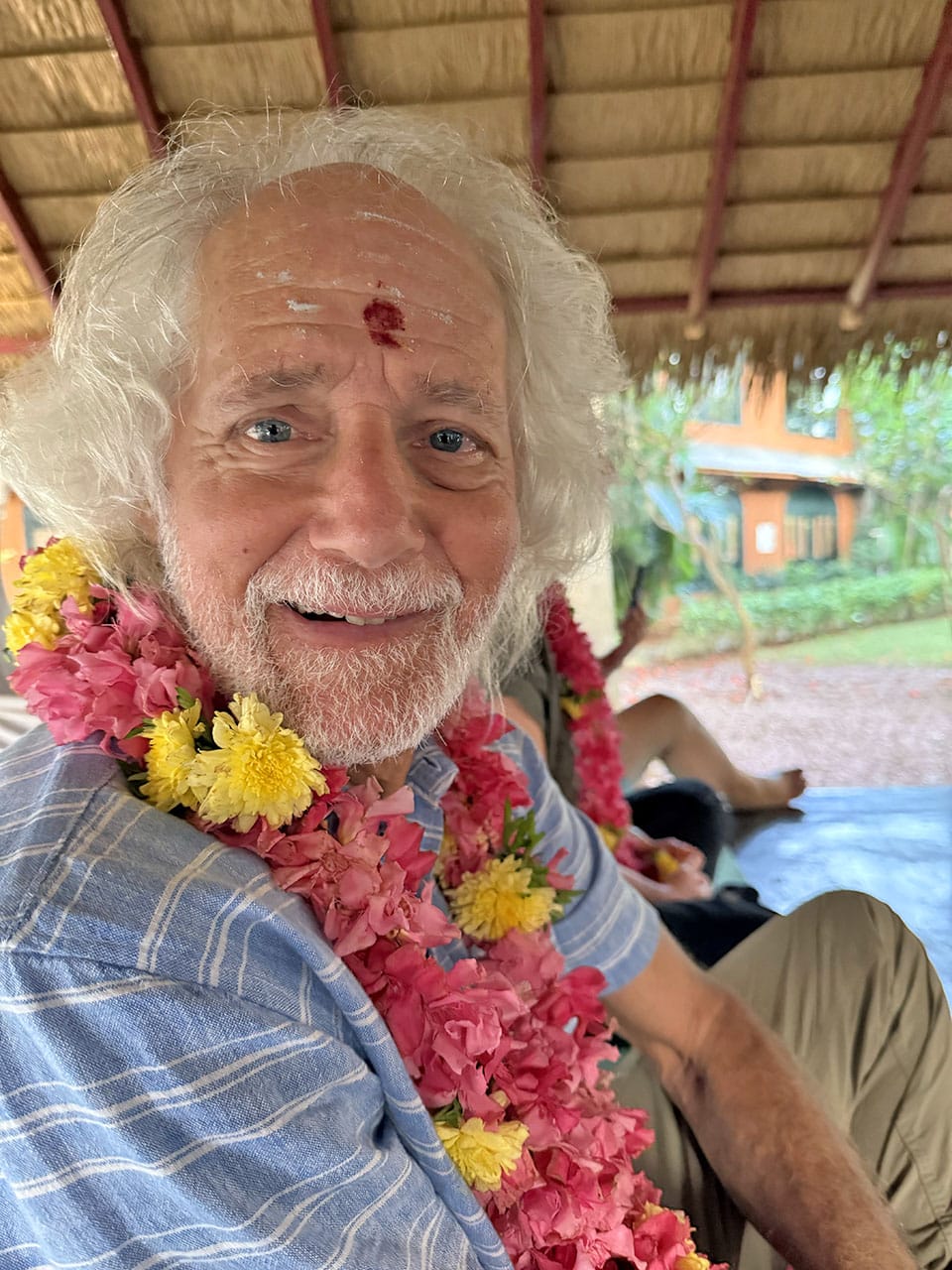
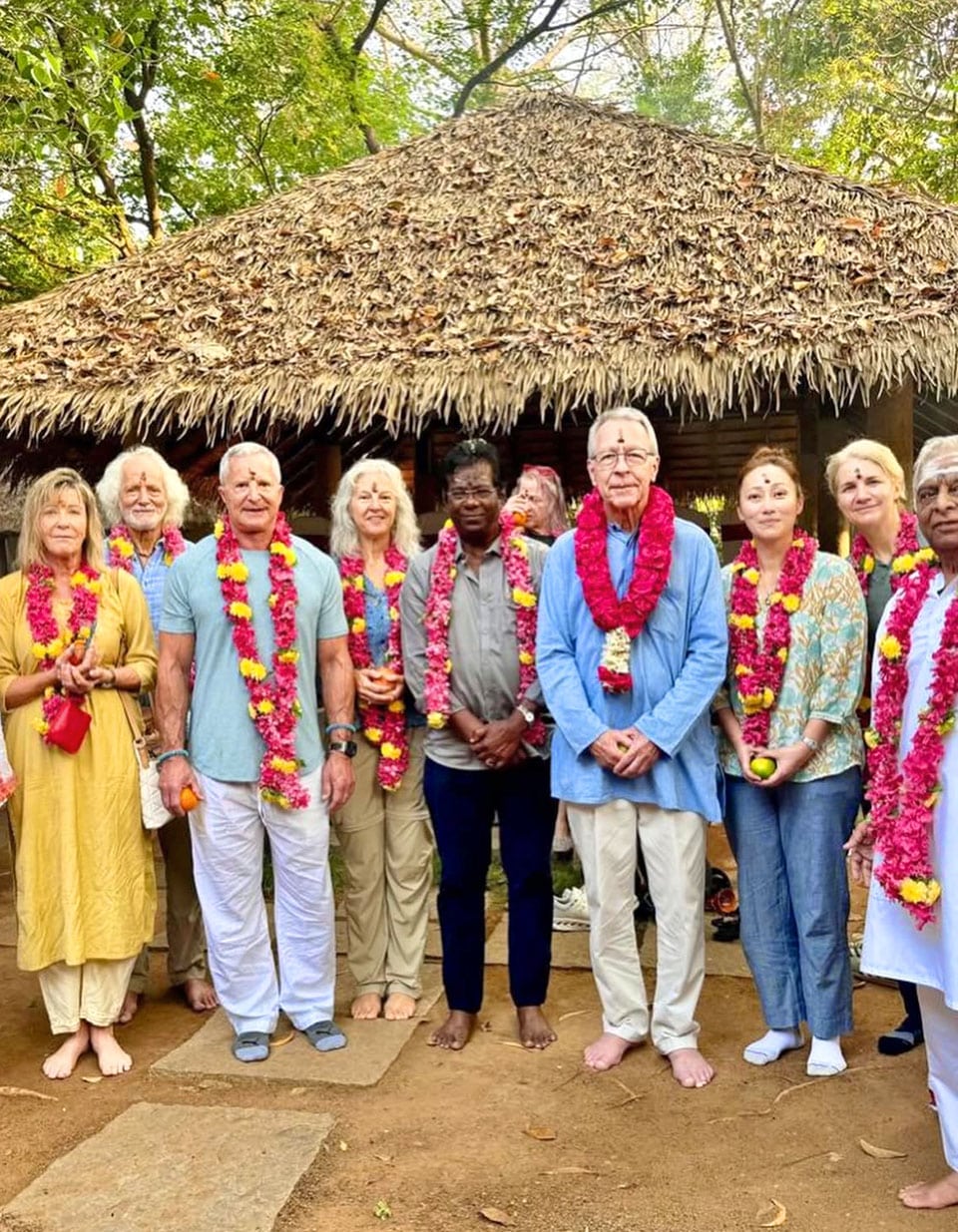
Most commonly associated with Hindus (and sometimes Jains and Buddhists), tilaks are sacred markings applied to the ajna chakra (the “third eye”) using substances like ash, sandalwood paste, or turmeric. They can signify devotion, spiritual focus, or simply serve as a blessing. (A bindi is typically a cosmetic red dot, while a tilak is more ritual-based.) Below, our tilaks are from the fire circle puja.
Kolams
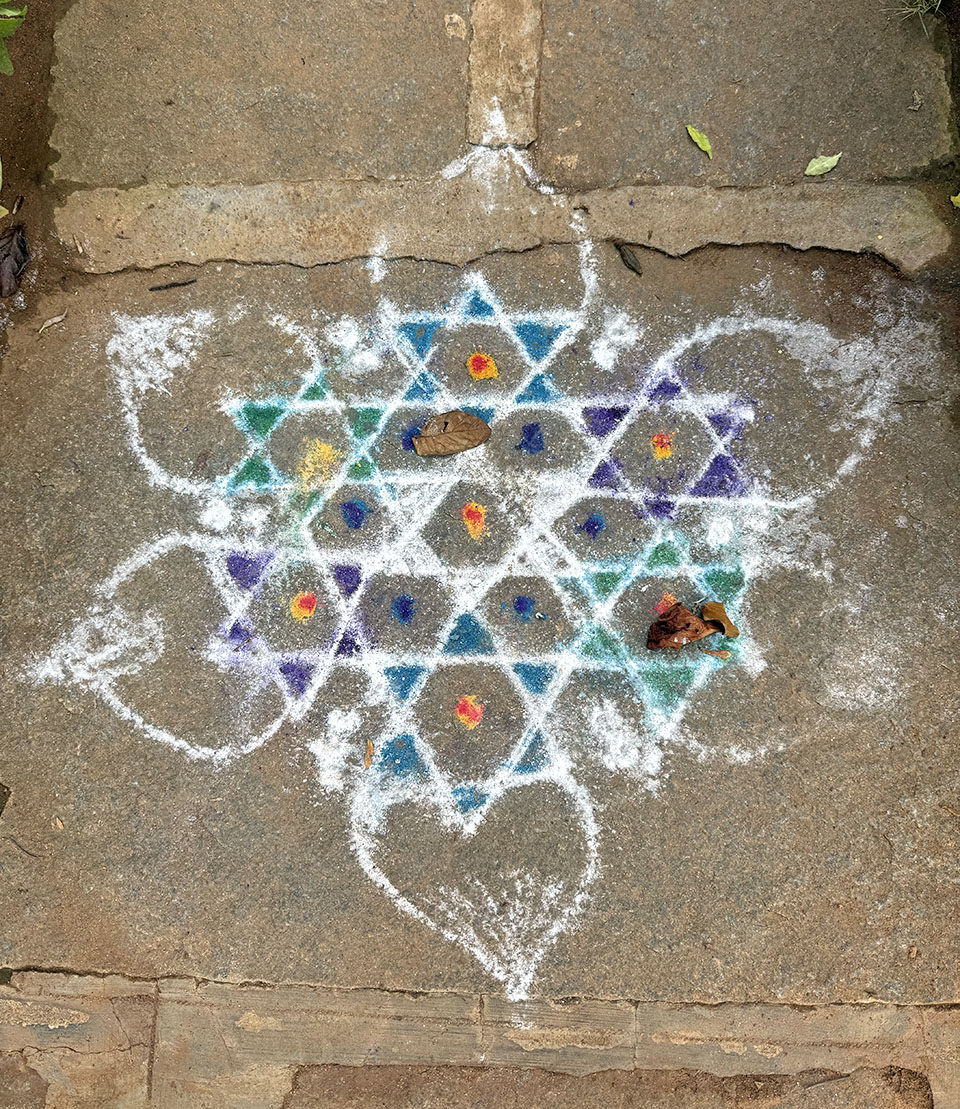
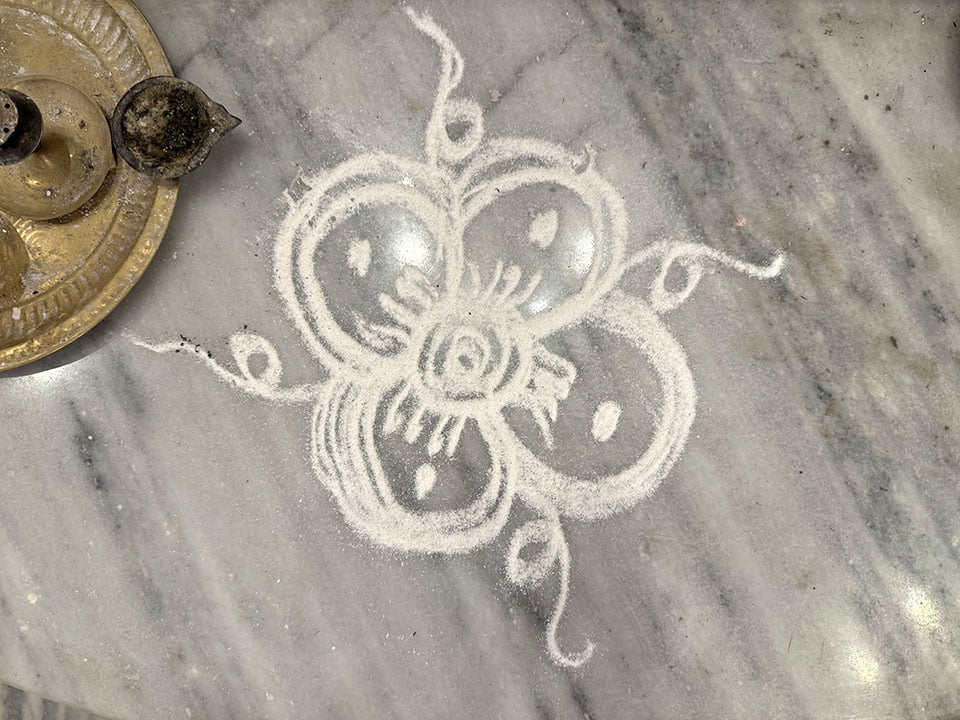
Many Hindu homes and businesses (including most of the hotels we stayed in) start the day with a kolam, and we saw these throughout our India travels—intricate, geometric designs drawn in white rice flour at the threshold. (In modern storefronts, colored sand is often used instead, since it’s heavier and doesn’t blow away as easily.)
Each morning, the doorstep is swept and washed—sometimes with cow dung for purification—and the design is carefully hand-drawn while the floor is still damp. Kolams are typically created by women, who are often seen as the “Lakshmi of the home”, symbolically bringing prosperity. By drawing the design, she “opens” the house to divine energy, inviting auspiciousness and warding off negative forces. Creating a kolam is a quiet, meditative ritual, where the daily pattern is chosen based on ancestral tradition, the day’s spiritual significance, and sometimes the artist’s mood, all while maintaining precise symmetry.
Sri Ramanasramam
An ashram is a spiritual sanctuary where people come to live, practice meditation or yoga, and study with gurus—often supported by donations, with simple lodging and meals typically provided.
Sri Ramanasramam sits in Tiruvannamalai at the base of the sacred Arunachala mountain, long considered a powerful spiritual center. We met with the ashram’s president—a former MD in the U.S. who returned to his hometown to manage this ashram—and were given a personal tour of the grounds.
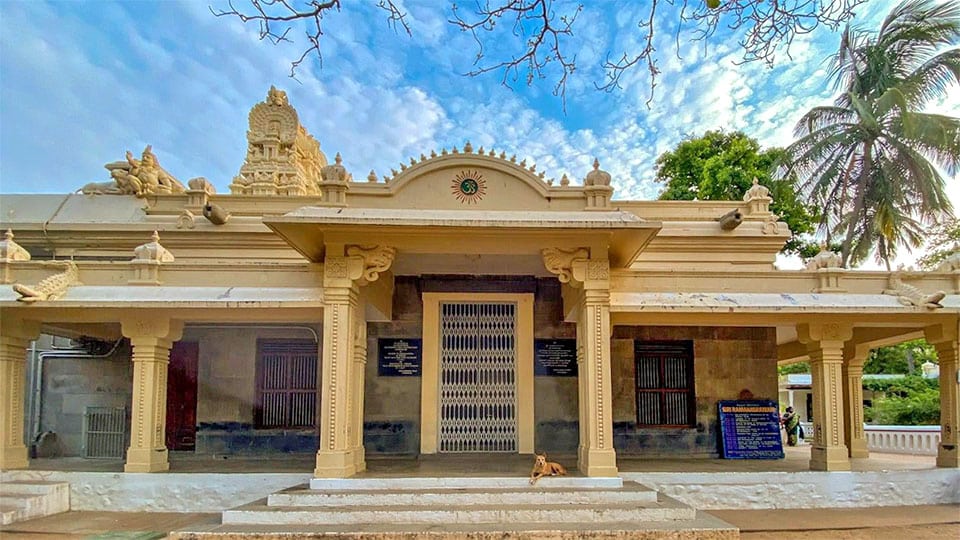
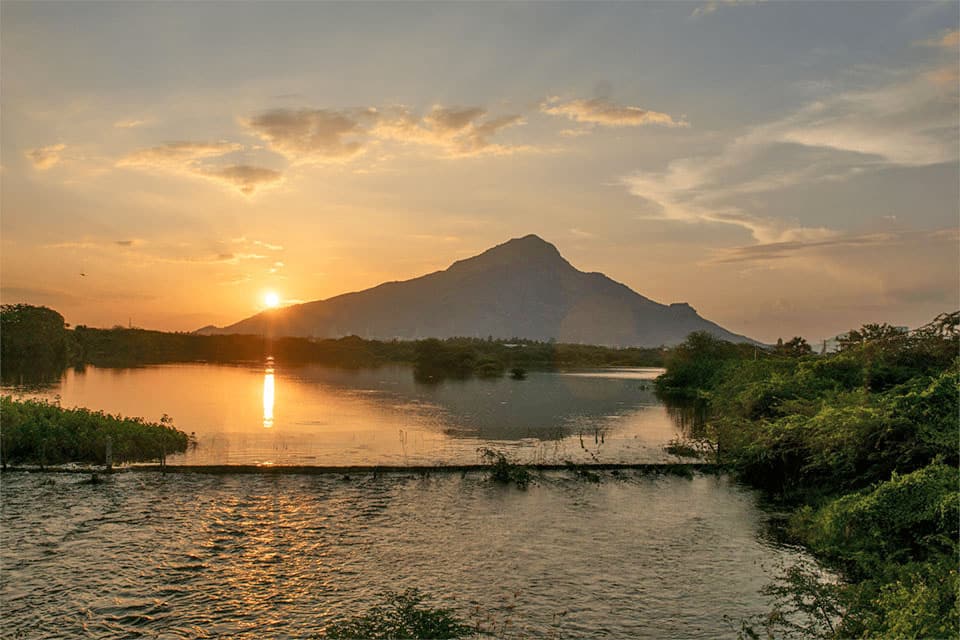
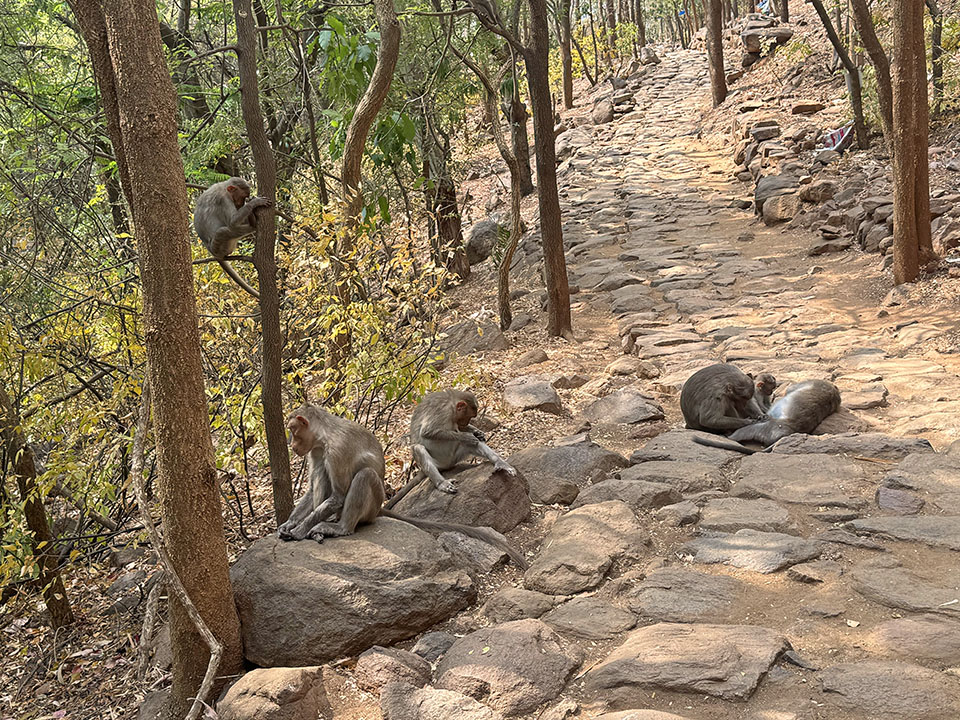
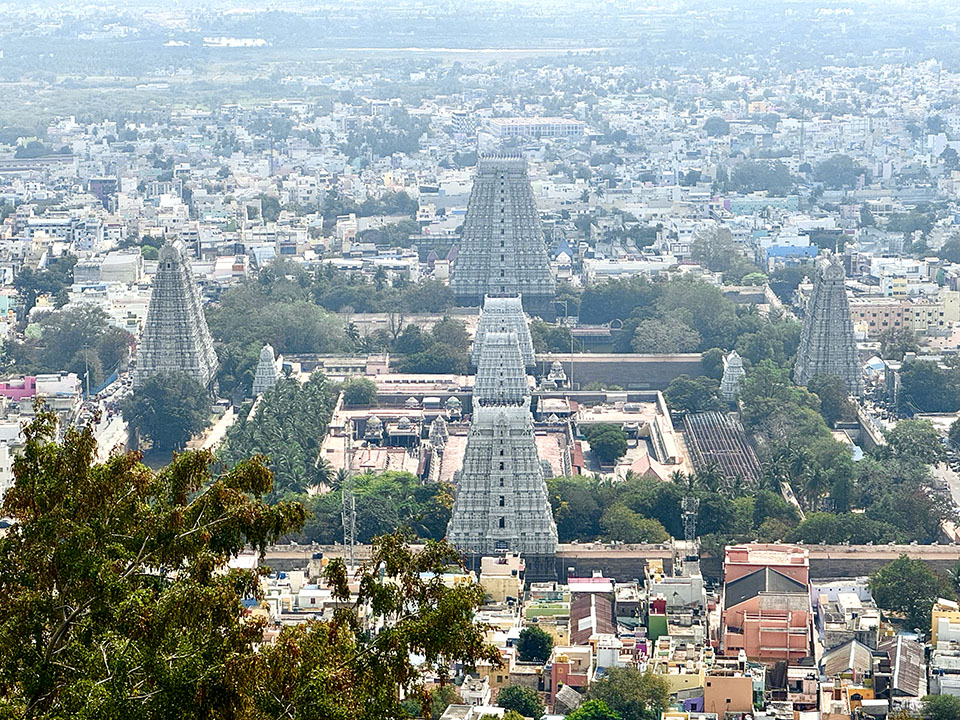
We visited the meditation hall, a large bookstore printing their guru Sri Ramana Maharshi’s teachings in multiple languages, and hiked up the mountain (with more monkeys) to a cave used for meditation, with views overlooking the Annamalaiyar Temple. We were also served a simple lunch on bamboo leaves in a large communal hall alongside hundreds of others. The ashram also operates like a soup kitchen, feeding anyone in need—those guests are served first, before residents and visitors.
Photos weren’t allowed other than on the hike, so we have very few from this part of the experience.
Fire Circle Puja
The next morning started with a fire circle puja, a sacred ritual where offerings are made into a fire to purify obstacles and invite in positive energy and healing. The ceremony was just for our group (plus one Norwegian visitor, who asked if he could join us; he was on his way to the Ganges to study with a guru.)
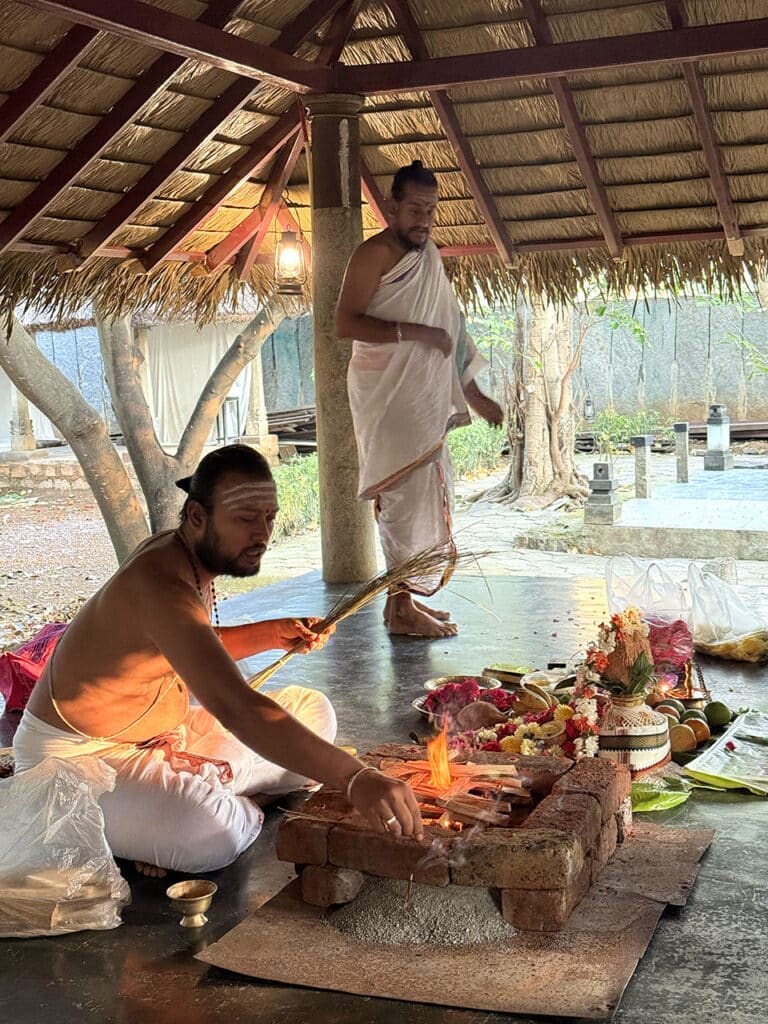
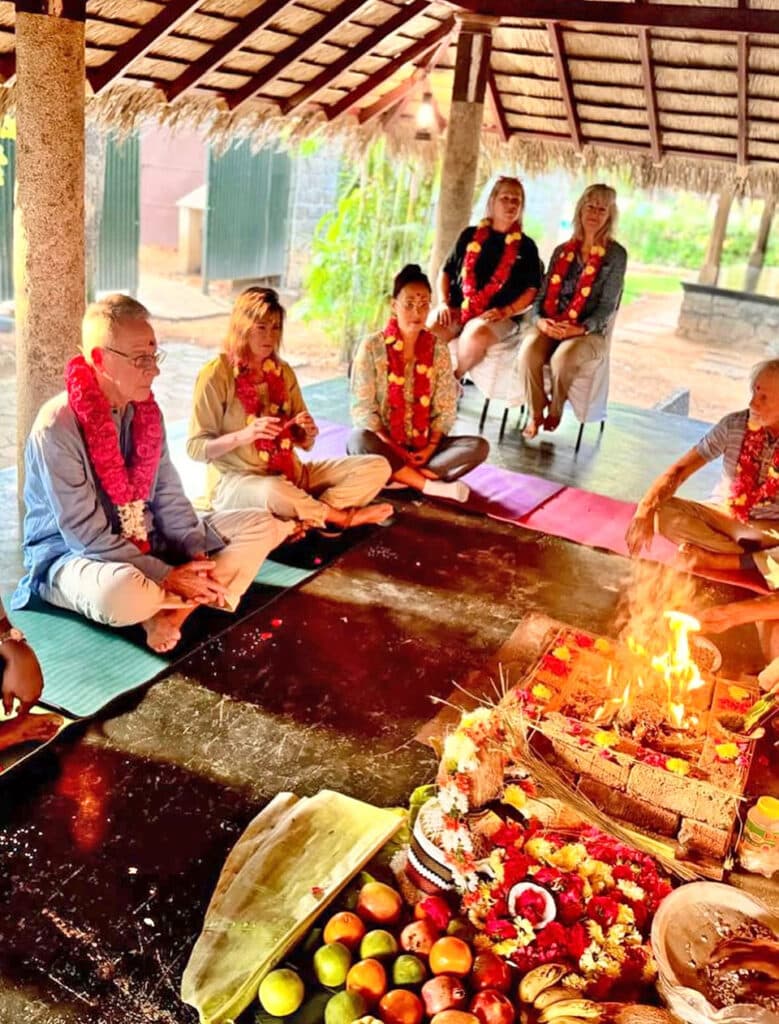
The Hindu priests placed flower garlands around each of our necks, then Roger shared our names with the priests, who chanted Sanskrit prayers for each of us, while offering herbs, ghee (clarified butter), flowers, and grains into the fire, symbolically releasing negativity and supporting personal and spiritual growth.
A platter with burning ghee and incense was then passed around the circle for us to draw the smoke toward ourselves for purification, and we then walked around the fire three times as a group.
We felt so much gratitude taking part in a Hindu ritual that has been practiced for thousands of years. After the beautiful fire circle puja, we were off to experience the first large temple of our trip.
Arunachaleswarar Temple
This was the first massive Hindu temple we visited—spanning 25 acres and adorned with intricate reliefs of Lord Shiva, his bull Nandi, and other deities across its towers and shrines.
Nine towering white marble gateways (gopurams) rise above multiple concentric courtyards, with the eastern tower soaring over 217 feet—one of India’s tallest. Colorful, elaborately carved shrines dot the grounds, adding to the temple’s stunningly beautiful detail.
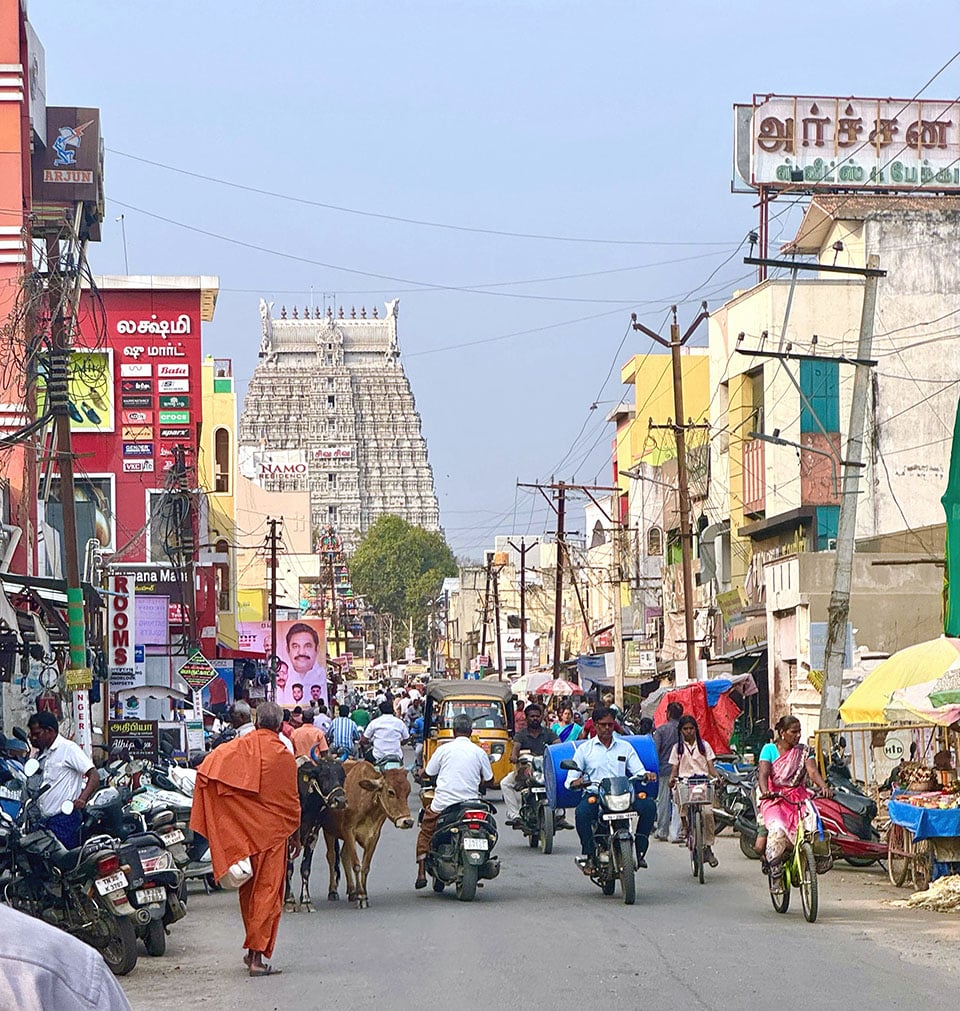
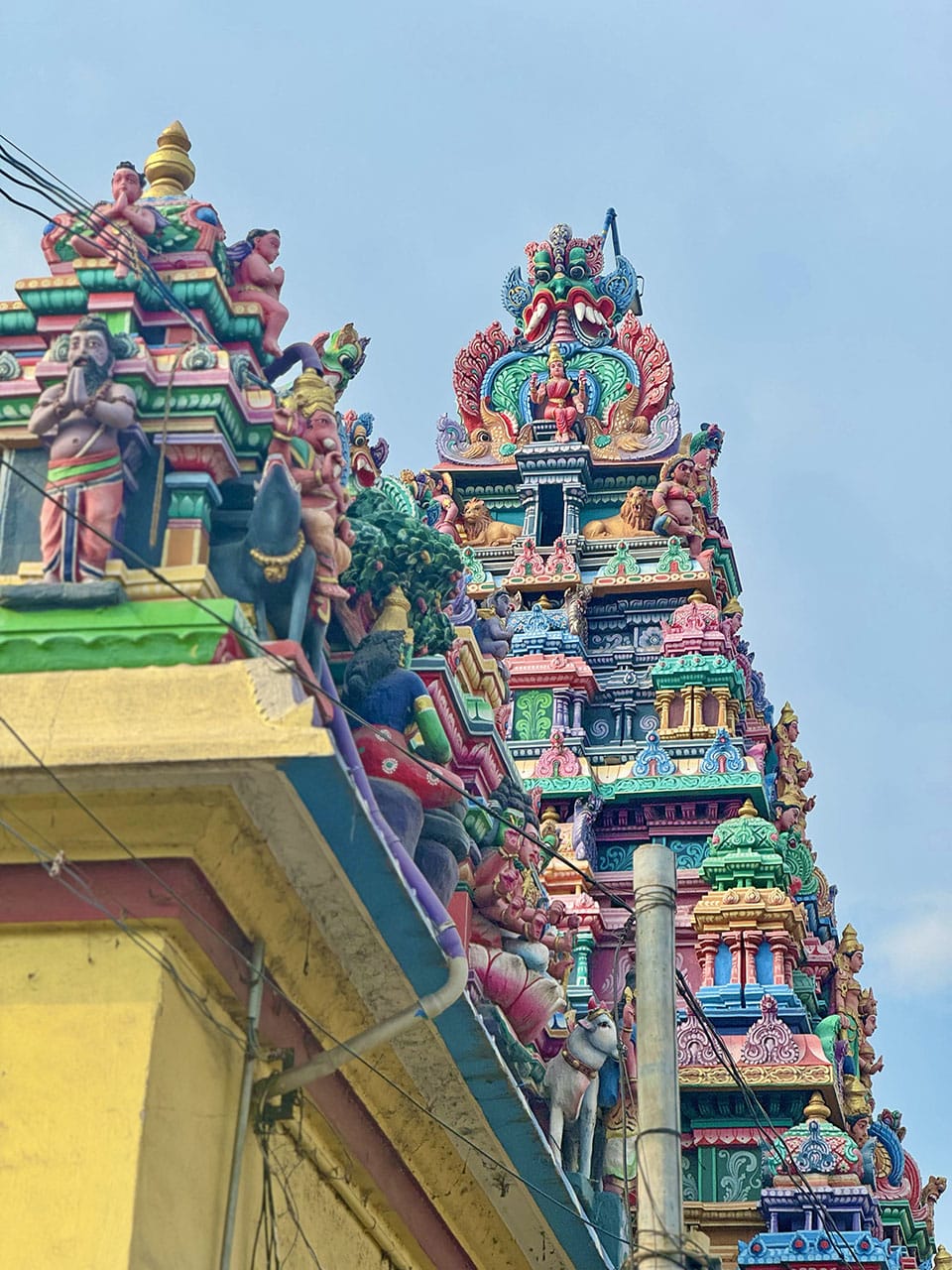
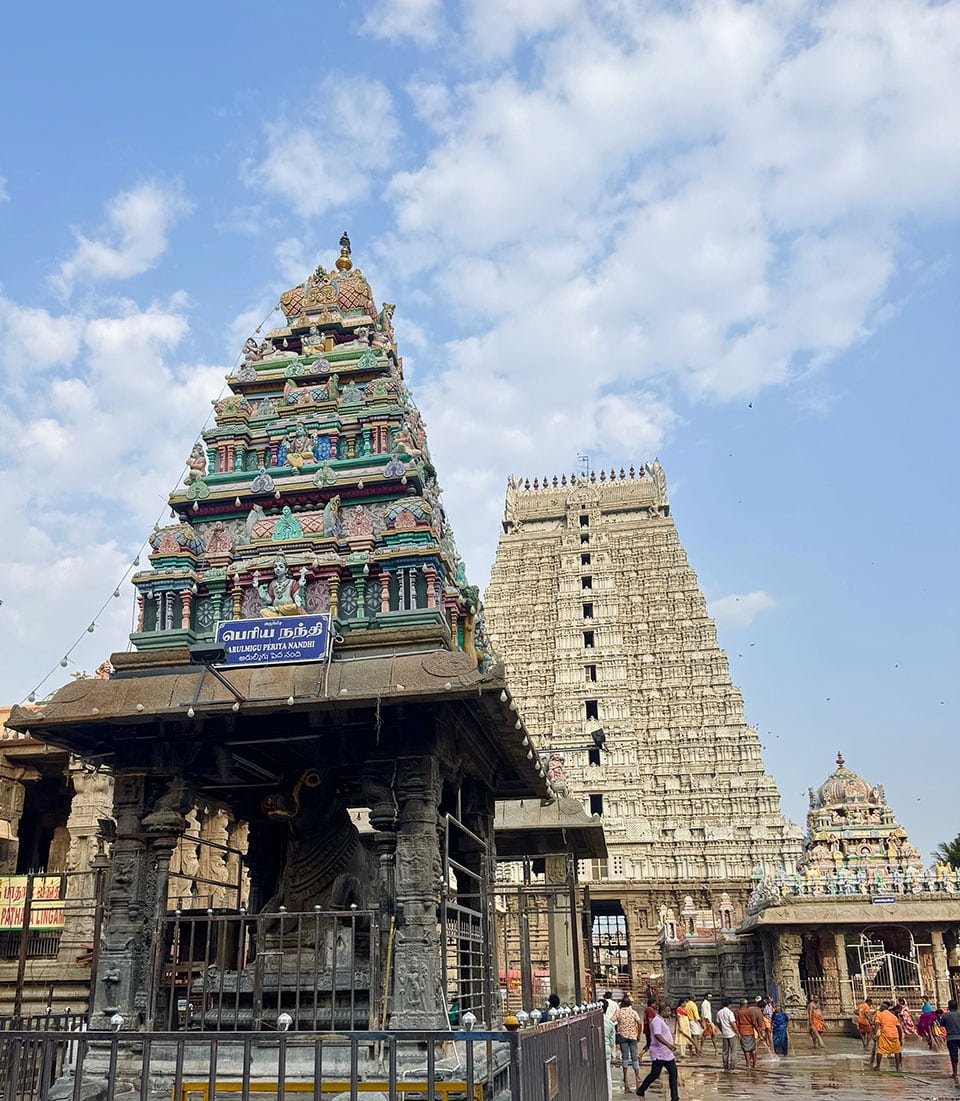
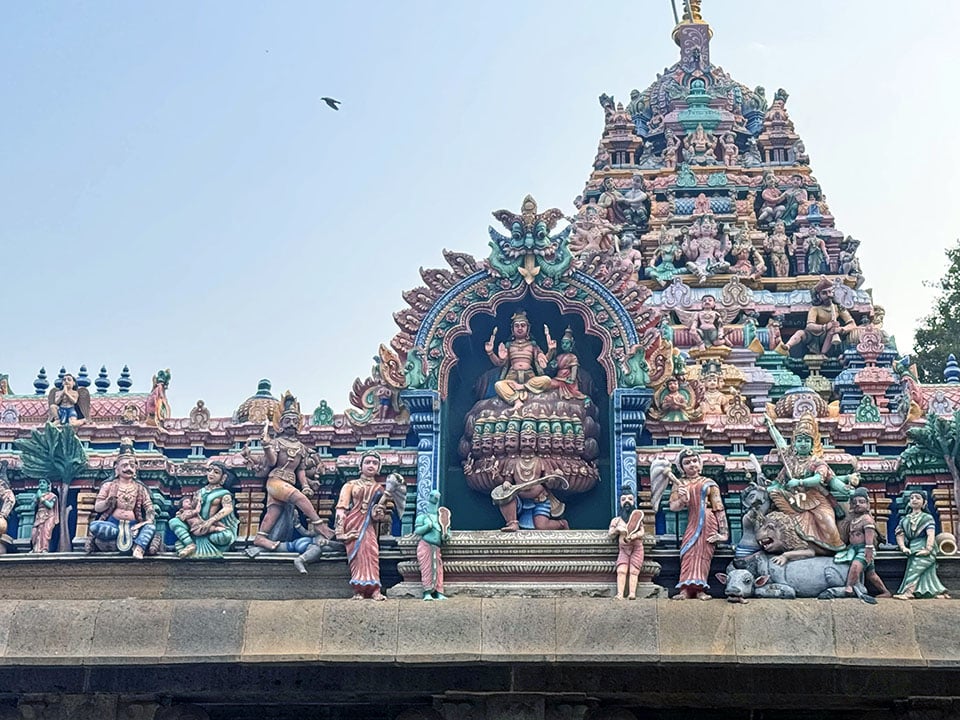
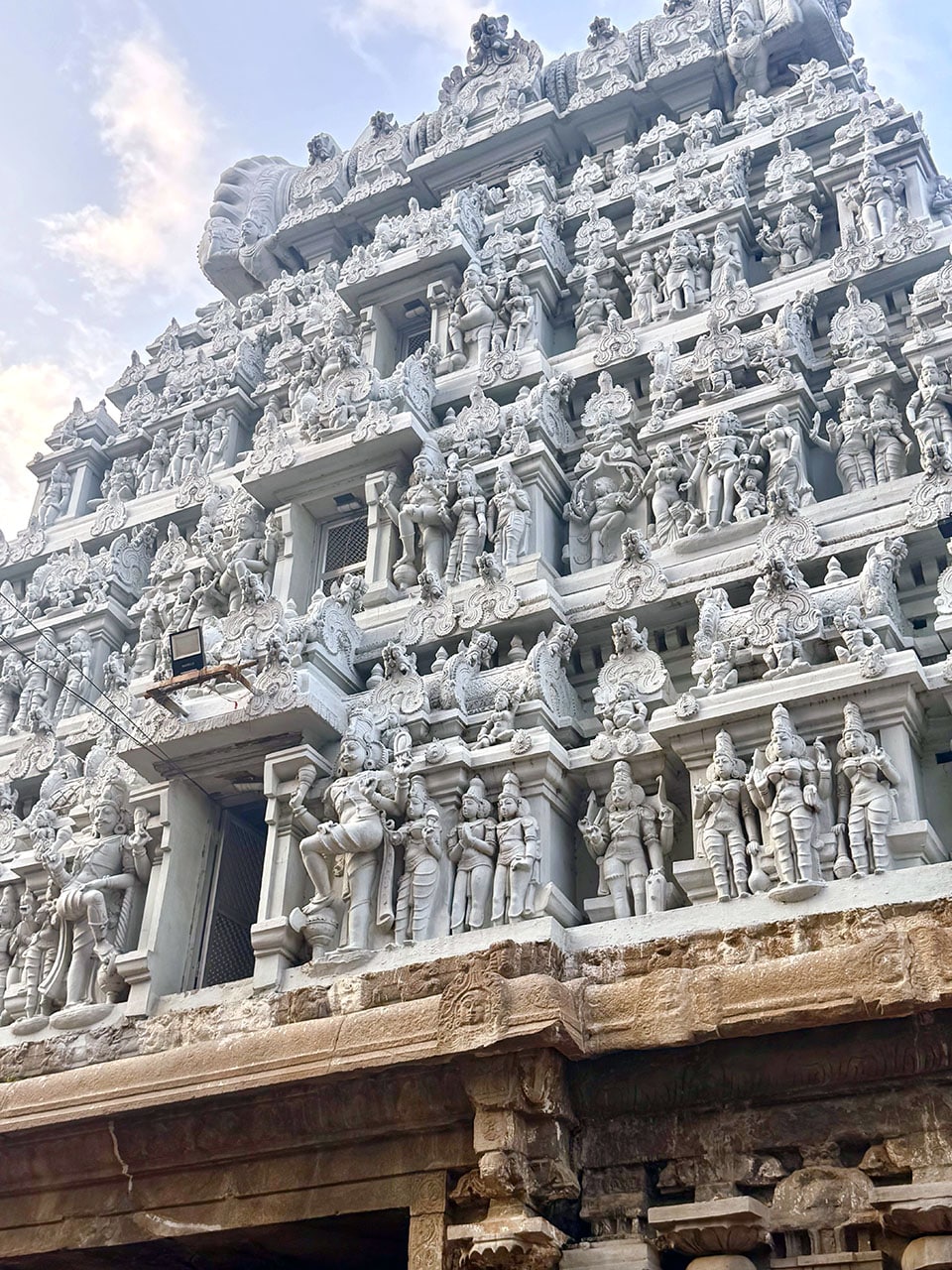
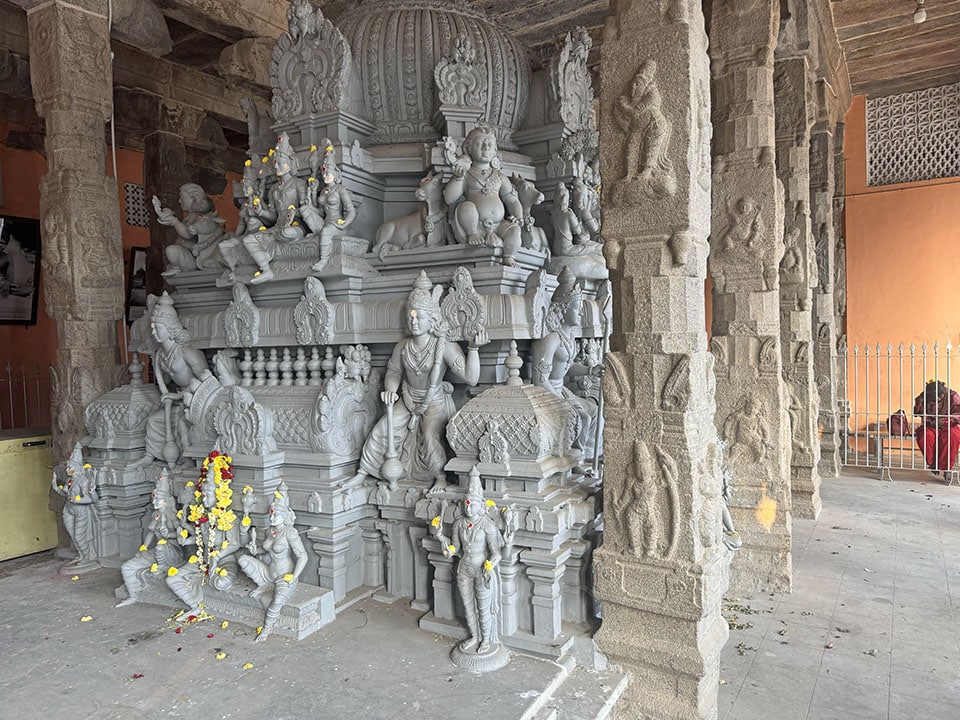
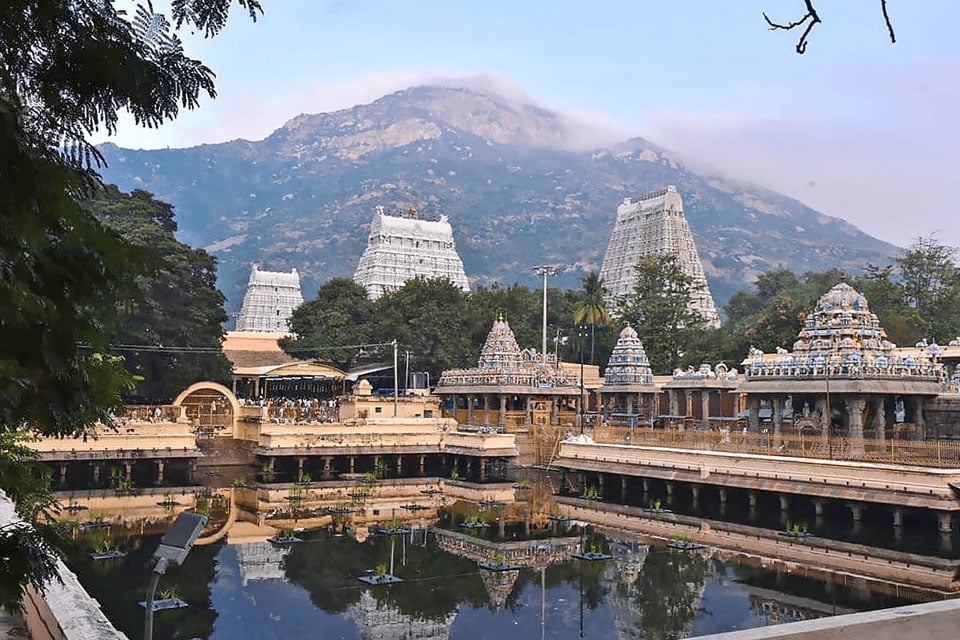
Dedicated to Lord Shiva, the Arunachaleswarar temple was built over more than 1,000 years (roughly 850–1280 CE) by dynasties including the Cholas and Vijayanagara kings.
Our bus was not able to get close to the temple, so we had to walk a few blocks through busy streets with no sidewalks—cars, tuk-tuks, and motorbikes whizzing by— walking single file to keep from getting hit, we weaved between storefronts, trash, vendor carts, cows, and cow pies—watch your step! Cows are sacred and revered as “Gau Mata” (Mother Cow) because they provide life-sustaining milk, fuel, and fertilizer, symbolizing selfless motherhood and the backbone of traditional agriculture.
Shoes aren’t allowed inside the temple, so Asoka took us to a nearby “shoe minder” where we left them for a few rupees before walking barefoot to the temple. Some in our group wore the socks Mallika had given us, but we went barefoot like most Hindus—and loved being grounded.
The temple was packed with thousands of pilgrims, and being non-Hindu, we were not personally able to visit most of the inside spaces, which are reserved for Hindus only. But it was still amazing to walk around outside and feel thousands of years of sacred energy.
At one point, a pilgrim family of five (parents with three late teenage daughters) asked to take selfies with us, then each of them wanted to shake each of our hands. That quickly became a theme throughout our trip—many pilgrims coming from more rural areas may have never seen a white person or white/blond hair before, so they were excited to take photos with us, curious about our white/blond hair and blue eyes. We have most assuredly ended up in quite a few Indian family photo albums—just as they’ve now ended up in ours!
We learned that during certain festivals, priests go up inside the temple towers, lighting ghee butter lamps at each level. That must be spectacular to see at night! During more ancient times, the height of the temples was also useful as lookouts for invaders. Villagers would take refuge in the thick-walled temples while the large temple doors would be barred shut, keeping everyone safe inside.
After two days in Tiruvannamalai, we were off to Auroville and Pondicherry. The changing landscapes—and constant roadside scenes—kept us entertained and asking Asoka plenty of questions along the way.
Another Roadside Attraction
Much of the countryside in South India feels very reminiscent of rural Mexico—cows and dogs roaming freely, motorcycles weaving through traffic, roadside shrines, and stands selling watermelon, drinking coconuts, and other fruits, along with roadside garbage. All set against a backdrop that was both vibrant and rough around the edges.
So far, little has truly shocked us; in many ways, India feels like Mexico on steroids. In the spirit of the late Tom Robbins, traveling by bus through South India offers unending glimpses of daily life and roadside attractions—shrines, sculptures, street art, and an ever-changing mix of landscapes and buildings passing by our windows.
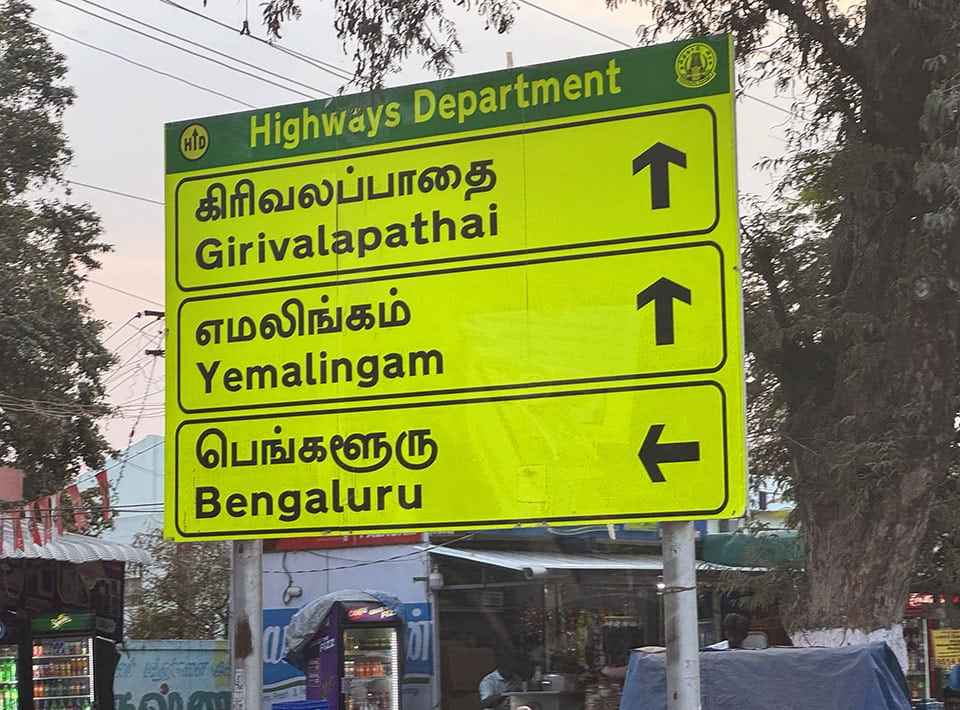
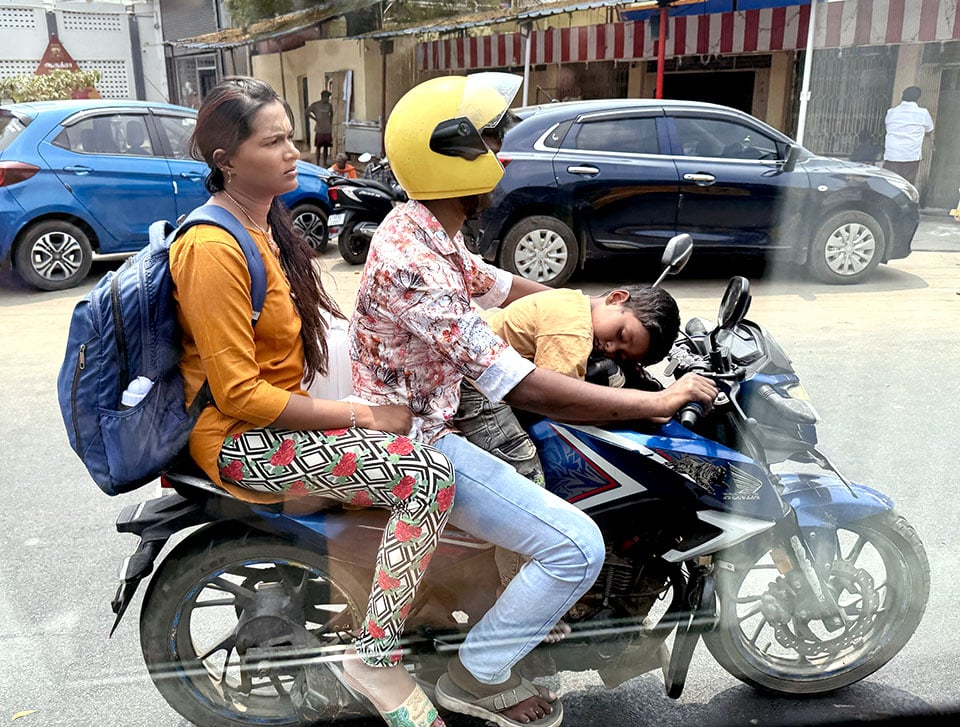
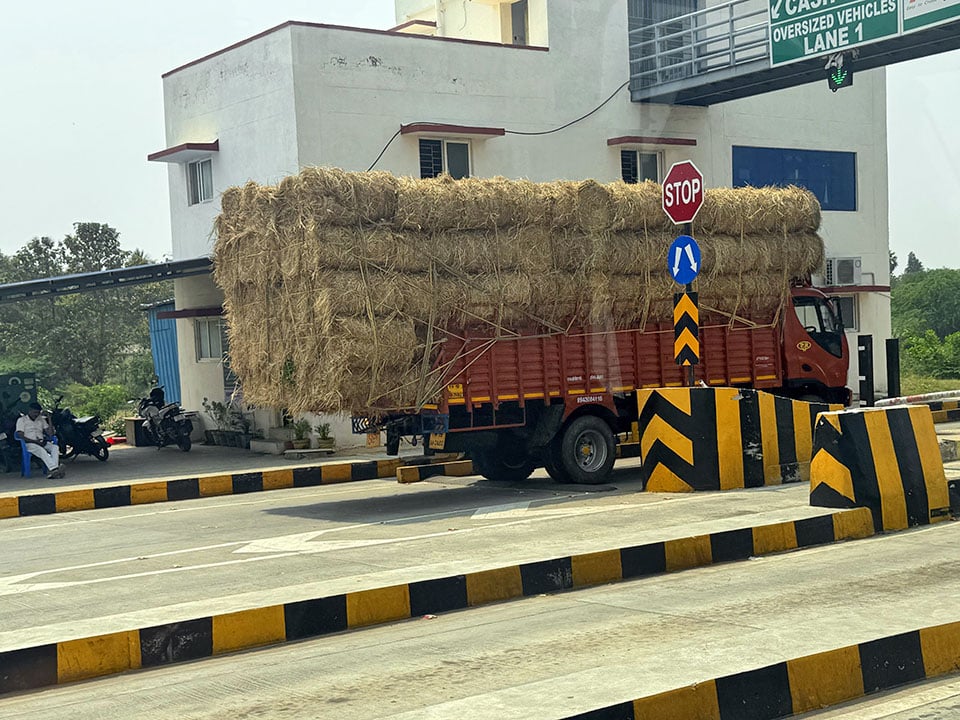
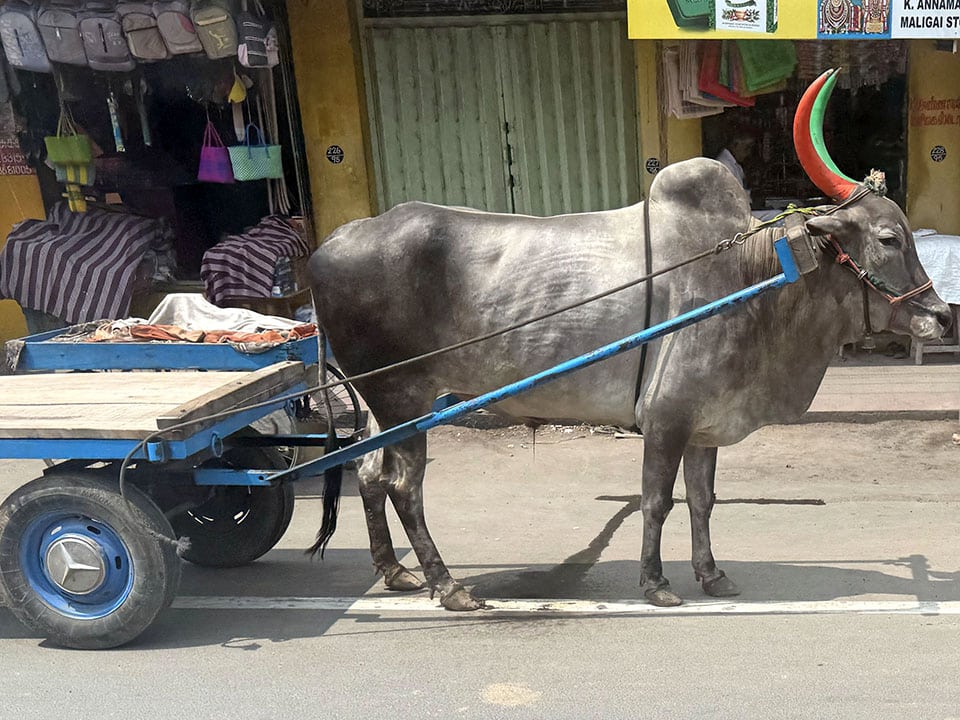
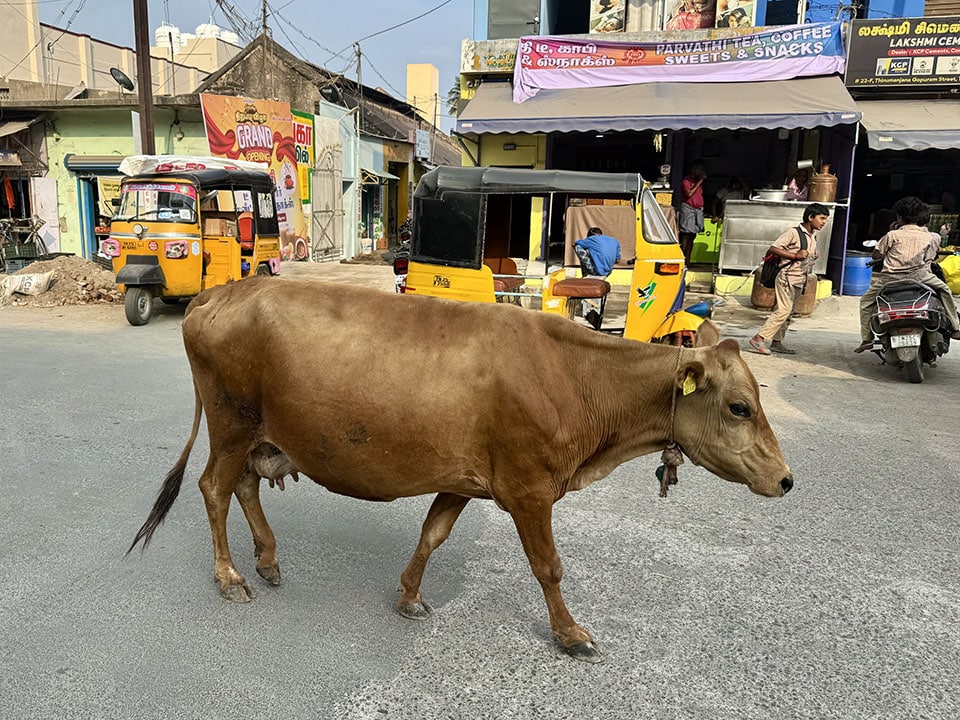
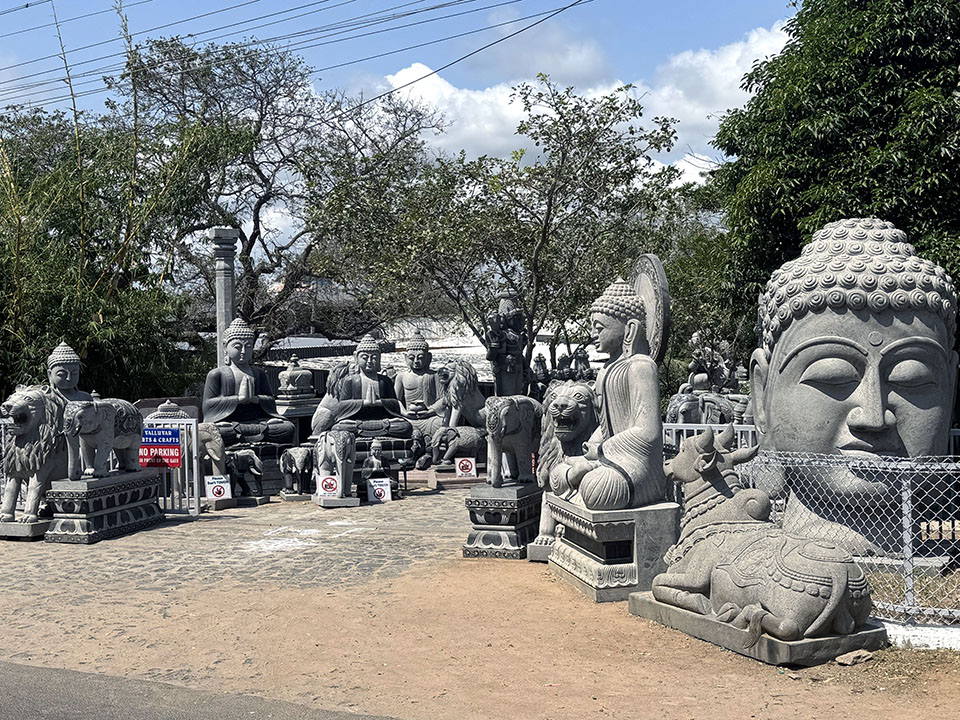
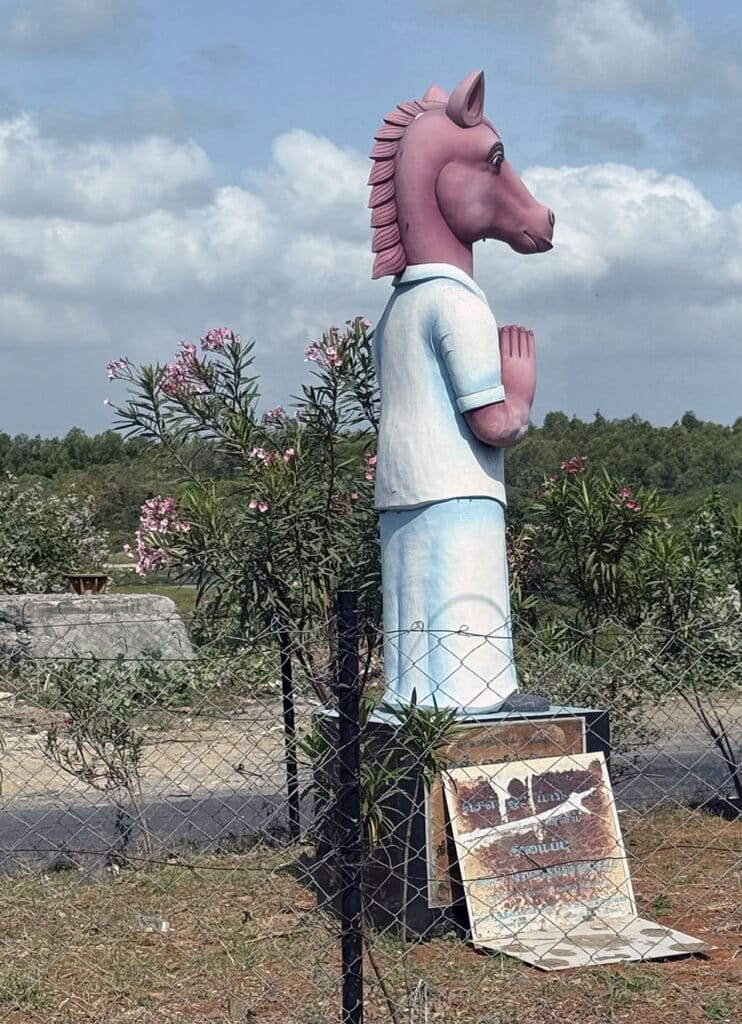
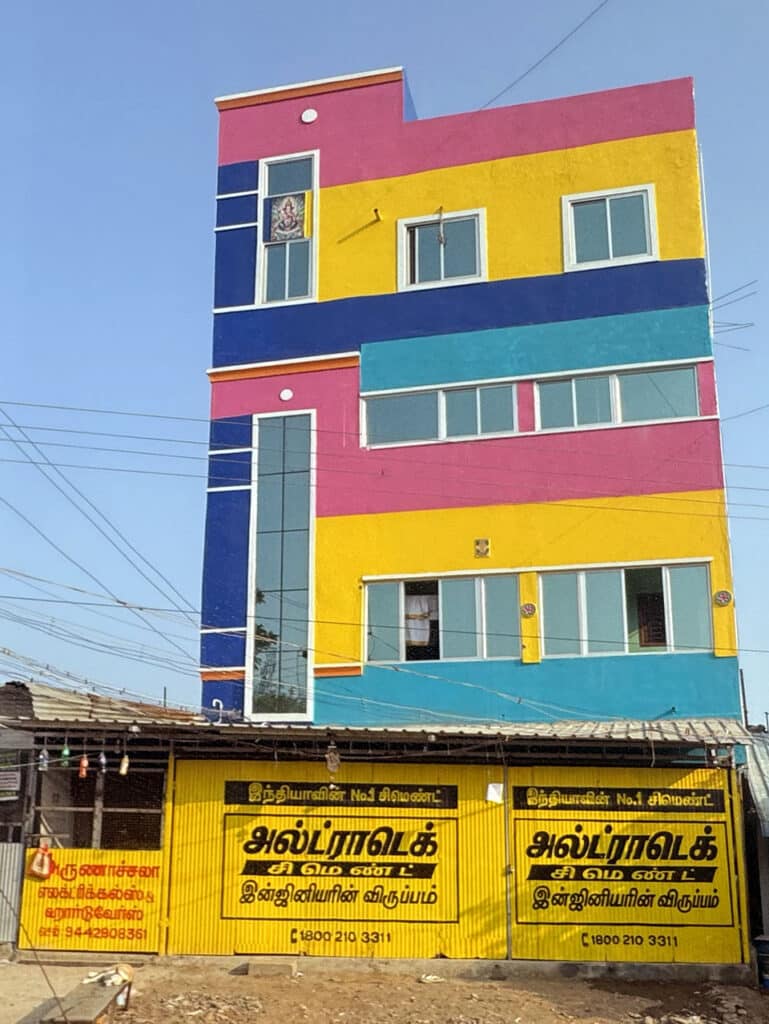
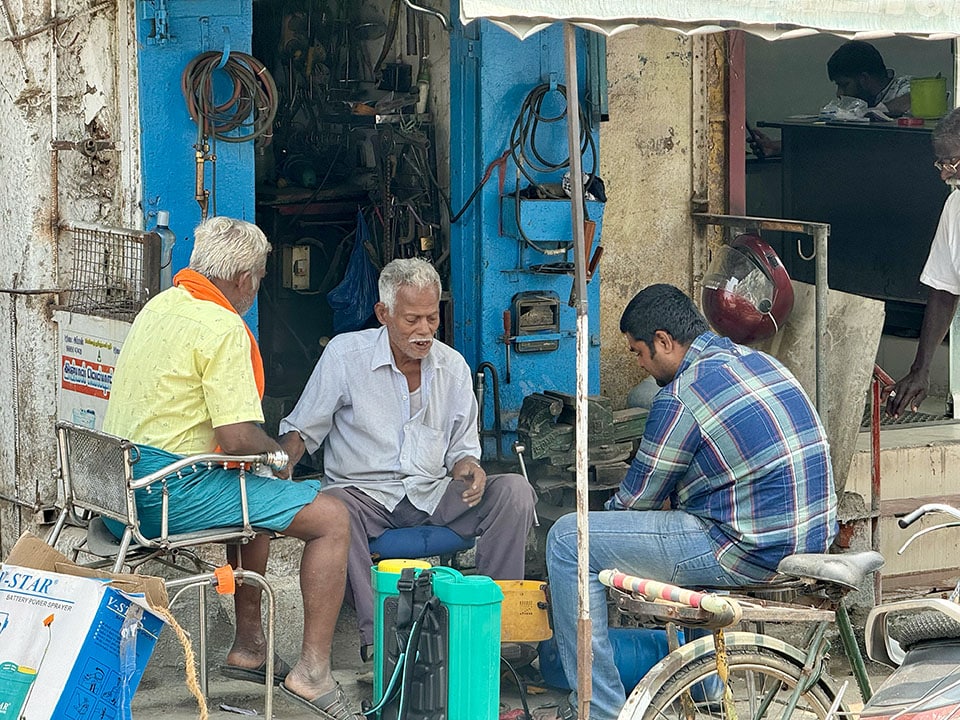
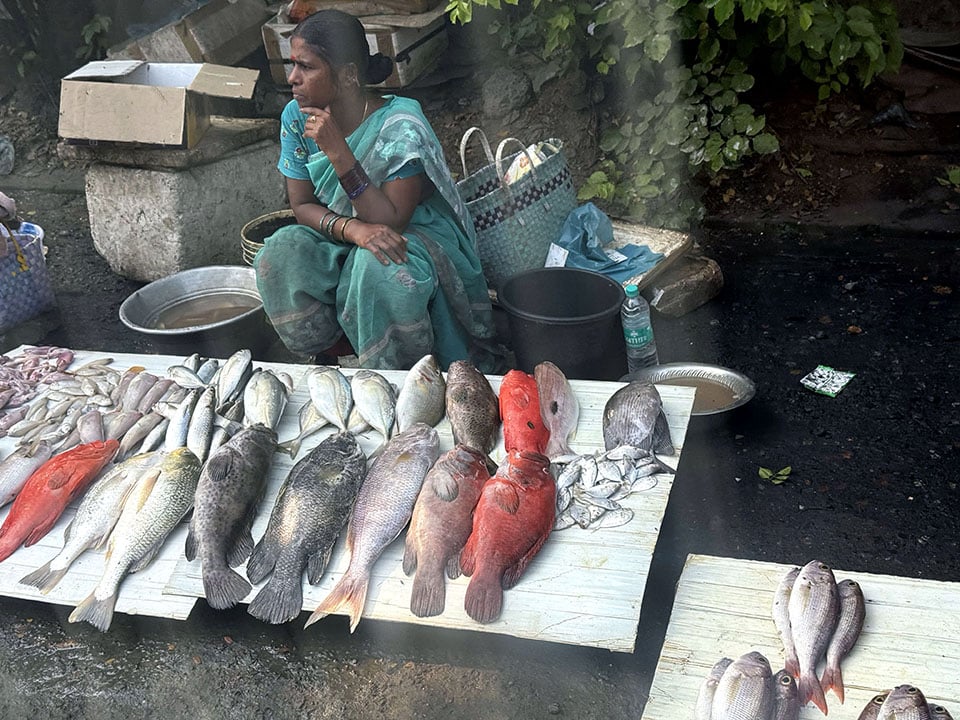
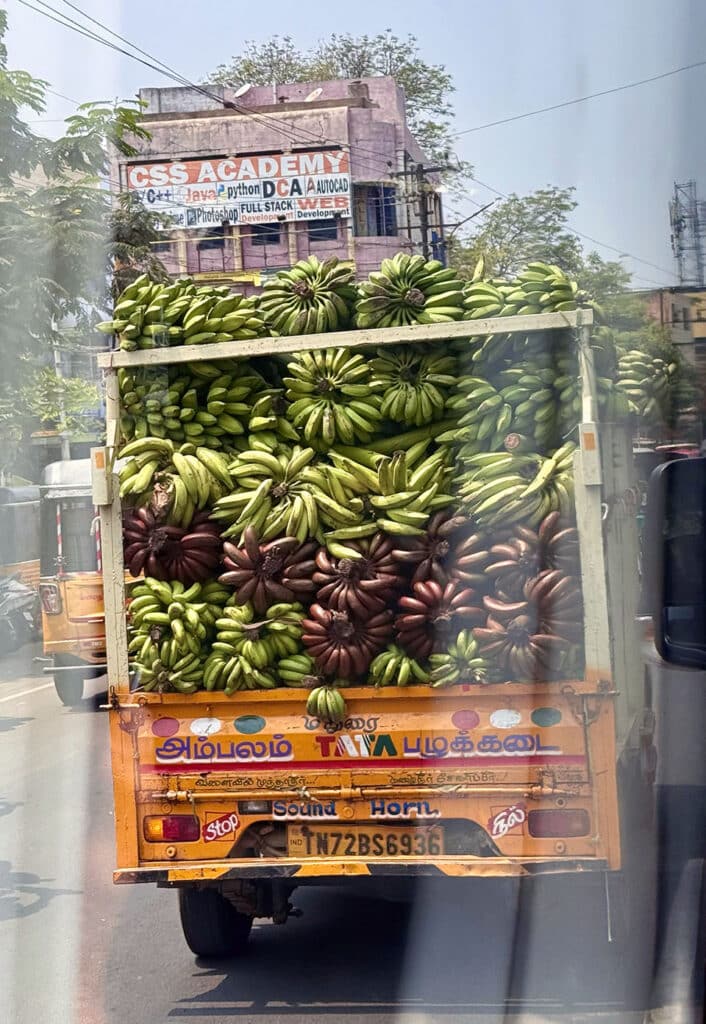

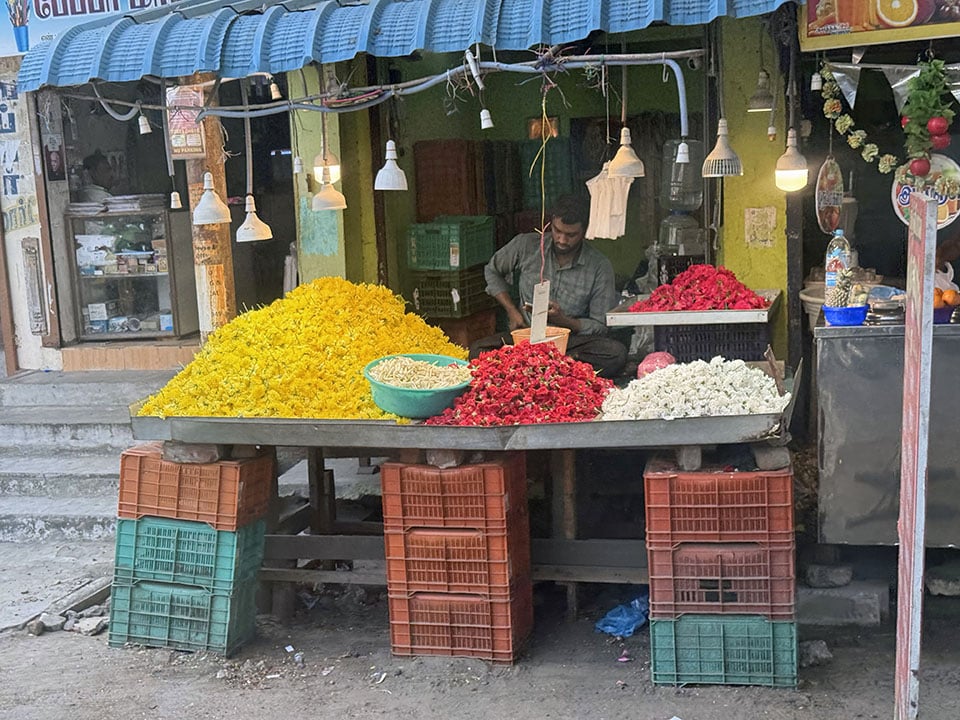
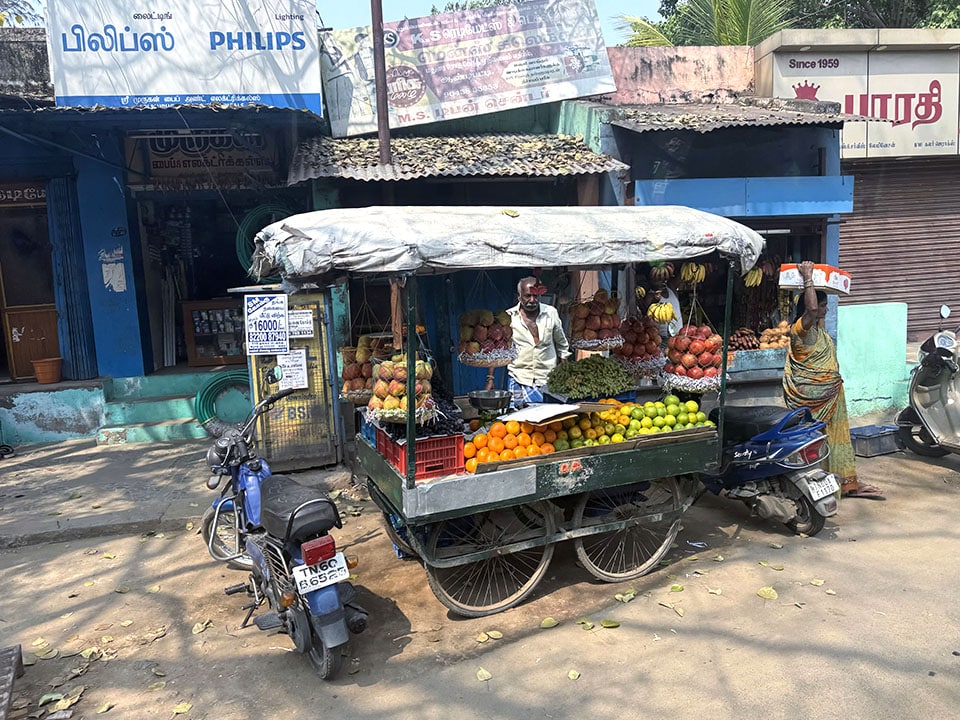
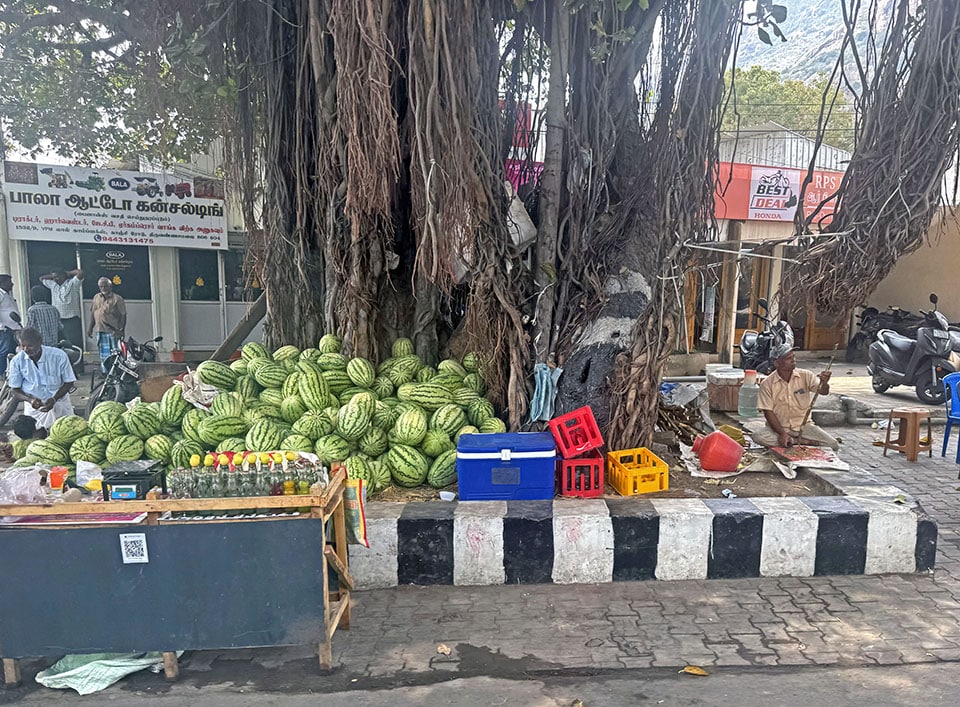
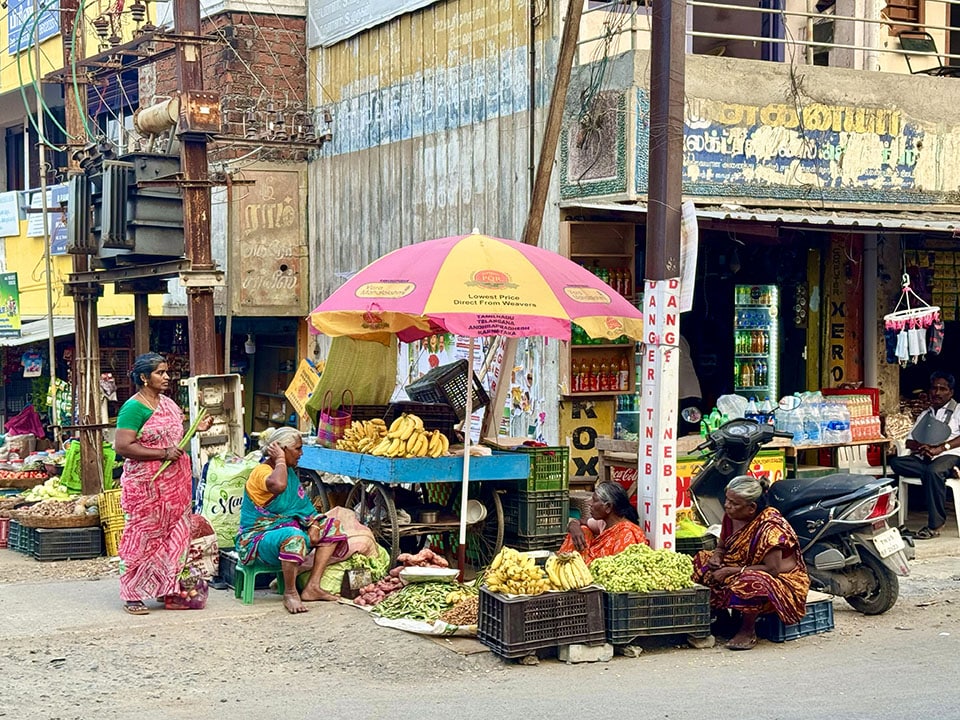
Sometimes we captured the perfect shot. Other times, just as the perfect moment appeared (like the woman in a bright green sari balancing a clay pot on her head as she walked through a beautiful arched doorway), the bus would lurch—or a truck would pass by and block everything.
For every photo we captured, there are three or four more that exist only in our memories. We also had to contend with bus window reflections of white seats, white curtains, and people, so a few images may look like a double exposure.
The landscape varied along the way, from coconut palms to rice paddies to sugar cane fields. And for you sailors, the grove of trees in the middle of the second row is young teak trees. We will see many more mature teak forests in Part 3 in Kerala, among the tea plantations.
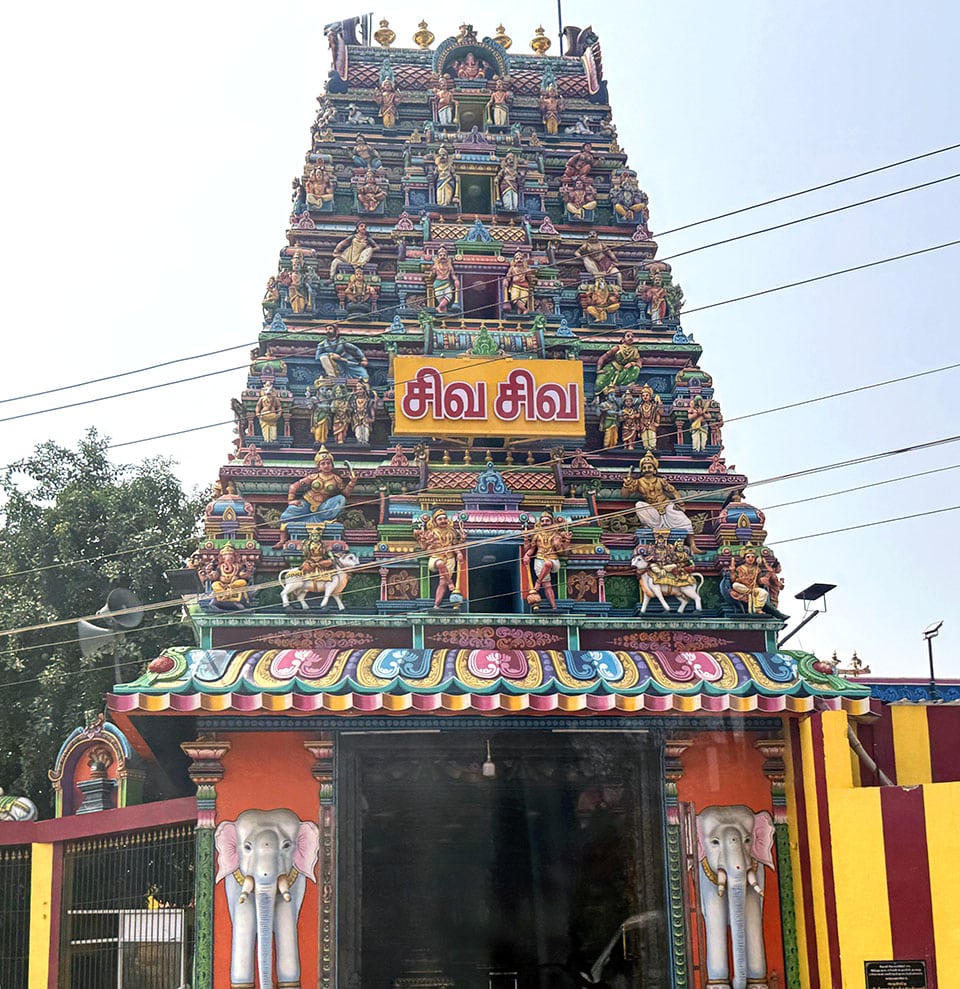
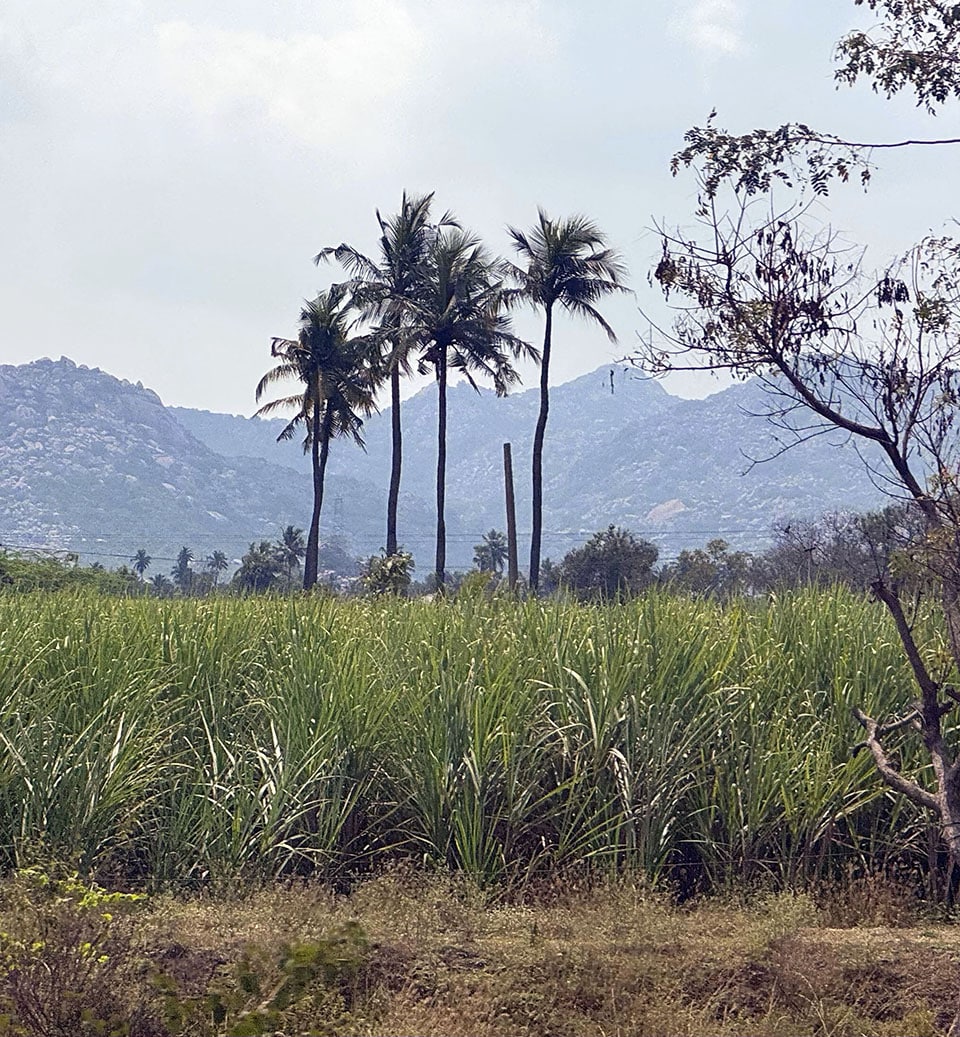
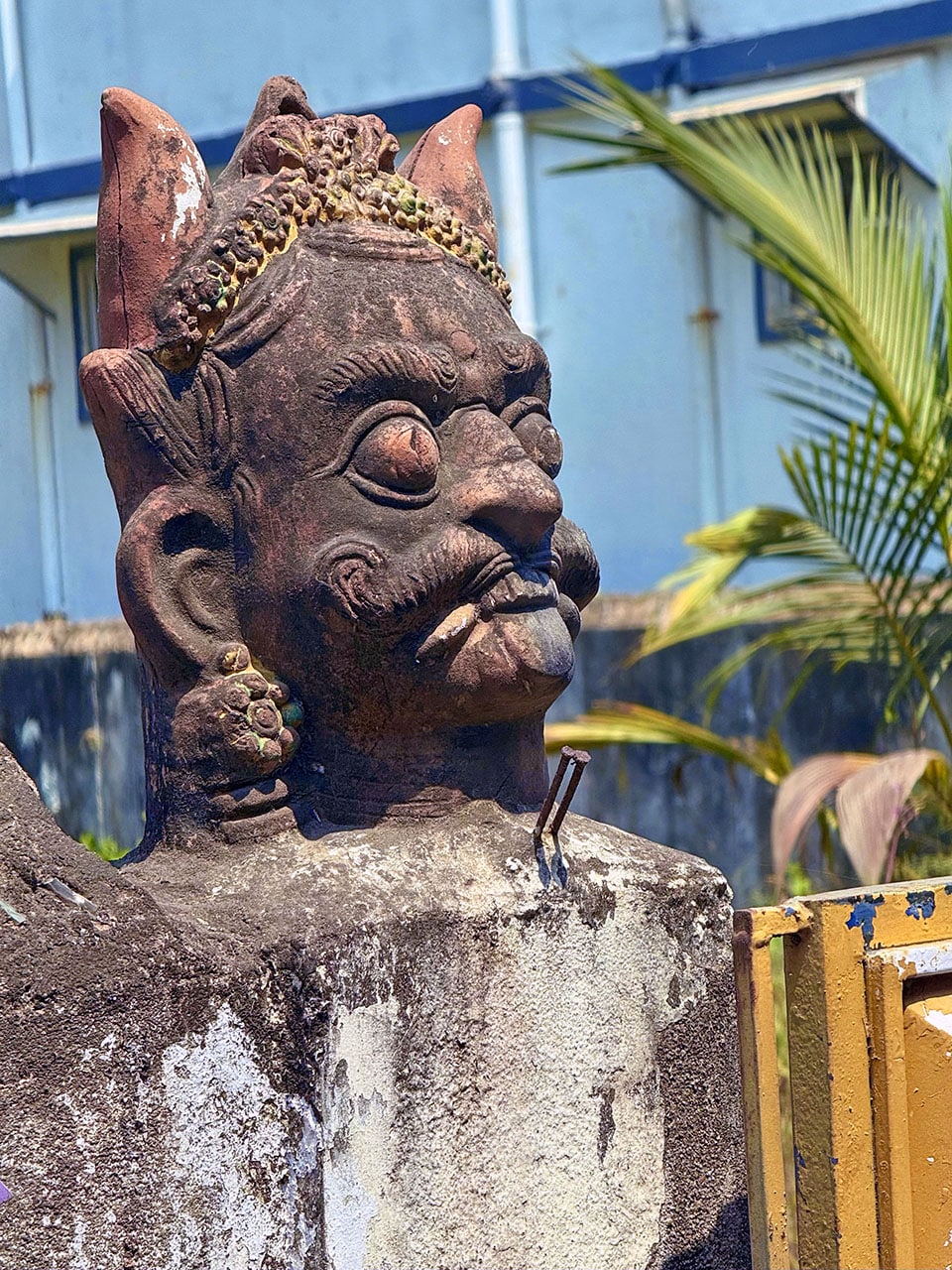
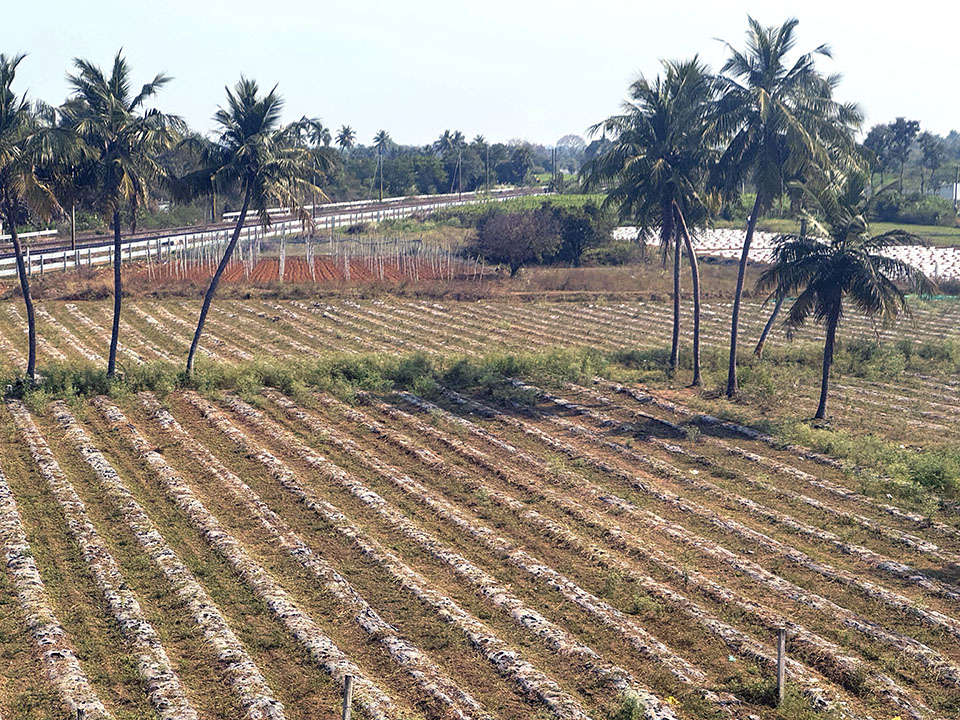
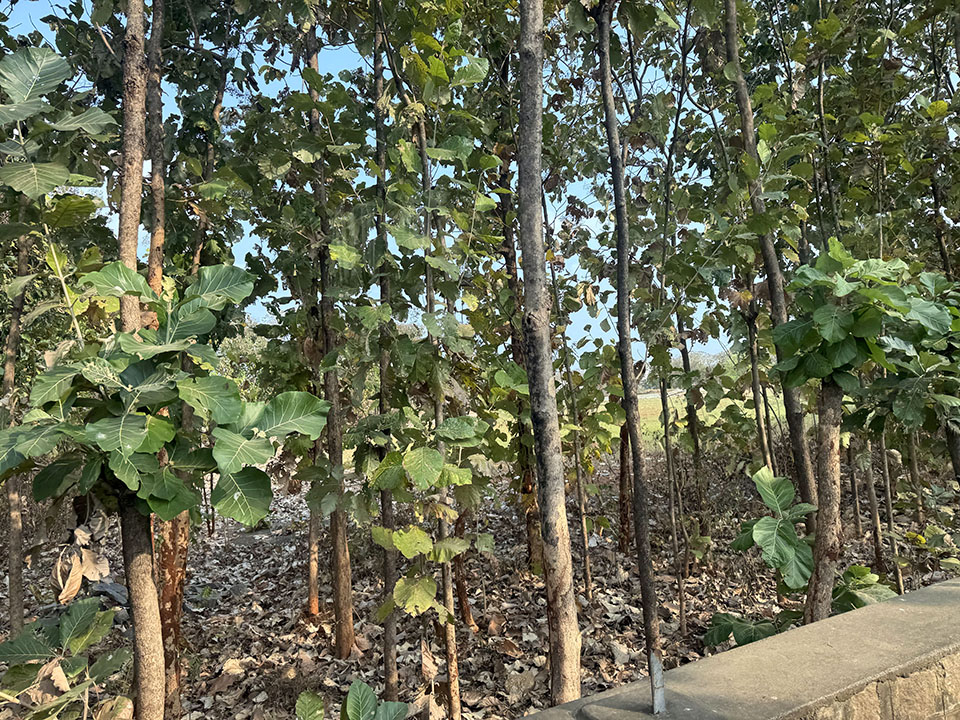
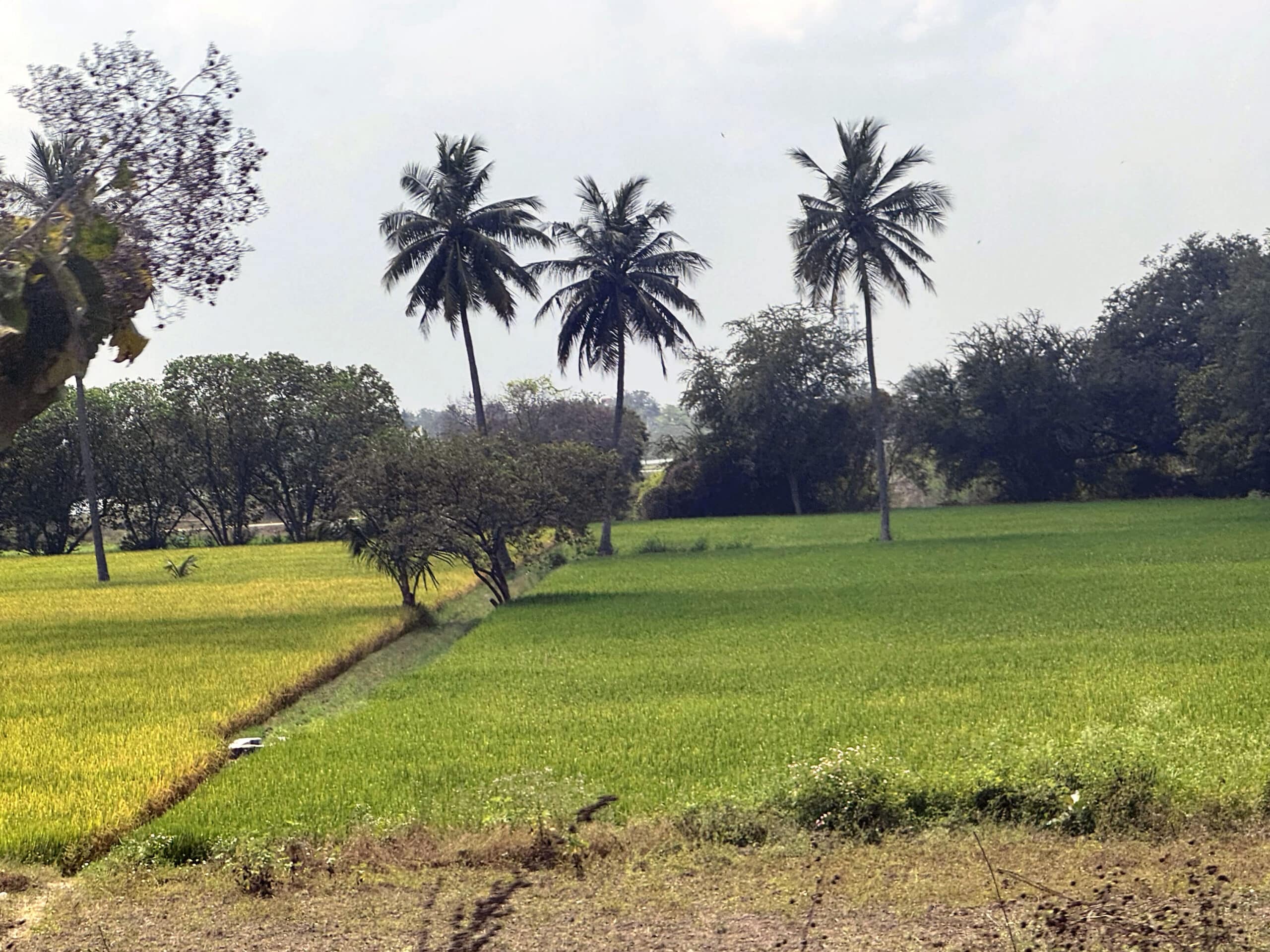
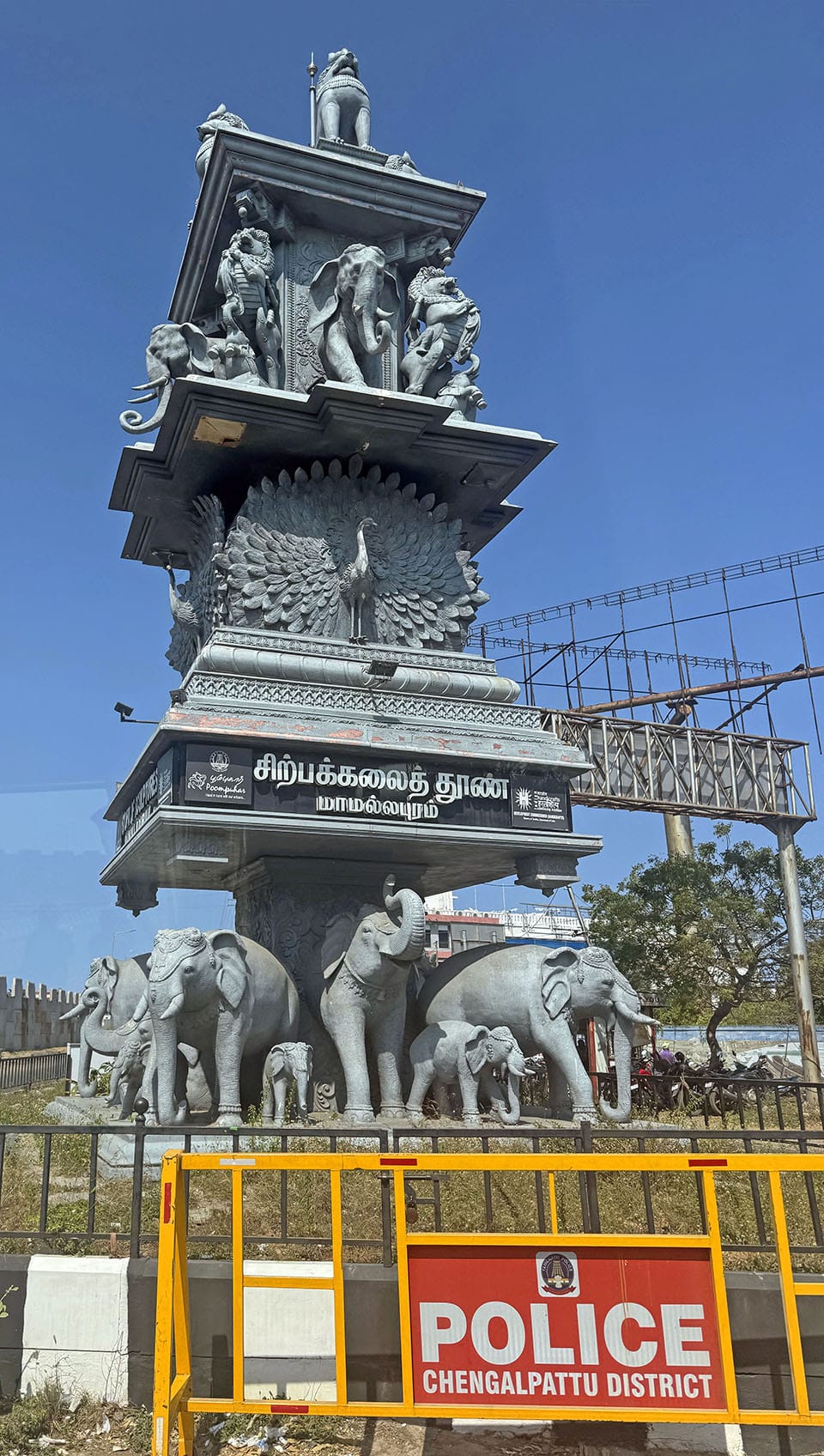
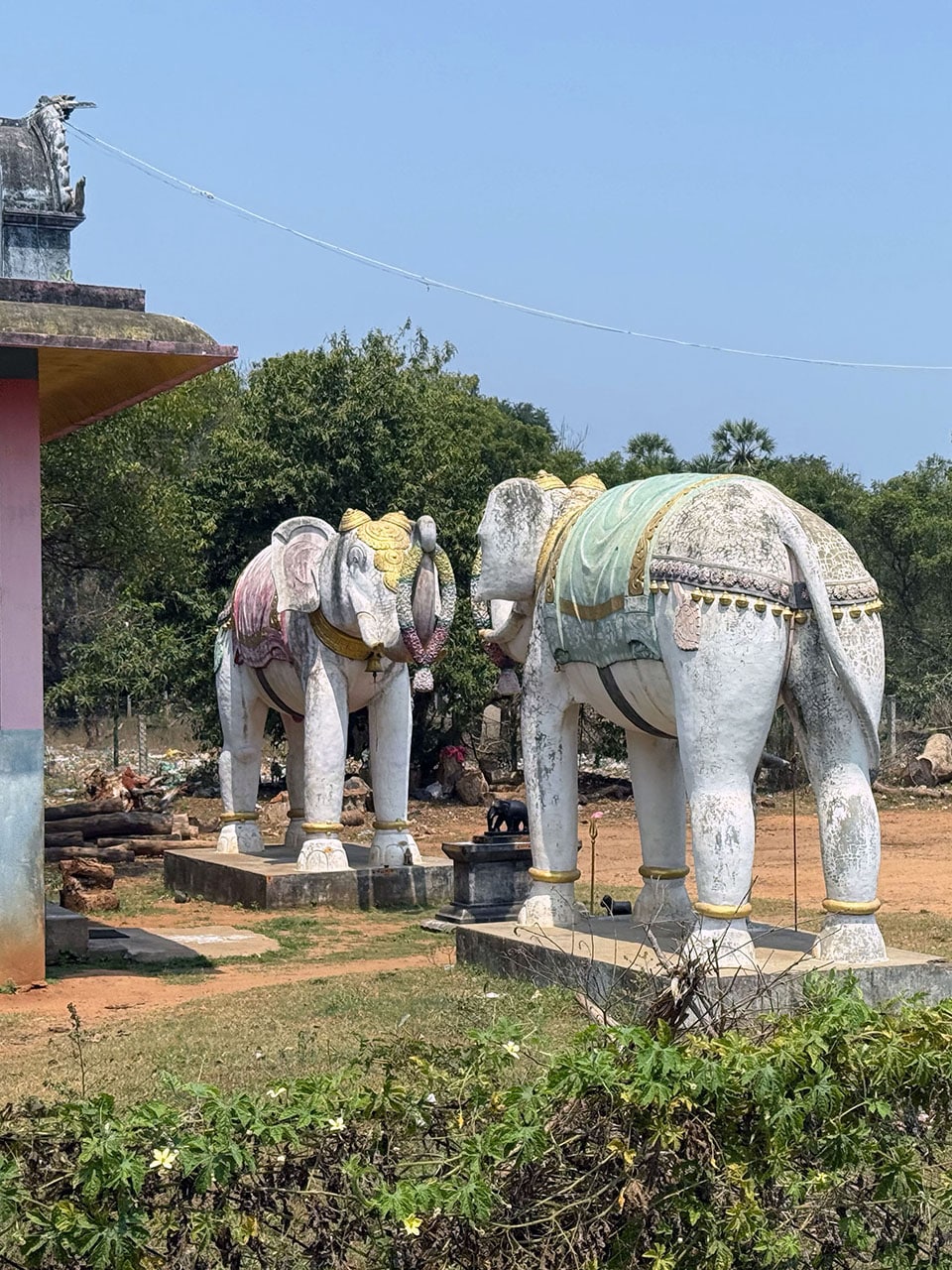
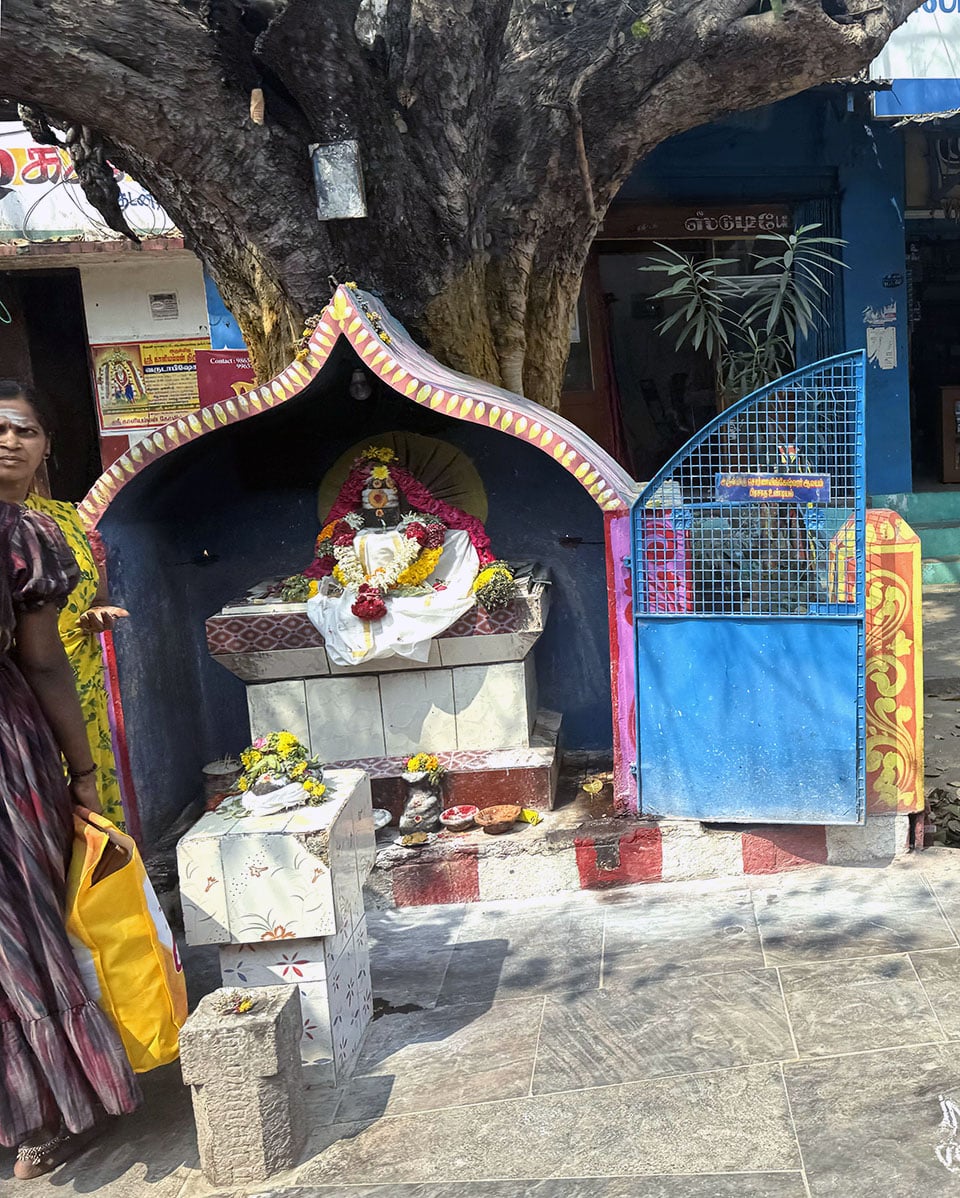
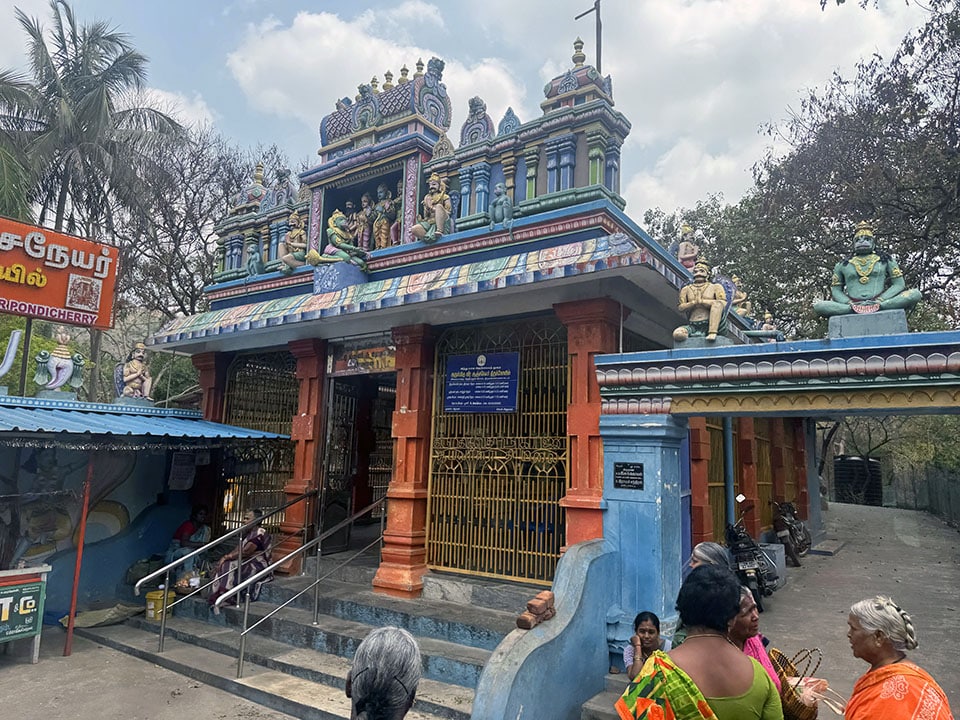
Indians drive on the left side of the road (a remnant of British rule), so we were always trying to anticipate which side of the bus would give us the best shot—and which might be blocked at the last second.
Washroom with a View
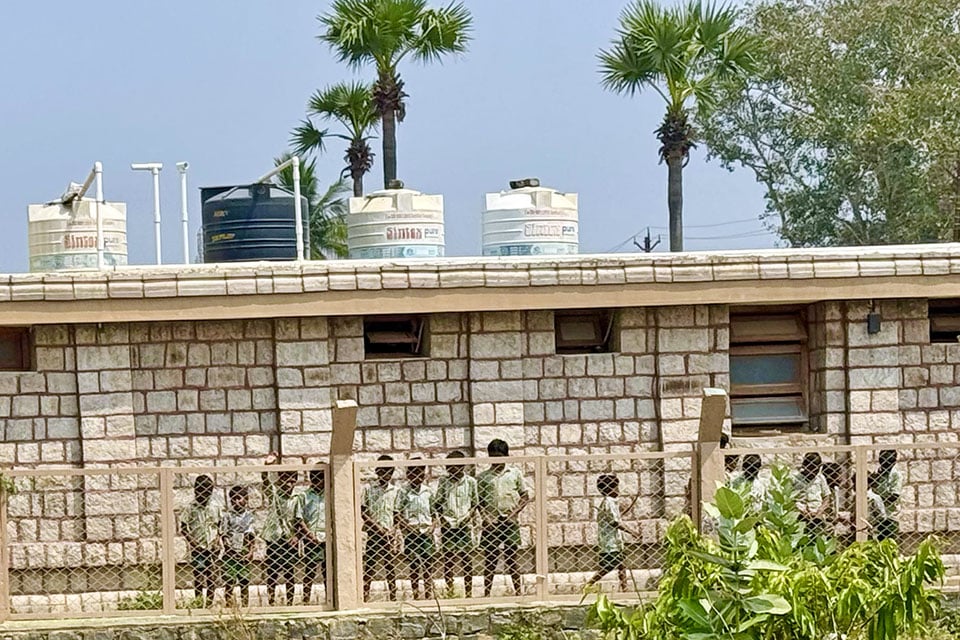
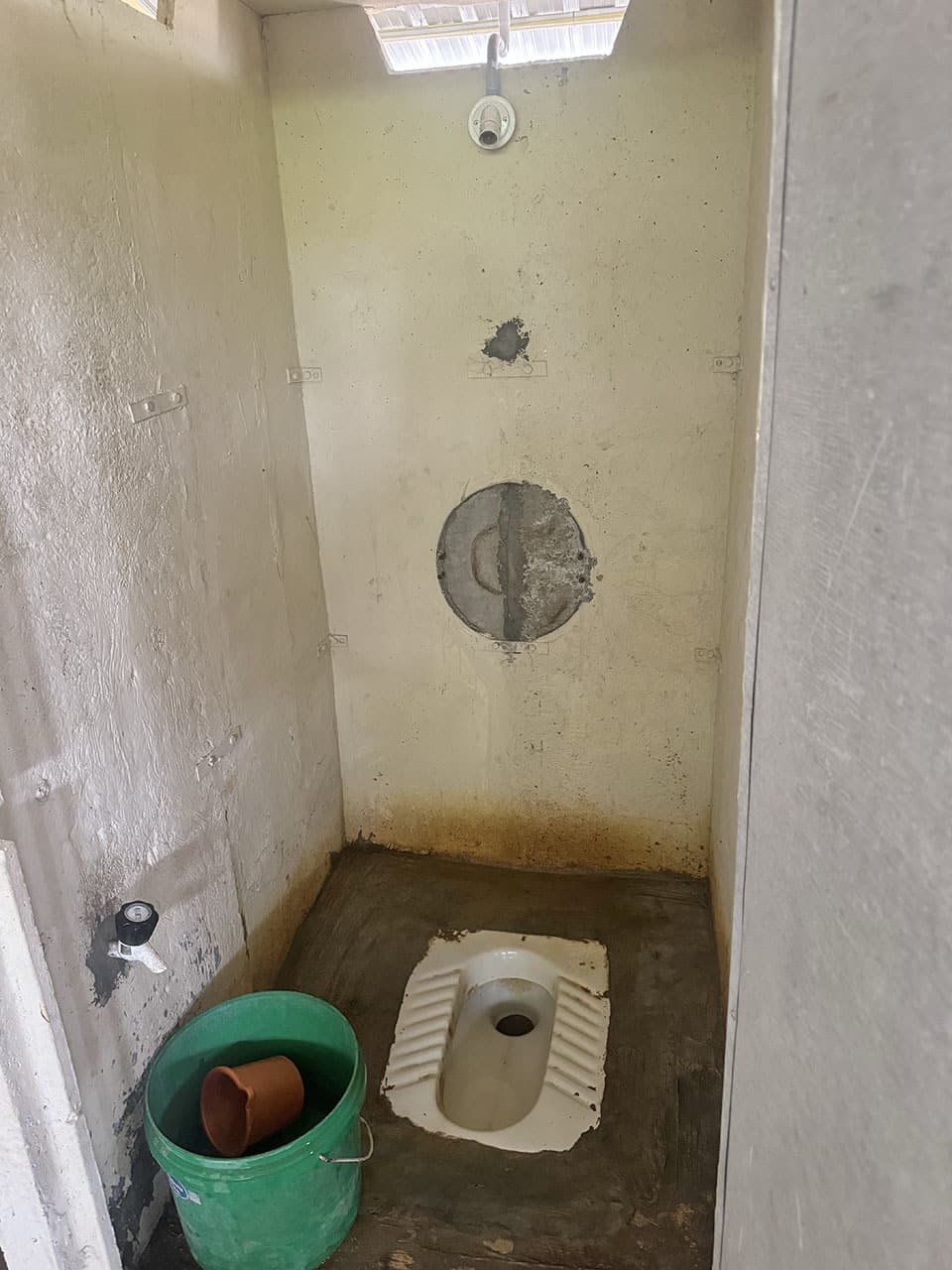
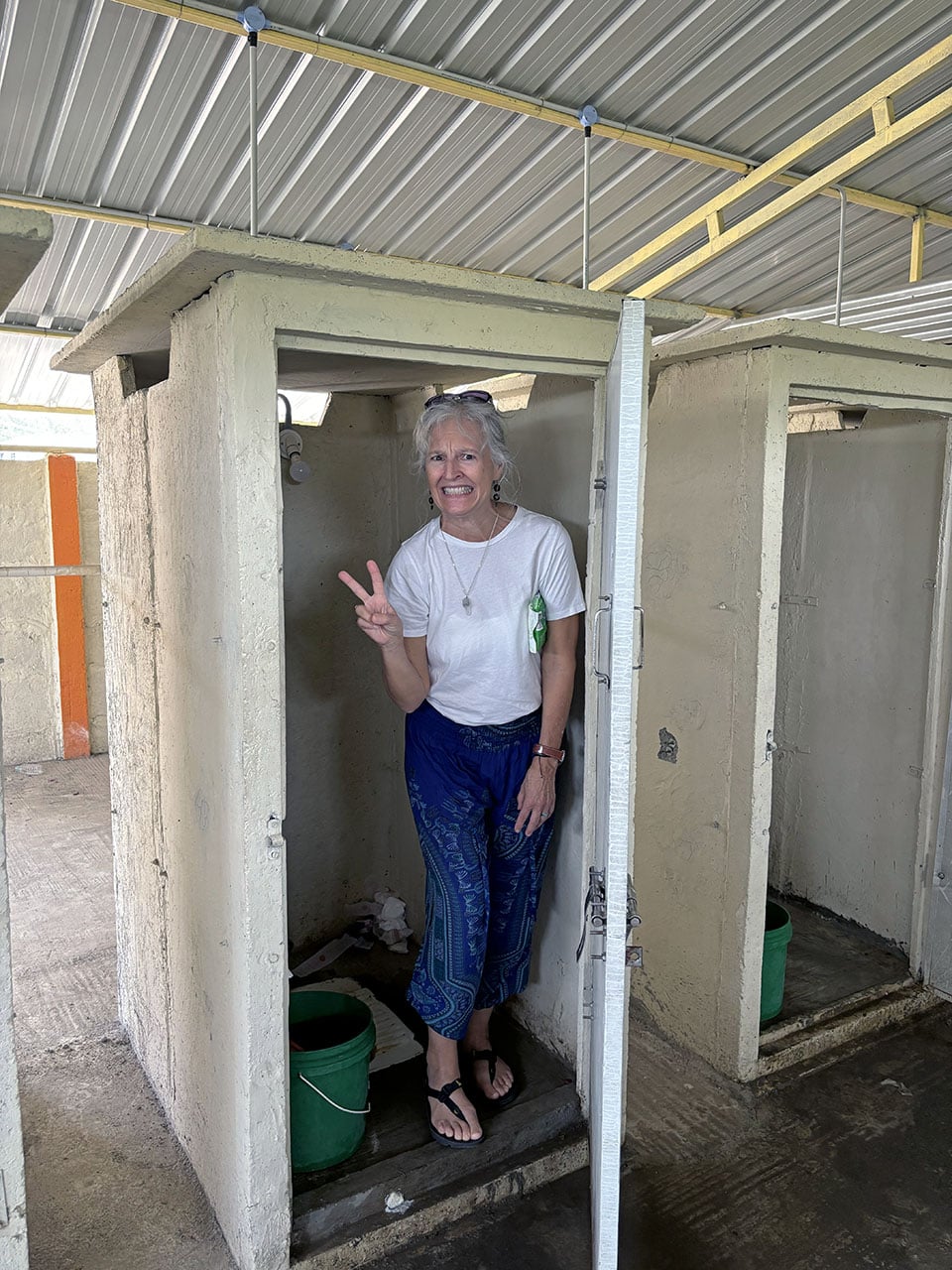
The bus would make scheduled washroom breaks along the way, but Asoka let us know that if anyone needed to go in between stops, he would do his best to find a clean washroom. One time, Heidi really had to pee with no washrooms in sight, so we stopped at the side of the road, and she ran behind a boulder. Everyone was amazed at how quickly she returned… she peed fast because she was afraid a roadside monkey would grab her, LOL.
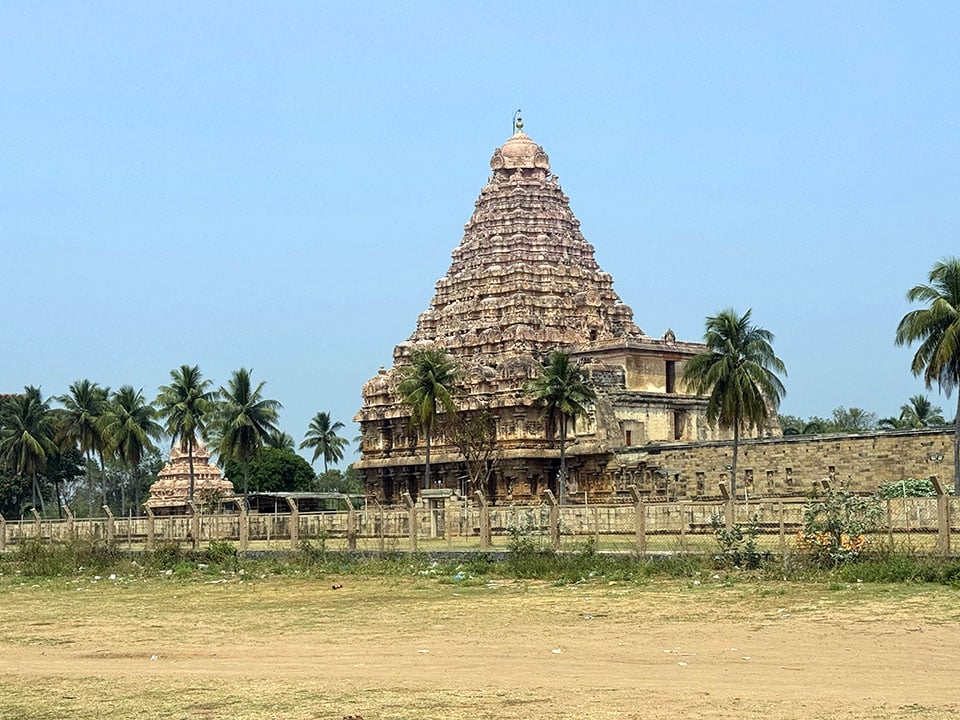
Another time, we pulled into this shrine solely to use the washrooms… but unfortunately, they were closed for cleaning, so we had to use a second set (the old washrooms) at the back of the parking lot…no bueno! We should have paid attention to the boys peeing along the fence and followed suit…it would’ve been a better experience. Thankfully, this was the only dirty, smelly, mosquito-filled bathroom experience we had in our entire time in India. And a great reminder to be grateful for nice, clean bathrooms. No time to visit this temple, we were on to better things.
Meditations & Vedic Lessons with Rajaraja
In between all the roadside attractions, temples, and ashram visits, we meditated with Roger twice a day on most days; he also sometimes shared Vedic teachings with us. Usually, we met early in the morning before we left the hotel and again late afternoon when we returned. Depending on the day and the length of our journey, he would sometimes guide us in meditation on the bus. And we had some lovely opportunities for one-on-one chats, Vedic lessons, and healing energy sessions with Roger. Thanks, Roger, for sharing your wisdom on this life-enriching trip!
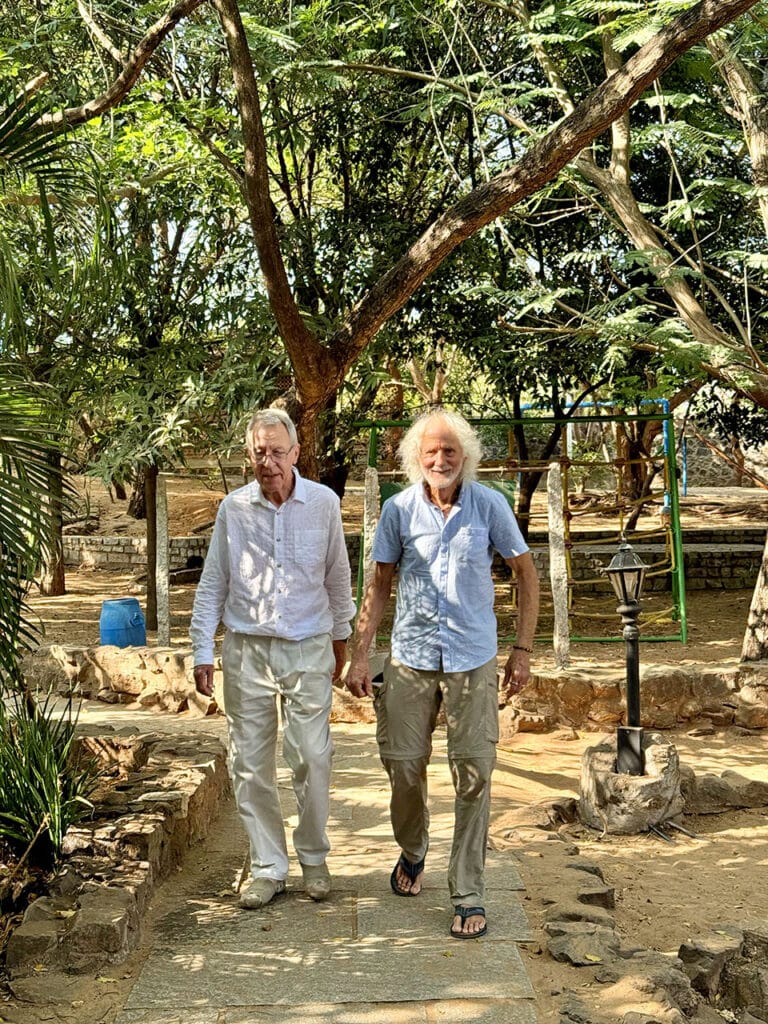
Roger was also very diligent about continuing his Instagram live meditations every Tuesday through Friday, and many of us had the opportunity to be “in the green room“ backstage on his Instagram live. We had a fun time being live at this meditation on February 24.
Auroville
Auroville is an interesting concept. Conceived by Sri Aurobindo and founded in 1968 by Mirra Alfassa (“the Mother”) near Puducherry, Auroville is an ongoing experiment in human unity—a place where people from around the world live together beyond nationality, politics, or religion. Inaugurated with residents from 124 nations, it was envisioned as a “City of the Future” focused on sustainability and conscious evolution. We saw lots of school kids on field trips here (and at every stop along our tour). It’s wonderful to know that these local kids are learning about the same Indian cultural things that we are.
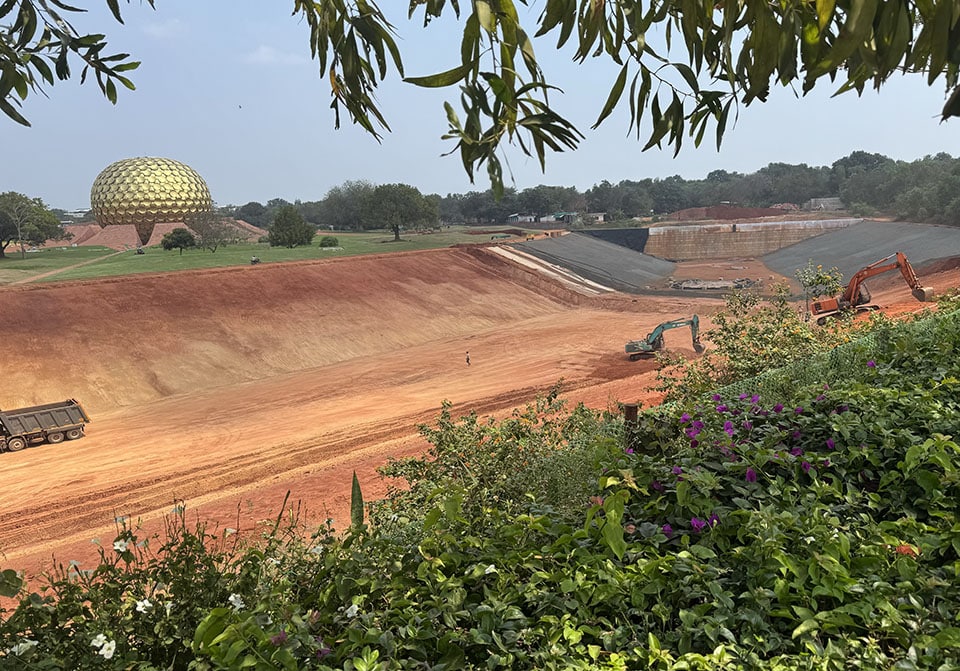
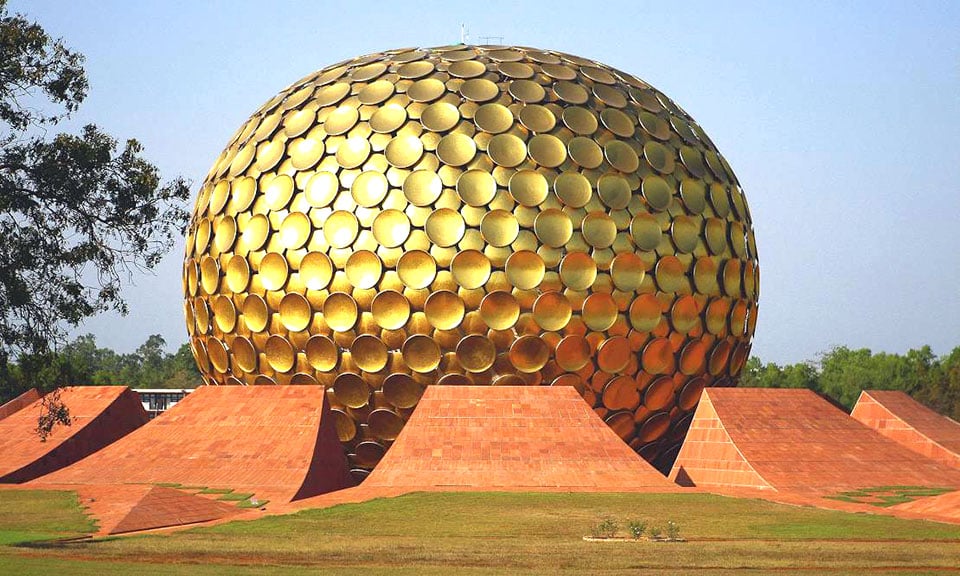
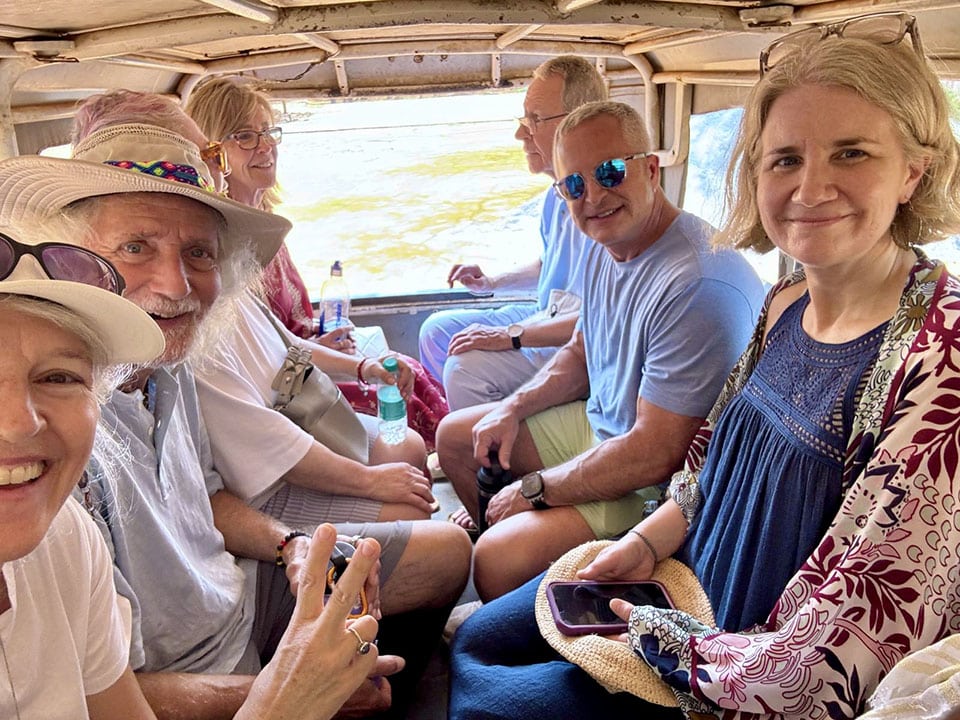
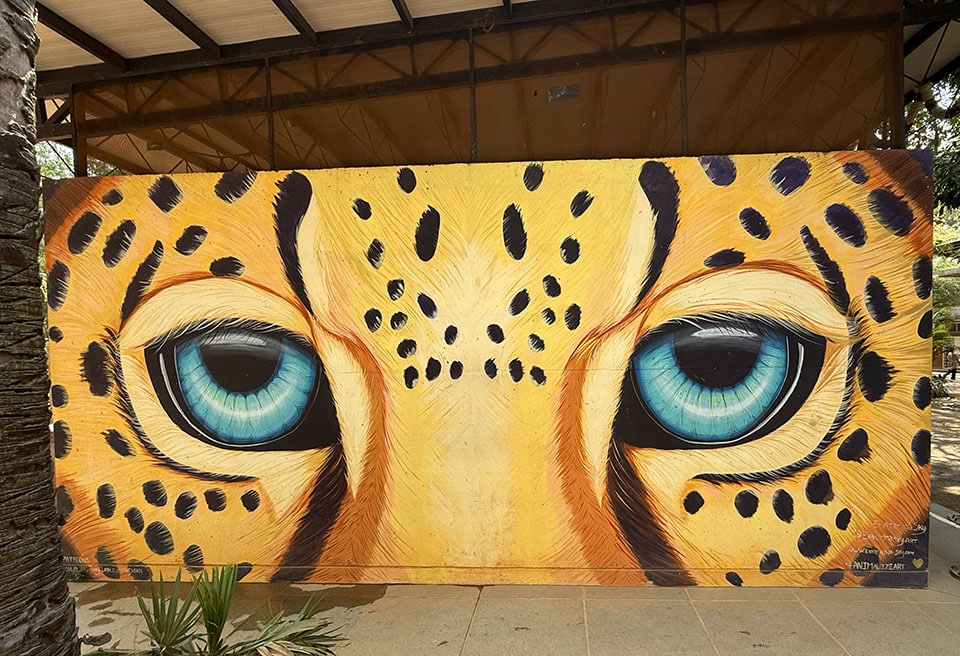
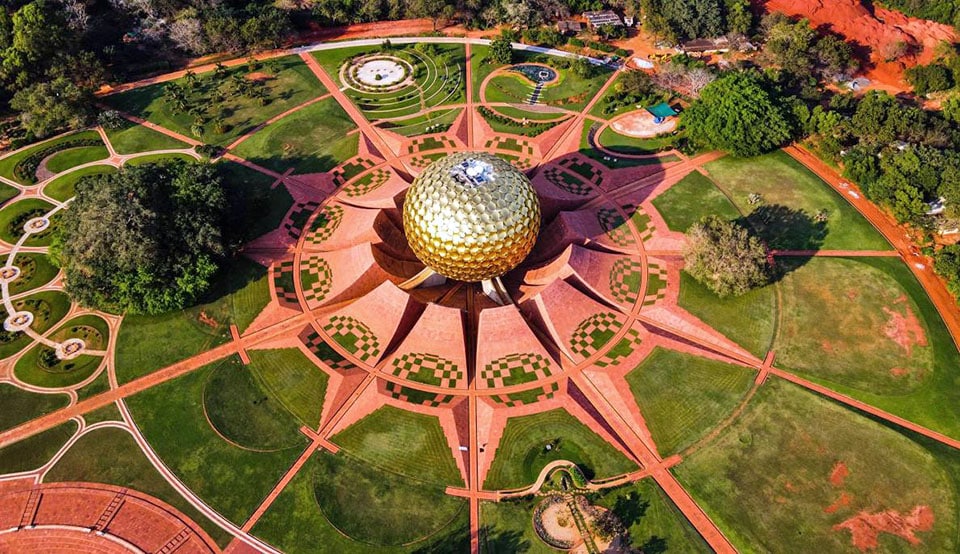
Top left: Auroville as it exists today, still under construction; our group in the back of a shuttle truck getting a lift back to our bus, it was quite a long walk in the heat from the entry area to the Matrimandir (gold dome); Tosh-eyes greated us at the botique shopping area; and a model of what Auroville will look like some day when it’s done. Courtesy of their website.
At its center is the Matrimandir, a striking golden meditation dome symbolizing a higher consciousness emerging from the earth. Inside is a white marble chamber designed for silent meditation, where a beam of sunlight illuminates a crystal globe. The surrounding gardens, amphitheater, and banyan tree form a designated “Peace Area.” (The inner chamber is reserved for residents and those with advance permission.)
Residents contribute through full-time work (about five hours a day) in roles that support the community. Many are artisans, and the on-site boutiques feature beautifully made goods—incense, natural-dyed clothing, handmade paper, and musical instruments.
Auroville operates as a social enterprise, with proceeds supporting the community rather than private owners—funding development, services, and housing.
The main extent of our stop here was the boutique shopping. Kirk picked up a few handmade shirts, and Heidi found some incense, soaps, and lotions. Kirk and Roger also grabbed an excellent demitasse for about 50 rupees (roughly 50¢ USD). The shopping was nice (a bit upscale), but we would have enjoyed Auroville more if we could have visited the meditation dome. From Auroville, we continued to Pondicherry.
Pondicherry (Puducherry)
Founded as a French outpost in 1673, Pondicherry (now called Puducherry) is a unique blend of French colonial charm and Indian culture. Often called the “French Riviera of the East,” it remained under French control until 1954 and is now known for its architecture, food, and laid-back vibe.
The French Quarter (White Town) is especially picturesque, with pastel-colored villas, bougainvillea-lined streets, and French signage. The city reflects a seamless mix of French and Tamil influences in its architecture, cuisine, and daily life—often affectionately referred to as “Pondy.”
Long before the French arrived, this was an ancient trading hub, with links to Roman trade as early as the 1st century CE.
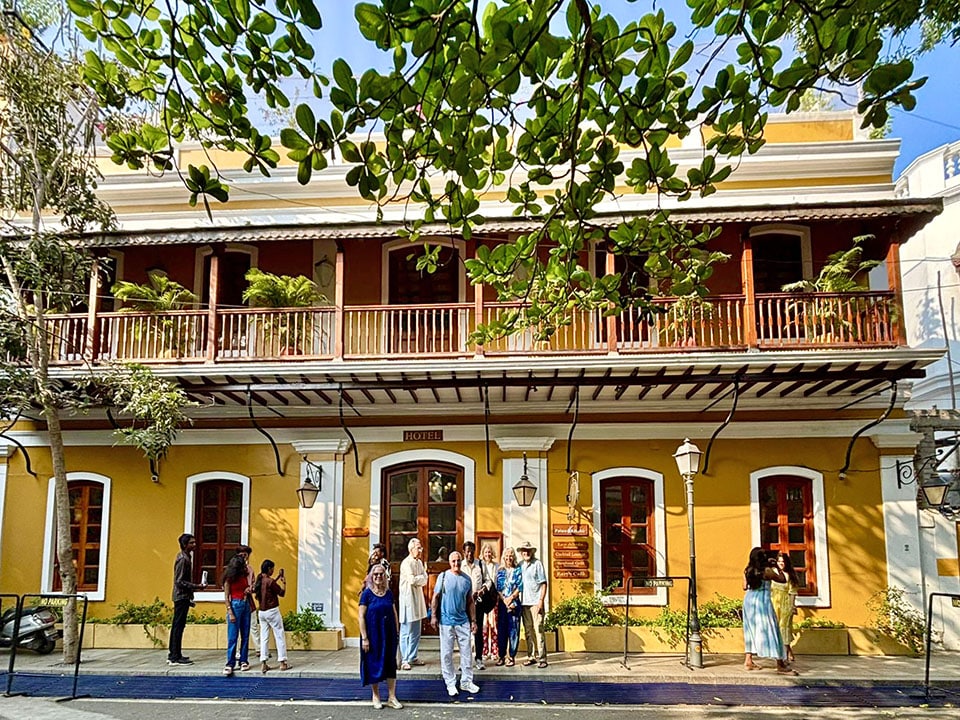
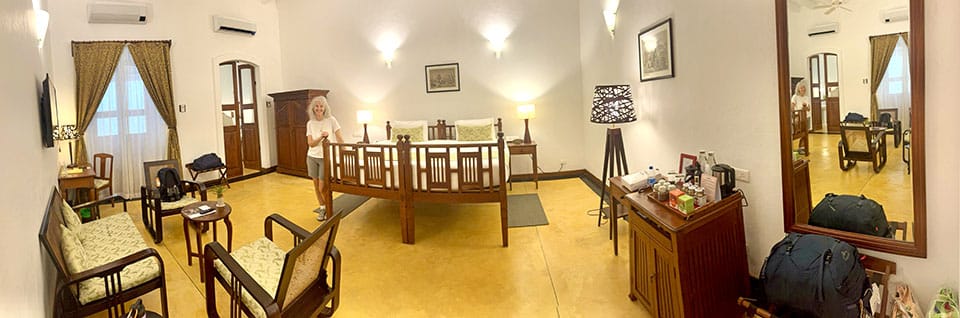
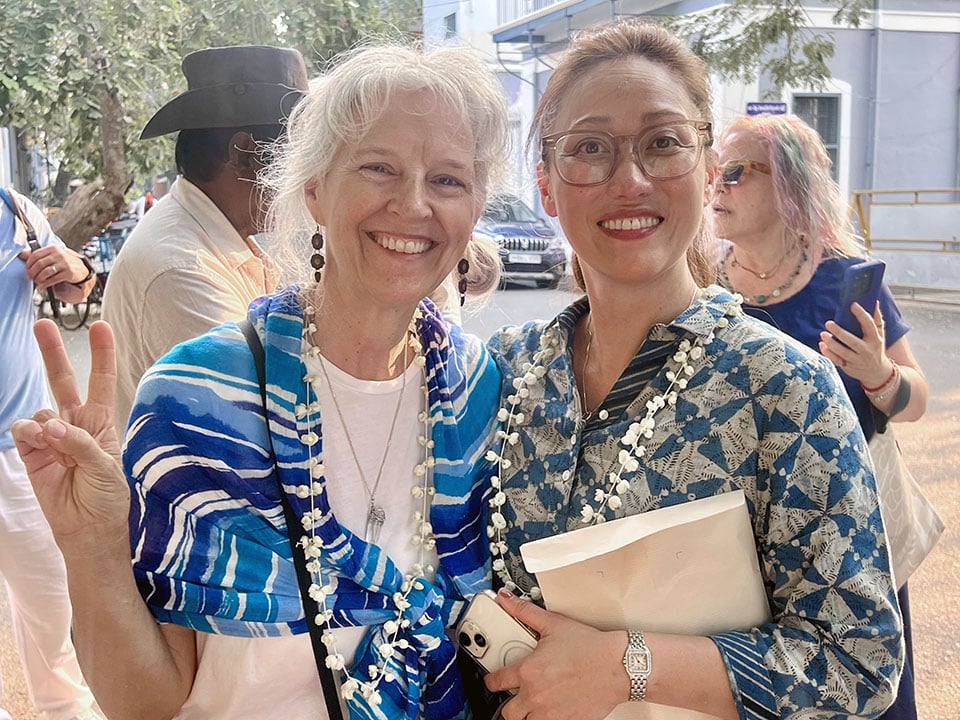
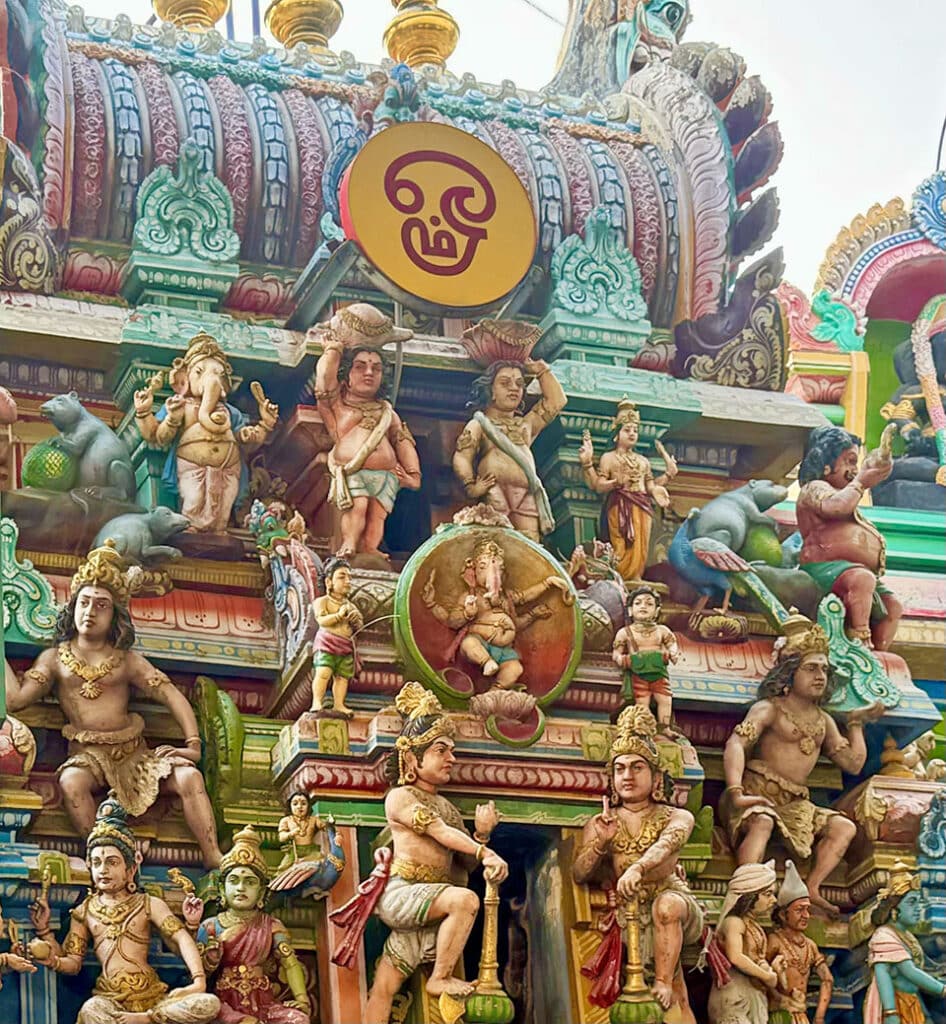
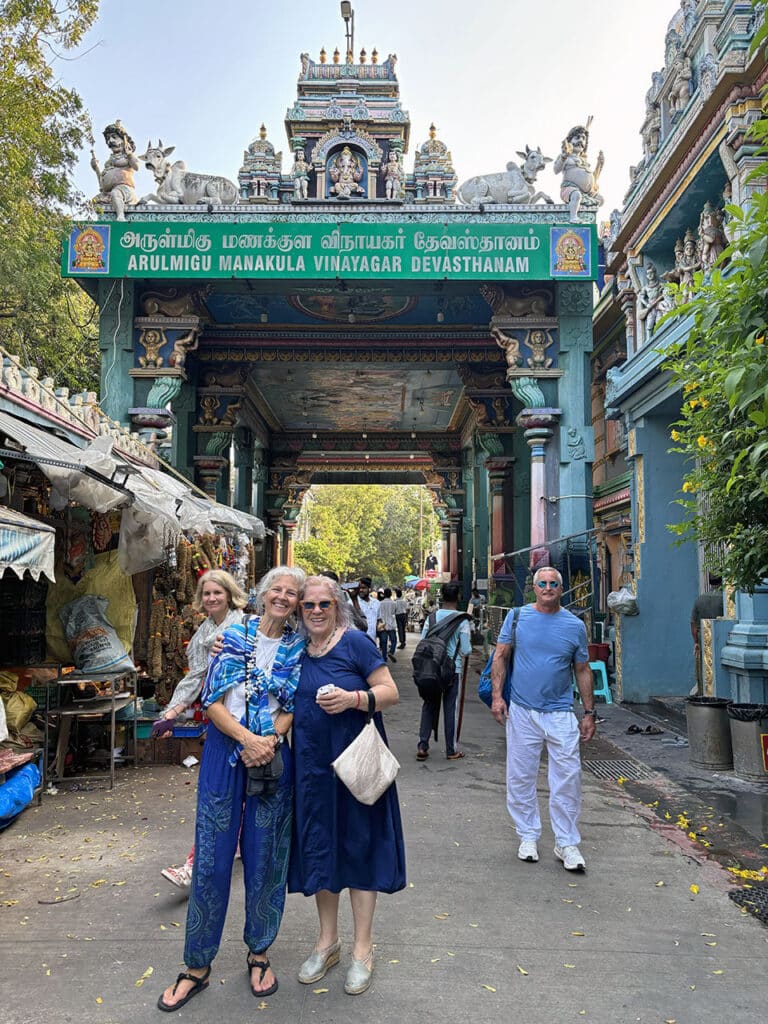

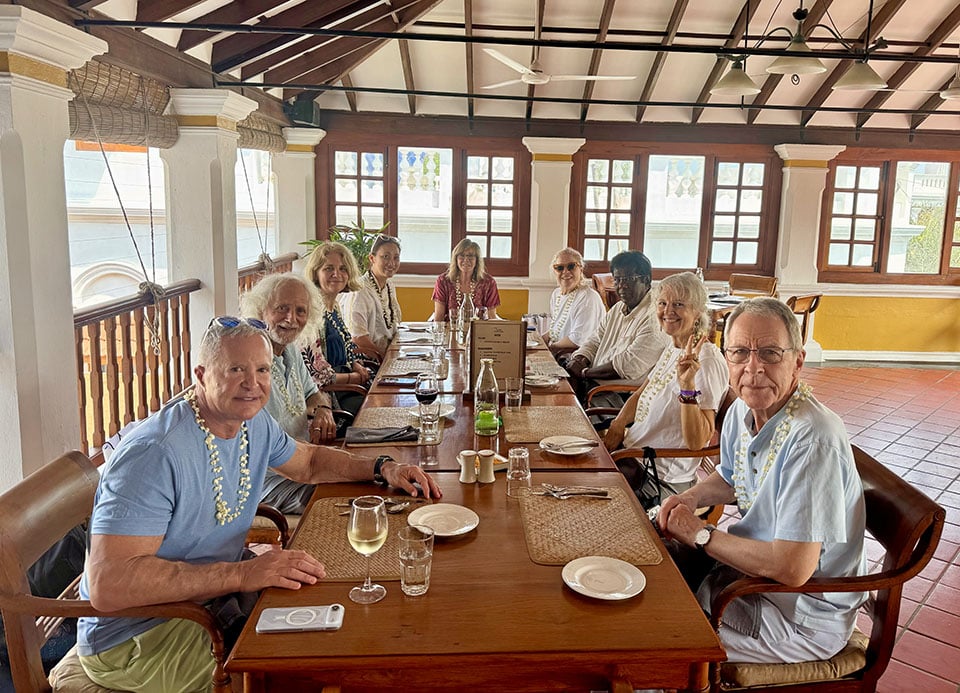
Our south tour mates (minus Mallika!) counterclockwise from bottom right: Roger Gabriel, Heidi, Asoka, Basillica, Kathy, EK, Isabelle, Kirk, and Drew.
We stayed just a block from the beach along the Bay of Bengal and spent time walking the seawall. We also visited the Sri Aurobindo Ashram in White Town—a well-known spiritual community founded in 1926 and home to the samadhi (resting place) of Sri Aurobindo and “the Mother.” We sat quietly in the tranquil garden for meditation, listening to the birds sing.
Just down the street is the Arulmigu Manakula Vinayagar Temple (dedicated to Ganesha), which we had hoped to visit, but it was closed that day for a private funeral.
Pondicherry felt noticeably cleaner than other places we visited in India—very little trash—and even the police still wear uniforms reminiscent of French gendarmerie. Our hotel, Palais de Mahe, was apparently featured in a Bollywood film and had a steady stream of people taking selfies out front.
A Note on Garbage…
The other thing we saw a lot of out the bus window was garbage.
In an anthropology class in college, Heidi learned that before the rise of packaged goods, foods in many parts of the world were wrapped in natural materials—banana leaves, corn husks—things that simply biodegraded when discarded. However, when Western nations came in with their packaged products, they never taught the local people that “these types of packaging do not biodegrade and must be dealt with in another way”. They also never brought garbage cans or garbage trucks, or helped in any way to resolve the refuse problem they were creating.
Sadly, with the spread of modern packaging—plastic, foil, and other non-biodegradable materials—waste has become a much bigger challenge, especially in places where infrastructure hasn’t kept pace. Meanwhile, Coca-Cola, Frito-Lay, and others keep pushing their products, with all of the plastic and foil packaging we now see in the ocean everywhere—from Mexico to India.
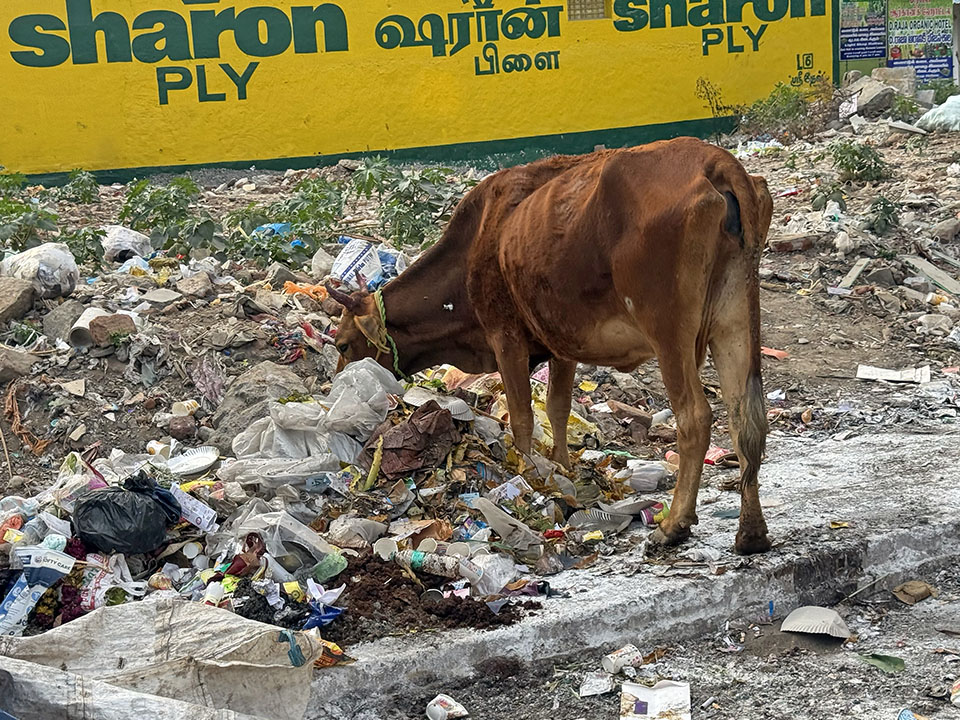
Throughout much of India, we saw garbage along roadsides, even in towns and cities. It’s especially concerning because cows, which are considered sacred and protected in India, often end up eating food scraps from trash—along with plastic and other packaging.
We asked our guides about it, and the explanation was complex: rapid population growth, urbanization, and limited waste management systems have made it difficult to keep up. India generates over 170,000 TONS of daily waste, and much of it isn’t properly sorted or processed.
There are also cultural factors at play. Several guides told us that while homes are typically kept very clean inside—public spaces (and even yards) aren’t always treated the same way—so trash often ends up outside rather than inside.
That said, efforts are being made. We heard about initiatives, including roads built with recycled plastic, and growing awareness of waste management. However, like many places in the world, garbage is a complicated issue.
Thanjavur
Brihadeeswarar Temple
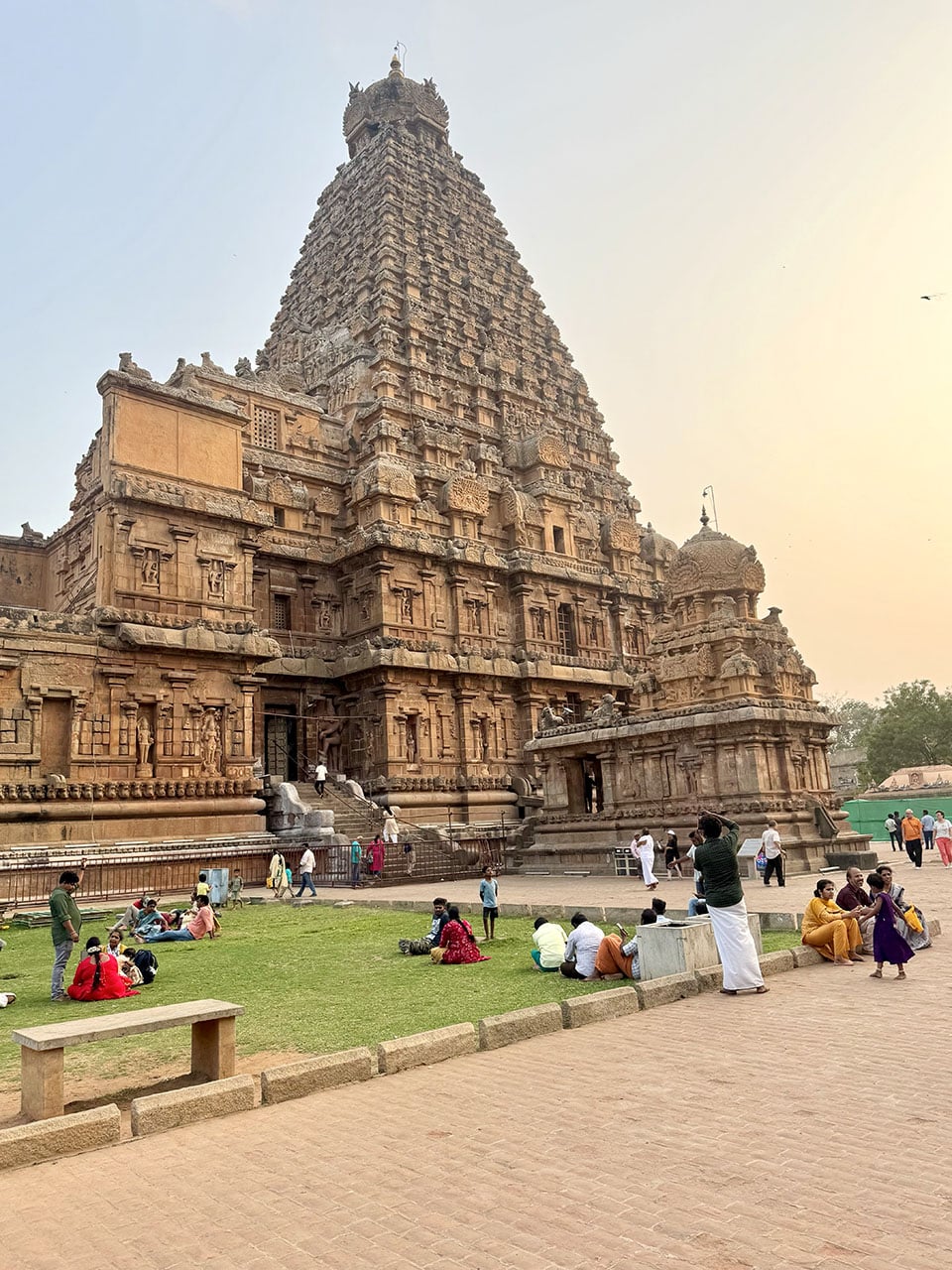
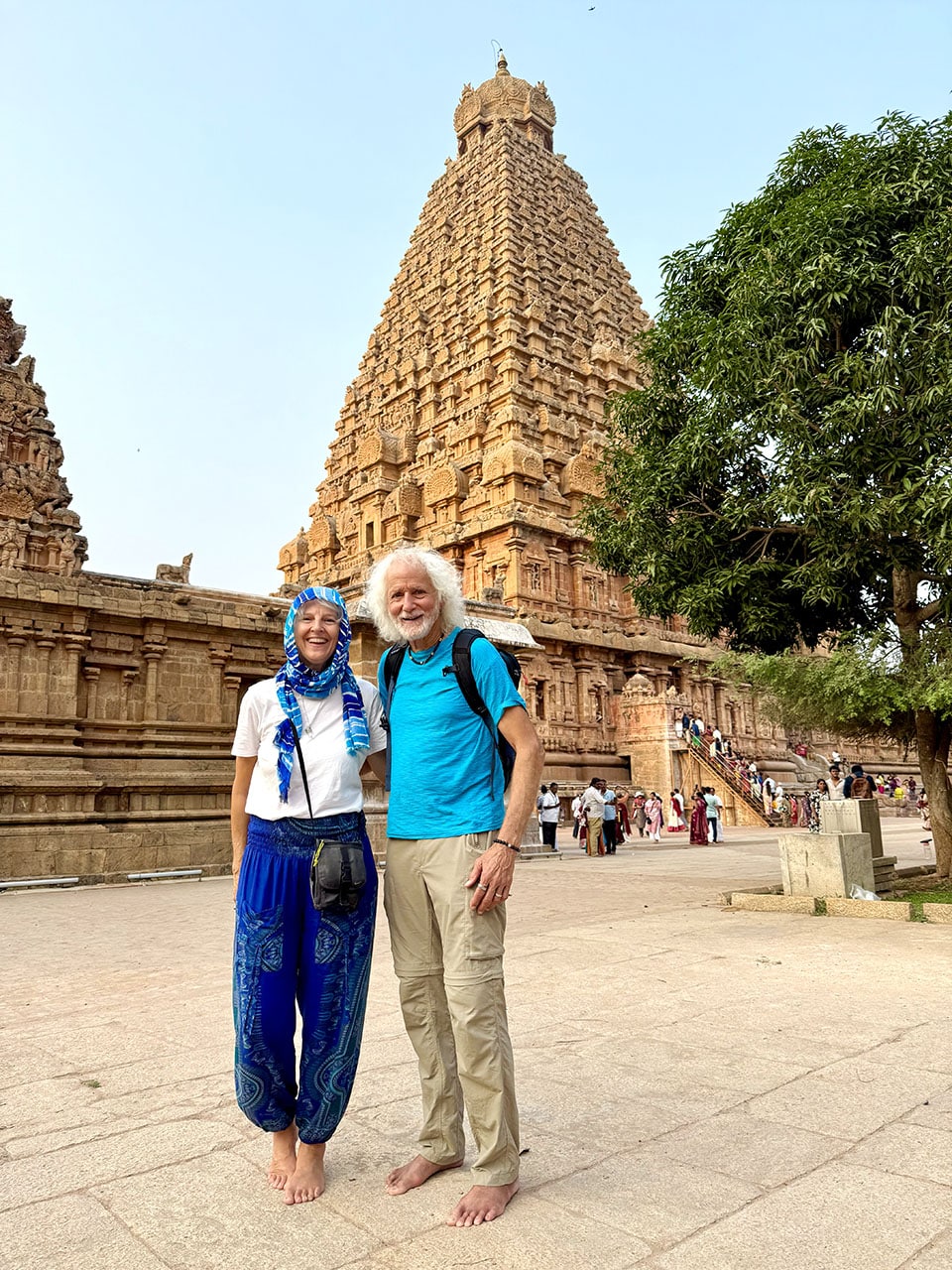
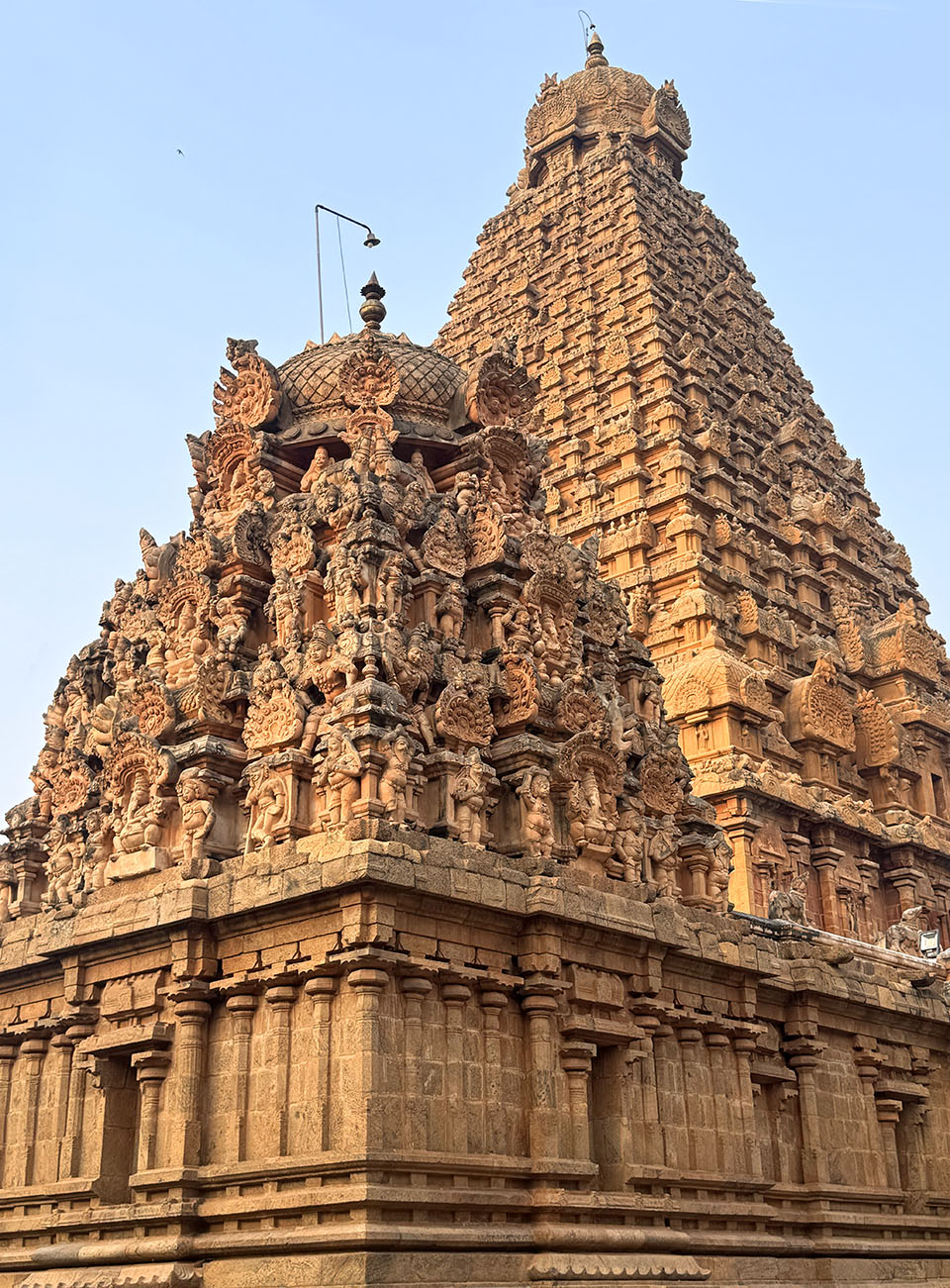
The massive Brihadeeswarar Temple in Thanjavur is considered a masterpiece of Chola architecture, built by Emperor Rajaraja I in 1010 CE, and is a designated UNESCO World Heritage Site.
Dedicated to Lord Shiva, Brihadeeswarar Temple is famous for its 216-foot granite tower (vimana) topped by a massive 81-ton monolithic capstone, as well as a giant Nandi bull carved from a single stone.
Often called the “Big Temple,” the Brihadeeswarar Temple remains a living heritage site where ancient rituals and cultural festivals continue to be practiced today.
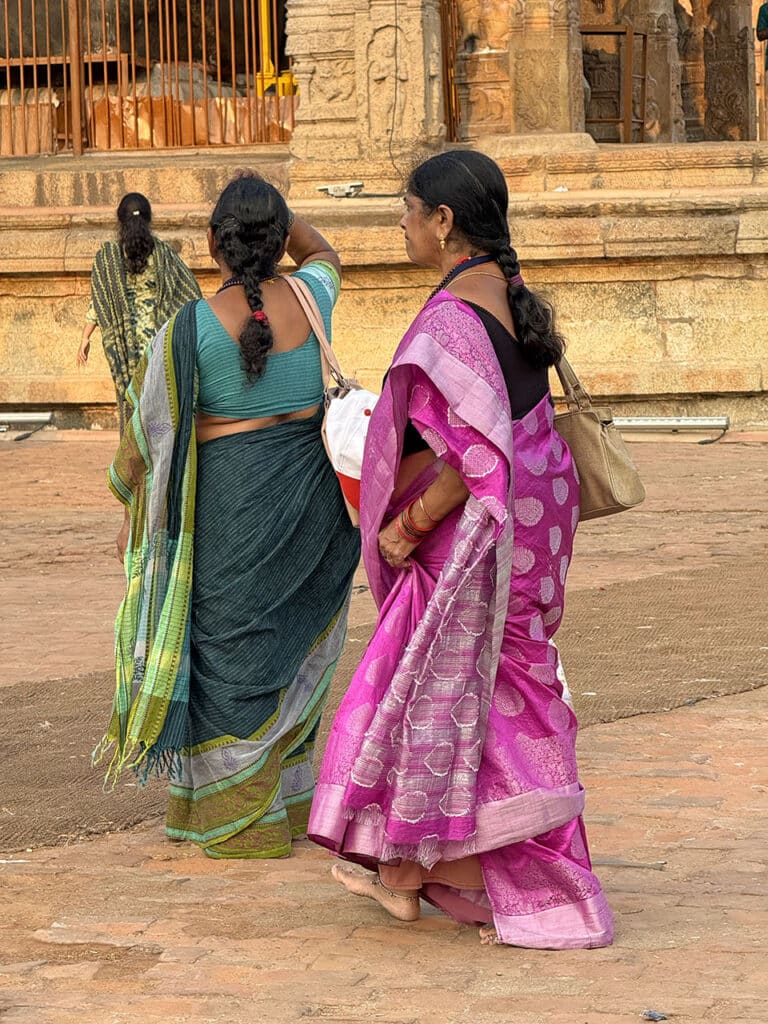
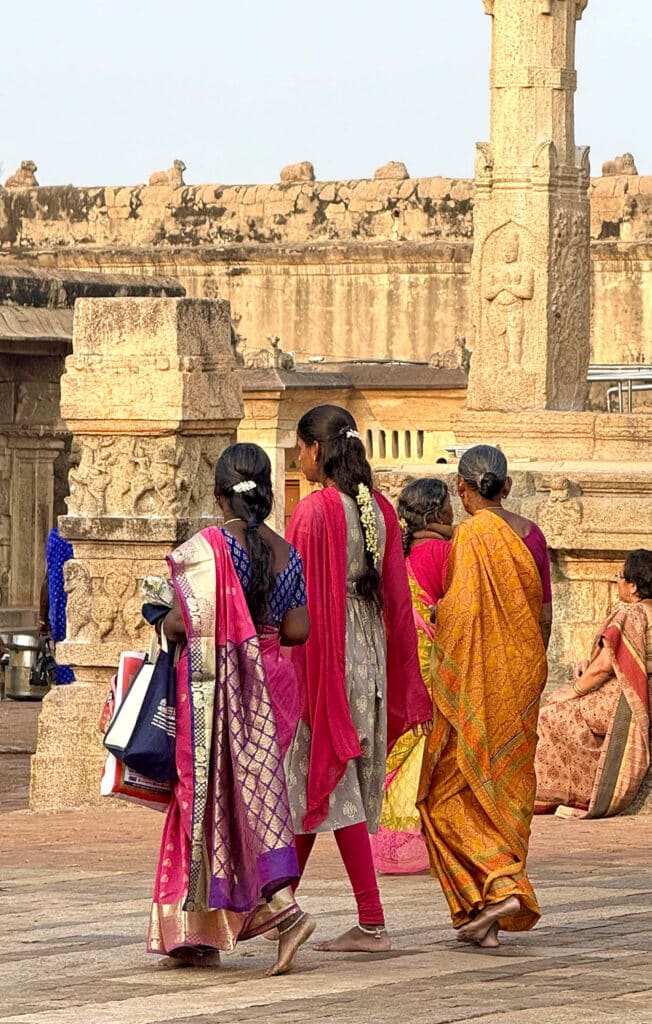
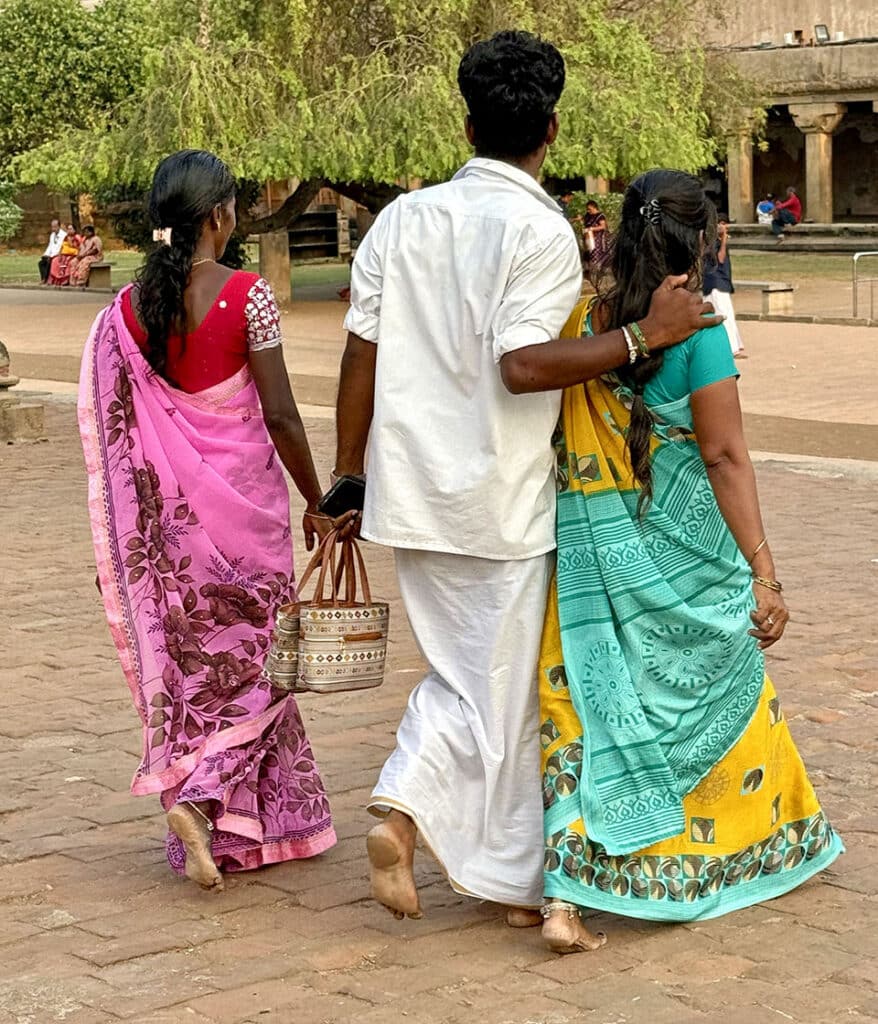
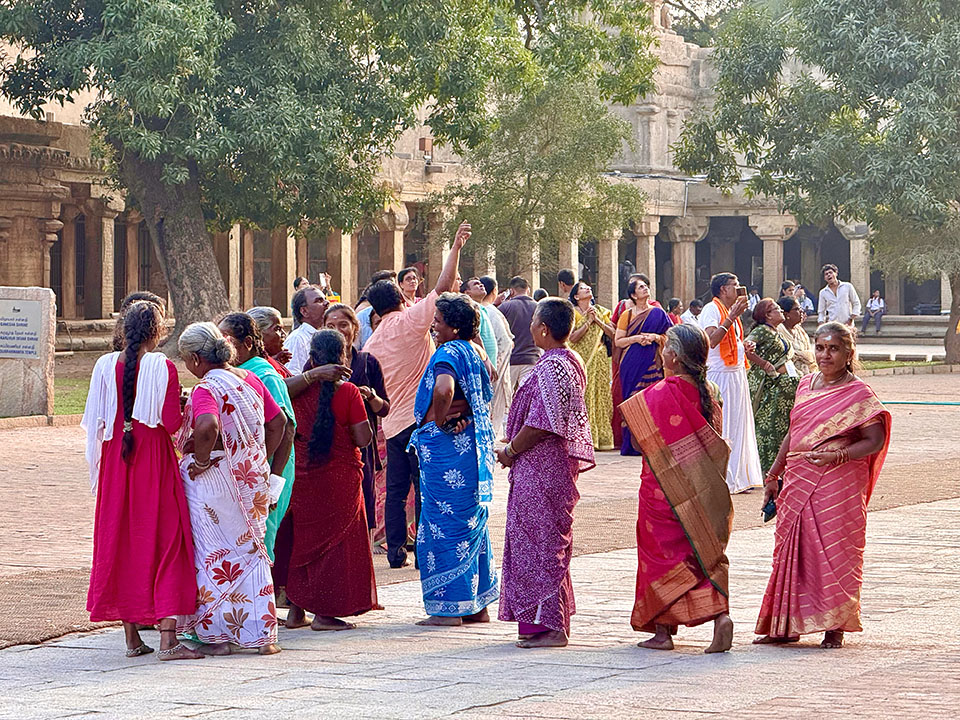
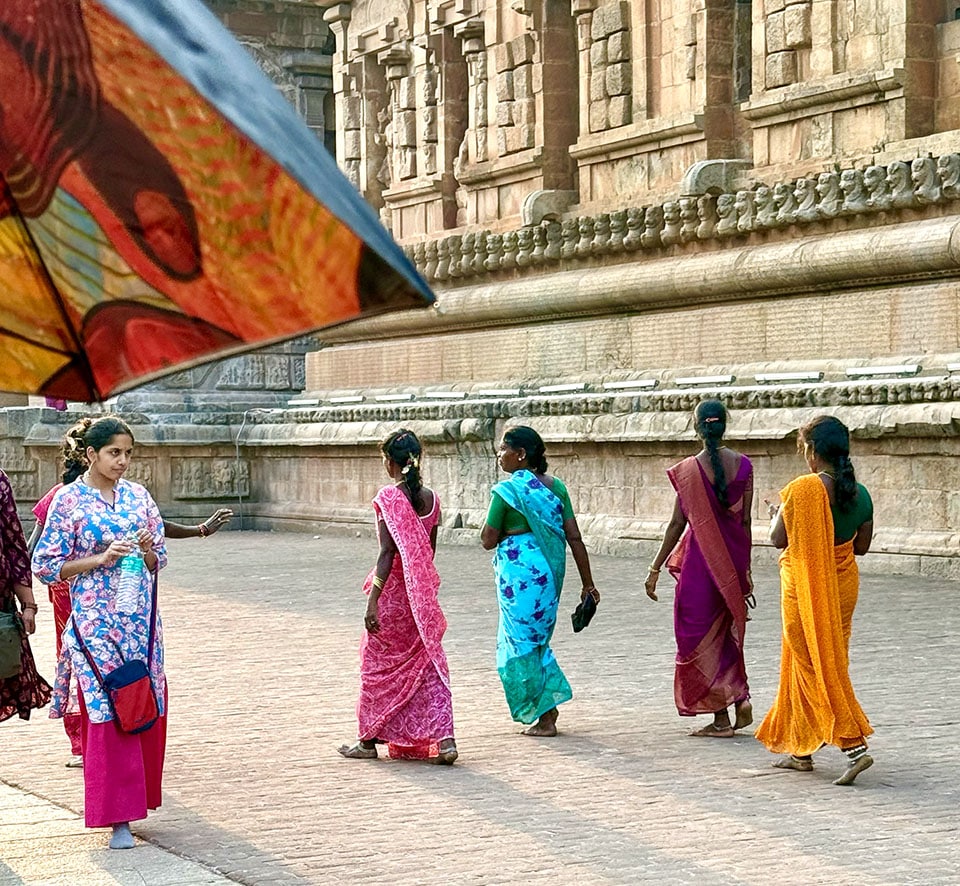
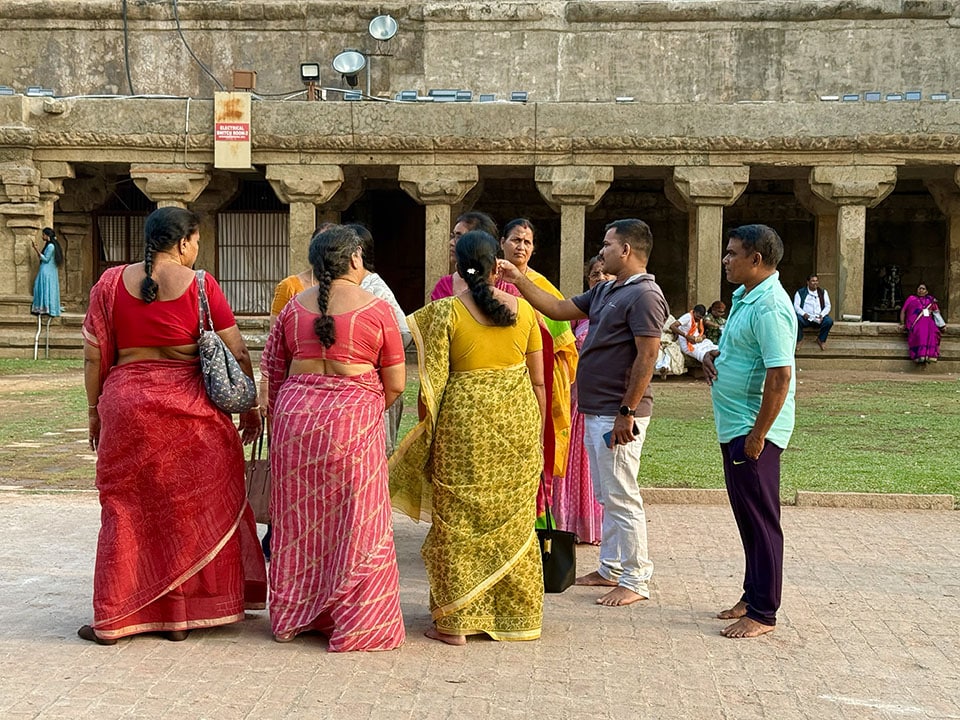
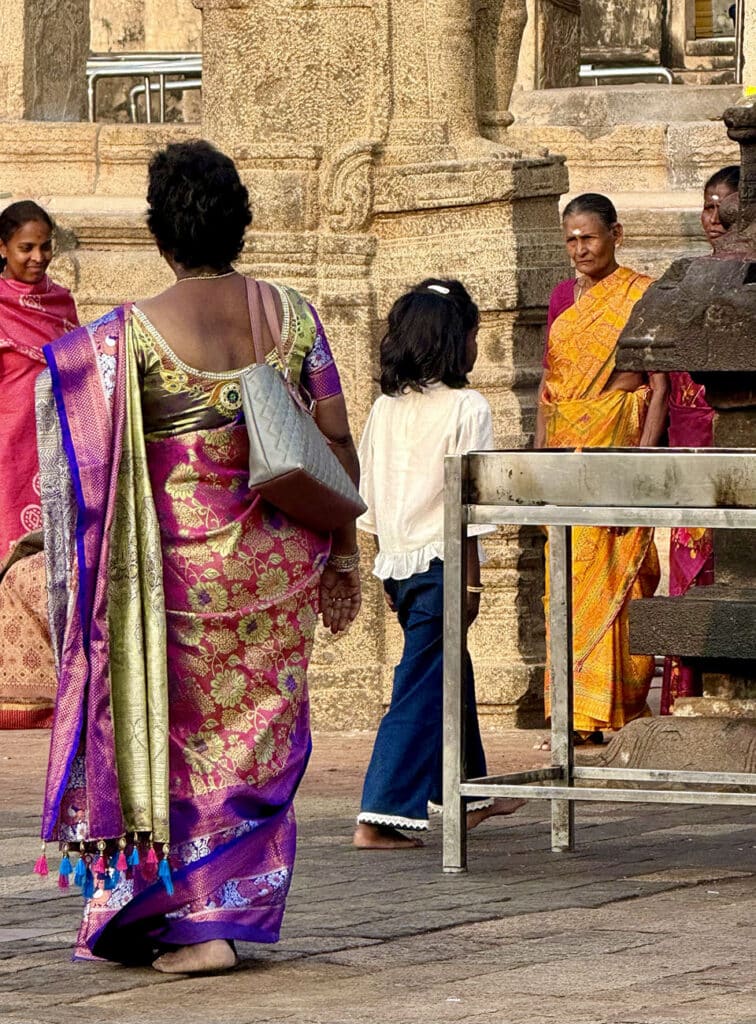
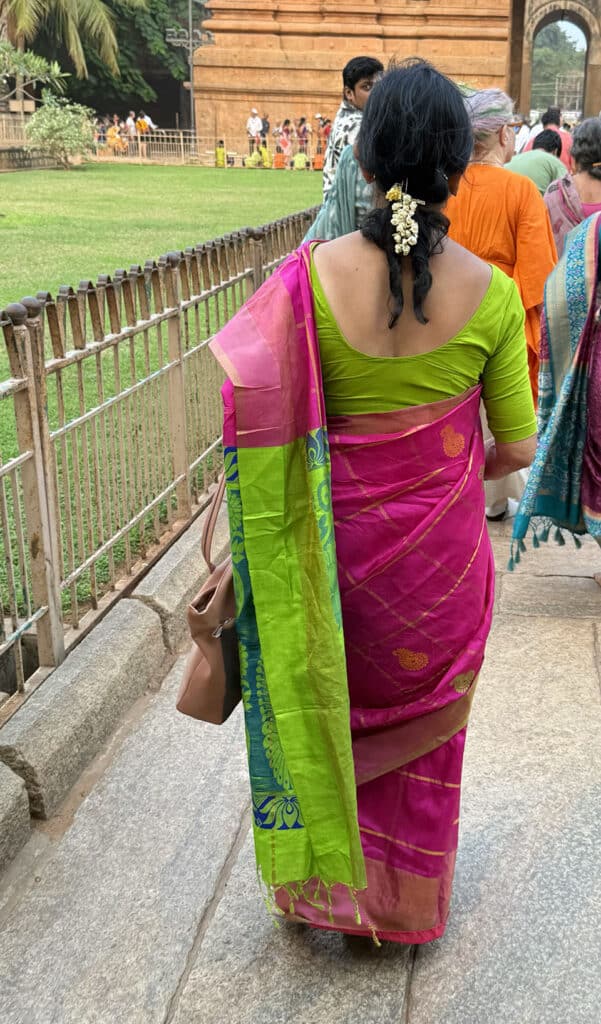
While Kirk focused on photographing the incredible architecture, Heidi was enamored by the rainbow of brightly colored, beautiful saris everywhere. This temple experience was one of our favs in South India.
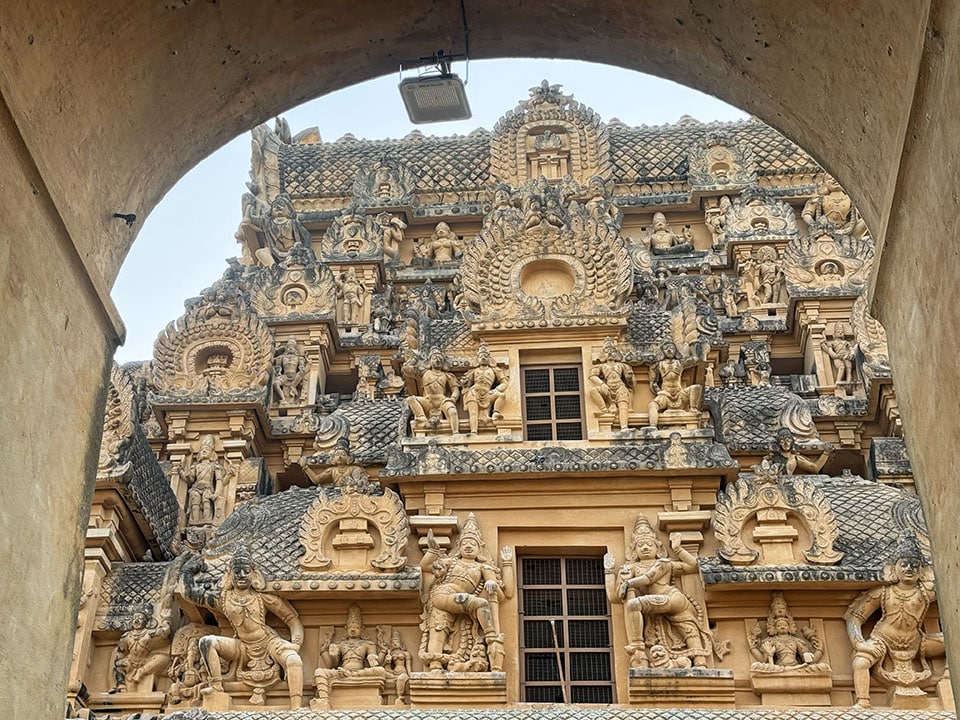
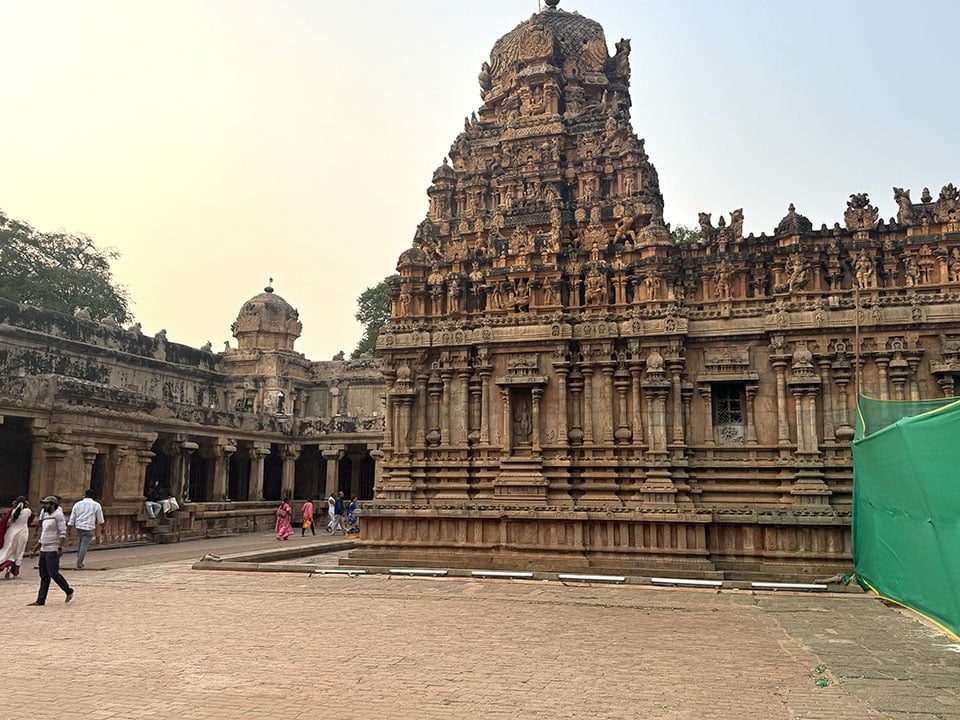
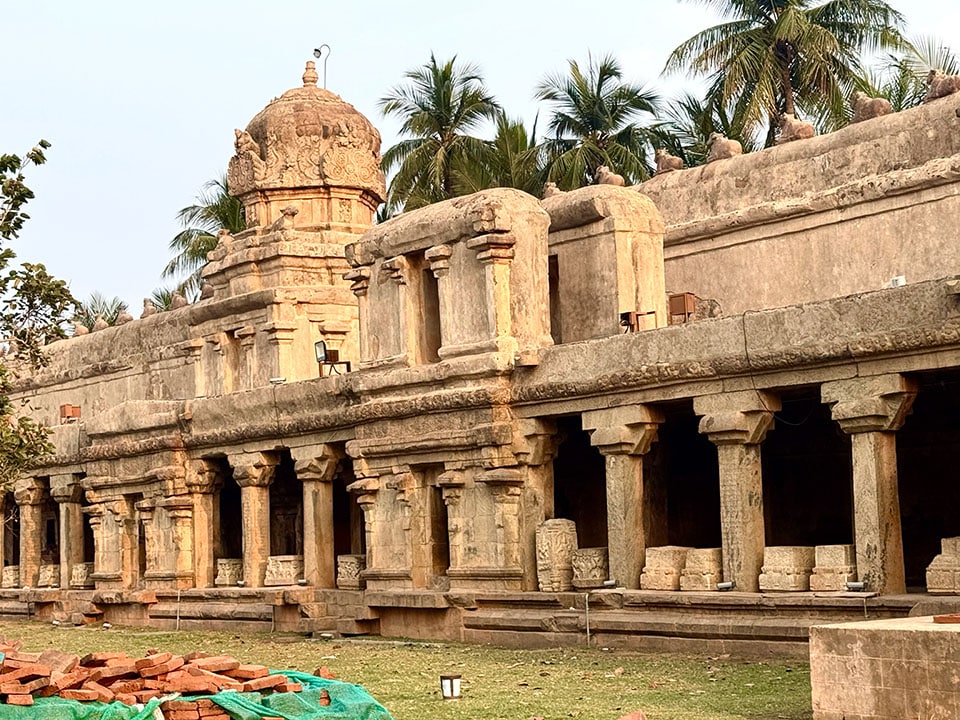
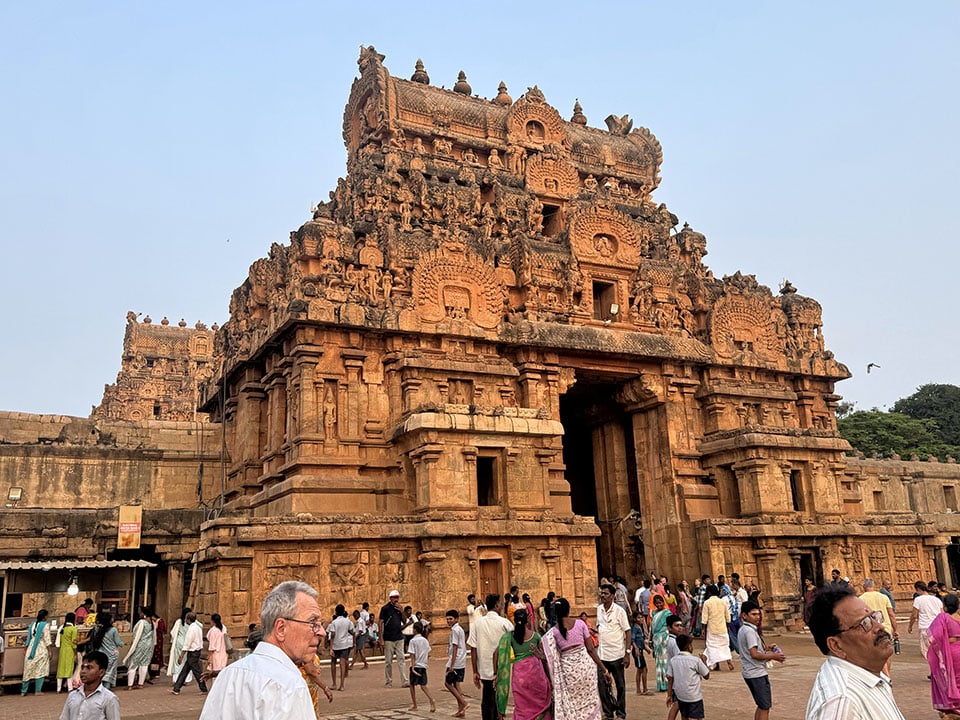
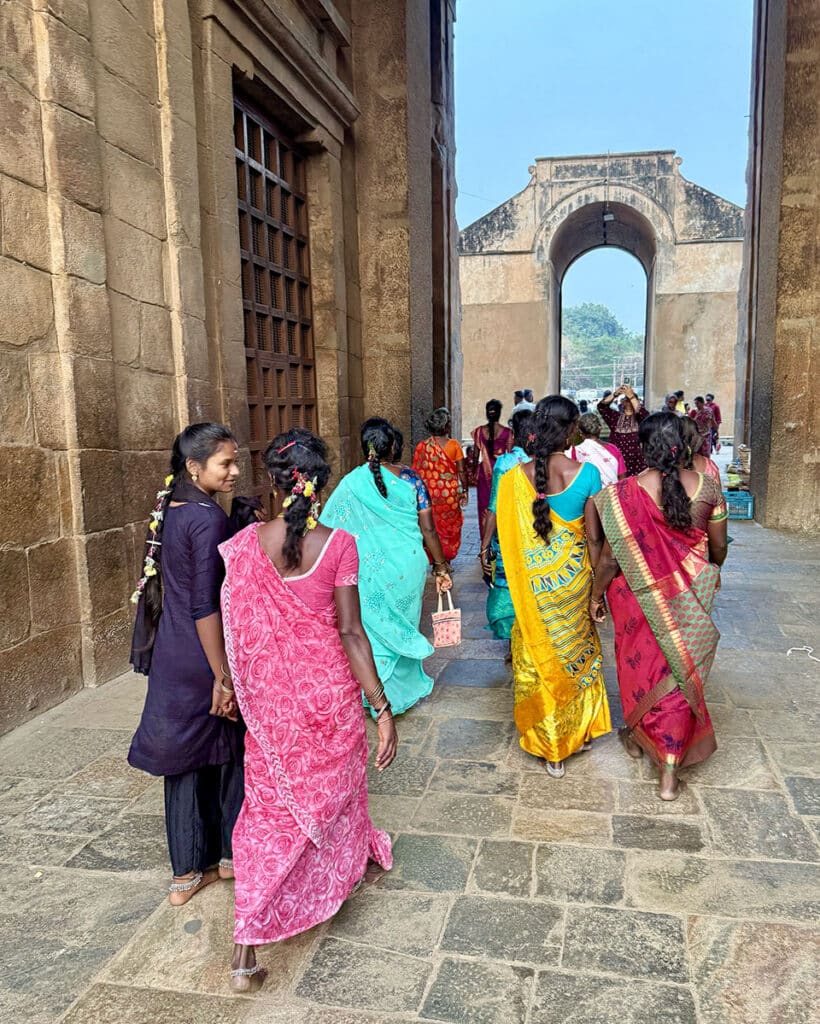
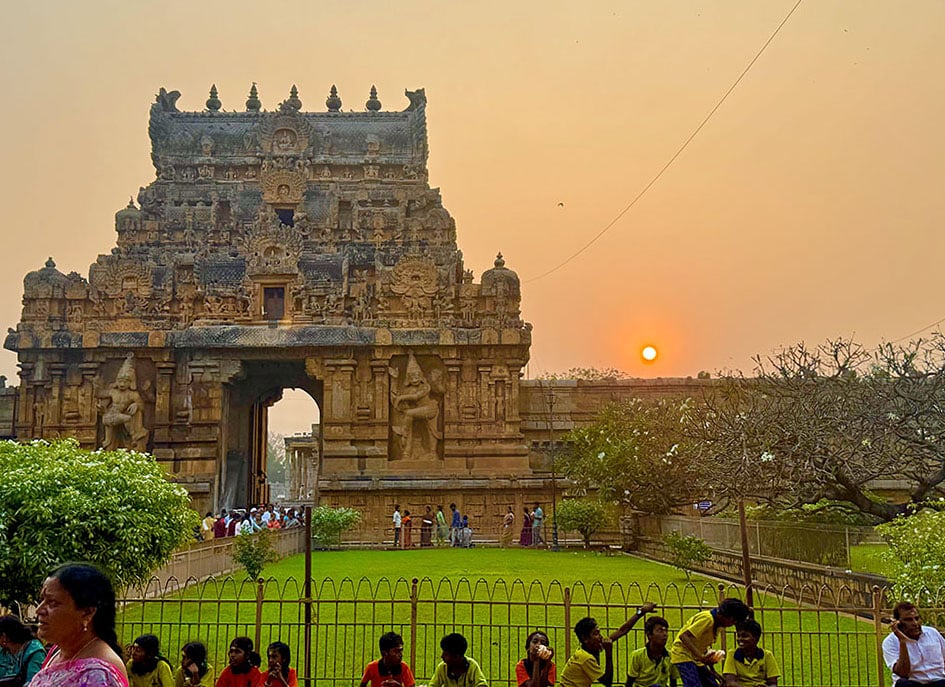
We had a fun experience when Asoka was telling us about the temple’s history, and a group of schoolboys came up. He asked them what school they went to, and then he started asking them lots of questions about the temple. The boys were a little awestruck. A few of them, eager to show off and answer his questions, and a few others squirming to hide in the back.
Bathing and Clothing Temple Idols
In Hindu temples, deities are treated like living royalty through the daily rituals of Abhishekam and Alankaram—bathing and dressing the idols with care. These temple gods and goddesses are cleansed daily by temple priests, in a series of baths of water, sesame oil, milk, yogurt, honey, ghee, coconut water, and sandalwood or turmeric, then rinsed with fresh water, and thoroughly dried. Afterward, they are dressed in silk or cotton garments and adorned with jewelry and fresh flowers. In large temples with many deities, it can take hours each day to perform these bathing and dressing rituals.
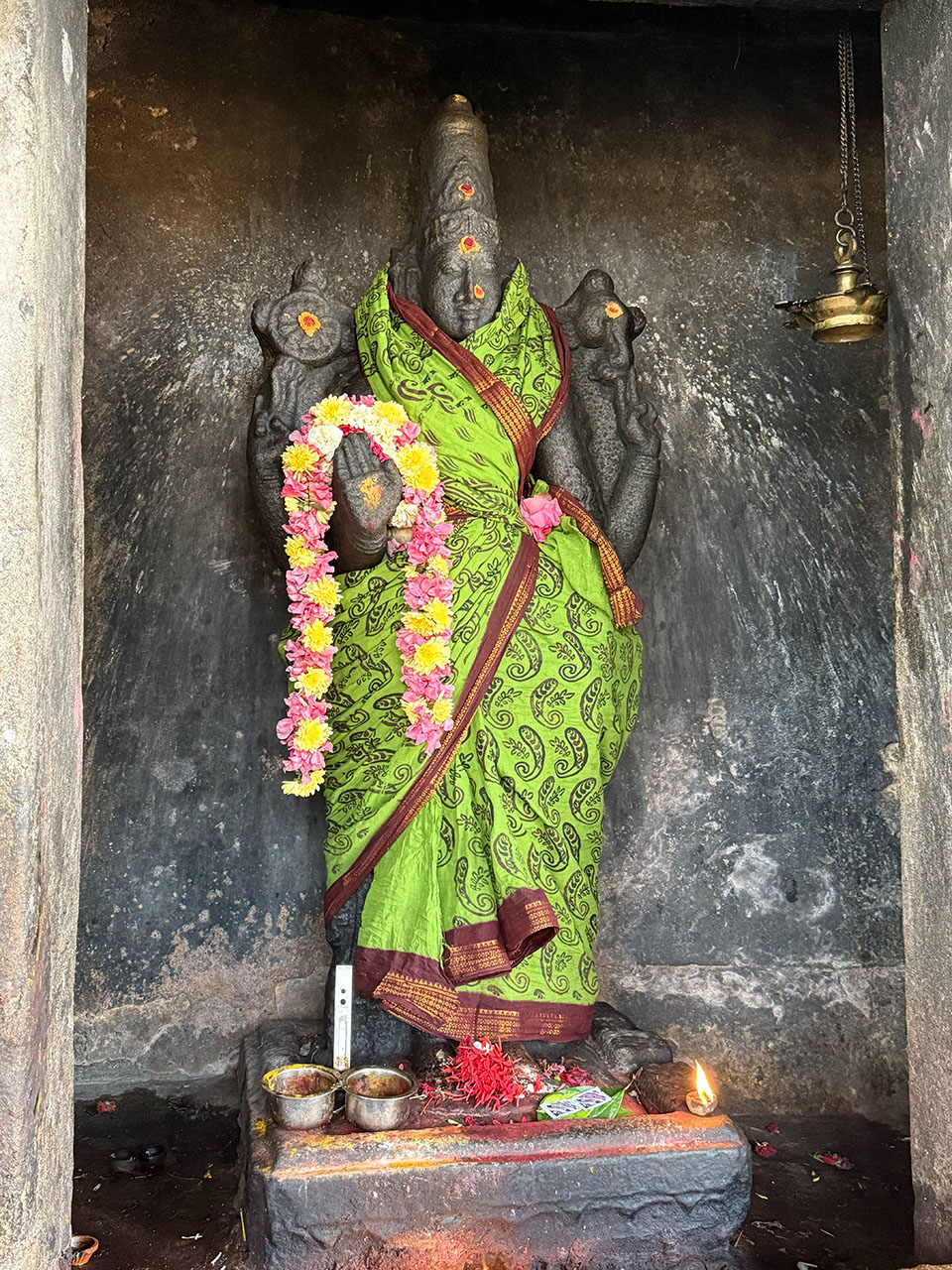
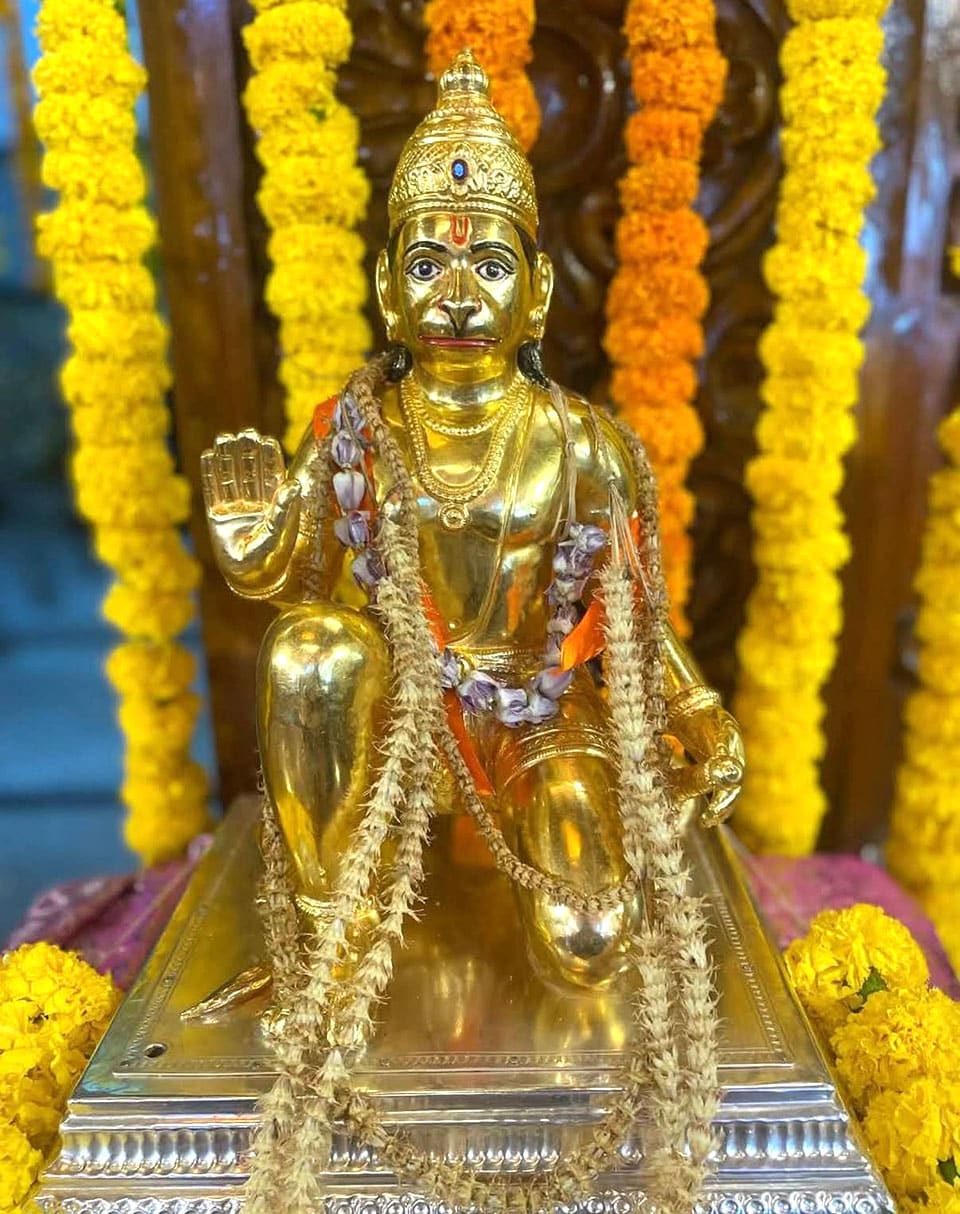
Durga in her full regalia and Hanuman in flowers capture the beauty and devotion of this tradition, a daily act of love and reverence for the divine.
Bharatanatyam
That evening back at our hotel, we were lucky to be treated to this live classical dance performance put on just for our group. Bharatanatyam is a major 2,000-year-old Indian classical dance form from the temples of Tamil Nadu, telling stories from Hindu texts—traditionally performed as an offering to the gods. Grace, purity, and geometric poses characterize this dance, blending Bhava (emotion), Raga (melody), and Tala (rhythm) to tell stories through intricate footwork, hand gestures (mudras), and facial expressions. Dancers wear traditional costumes with pleated fans, jewelry, and ankle bells.
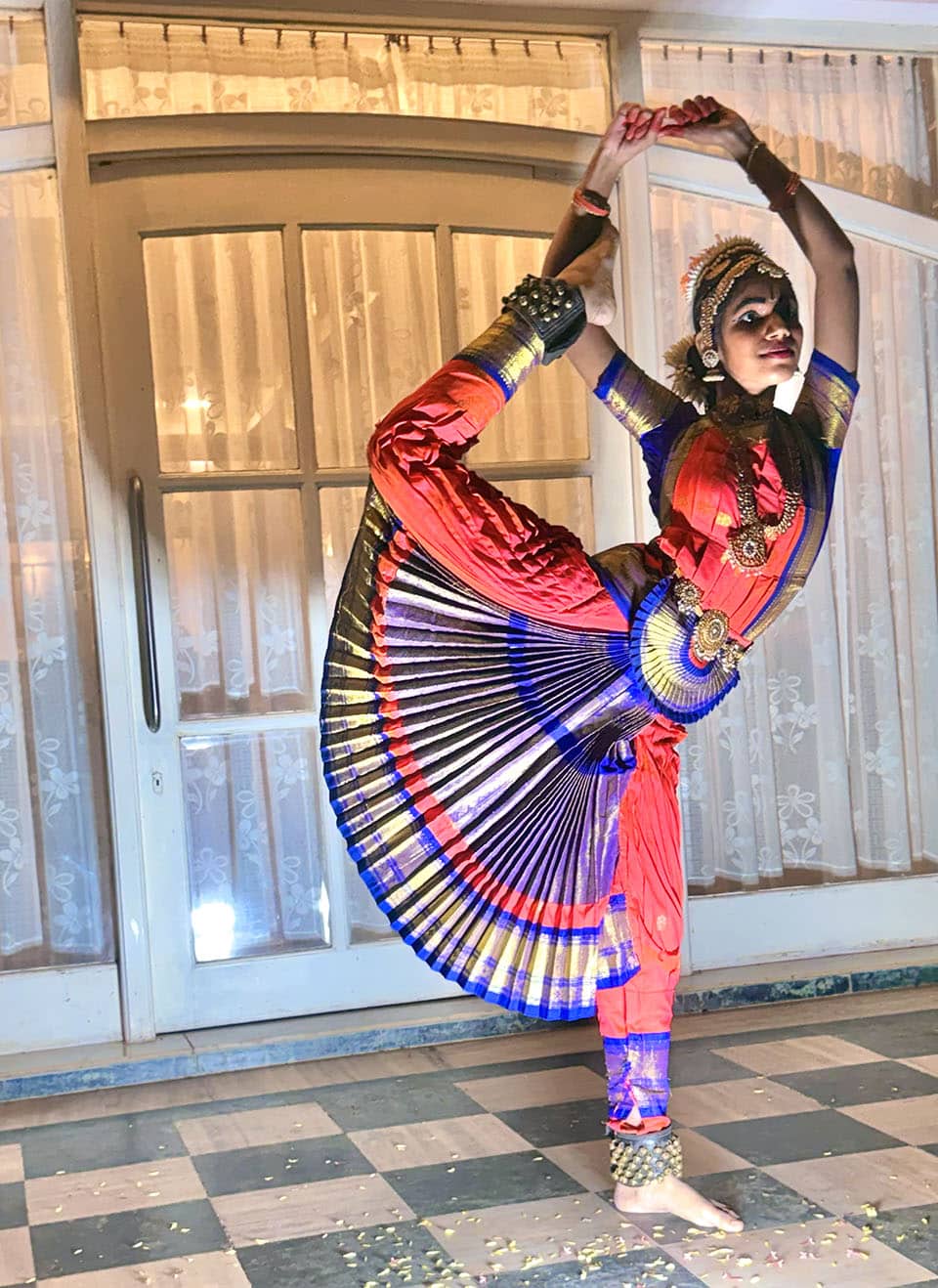
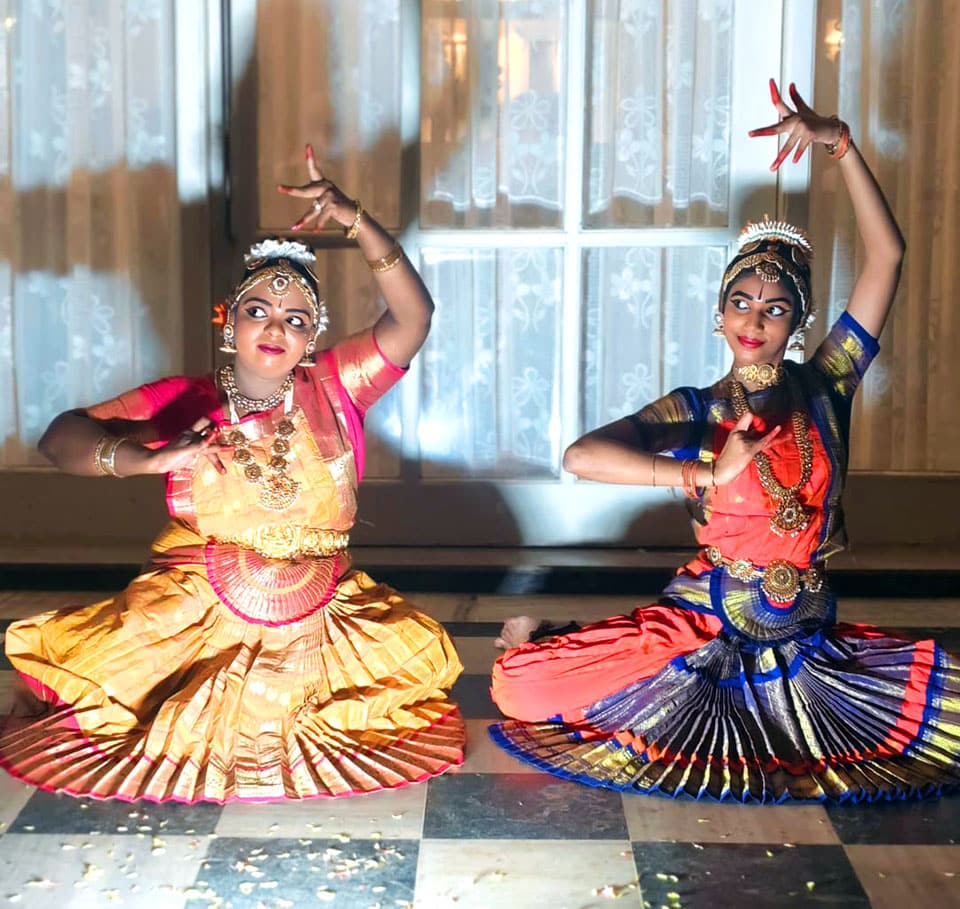
This was the only hotel on our whole trip we didn’t love…but apparently it was the best hotel in the area. And the dance performance was a beautiful touch.
Madurai
In Madurai, we stayed at the Gateway Hotel Pasumalai, originally built in 1890 as a colonial residence for British textile magnate Sir William Harvey. Set on 62 acres atop Pasumalai Hill, it’s now a luxury hotel known for its colonial architecture, sweeping views—and resident peacocks.
The whole place had the feel of an old British gentleman’s club. Adding to that feel, apparently, the Prime Minister of India was in town, and some of his entourage were staying here too, complete with their private security in khaki uniforms, berets, and old rifles—a definite vibe of a bygone era.
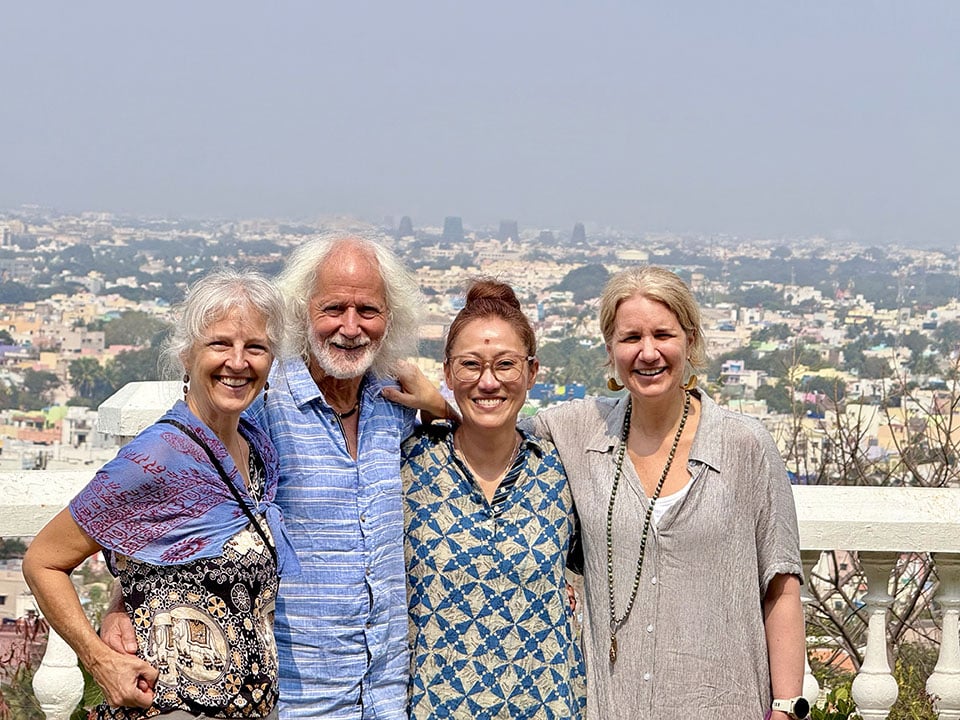
From the hilltop, we could see across hazy Madurai to the massive Meenakshi Amman Temple (behind EK and Isabelle—the air pollution was intense here). Throughout the trip, we used the AirVisual app to track air quality and decide when to wear masks.
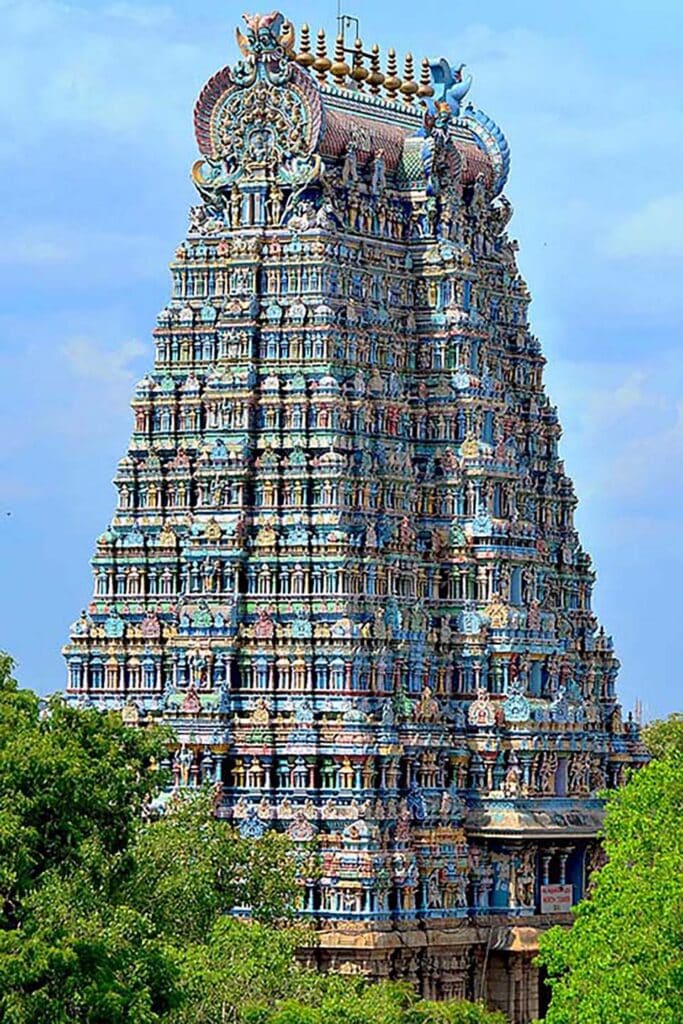
This stunning temple, dedicated to Goddess Meenakshi and Lord Shiva, has been a place of worship for over 2,000 years. The current structure dates to the 16th–17th centuries, rebuilt under the Nayak rulers after earlier versions were destroyed. It’s famous for its 14 towering, brightly colored gopurams (the tallest around 170 feet) and incredibly detailed carvings covering nearly every surface. The entire complex spans about 14 acres.
Unfortunately, much of the temple was under scaffolding for repainting (done roughly every 12 years), and Kirk wasn’t able to get good photos, so these are from Google. Even so, you could still glimpse the vibrant colors and intricate details beneath the restoration. This temple is widely considered one of the most elaborate and structurally magnificent temples in India.
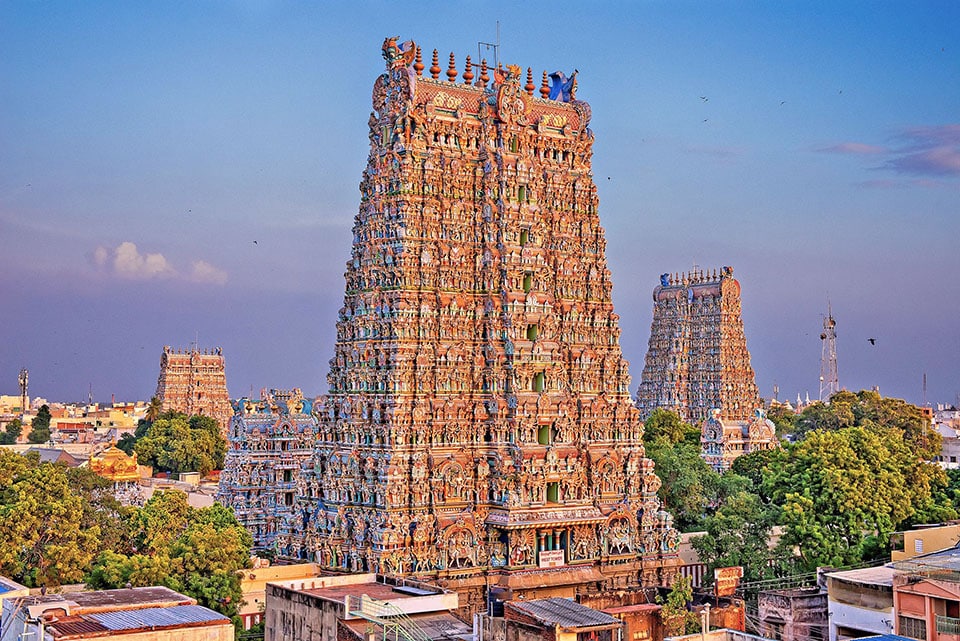
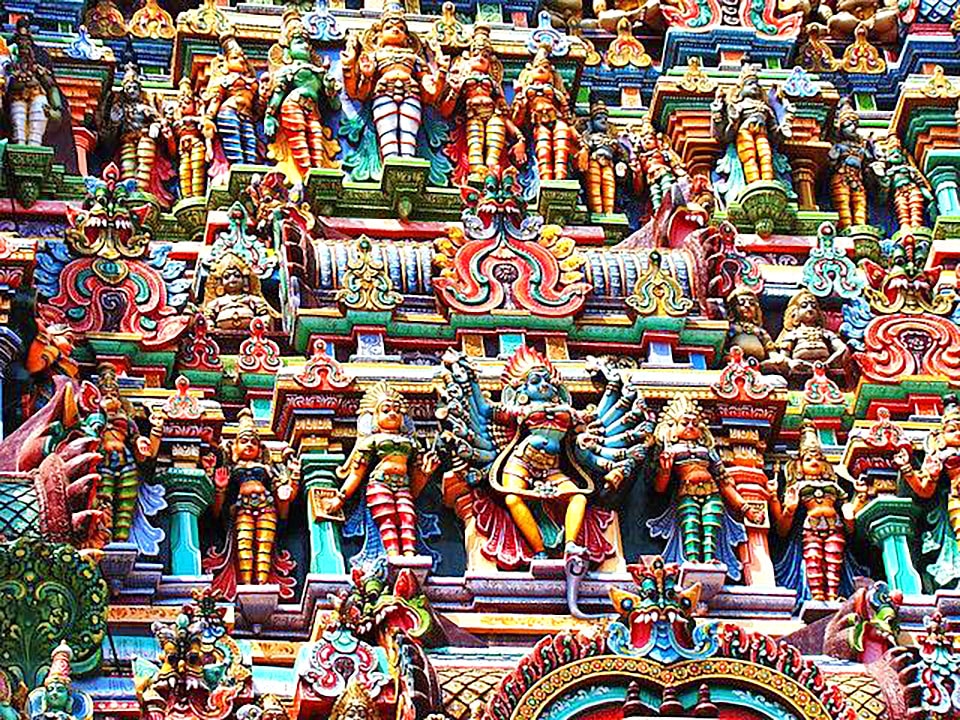
Heidi missed seeing this one in person—she wasn’t feeling well and stayed back at the hotel while Kirk and the group explored. By this point, several of us had developed coughs; no doubt the heavy air pollution wasn’t helping.
Indian Birds
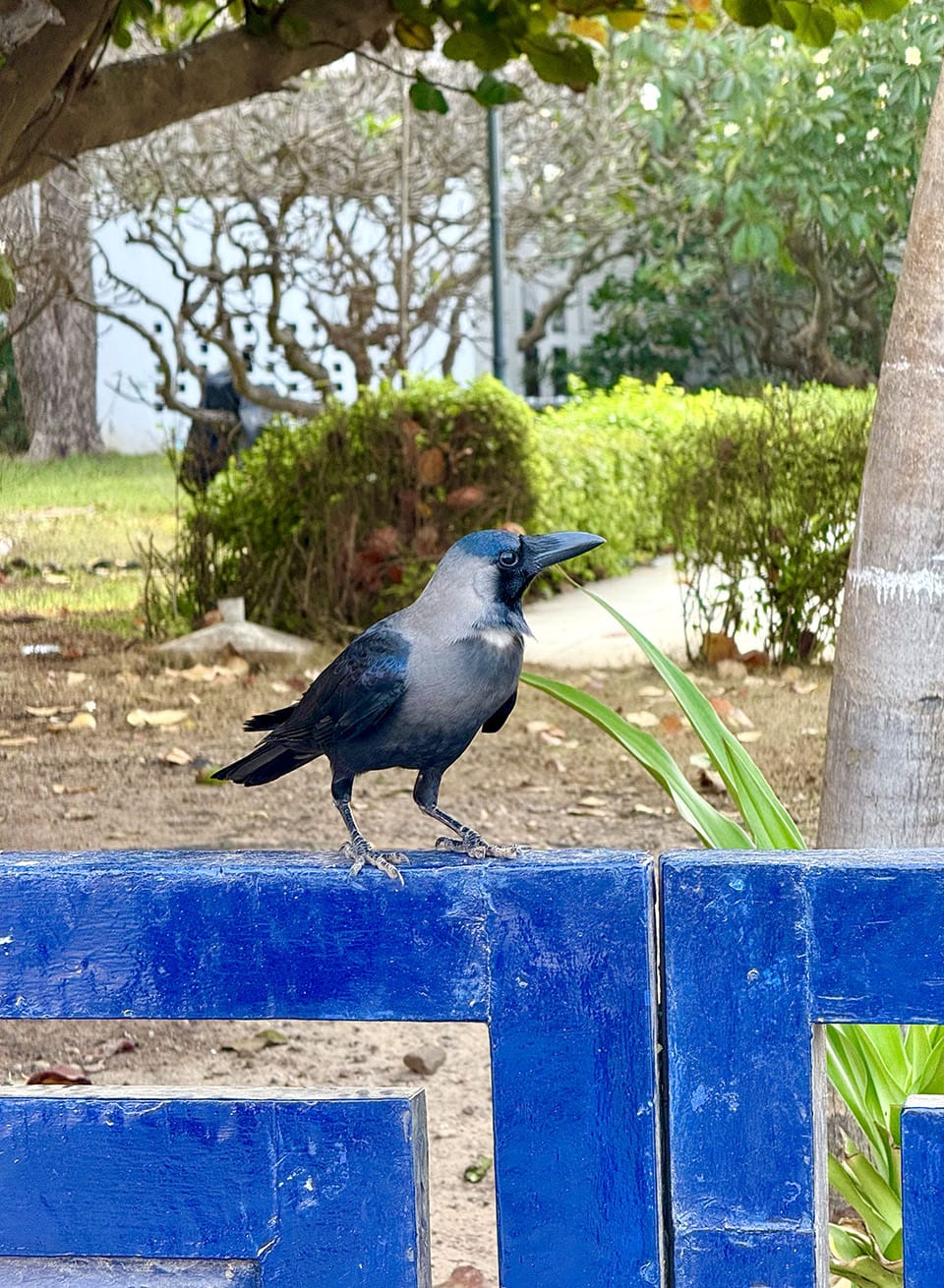
Not wanting to miss out on the local natural beauty, Heidi took a walk around the hotel grounds and was immediately enthralled by all the different birdsongs. With a little help from the Cornell Lab of Ornithology’s Merlin app, she identified several species, including the stunning Indian Peafowl—better known as peacocks. The crows here were nearly as large as ravens, and bluish with a gray chest.
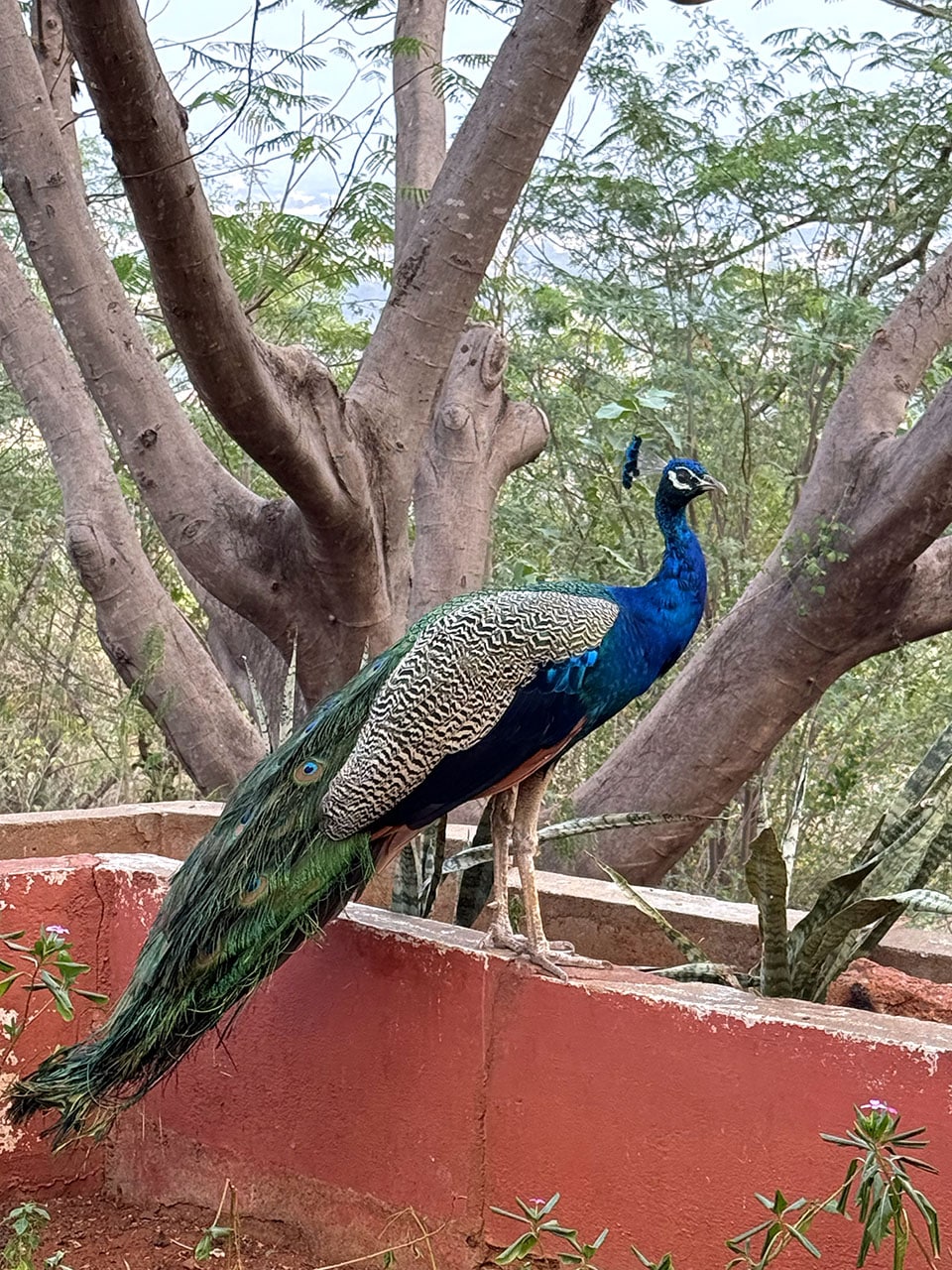
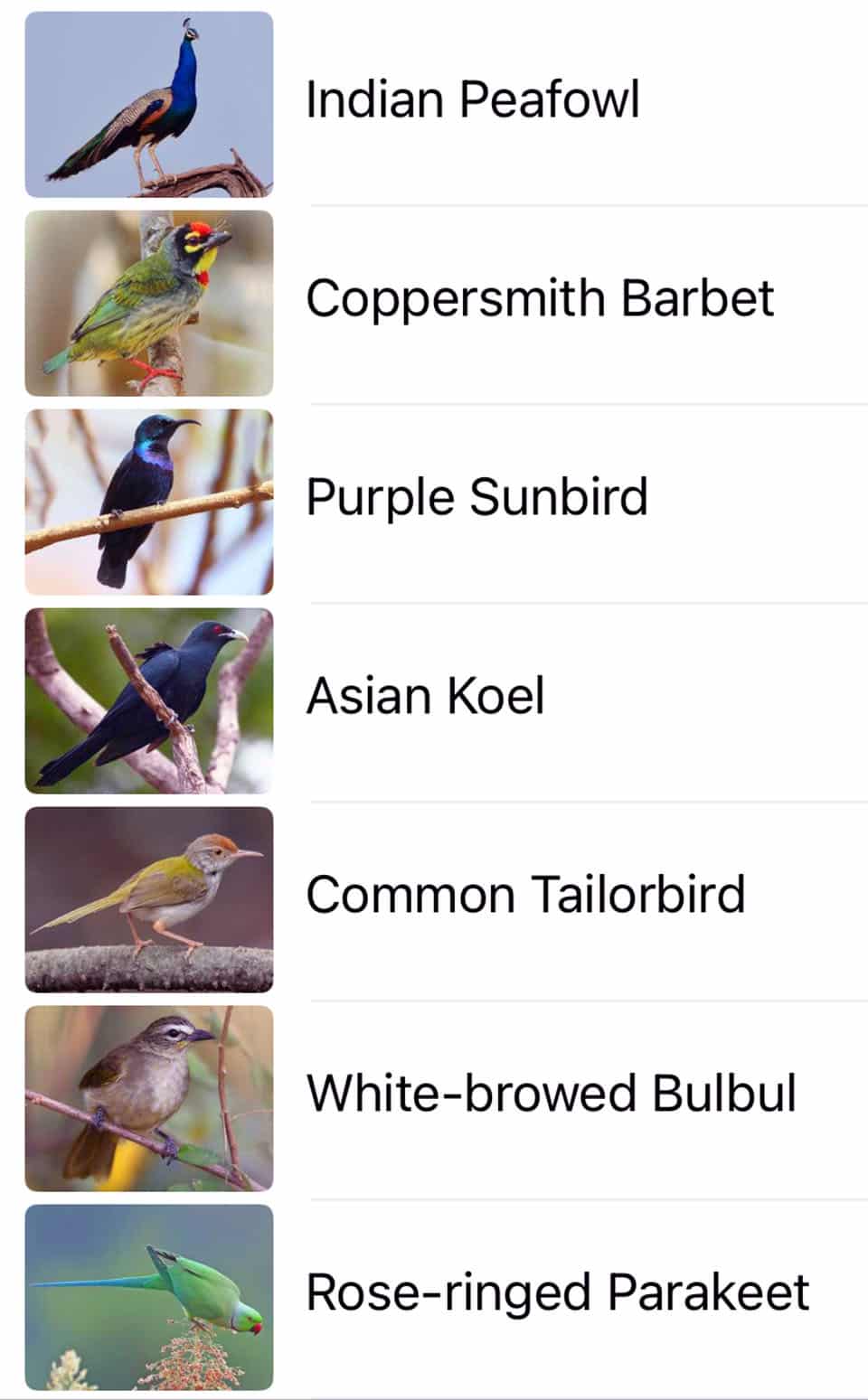
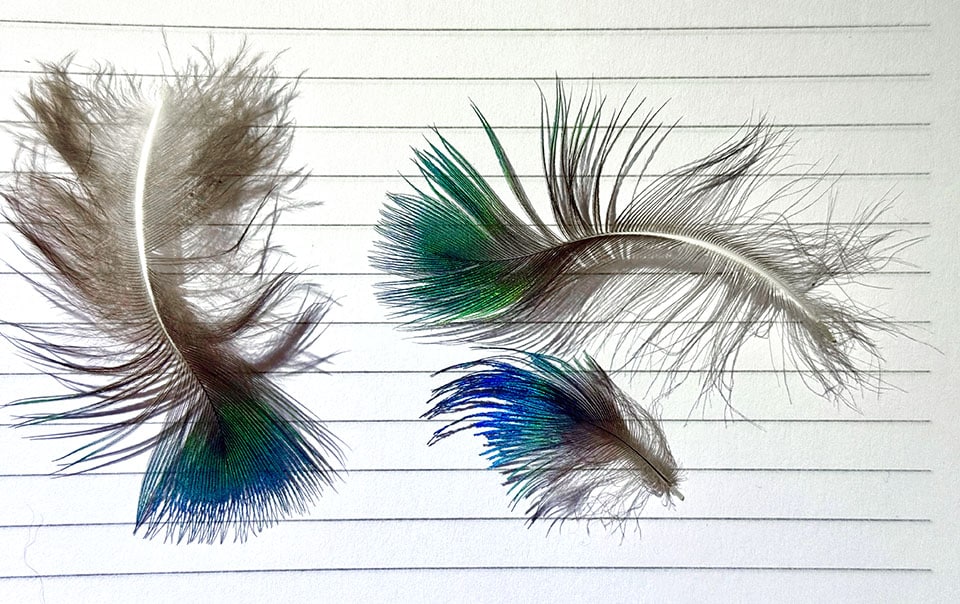
As Heidi wandered around, she discovered small, 1-inch feathers glinting in shades of iridescent blue, green, and purple scattered on the ground—nature’s own sparkling confetti. In India, peacocks and their feathers are deeply revered, considered symbols of luck and protection. Interestingly, in contrast, many people in the US regard peacock feathers as unlucky, due to the “watchful eye” pattern.
It was a wonderful reminder of how the same natural treasure can hold such different meanings across cultures, yet universally inspire awe.
Roadside Landscapes
As we left Tamil Nadu for Kerala, the landscape shifted to more lush, rural, and filled with rice paddies, sugarcane fields, and Australian pine plantations (commonly used as poles for scaffolding and supports).
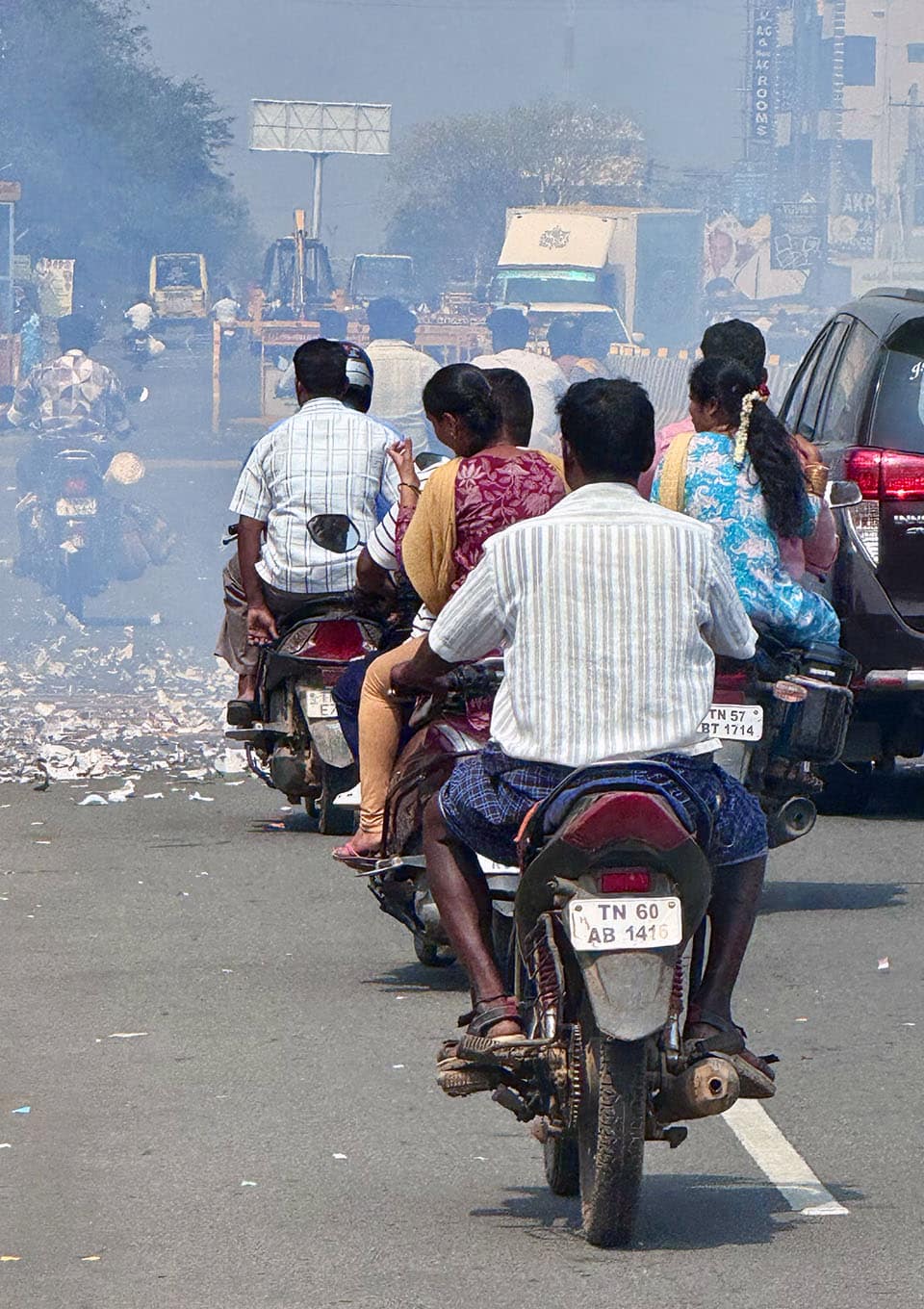
On the drive from Madurai (Tamil Nadu) to Thekkady (Kerala), we passed a lively street party with fireworks in the road, which slowed our bus just long enough for Asoka to ask what was going on. It turned out to be a celebration for a young girl—around 2 or 3 years old—getting her ears pierced for the first time. Everyone enthusiastically invited us to get off the bus and join the celebration…but we had places to go, more temples to visit, so we smiled, waved, and kept going.
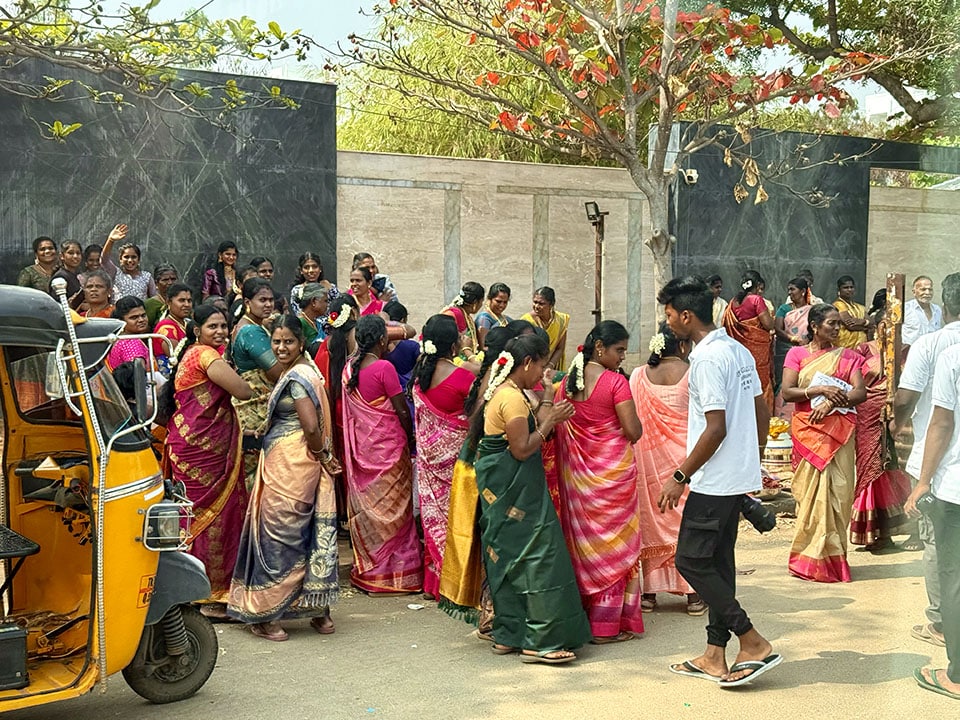
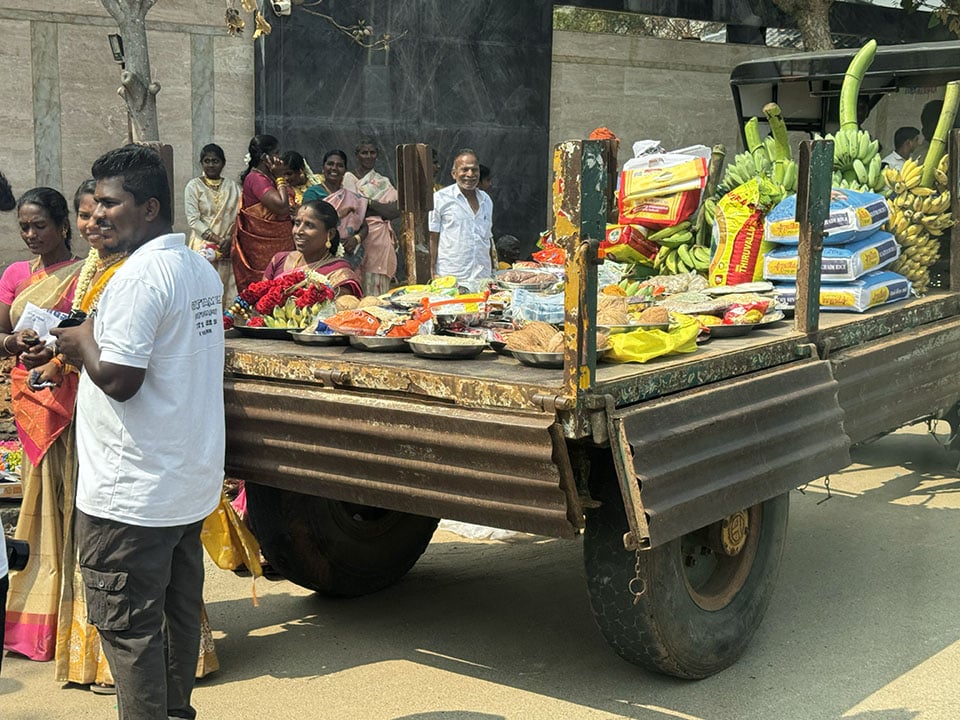
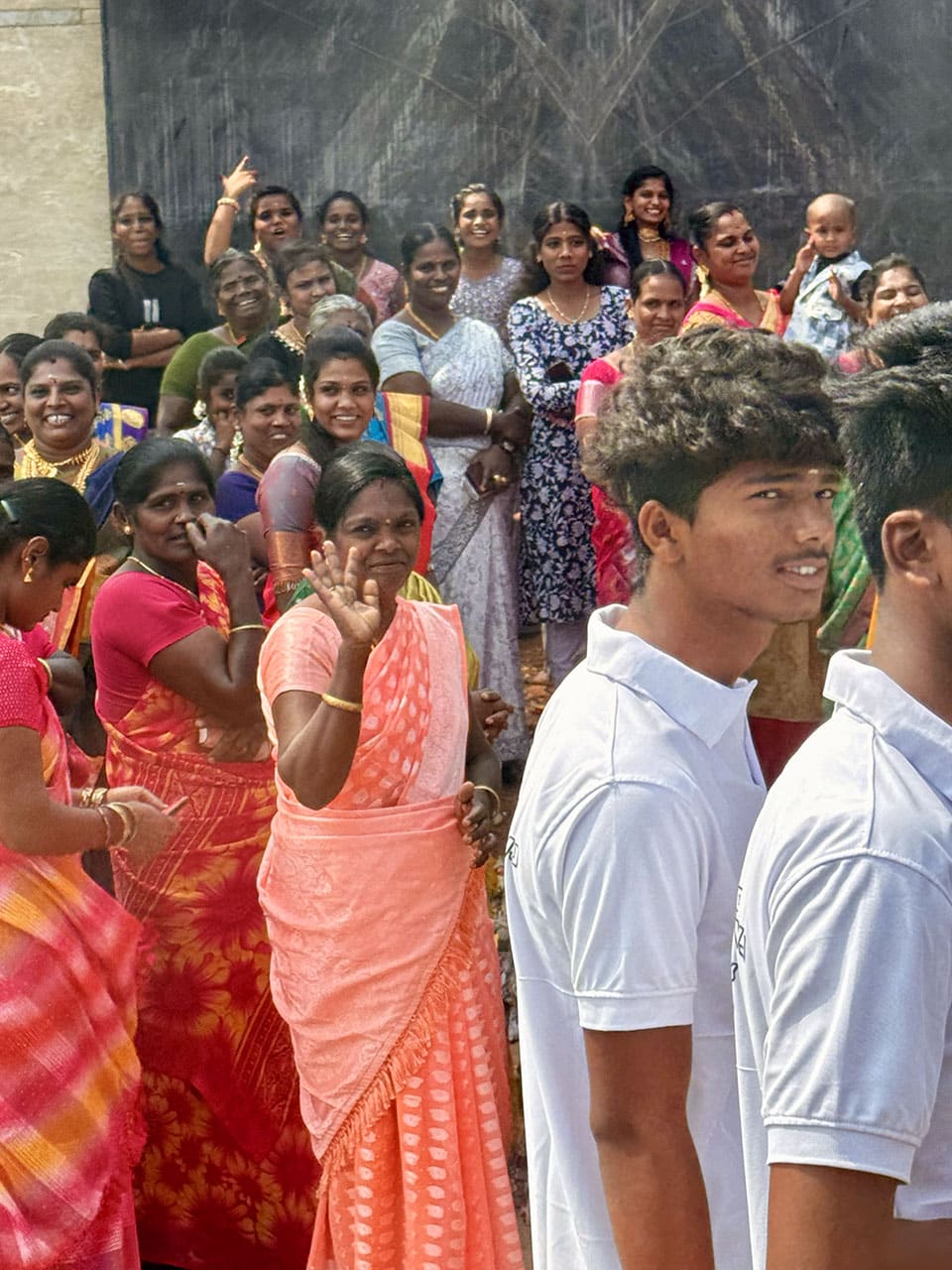
Indians truly celebrate everything. With over 400 religious holidays each year—more than one a day—there’s always something to celebrate. And beyond that, there are celebrations for life’s milestones, big and small, from weddings to job promotions to ear piercings. Imagine if Americans celebrated like that?!
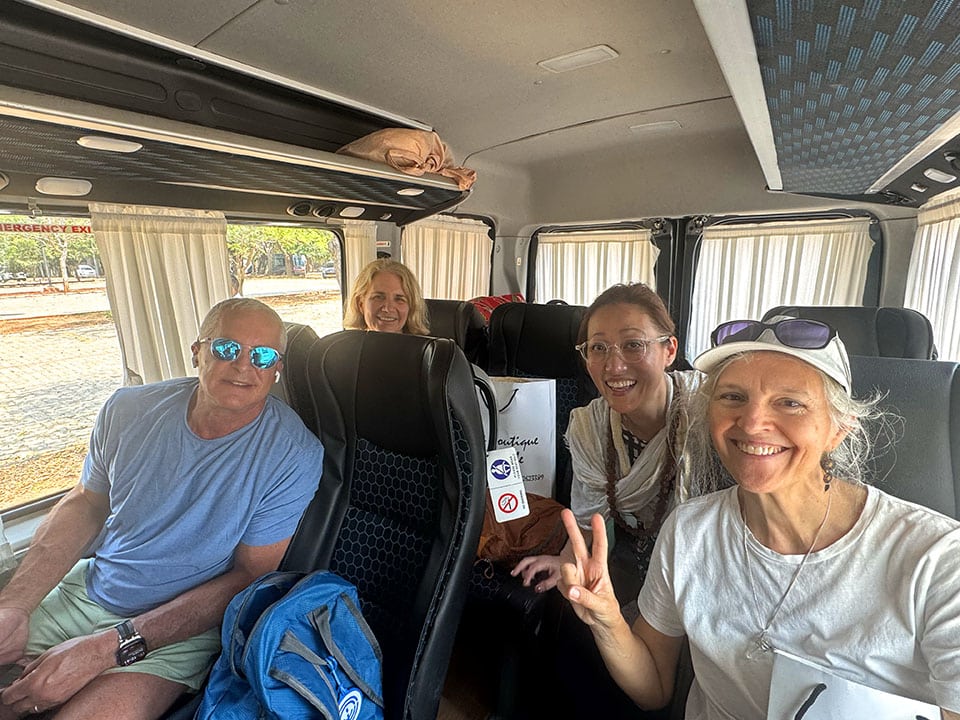
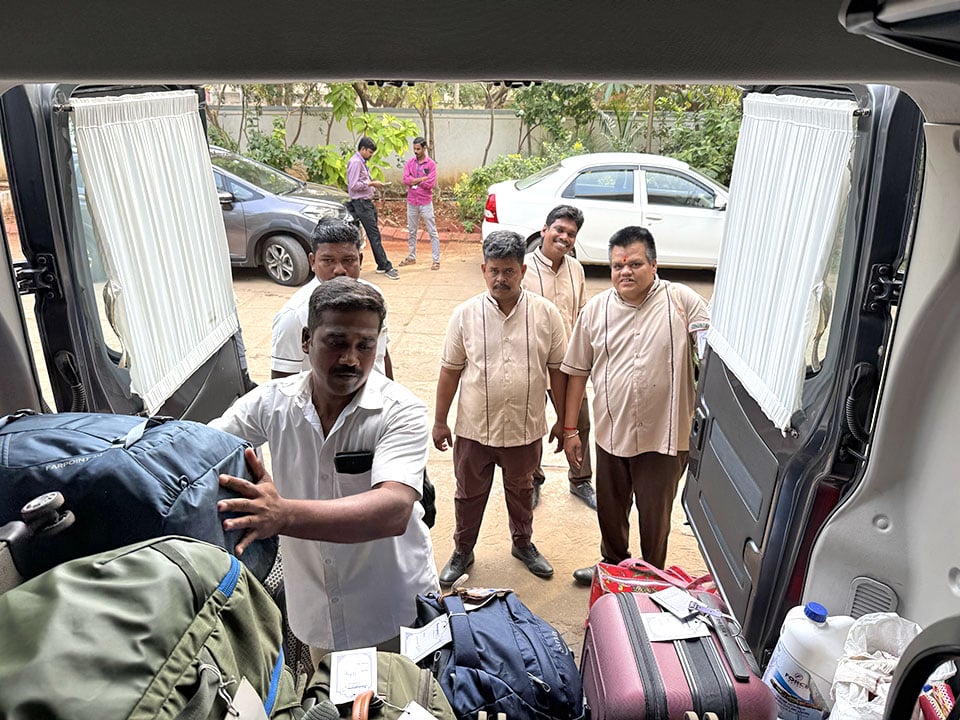
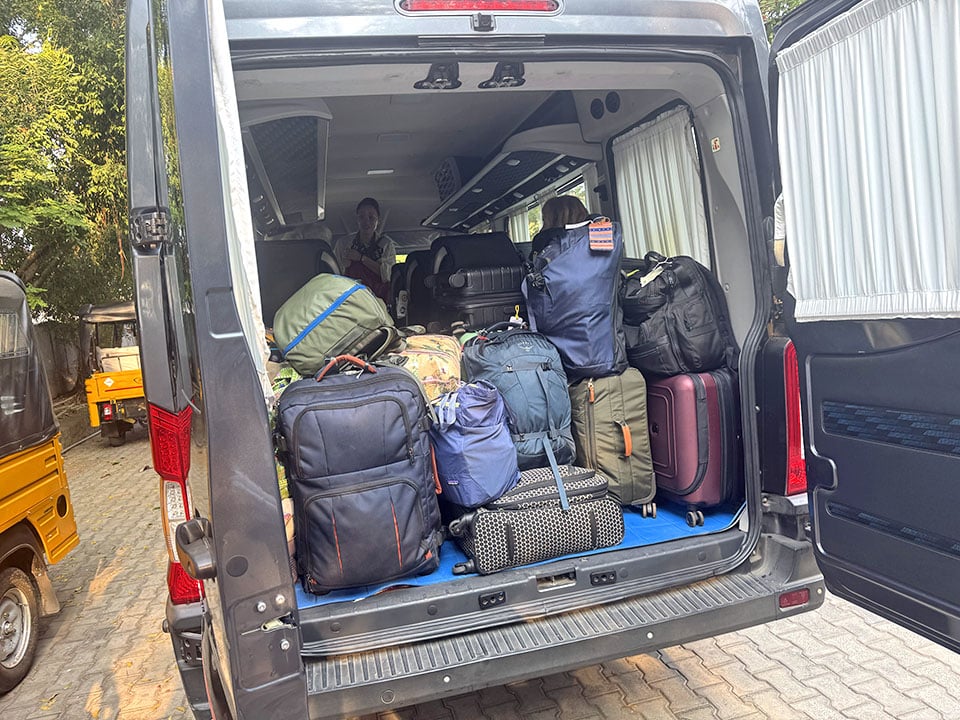
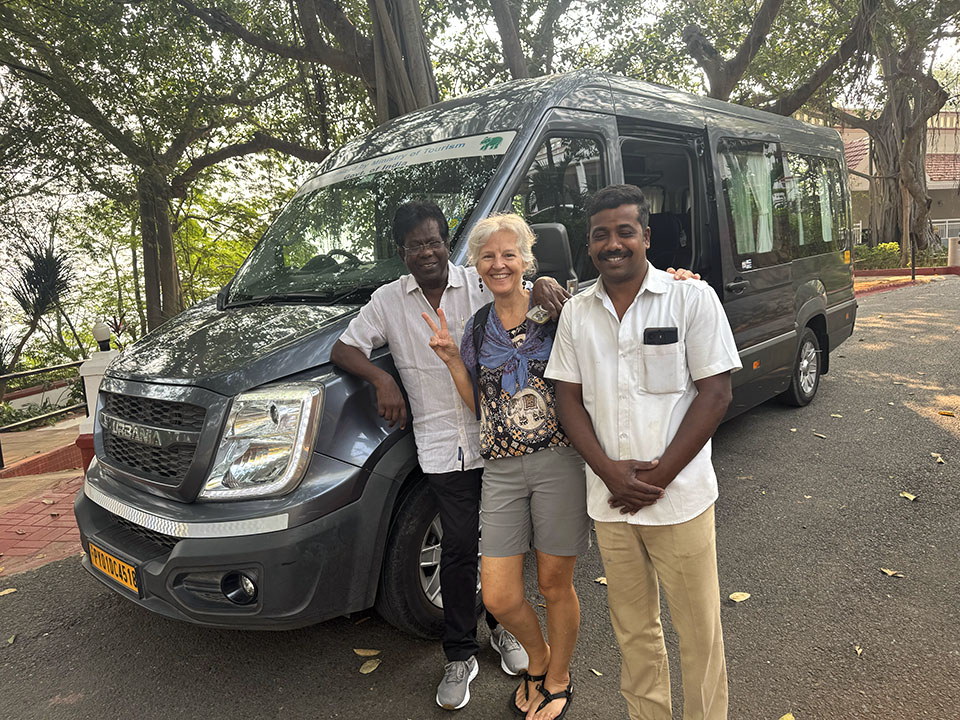
We are grateful to Ashoka and Mani for making our travels through Tamil Nadu so interesting and safe. So long, Tamil Nadu—it’s been real. Next stop: Kerala.
Thanks Kirk and Heidi for sharing your travels!
Thank you for sharing such great photo’s, I feel like I just watched Rick Steves tour of India only better. Great job educating me on so many topics.