Travels to India, Part 3: India’s Spice Coast, Kerala Backwaters, Ayurveda & Kochi
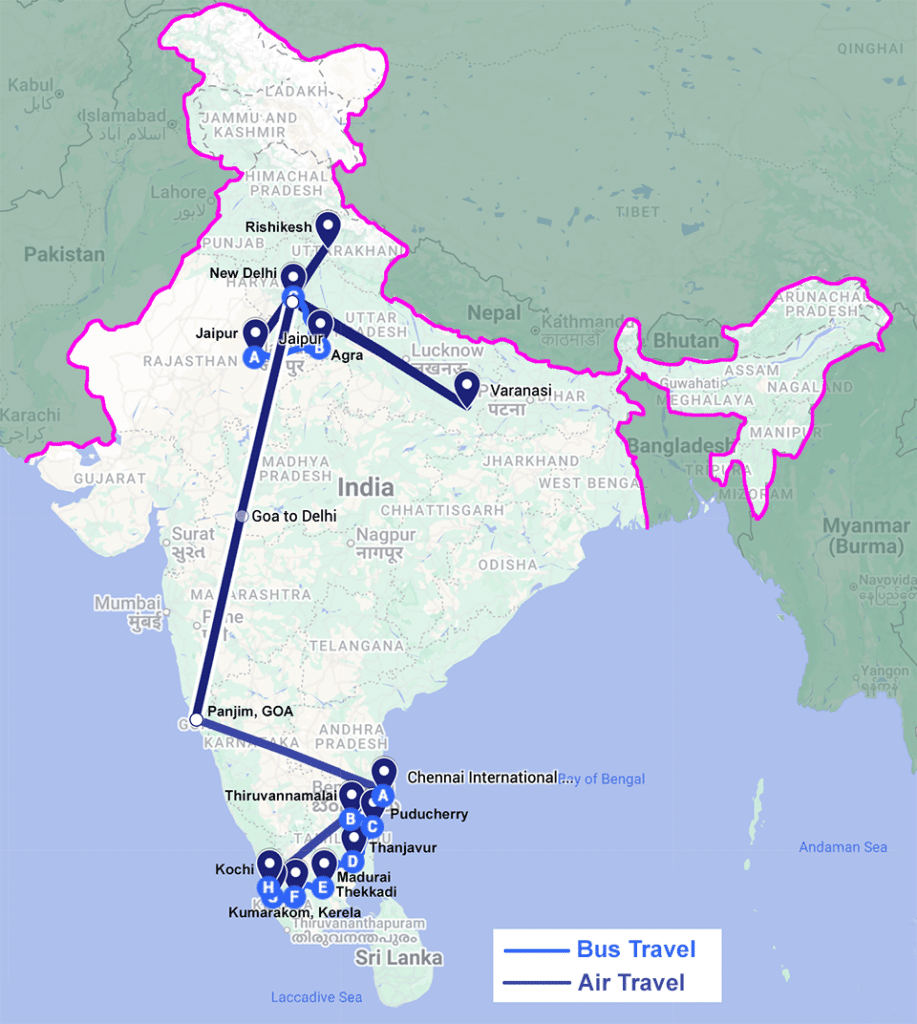
Part 1: Why India? explains how our India adventure came about. In Part 2, we explored the state of Tamil Nadu with its towering Hindu temples. Now we’re continuing westward into the tropical state of Kerala, located on India’s southwestern Malabar Coast. Known locally as God’s Own Country, Kerala is celebrated for its high literacy rate (among the highest in India) and renowned for its laid-back lifestyle, serene, palm-lined backwater canals, leafy tea plantations, and teak forests—it’s also the birthplace of ancient Ayurvedic medicine. One thing we noticed right away was how verdant and GREEN Kerela is.
Kerela
Bordered by the Arabian Sea to the west and the Western Ghats mountains to the east, Kerala’s economy relies heavily on tourism, remittances (many Keralans work in the Middle East, sending money to family back home), and cash crops including coconuts, coffee, tea, and spices.
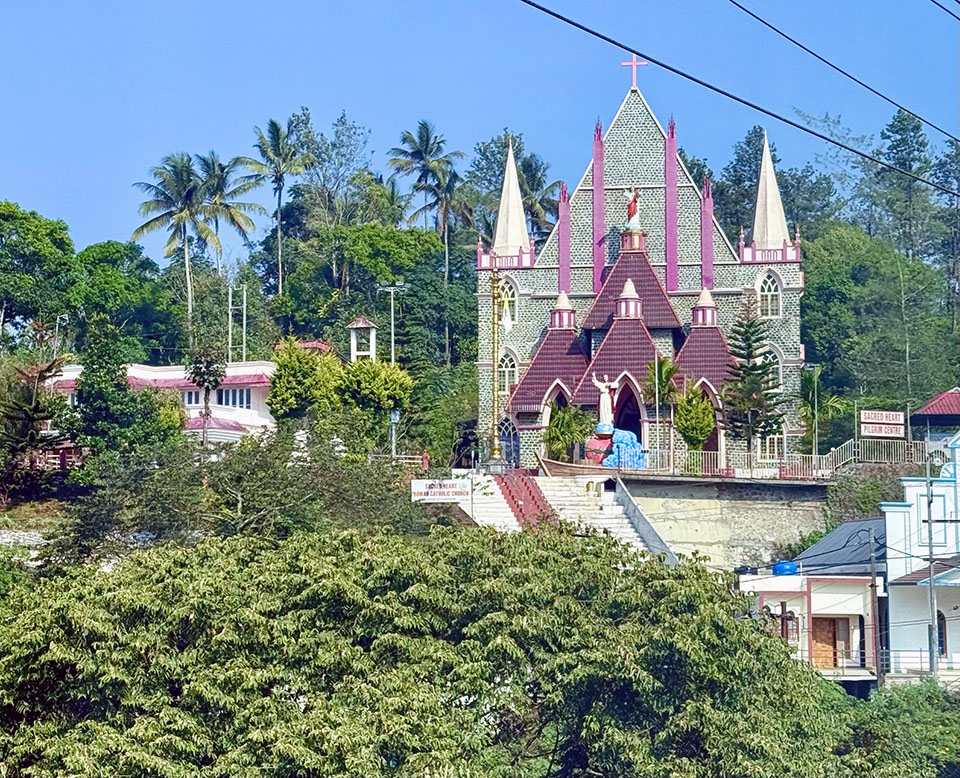
Another noticeable difference between Kerala and Tamil Nadu was the increase in Christian churches. Kerala is 18% Christian, compared to only 6% in Tamil Nadu. This contributes to Kerala feeling more conservative and also to its very high literacy rate. Although many women still wear saris here, they were generally in more subdued, muted, and drab colors in Kerala than we’d previously seen in Tamil Nadu.
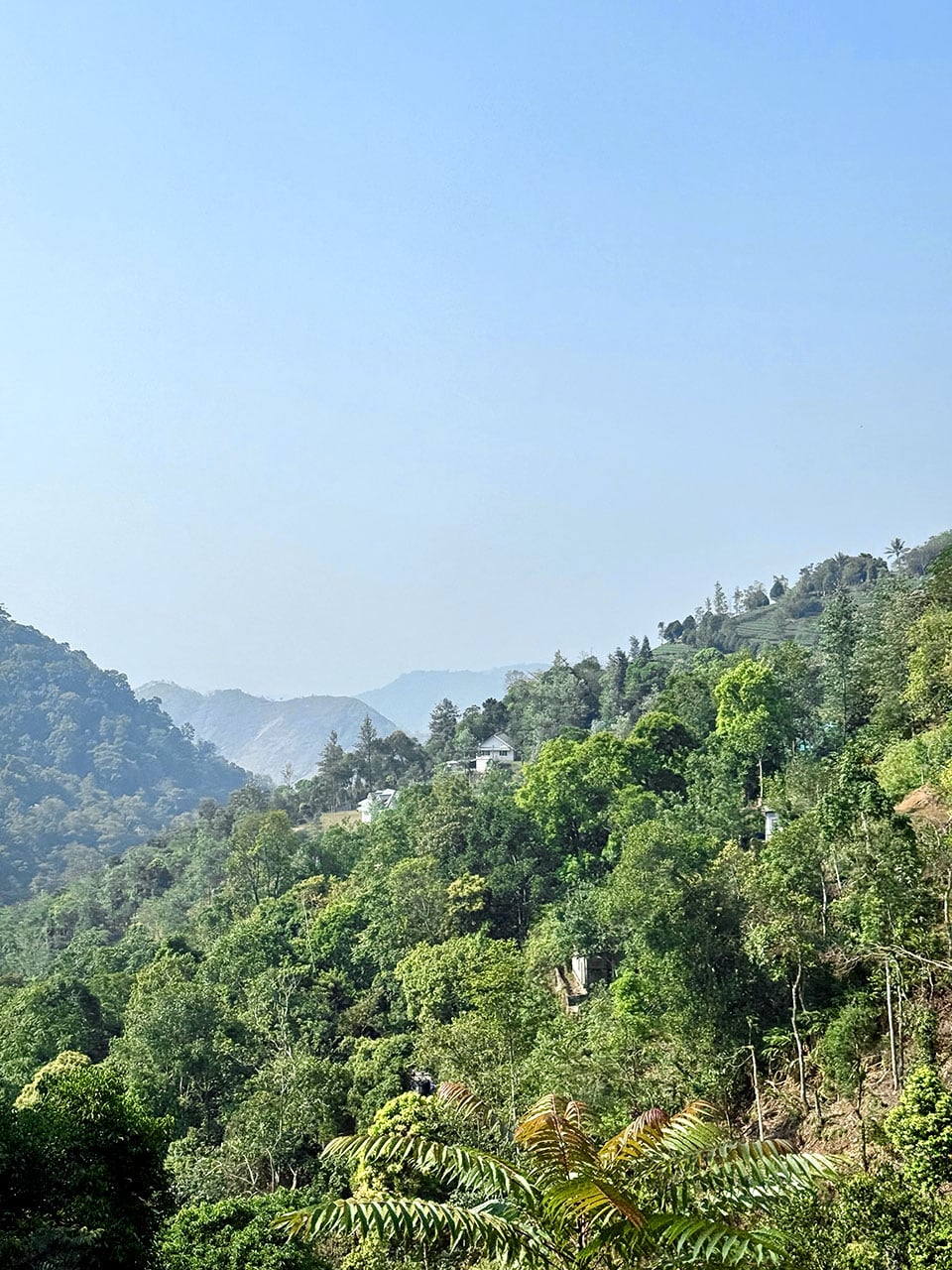
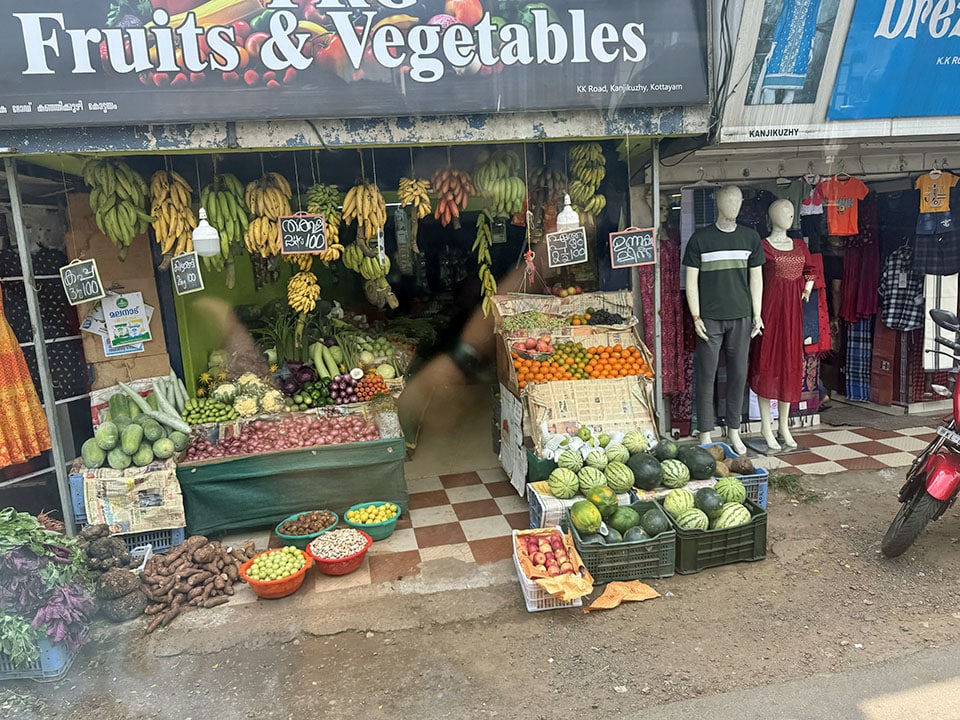
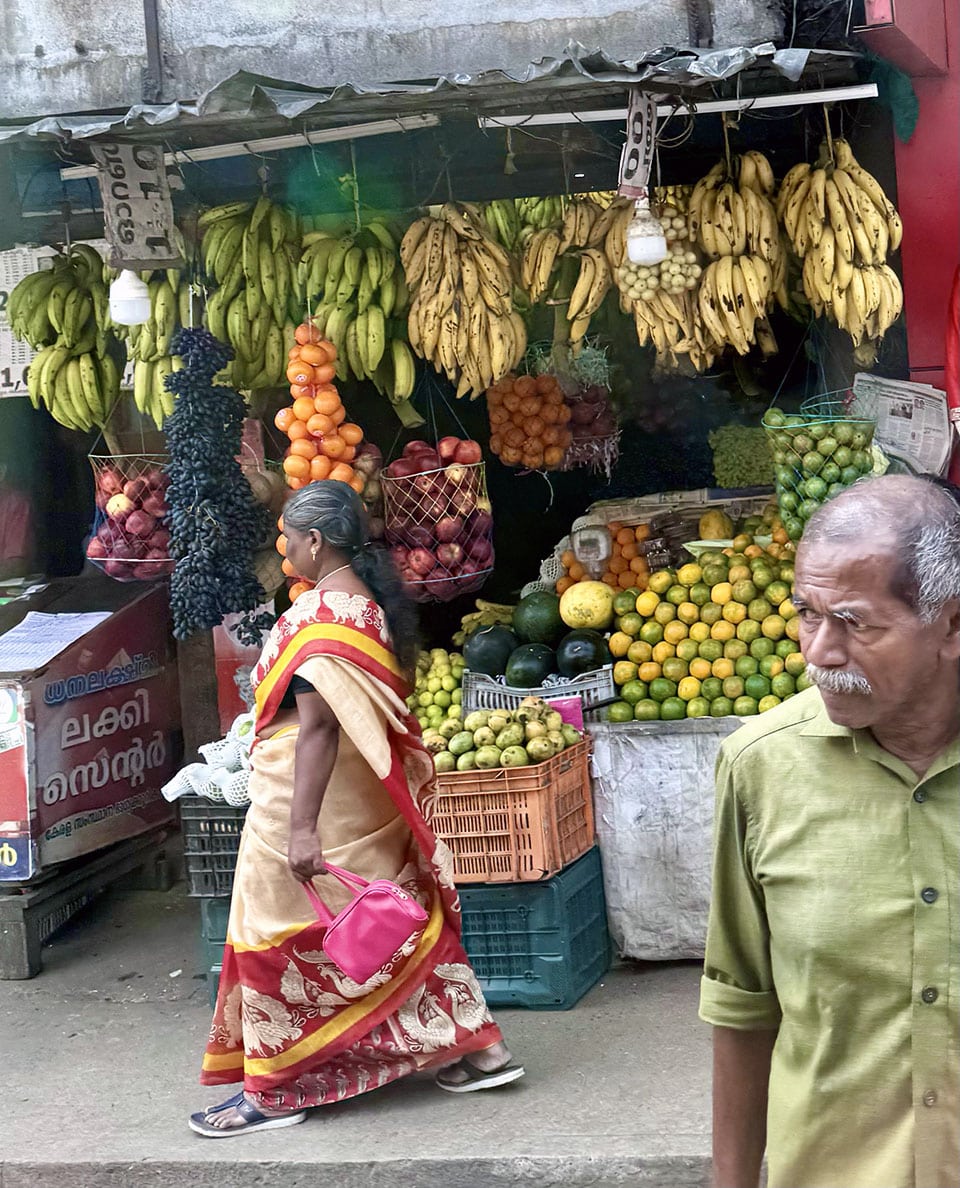
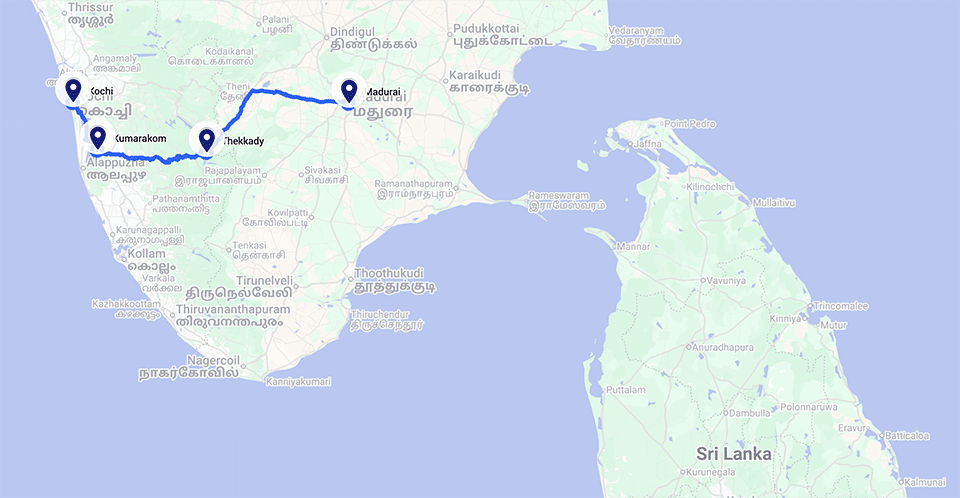
Our bus ride continued west for another 3-4 hours, winding up, up, up, through small towns, into the hills to about 2,700’ elevation. The scenery out the bus window here was very different than the previous week. Much more tropical and green, with rolling landscapes, driving through canefields, spice farms, tea plantations, and teak forests, complete with monkeys!
Spice Village in Kumily
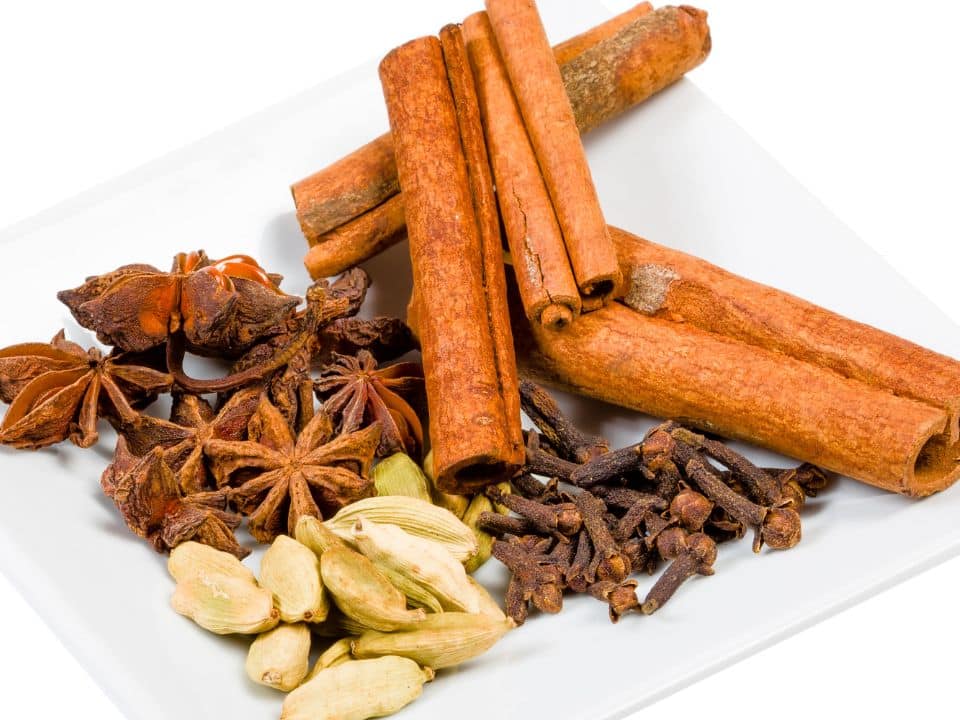
First stop, Spice Village in Kumily. On our guided walking tour of Spice Village, we learned how different spices are grown, including cardamom, vanilla, black pepper, cinnamon, nutmeg/mace, allspice (that is the unique flavor we had been tasting in South Indian foods!), blue pea flour, cloves, cacao, and turmeric. Black pepper (which grows on vines everywhere, including telephone poles) is known as “black gold”, because it made so much money for the colonial Europeans.
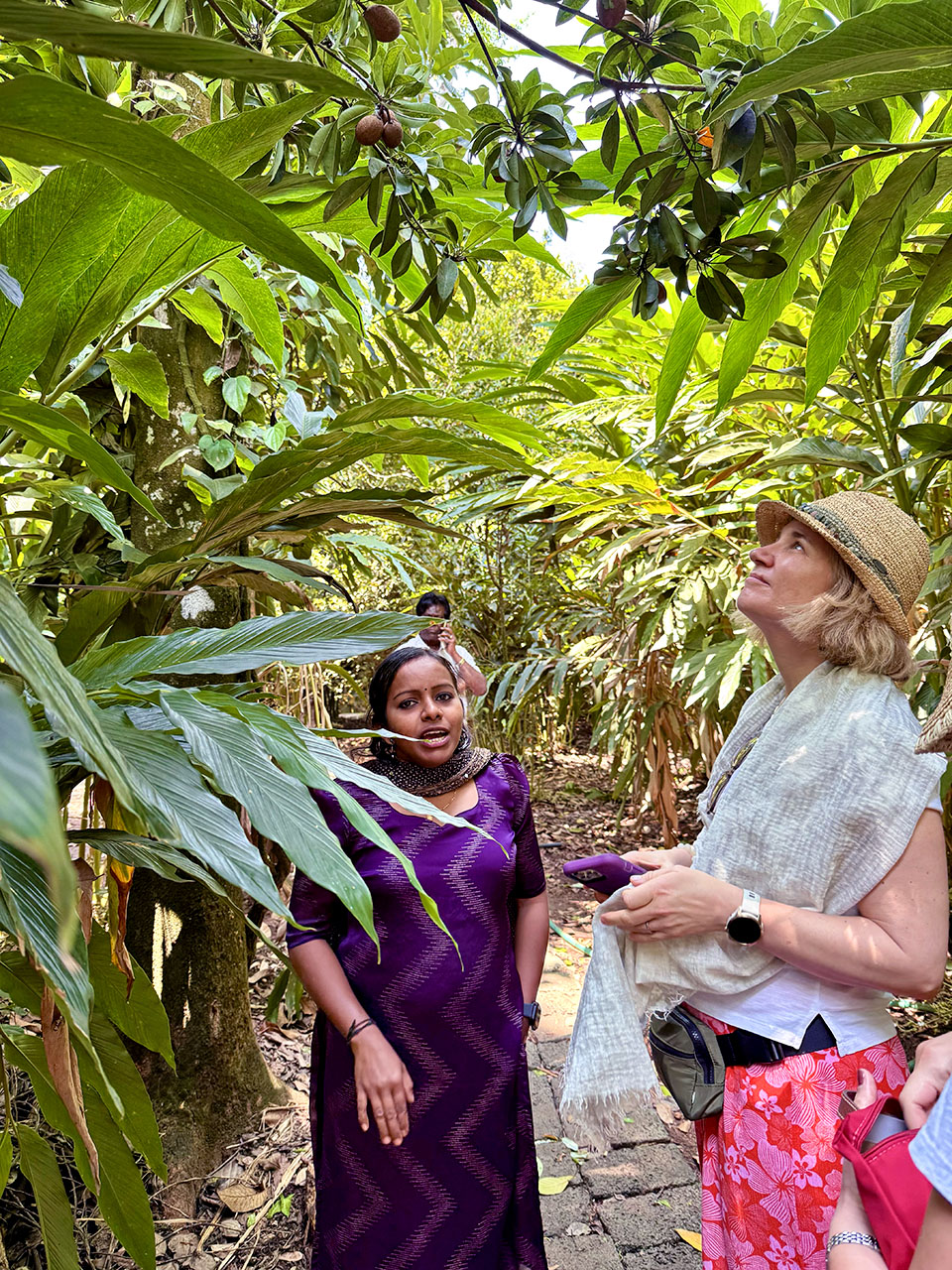
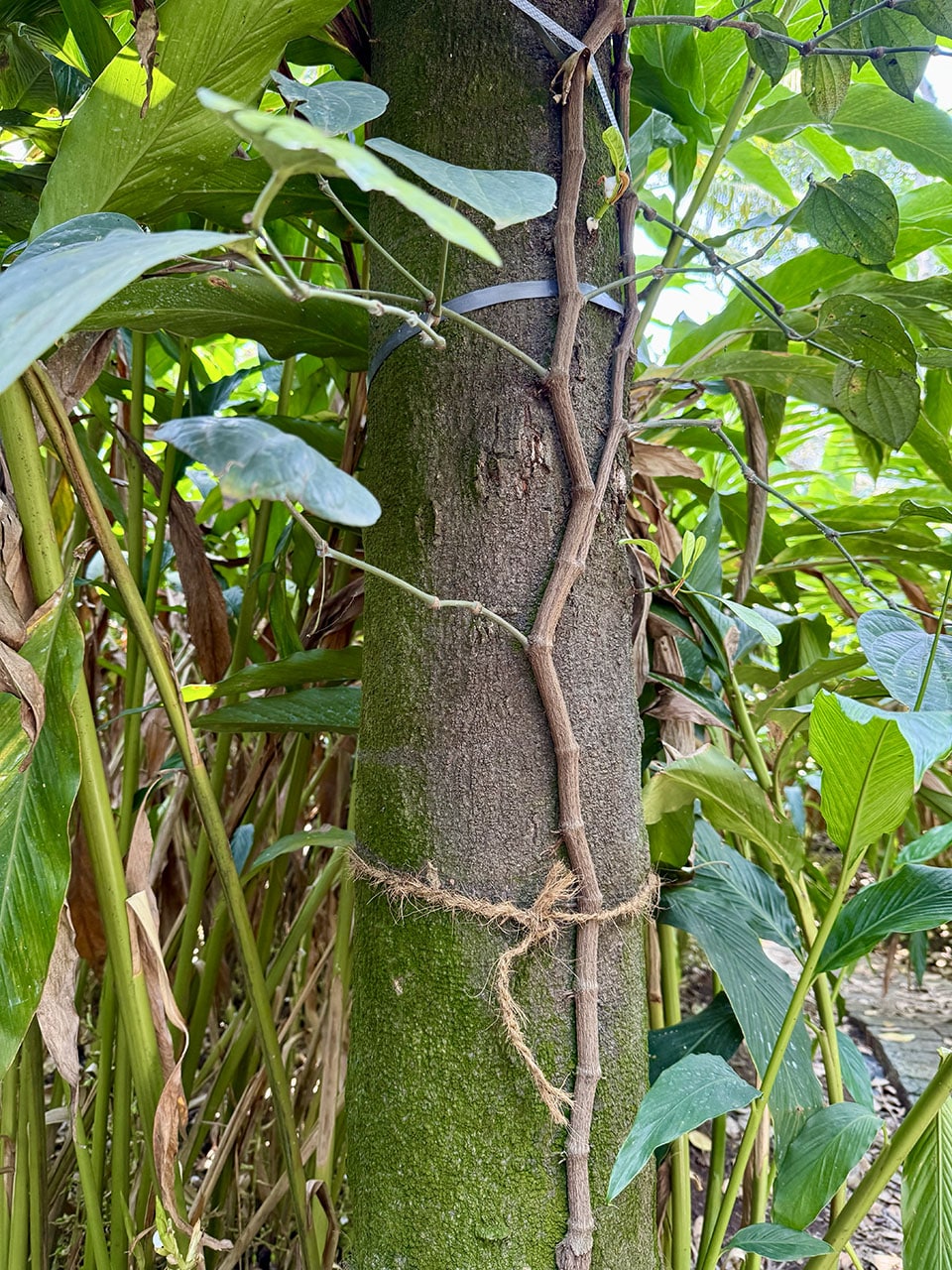
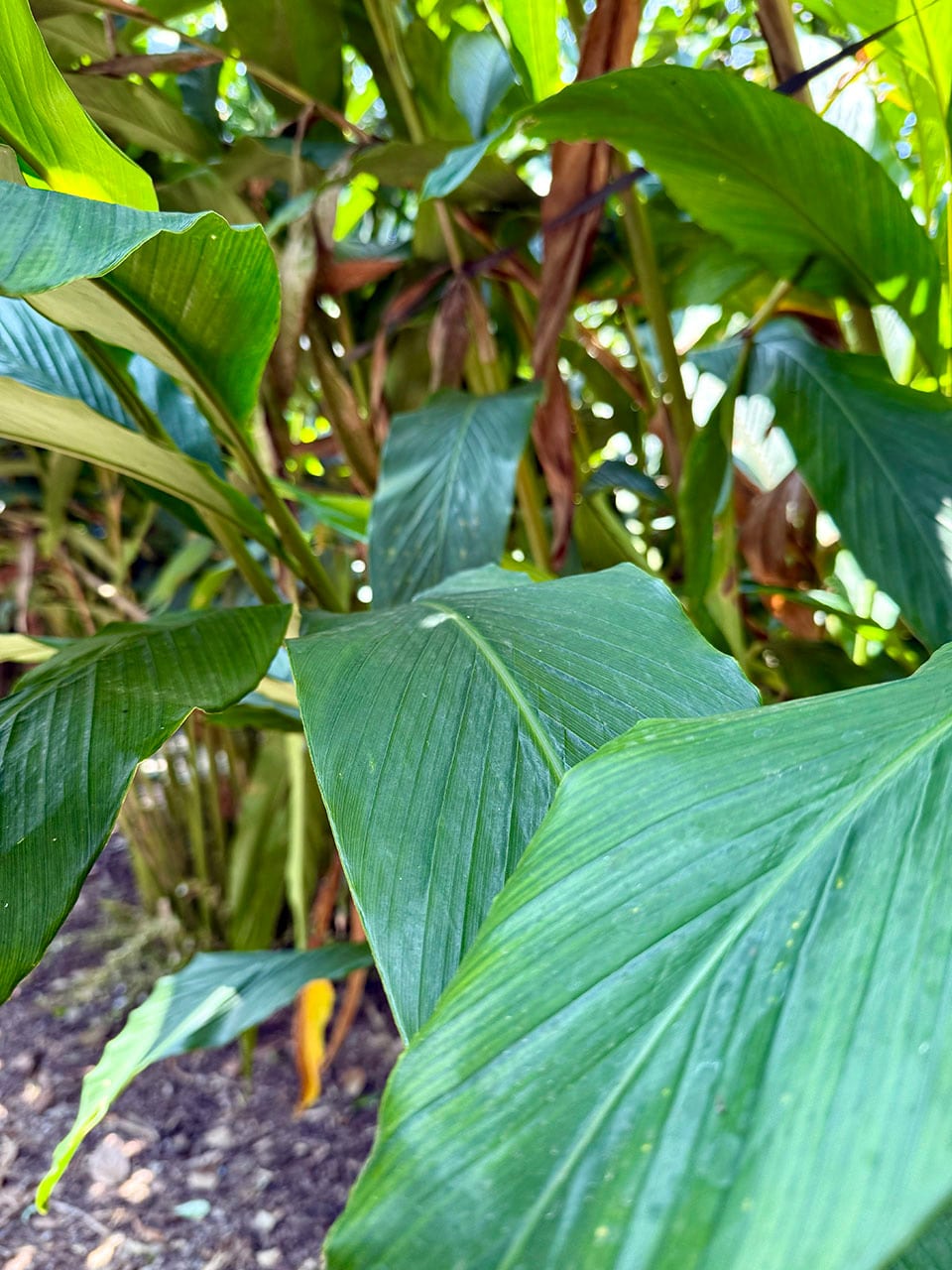
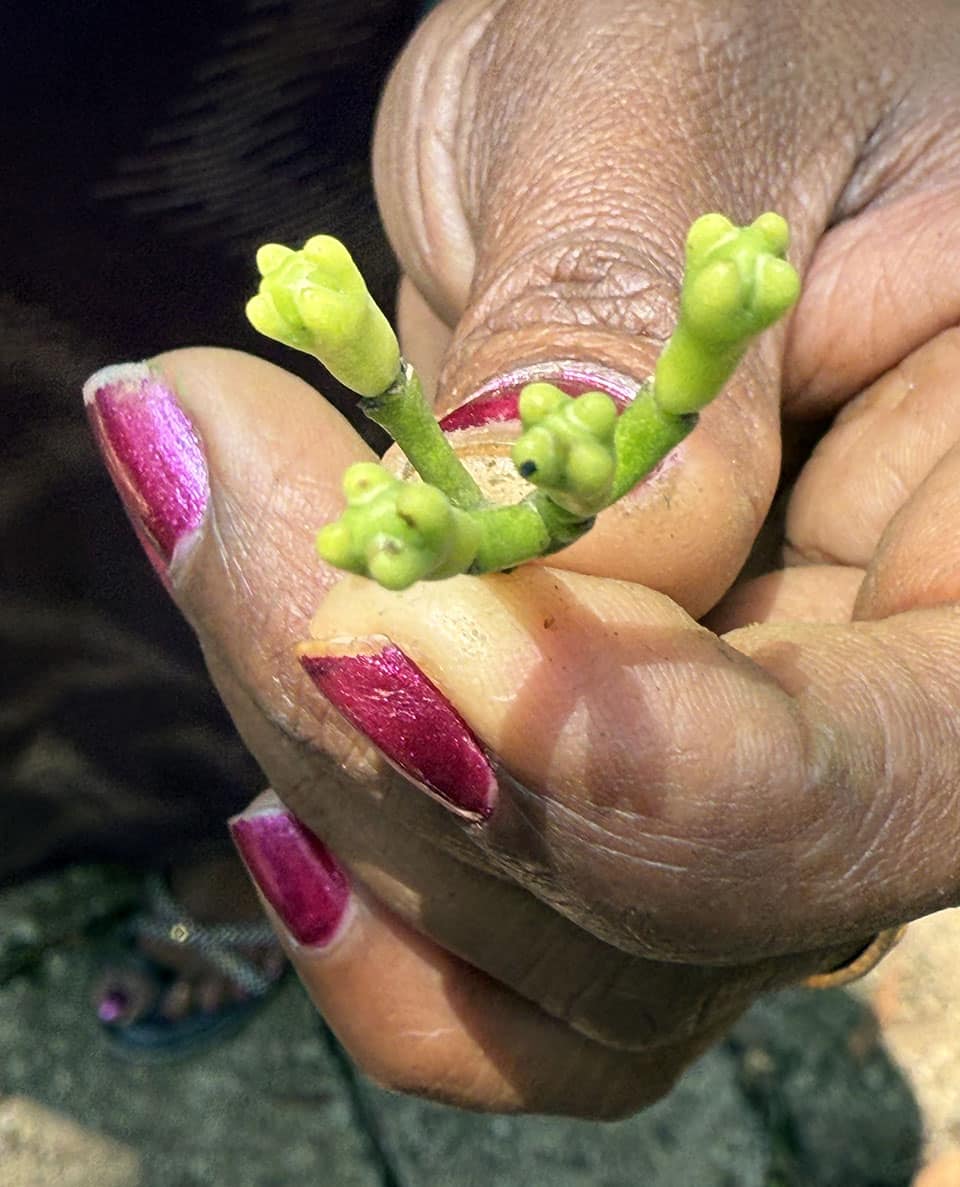
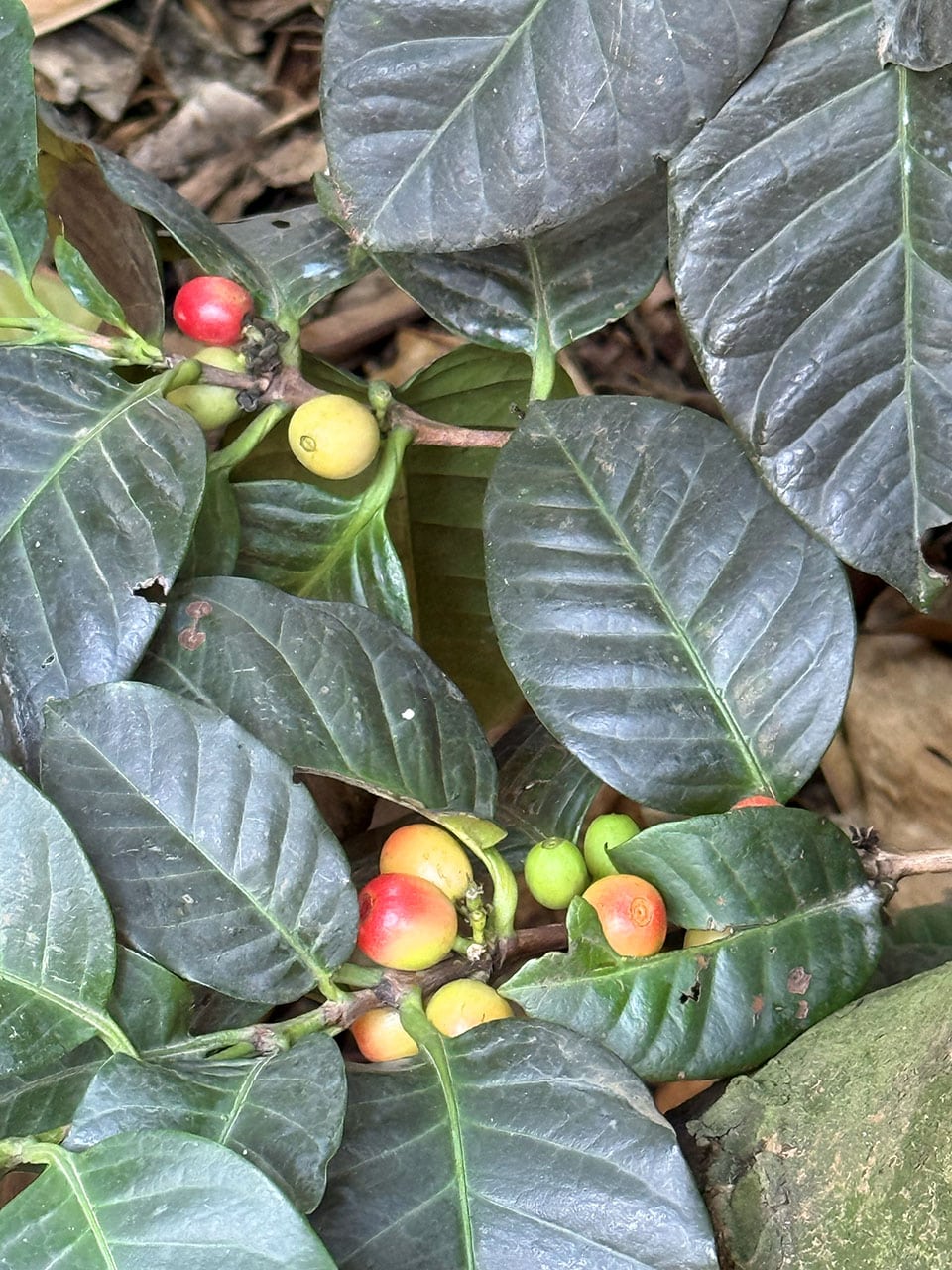
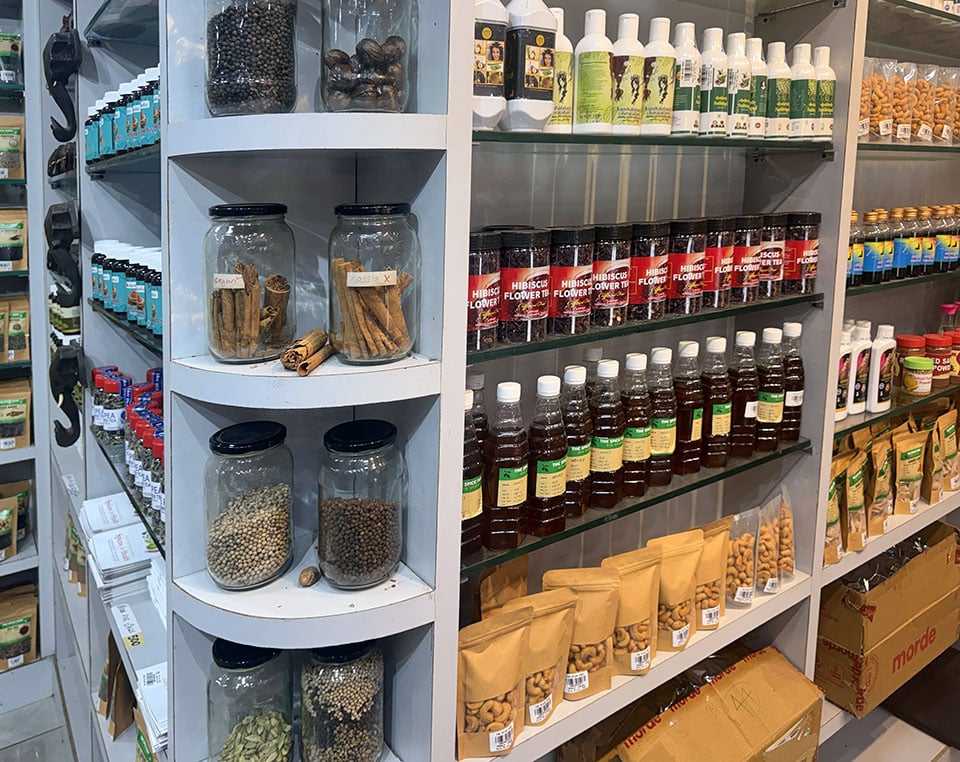
On our tour, we saw how a variety of spices were grown, from black pepper vines (top middle), cardamom (top right), to cloves (left center) and coffee (middle center), and brought home several spices from their wonderful gift shop.
We also bought a delicious tea mix called Ginger Coffee (which does not actually contain coffee). Its ingredients include: black pepper, ginger, palm jaggery (a type of brown sugar made from date or coconut palms), basil, cinnamon, clove, and cumin… and we drank it daily to help with our upper respiratory infections.
Ginger Coffee is a spicy, sweet Ayurvedic remedy for:
- Reducing heat or acid in the stomach.
- Calming digestive systems and joint pain
- Boosting immunity
- Relieving Colds and Flu
- And Reducing Motion Sickness
So far, we have not been able to find it online, and what we purchased is already gone! So we plan to make our own from the ingredients listed above. It’s super delicious!
Thekkady (Teakwood Forest)
After our group nearly bought out the gift shop at Spice Village, we continued to our next hotel stop in Thekkady (Th is pronounced T in most of India, so it’s “Tay-kuh-dee”), which means teakwood forest (Thek is ‘Teakwood’ and kady is ‘forest’). The teak industry seems to be alive and well here for both building materials and furniture.
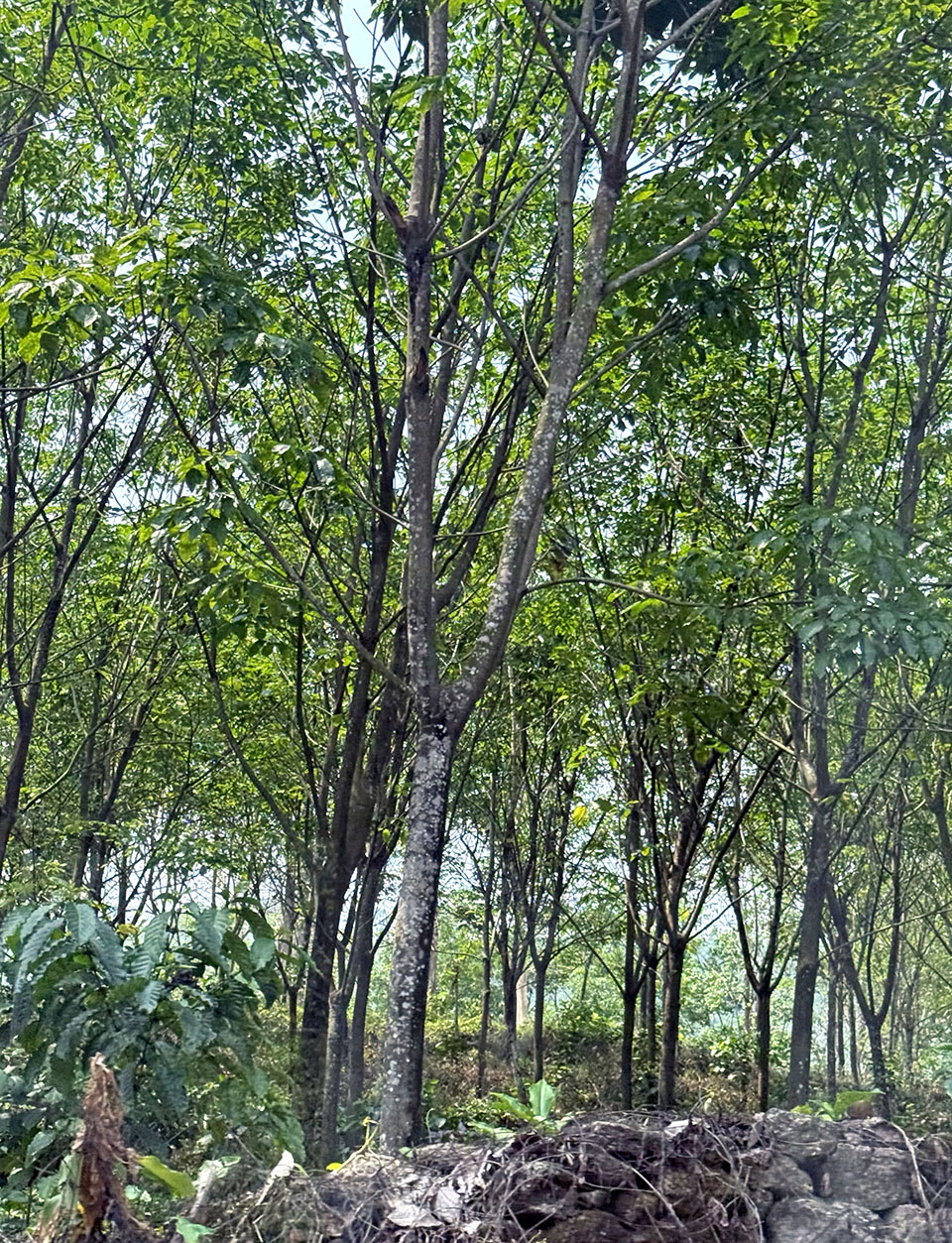
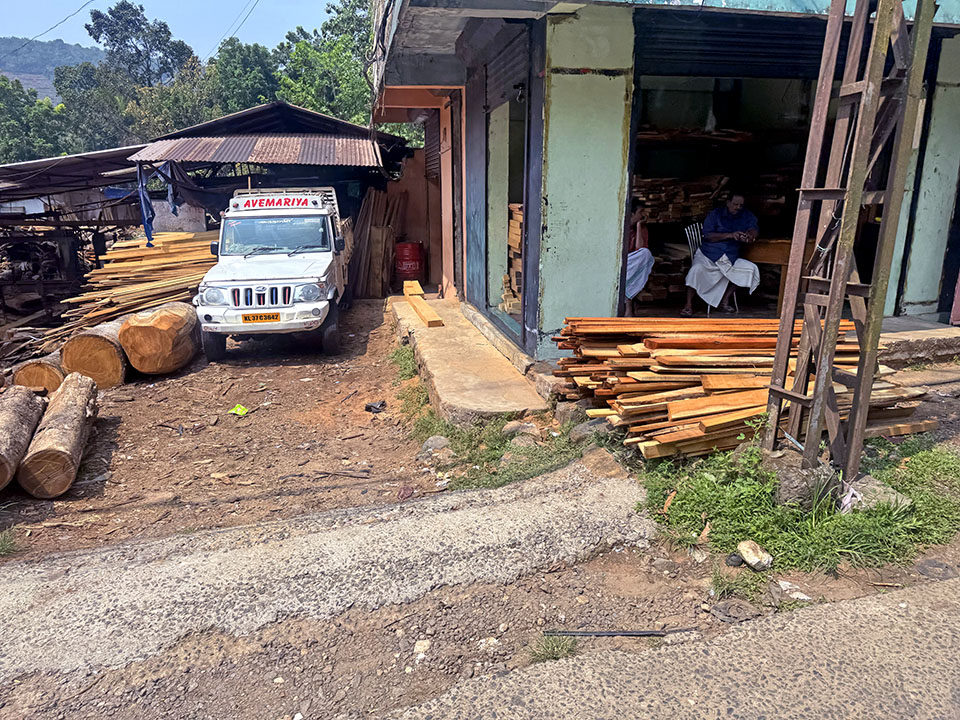
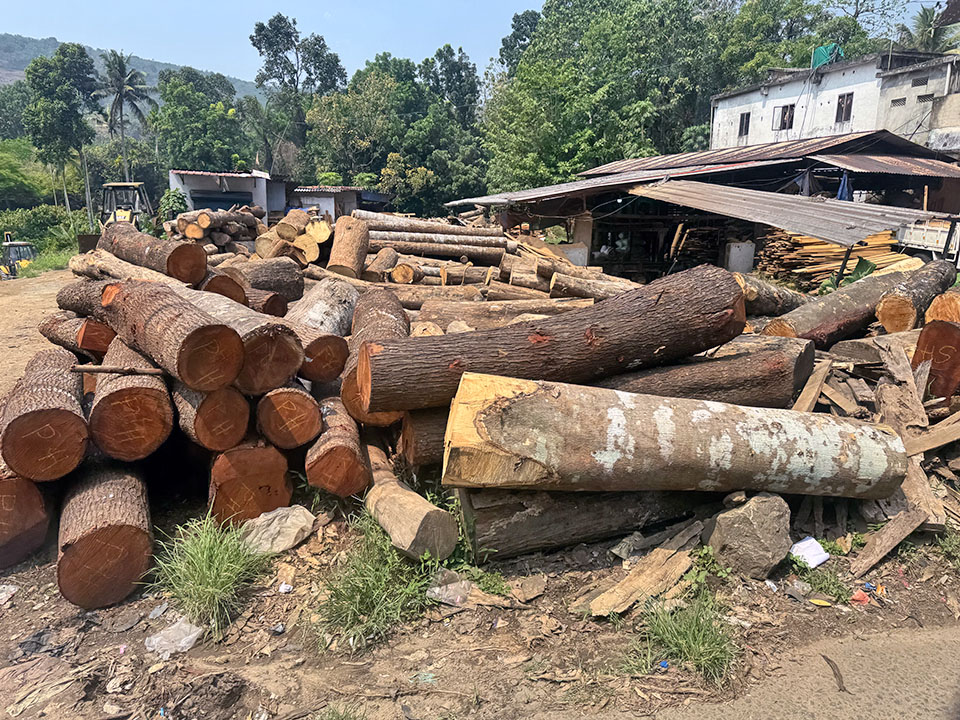
Thekkady, known as the “spice capital” of India, is situated in the Cardamom Hills of the southwestern Ghats, and is a premier nature destination, famous for the Periyar National Park (Tiger Reserve), a 777 sq km sanctuary with elephants, tigers, monkeys, and a lake where you can see everything by boat. Sadly, visiting this national park was not part of our tour, but it looks amazing, and we’d love to come back!
Thekkady Spice Garden Resort
The Shalimar Thekkady Spice Garden Resort was gorgeous! Lots of individual bungalows are sprinkled around the large grounds. It’s an Eco resort, and after the lack of trash receptacles on this trip so far, we were very impressed by the number of bins for plastic, paper, and organic waste around the grounds and in all of the guest rooms. We signed up to go on a “nature walk, “but it was really more of a tour of the grounds, including their RO water bottling plant and recycling center. We are grateful for their stewardship!
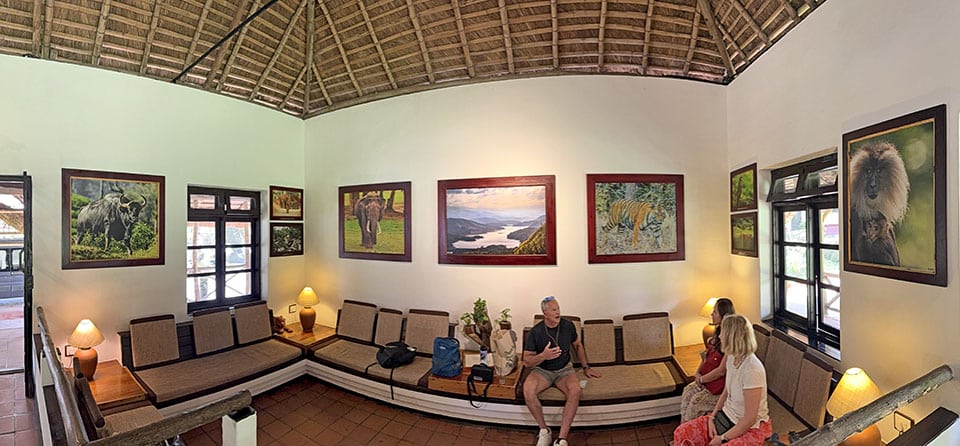
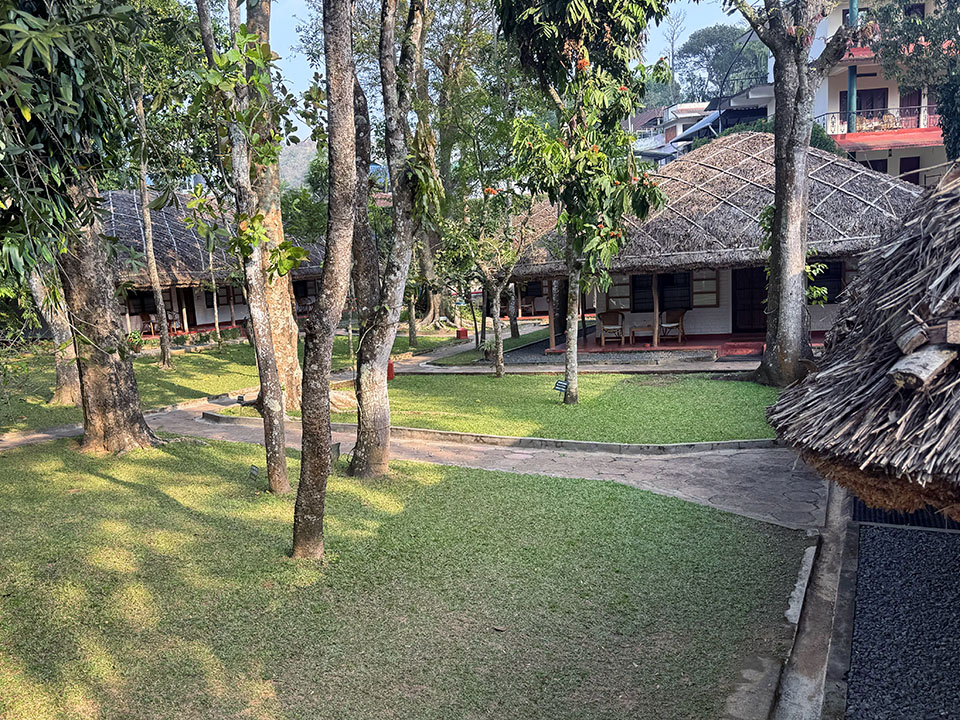
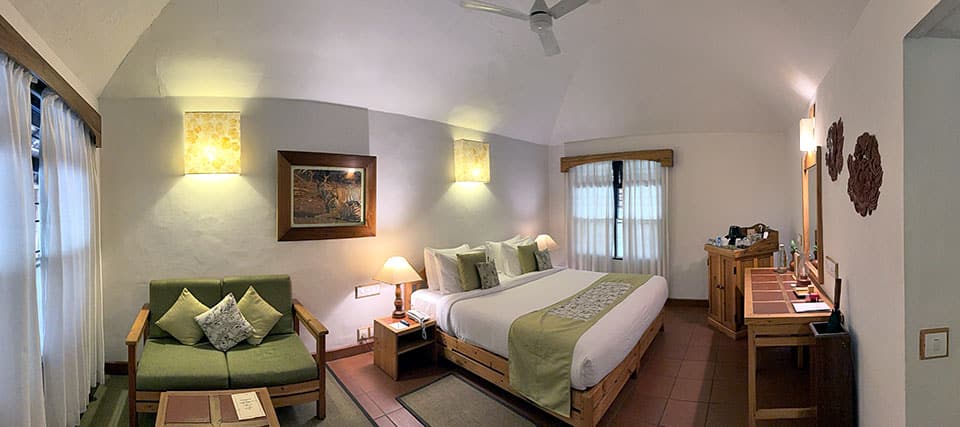
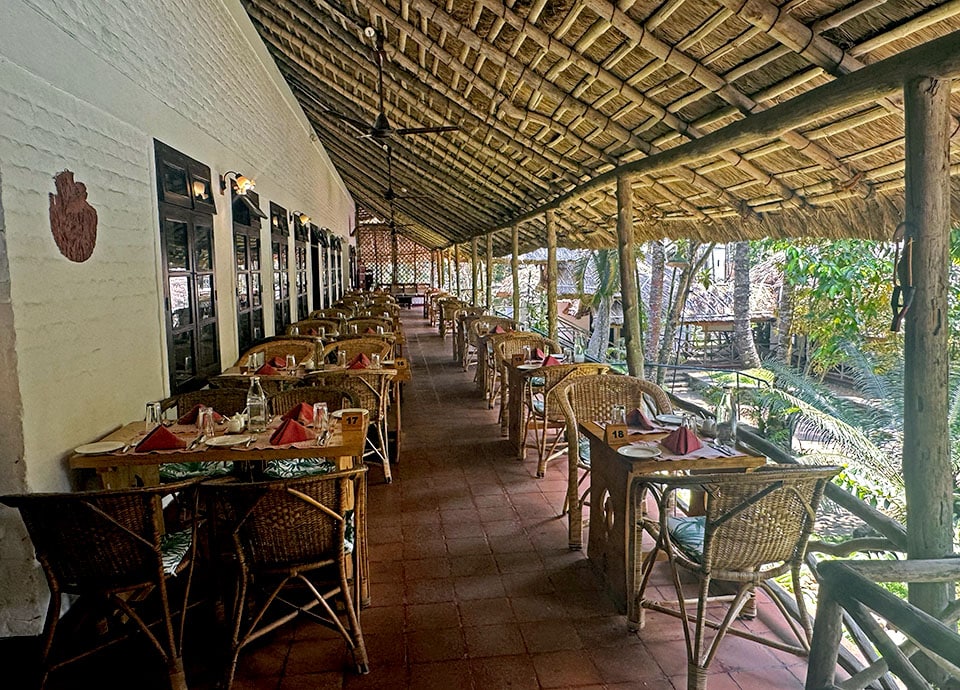
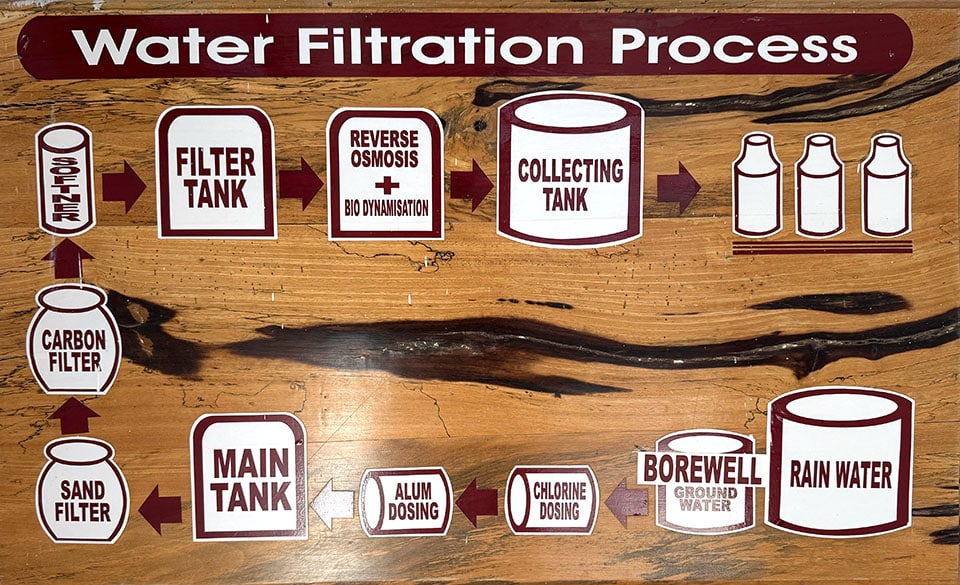
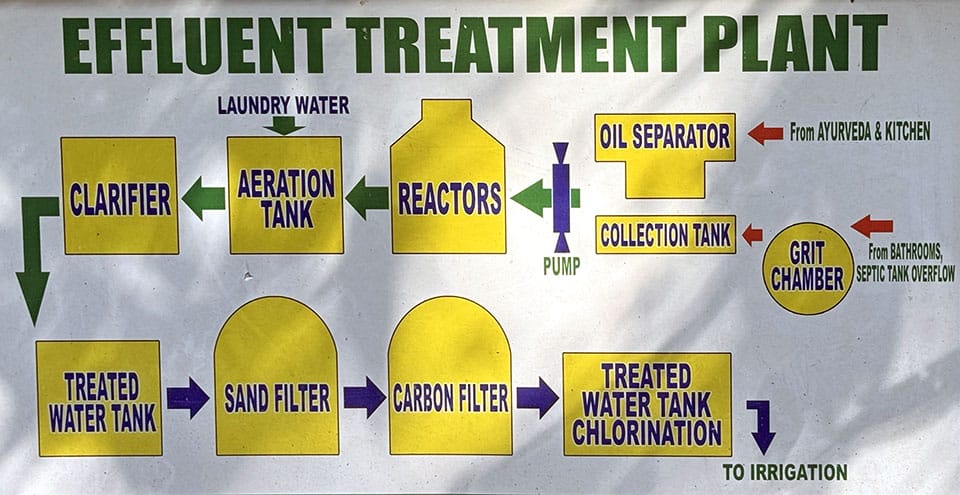
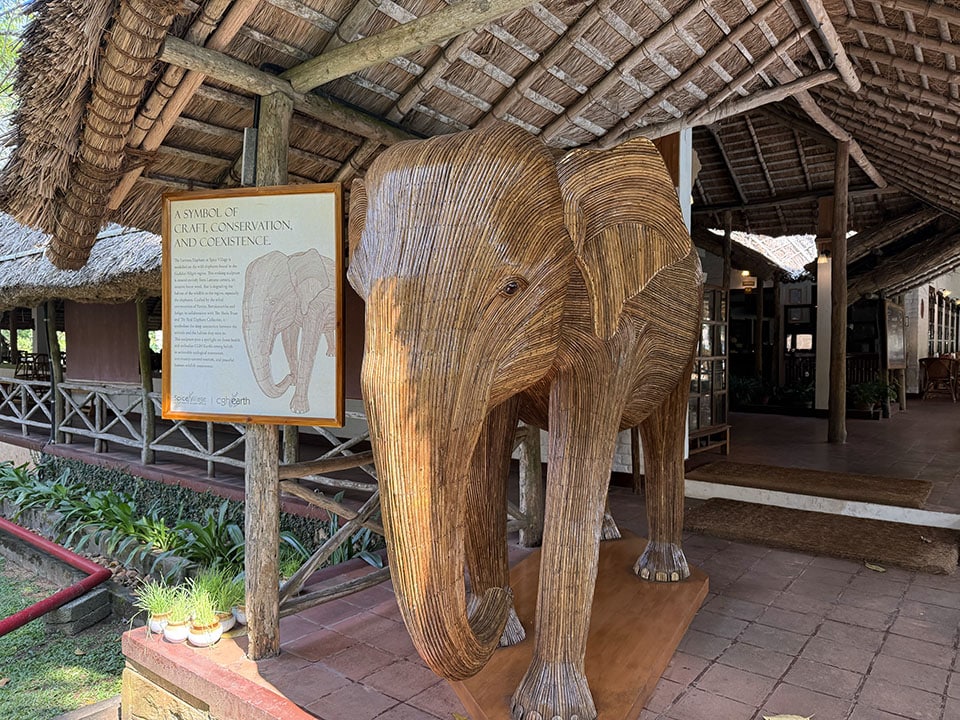
Many resort guests stay here when visiting the Periyar National Park & Tiger Reserve, and the photos in the lobby (top left) are from the park; our accommodations were super comfy; the elephant above is made entirely of invasive plants… So you can see why we’d return to Shalimar Thekkady Spice Garden resort in a heartbeat!
All the trees and shrubs around the grounds were labeled with their names, like a botanical garden and the walk was nice, with a few birds but no animals, not quite the“nature walk“ we had hoped for, but still very interesting. Apparently, they did have an actual nature walk that evening around 8 PM, but we were busy and not able to take part.
Ayurvedic Massages
These were our first Ayurvedic massages (included) on this trip, and more amazing massages would come later. These particular Ayurvedic massages were called “4 hands”, or synchronized massages, which means being massaged by two people at the same time.
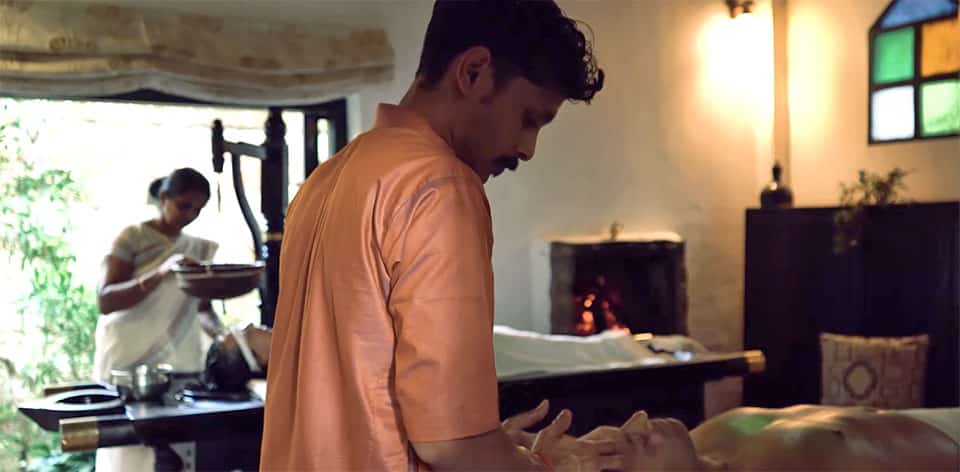
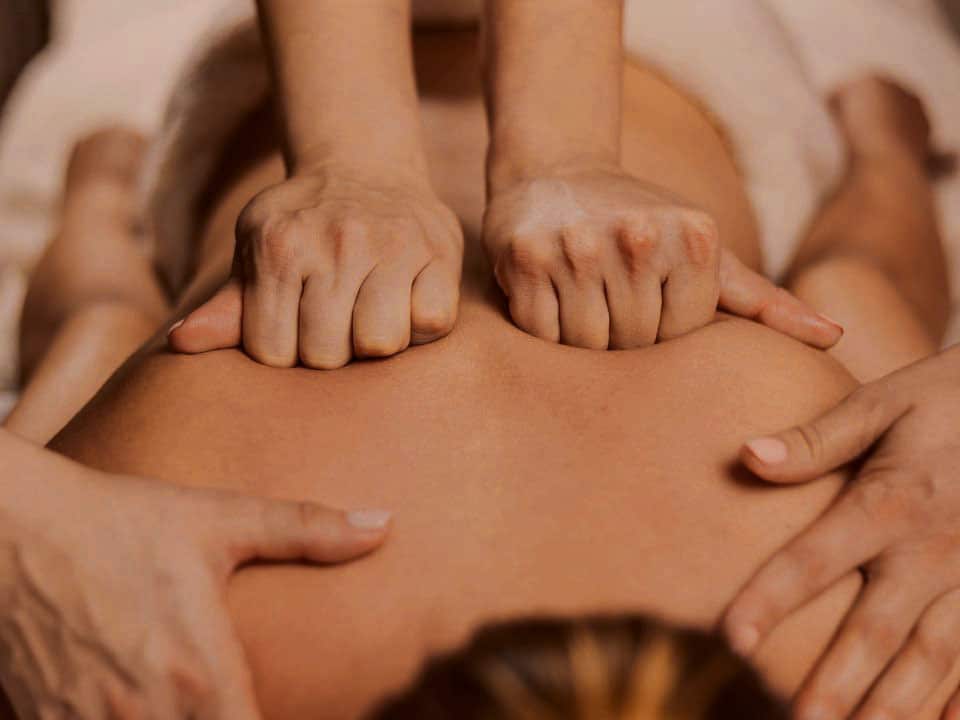
Left photo ©Amritara Shalimar Spice Garden Resort & Spa
Men are only massaged by men, and women are only massaged by women. It felt amazing to have hot, herbal Ayurvedic Massage oil drizzled on you with two sets of hands rubbing up and down your entire body. You are basically naked, except for a paper loincloth. The experience started seated on a stool with a vigorous head, neck, and shoulder massage first, then lying on the massage table for the full-body, front and back. They do not have headrests, so you end up turning your head side to side or putting it face down on a pillow, which was a bit uncomfortable, but honestly, well worth it.
After the massages, we were each taken to a private shower room where one of the massage therapists scrubbed us up one side and down the other with a wonderful herbal scrub that left our skin feeling so soft for several days. Then they shampooed our hair with the most divine shampoo, leaving it silky-smooth without any conditioner. Finally, we were completely rinsed off with bucket after bucket of hot water dumped over us. Then we were left to shower and rinse ourselves off. We have honestly never been so pampered in our lives.
After we dried and dressed, they gave us a warm, herbal beverage and some amazing mango face cream. We asked if we could buy the shampoo and the face cream, but they were out of stock. We would return just for those two items alone!
The 50-Mile Restaurant and Ragi Manni Cardamom Dessert
For dinner that night, we ate at their eco-friendly “50-Mile” restaurant, in which every ingredient was sourced within a 50-mile range. It was mostly meat, including water buffalo, and not a lot of veggies, but they had a delicious grilled cauliflower steak, seasoned with many spices we had learned about and tasted earlier in the day.
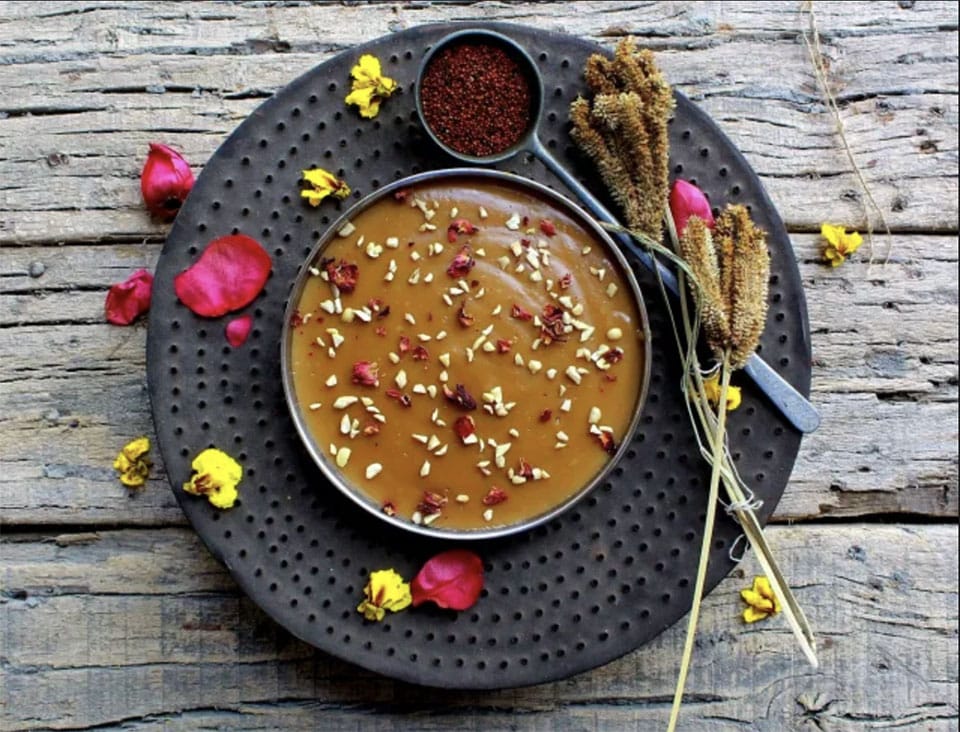
They also had a super-yummy dessert that was gluten-free and dairy-free, so it was one of the few times that Heidi got dessert on the entire trip! Ragi Manni is a cardamom-flavored gelatin made from cardamom and millet. Check out this Ragi Mani recipe here if you love cardamom as much as we do. It was soooo gooood!
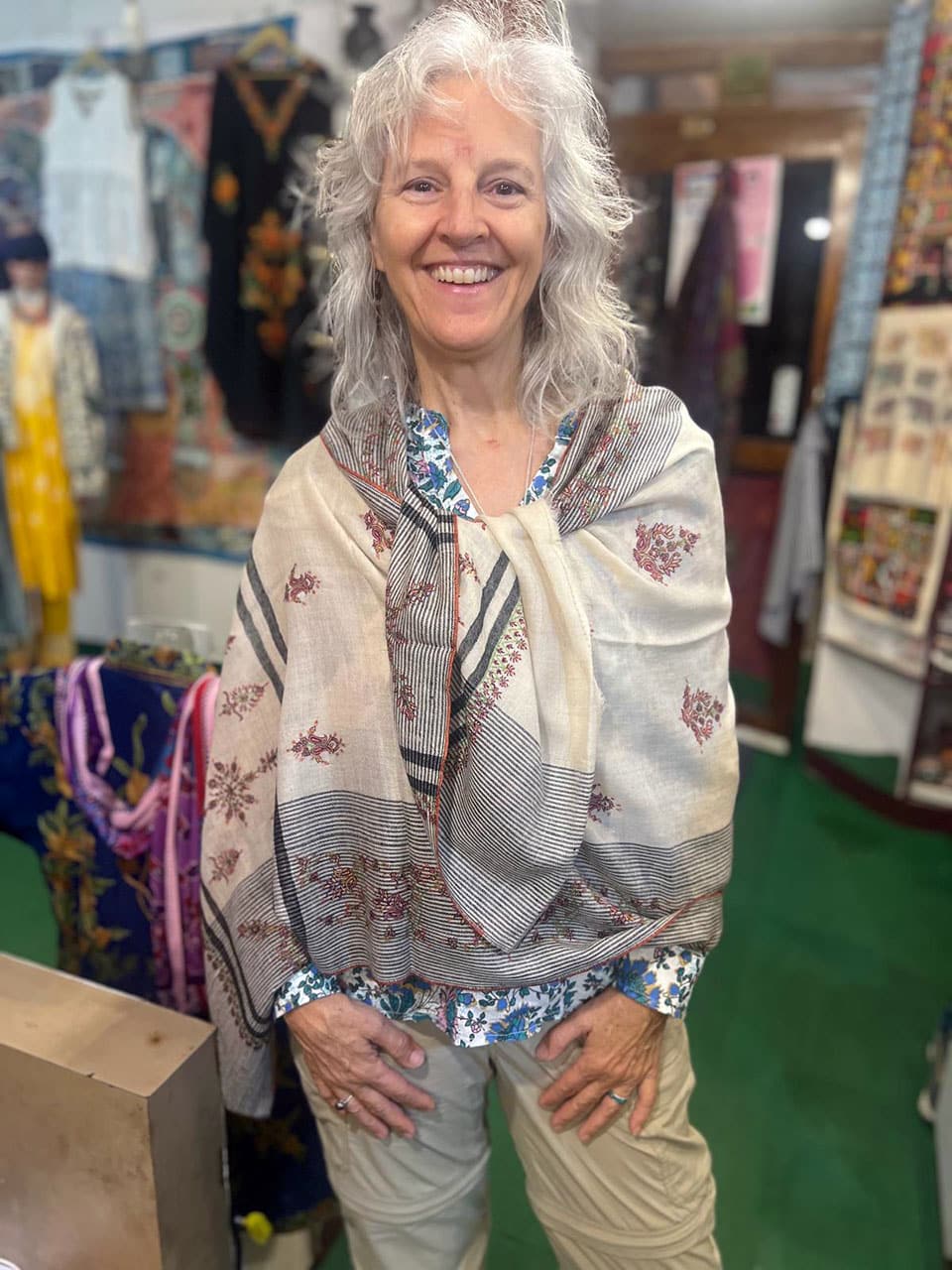
After dinner, a few of us took a walk outside the hotel grounds. This was the first place on our trip so far that we could walk to shopping directly from the hotel—just outside the front gates and to the left, the street on both sides was lined with shops. Amazingly, not very much traffic in the small village of Thekaddy, so we could actually cross the road without fear of being hit by a car or motorbike. There was a nice boutique shop right next door with good prices on clothing, scarves, wood carvings, and more, and several of us bought gifts there.
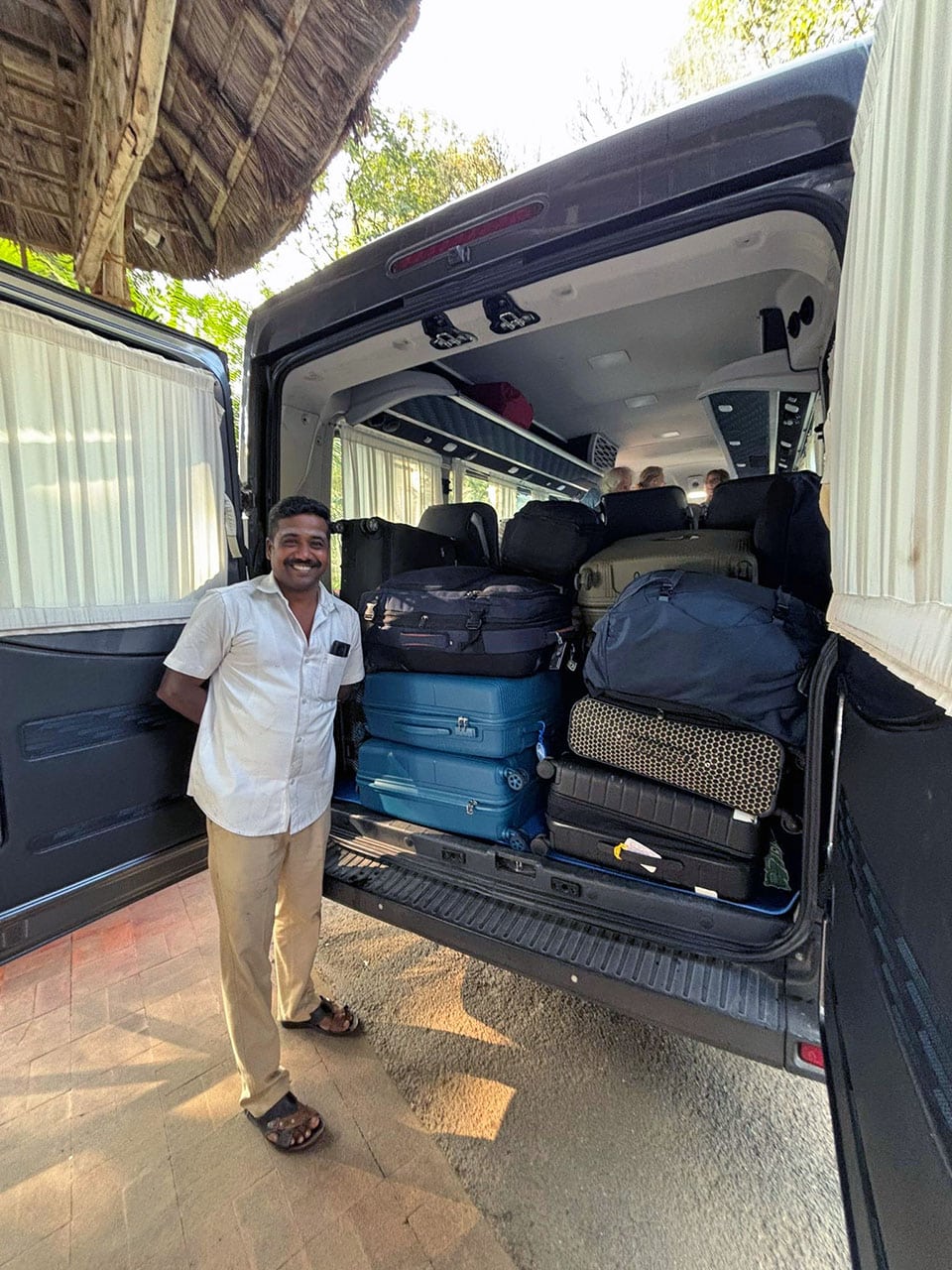
While we were here in Thekaddy, it became obvious that many of us would need larger suitcases for all the spices and souvenirs we had been buying. So our tour guide, Asoka, magically procured new, larger suitcases for us, and suddenly the amount of luggage inside the van doubled! Mani always did an amazing job Tetris-ing it all in (ours is one of the large blue ones on the bottom left)!
Misty Mountain Tea Plantation Visit
After one night in Thekaddy (we would’ve loved to stay longer in this serene location to see tigers and elephants in the national park!) We headed further up and over the mountains, making a brief stop at Misty Mountain Tea Plantation before continuing to Lake Vembanad and Kumarakom Lake Resort.
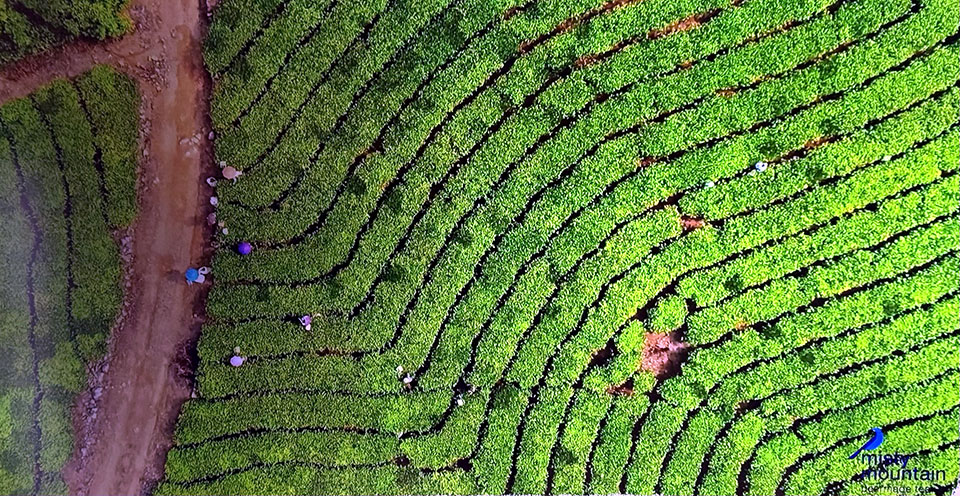
Located at 3,500 feet in the Peermade Mountains of the Western Ghats in Kerala, Misty Mountain Tea Plantation’s rolling green terraces span 650 acres. It is one of the largest single‑family‑owned tea estates in Kerala, where tea is still grown and processed traditionally—from plucked leaf through withering, rolling, fermenting, drying, and sorting into finished teas.
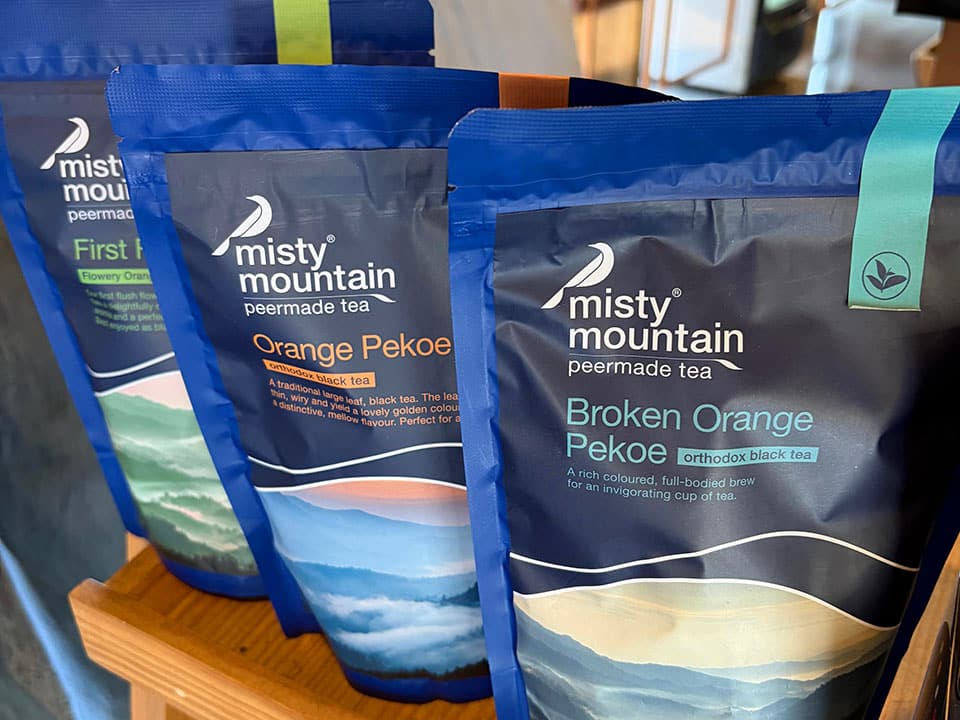
Unfortunately, the timing was wrong to see the actual tea harvesting in action. However, a short film walked us through the hands‑on plucking and factory work, and tasting Misty Mountain’s own blends gave us a good sense of the tea they produce.
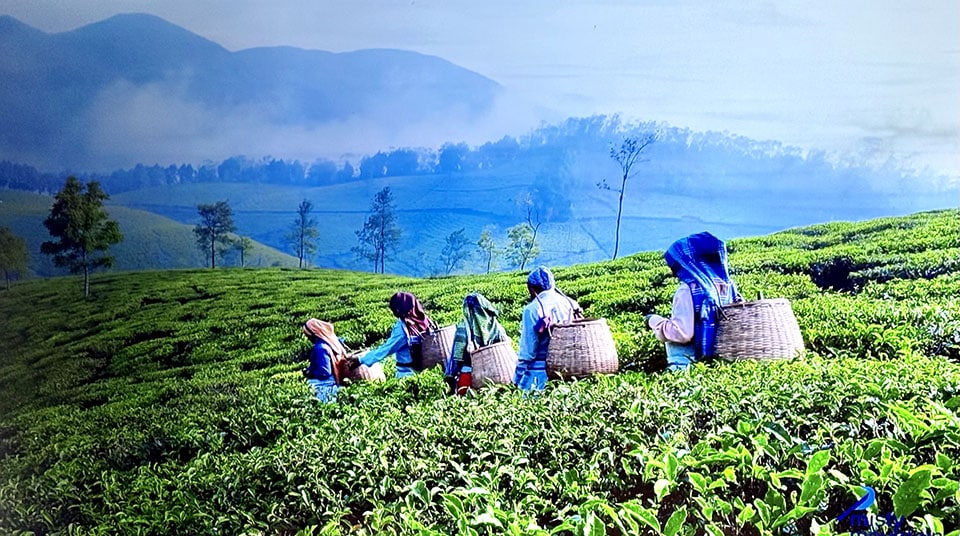
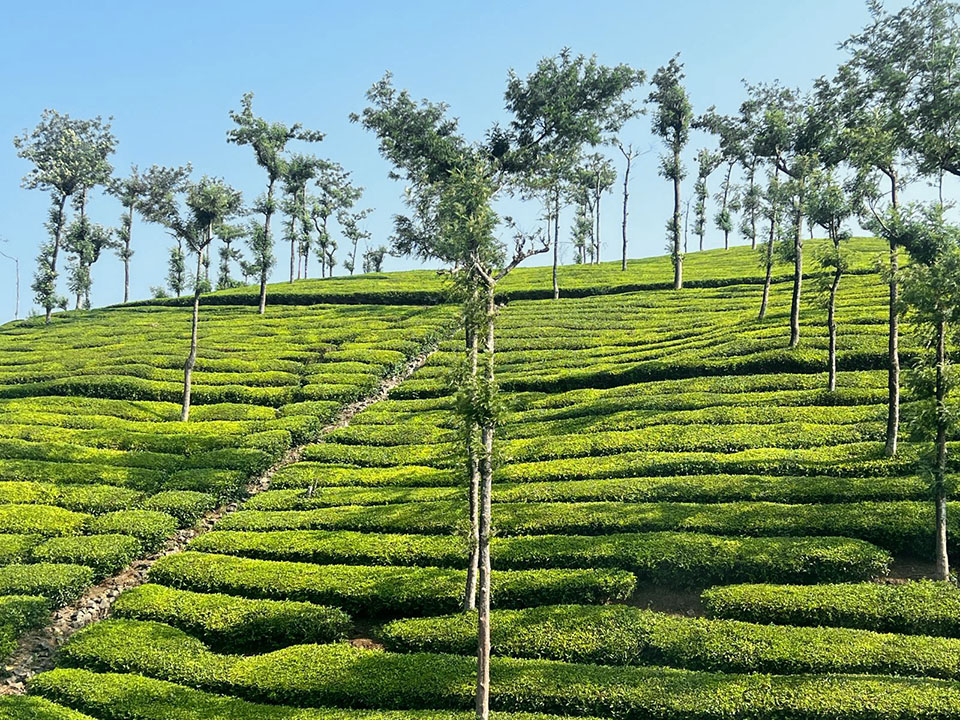
This photo above was the view out our bus window as we wound up the mountains, switchback after switchback, kilometer after kilometer—all the tea plantations looked similar.
We learned that black, green, and white teas all come from the same plant (Camellia sinensis); what makes them different is how soon and how much the picked leaves are oxidized (exposed to air). White tea is the least processed: very young buds and leaves are simply picked and then gently withered and dried, with little or no oxidation, so they stay light and delicate. Green tea is also lightly exposed to oxidation, but the leaves are quickly heated (by steaming or pan‑firing) soon after picking to stop oxidation, which preserves their green color and fresh, grassy flavor. Black tea requires full oxidation: the leaves are withered, rolled (to break cell walls), left to oxidize until dark, then dried, giving it a bold, deep color and richer, more robust taste.
British planters first introduced tea to India’s northern hill regions in Assam and Darjeeling in the early 19th century, then expanded southward into the Western Ghats in the mid-1800s. They quickly realized Peermade Mountain’s high elevation, cool mist, steady rain, and rich, acidic soil were perfect for tea—especially after nearby coffee estates had been ruined by coffee‑leaf disease. After our brief tea stop, we continued to what turned out to be one of our favorite places in all of India.
Lake Vembanad, and Kumarakom Lake Resort
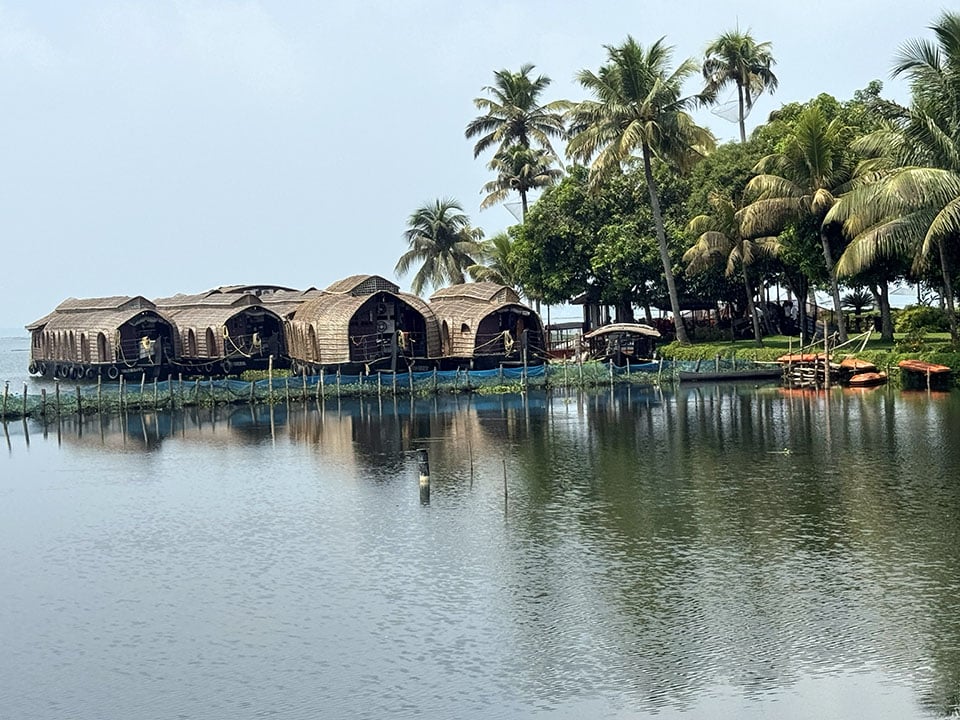
Lake Vembanad is India’s longest lake, stretching 60 miles long by 8.5 miles wide, with an average depth of 25–40 feet. The lake forms the heart of Kerala’s famous Kumarakom “Backwaters”, offering a peaceful maze of palm-lined canals and lagoons, fed by 10 rivers—with emerald-green shorelines, a bird sanctuary, and traditional Keralan houseboats.
Here, backwater access is primarily via watercraft, with footpaths and dirt roads running between the rivers and canals. Drawing visitors from around the world, Kumarakom feels more like a serene, dreamlike South Pacific paradise than a freshwater lake.
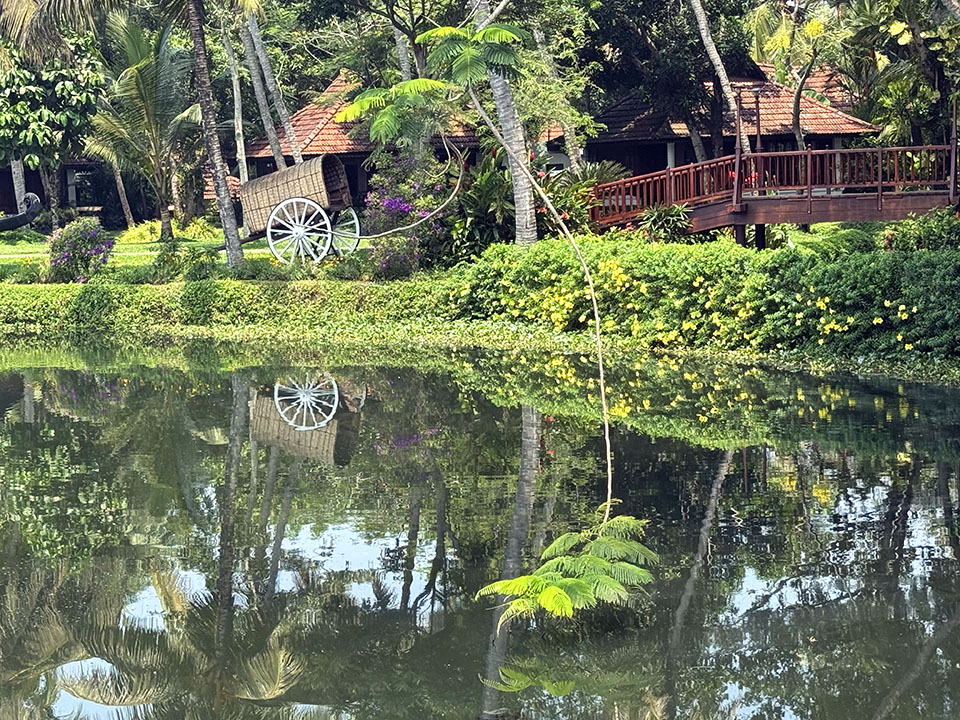
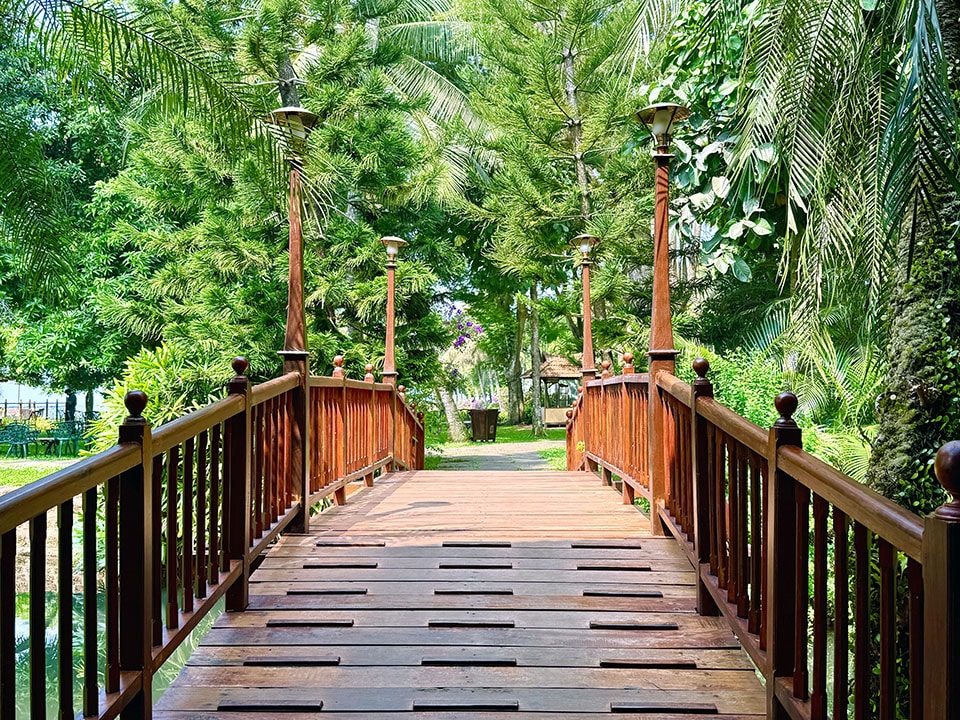
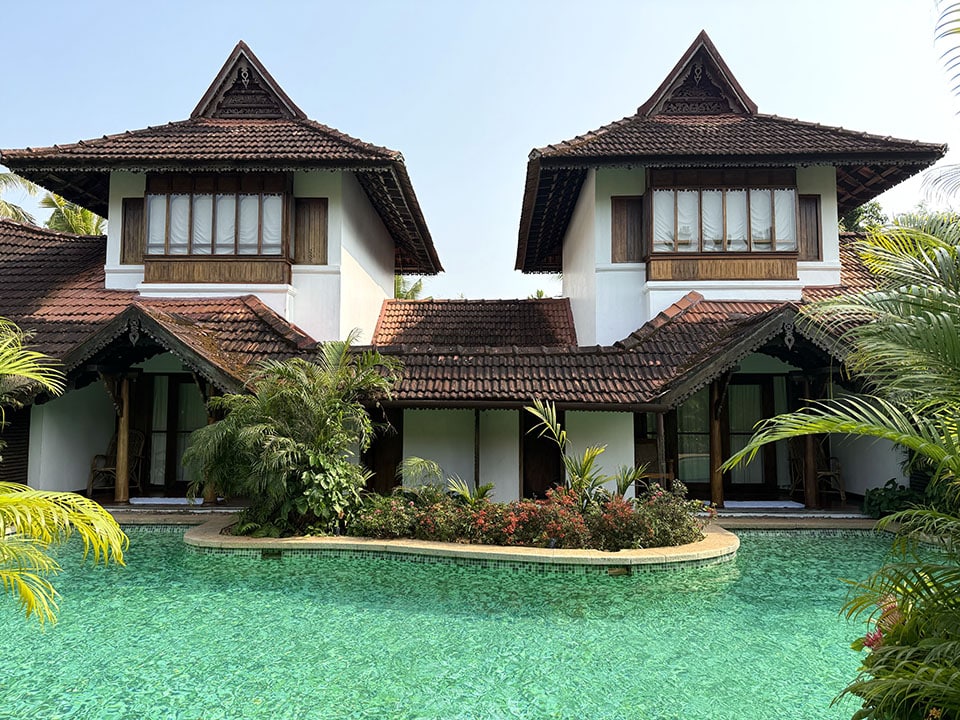
On the lake’s eastern shore sits the lush, tropical Kumarakom Lake Resort, a luxury heritage retreat complete with individual waterfront bungalows (set along canal-like swimming pools), designed in the classic Kerala style: teakwood interiors, sloping tiled roofs, and open‑courtyard layouts that echo traditional Keralan homes.
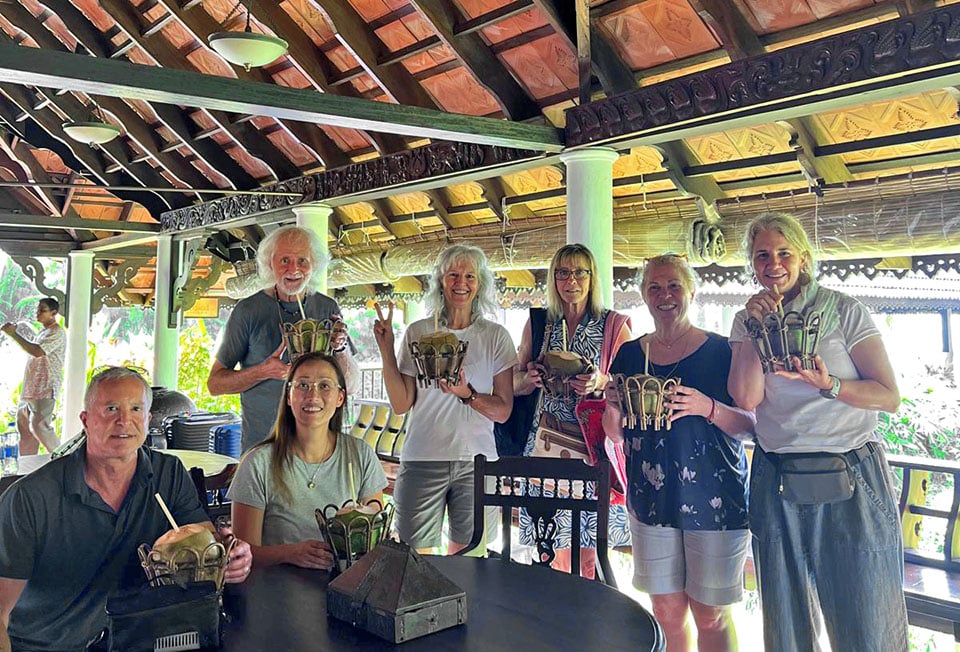
Almost everywhere we stayed offered us a non-alcoholic herbal-infused welcome beverage upon arrival. Here it was Heidi‘s favorite drinking coconuts, which we all enjoyed. At this point, we said goodbye to our southern tour guide, Asoka, and driver Mani, as our tour would soon be ending. We also had the pleasure of meeting Jai (“Jay”), owner of Athma Tours, who joined us here for a few days—so nice to get to know her too.
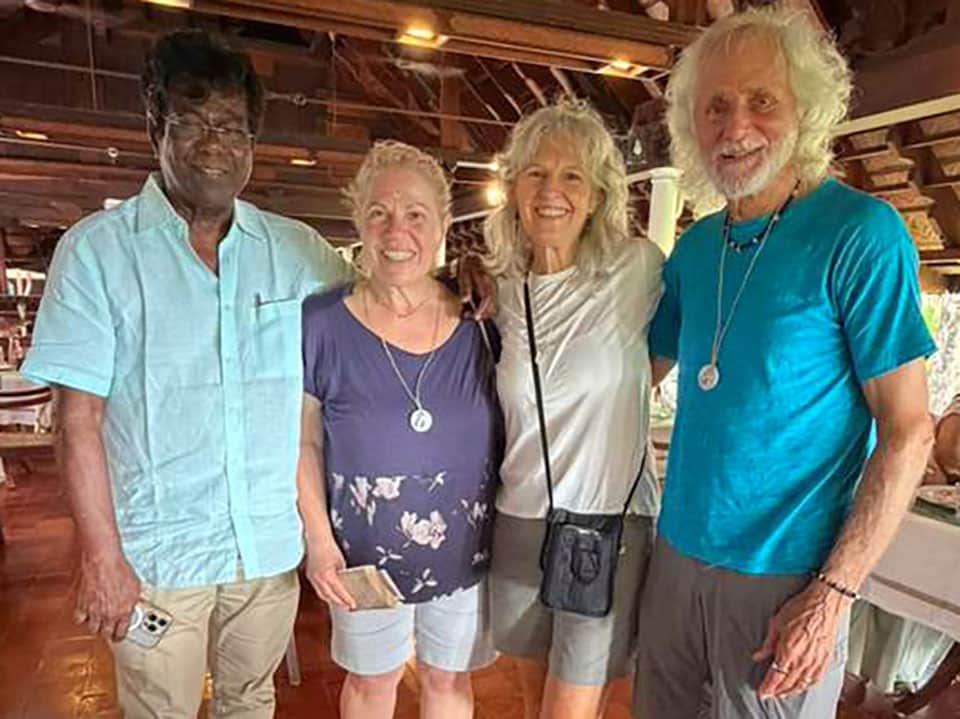
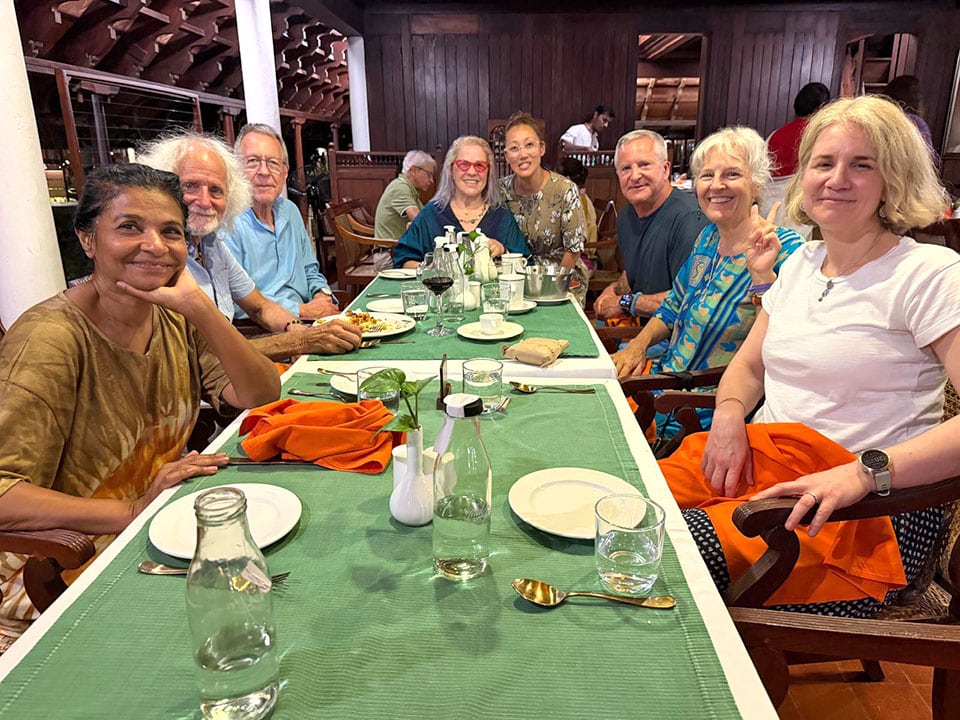
Top left: Asoka, Basilica, Heidi & Kirk; Top right: Jai, Kirk, Roger, Basilica, EK, Drew, Heidi, Isabelle; Bottom: Drew, Kirk, EK, Heidi, Kathy, Basilica, and Isabelle.
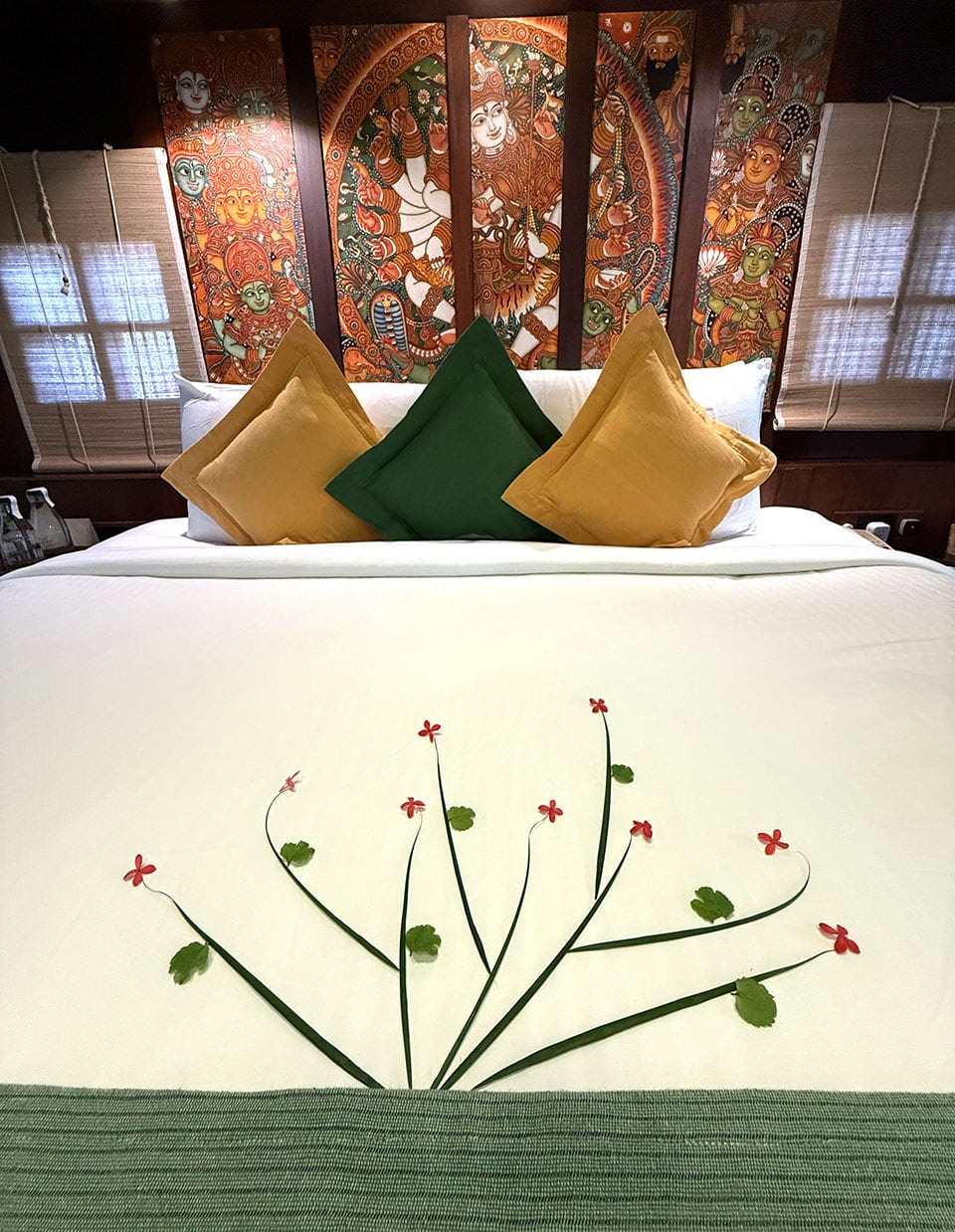
As you have likely noticed, Kerala is a VERY green state. Calm and peaceful Kumarakom Lake Resort takes the cake with its green-zen feel. And the teakwood casitas are like sleeping inside of a boat—so you can see why we’d love to return here someday!
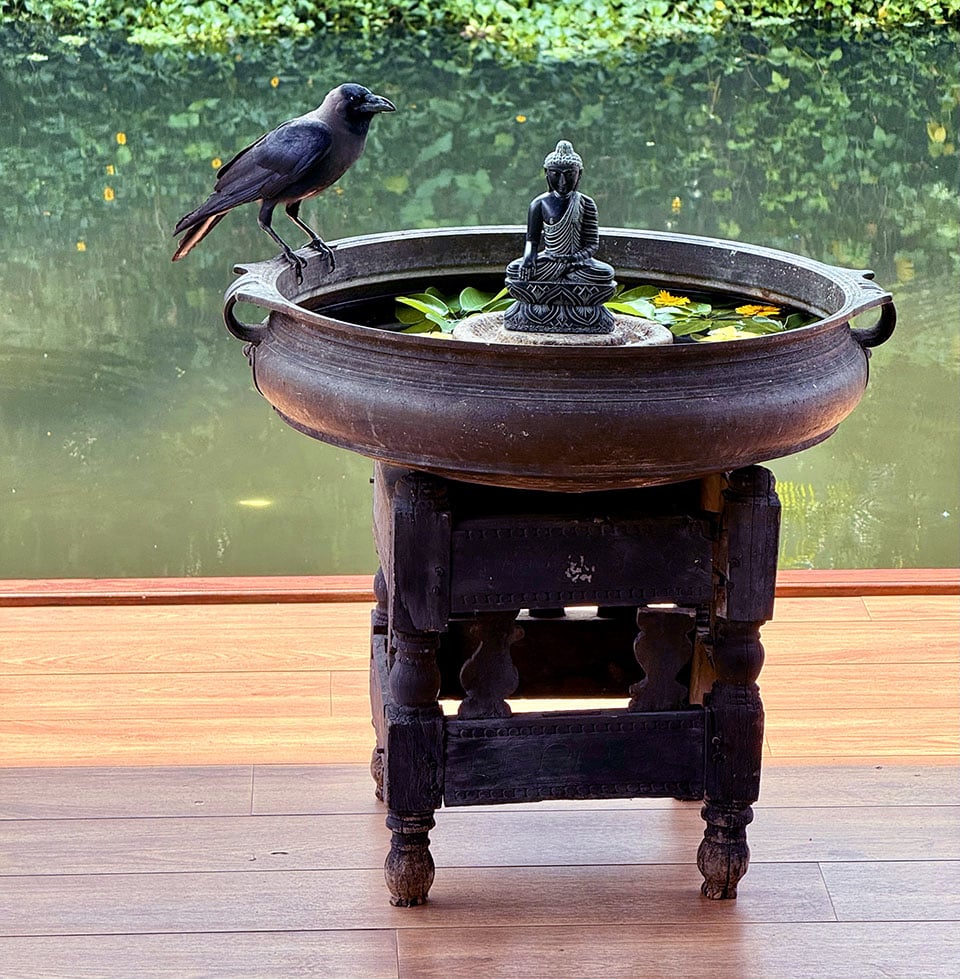
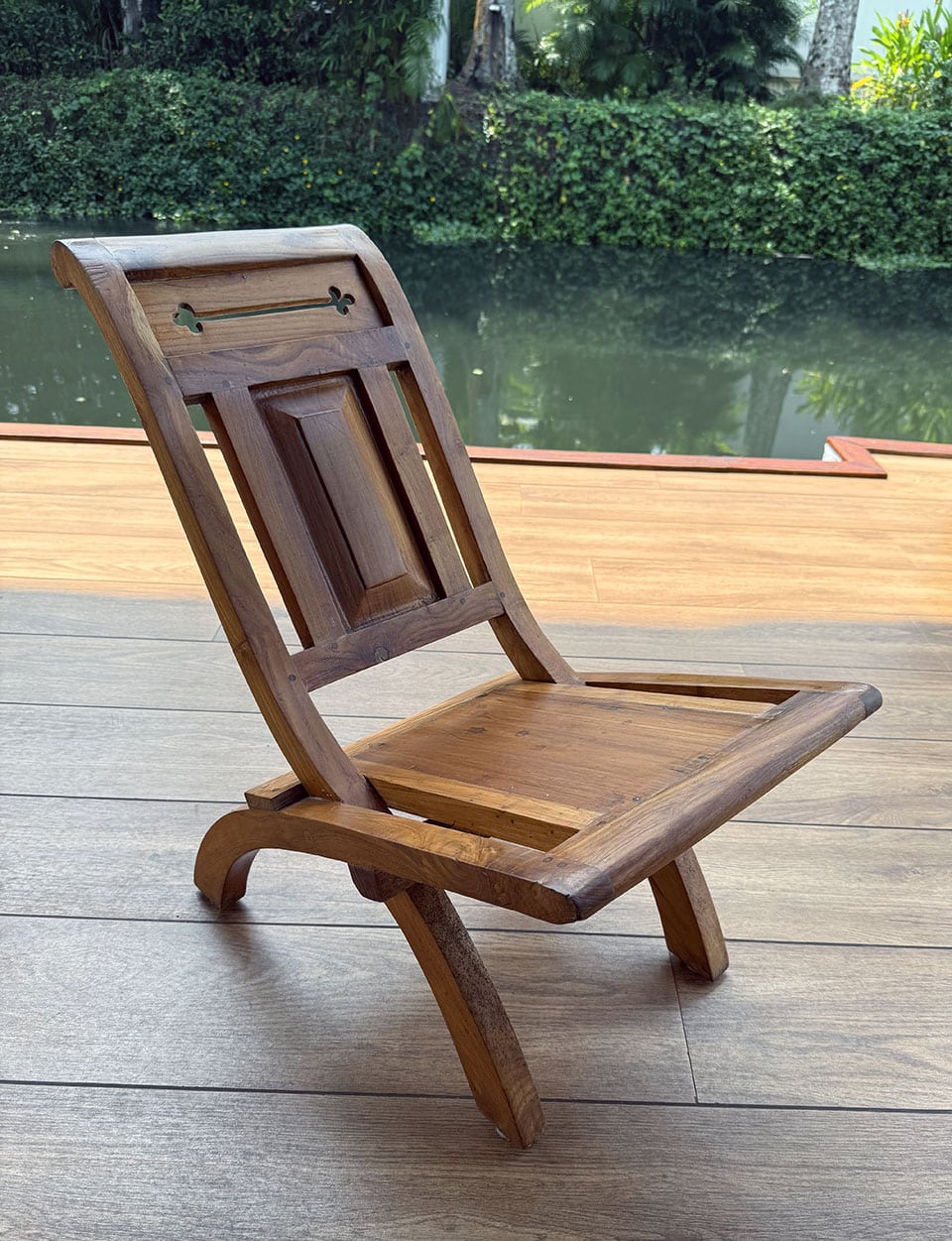
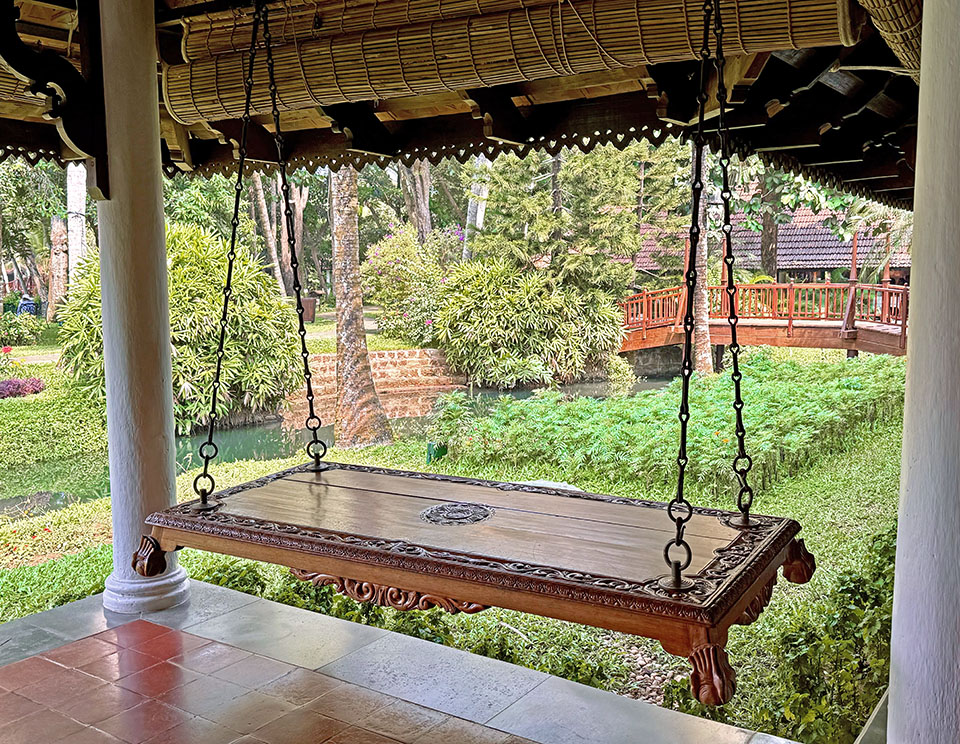
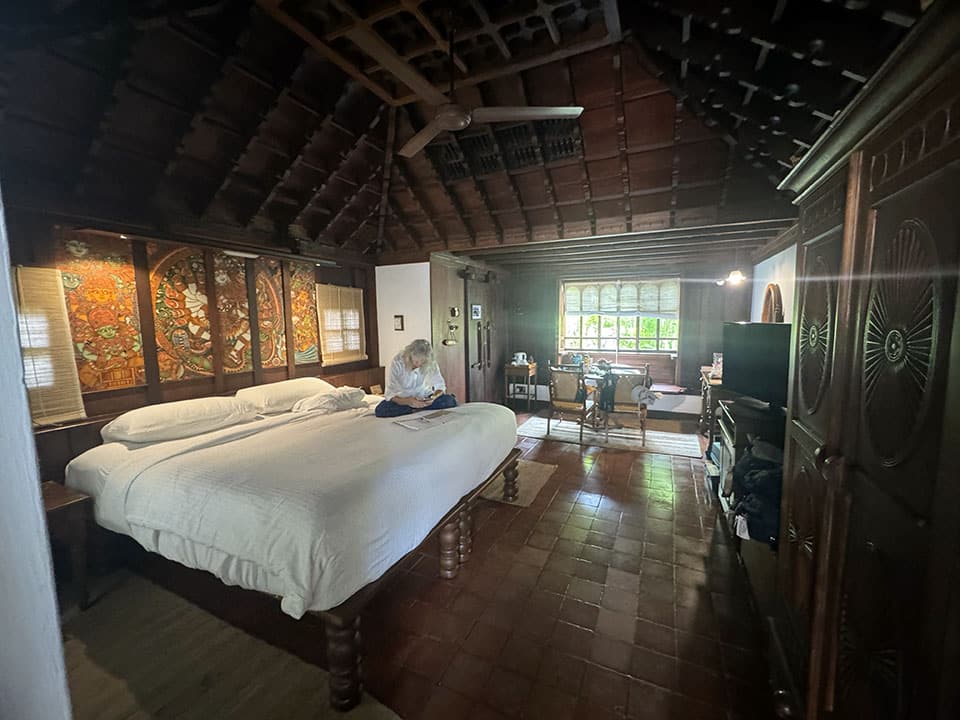
Traditional Keralan Carved Wooden Doors, Ceiling, and Canoes
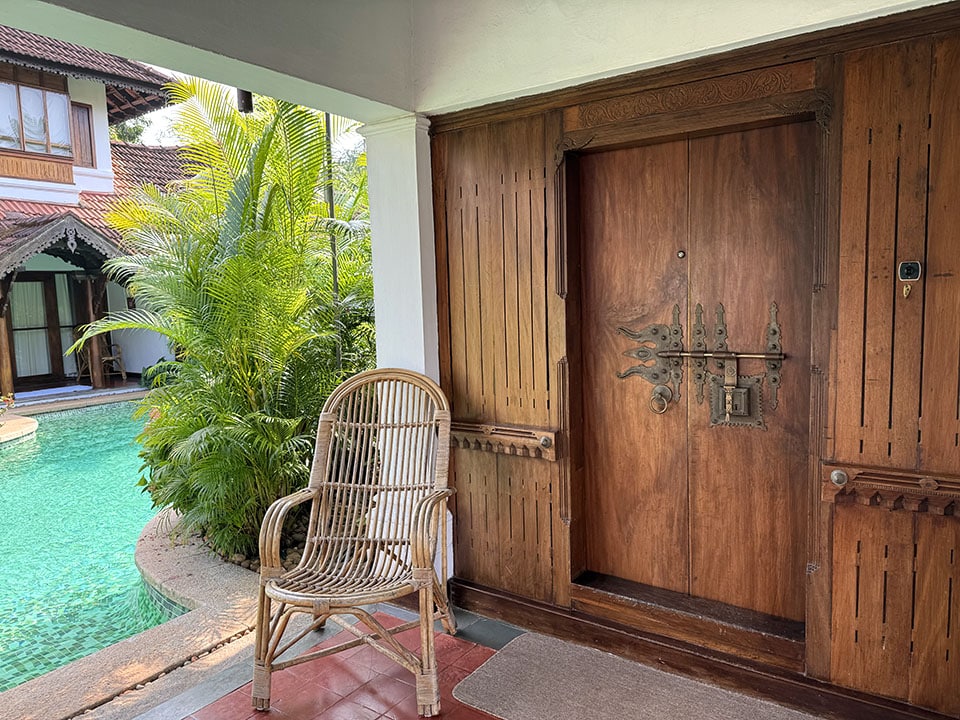
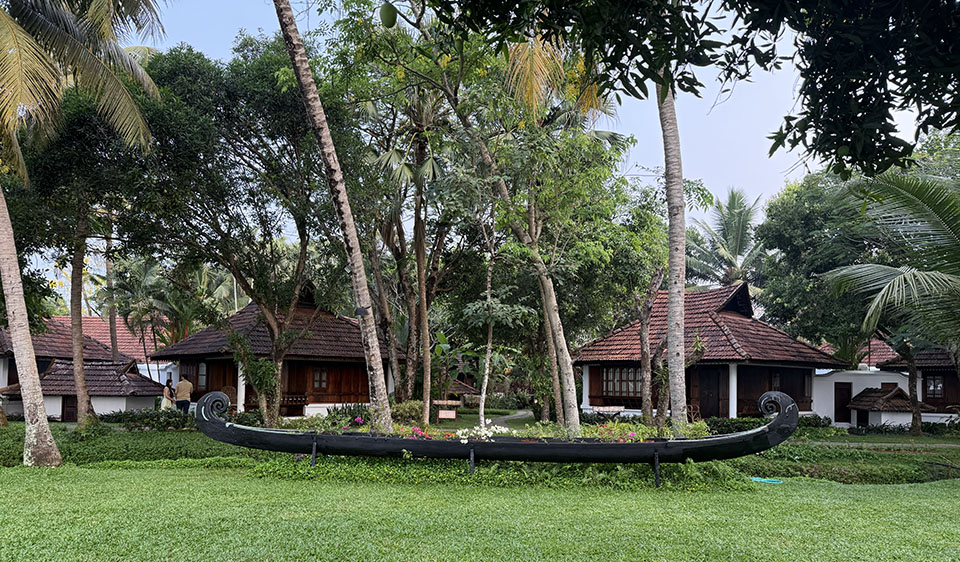
The exquisite, ornately carved doors and architectural details around this resort were stunning. There was also a carved teak canoe in the lawn and carved models of local wooden racing canoes.
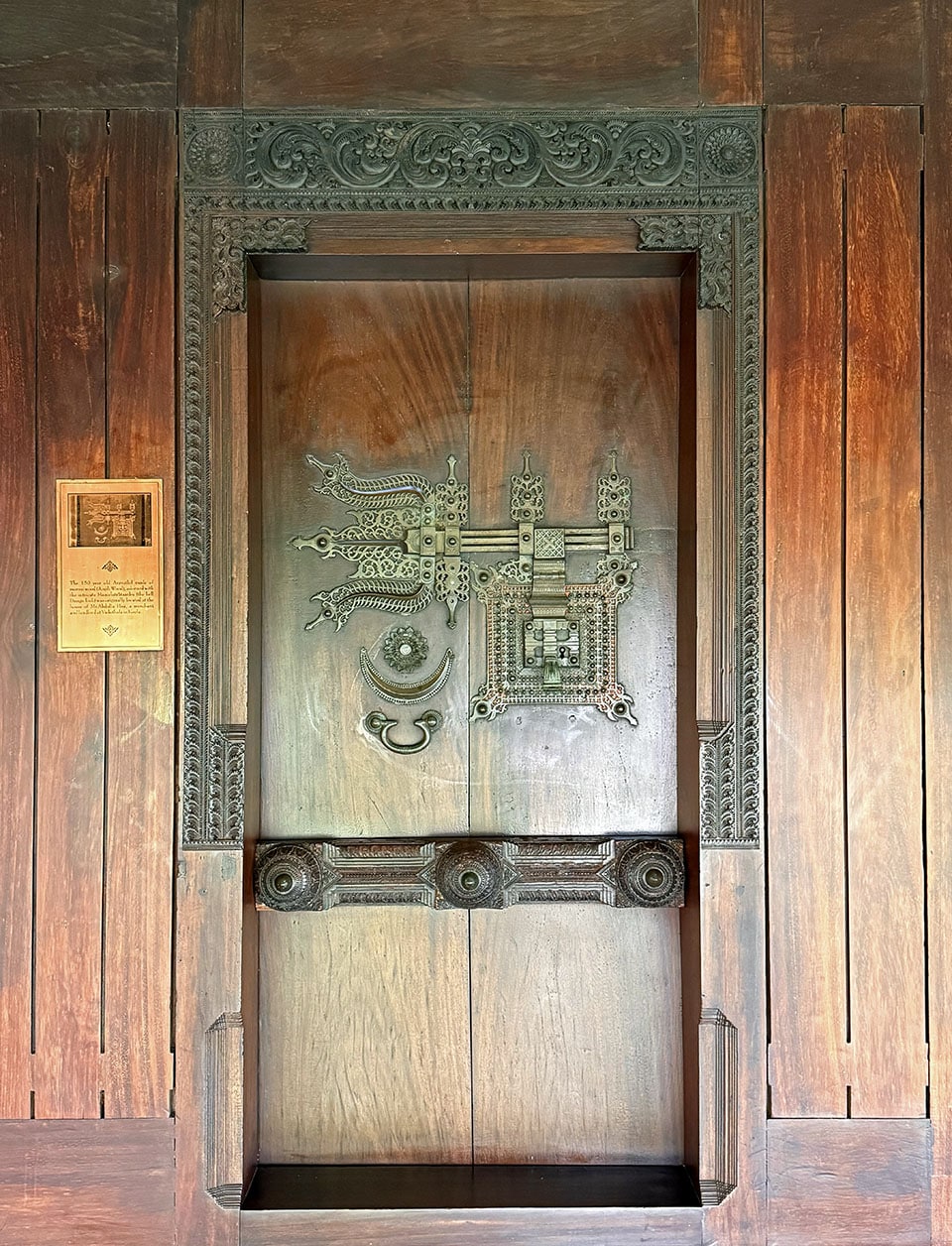
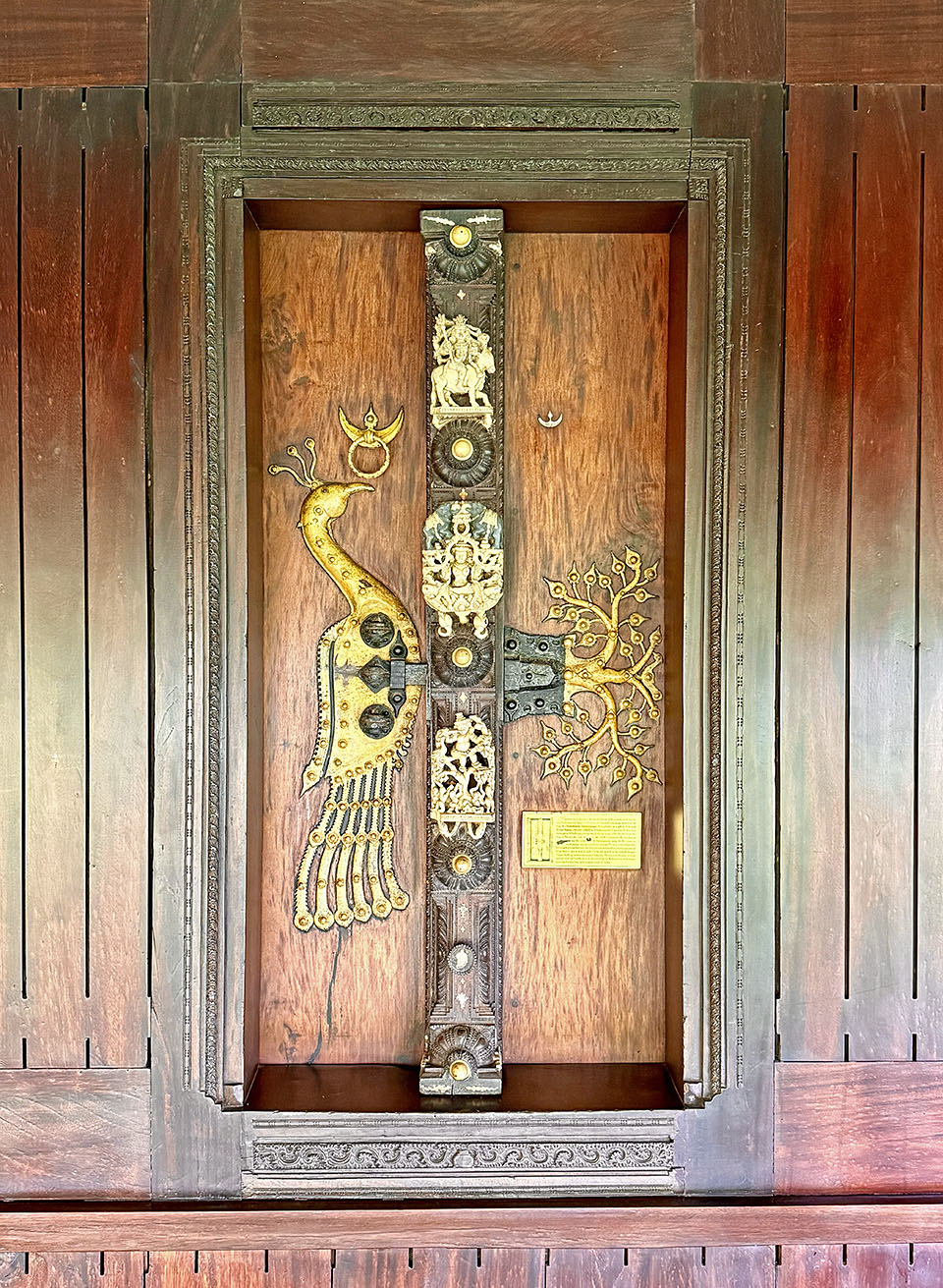
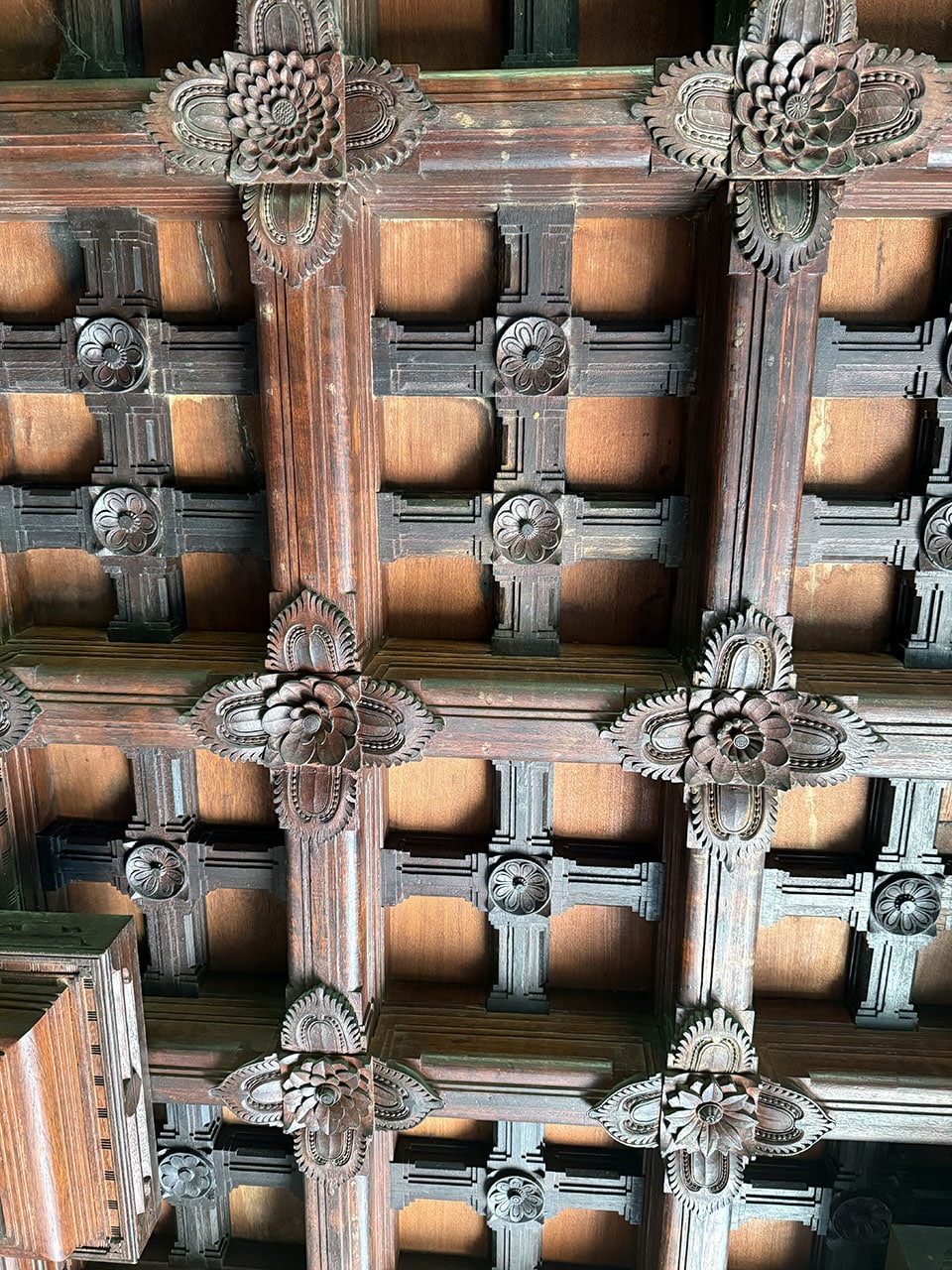
Left door: 150-year-old Aravathil door, made of moresi wood (Anjili Wood), adorned with an intricate Manichitrataazhu (bell-design lock that rings when locked or unlocked), originally from a merchant’s house in Kochi. Center door: 300-year-old door with a different Manichithrathazhu lock design (a traditional Keralan door lock, known for its intricacy, beauty, and efficiency). Right, intricately carved teakwood ceiling from the resort lobby.
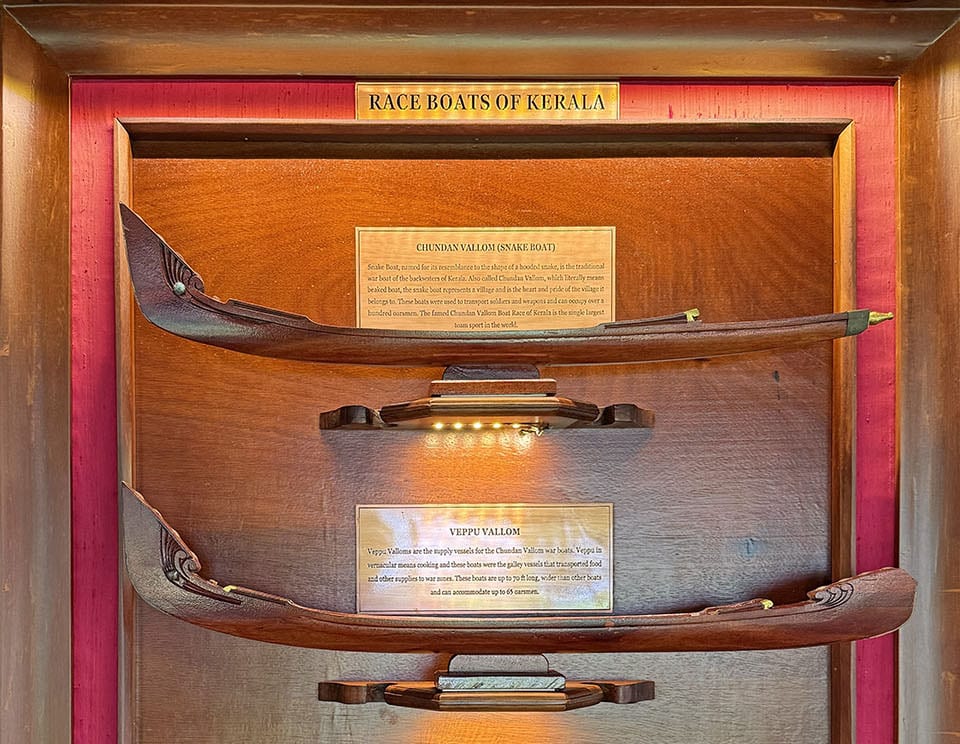
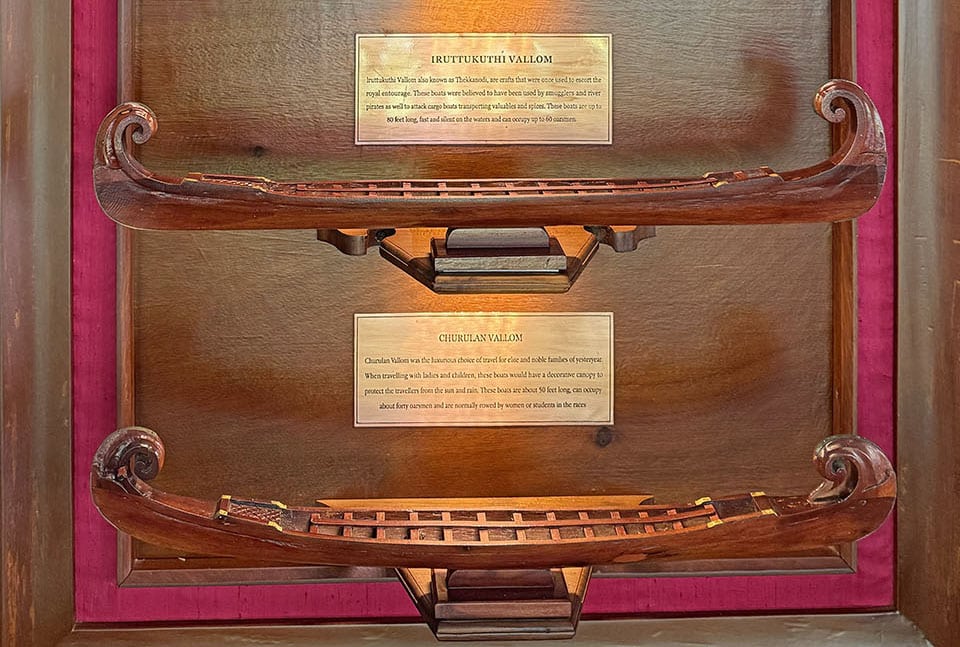
Keralan Racing Canoes, top to bottom: Chundan Vallom (Snake Boat) — the iconic “snake boat” war canoe of Kerala’s backwaters, once transported soldiers and weapons, with room for more than 100 oarsmen. Veppu Vallom — the wider galley boats that carried food and supplies alongside the war canoes. These boats are up to 70 ft long and can accommodate up to 65 oarsmen. Iruttukuthi Vallom (Thekkanodi) — long, fast, stealthy boats used to escort royalty and, according to legend, by smugglers and river pirates. These boats are up to 80 feet long, fast and silent on the waters, and can hold up to 60 oarsmen. Churulan Vallom — elegant covered boats favored by noble families. These 50-foot-long boats can carry about forty oarsmen, and are now often rowed by women and students in races.
Today, these traditional boats are best known for Kerala’s spectacular annual snake boat races, held during the monsoon season in late August or early September. Entire villages train for months and compete in synchronized crews that can include over 100 rowers, drummers, and singers paddling in unison to rhythmic chants. Events like the famed Nehru Trophy Boat Race draw thousands of spectators and have become an important celebration of Kerala’s culture, teamwork, and community pride. That would have been fun to see, but we weren’t there during the right season.
Post Meditation Sunset “Cruise”
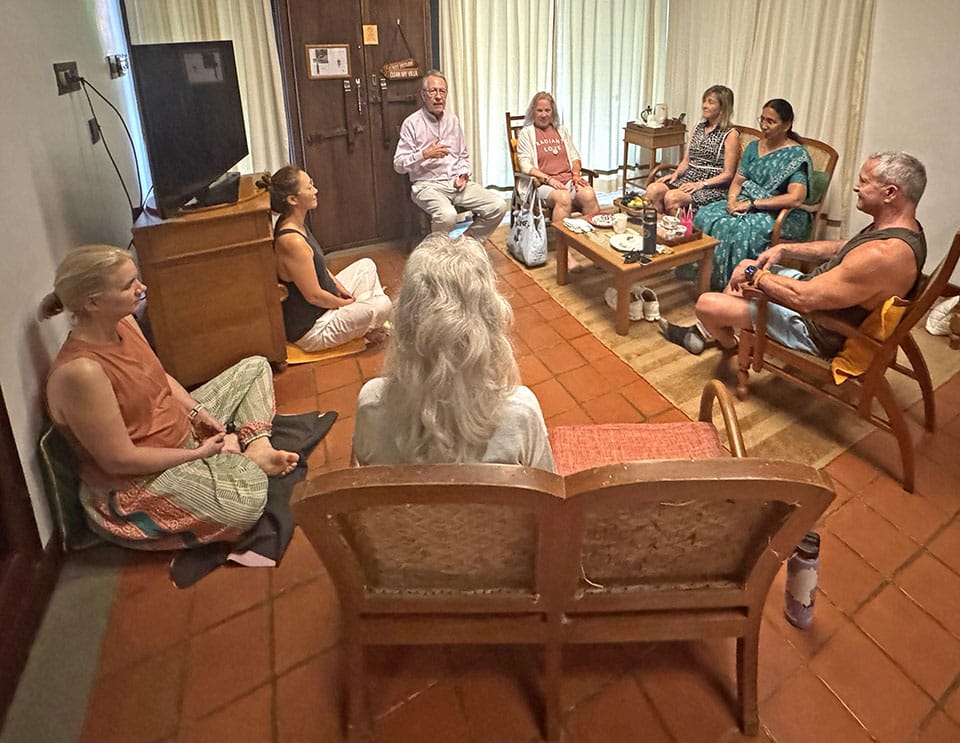
Following our afternoon group meditation with Roger, we all boarded a hotel-operated barge boat for a sunset cruise on the lake, with traditional Keralan live music. As we cruised along the shore, we saw many large homes, mansions, and other resorts amid the backwaters of this tropical paradise. However, the “sunset” was a bit of a disappointment, as the sun disappeared into the haze of the Arabian Sea mist, combined with pollution, before it was anywhere near the horizon.
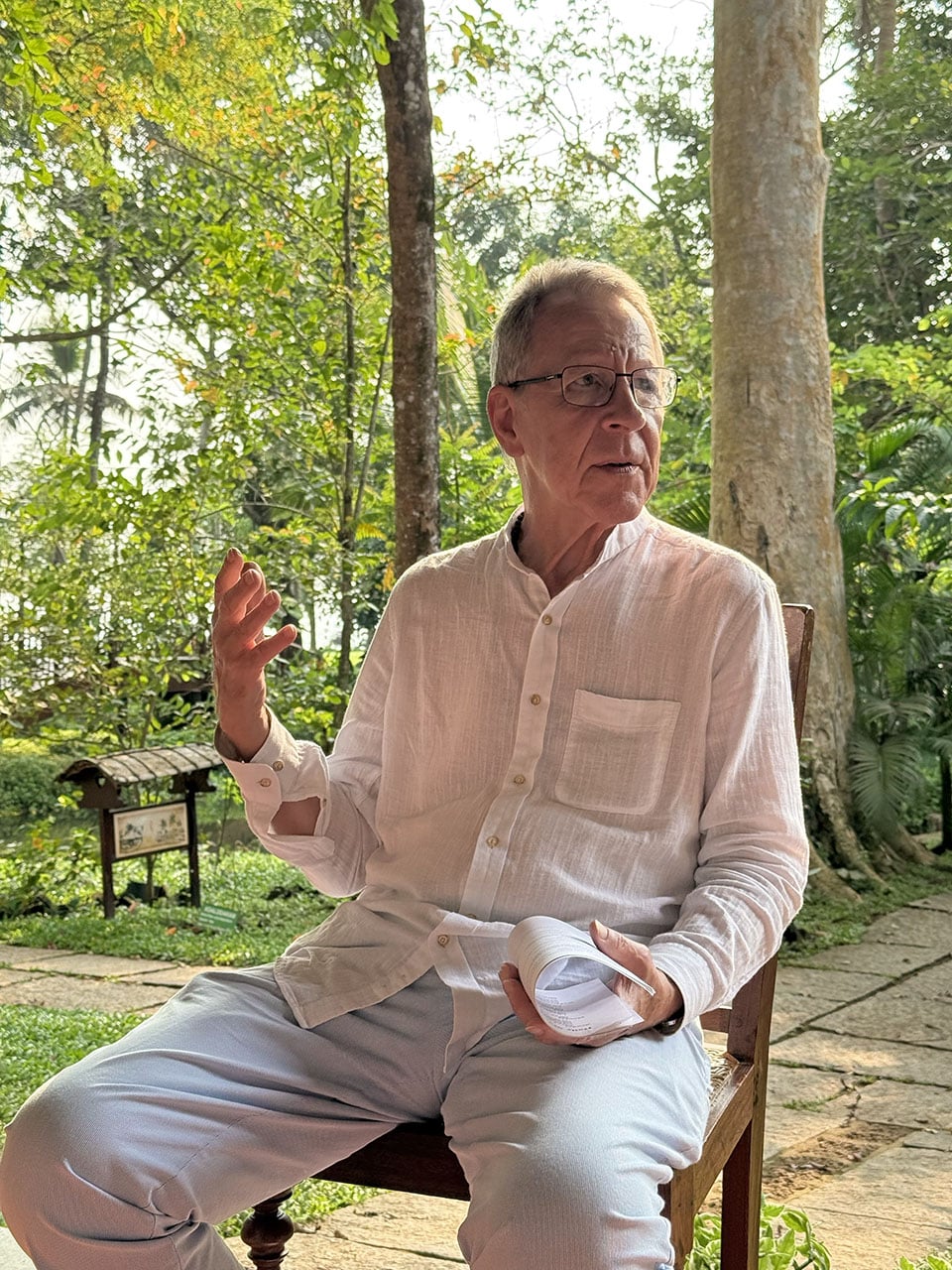
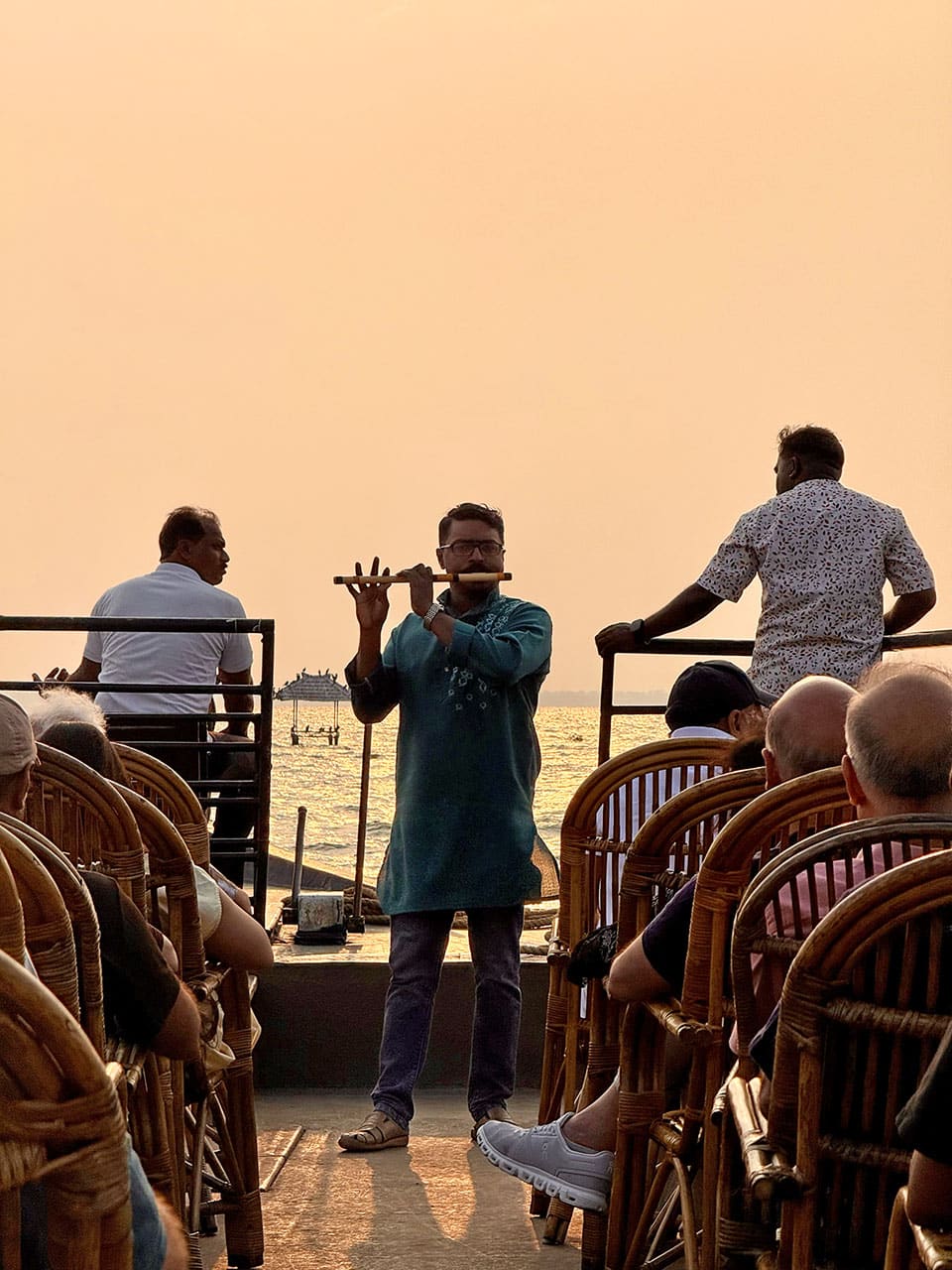
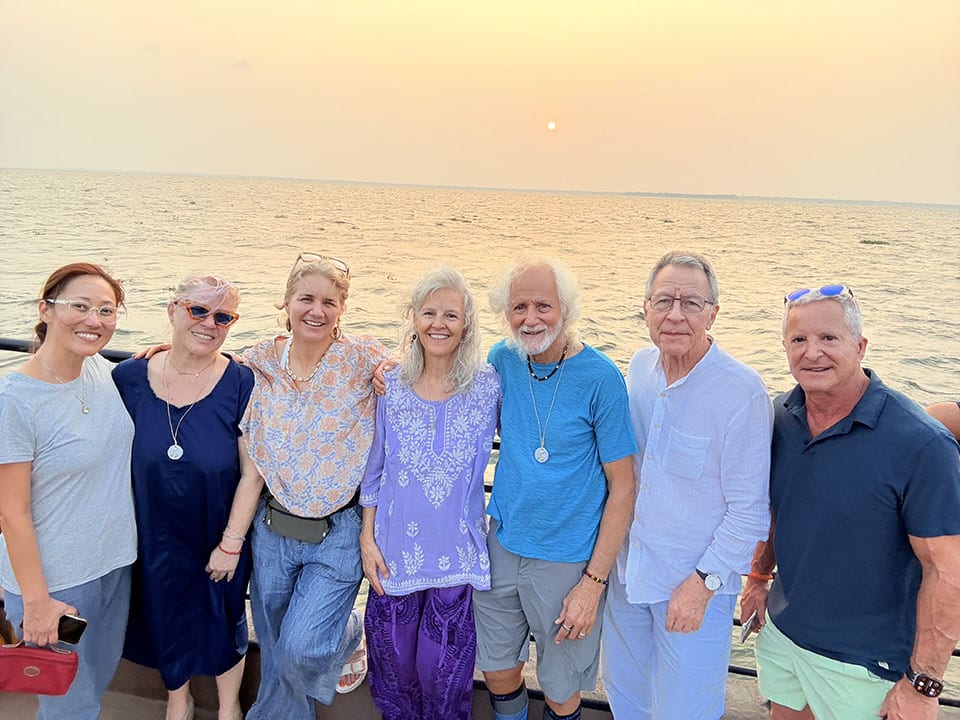
EK, Basilica, Isabelle, Heidi & Kirk, Roger, and Drew on our sunset “cruise”.
Back at the Kumarakom Lake Resort, our buffet-style dinner was delicious. And they had Heidi’s new favorite ‘appam’, a sourdough-like crêpe made from fermented rice flour and coconut. We’re excited to try out this appam recipe.
6° of Samuel Resendiz
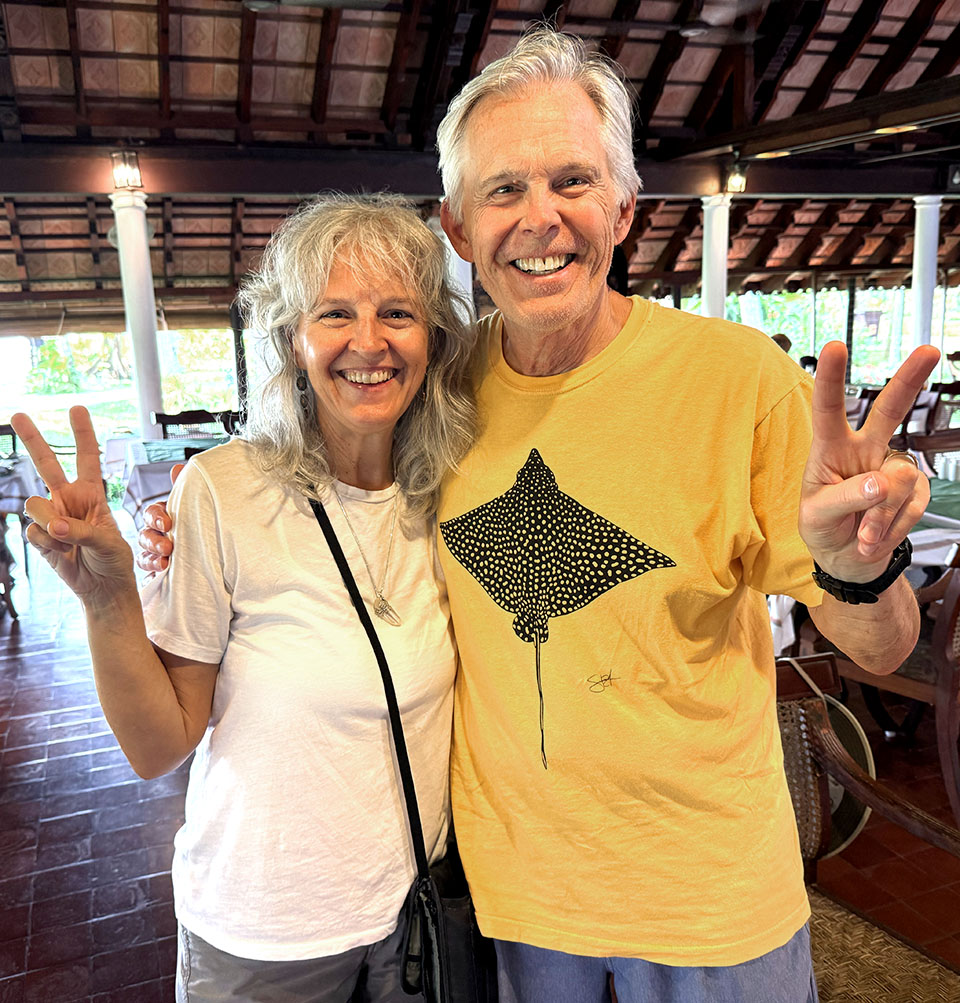
We also had a wonderfully FUN small-world synchronicity. As Heidi walked from the buffet back to our group table, Kirk kept pointing at somebody at another table. She looked where Kirk was pointing and saw a guy wearing a one-of-a-kind, unique manta ray t-shirt designed by our underwater photography friend Samuel Resendiz in Puerto Vallarta. You can only buy that T-shirt in one place… directly from Samuel in PV—and Heidi has the same T-shirt (in black and white)! We introduced ourselves to Ken and Janis from Michigan and took a photo to send to Samuel. He was so amazed to see his t-shirt on someone halfway around the world, in India! They had spent time in Puerto Vallarta before visiting India, and we all enjoyed a good laugh together! Great people, we hope to see them again in Puerto Vallarta on their next visit.

Backwaters of Kerala
The next day, we were up early for a morning lake tour on a small traditional Keralaan boat—our group had to split into two boats as we had too many people for one.
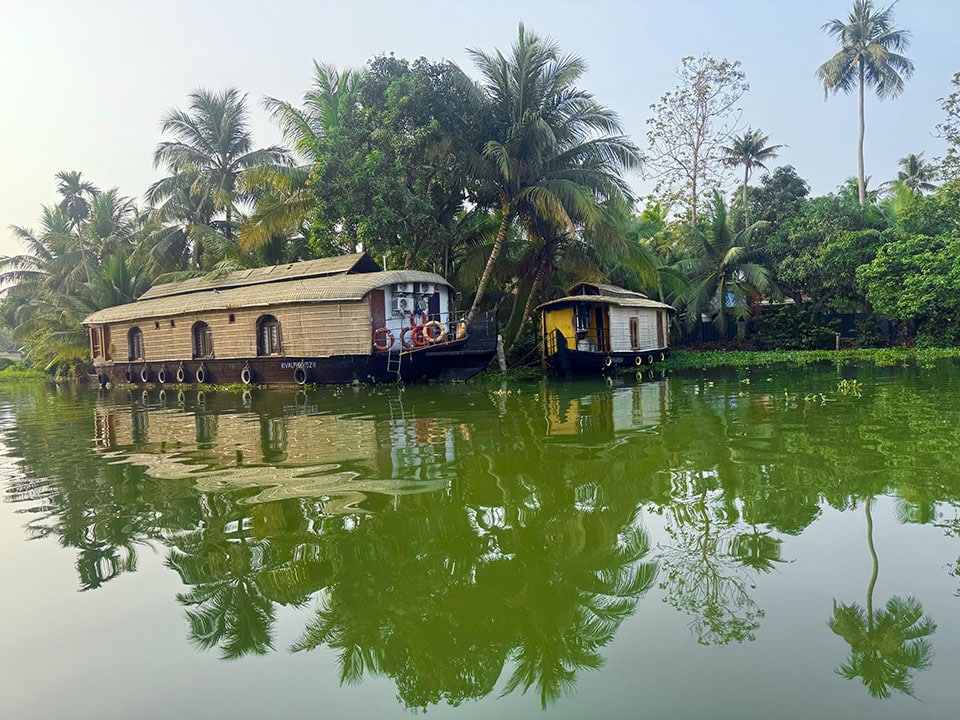
The tour wound through the labyrinth of houseboat-filled canals that make up the backwaters of Kerala. As you can see from the map, the myriad rivers and canals are interconnected. We also passed many traditional homes, with people bathing in the canals, doing laundry, cooking, and kids on their way to school. It was a beautiful, fascinating tour of life in the backwaters.
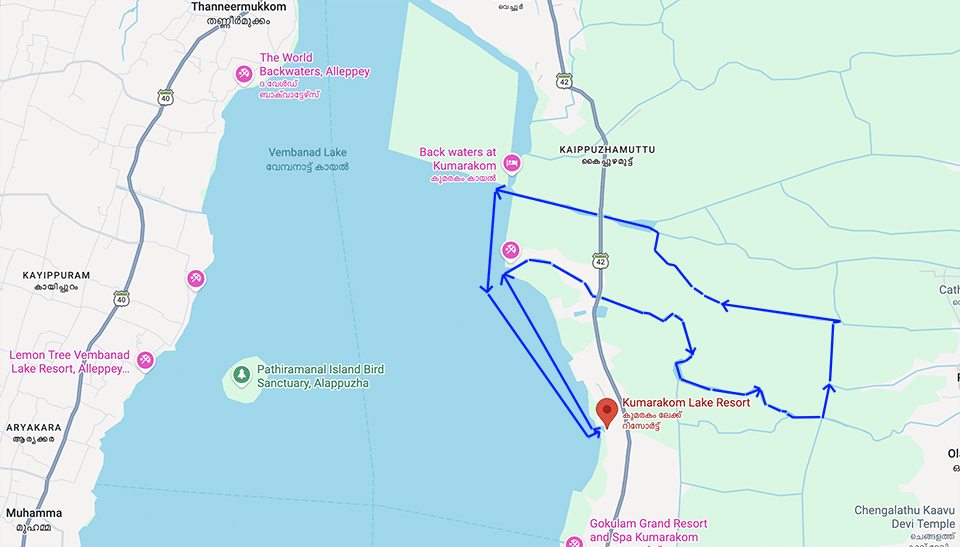
Before they became the iconic houseboats seen today, Kerala’s backwater barges were traditional cargo boats called kettuvallams. They were used to transport goods like rice, spices, and coconuts along the waterways, serving as an essential part of local trade before tourism gave them a new life as floating guest houseboats. Canoes have also historically been used for carrying cargo (like the bamboo cuttings below), fishing, tours, and racing.
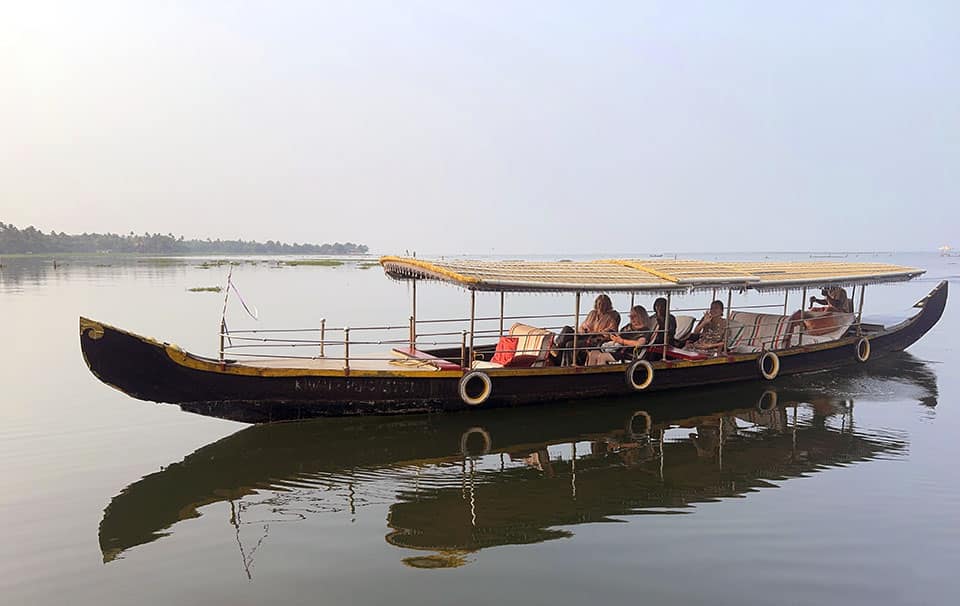
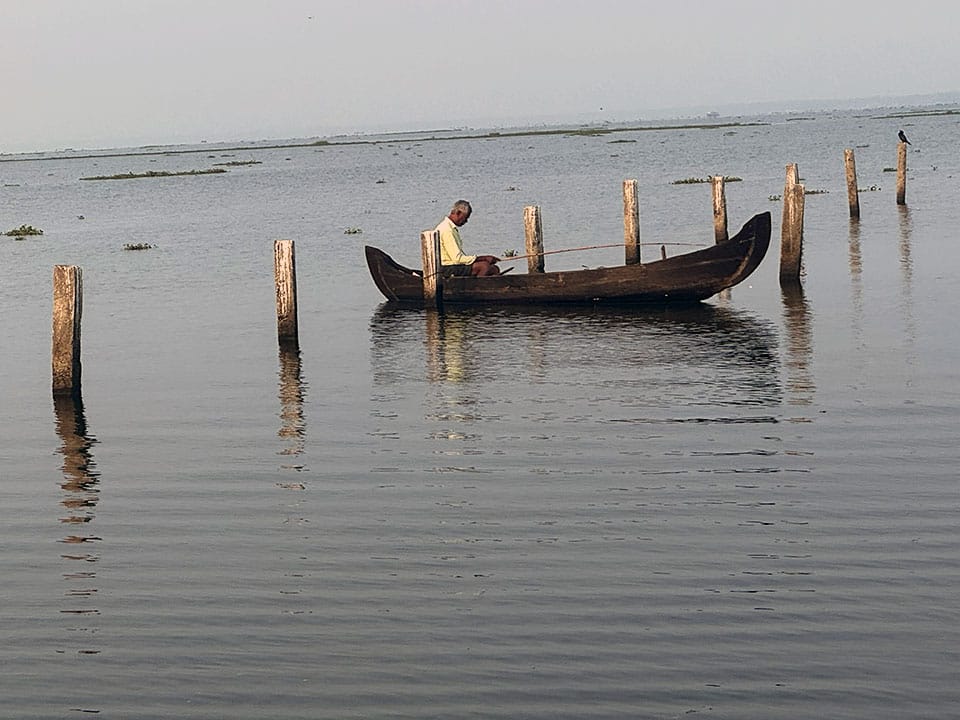
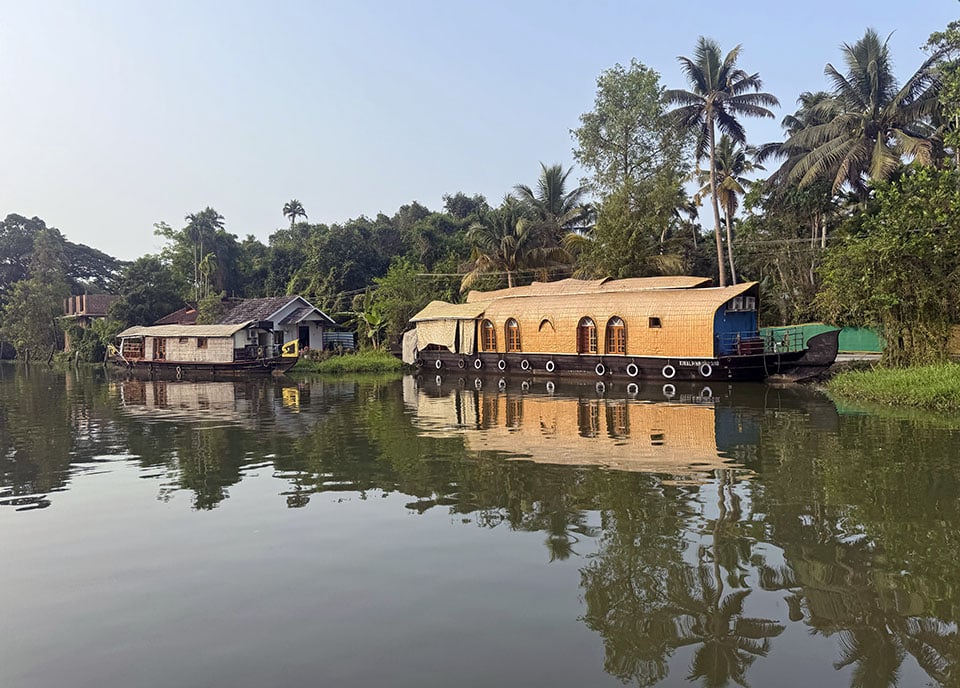
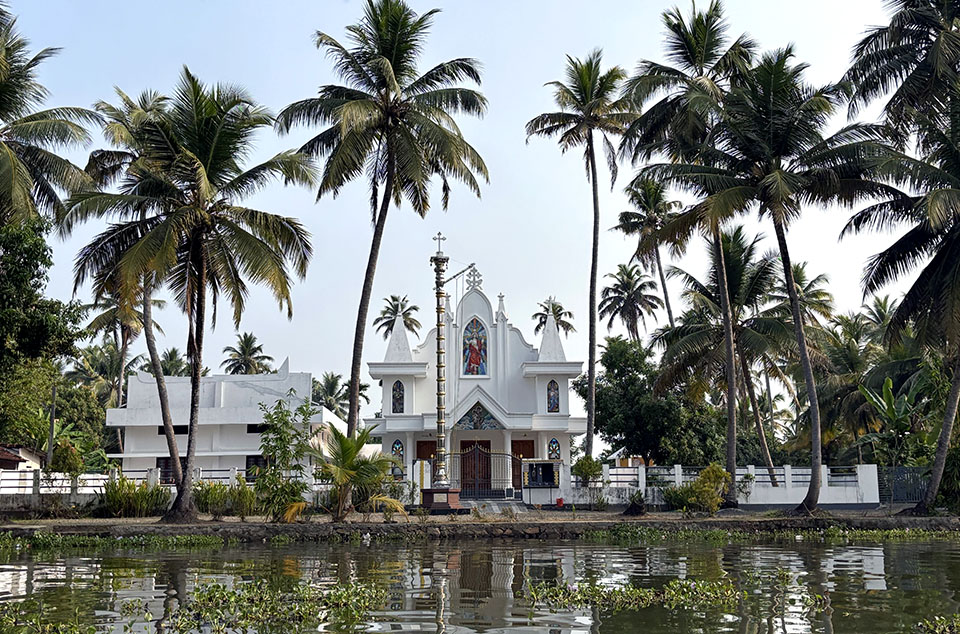
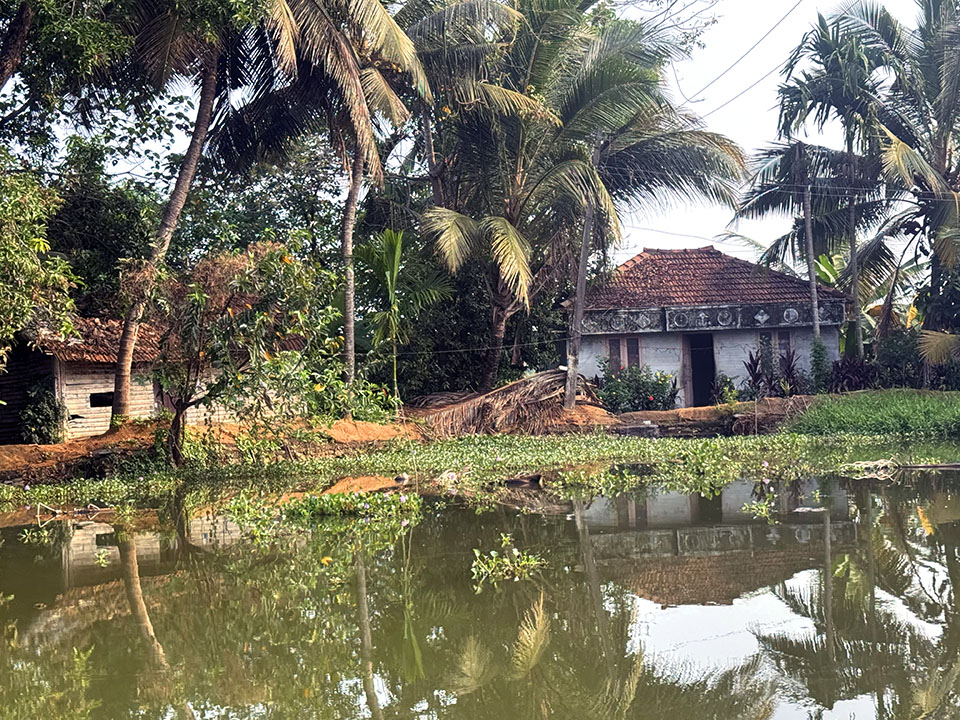
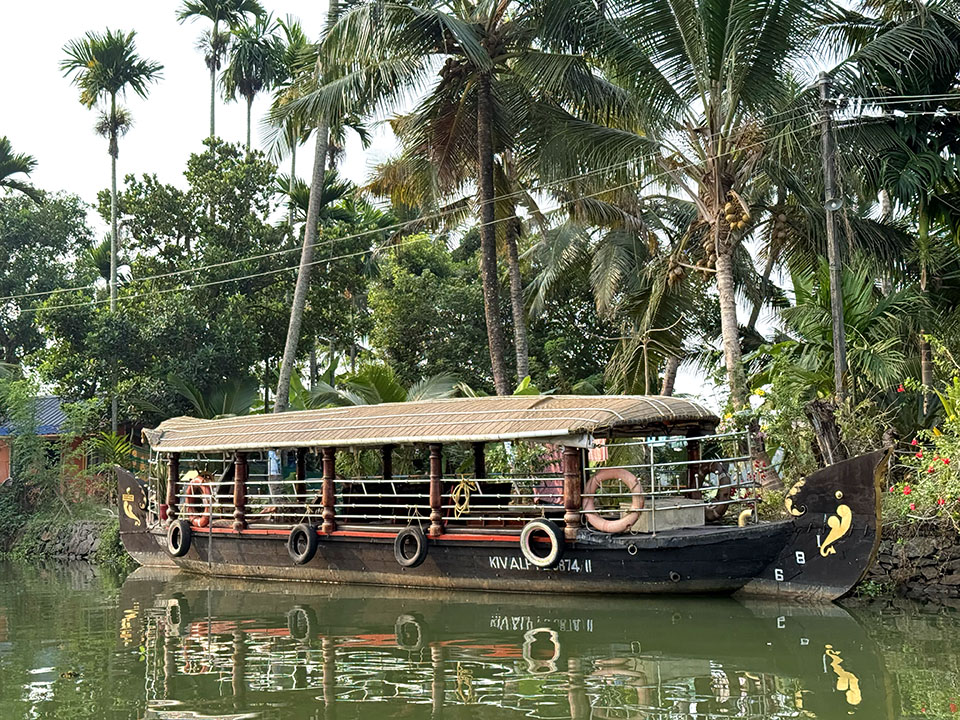
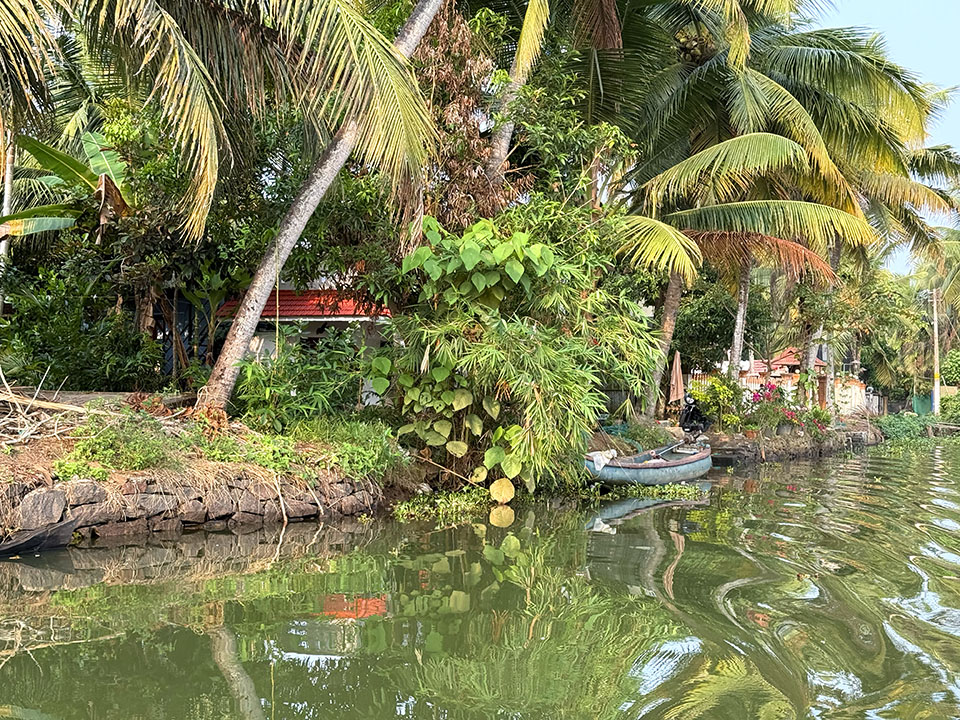
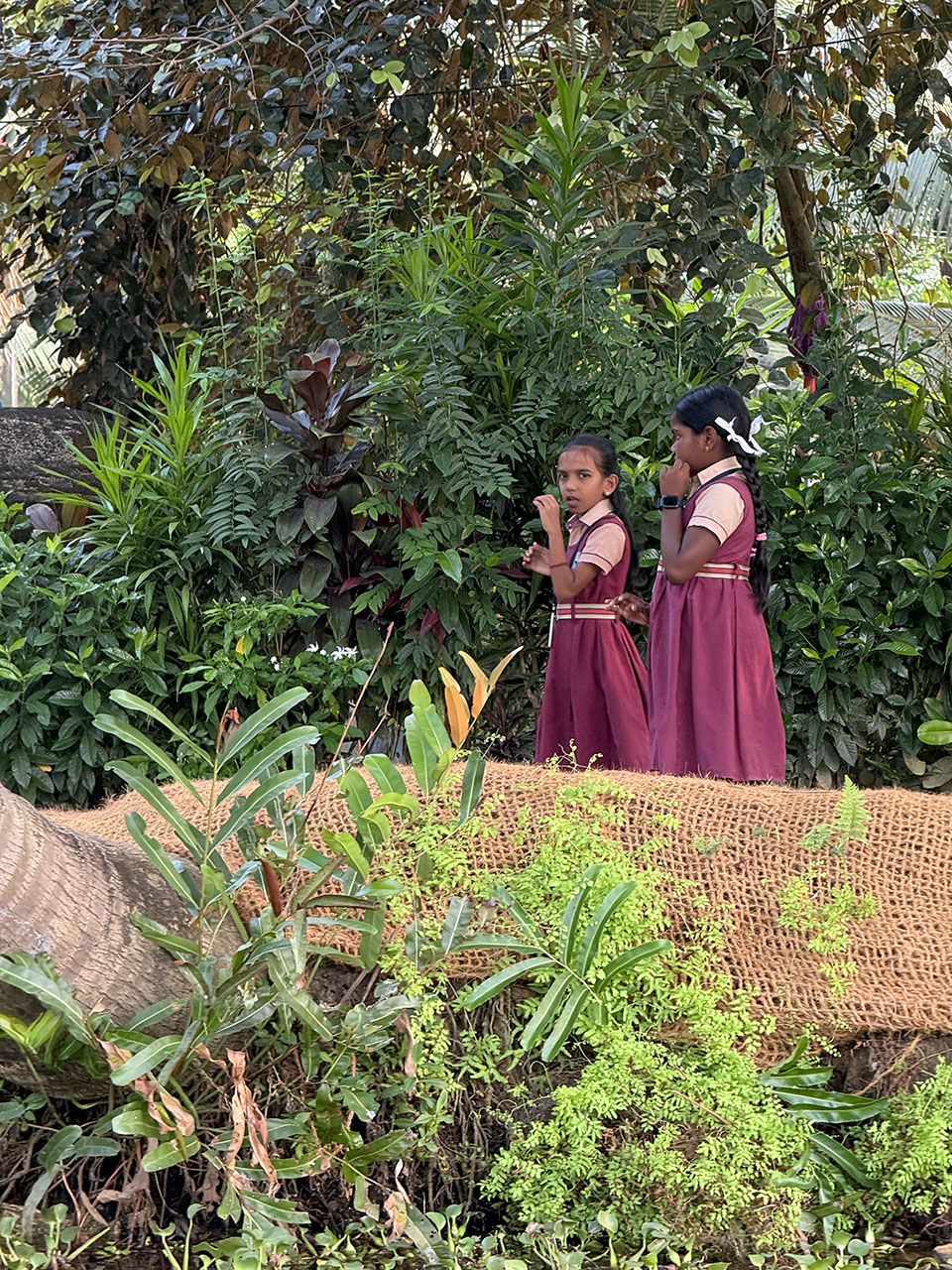
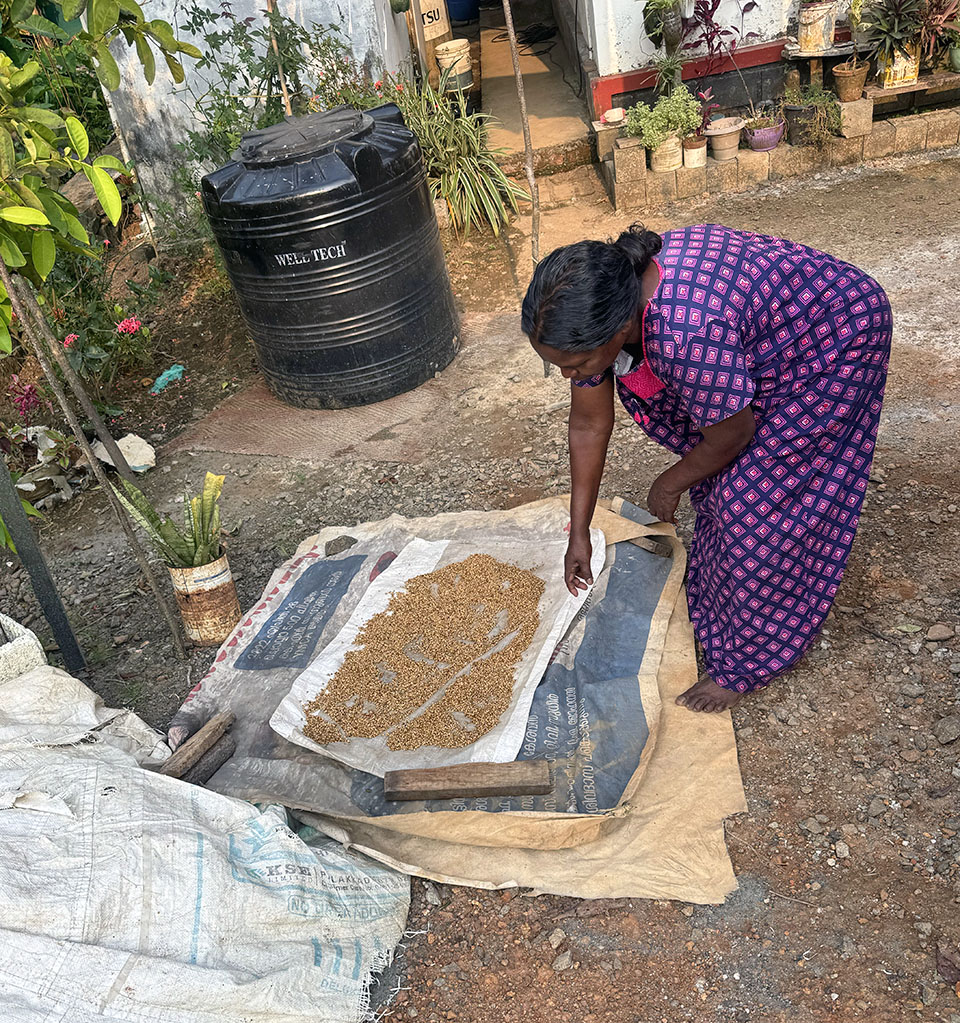
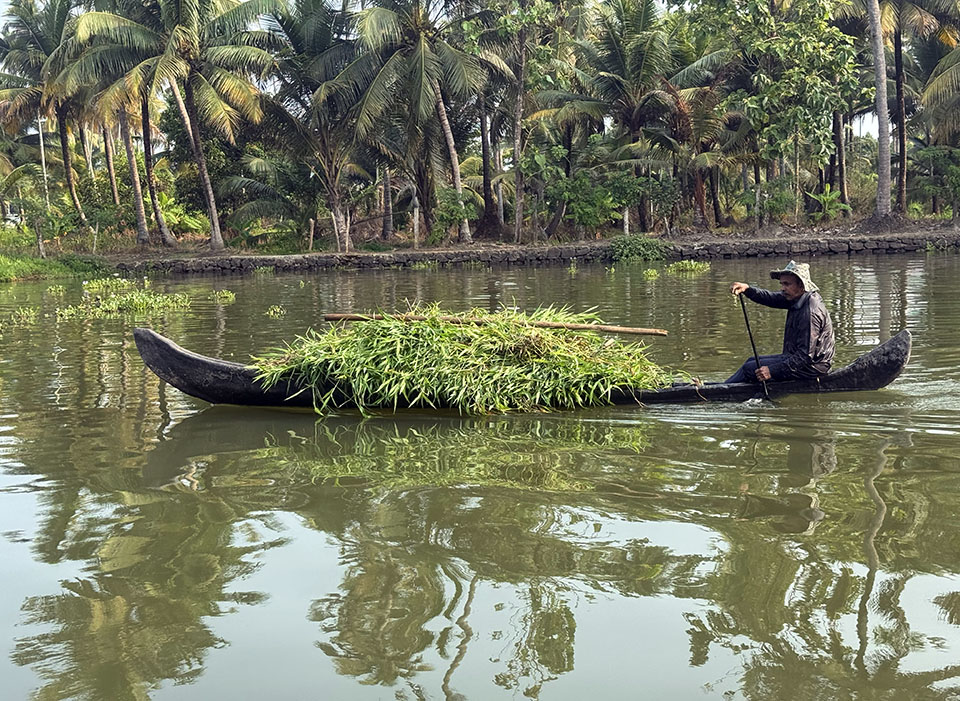
Today, Kerala’s backwaters have modernized from slow cargo barges into a lively mix of electric ferries and smaller boats, while most trade now flows via roads, rails, and deep‑sea ports. The region remains a vital gateway, yet the waterways still feel timeless for travelers exploring them by boat.
Before visiting India, we watched this 22-minute documentary, Houseboats & Tradition: The Hidden Crisis in Kerala’s Backwaters. It’s an interesting documentary; we recommend watching it to understand more of the Backwaters we saw.
Shirodhara Massage
That afternoon, we were treated to more Ayurvedic massages. Shirodhara is a deeply calming Ayurvedic massage that involves a slow, steady stream of warm herbal oil poured over the forehead and scalp for about 30–50 minutes. This particular one swung in an infinity shape across the forehead. They put a cloth across your eyebrows so that oil didn’t drip into your eyes, as we lay comfortably on a table while the rhythmic flow of oil gently bathed the third‑eye region and crown of our heads, helping to quiet mental chatter, slow the breath, and shift the nervous system into deep relaxation.
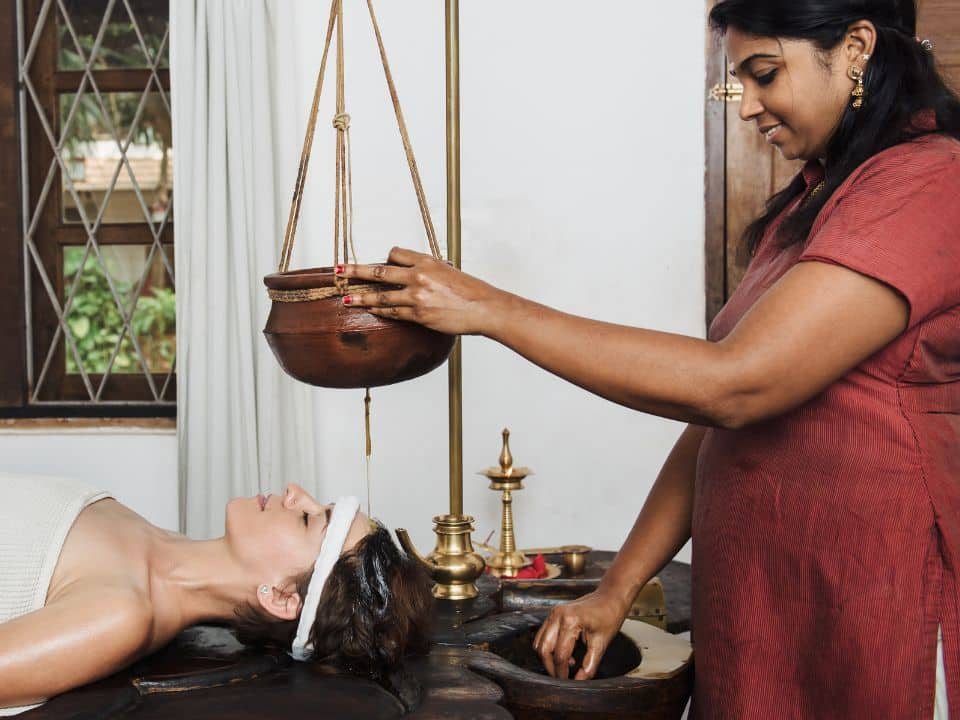
The Shirodhara treatment is widely used to relieve stress and anxiety, support better sleep, ease tension headaches or migraines, and improve mental clarity, while also nourishing the scalp and hair, and leaves you feeling profoundly grounded, refreshed, and mentally reset. It was truly amazing, and we loved it so much that we would later have another one in North India. If you get the chance to experience Shirodhara, your nervous system will thank you.
Kumarakom Sports, Arts, and Crafts
Many of the resorts we stayed at had a variety of traditional arts and crafts, music, dance, yoga, etc. that guests could participate in if/when we had time, which was not often on this amazing back-to-back packed Athma Tour! Sometimes people opted to stay at the resort to take part in various activities, rather than experience one of our guided tours.
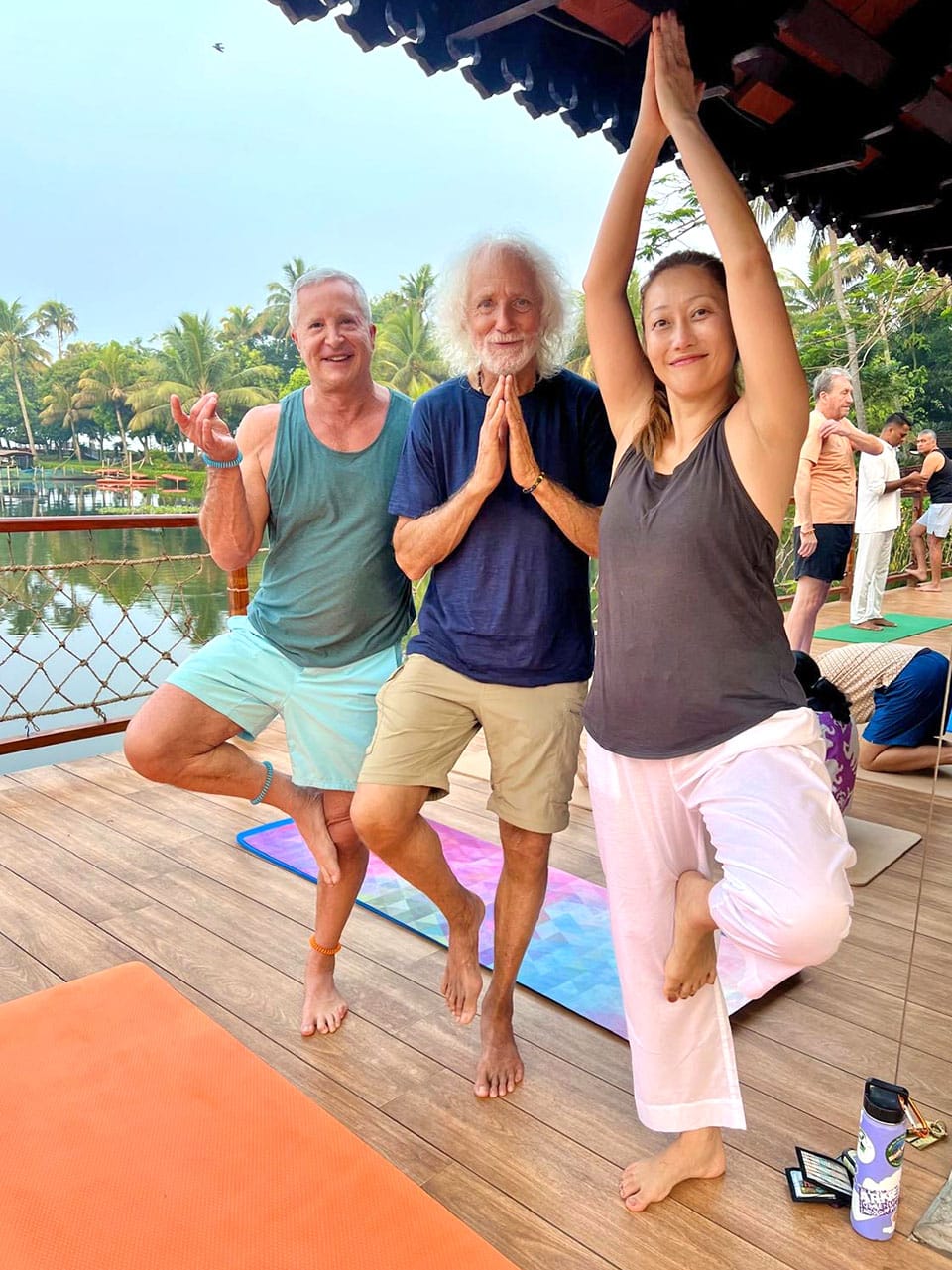
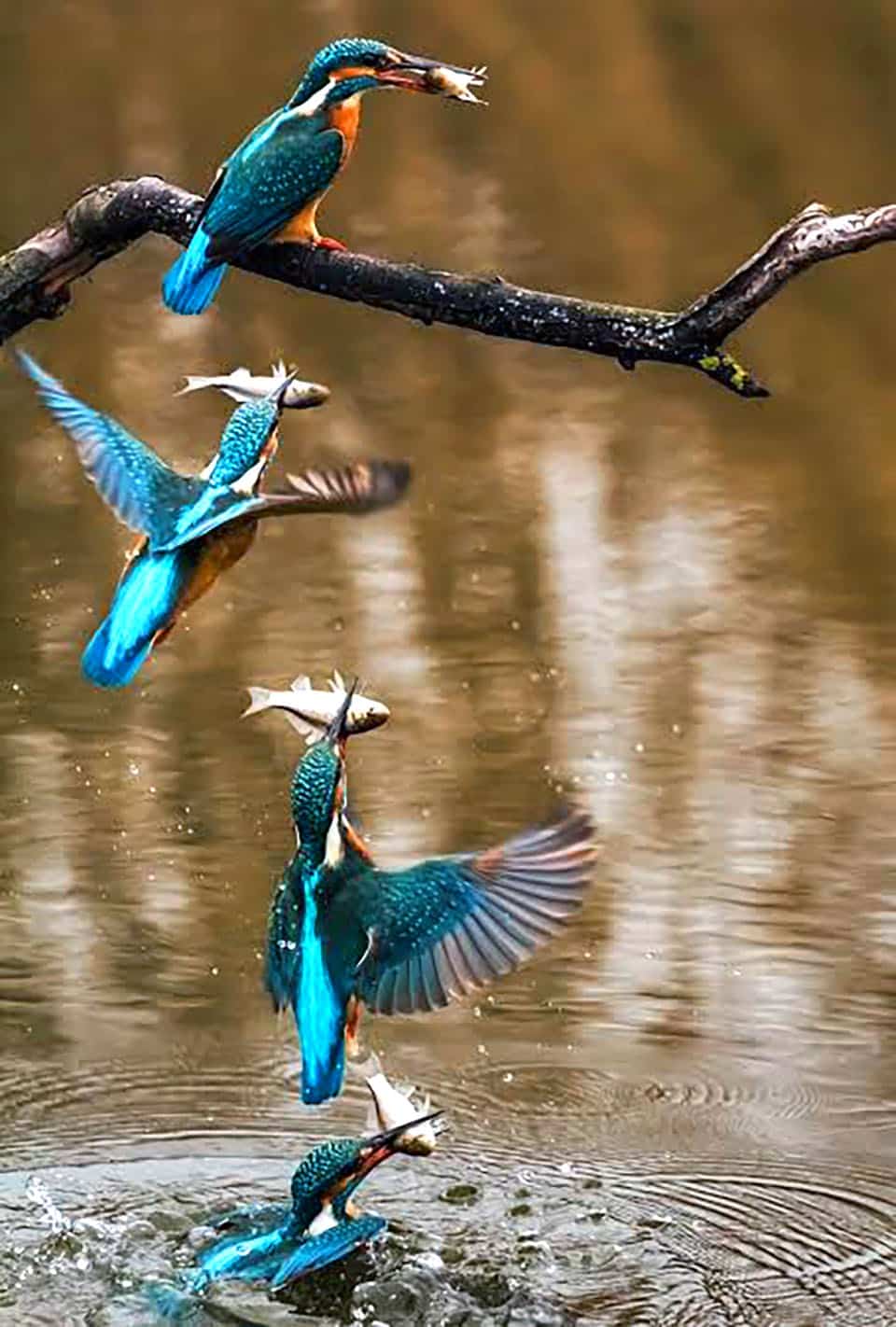
We took the morning yoga class, overlooking the lake, which was teaming with abundant bird life—including white herons, sunbathing cormorants, and magnificent turquoise blue and orange kingfishers darting in and out of the water, grabbing little fish so quickly, it was impossible to get a photo — luckily, we found this time-lapse kingfisher photo online, which shows exactly what we saw. Thanks to whoever took it!
We also had fun playing with clay at the pottery shed, where we threw clay pots on a wheel, with the help of the resident potter. His father was the resort potter before him, and when he died suddenly 20 years ago, the resort asked the son to take over as their resident potter. He comes from a long lineage of potters, and the rest of his family sells their wares in the local village.
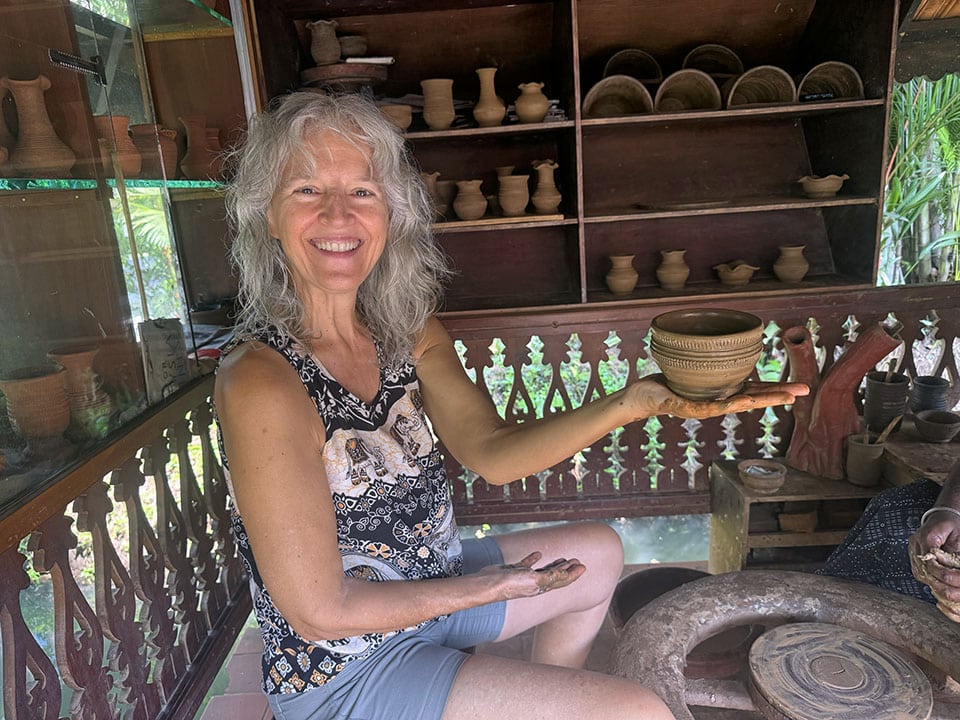
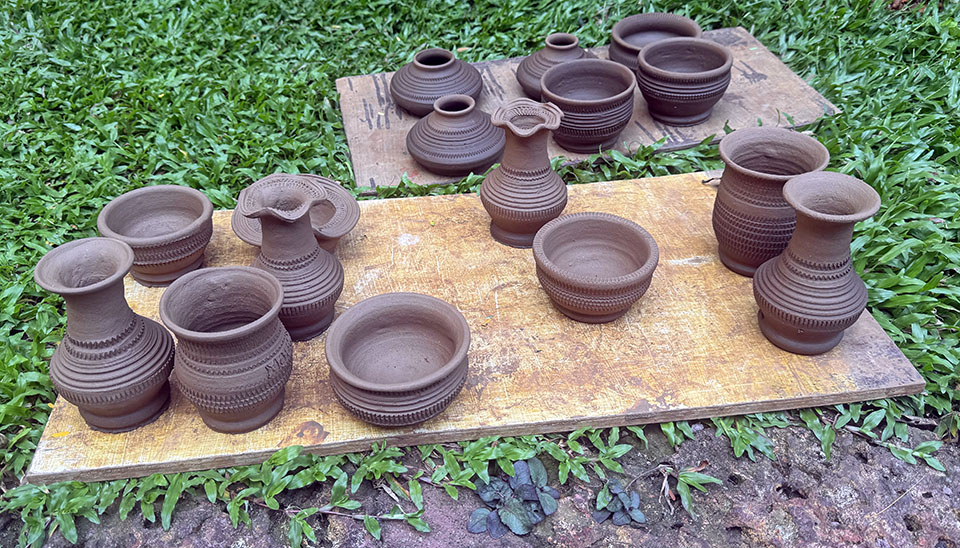
Heidi’s bowl is at the top left, Kirk’s amphora-shaped vessel is at the top center.
We could choose among several shapes of vessels to make, and the potter basically put his hands over ours and directed how much pressure, and when and where to move them as he spun the wheel.
Kirk wanted to make an amphora shape that the potter did not have an example of. So Kirk pulled up a photo of an Ancient Greek amphora, and the potter helped him to make it. They did not have a kiln to fire them, so our pots were left to dry in the sun. Too bad, when we stopped by to pick them up before we left, they were not dry yet, so we had to leave them behind. Note to self, next time, make your clay pots the day you arrive!
Heidi and the other women in our group also enjoyed having Mehndi, or henna art, applied to their hands.
Henna is a natural reddish-brown dye made from crushed henna leaves that has been used in India for centuries to paint temporary designs on the skin. Its roots trace back many thousands of years in temples, before spreading into everyday life and special celebrations about 400-500 years ago.
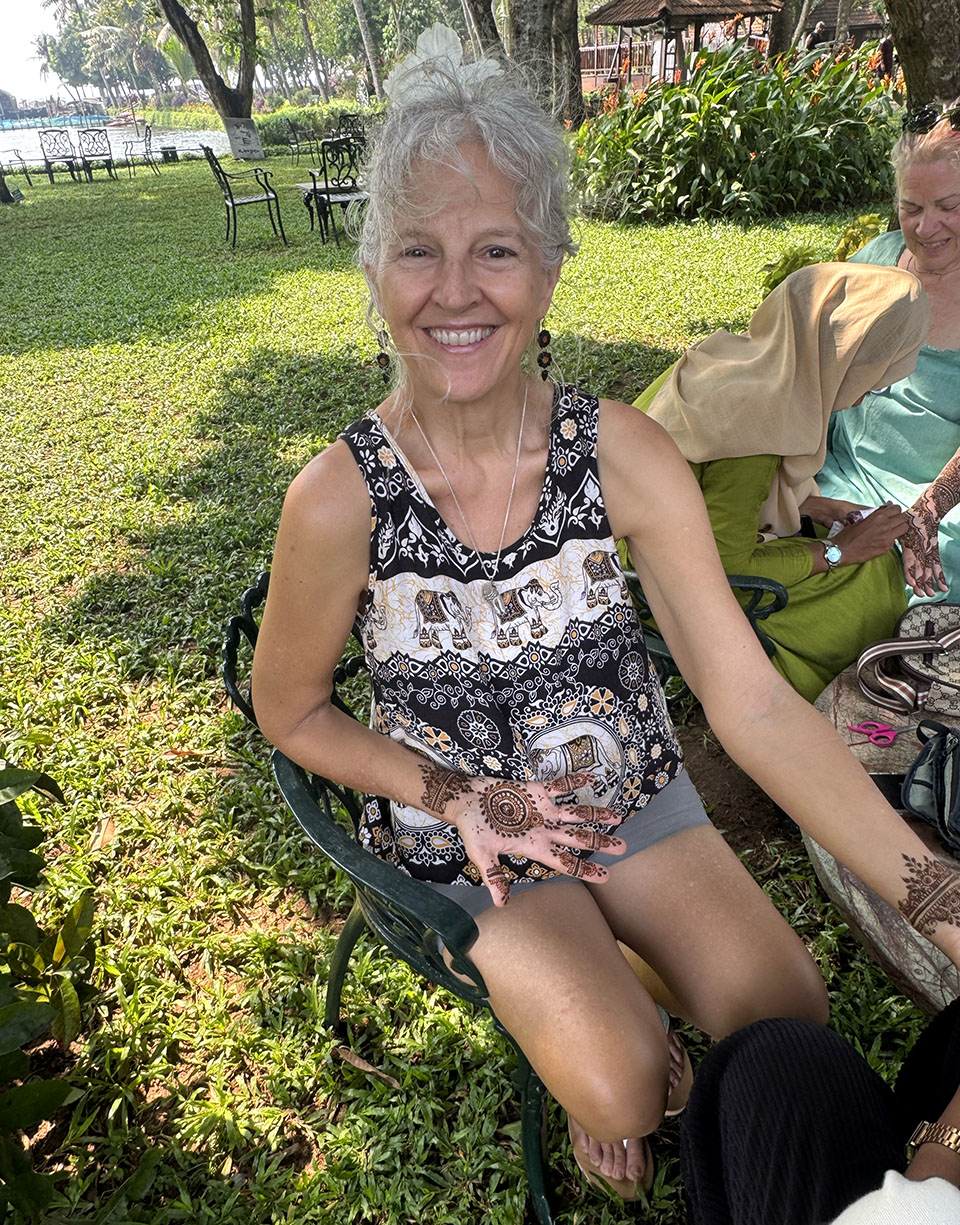
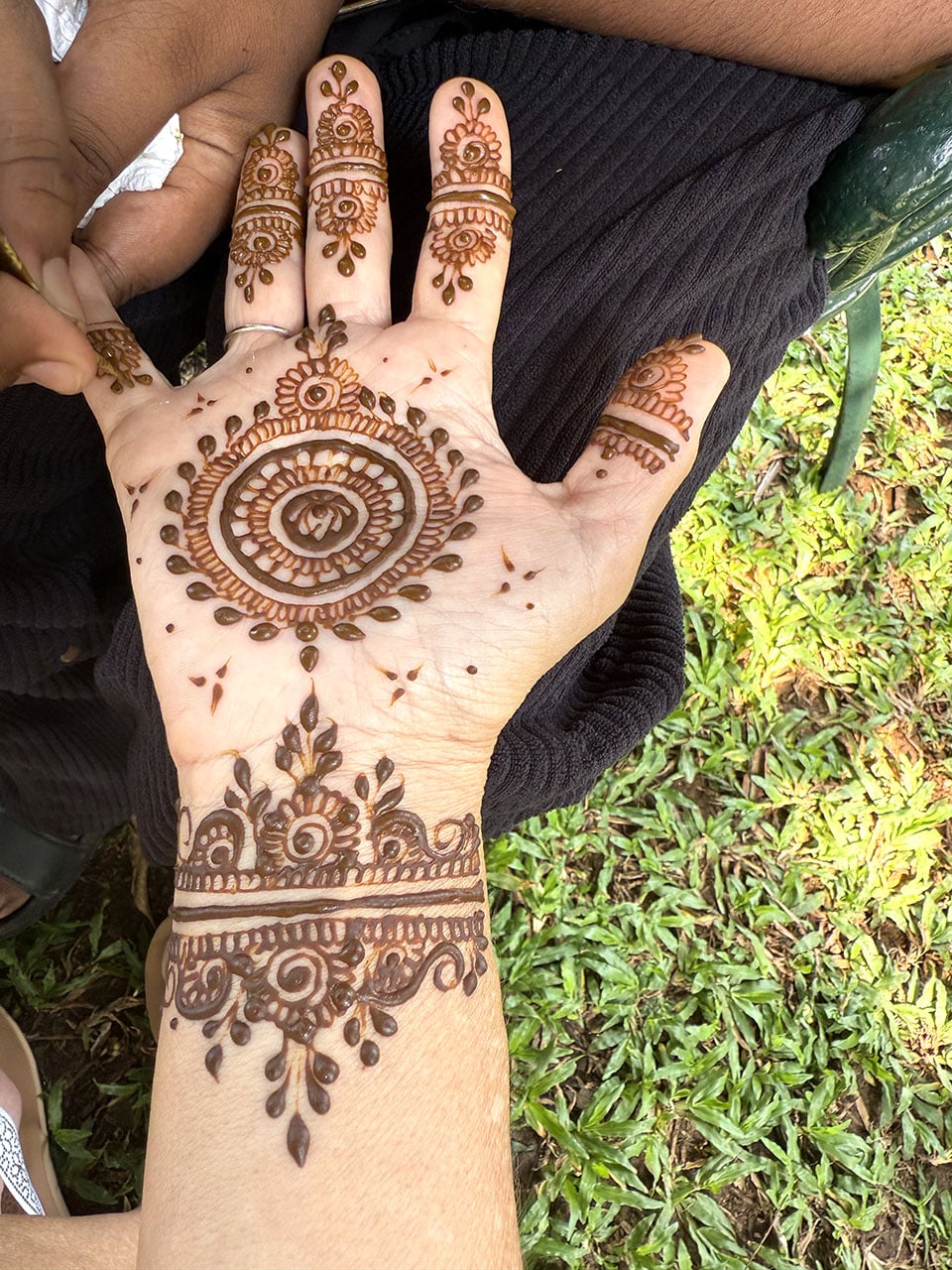
Today, mehndi is a vibrant part of celebrations from weddings to festivals like Diwali, where brides, guests, and travelers alike adorn their hands and feet with delicate floral and geometric patterns.
The henna artists at Kumarakom were very quick, taking about 20-30 minutes to decorate both palms. Then Heidi had to let her hands dry for 2 to 3 hours without using them! That was the hardest part… try not using your hands for 2 to 3 hours!! After that, she was instructed to rub coconut oil all over her hands to remove the dried henna, and then was not supposed to wash them until the next day. The henna darkened over the next 24 to 48 hours and lasted about a week. So much fun to sport beautiful henna hands!
While Heidi was getting her hands hennaed, Kirk went on a tour of a local Shiva temple, complete with a live elephant.
Ettumanoor Mahadeva Temple
One of Kerala’s most revered Shiva shrines in Kottayam, boasts stunning Kerala-style architecture and intricate murals. Rebuilt in 1542 with ties to the Pandavas and sage Vyasa, it features a live temple elephant stationed near the entrance for devotees’ blessings. The sign near the elephant said he was in musth, so we couldn’t get very close, as they can be quite dangerous during this high testosterone time. And apparently, in 2018, during a festival event, an elephant stampeded here. No bueno.
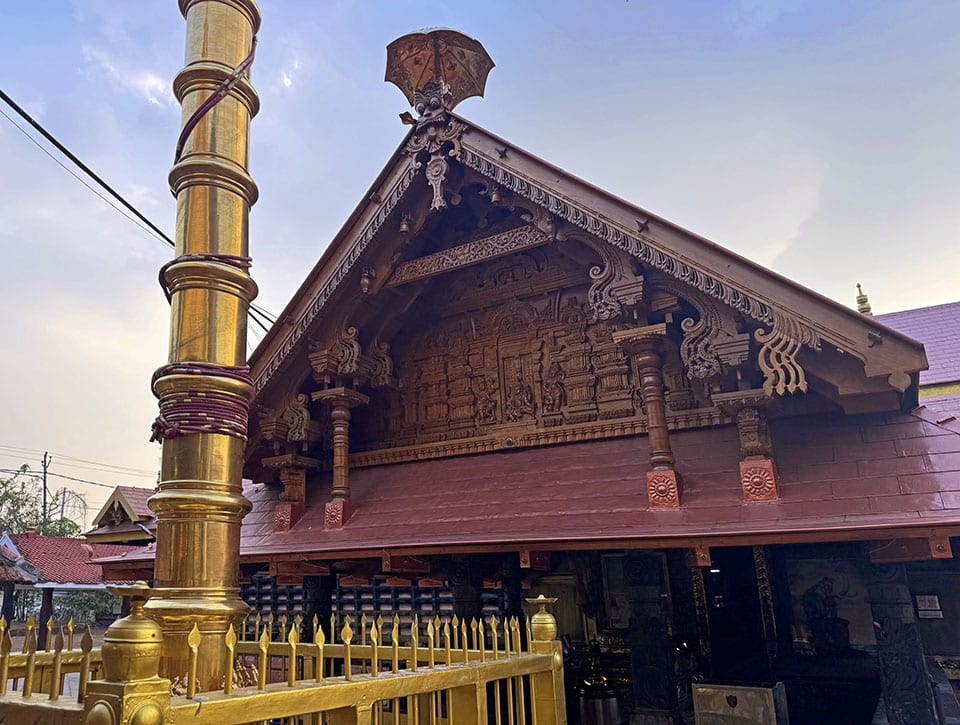
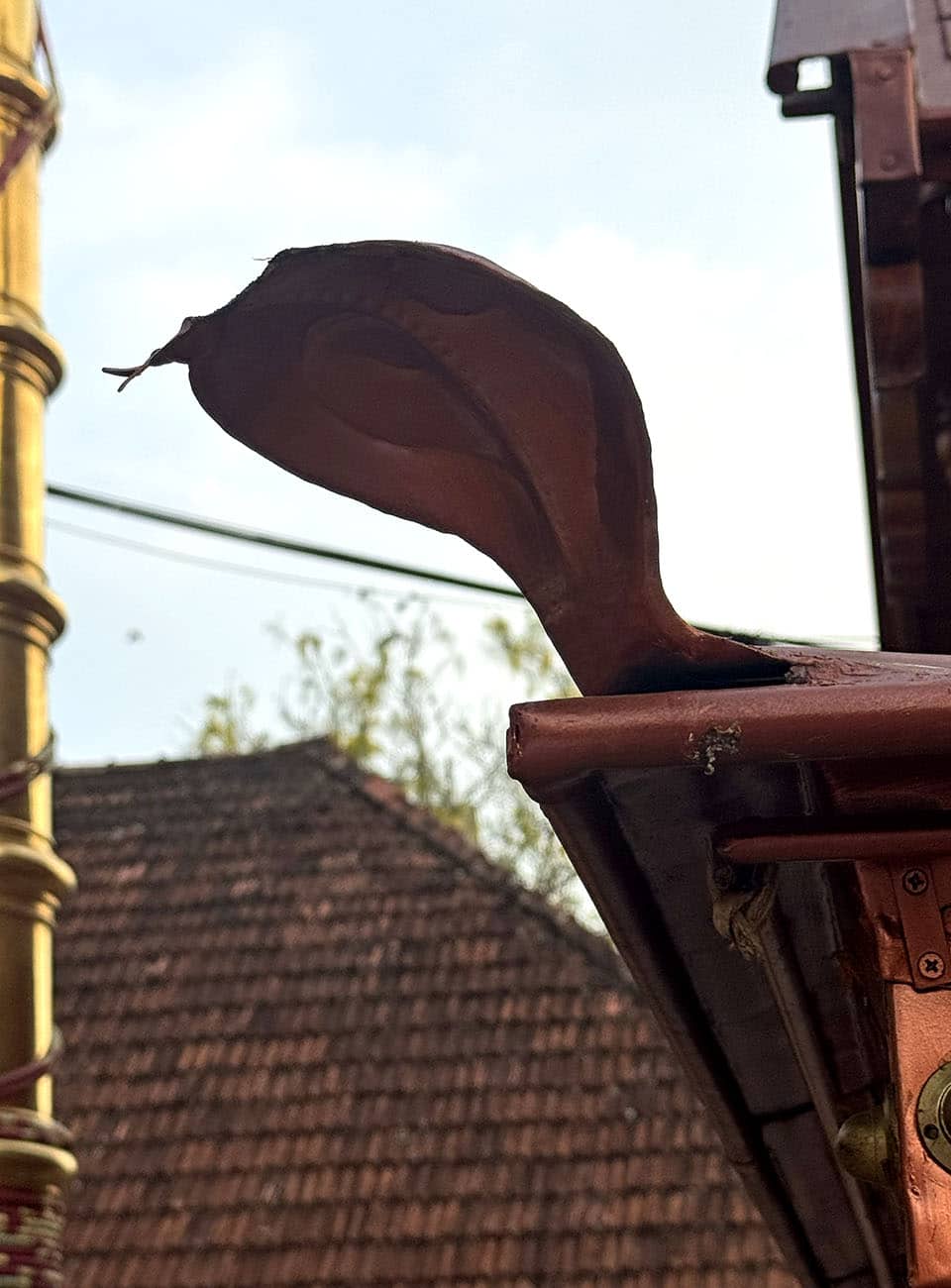
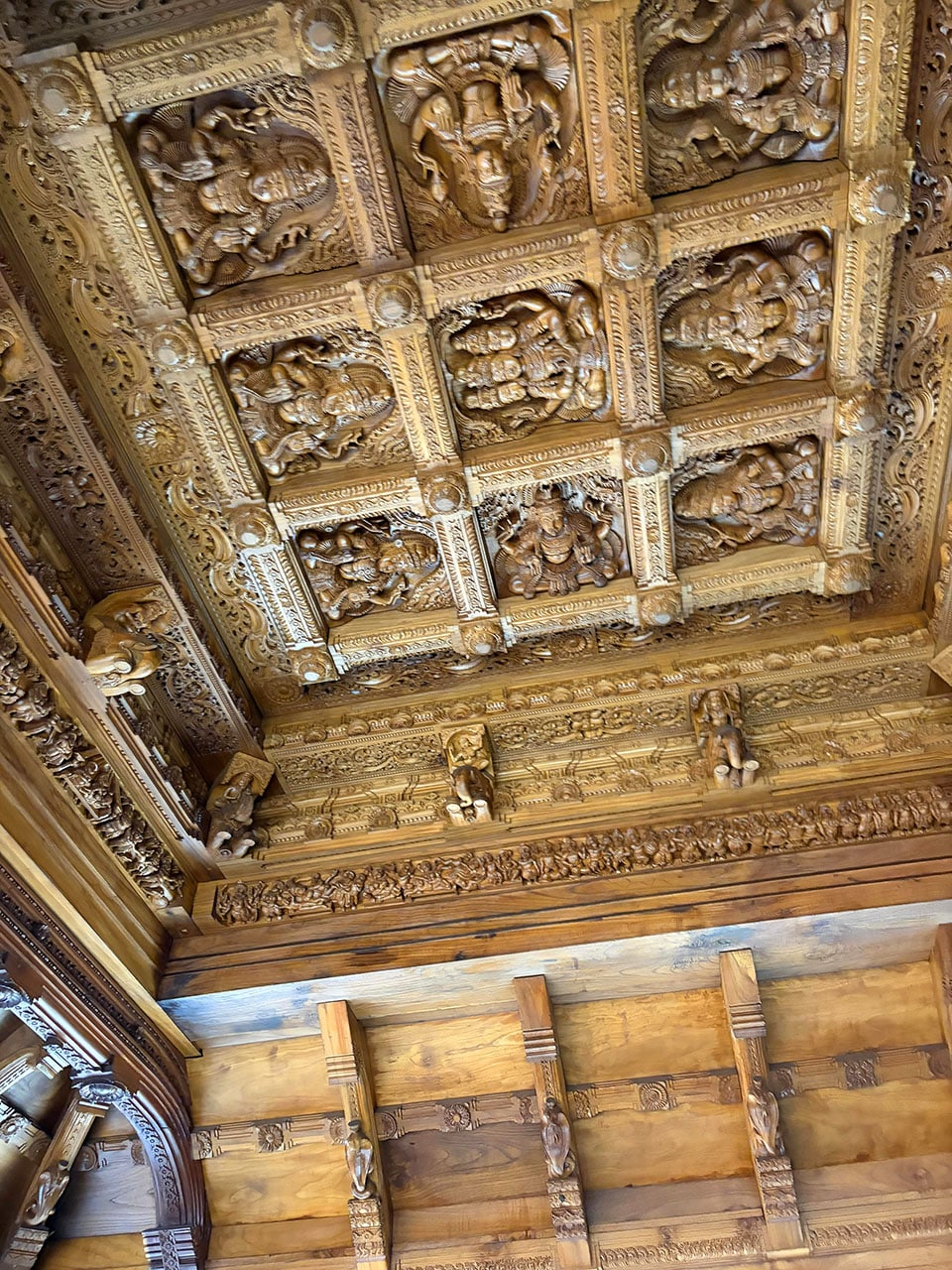
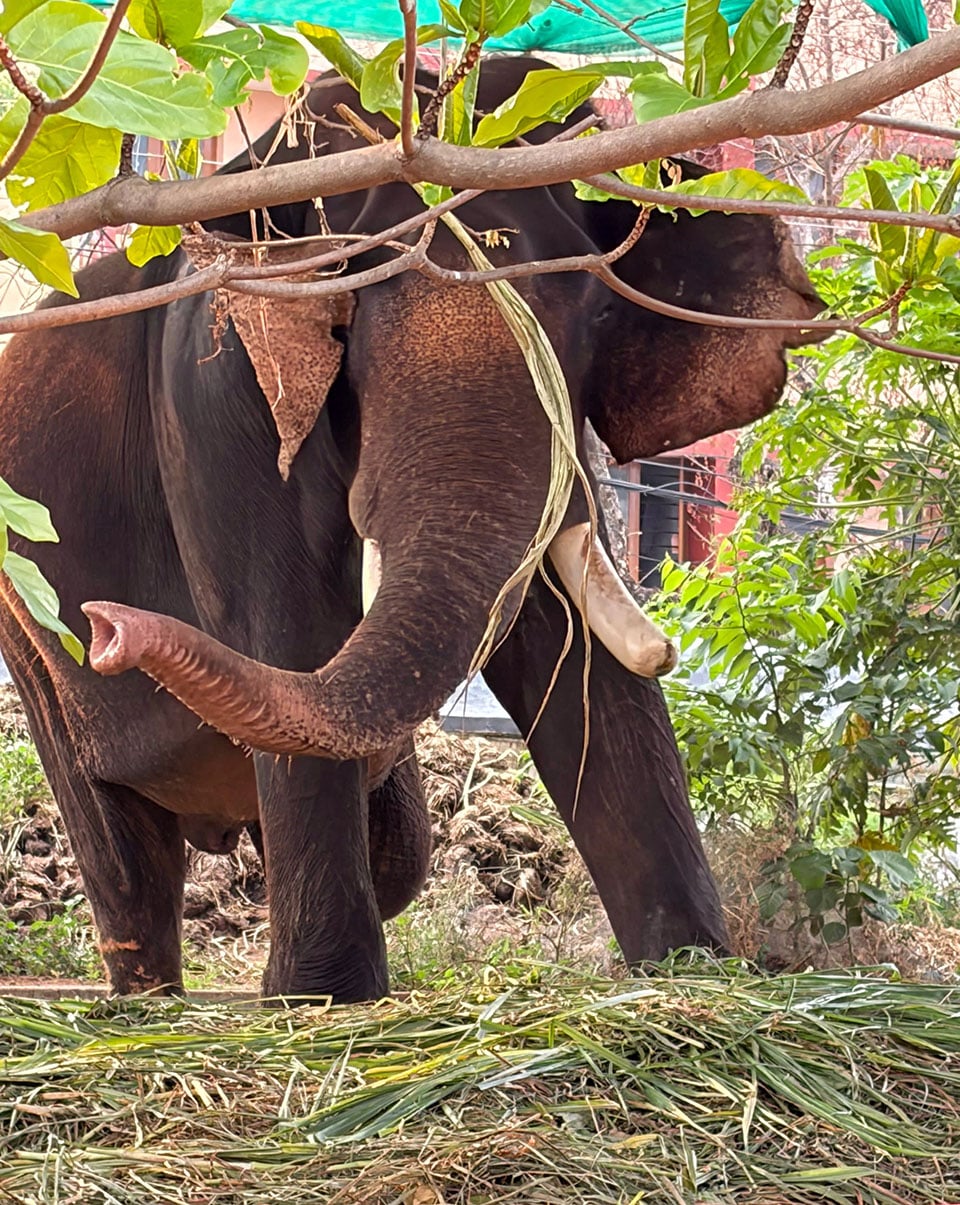
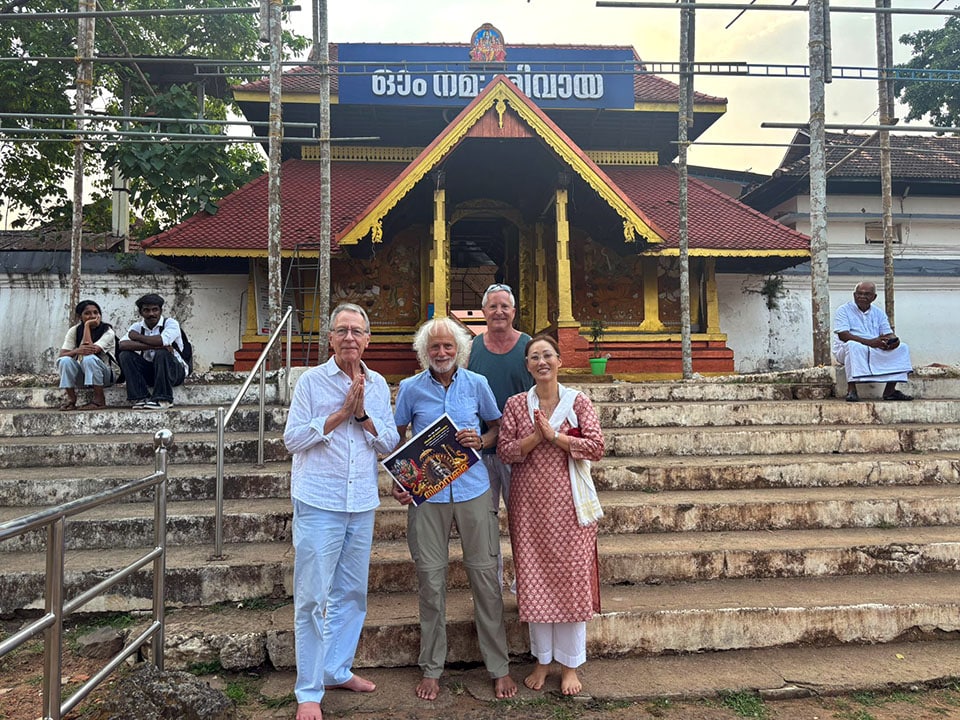
The corners of the temple were guarded by cobra-headed sculptures. The original architecture also had a series of shelves running around the façade of the building where butter lamps were placed. It would be a stunning sight to see them all burning during festivals, with the whole building lit up at night.
So Long Kumarakom Lake Resort
Sadly, after three days of mostly downtime, it was time to head to Kochi. As much as we would’ve loved to linger at this beautiful paradise resort forever, our journey south was quickly coming to an end, and we needed to continue to Fort Kochi. Have we been in India for two weeks already?! Kumarakom Lake Resort stole our hearts and was easily a favorite in our entire Indian adventure. Even under a full moon at night, you can see why we love it here!
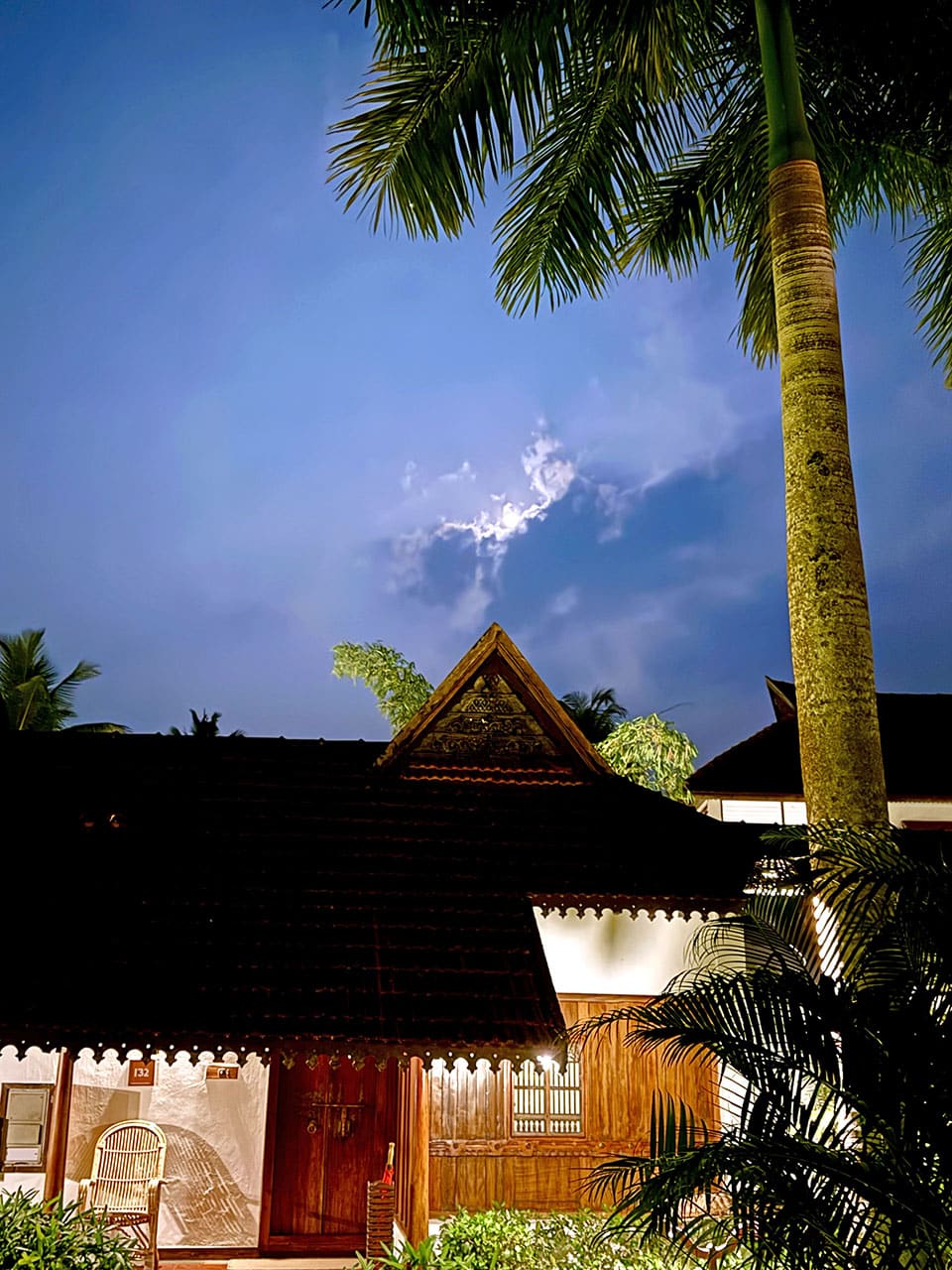
Fort Kochi
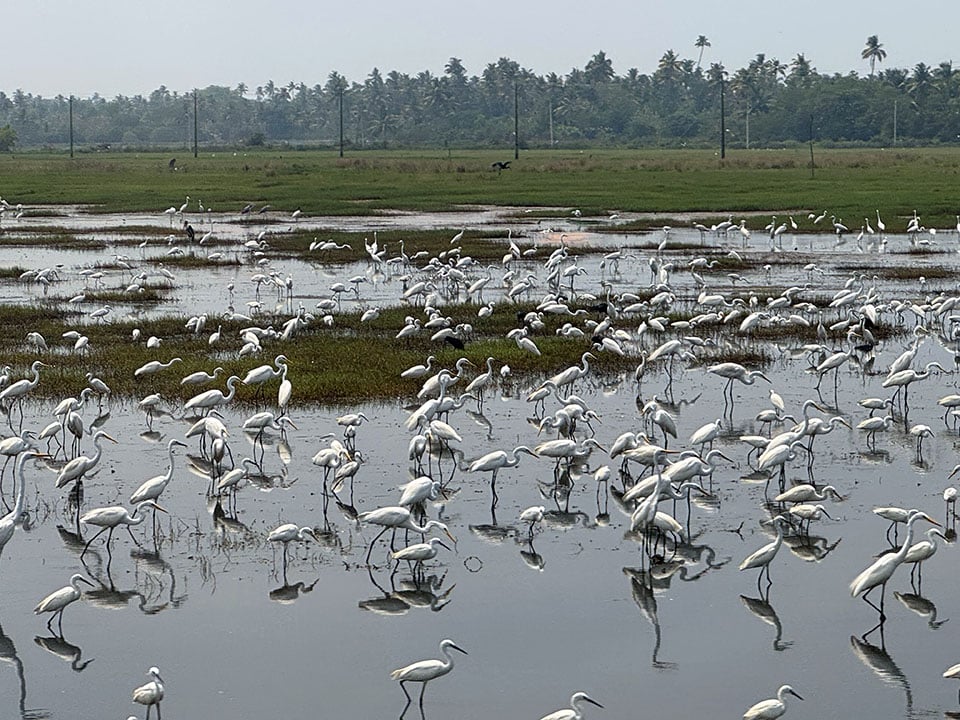
Our next stop, Fort Kochi, was about a 90-minute drive along beautiful Lake Vambanad, and the bird sanctuary with thousands of white herons, black Ibis, Brahminy kites (which looked very much like bald eagles), and so many more birds we could not identify through the bus window.
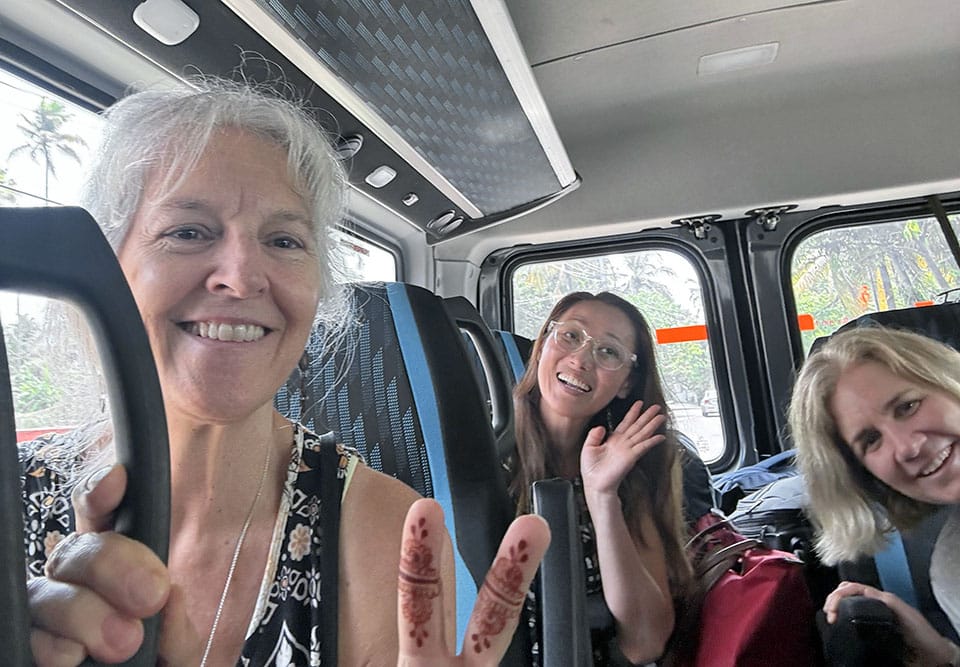
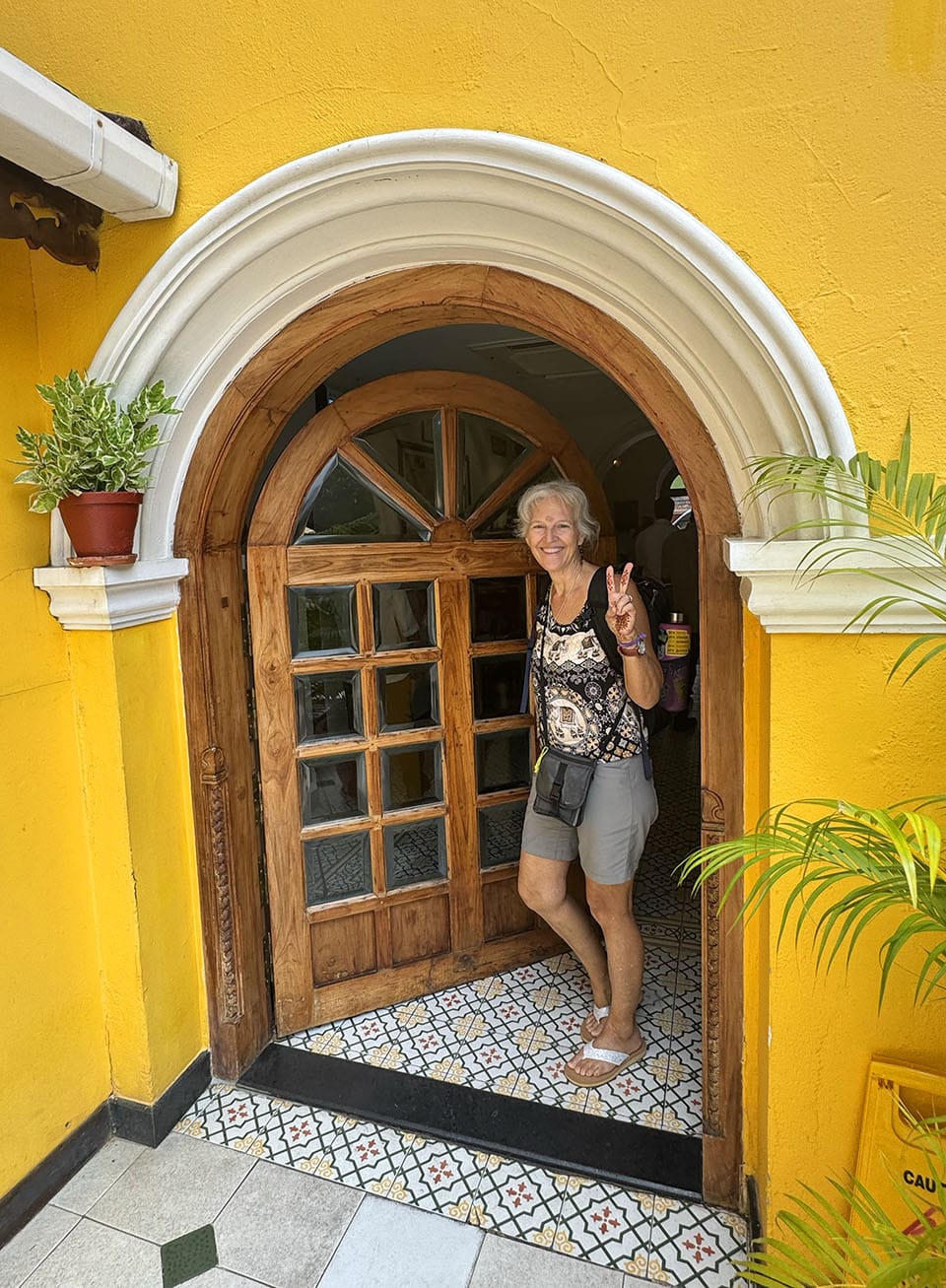
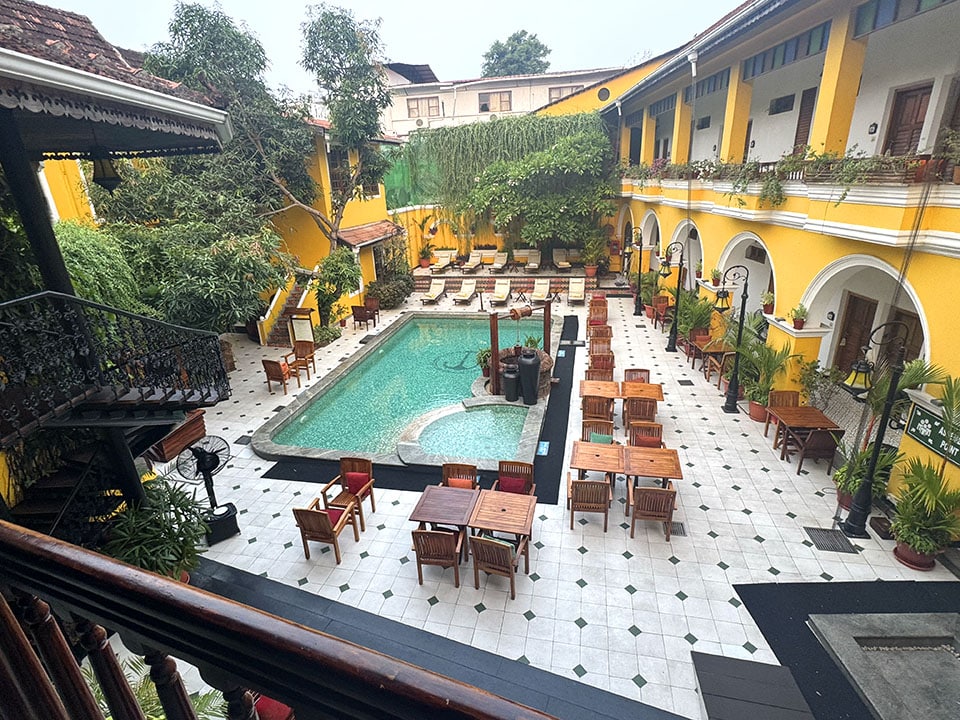
We stayed at the beautiful Forte Kochi Hotel. This once palatial home was originally built by the Portuguese in the early 1800s and later refined by the Dutch. Before it became a hotel it belonged to the Koders, one of Fort Kochi’s most influential Jewish merchant families who traded spices, timber, and coconut coir products from their family store in the front of the building, while they lived upstairs. A unique feature of this property is an ancient Mikvah—a sacred Jewish ritual bath—tucked away in the courtyard, one of the last of its kind in India. With its vibrant yellow facade, arched stained-glass windows, and teakwood rafters, this hotel provides a fascinating look at the colonial architecture alongside the deep Jewish heritage that defined Fort Kochi for centuries.
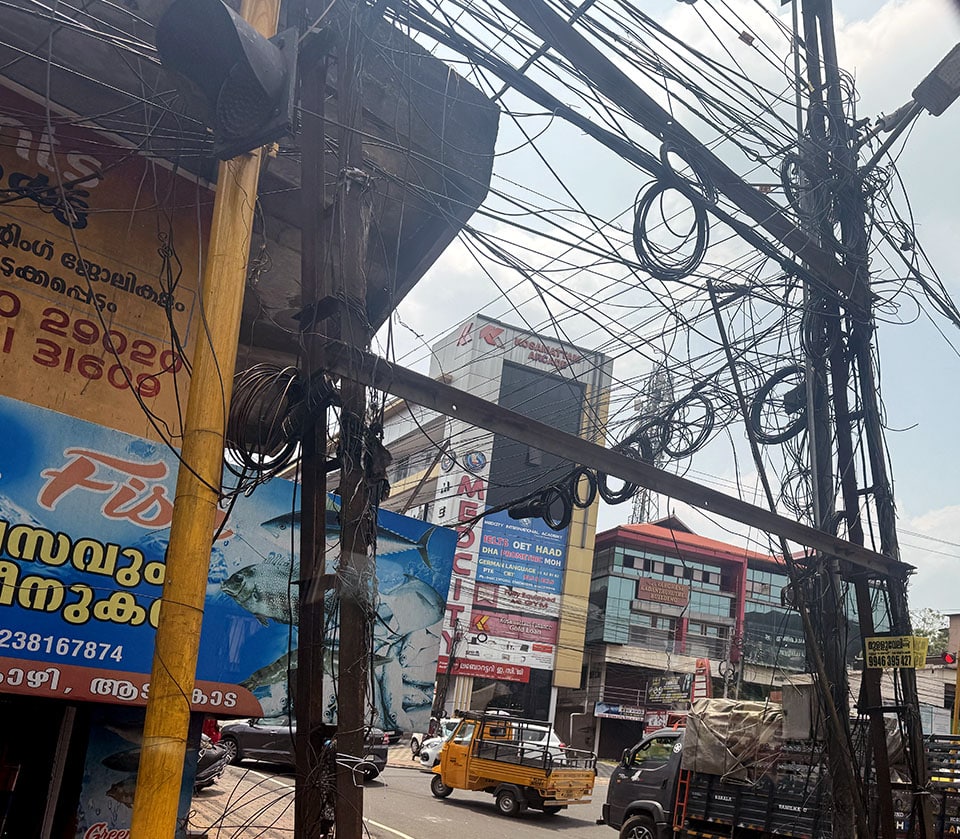
Fort Kochi is a historic coastal district within the broader city of Kochi (formerly called Cochin). Our walking tour of Fort Kochi included beaches, Chinese fishing nets, the famous St. Francis Church, and winding pedestrian lanes full of shops. The larger metropolitan Kochi (population 4 million) comprises a bustling mainland commercial maritime hub, modern amenities, shopping malls, and the vibrant, urban energy of a port city.
Ugghh! Heidi‘s upper respiratory infection got the best of her in Kochi, and she missed most of the activities here, opting to rest up at the hotel. Fortunately, Kirk was still feeling well at this point and joined the rest of our group for the unique tours of Kochi.
Queen of the Arabian Sea
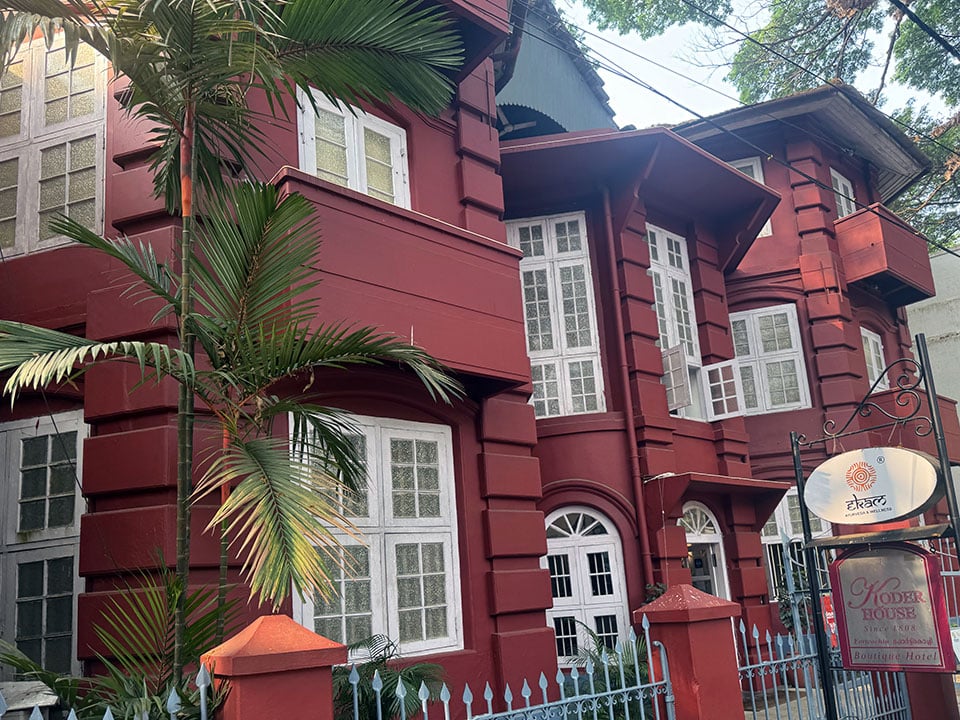
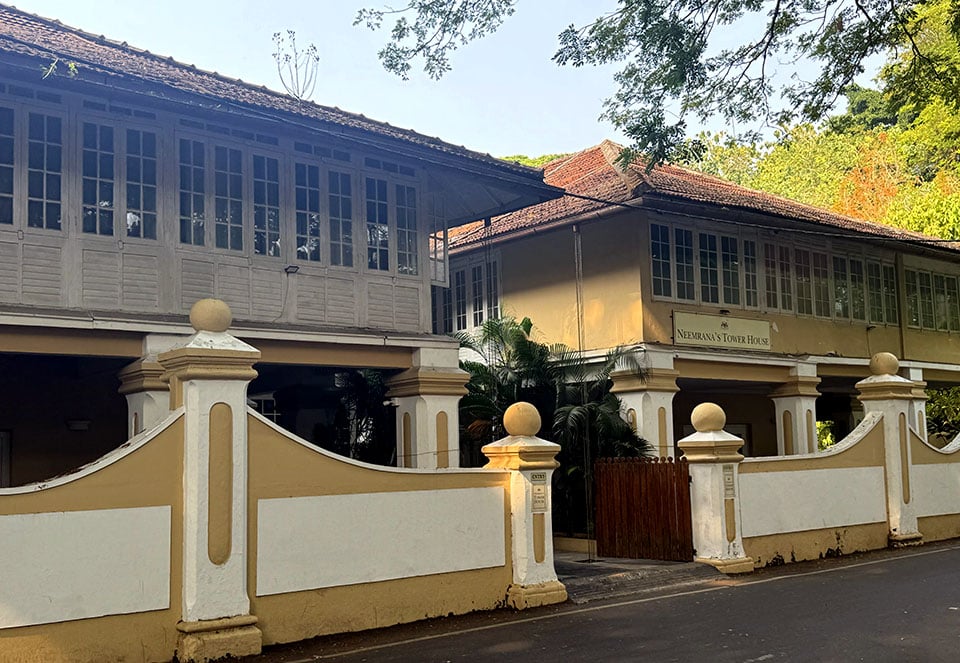
Often referred to as the “Queen of the Arabian Sea”, Kochi has been a cultural melting pot for centuries, shaped by influences from Arab, Chinese, Portuguese, Dutch, and British traders. This is reflected in their mix of colonial architecture styles. These two former homes (below) are now heritage hotels.
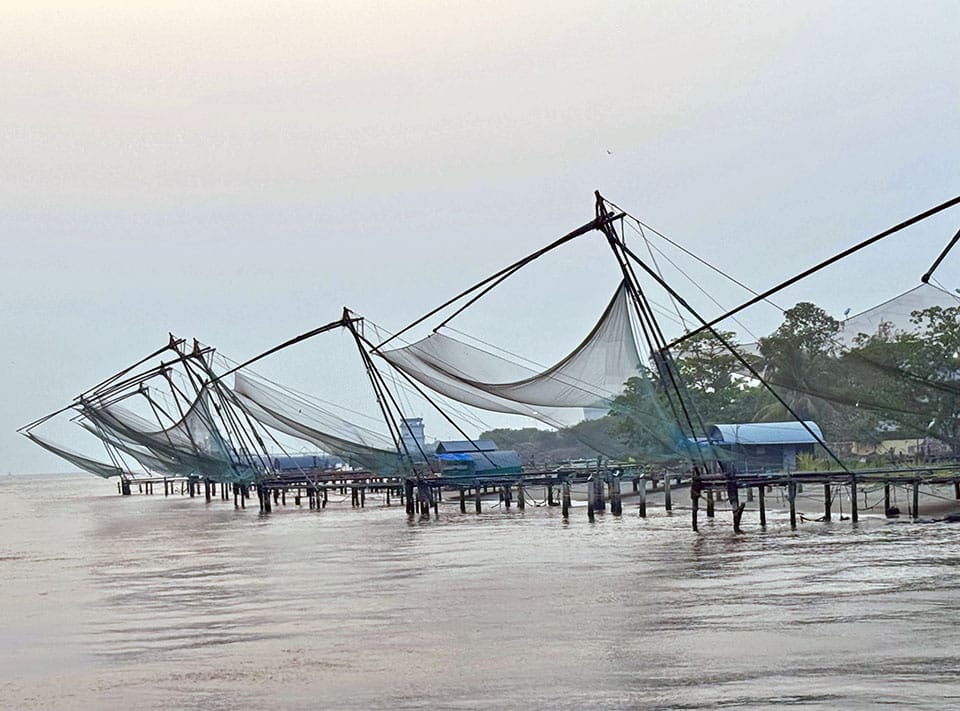
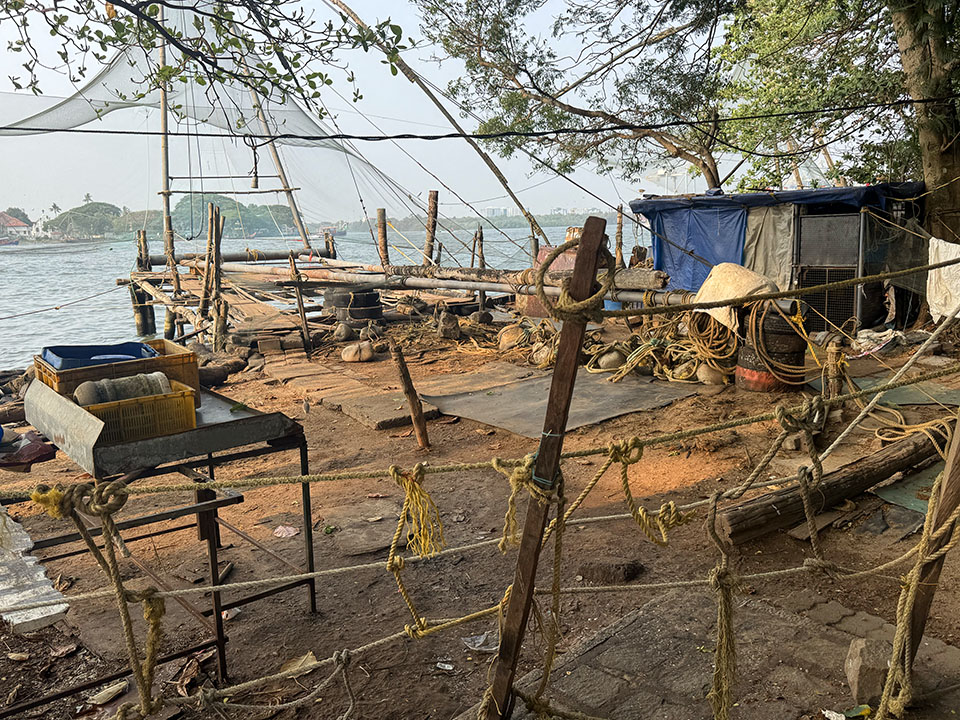
Starting with a walking tour from our hotel to the nearby waterfront, we first encountered the striking “Chinese” fishing nets for which Kochi is famous. These huge cantilevered structures arrived via Portuguese traders, who adapted a Chinese‑style fishing technique they encountered in Macau. As you can see in this video, the nets work like a giant seesaw: a large net is lowered into the water, then lifted to trap small fish. Today, they are operated by local fishermen who sell their catch by the shore. More than just a fishery, they are a beautiful symbol of Kochi’s layered maritime history.
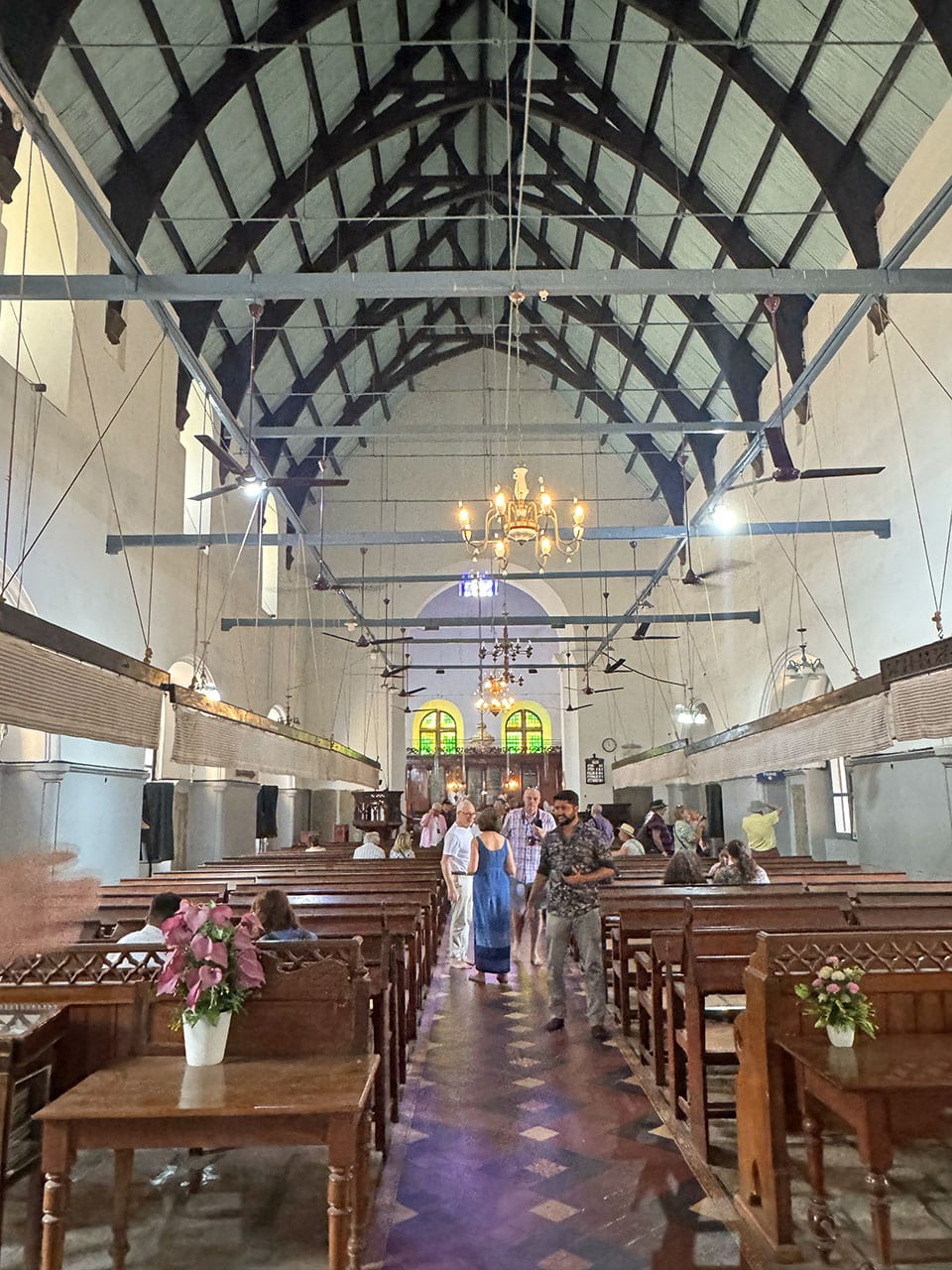
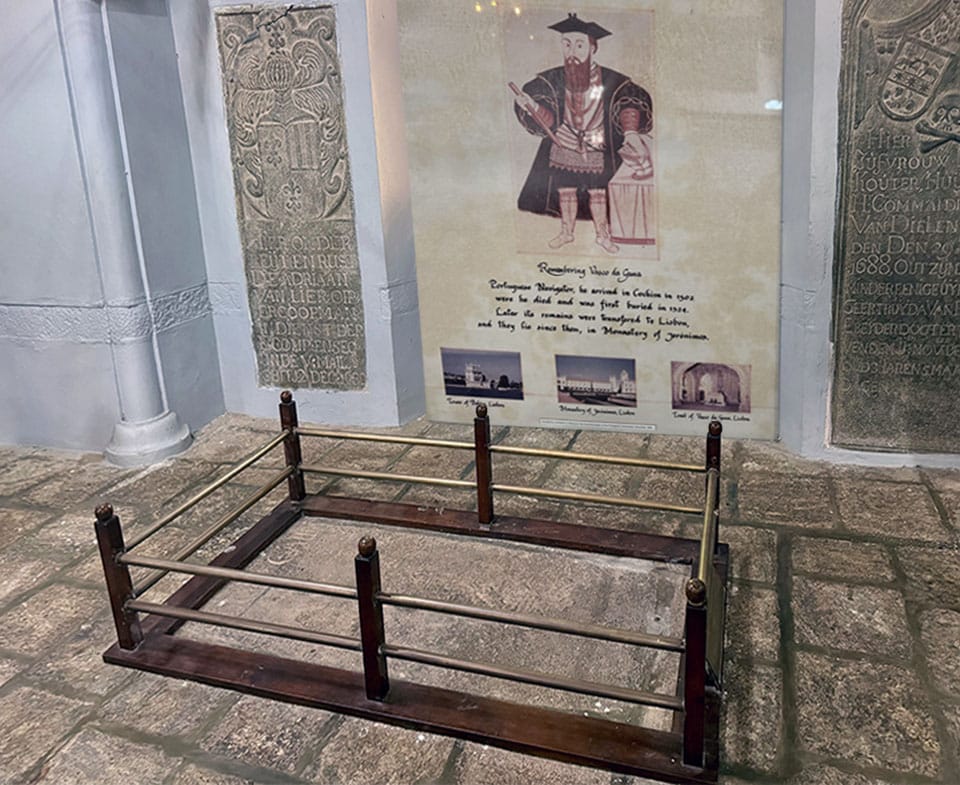
From the waterfront, we walked on to St. Francis Church—the oldest European Church in India—where the famous explorer Vasco da Gama is buried. And from there, we hopped into several tuk-tuks that took us to the beginning of Jew Town.
Jew Town & Paradesi Synagogue
Jew Town is India’s oldest Jewish settlement, theoretically dating back to King Solomon’s era. The name “Jew Town” (or Jew Town Road) is a historical descriptor for the Jewish enclave, adopted proudly by the Jewish community itself as a symbol of autonomy and harmony with Hindu neighbors, and is not considered derogatory. It reflects centuries of religious freedom and prestige under local rulers.
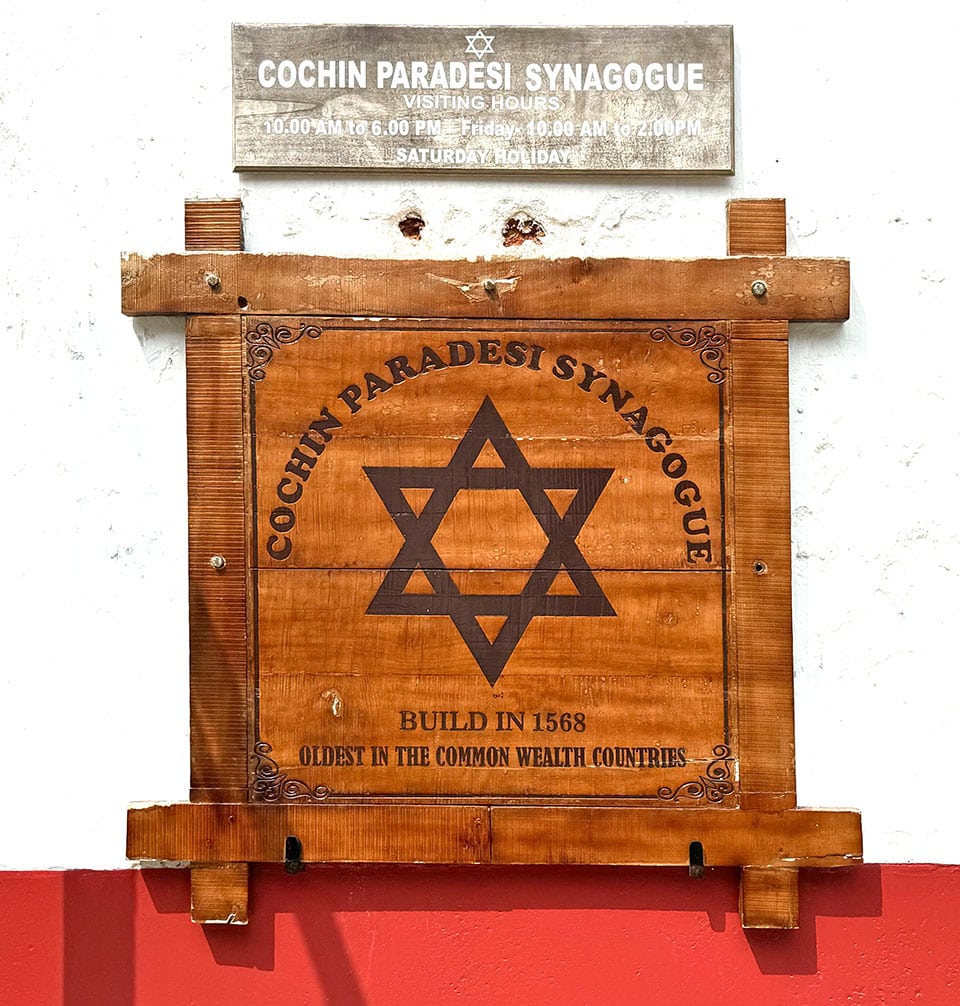
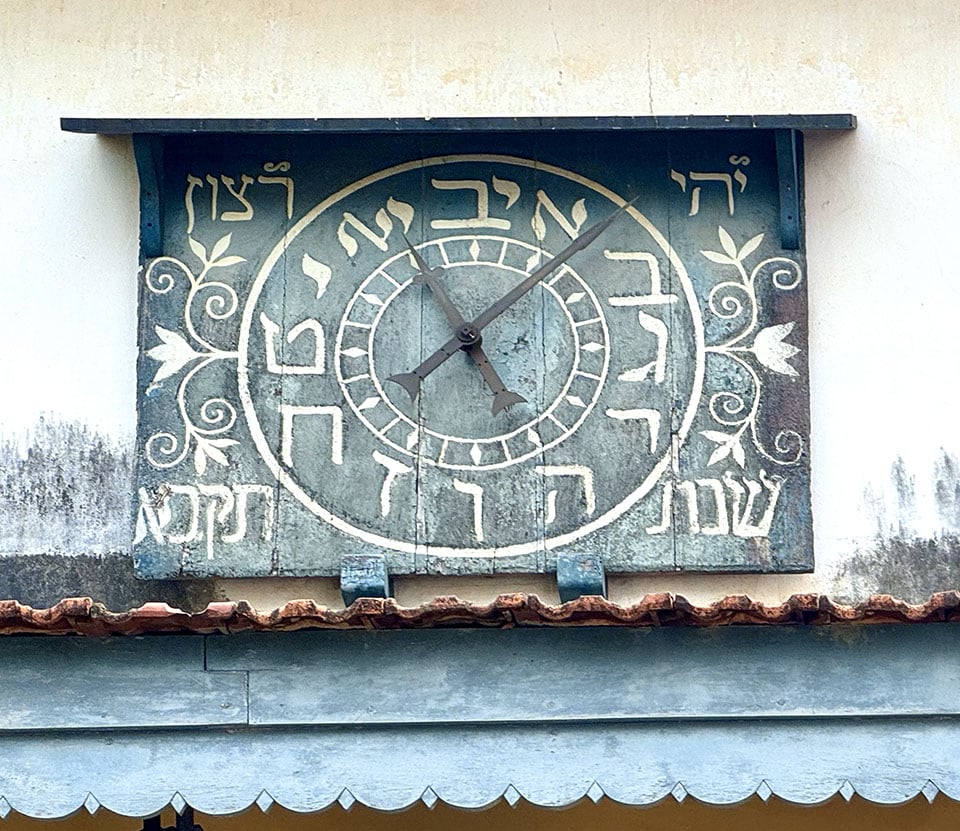
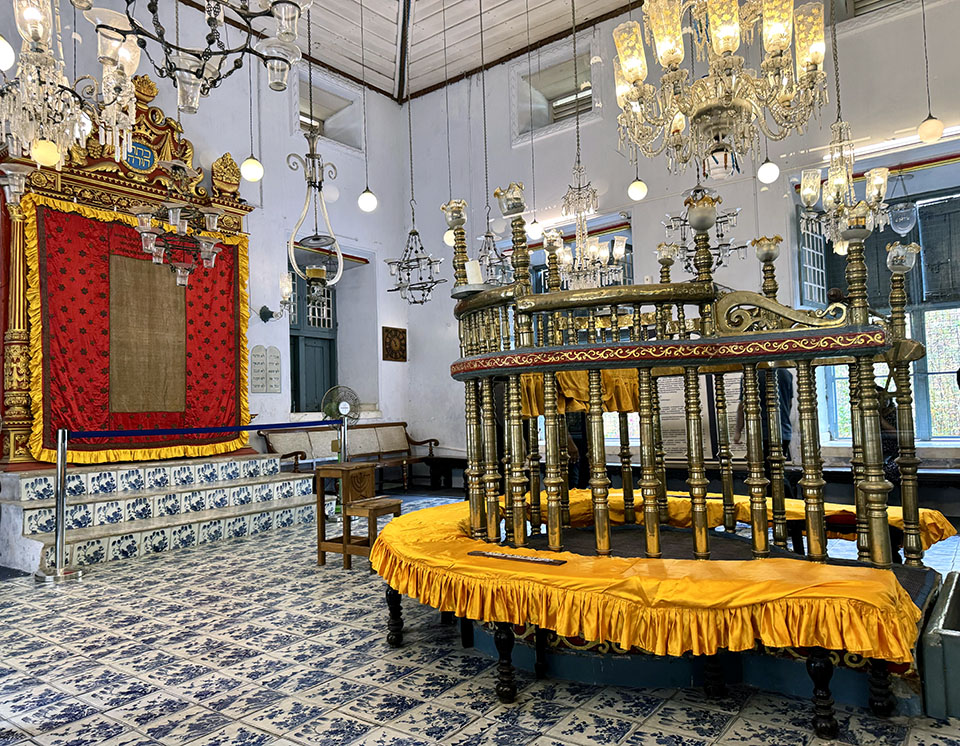
The Paradesi Synagogue, India’s oldest active synagogue, was built in 1568 by Sephardic Jews who fled the Portuguese Inquisition. The exterior was in a nondescript alley and difficult to photograph (other than the sign and clock). But once inside, the synagogue was decorated with beautiful Belgian chandeliers, hand‑painted Chinese floor tiles, and housed ancient Torah scrolls inside in a richly decorated ark. This visit showed Kochi’s and India’s unique history of religious tolerance and cross‑cultural exchange. Oh, what the world could learn today from ancient Kochi.
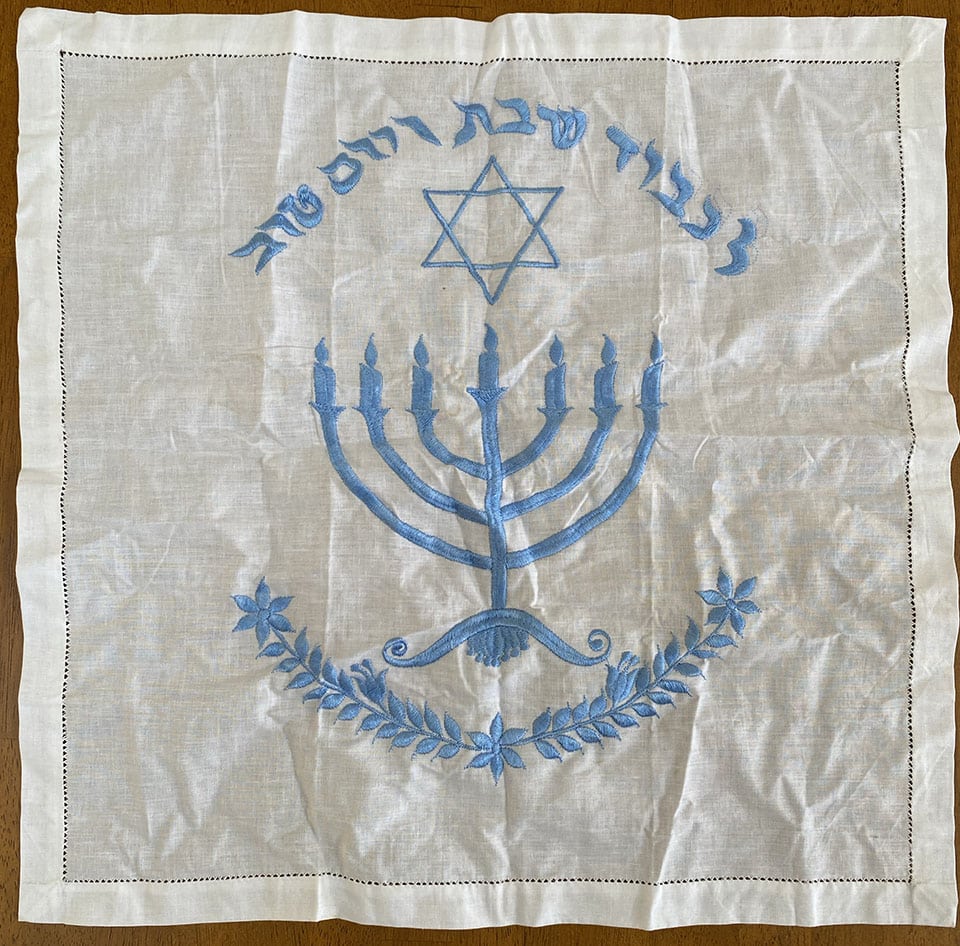
After visiting the synagogue, Jew Town was a shopper’s paradise — a maze of narrow, colonial streets, lined with colorful spice stalls, antique shops, and boutiques selling everything from hand‑painted tiles and brassware to silk saris and quirky souvenirs. Many of these shops trace their roots back to the Jewish merchant’s trading quarter, but most are now run by Muslim and other local families. Interestingly, the last Jewish‑linked shop, Sarah Cohen’s embroidery store (where we bought this challah cover for family), is lovingly preserved by a Muslim shopkeeper who inherited it from their elderly Jewish owner.
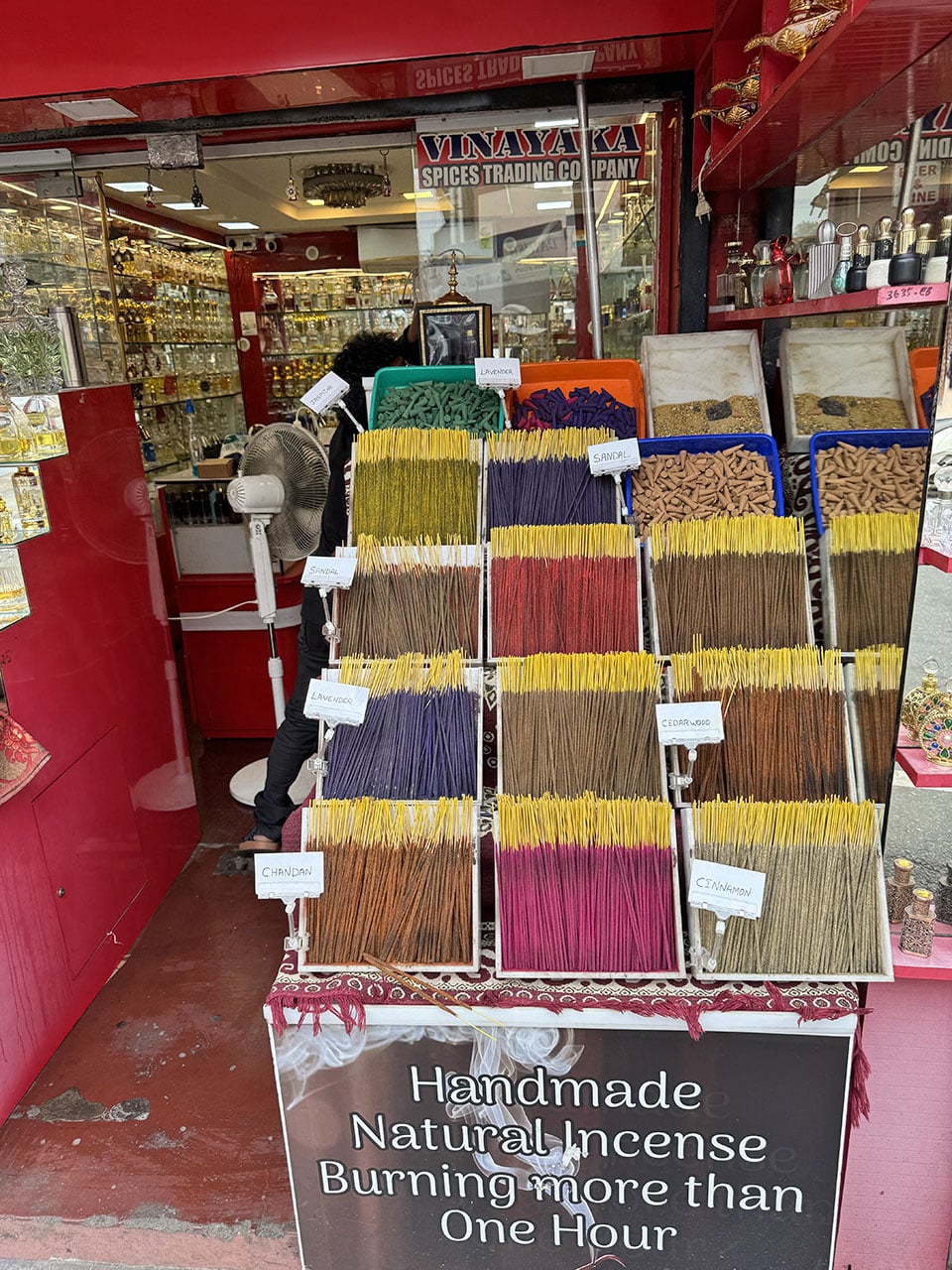
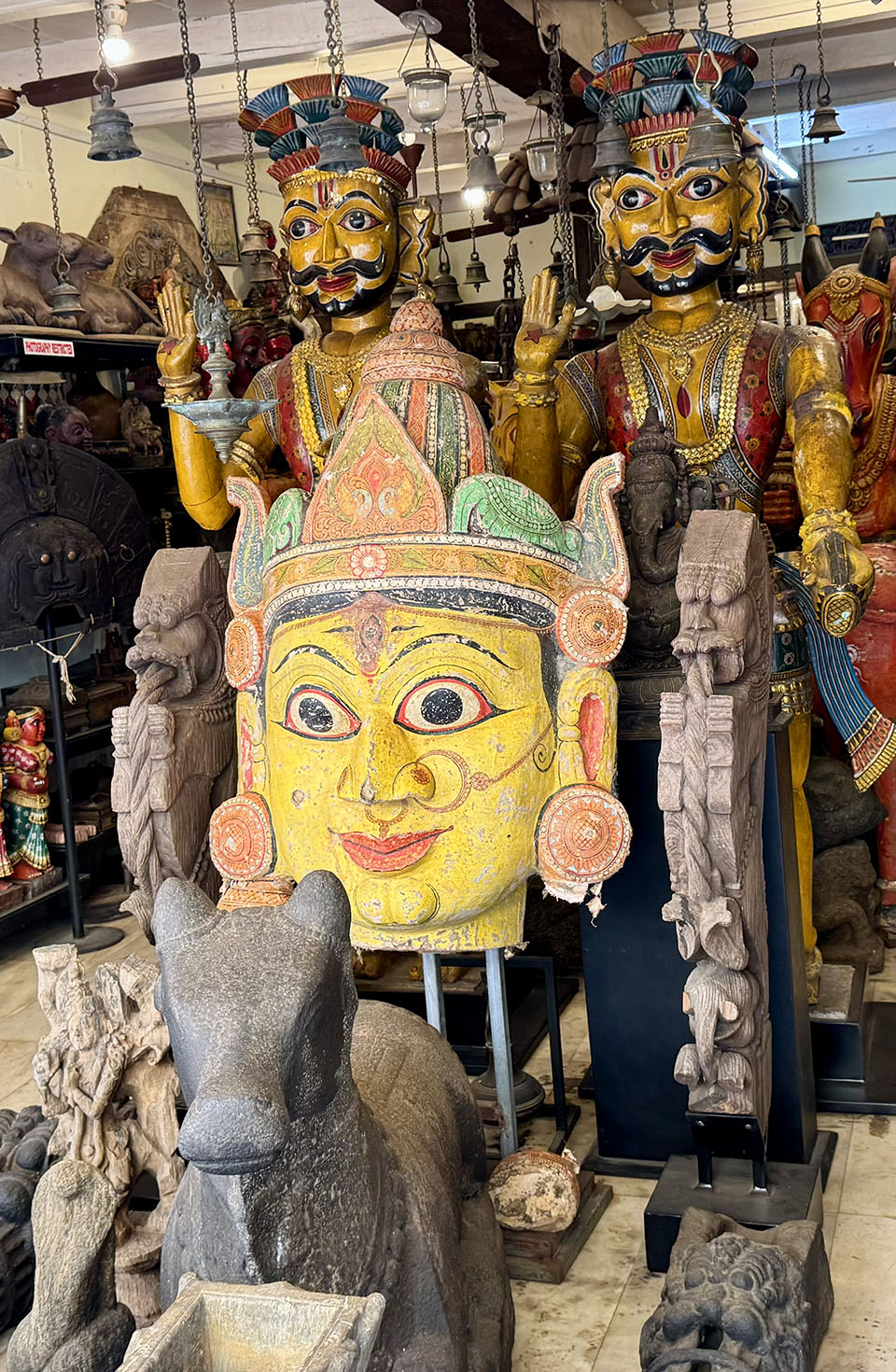
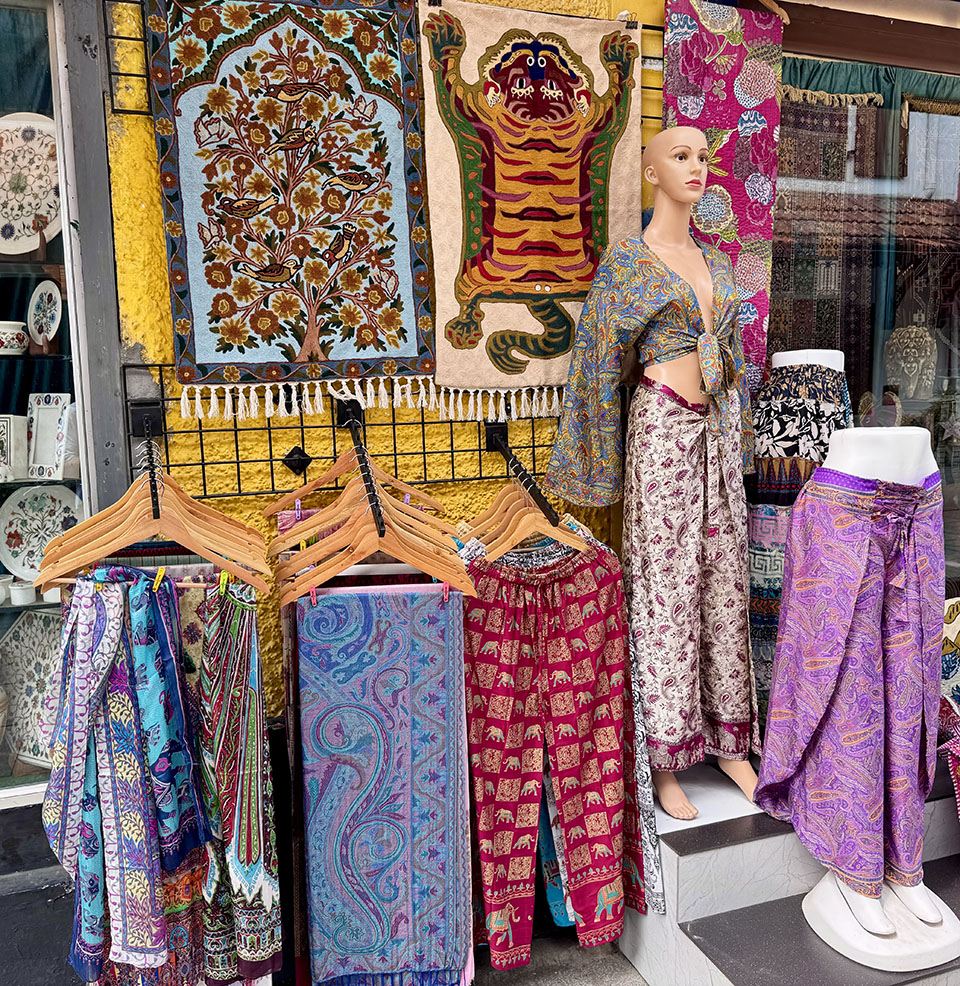
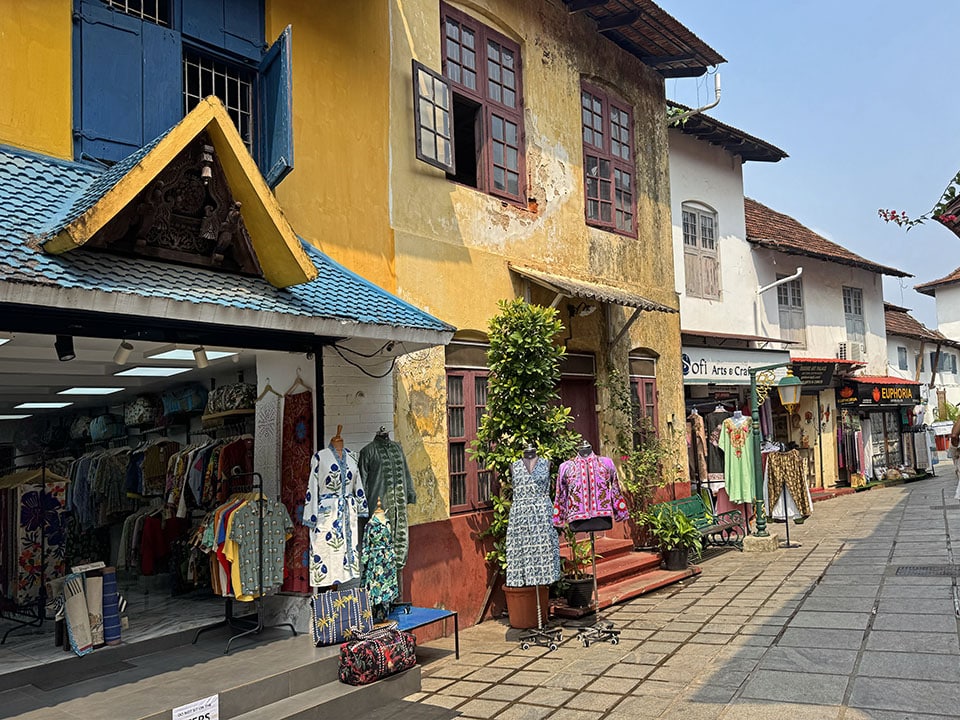
Kochi Harbor Tour
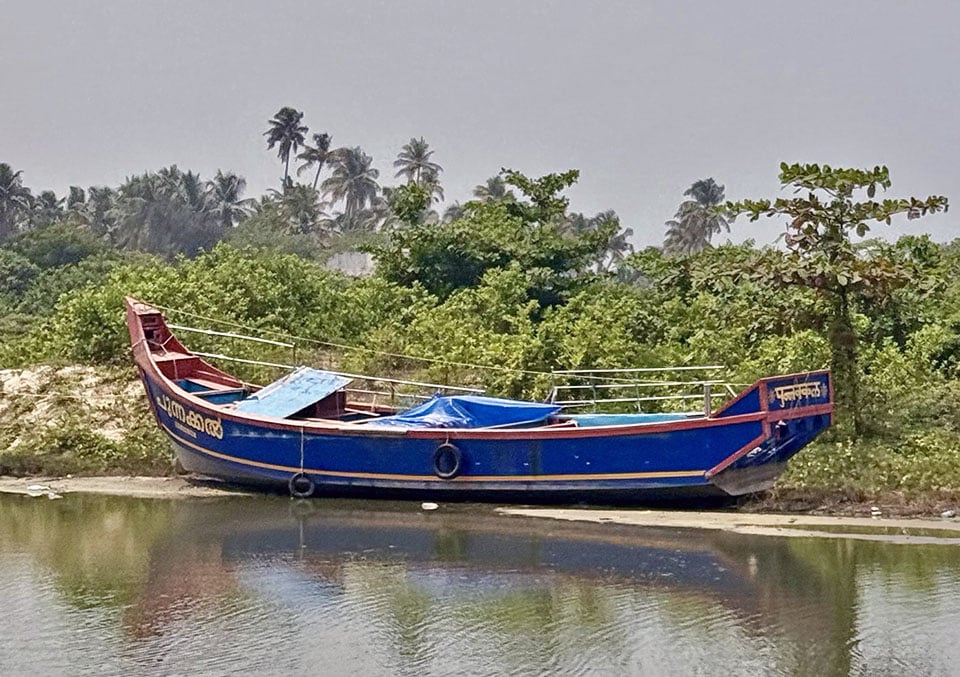
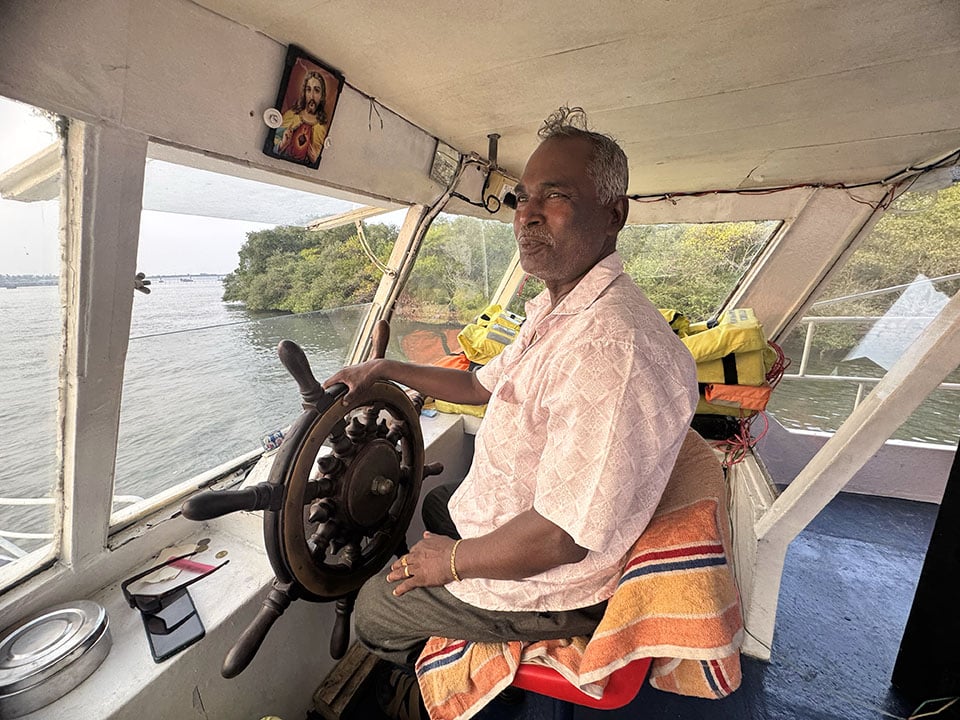
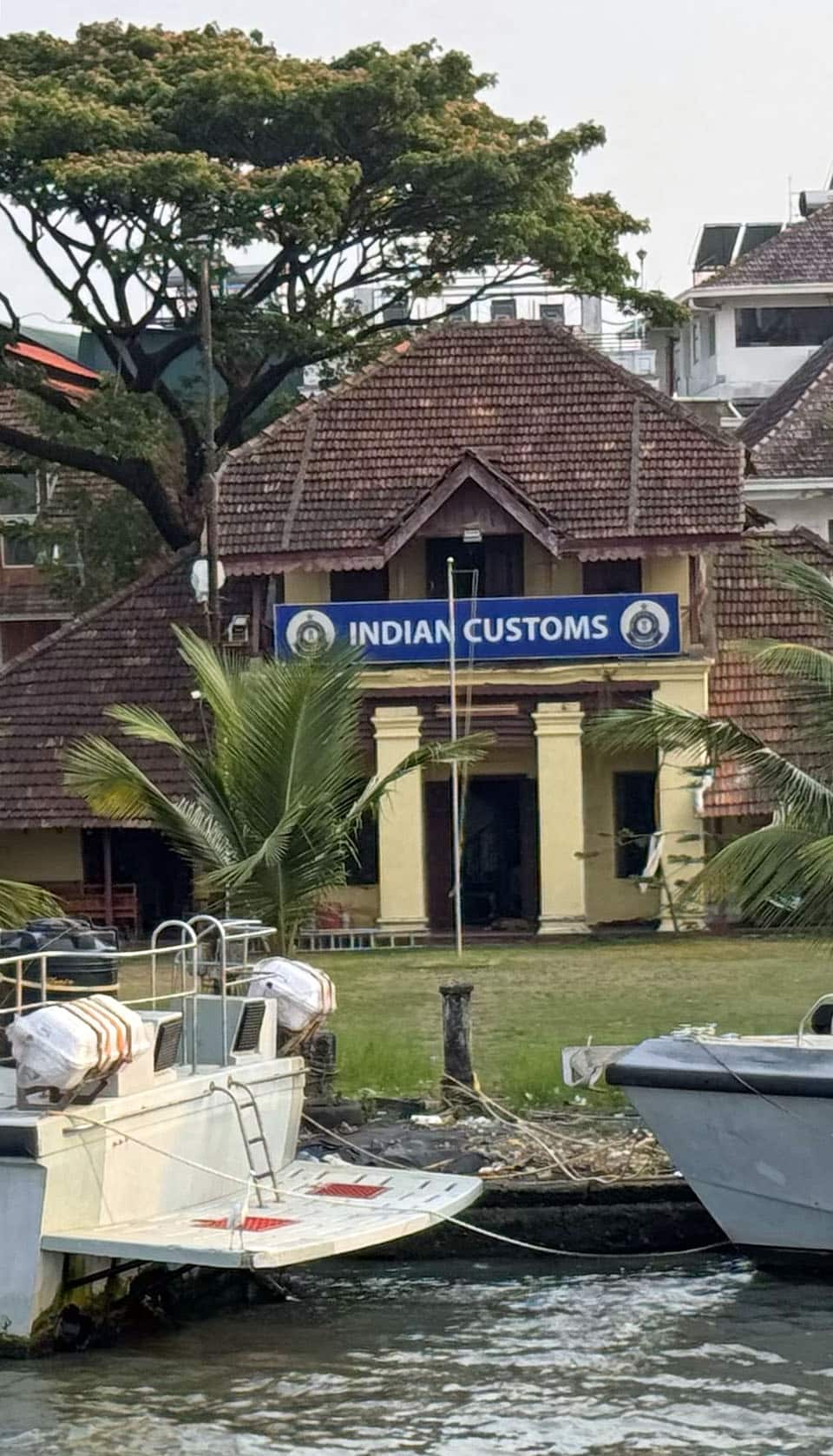
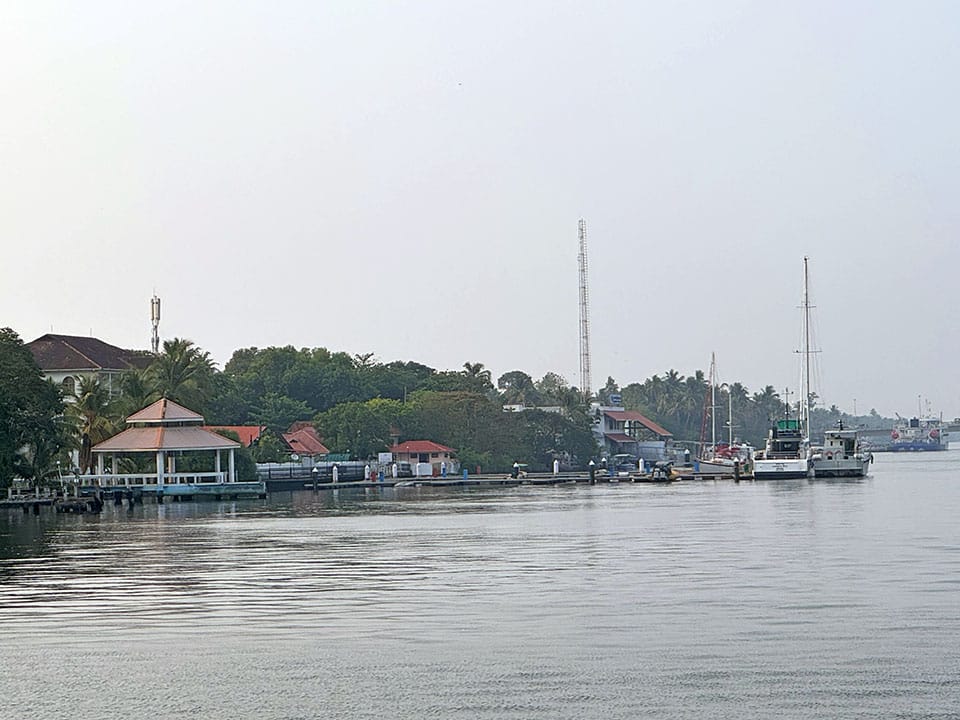
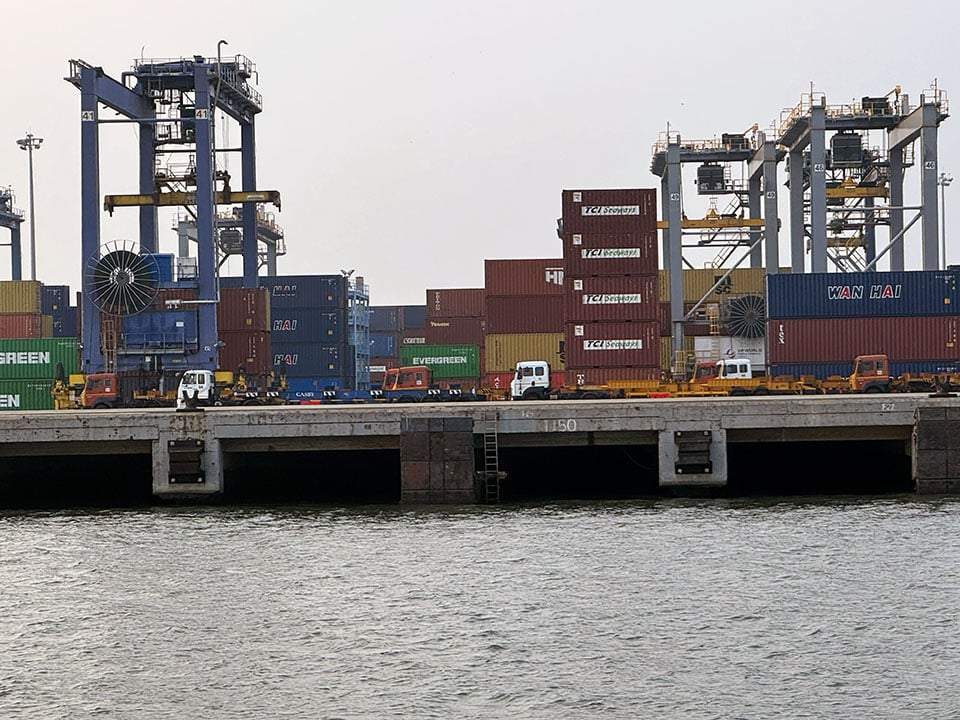
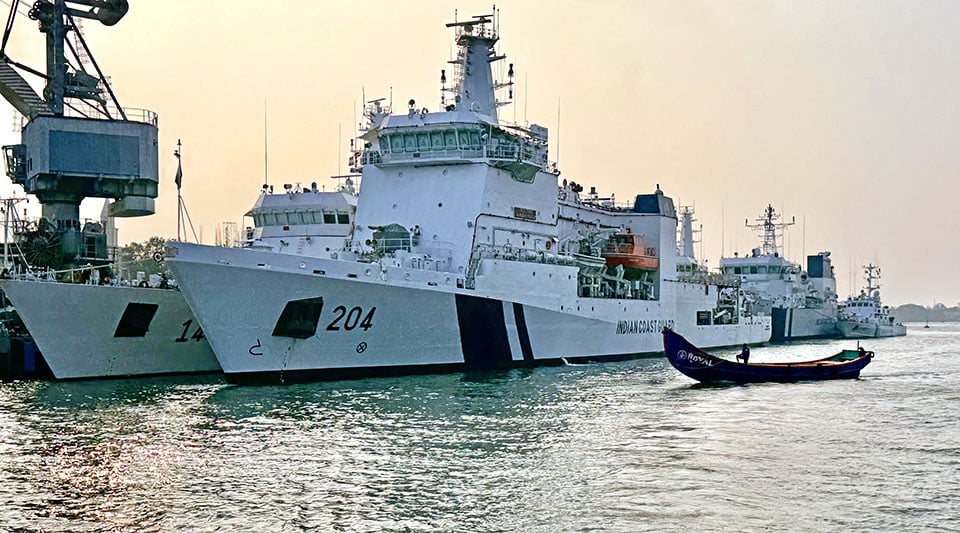
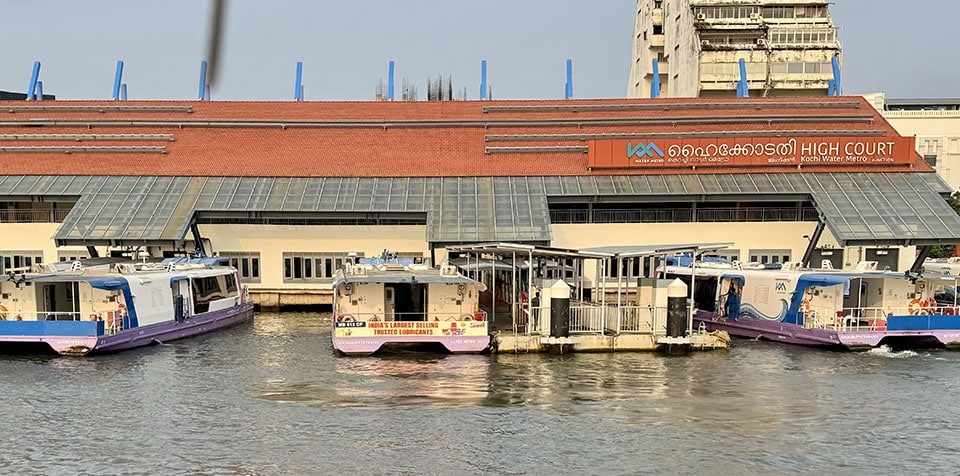
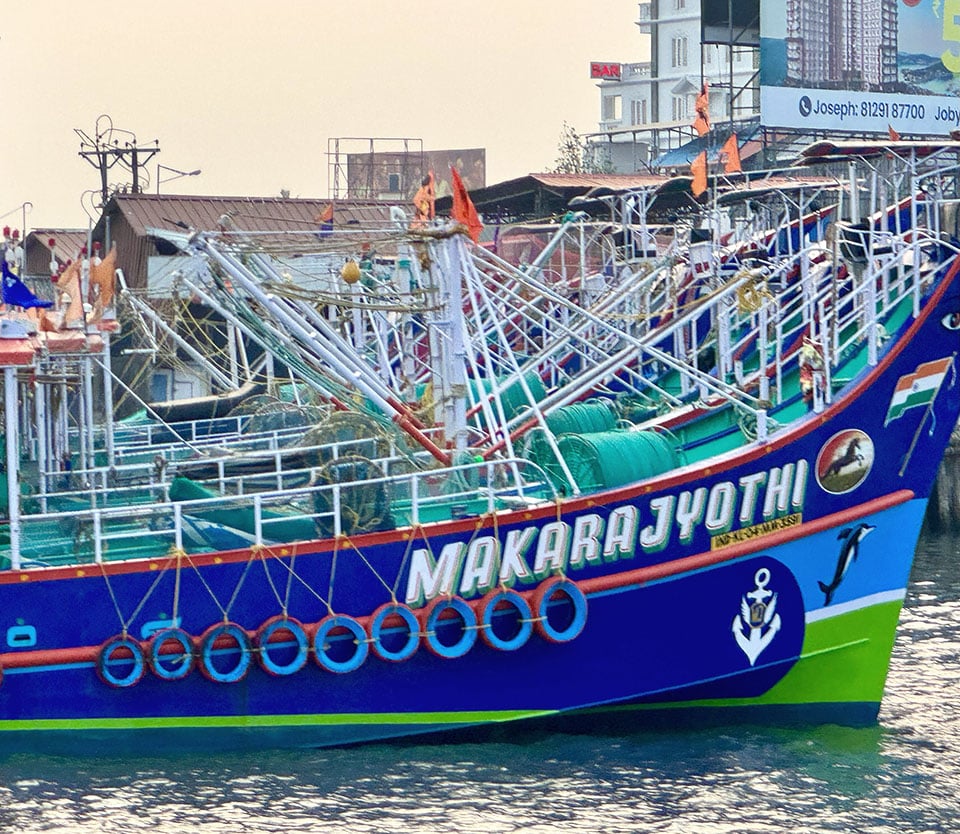
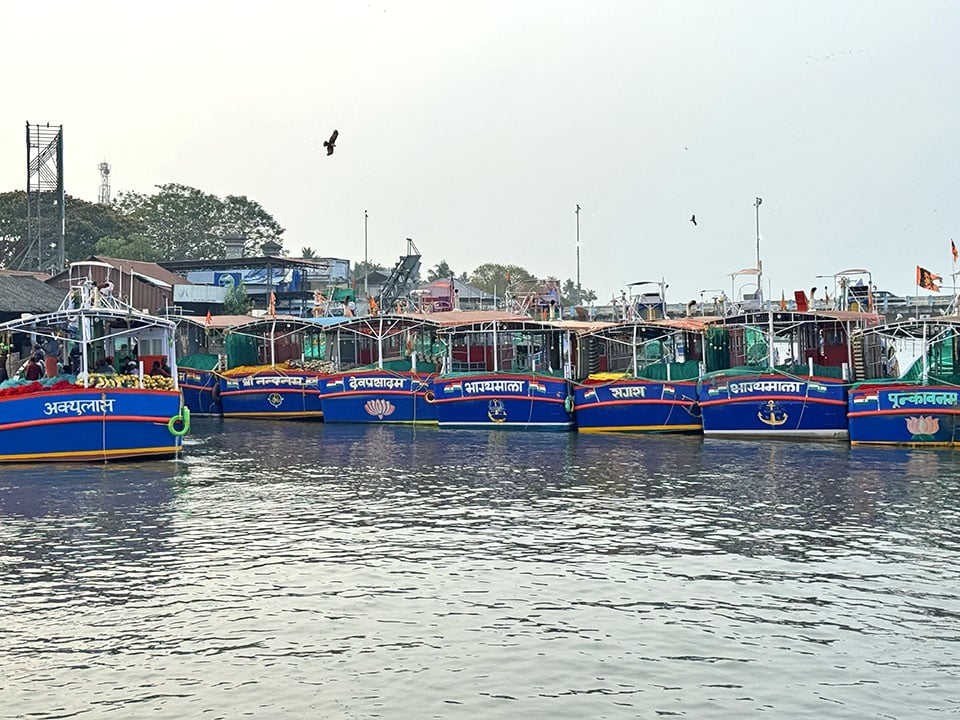
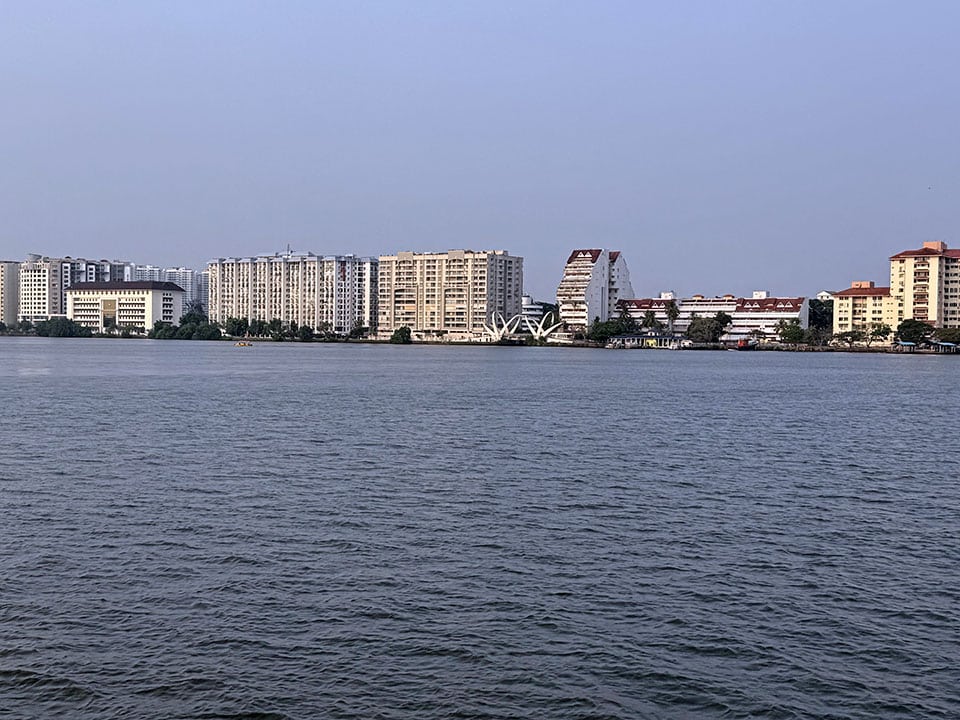
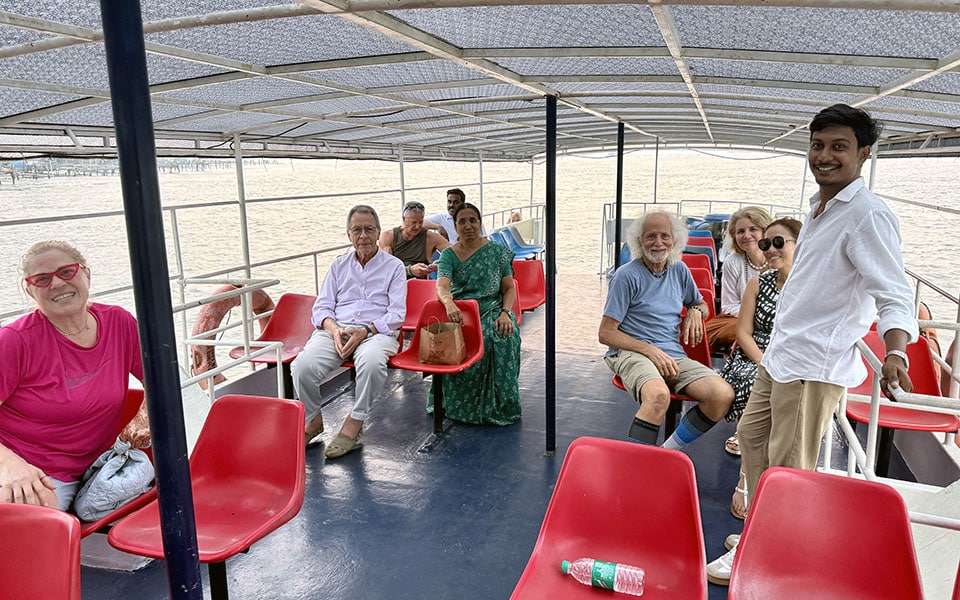
After our shopping spree, it was time for a harbor tour. We passed the Kochi Port Captains’ office (where cruising sailboats would check in, surprisingly, there are two sailboats at this dock…and we wonder if any of our cruising friends who’ve sailed the Indian Ocean, stopped in Kochi?), commercial docs, and the container ship port cranes, an Indian Coast Guard base, and many brightly colored fishing boats (we were told that the different colored stripes on their hulls indicates the type of fuel they use). There were also a myriad of electric commuter ferry boats, plying the canals of Kochi, full of newer, high-density residential towers. Near the end of the tour, we passed more of the cantilevered Chinese fishing nets, which lined most of the downtown harbor area, away from the commercial docks.
Kathakali dance performance
That evening, we experienced a “tourist-oriented” 90-minute Kathakali dance performance—Kerala’s famous, dramatic, storytelling dance‑drama, known for its larger‑than‑life makeup, towering headdresses, elaborate costumes, and expressive face and hand movements.
Kathakali emerged in Kerala in the 1500s, evolving from temple and folk dance‑drama traditions under royal patronage into a grand, all‑night storytelling art. Its elaborate costumes and makeup (taking over an hour to put on) developed over time so characters—gods, demons, and heroes—could be instantly recognized, turning each performer into a larger‑than‑life icon on stage. Performers (usually male) bring to life tales from the Mahabharata and Ramayana without spoken language, solely through hand gestures, intense eye rolls, and powerful, traditional live‑music rhythms contributing to the drama, all in a mesmerizing style.
Traditional Kathakali performances can last all night long—starting around 9 PM and running until 6 AM. As dramatic and suspenseful as it was, at the end of this jam-packed day, we were grateful for the sweetened condensed version rather than an all-night performance.
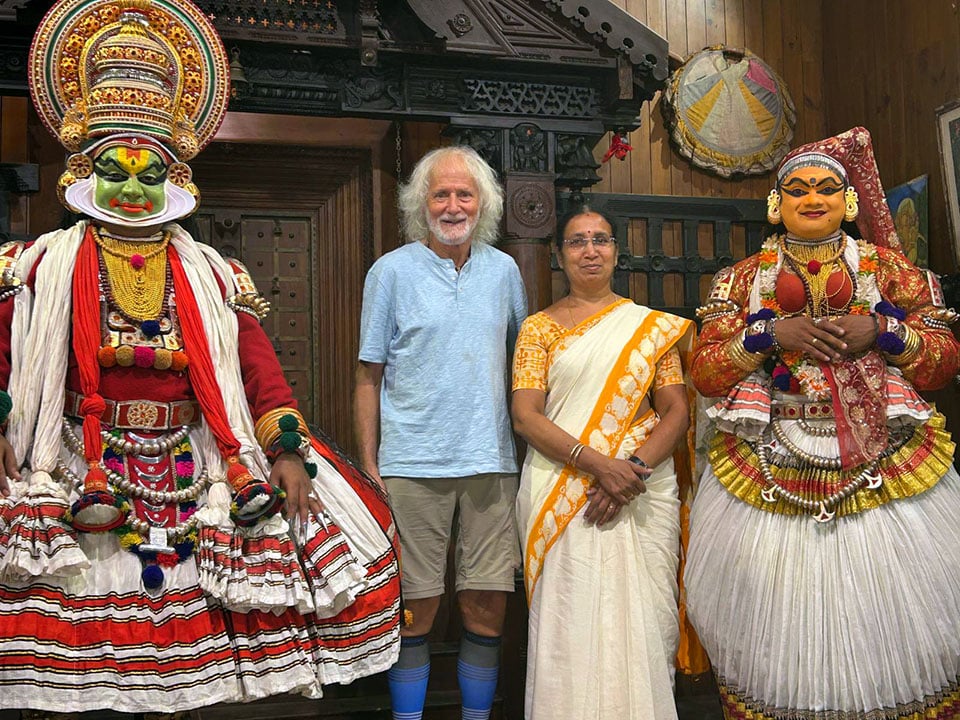
And just like that… our first two weeks in India had ended… time flies when you’re having fun!! We said goodbye to most of our tour mates, who were flying off in different directions. We made a few good friends on the southern tour, who we’ll keep in touch with. And we will regroup with our tour guides, Roger and Mallika, and our new friend Basilica, from Mykonos, Greece, on our North India tour in a few more days.
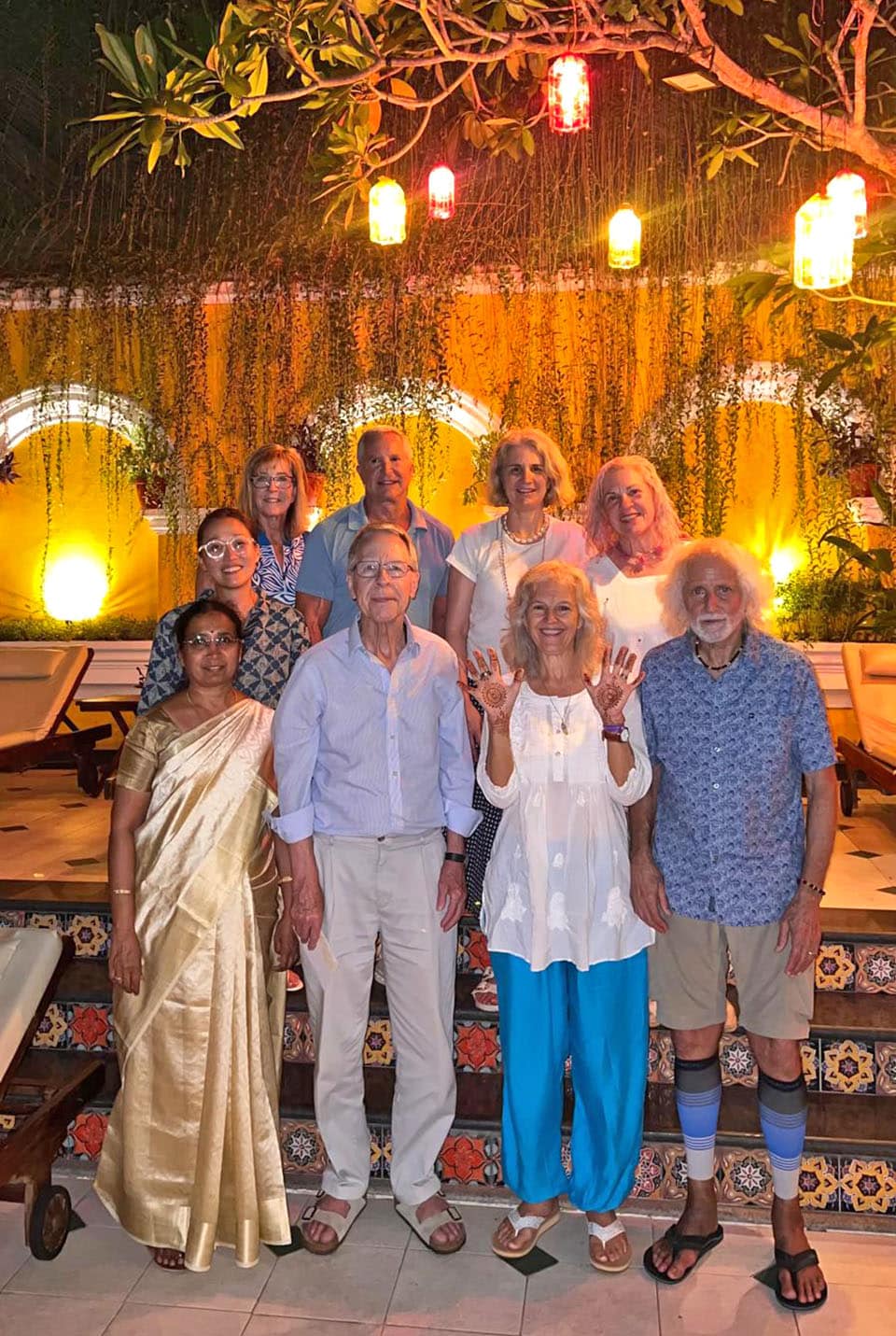
Back row: EK, Kathy, Drew, Isabelle, Basilica; Front row: Mallika, Roger, Heidi (henna hands!) & Kirk
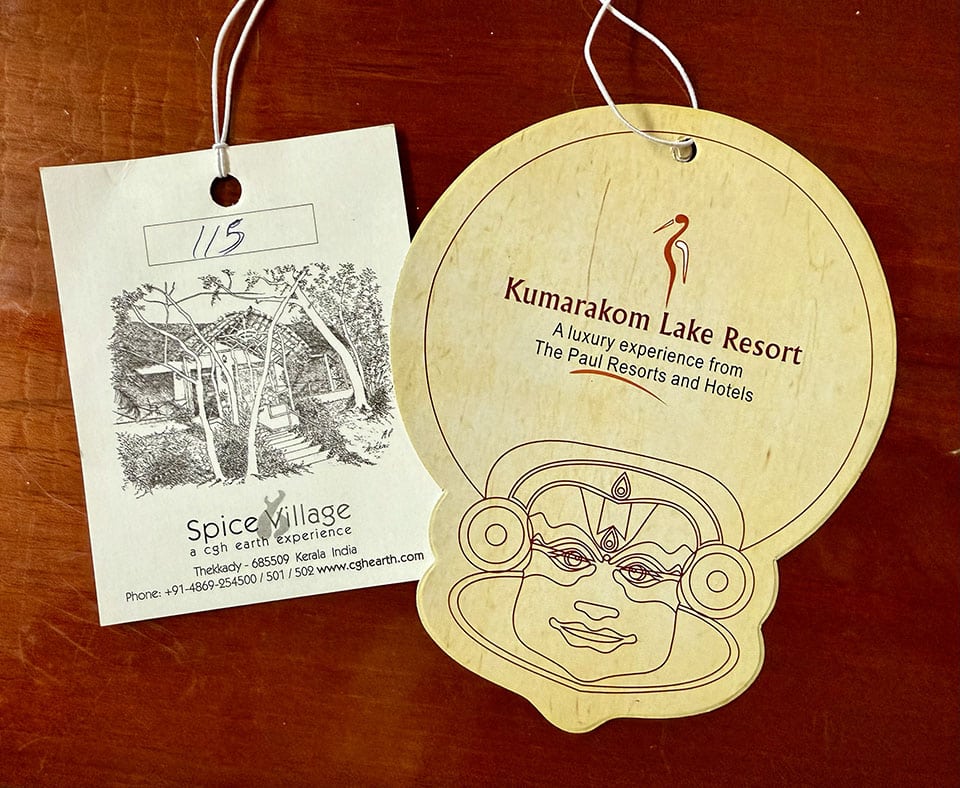
We loved all of the unique luggage tags that each hotel or resort tagged our bags with so their bellboys would know which room to deliver them to. It reminded us of old-time luggage tags in the early 1900s.
Between our South India and North India tours, we had five days to ourselves. So we headed to Goa, India’s smallest state. Goa was a Portuguese colony from 1510 until 1961, then became a union territory before officially achieving statehood in 1987.
We look forward to sharing Goa with you soon…we had an amazing time there as well!