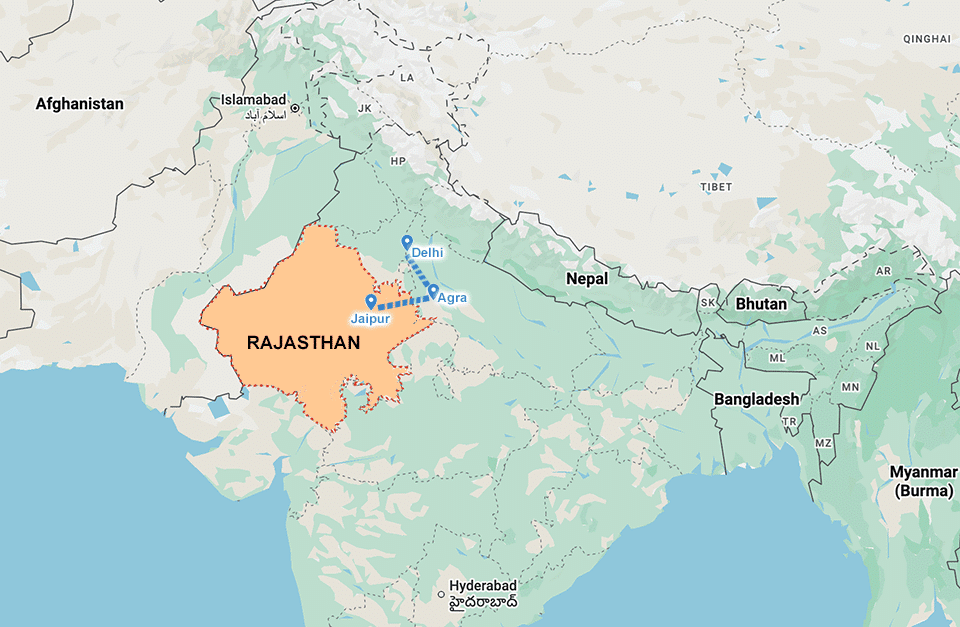

Travels to India Part 6: Rajasthan, Maharajas and Palaces, Oh My!
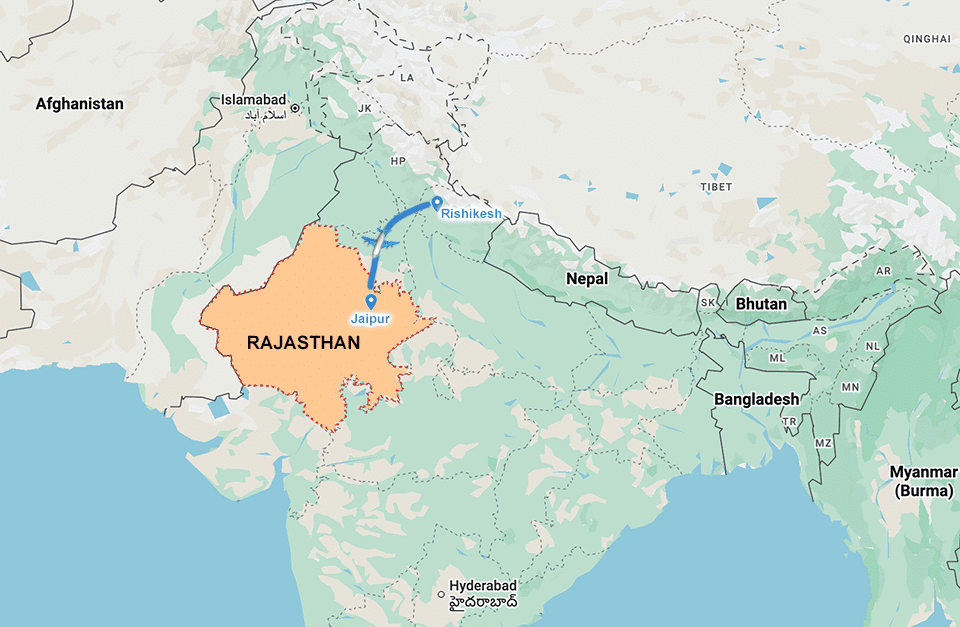
After our amazing experiences in Varanasi and then Rishikesh, we were sad to leave Mama Ganga behind, but we were also excited to explore Jaipur and Rajasthan.
And while our Mama Ganga experience was primarily about spirituality, Jaipur was all about history, architecture, and posh palaces that evoked the magical, fairytale-like imagery of The Far Pavilions.
Jaipur
We flew to Jaipur by midday and were met by the driver of our small tour bus. It was great to be back on a bus again, rather than driving in separate vehicles. It’s much easier to get photos out of a large bus window than from a car. Plus, being higher up on the bus, we could see better.
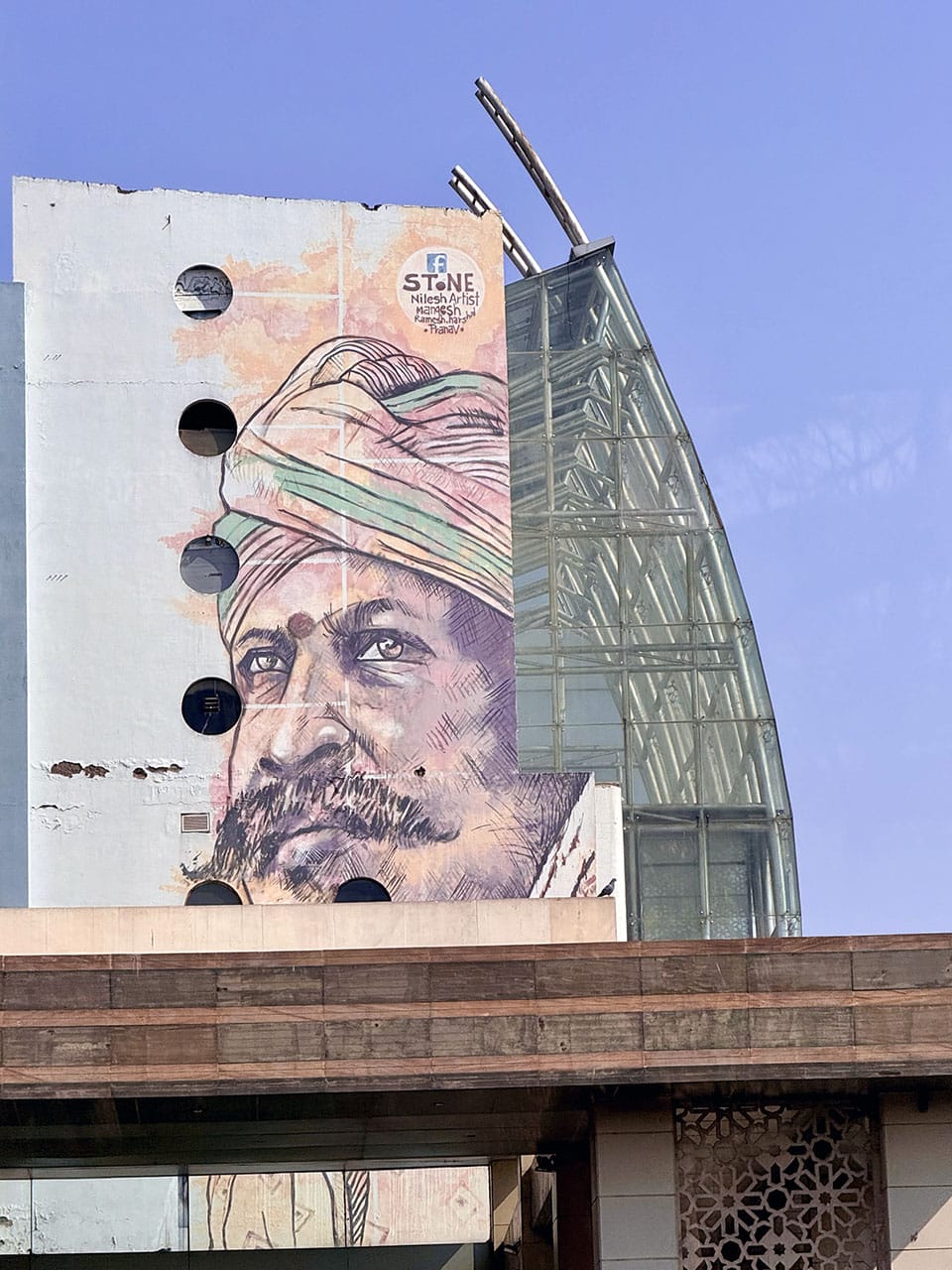
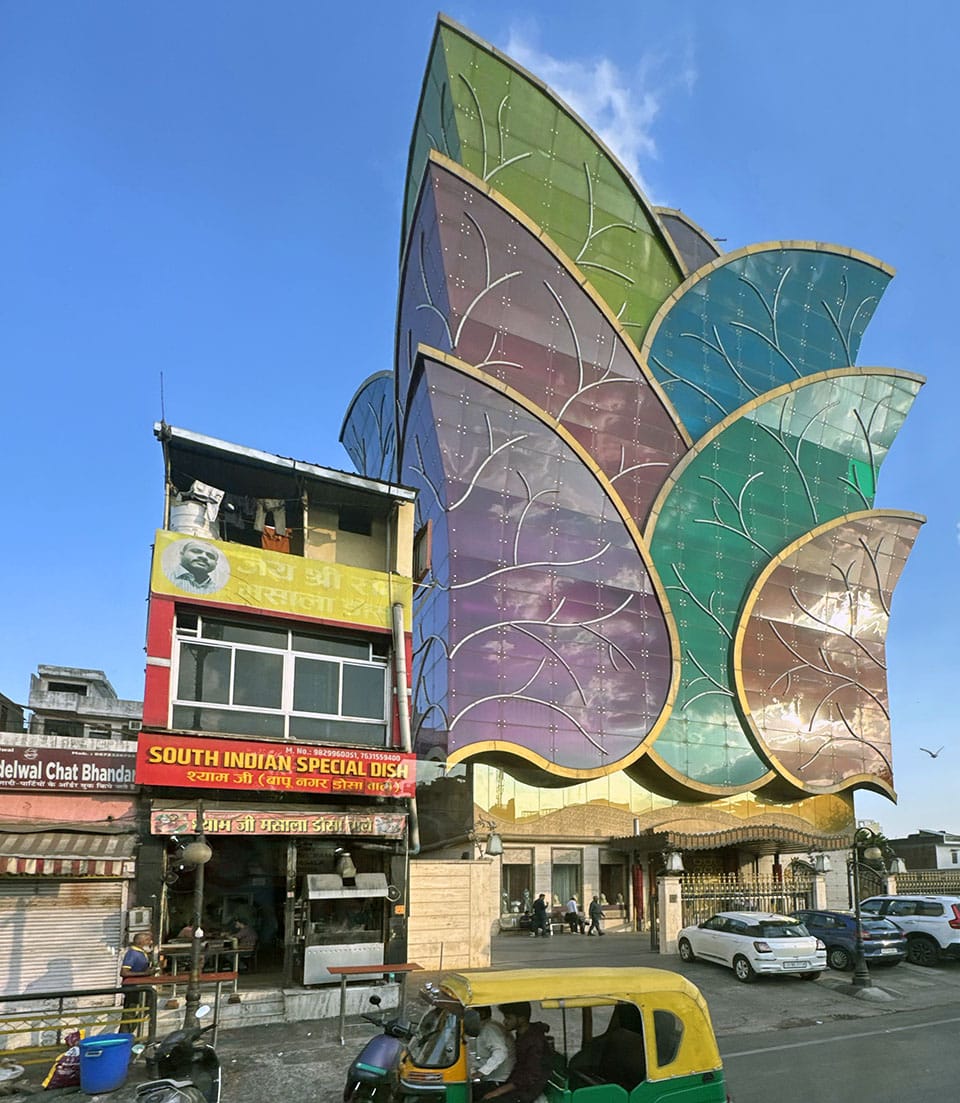
On our driving tour around the city, we passed by iconic Jaipur architecture (like the first two photos: Rajisthan State Museum Albert Hall built in 1876 and the Patrika Gate built in 2016), justaposed with new modern Eurostyle buildings, including the multi-colored glass lotus-leaf, home to a jewelry store headquarters, and the partialy submerged Jal Mahal “Water Palace” from 1699. (bottom photo).
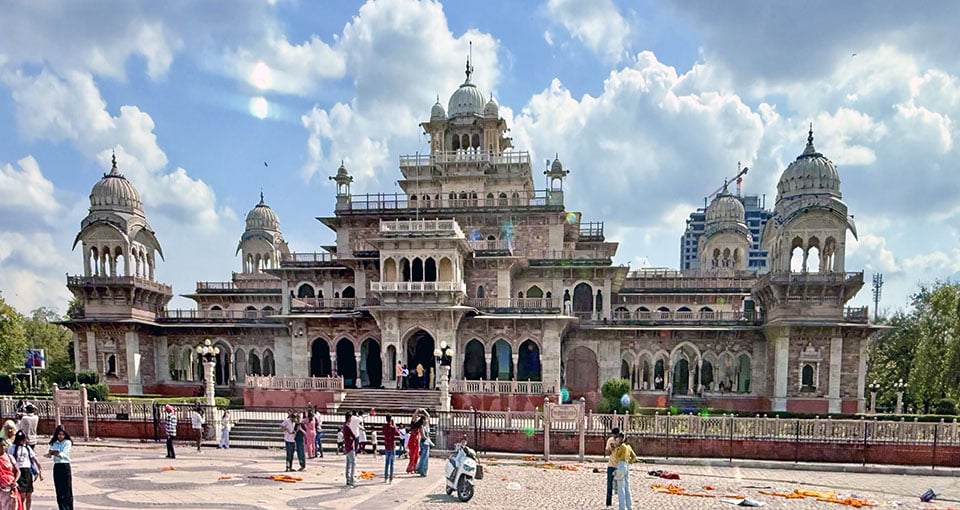
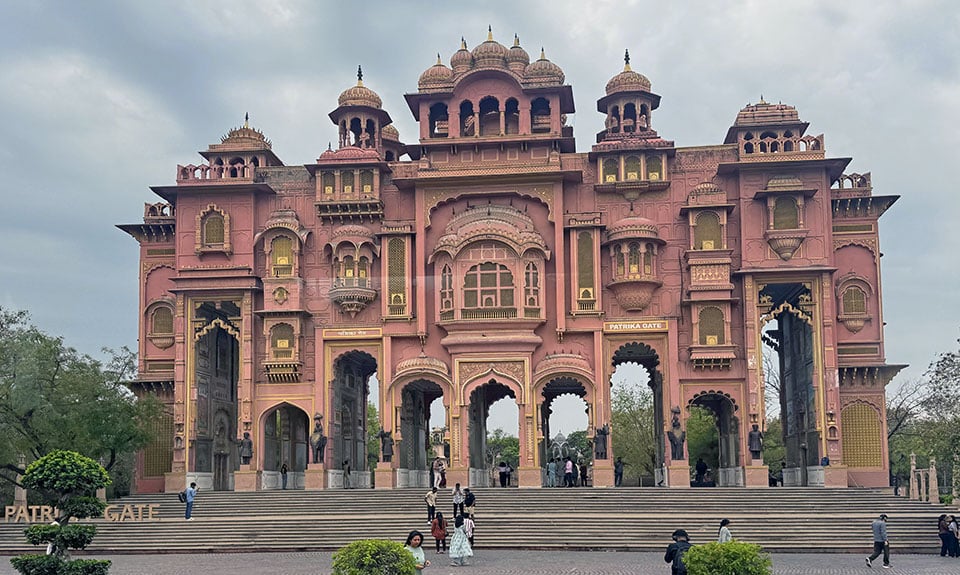
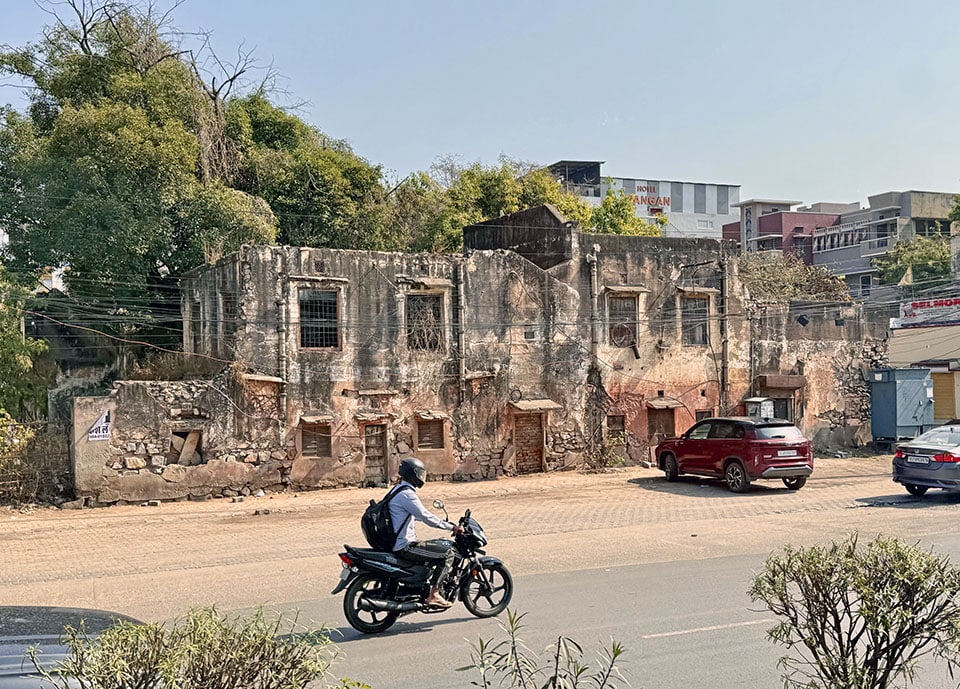
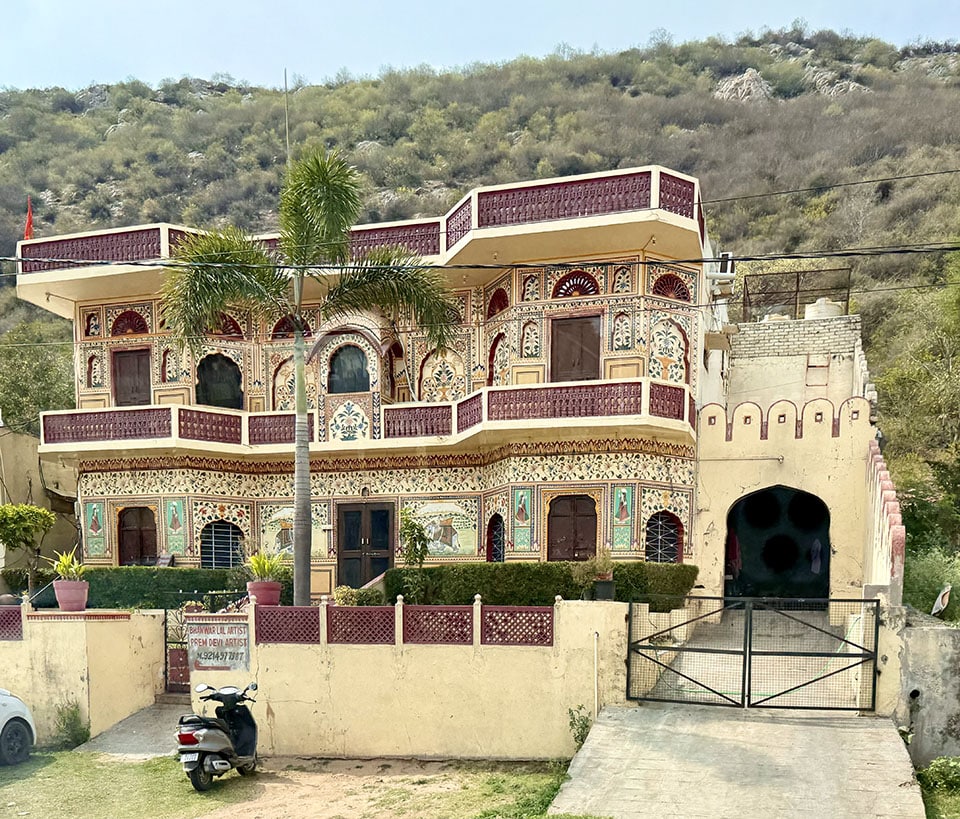
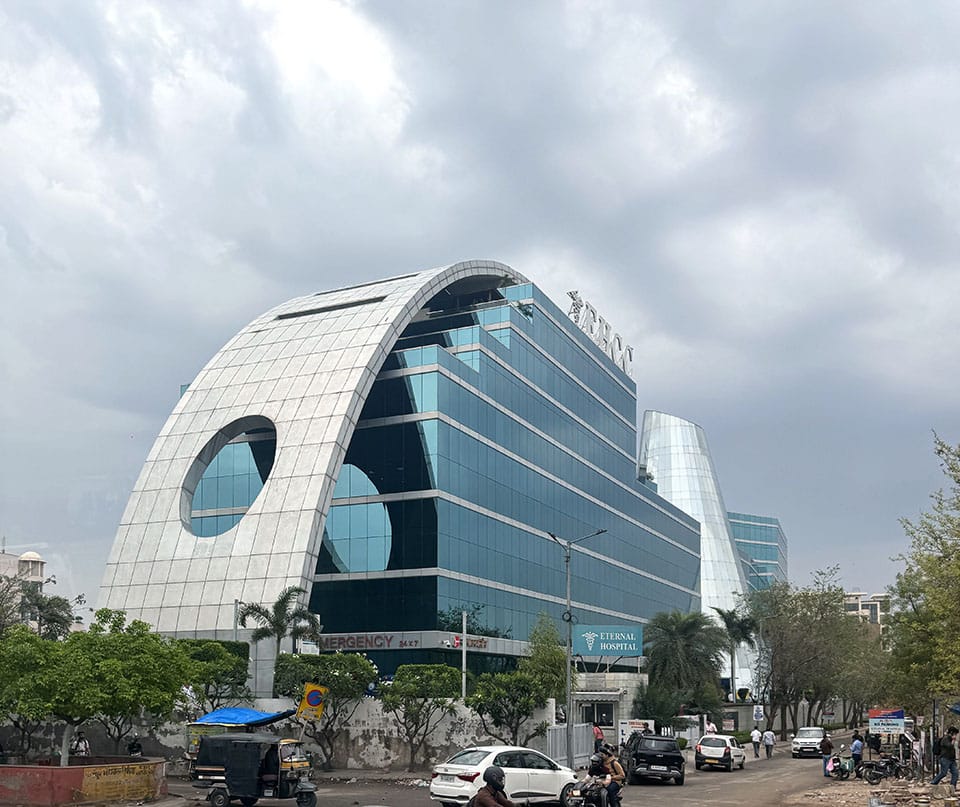
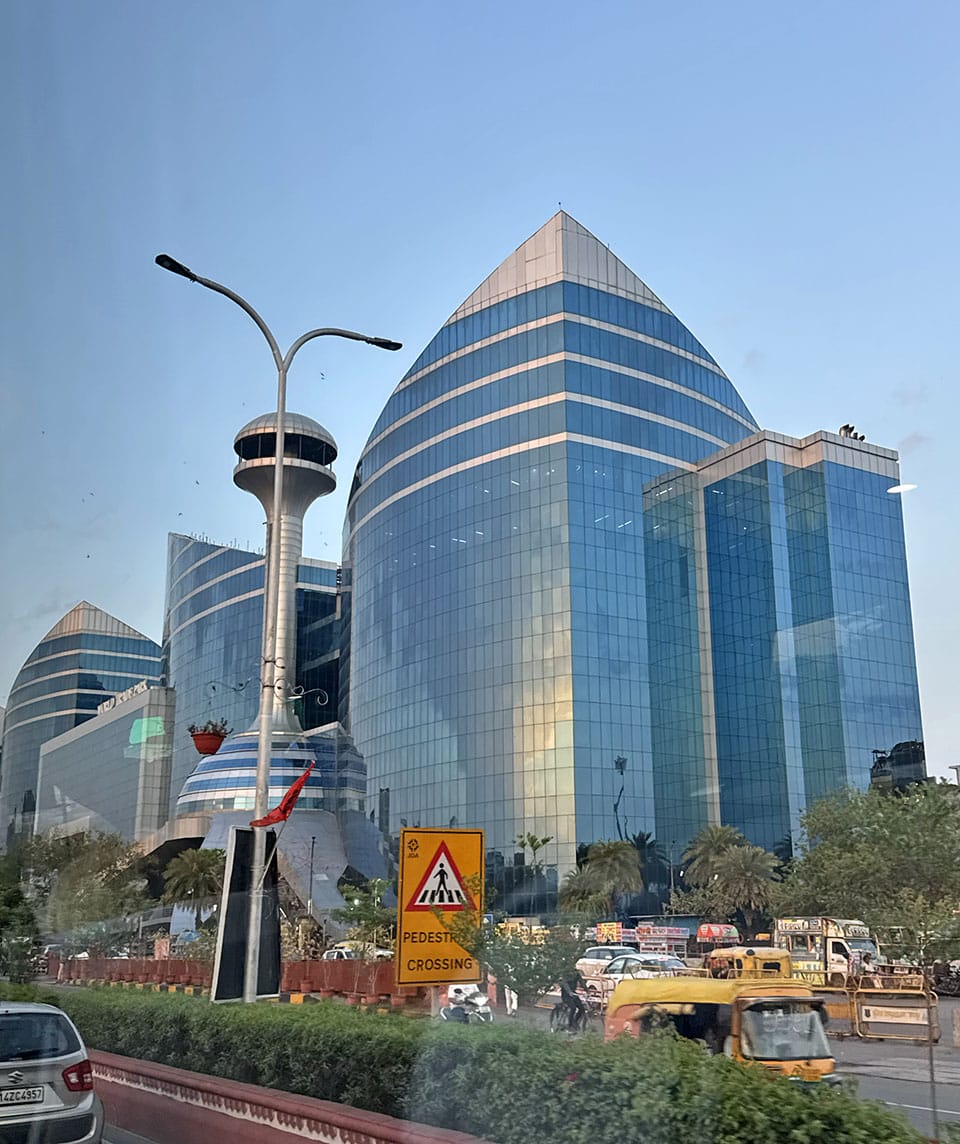
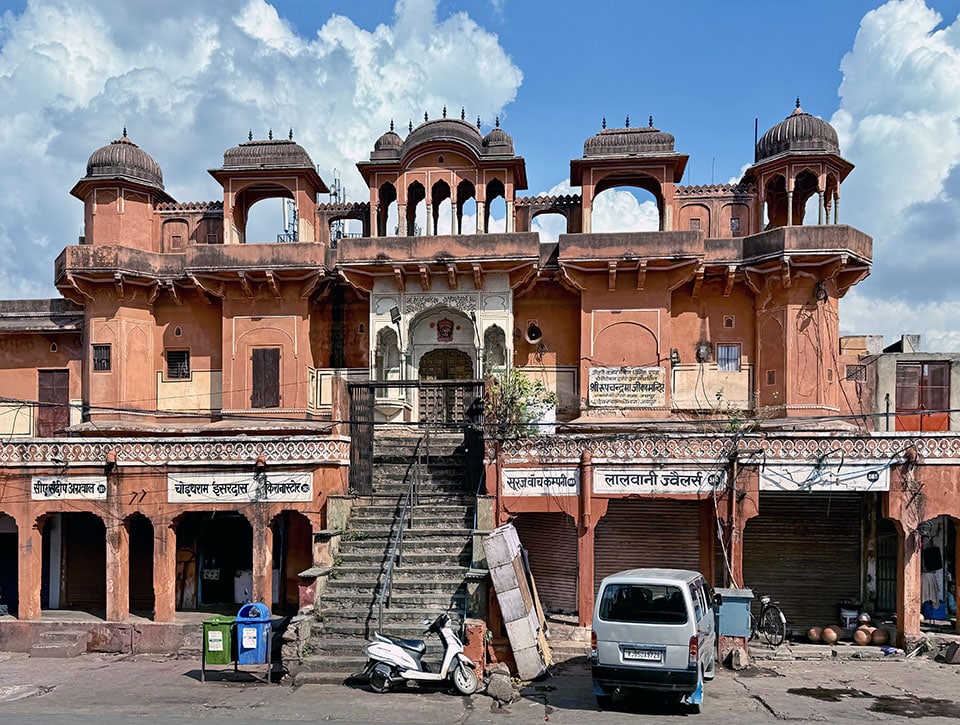
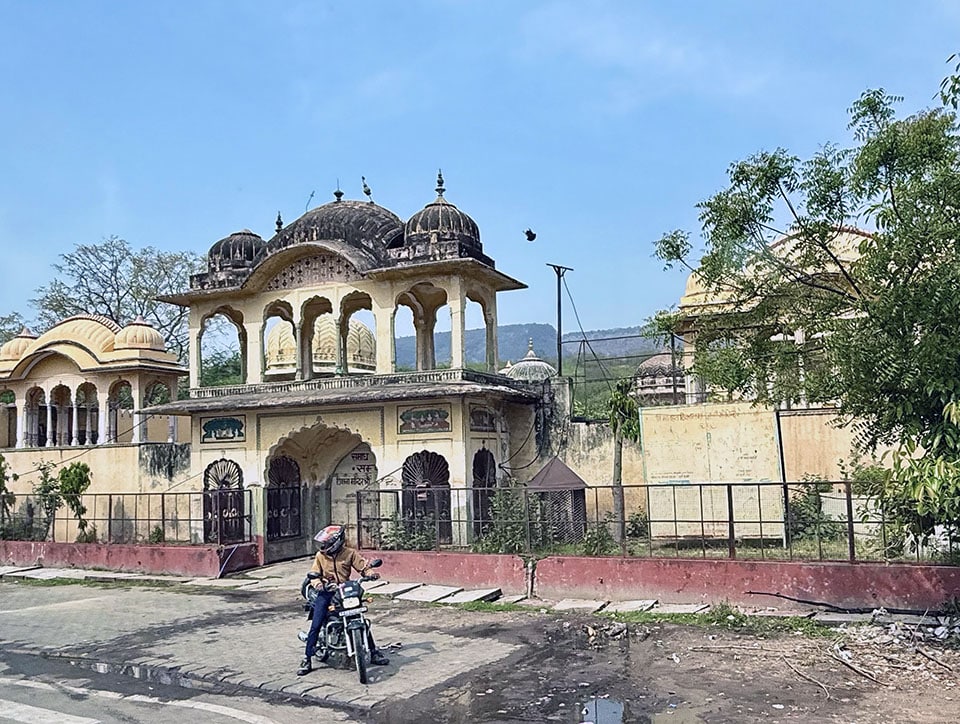
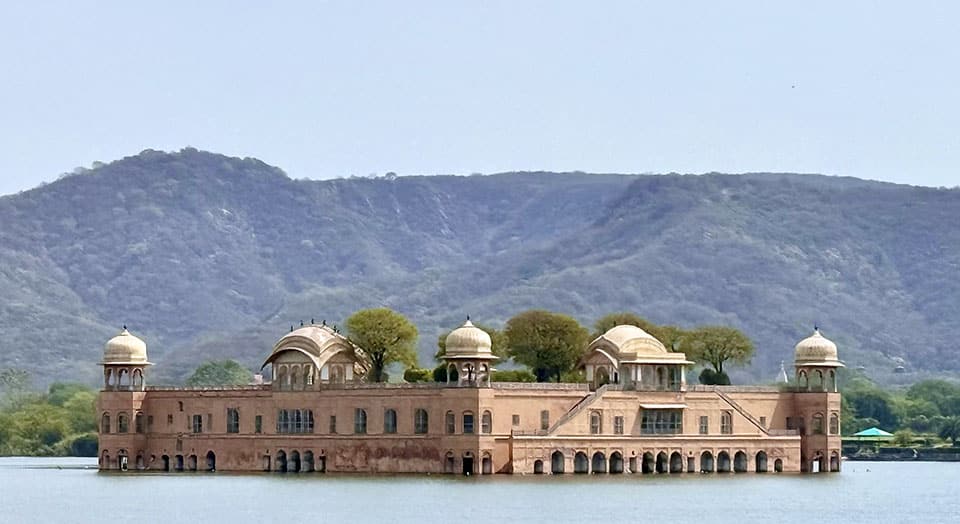
Jaipur is the bustling capital city of Rajasthan (the largest state in India by area) and is known as the “Pink City” for the beautiful terracotta-colored buildings that define it. This tradition began in 1877, when Maharaja Sawai Ram Singh II ordered the city’s buildings to be painted a terracotta pink color to welcome Prince Albert and Queen Victoria’s visit. The color, traditionally associated with hospitality, became a defining feature of Jaipur’s historic architecture and continues today.

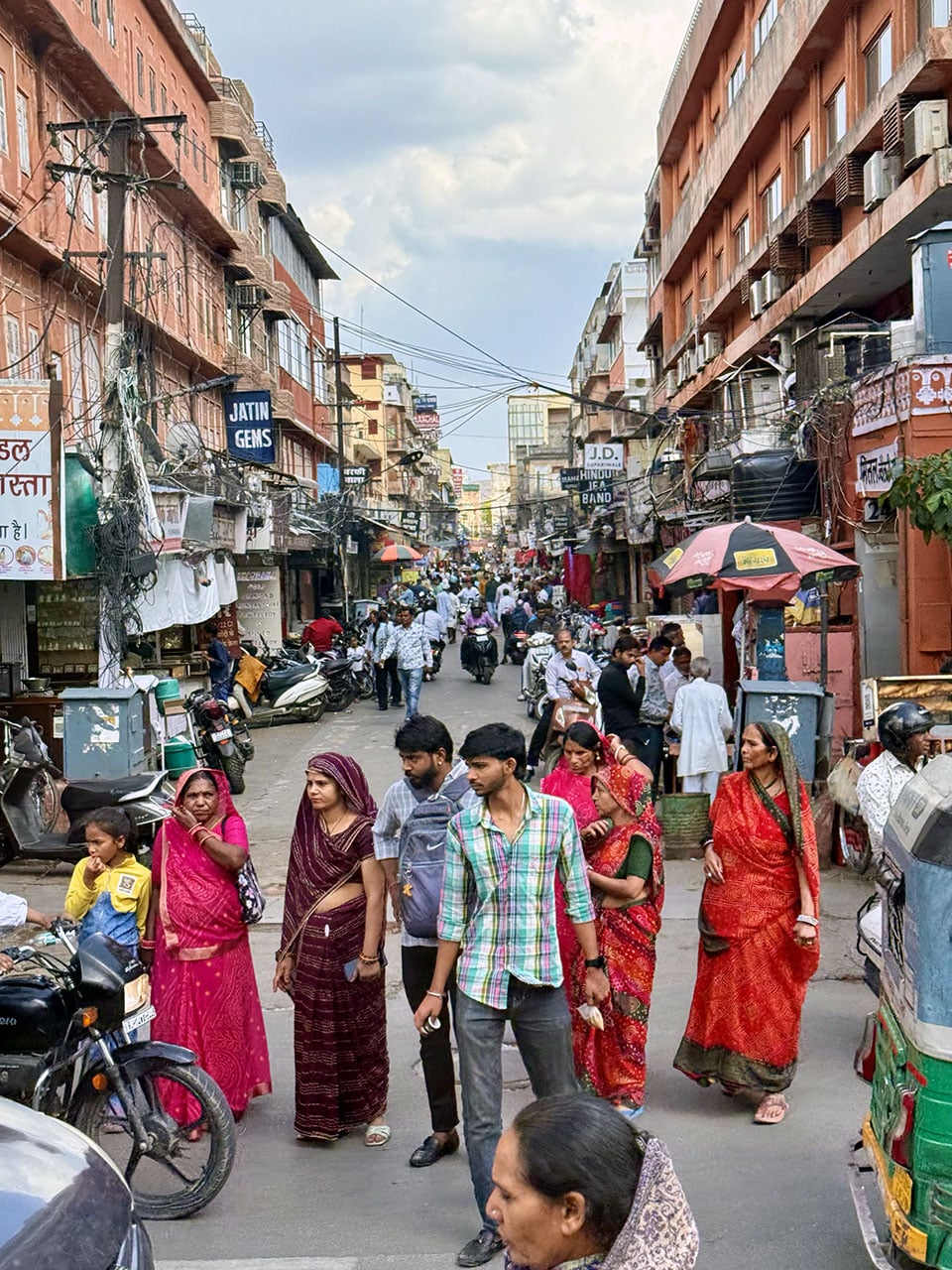
The Ajmeri Gate into Old Town Jaipur and the Bazaar area.
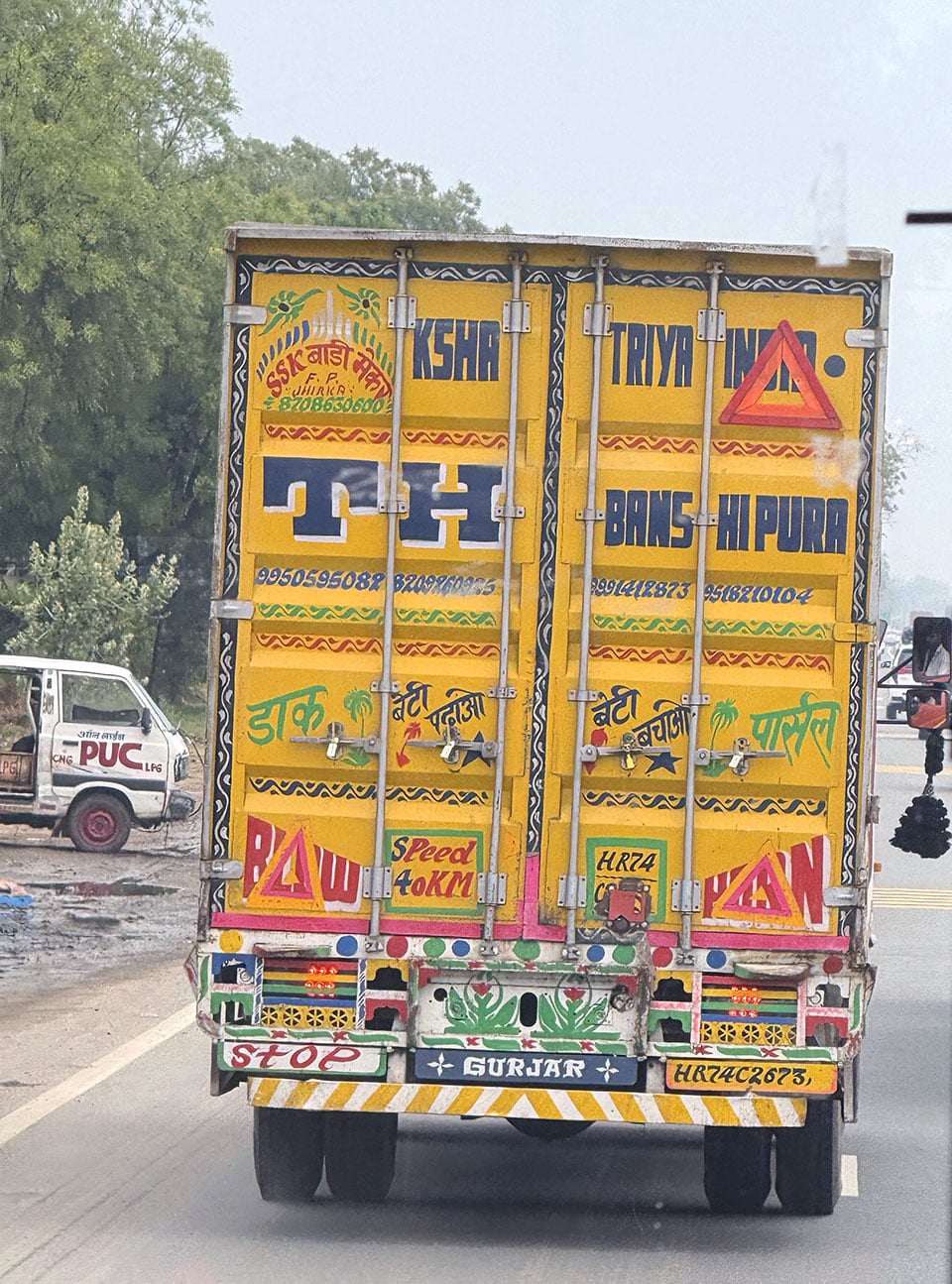
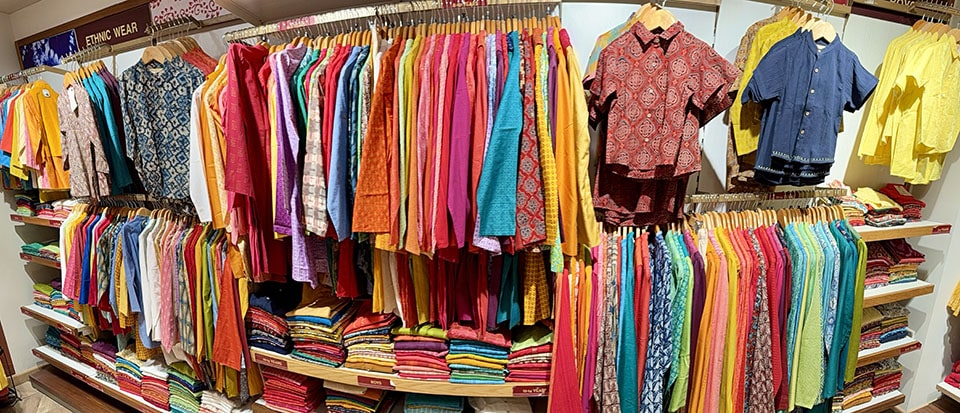
Literally, every place we have visited in India has been so uniquely different from the last. No two cities alike. Different architectural styles, different foods, even different trucks. The only common denominator seems to be India Oil gas stations and Fab India clothing stores (think the Gap, but with brightly colored, modern, and traditional Indian clothing), both of which were everywhere in India.
We stayed at the Jaipur Marriott, which was nice and modern—like any Marriott anywhere in the world—but we missed the character of our previous hotels in India. Being back in the city, we and our luggage had to go through x-ray and security each time to get into the hotel, as we did in the South (this was not the case at all in Varanasi or Rishikesh).
Rumbagh Palace
The first evening, we had a fancy dinner at Rambagh Palace, a former royal residence that is now one of Jaipur’s most renowned heritage hotels. Built as the home of Jaipur’s Maharaja Sawai Man Singh II and Maharani Gayatri Devi, it’s located adjacent to the Jaipur Polo Grounds.
Although we arrived dressed in our Indian finest, we still felt a bit underdressed in this very posh hotel, surrounded by elegant boutiques and luxury shops. We stopped at jewelry store there, where prices started at around $25,000 US and went up! It was another great reminder of the afluent world of Rajasthan’s royal heritage.


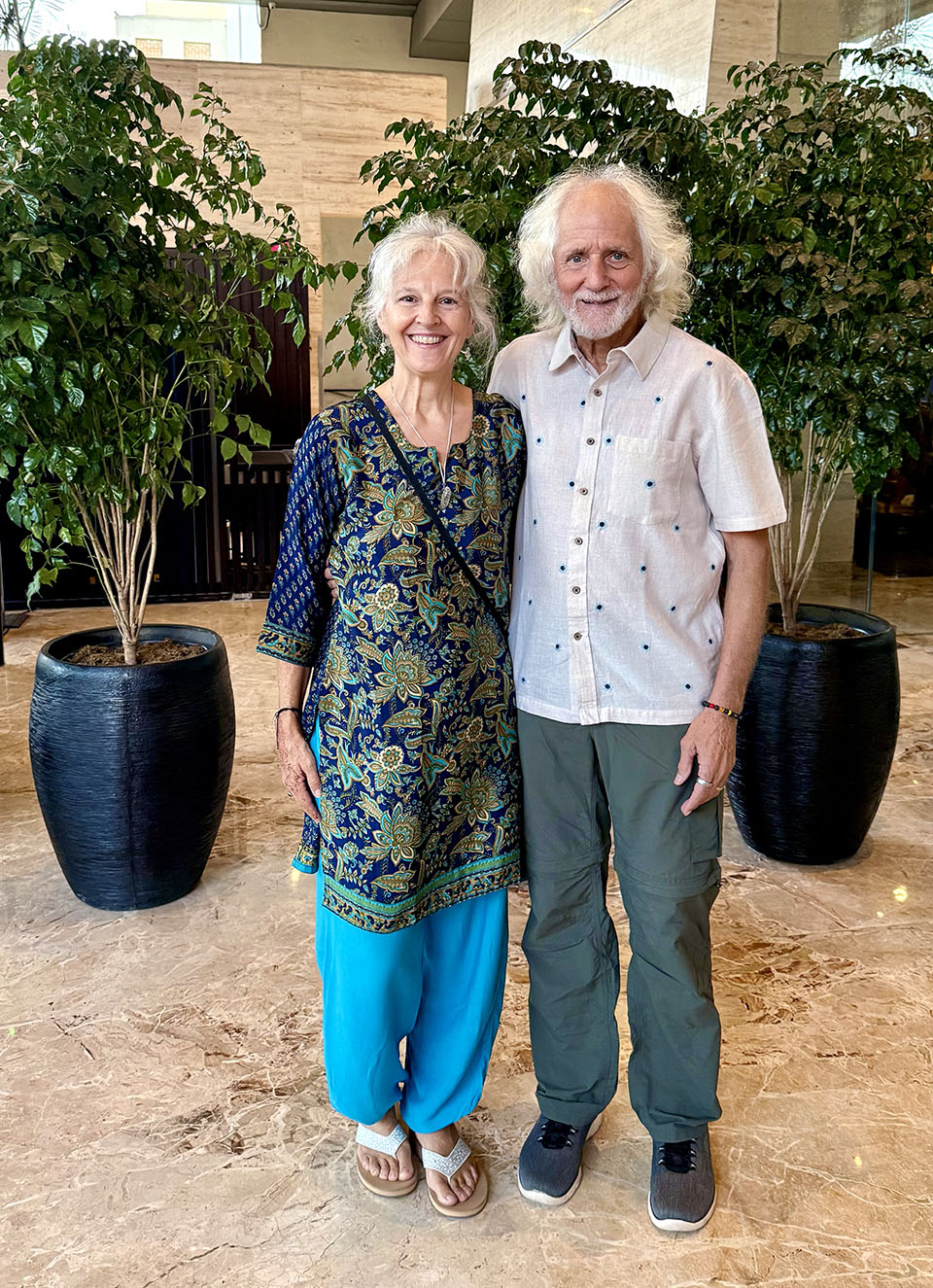
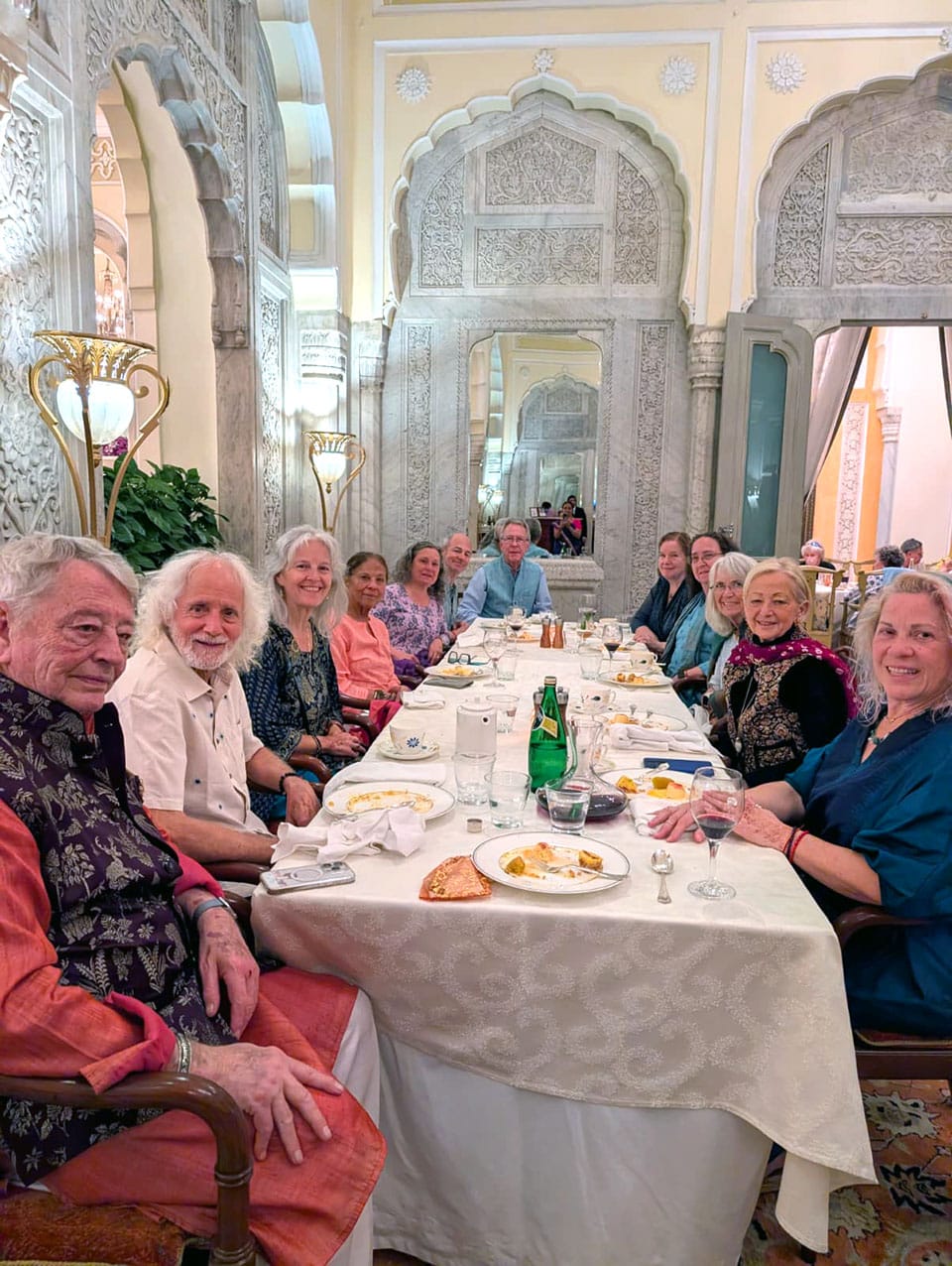
Dining: Tris, Kirk, Heidi, Marg, Pauline, David, Roger, Amy, Marie, Donna, Anne Marie, and Basilica
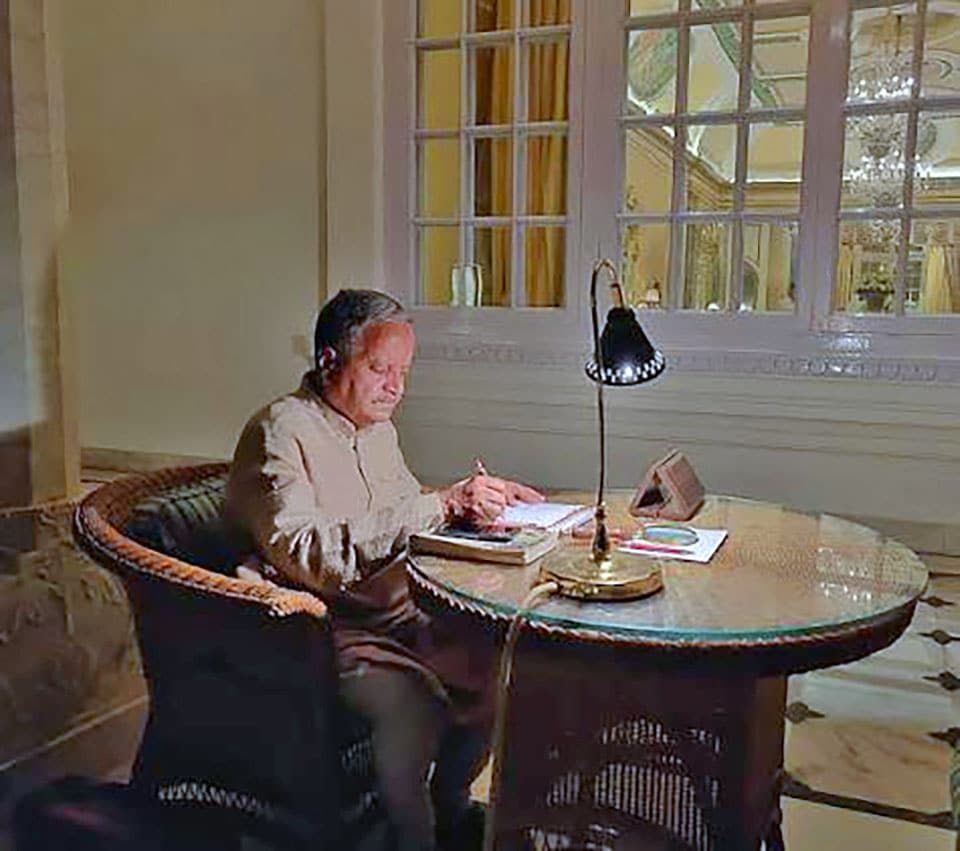
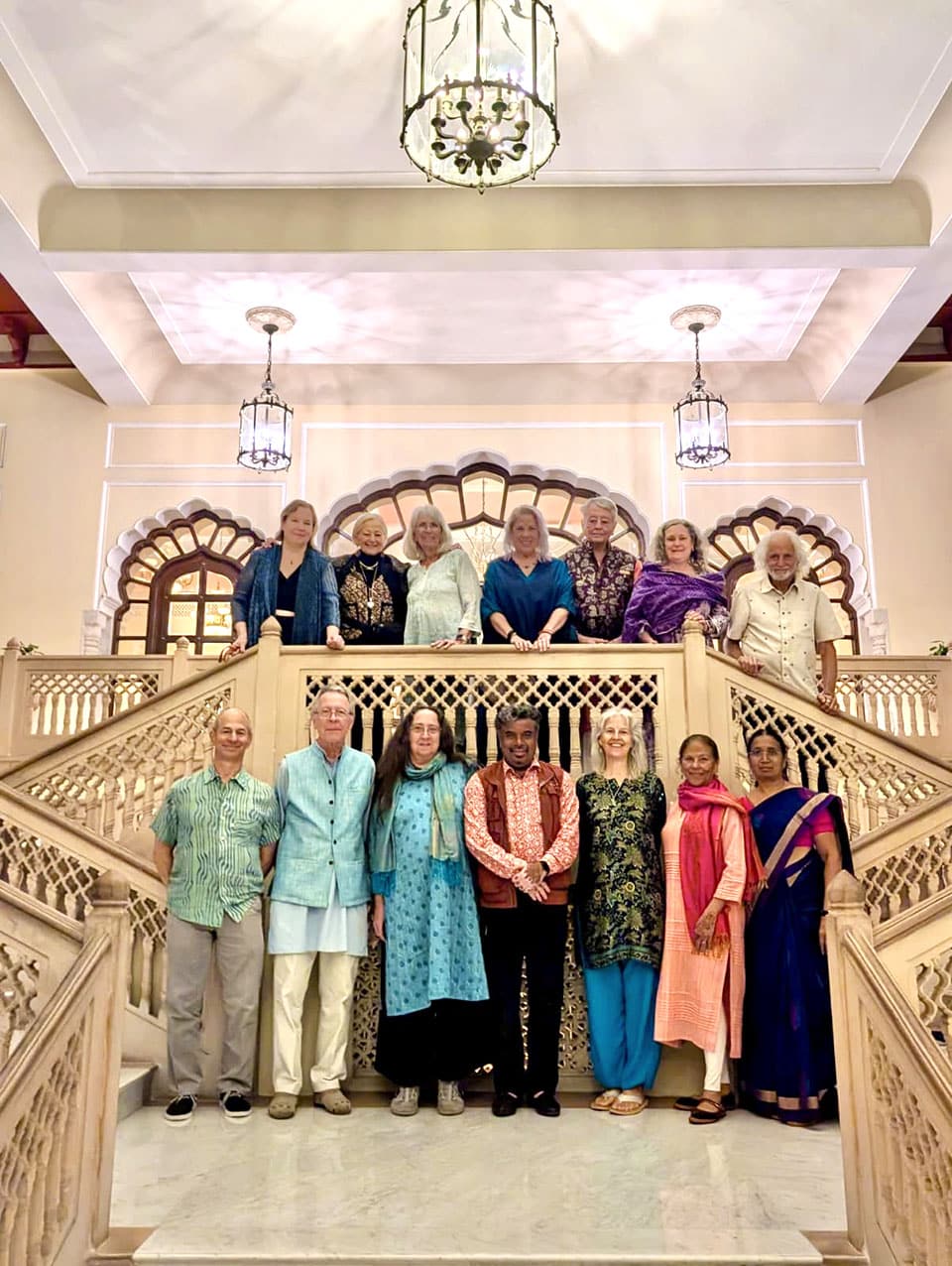
🎵 Went to the fortune teller…had my fortune told…🎶
One of the fun things that night was that Heidi had her palms “read” by an old traditional Indian palm reader, K.K. Dandiya. Apparently, he has been practicing palmistry at the palace since the 1980s and is quite well known among Bollywood stars. He seemed to do more numerology and astrology than actual palm reading, but it’s all tied together. He wrote down her birthdate and shared some insights about those numbers, then briefly looked at her palms. It was fascinating, and most of what he said about Heidi and her past was uncannily spot-on. Let’s hope he’s right about her future, too!
Amer Fort
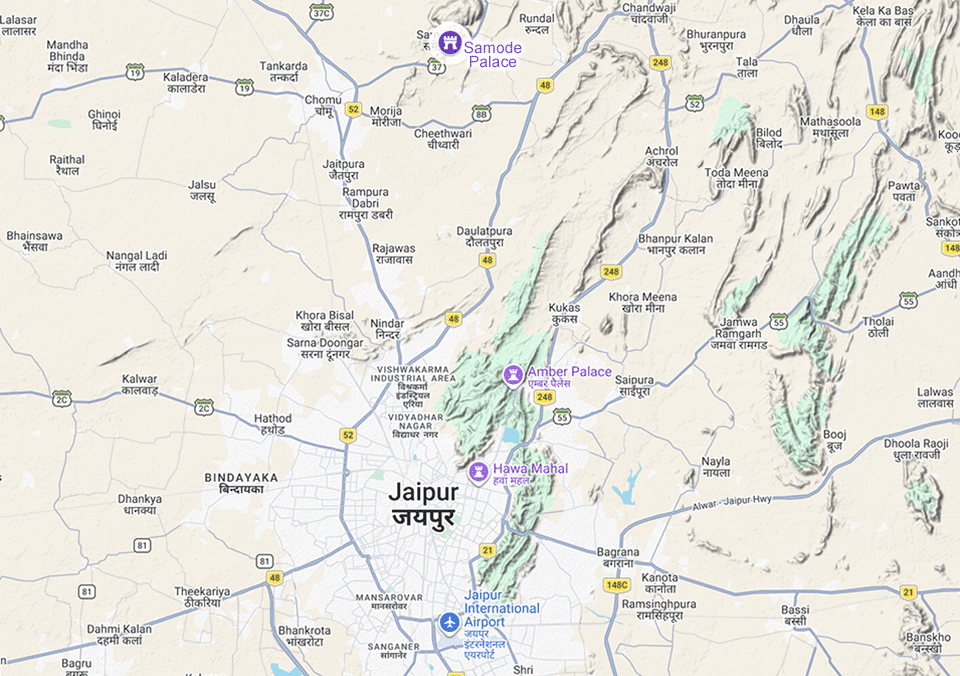
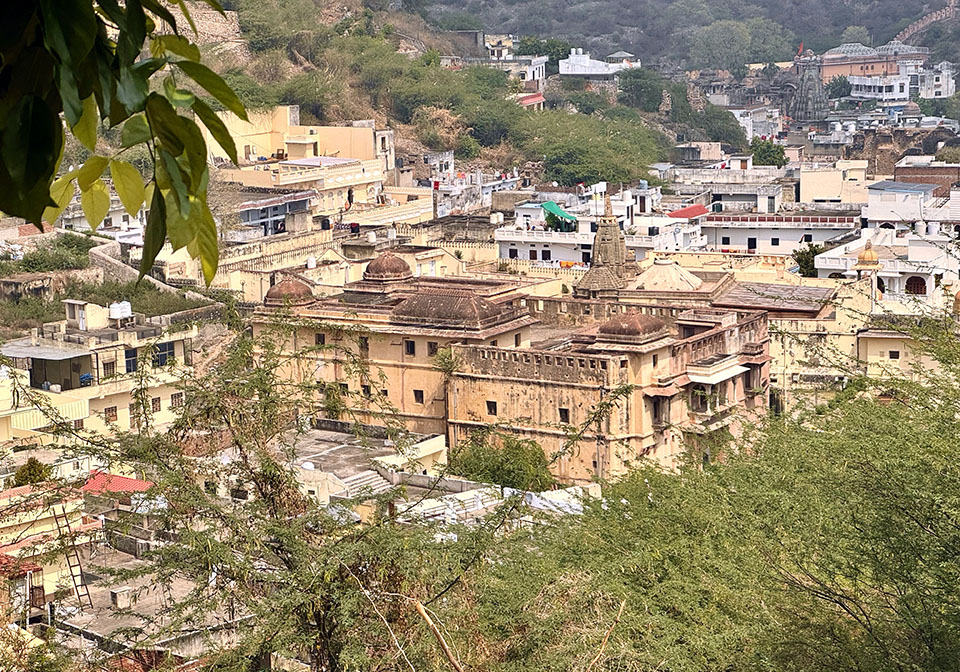
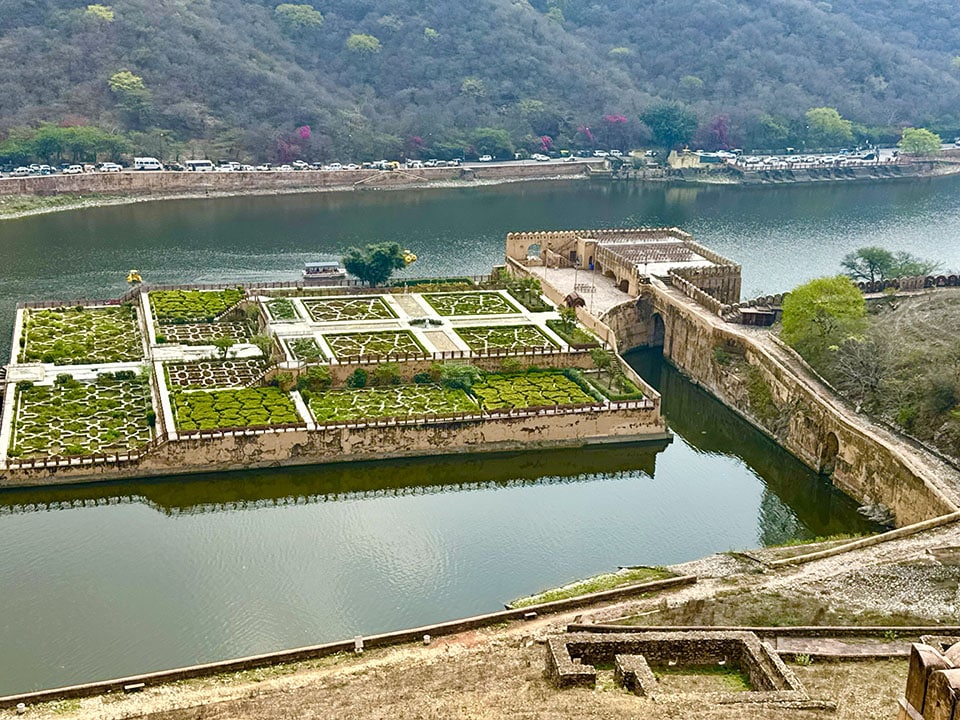
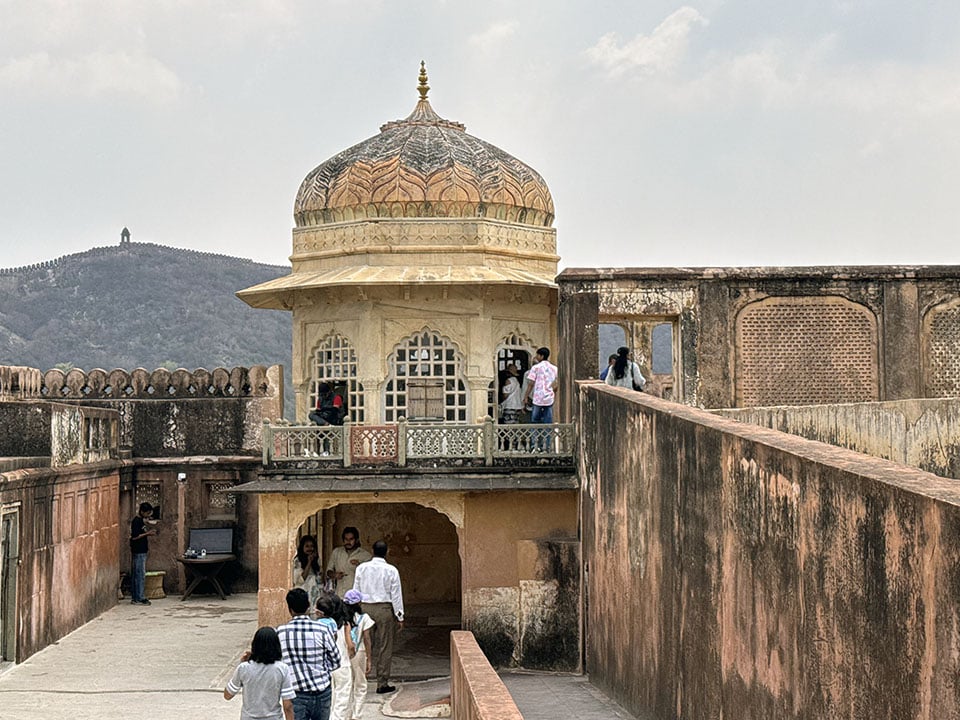
The next morning, we were up early to visit the Amer Fort (also called the Amber Fort by the British). This UNESCO World Heritage Site (photo at top of blog), about 7 miles outside Jaipur, sits atop a hillside overlooking Maota Lake. Although the site had been a fort since the 11th century, the large, beautiful palace we visited was begun in 1592 by Raja Man Singh I, a top general of the Mughal emperor Akbar.
Later rulers expanded it over the next centuries, creating the sprawling palace complex it is today. The Amer Palace was the original royal residence and capital of the Princely State of Jaipur. In 1727, the capital was moved to Jaipur, and the gorgeous City Palace, which we would visit the next day, became the new home of the royal family.
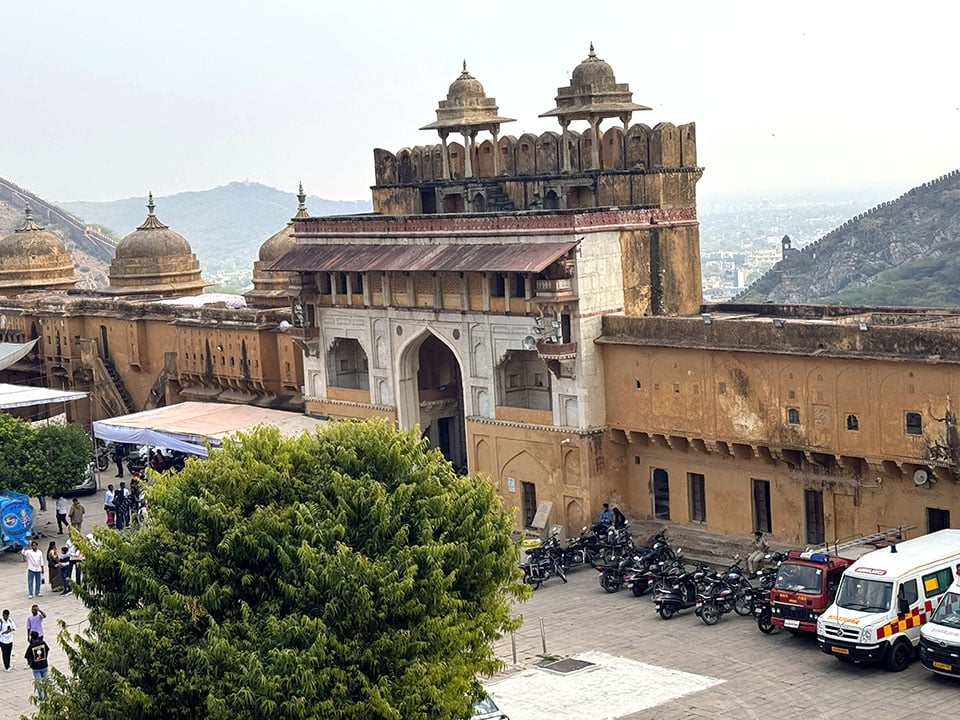
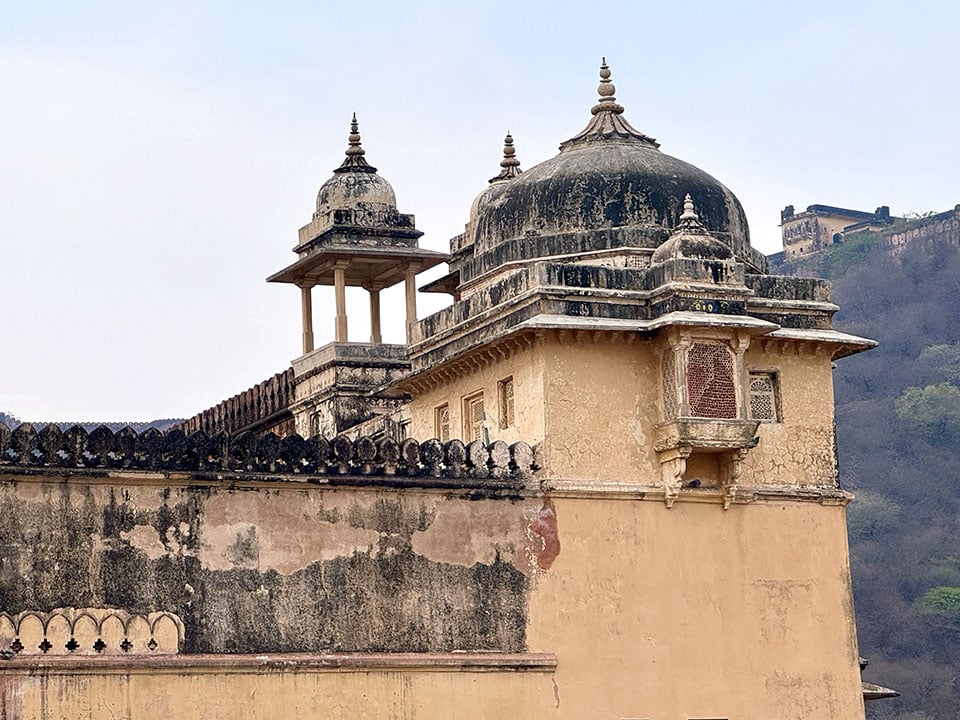
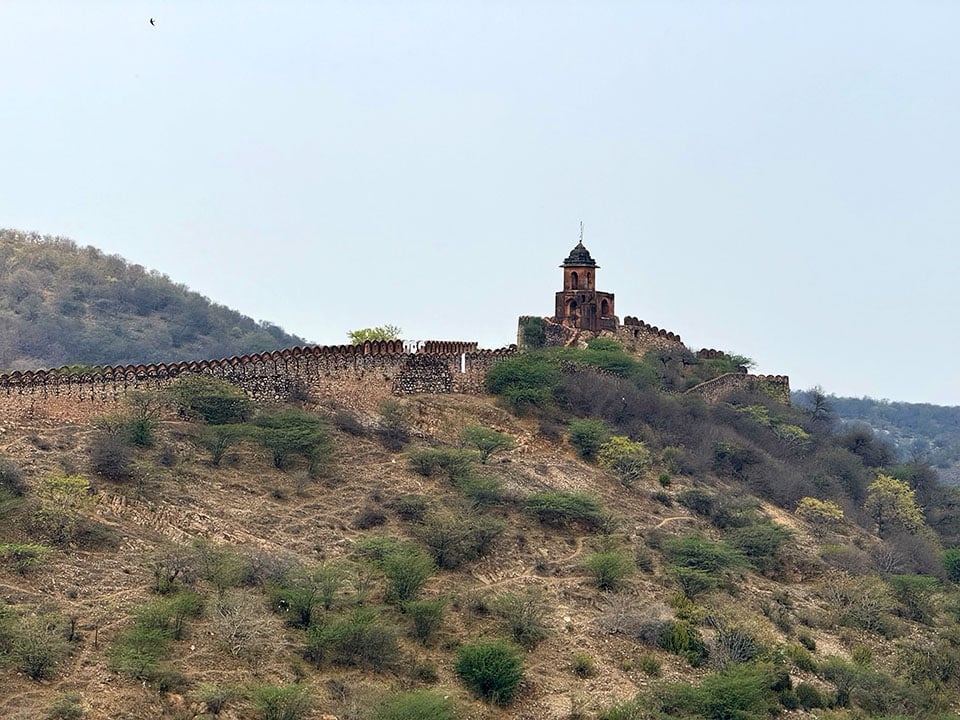
As we drove towards the Amer Fort, the impressive network of stone walls wound across the nearby hills. Often compared to the Great Wall of China for their scale and dramatic mountain setting, these walls were built to protect the ancient capital of the original Kachhwaha rulers.
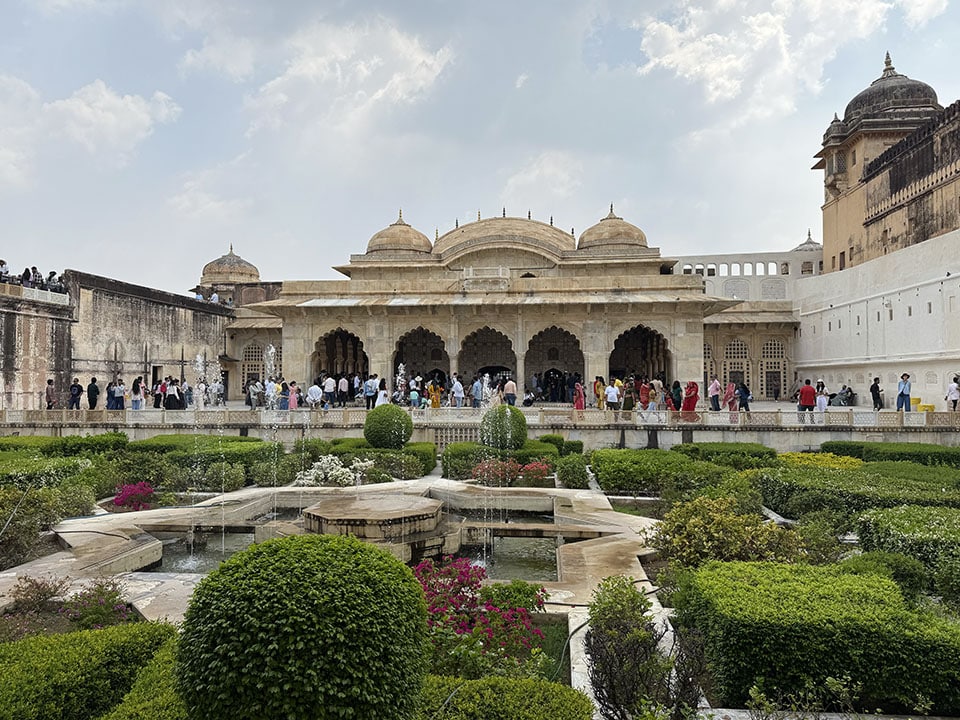
One of the reasons Amer Fort is so impressive is that it combines Indian Rajput and Islamic Mughal architecture. Rajput architecture contributed the defensive walls, courtyards, balconies, and intricate carvings. Mughal influence added graceful arches, symmetrical gardens, marble inlay, fountains, and elegant decorative details. Today, it is considered one of India’s finest examples of Rajput-Mughal architecture.
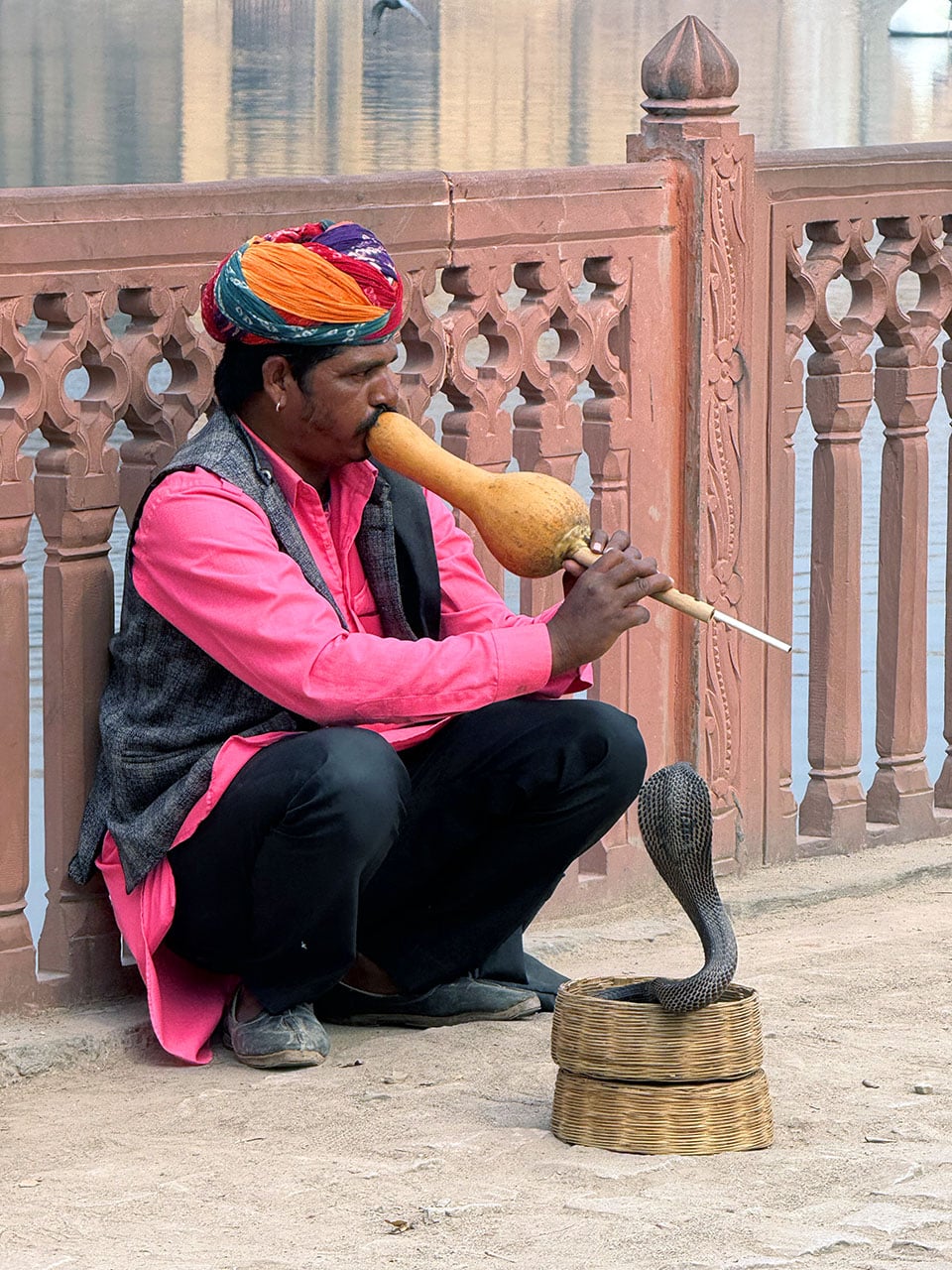
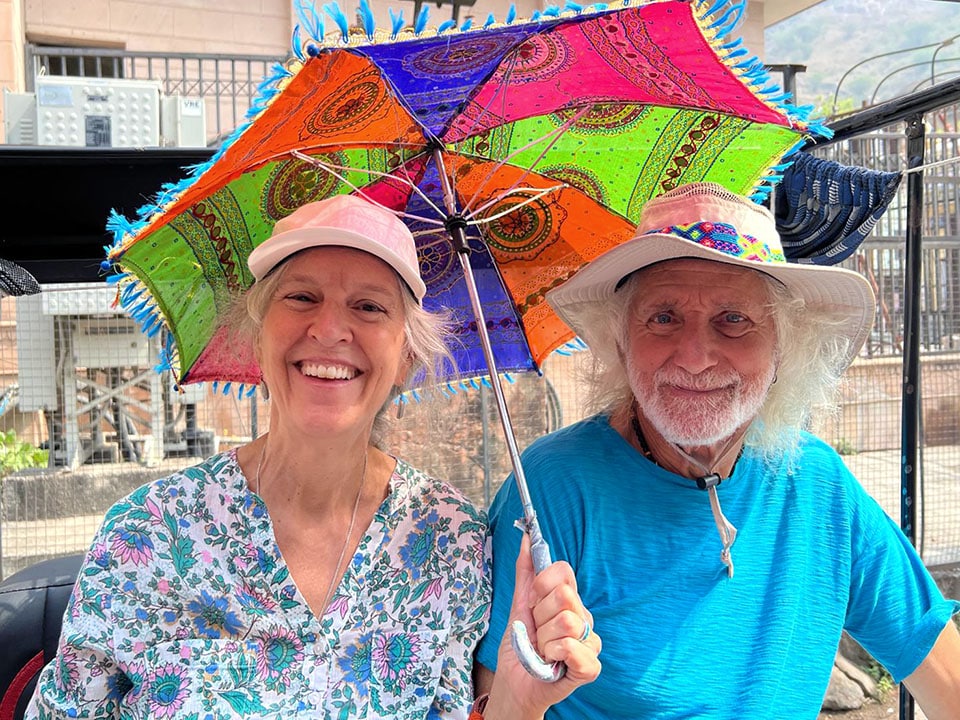
We left our bus in the parking area below, where Ramesh negotiated with a few jeeps to take us up the narrow, winding road to the Amer Fort. As we were waiting for our jeeps, we were entertained by a snake charmer, and Heidi bought an Indian sun parasol she had wanted for many years.
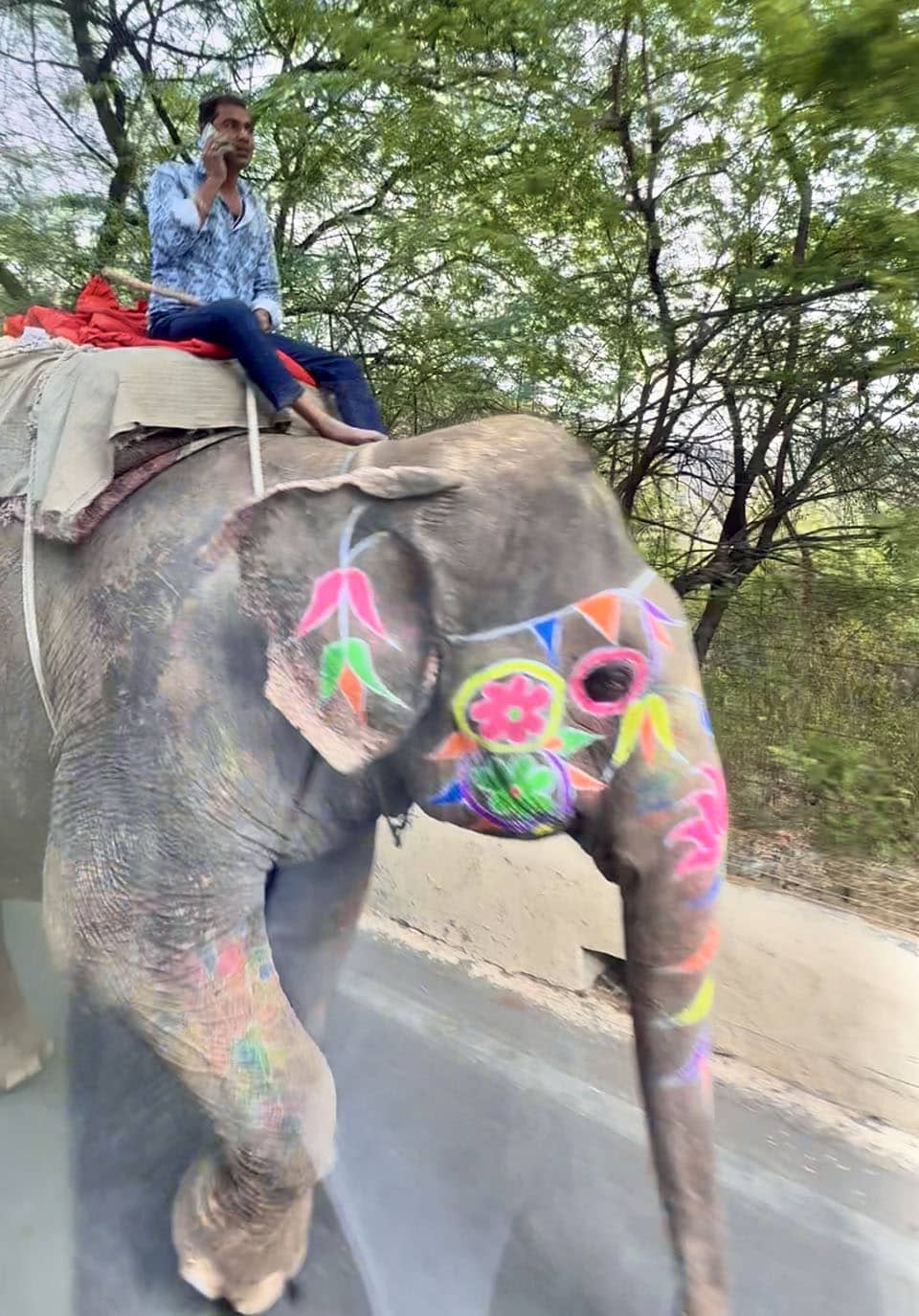
Unfortunately, for the elephants, you can still ride them up the steep road. Thankfully, they are restricted to early-morning hours when it is not too hot and to only one or two trips per elephant per day. We were glad to hear that the use of elephants in India is being phased out in favor of animal rights.
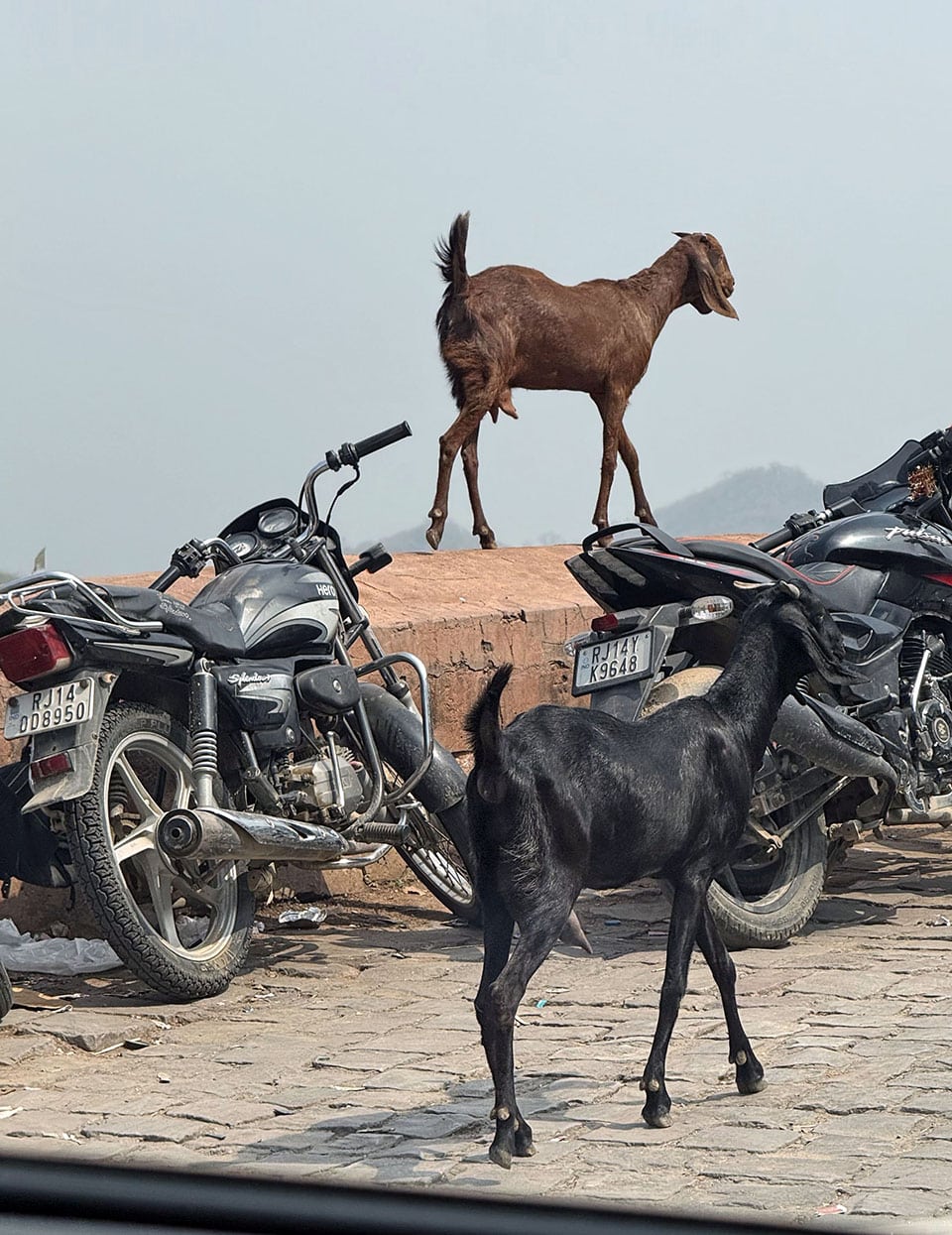
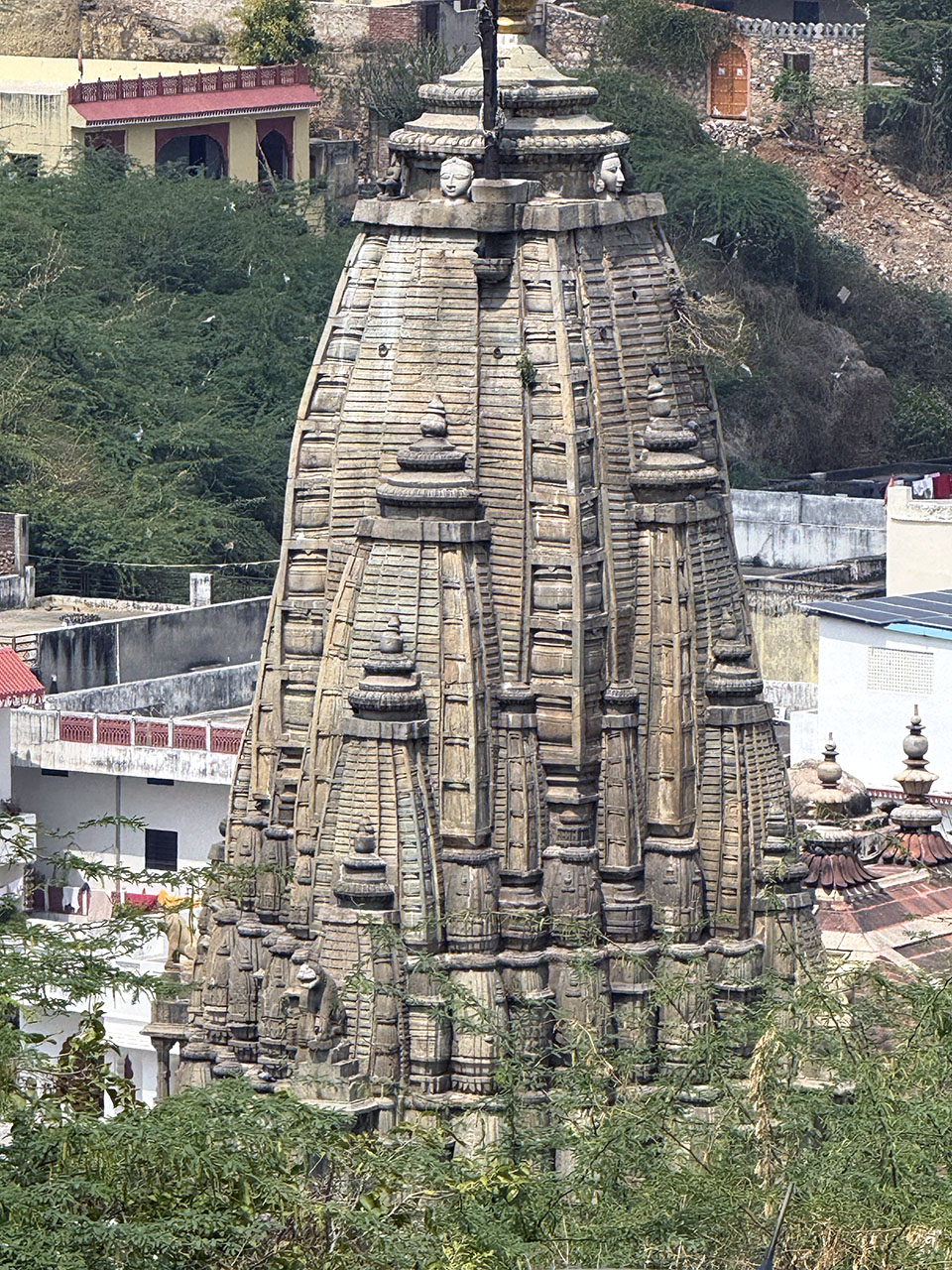
Basilica shared our jeep with us, and along the steep, windy road up, we saw lots of goats, monkeys, and the Meera Mandir Hindu temple, built in 1599. With bumper-to-bumper traffic from jeeps, motorcycles, and elephants all heading up to the fort, we moved so slowly that hawkers were running alongside us, trying to sell us trinkets through the jeep window all the way to the top.
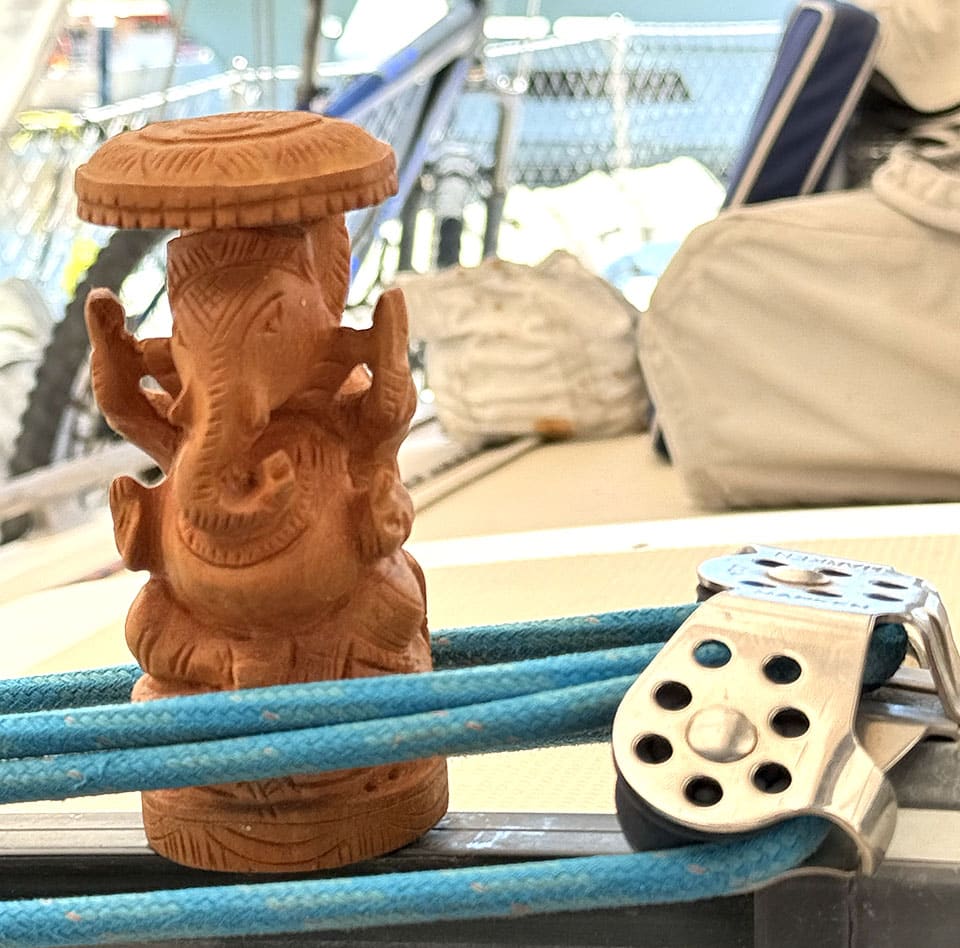
Once at the entrance, there were even more hawkers selling everything. Kirk bought a nice 5”-tall “sandalwood” Ganesh statuette for ₹500 or about $5 US dollars (yes, we got taken by fake sandalwood again!) By the low price, we knew it was not real sandalwood, just some other wood dipped in artificial sandalwood oil. No matter the type of wood, the carving itself was beautiful, if a bit pungent—stinking up our suitcase. When we got back to Mexico, we set Ganesh outside on the deck of Due West, guarding our companionway, to off-gas its artificial sandalwood smell.

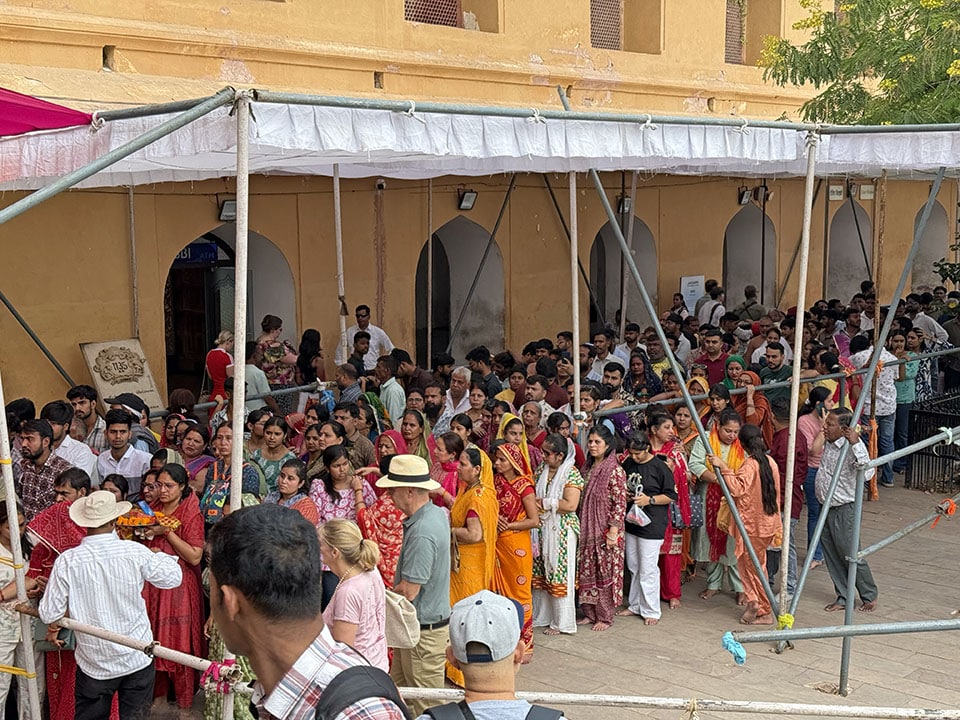
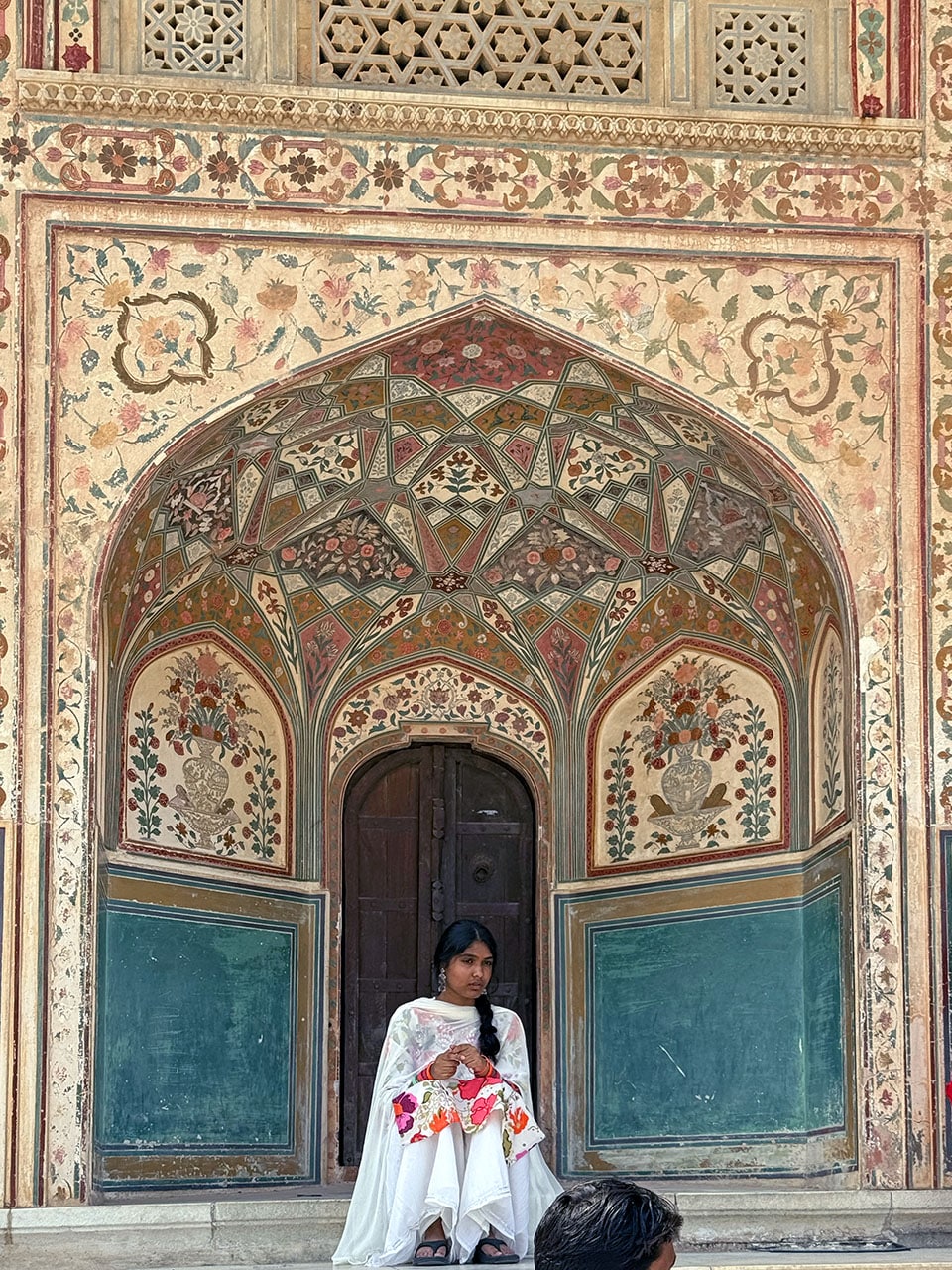
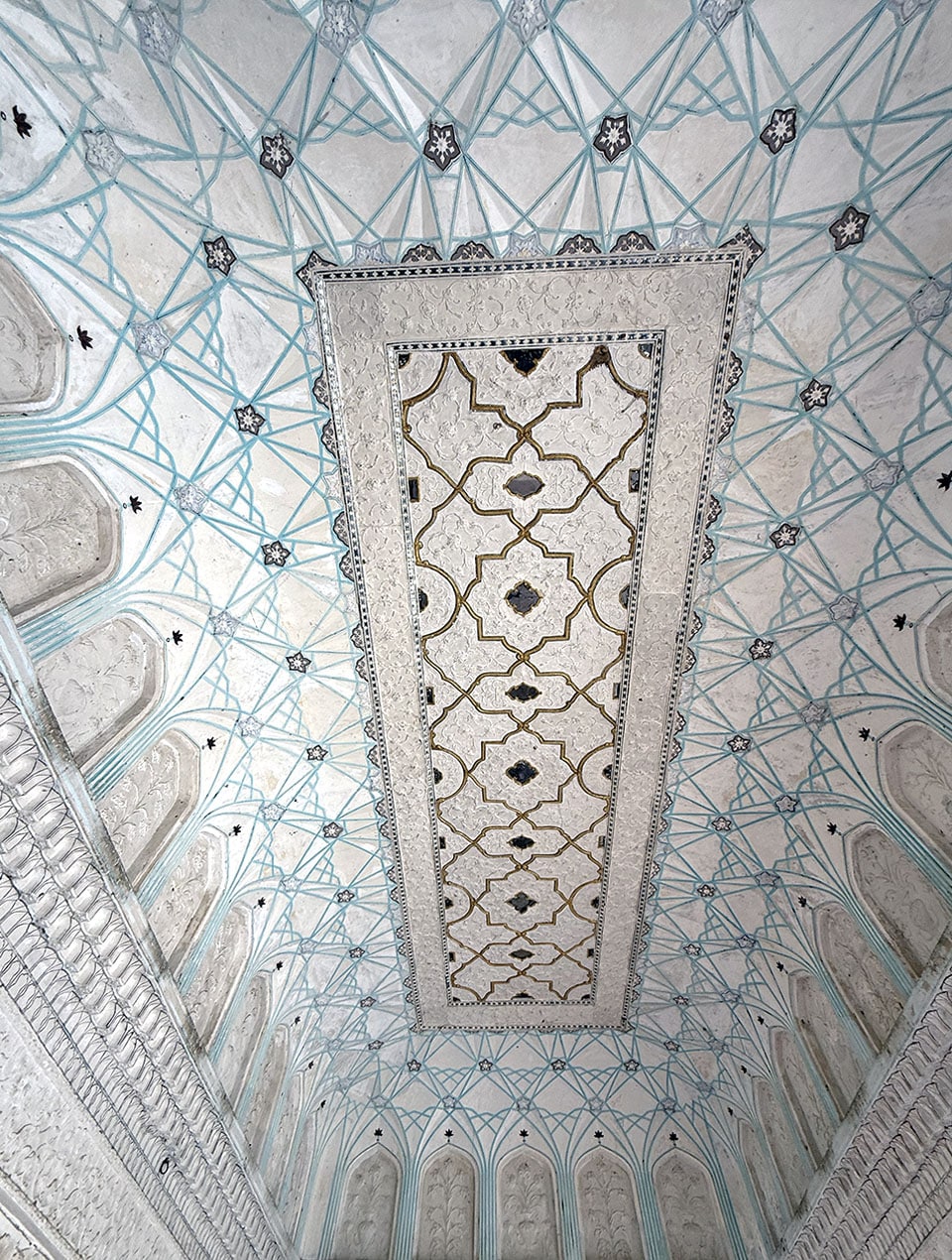
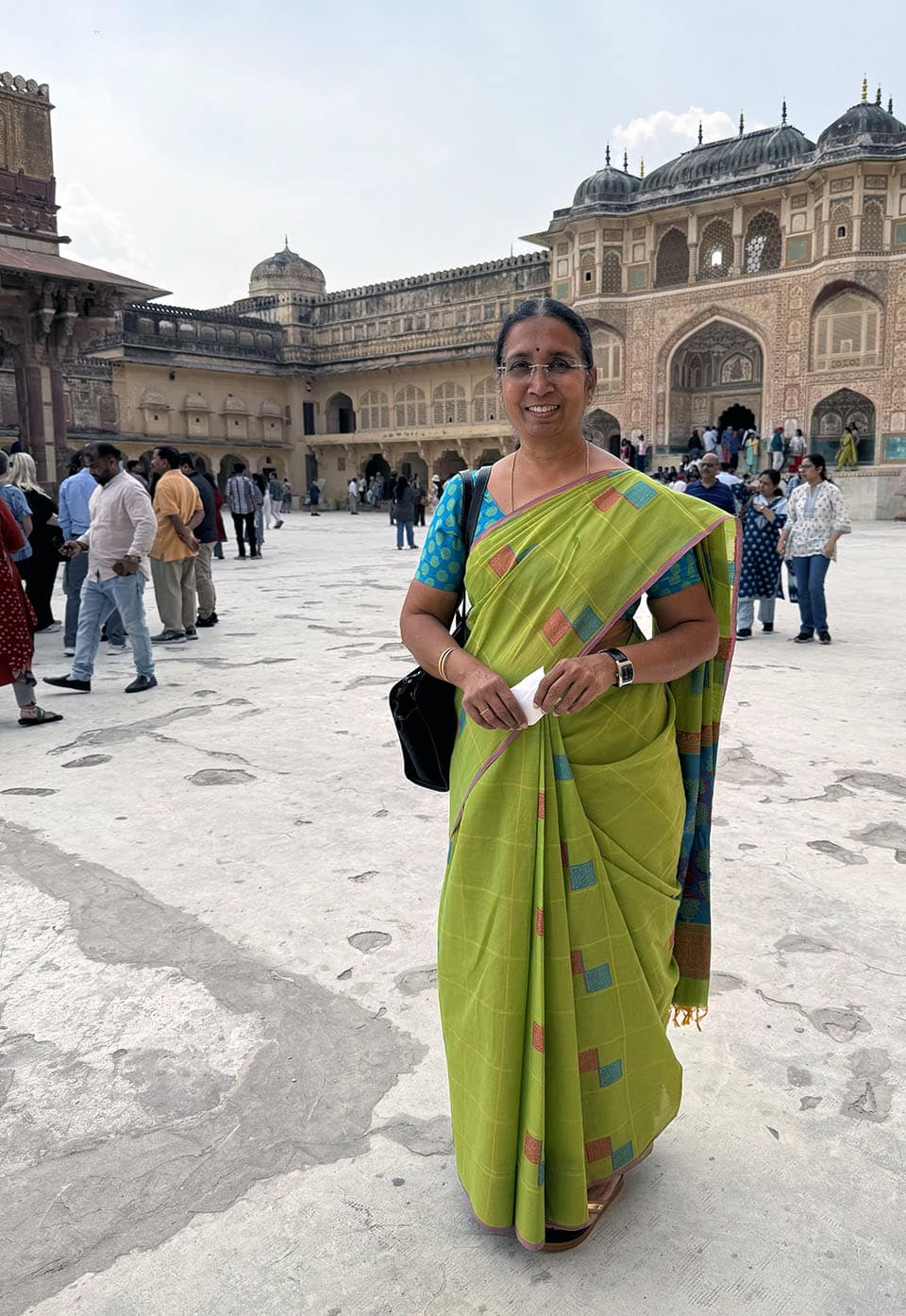
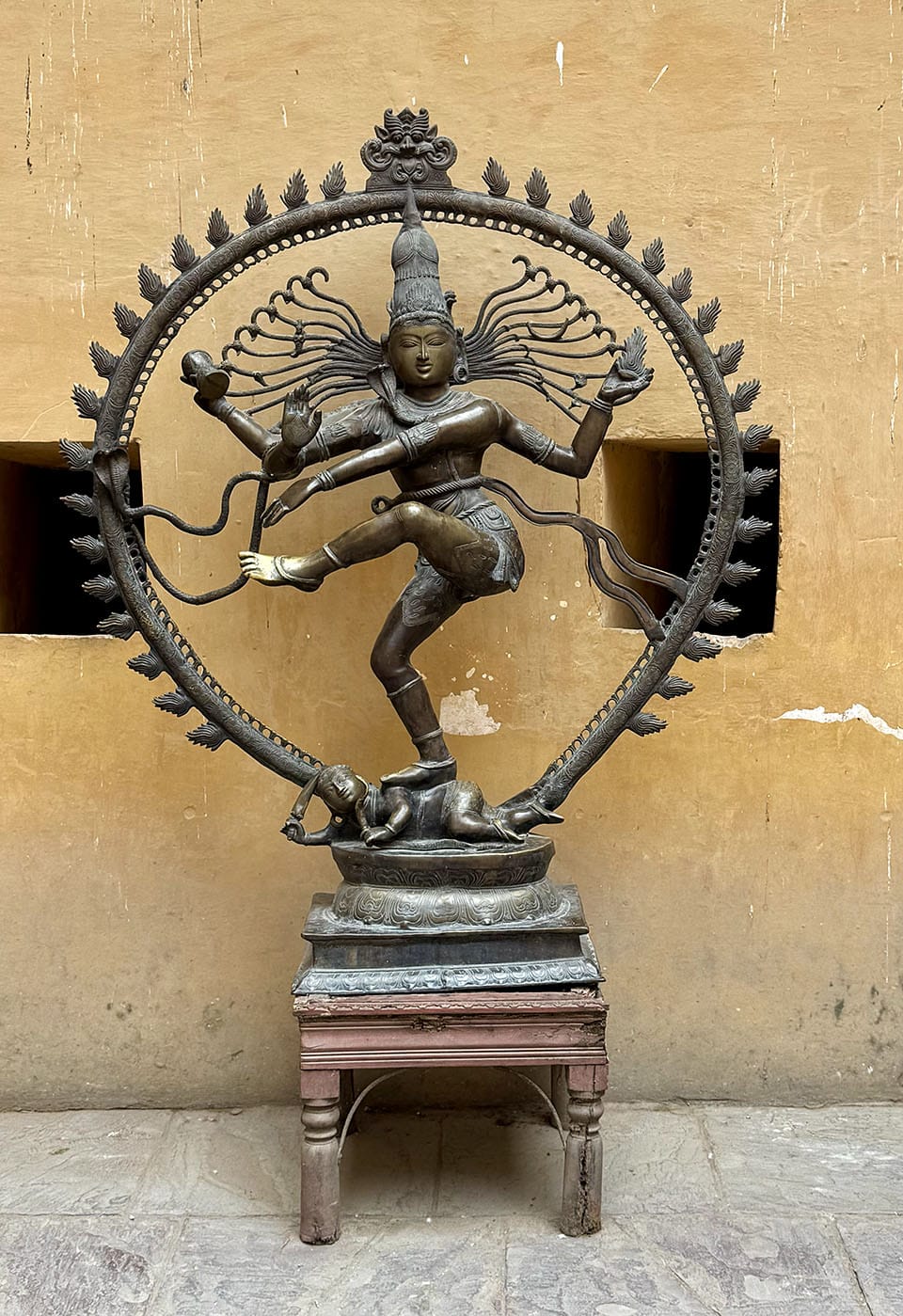
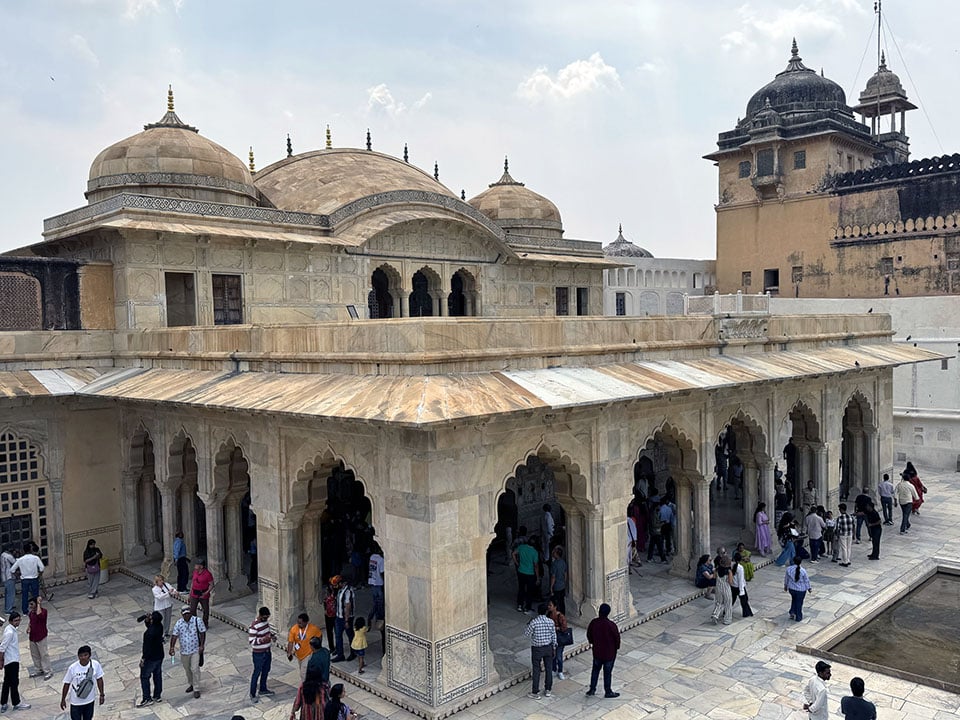
Inside the palace, we explored the many gardens, hallways, and rooms, including the breathtaking Sheesh Mahal, or Mirror Palace. All the walls and ceilings inside and out, were ornately painted with floral and geometric patterns in the Mughal style. And the architectural details of arches, walls, cornices, and soffits were amazing. Even the gardens were planted in geometric designs. And Mallika, in her stunning, colorful saris, always made every photo look better.
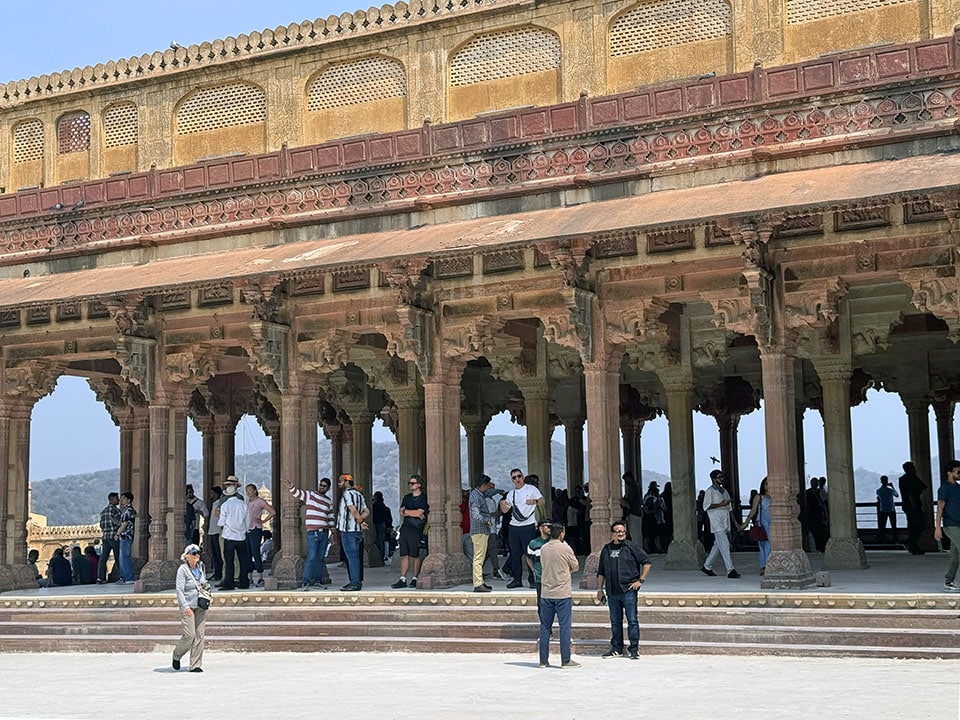
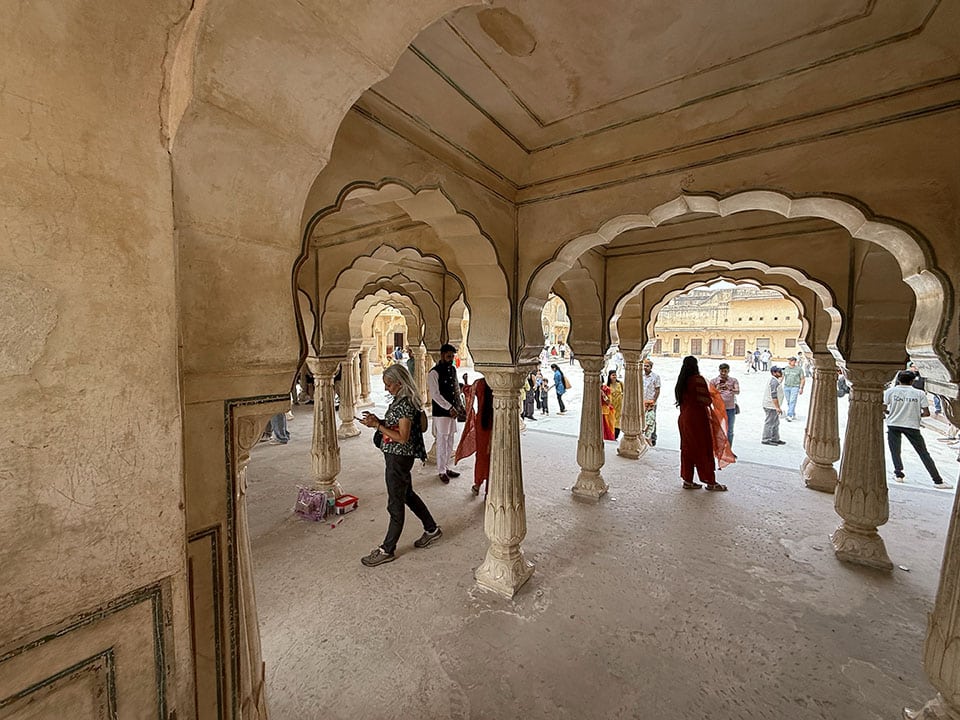
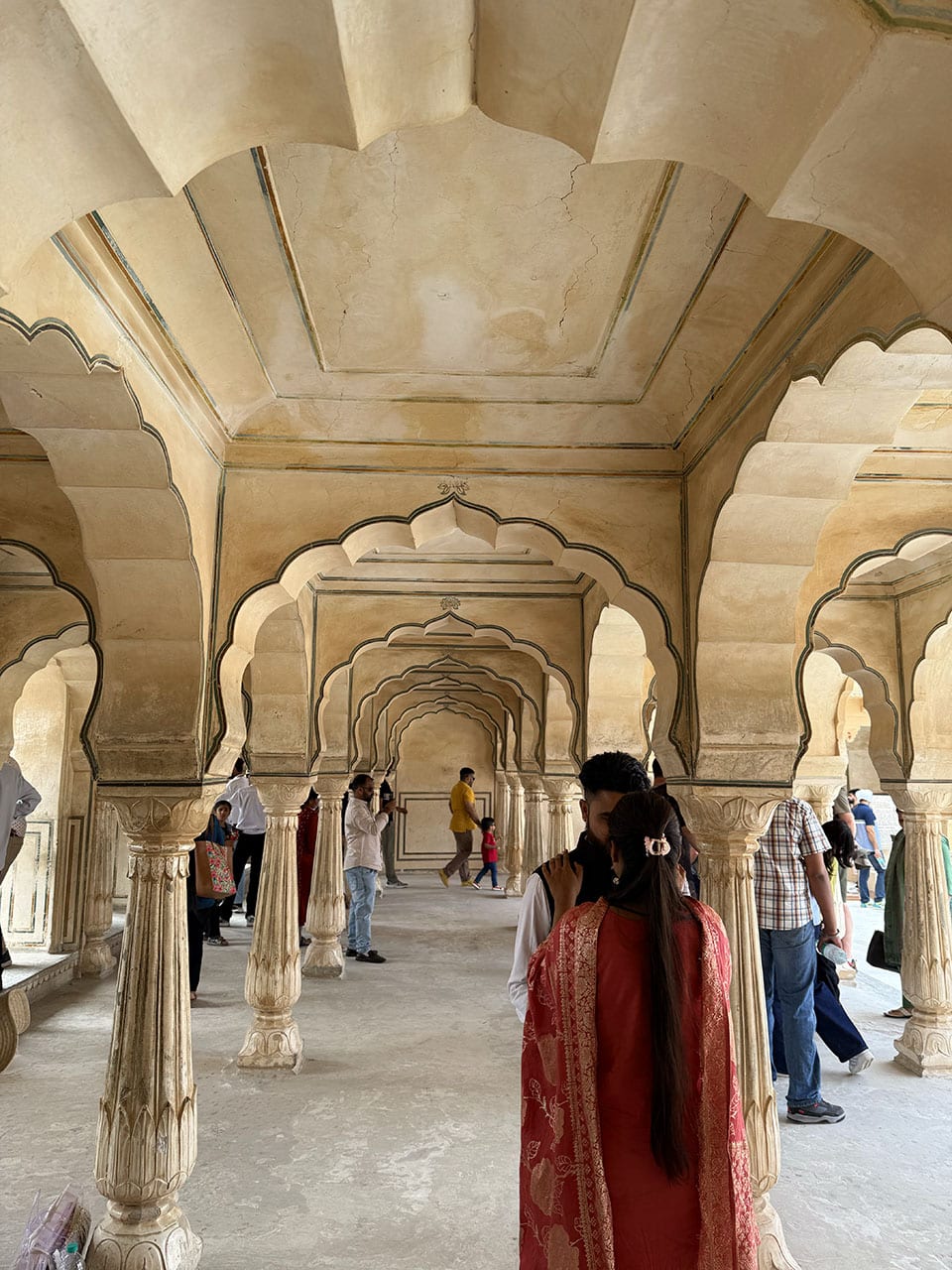
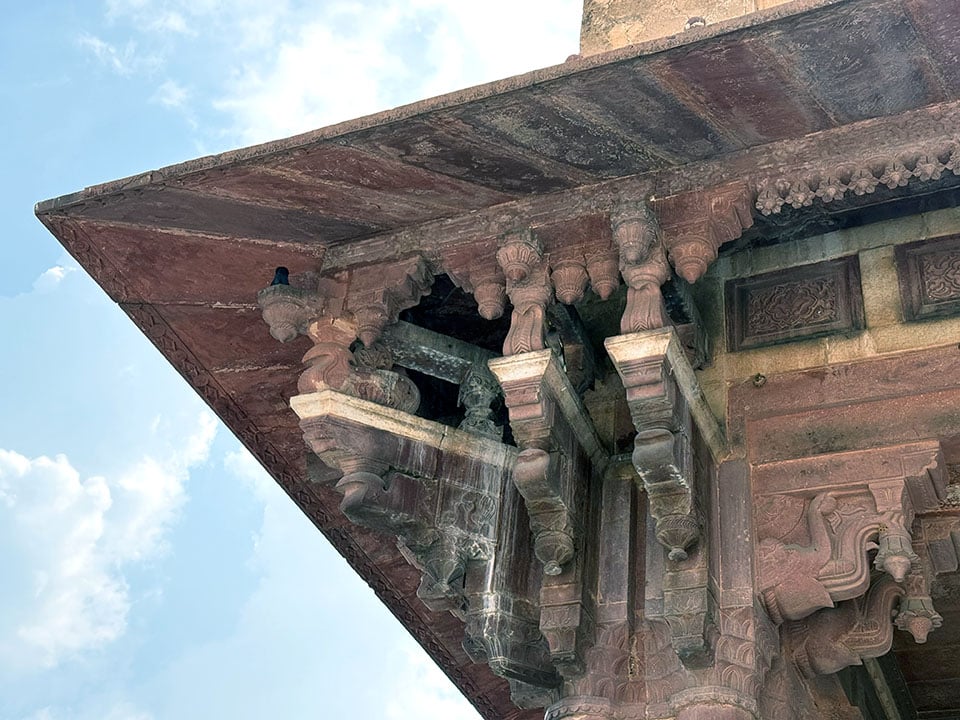
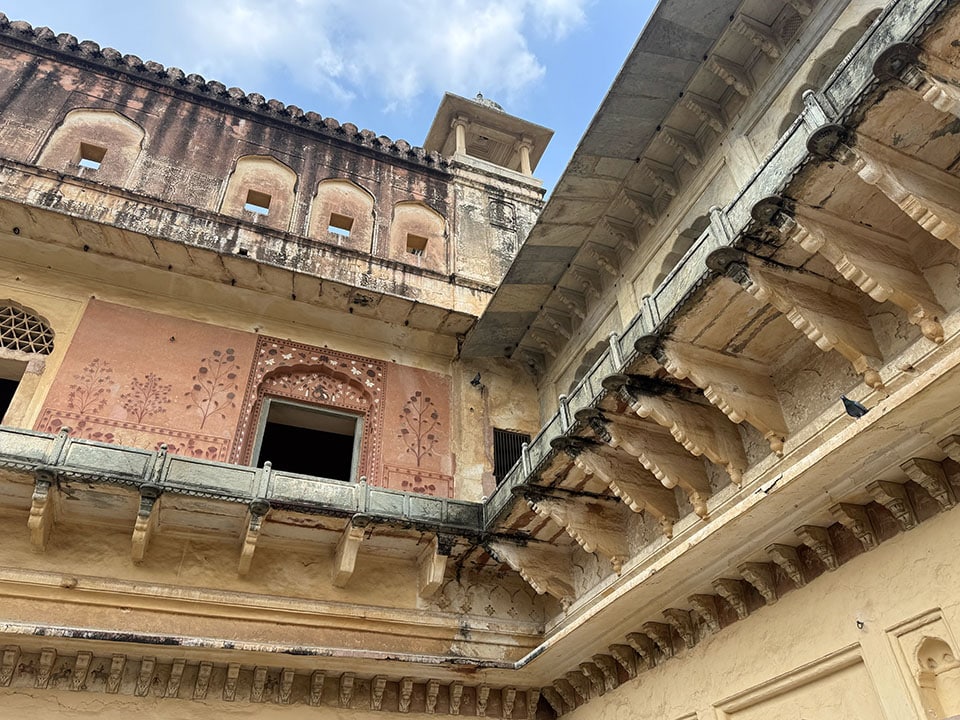
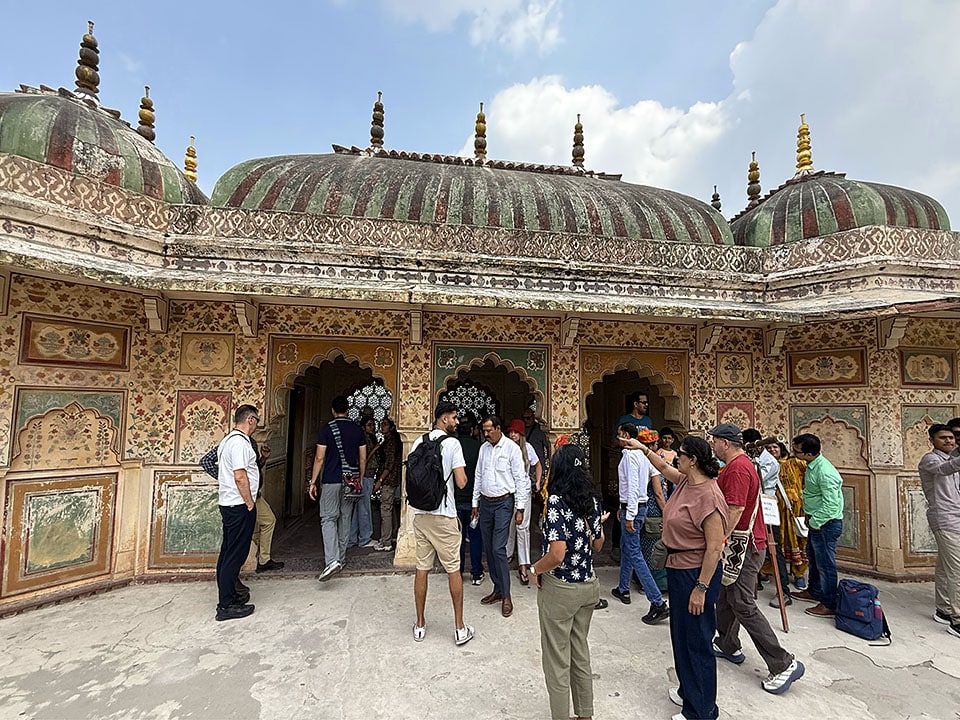

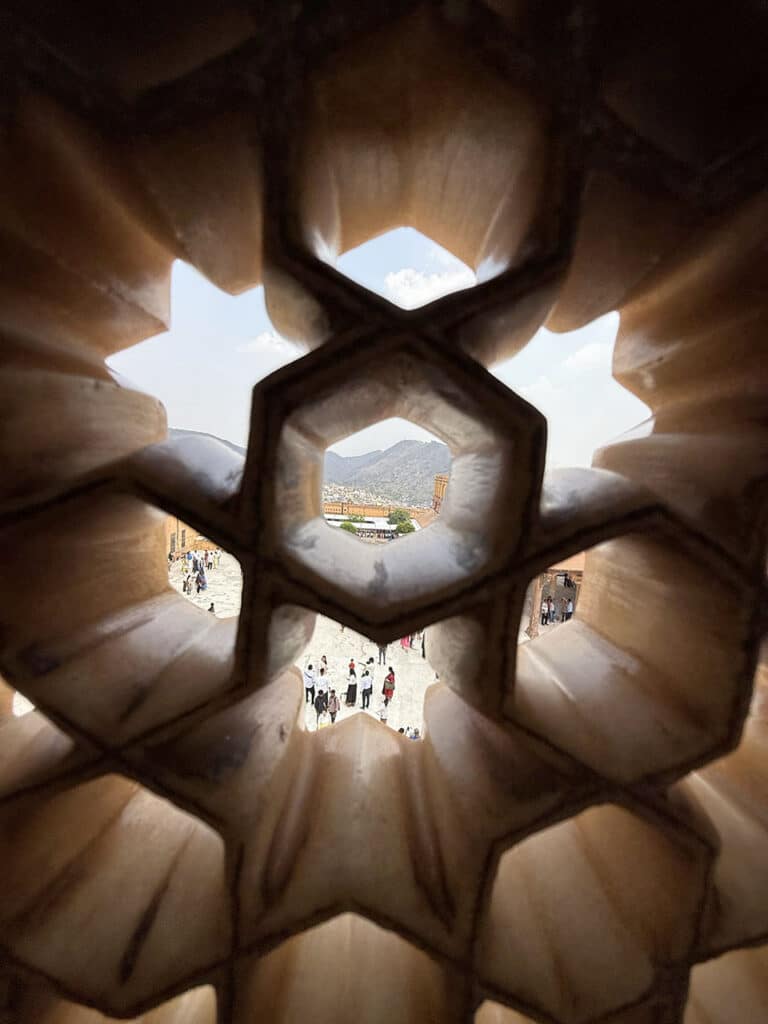
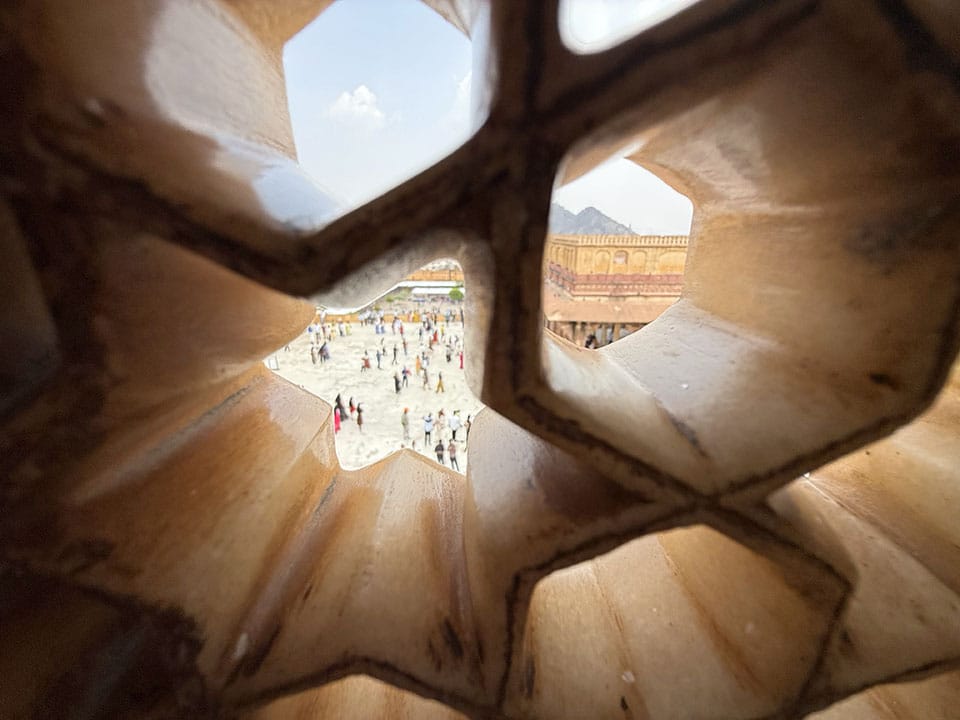
The view from the Harem quaraters: carved marble grates that the women could look through onto the coutyard below, without being seen—polished so fine they reflected light back in.
Sheesh Mahal
In the days before electricity, the glow of a single candle would reflect across thousands of tiny convex mirrors (some as small as your thumbnail)—embedded into the walls and ceilings in elaborate Persian floral and geometric designs—lighting up the whole room while creating the illusion of a night sky filled with stars.

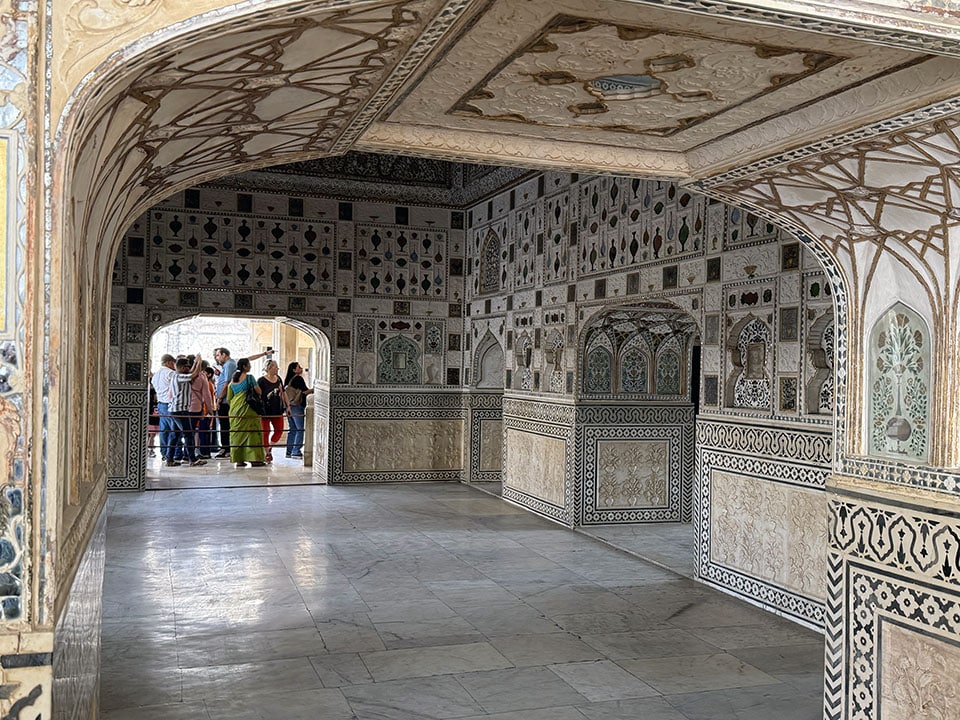
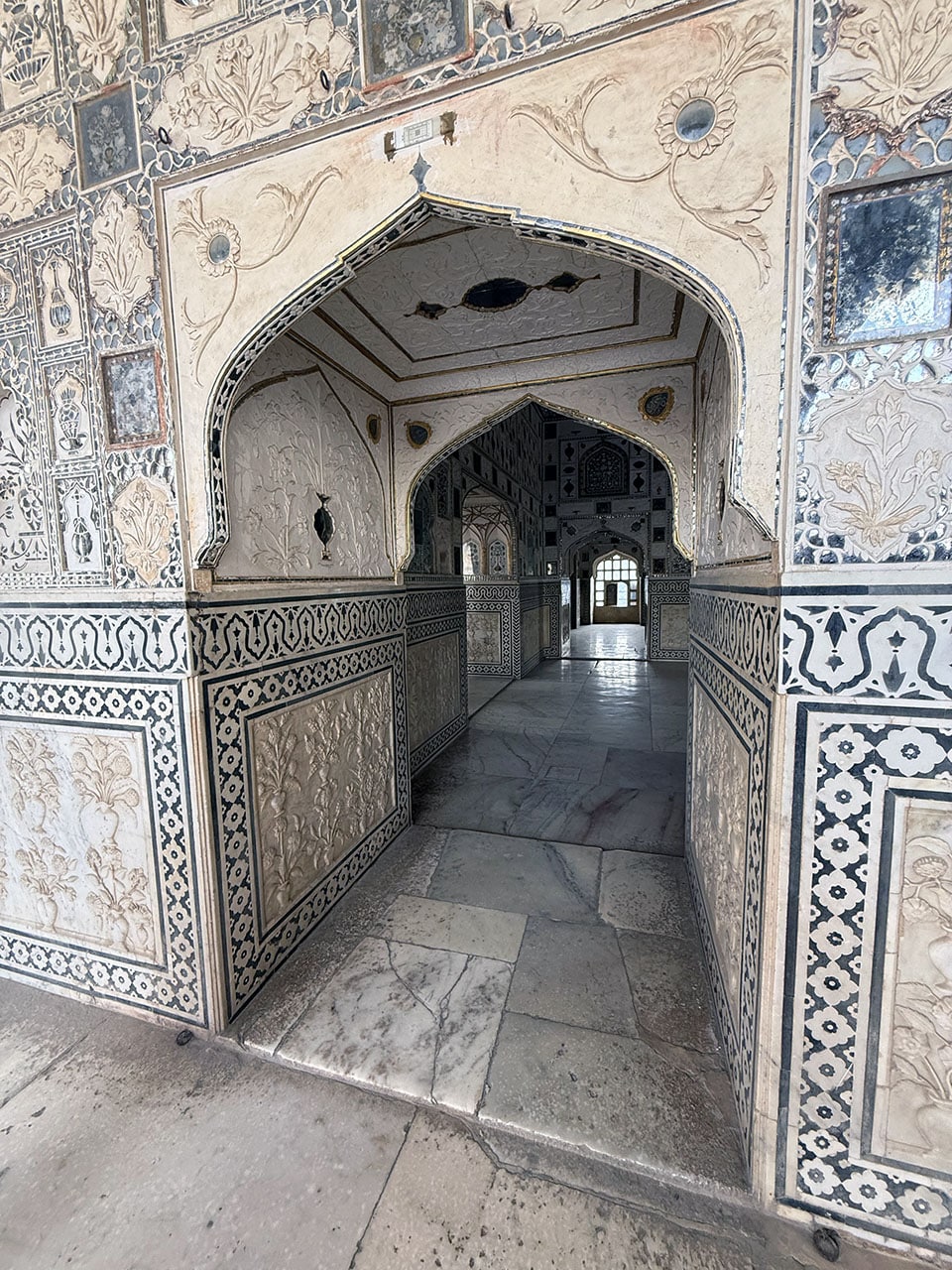
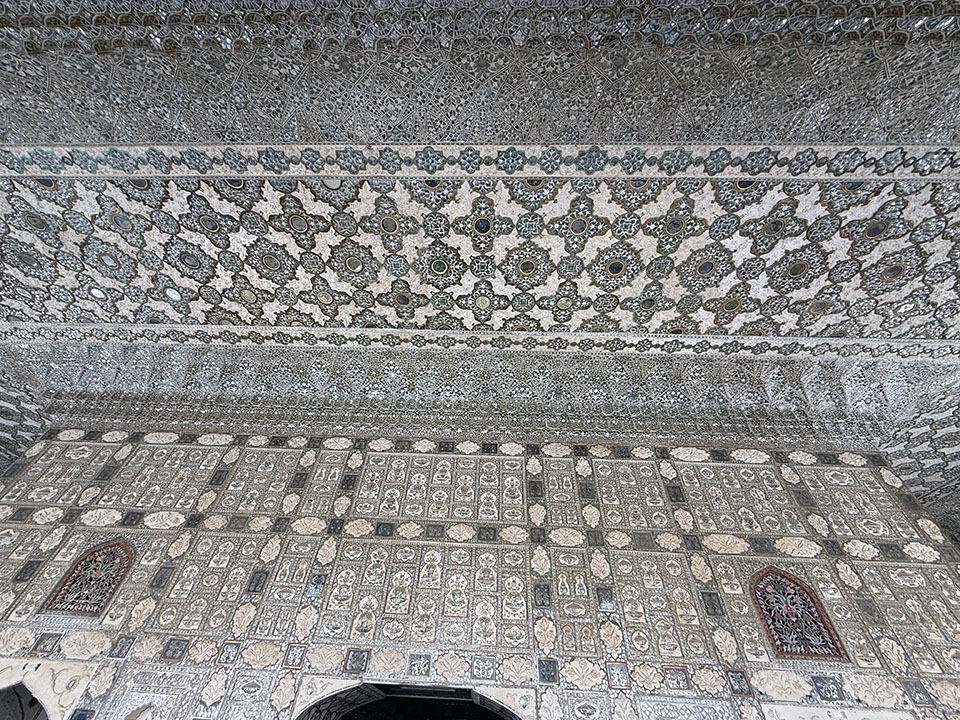
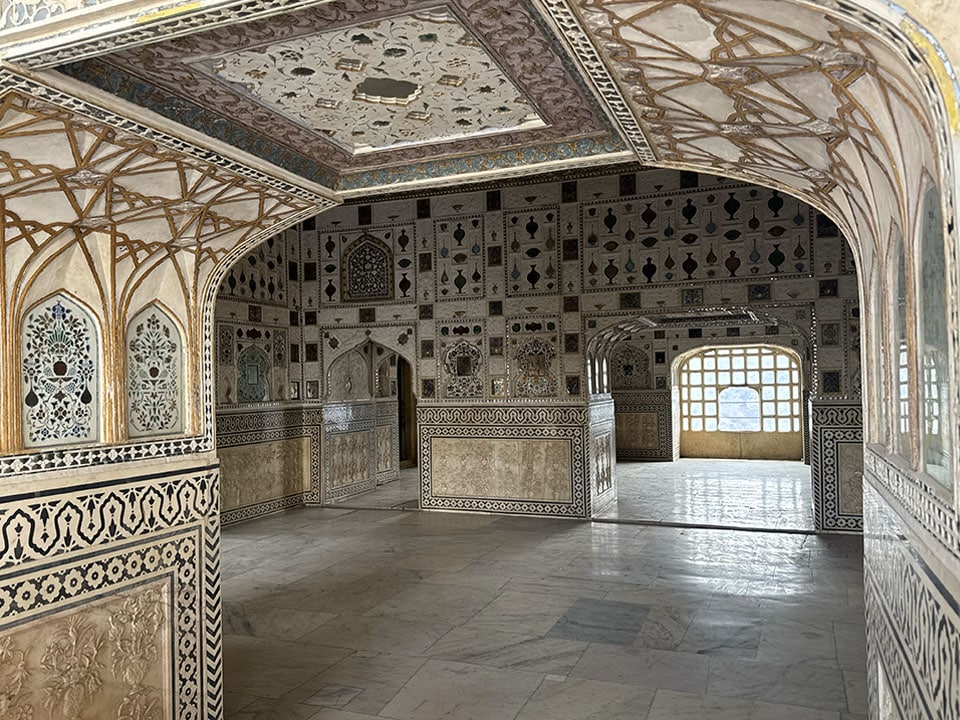
This was where the royal family would gather and enjoy the breathtaking beauty. It also showcased the remarkable artistic exchange taking place at that time between India, Persia, and Europe. The mirrors were crafted from imported European glass, carefully set by skilled Indian artisans into intricate Persian designs.
Outside the Sheesh Mahal, Ramesh pointed out large metal rings under the eaves, used to hang wet, woven mats made of vetiver grass (called tattis) over the open arched doorways in the summer. If you’ve ever smelled vetiver, it must’ve smelled amazing. The mats were kept wet by a system of water dripping from a trough on the roof above them. As hot air moved through the damp woven mats, evaporation cooled the incoming air—creating an ingenious form of natural air conditioning used throughout India long before electricity.
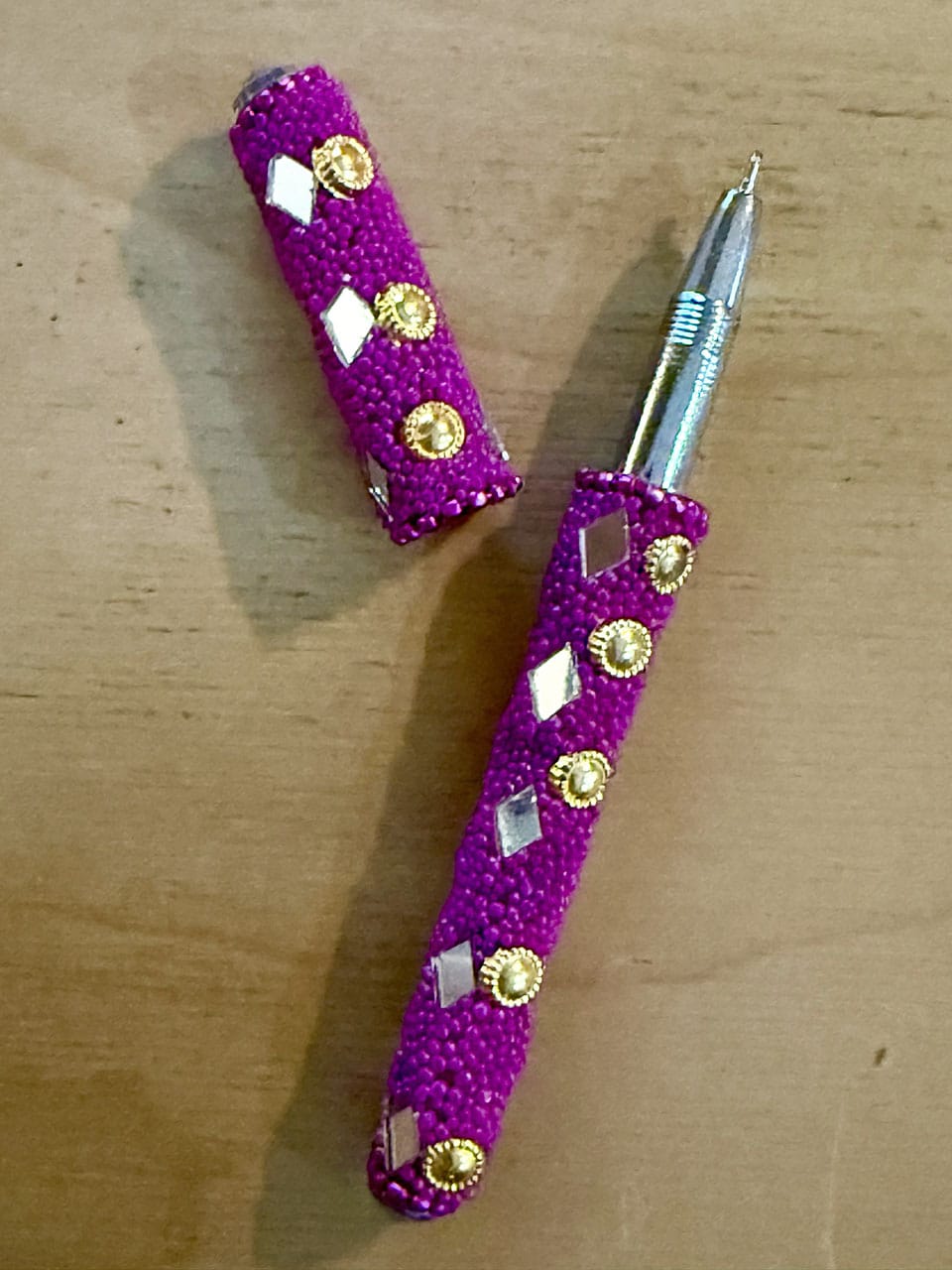
After touring the palace, we headed back downhill through the gauntlet of hawkers. Heidi was happy to find some more Indian mirror-and-jewel-encrusted ballpoint pens for gifts. Originally, the hawkers wanted ₹2,000 for 10 pens… Heidi laughed and said no, because she had paid much less than that for some others in Rishikesh. As we started back down the hill in our jeeps, and the hawkers ran after us the whole way down, lowering their price as we went… In the end, she paid ₹250 for 10 pens. We all had a good laugh about it…haggling is part of the game.
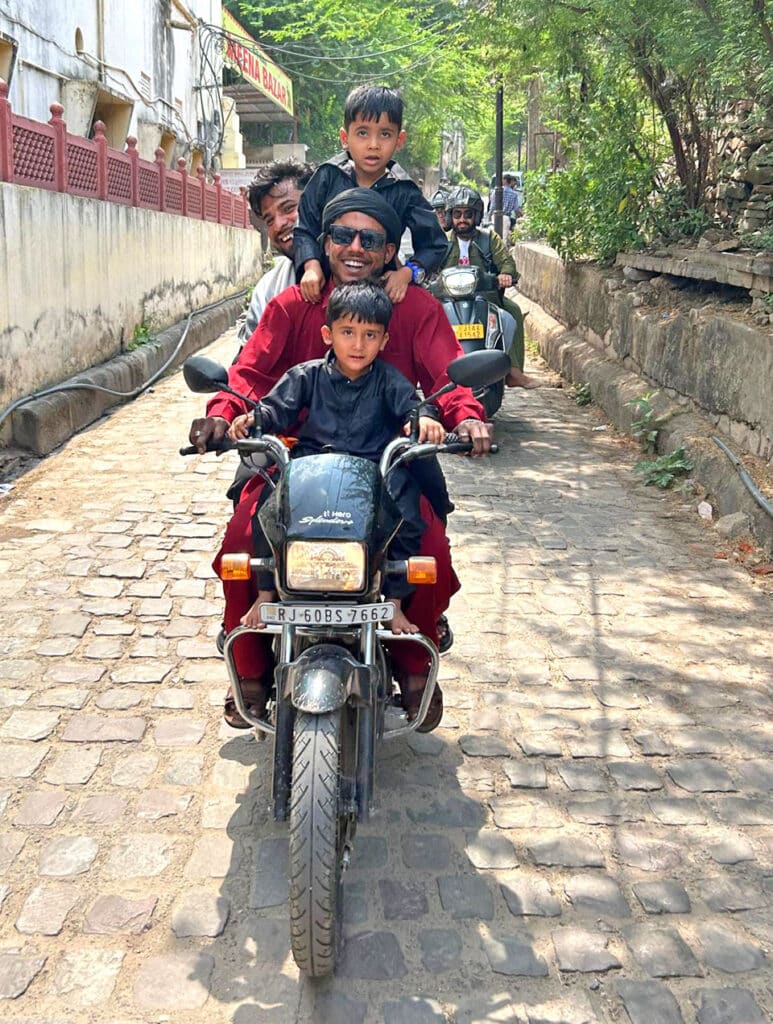
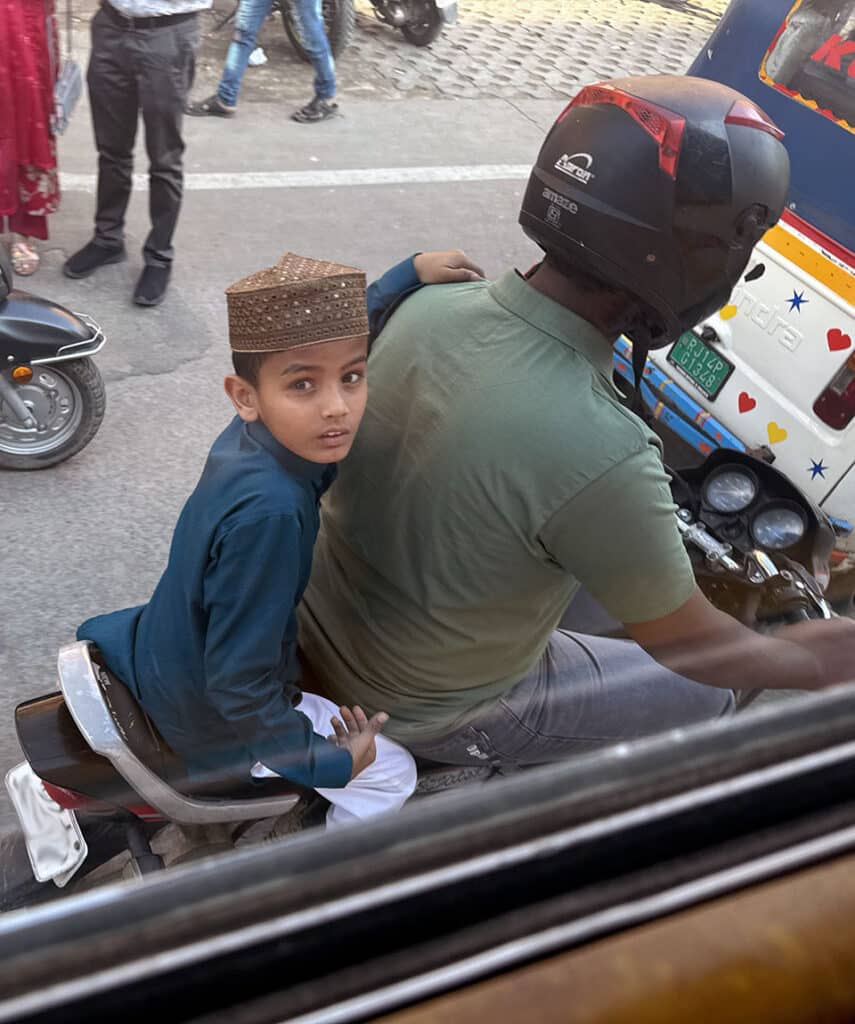
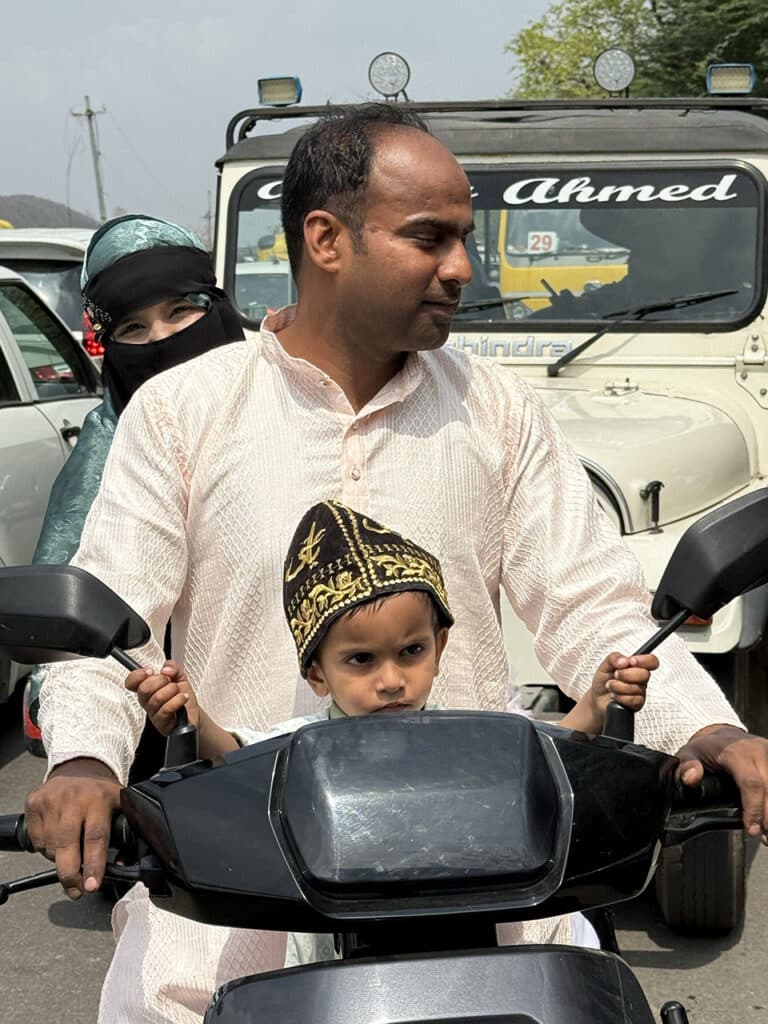
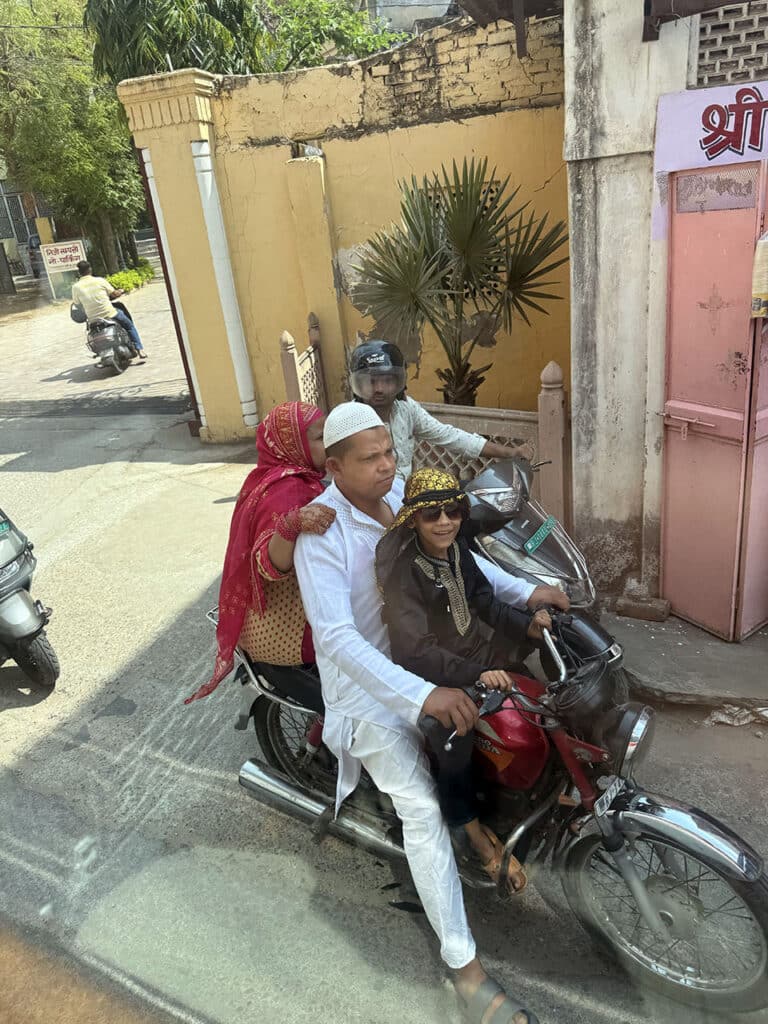
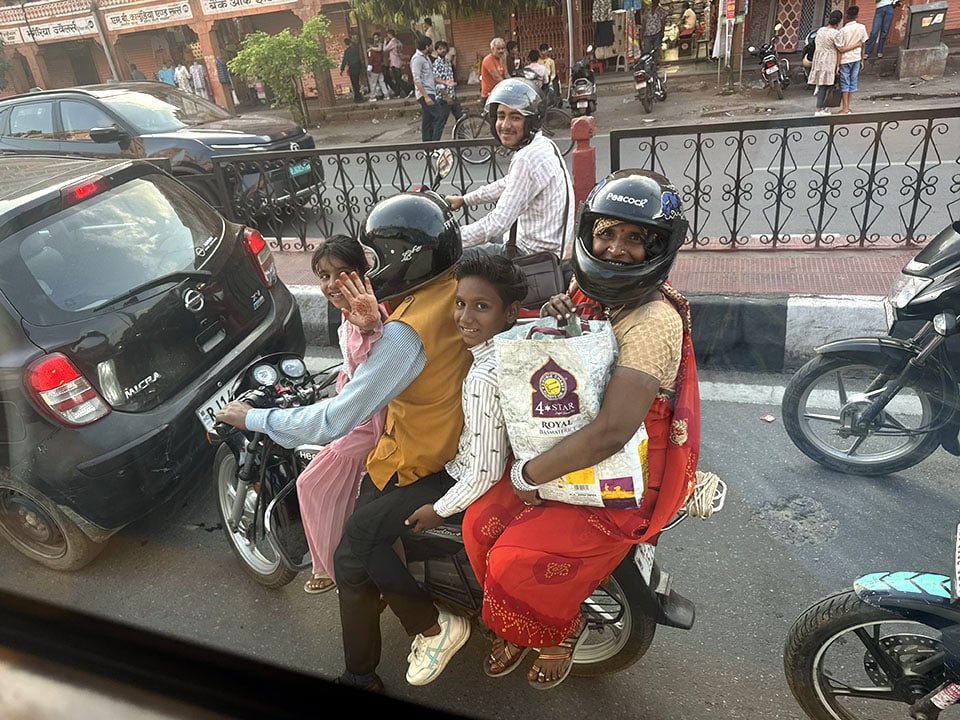
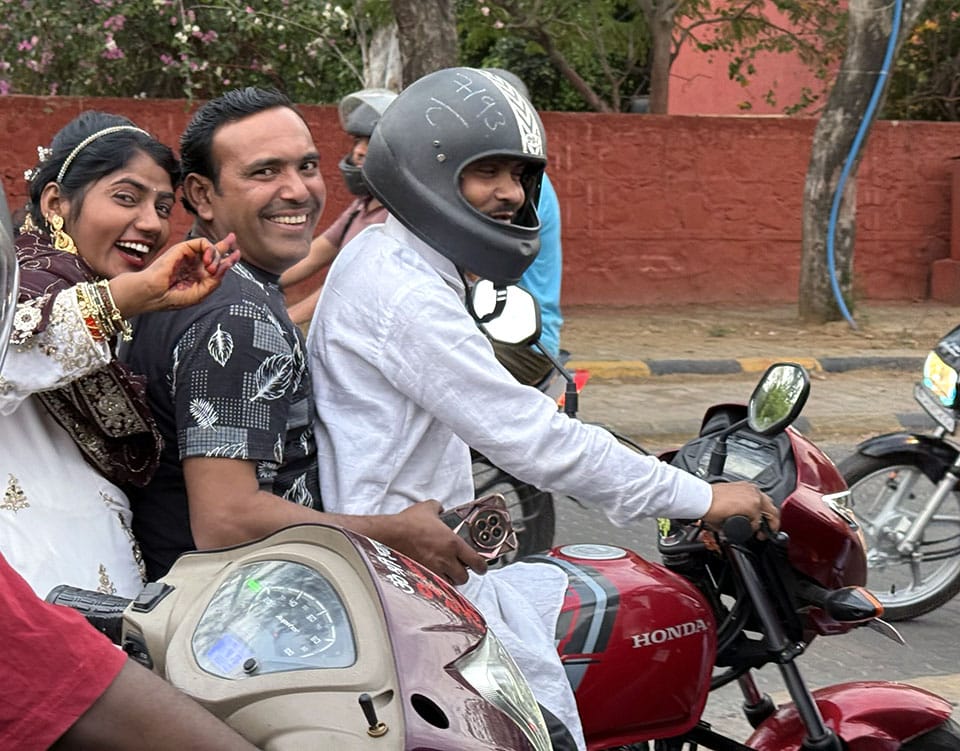
The bus ride back to Jaipur was even slower than our jeep ride up to the palace. Apparently, it was the end of Ramadan, and every Muslim in the area was headed to a festival, so the traffic was bumper-to-bumper, with people dressed up in their holiday finest on motorcycles 3-4 per bike.
Samode Haveli
Back in Jaipur, we lunched at another Royal Heritage Hotel restaurant, Samode Haveli, a luxury heritage hotel in the old city. Originally built over 225 years ago as the urban residence for the Nathawats of Samode (we would visit their opulant summer palace the next day), Samode Haveli now serves as a boutique hotel that preserves its traditional Rajput-Mughal architecture. After lunch, we were off to do some shopping, which Jaipur is known for.
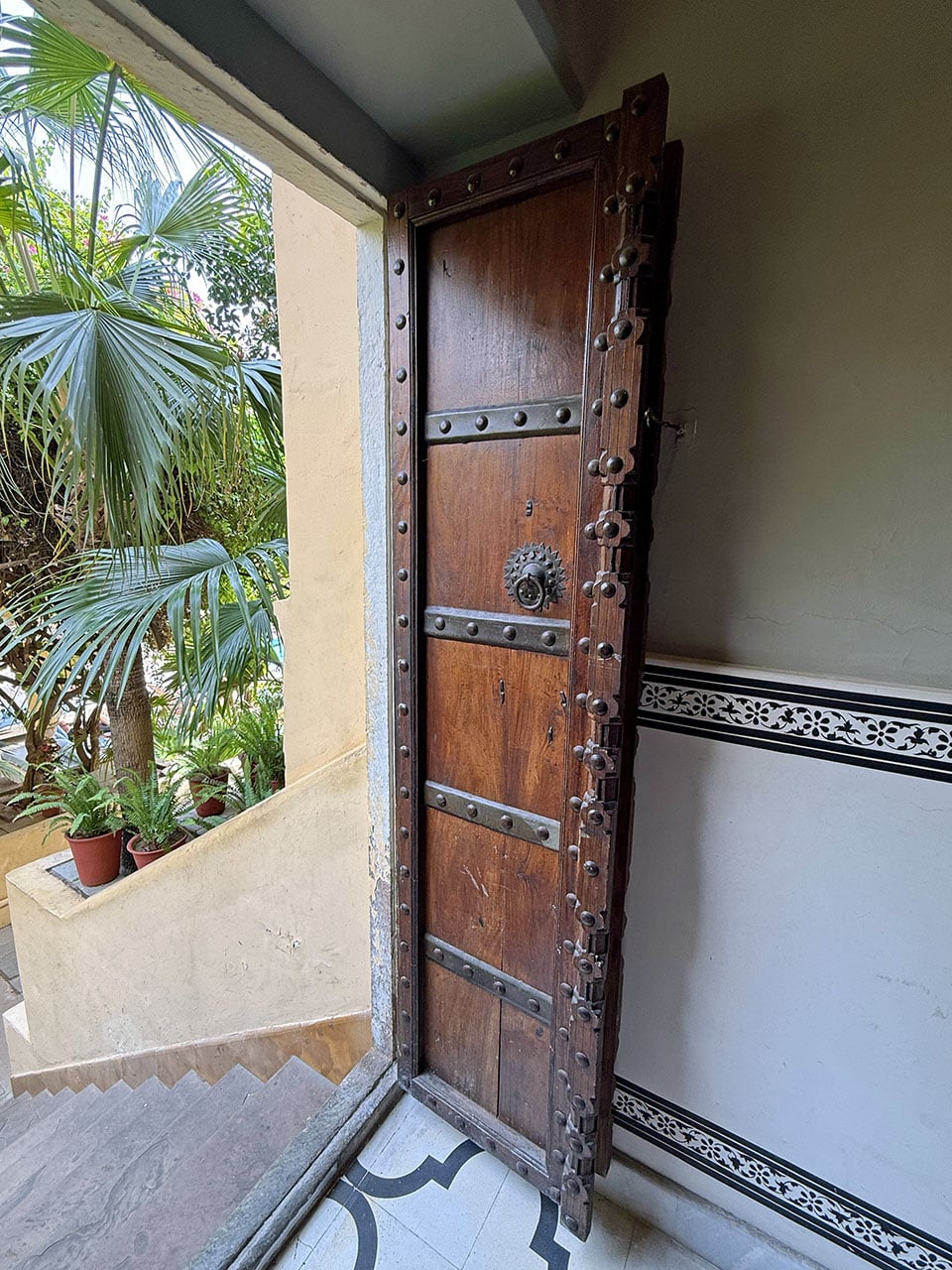
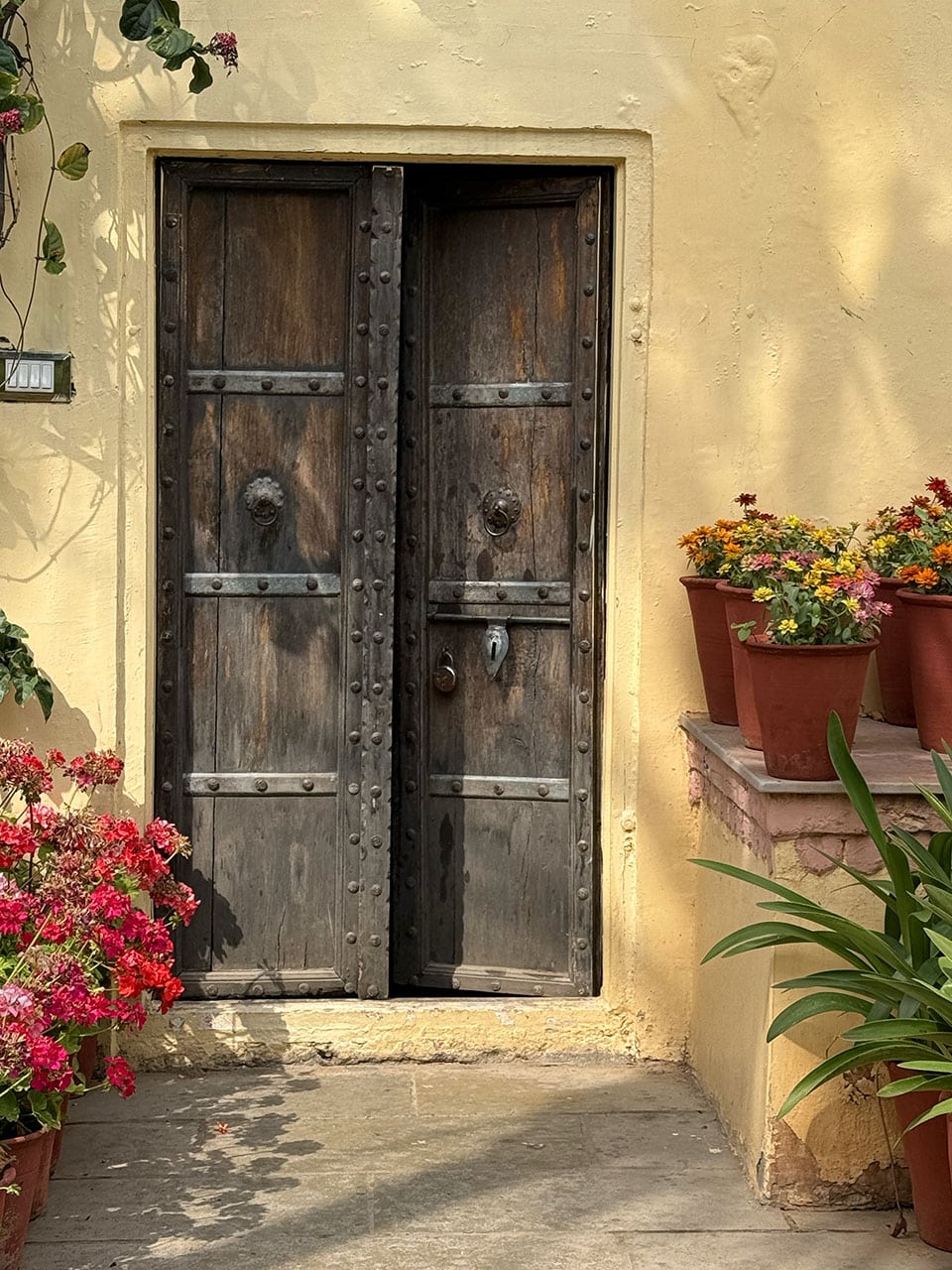
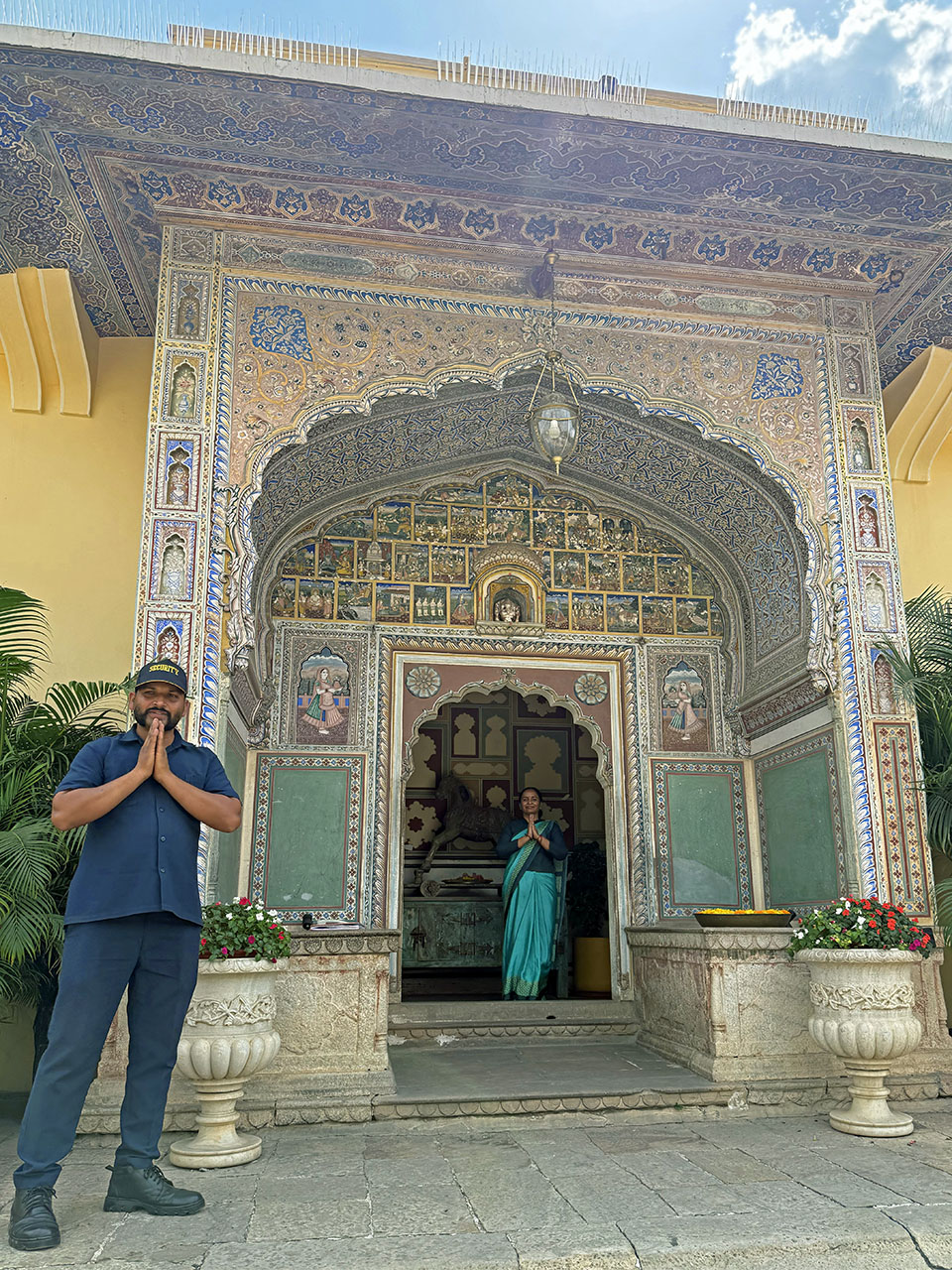
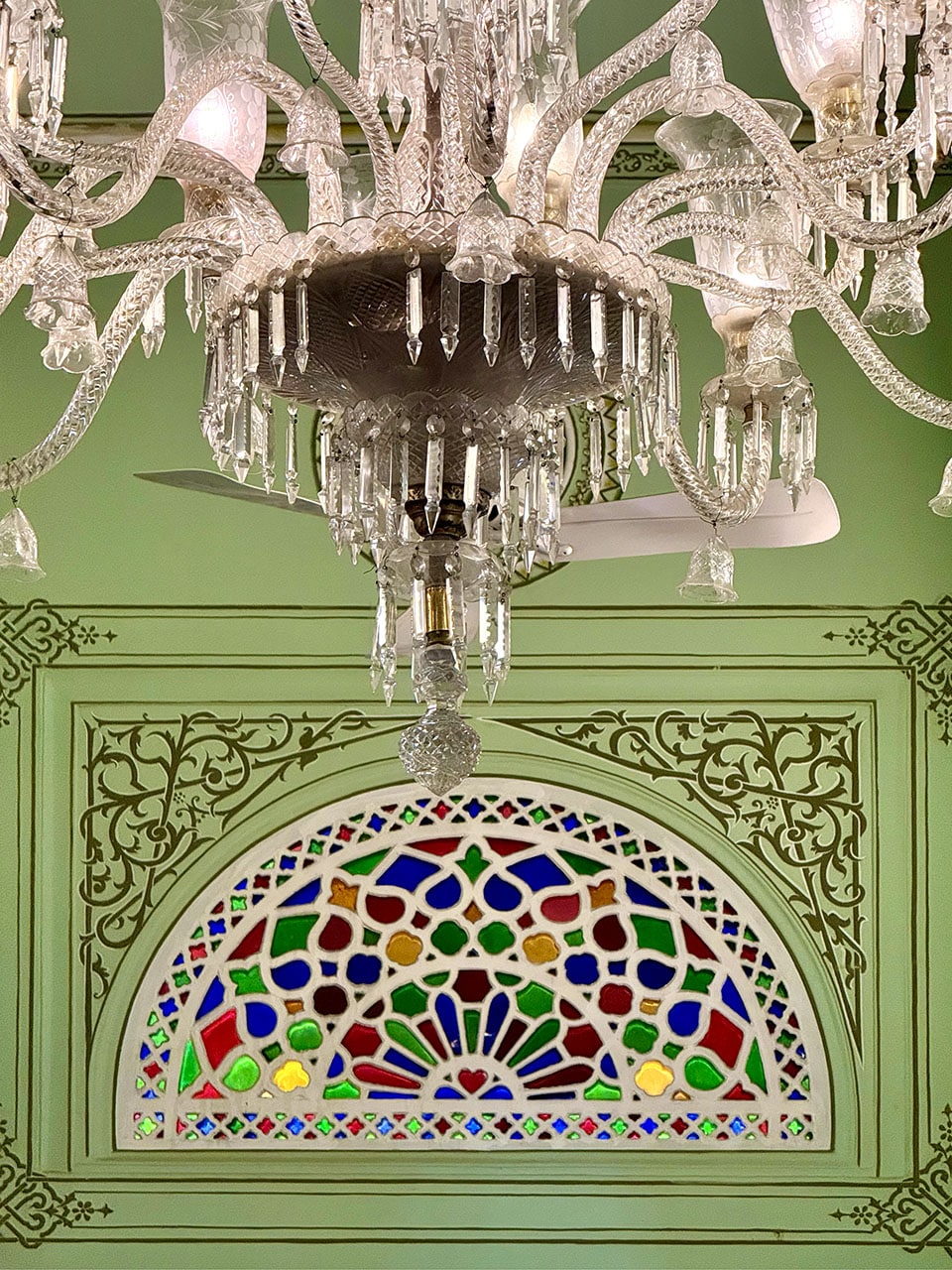
Traditional Indian block printing
Our first stop was a demonstration of traditional Indian block printing on cotton fabric. Since we both have some experience with screen printing, we understand the importance of registration—perfectly lining up multiple layers of color. So we were amazed at how well these artisans aligned each carved block with such precision, without registration marks or guides, just years of experience.
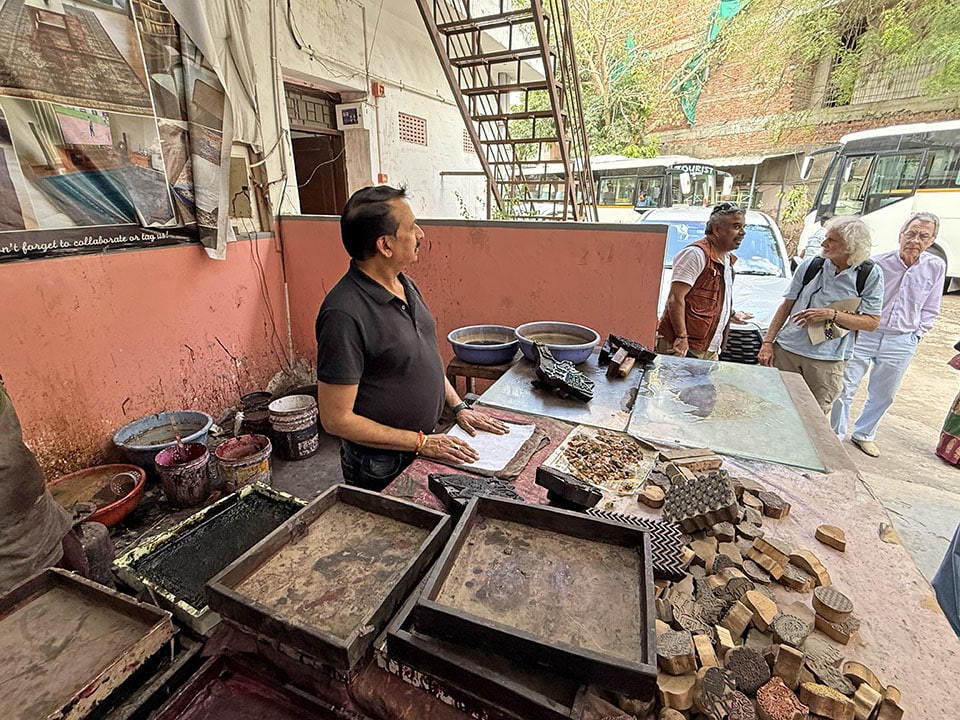
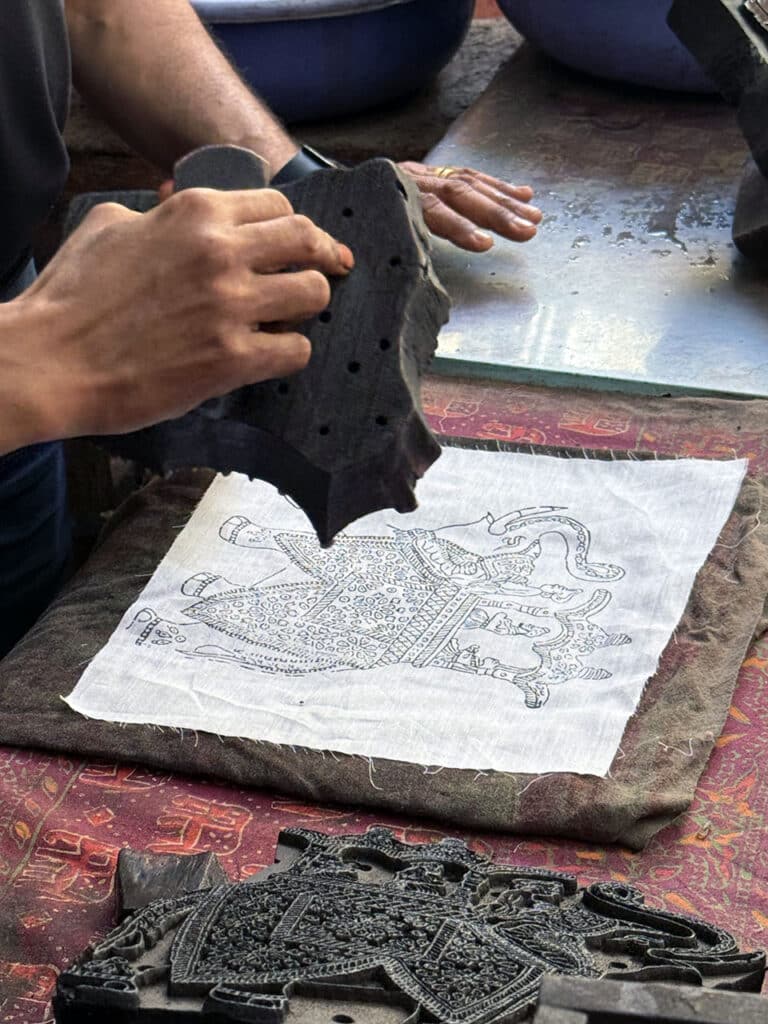
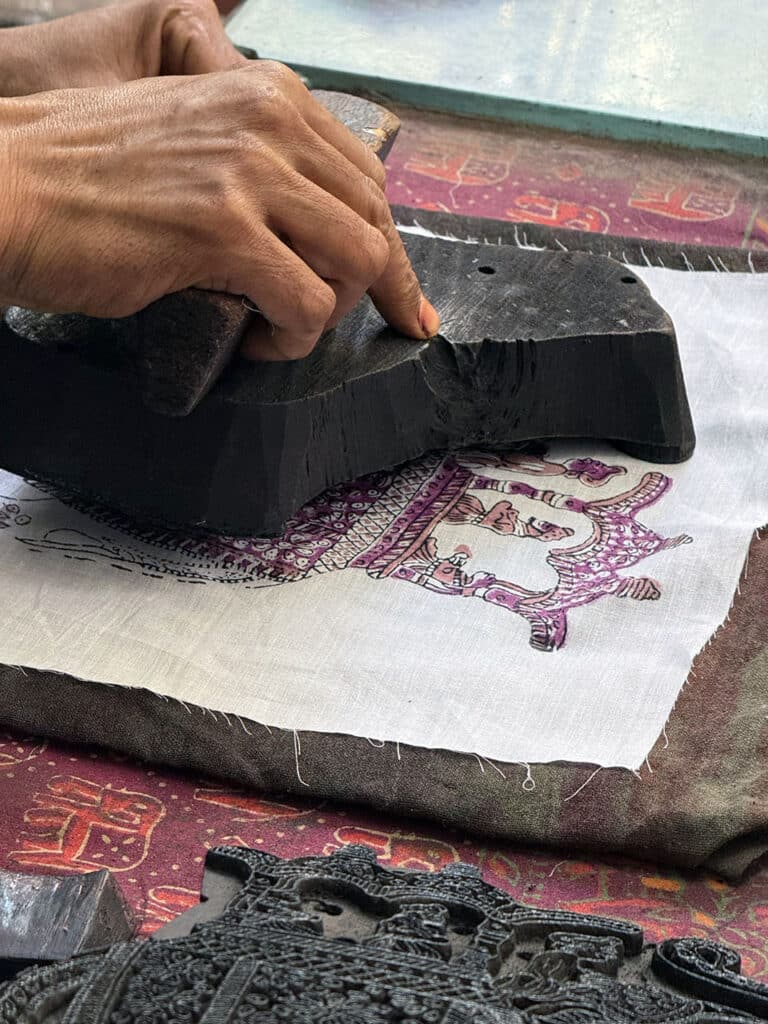
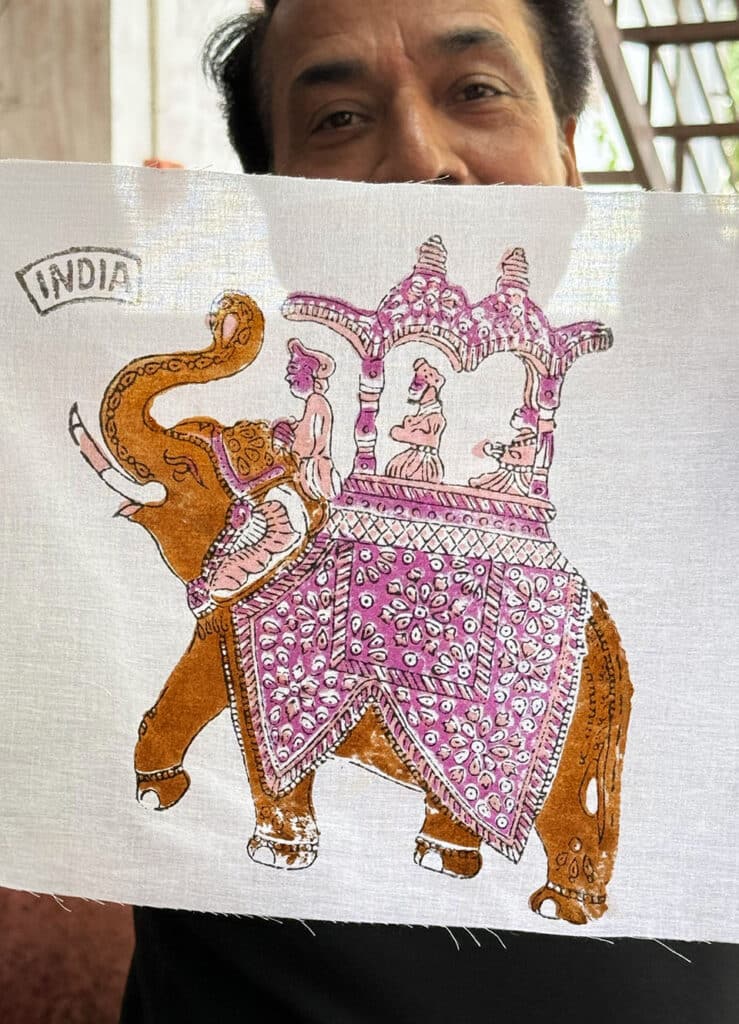
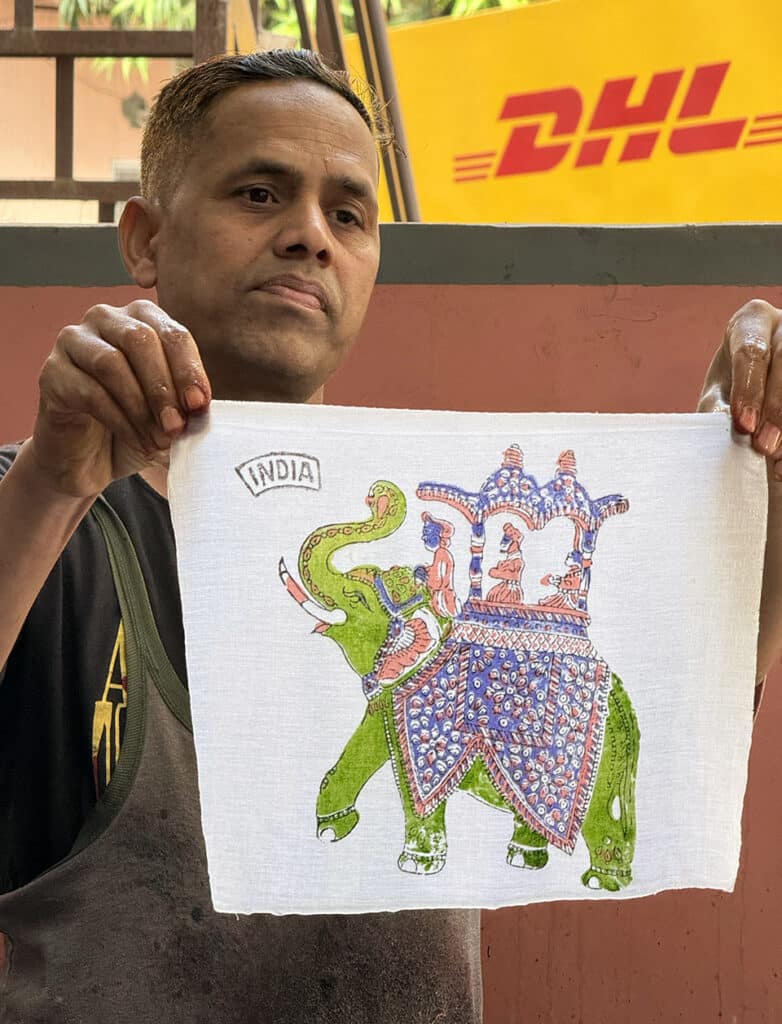
The final process involved dipping the cloth into a vat of something (??) which magicaly changed colors!
Right next door, we visited a shop selling block-printed cotton clothing, possibly connected to the printing demonstration? They also offered custom-made cotton and silk clothing, taking your measurements and creating garments overnight. We had both hoped to have a few shirts made in India, similar to what we did in Thailand nearly 30 years ago, but ultimately we didn’t find any fabric we loved enough to wear. A few of our tour mates, however, found some beautiful pieces. They made Basilica a gorgeous lime green raw silk top, and Roger and David had several nice cotton block-print shirts made as well.
Then half the group headed back to the hotel while the other half, including the two of us, Mallika, Ramesh, Basilica, and Marge, went shopping at Johari Bazaar, near the Hawa Mahal.
Hawa Mahal
Although we didn’t have time to visit Hawa Mahal (the Palace of Winds), we passed by it several times during our time in Jaipur and managed to photograph its iconic pink façade on our shopping spree.
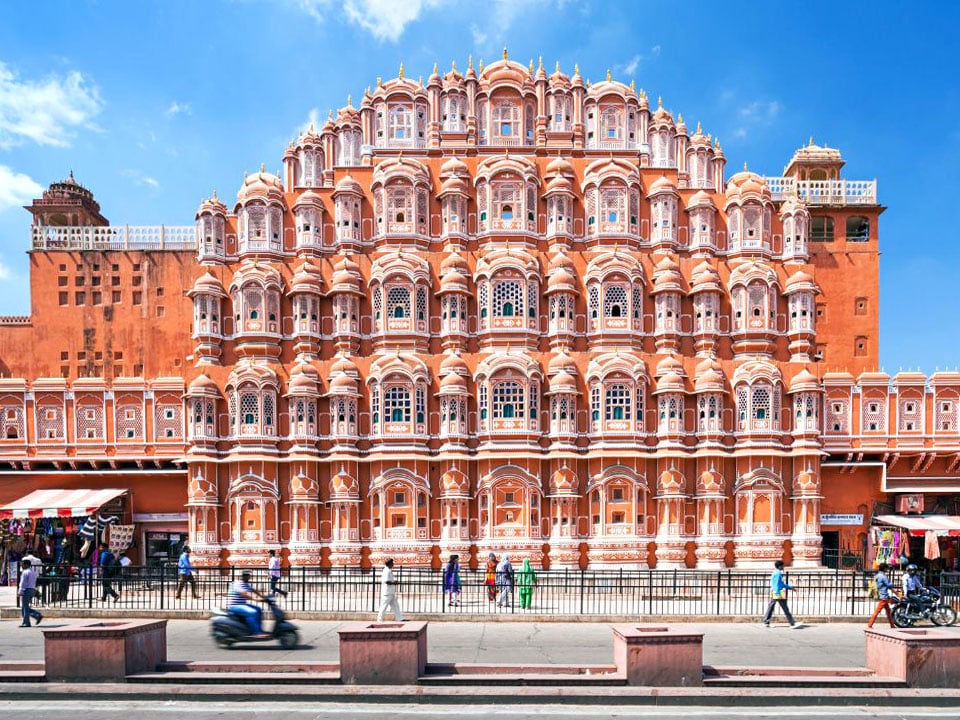
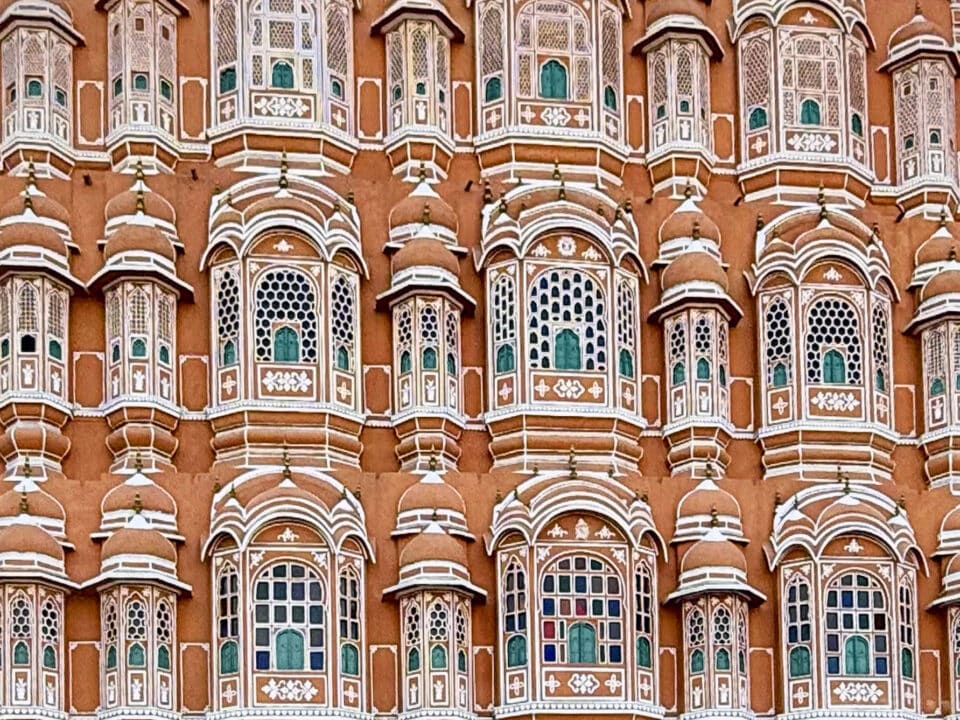
Built in 1799 by Maharaja Sawai Pratap Singh, the grandson of the founder of Jaipur, this five-story palace was designed with 953 small windows, or jharokhas, allowing royal women to watch the activity and celebrations in the streets below while remaining hidden from public view. The many windows also allowed cool breezes to flow through the palace, giving it the name “Palace of Winds.”
Johari Bazaar
This was one of the few times on this entire trip when we got to shop on our own, and it was nice to explore a few of the bazaar shops.
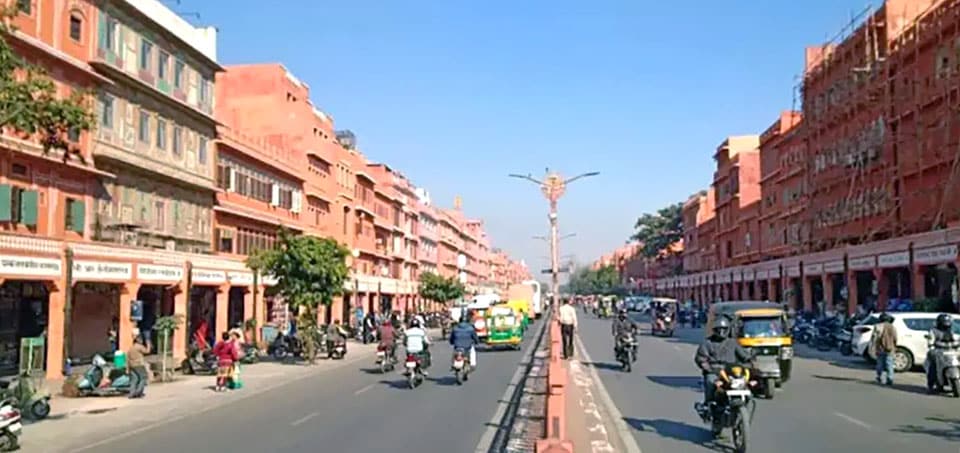
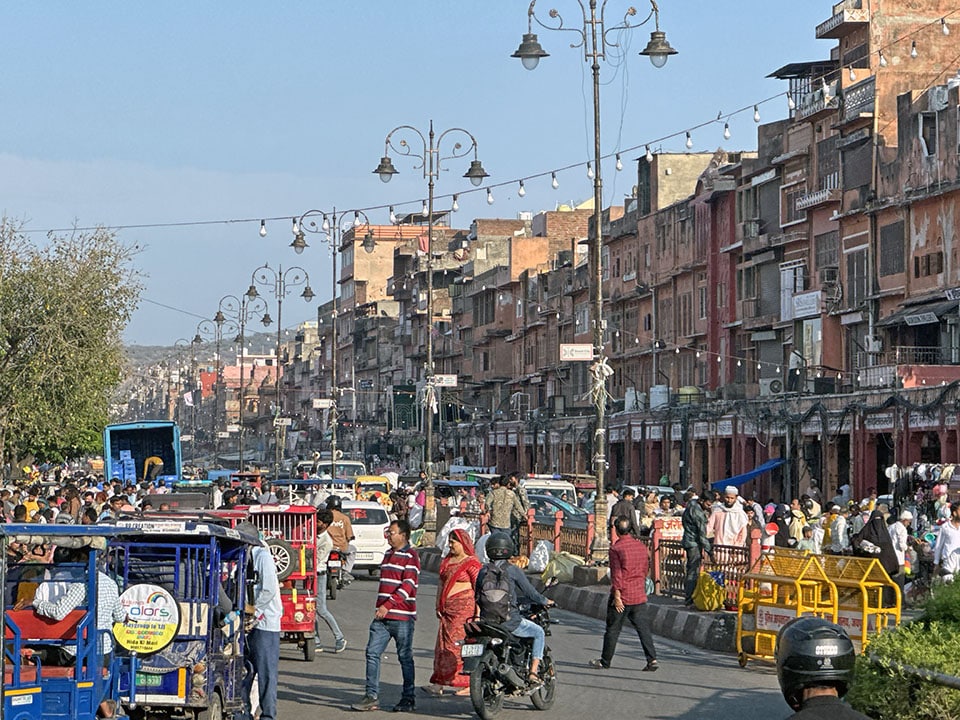
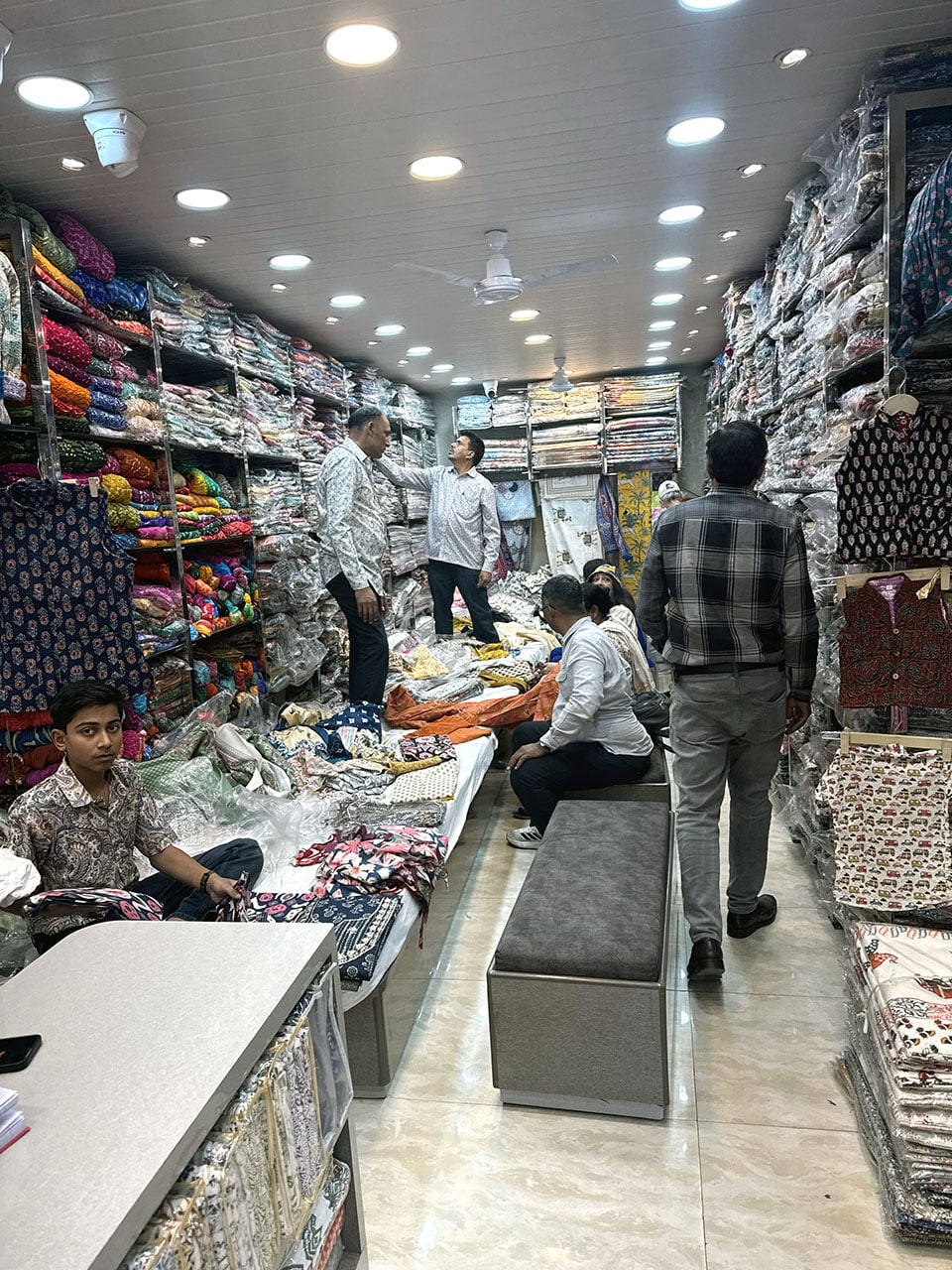
Shopping for fabric was an interesting experience here because you have to sit down on a bench while the staff brings fabrics for you to look at. It’s not at all how we like to shop—we prefer to browse on our own and find something that catches our eye. We were looking for fabric for some boat redecorating projects but didn’t find what we had in mind. We kept saying, “No, not that… more pink…or more orange,” and it felt like a huge waste of everyone’s time.
Apparently, the vibrant cotton fabrics we were looking for (like Mallika’s saris!) are more commonly found in southern India (unfortunately, we didn’t realize that while we were down there). Here, most of the brightly colored fabrics were either silk or synthetic. The cotton they had tended to be more muted in both color and pattern. They were nice, but not what we brightly-colored Mexican folks were looking for, LOL.
Most of the shopping experiences on this Indian adventure were curated by our tour guides, with visits to silk scarf and carpet weavers, jewelers, marble artisans, and textile printers, whom they have known and trusted for years. While it was nice to visit those vendors and see their beautiful crafts, when it comes to shopping, we much prefer wandering through bazaars and local markets, where we can discover things on our own and barter for them.
When in India…
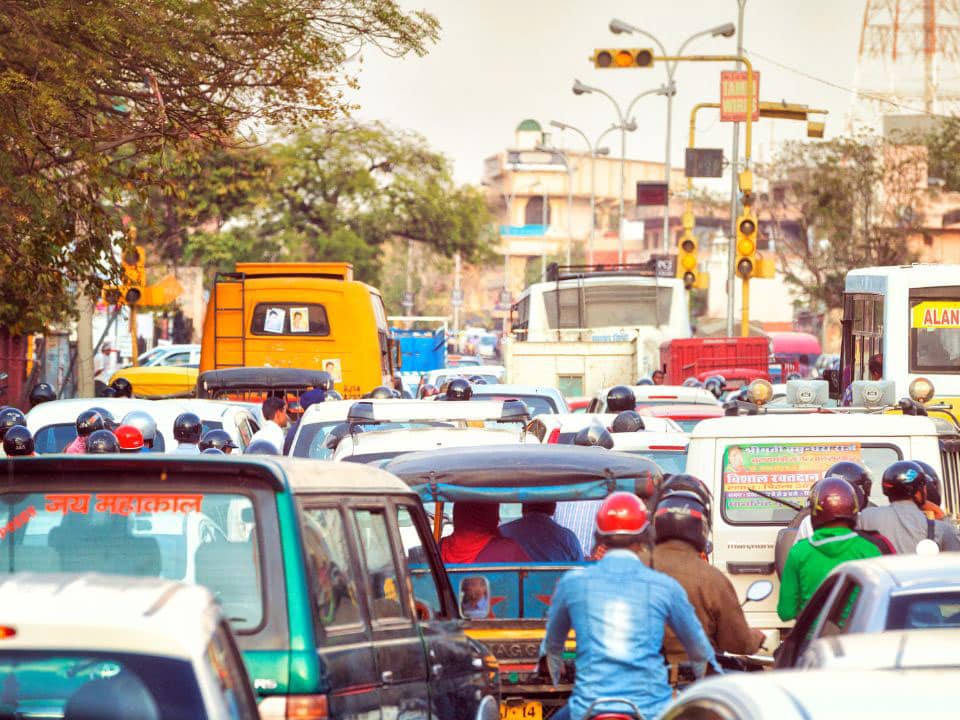
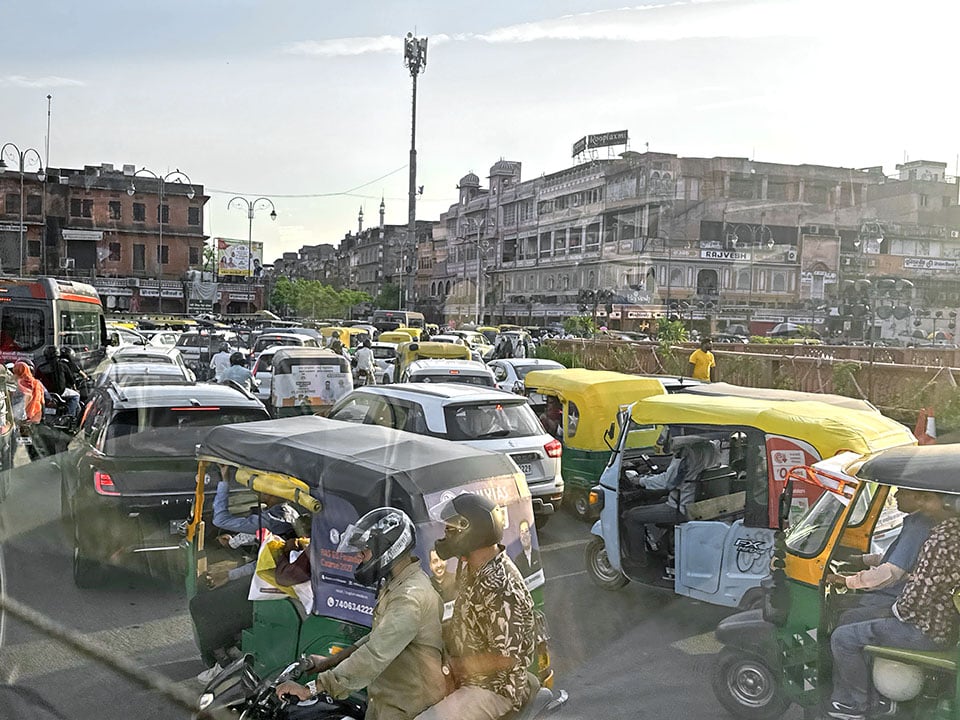
On our return from Johari Bazaar to the Marriott, the six of us split between two tuk-tuks. Basica, Marge, and Mallika were in one, while Ramesh rode with us in the other. We were leading the way, with Ramesh giving our driver directions and the second tuk-tuk following behind.
Suddenly, we found ourselves heading onto a freeway on-ramp. Both Ramesh and our driver immediately began yelling, with Ramesh shouting, “No, no, no!” Our driver quickly made a 180-degree turn right in the middle of the on-ramp, and the tuk-tuk behind us followed suit—James Bond style. We then traveled three blocks back in the wrong direction, against oncoming traffic— which was quite exciting for us, but none of them batted an eye! Of course, by that point, we had already seen a few tuk-tuks, cars, and motorcycles traveling the “wrong” way in India, so we probably shouldn’t have been surprised. All is well that ends well, and we returned to the Marriott unscathed.
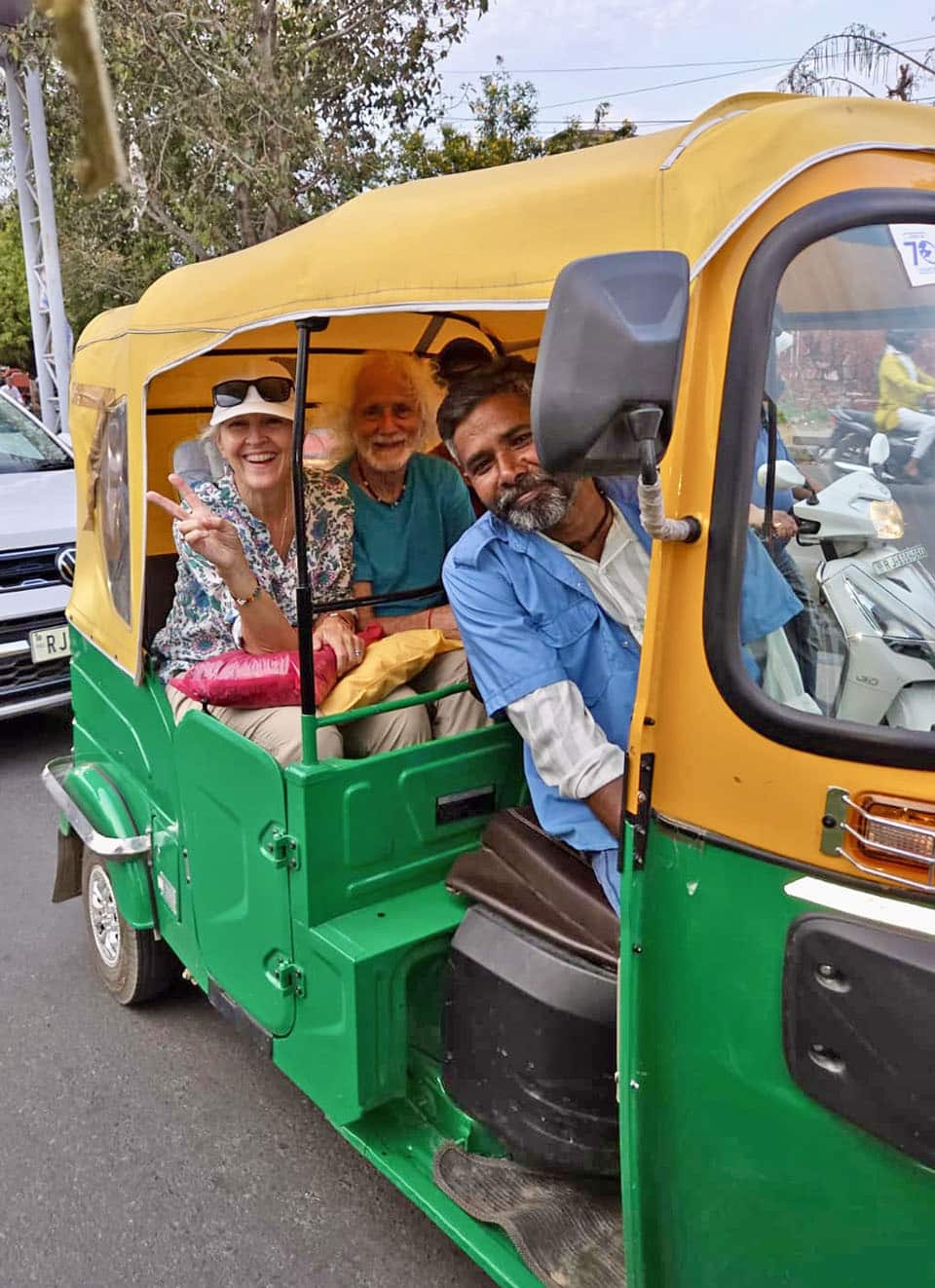
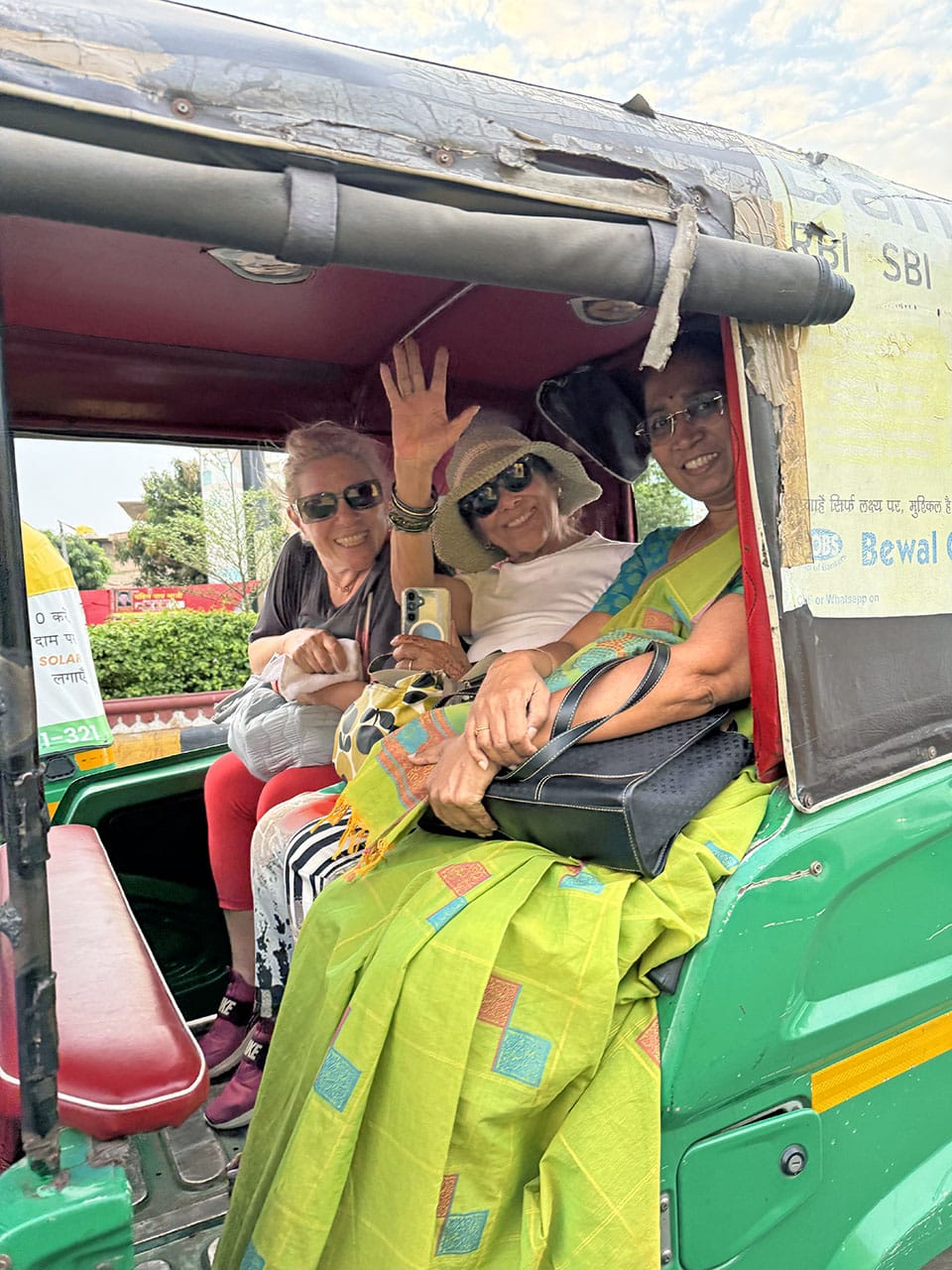
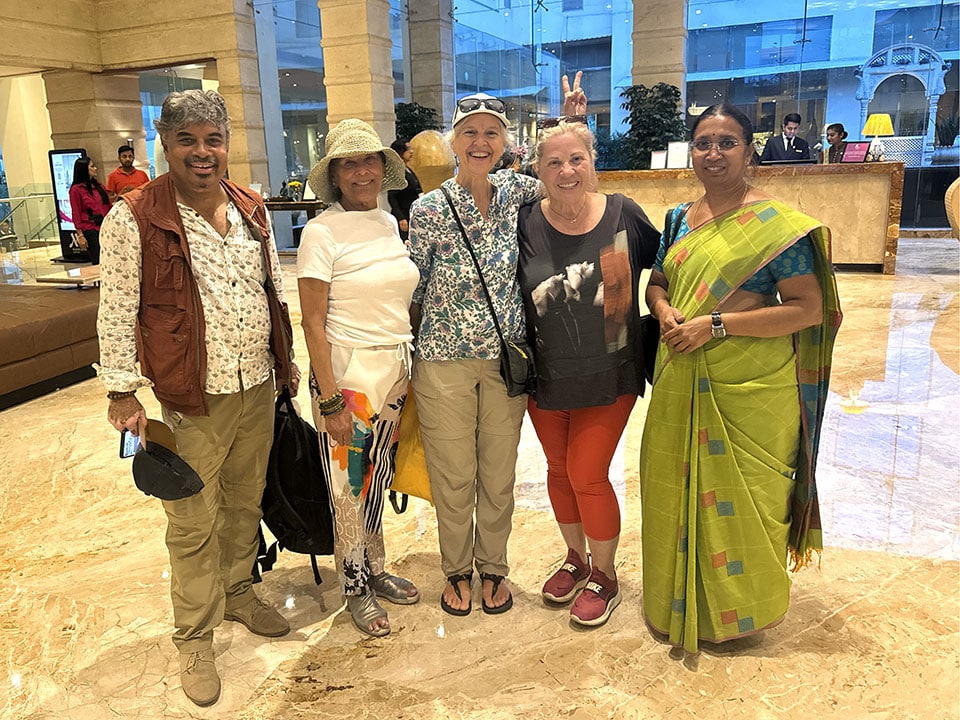
The intrepid shoppers safely returned to the Jaipur Marriott: Remesh, Marge, Heidi, Basilica, Mallika
The next morning, we were scheduled to go on an optional Leopard Safari tour at 5 AM, but apparently, due to the end of the Ramadan holiday, all of the tour slots were full, so that did not happen. While we were bummed to miss seeing the leopards in one of the few natural preserves left in India, it was actually nice to sleep in a bit because we’ve pretty much been go, go, go every day—as you may have gathered—we got a LOT of bang for our buck on this trip! And thankfully by Jaipur, we were both feeling 99% better.
Samode Palace
After breakfast, we took the bus about an hour north to visit the Samode Palace, also known as “The Summer Palace” of Rawal Berisal, the 19th-century Prime Minister of the princely state of Jaipur, whose city residence, Samode Haveli, we ate lunch at yesterday.
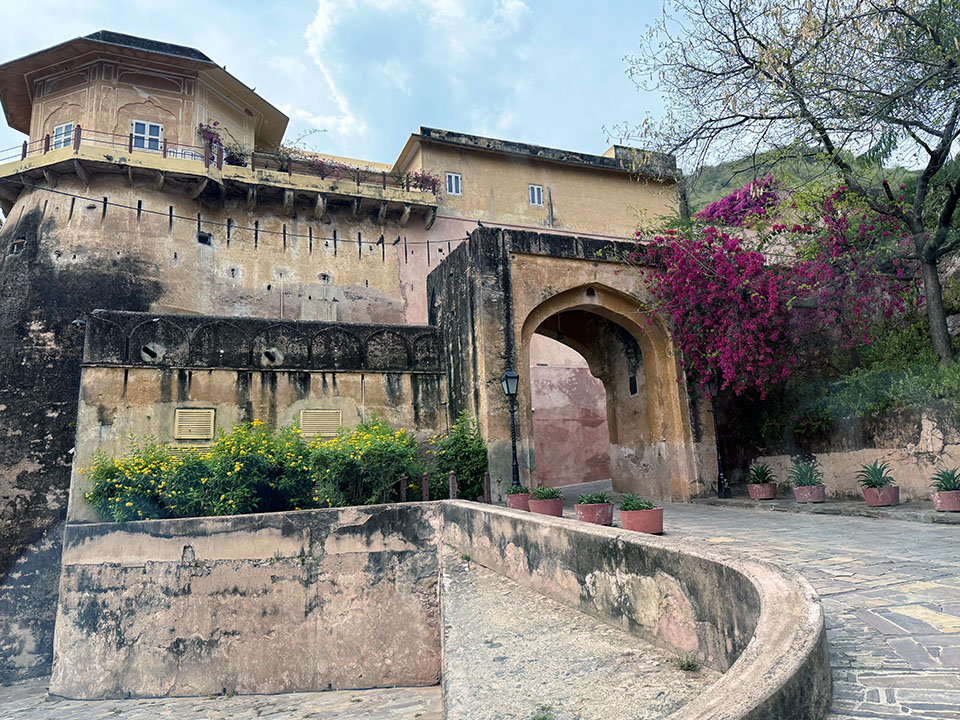
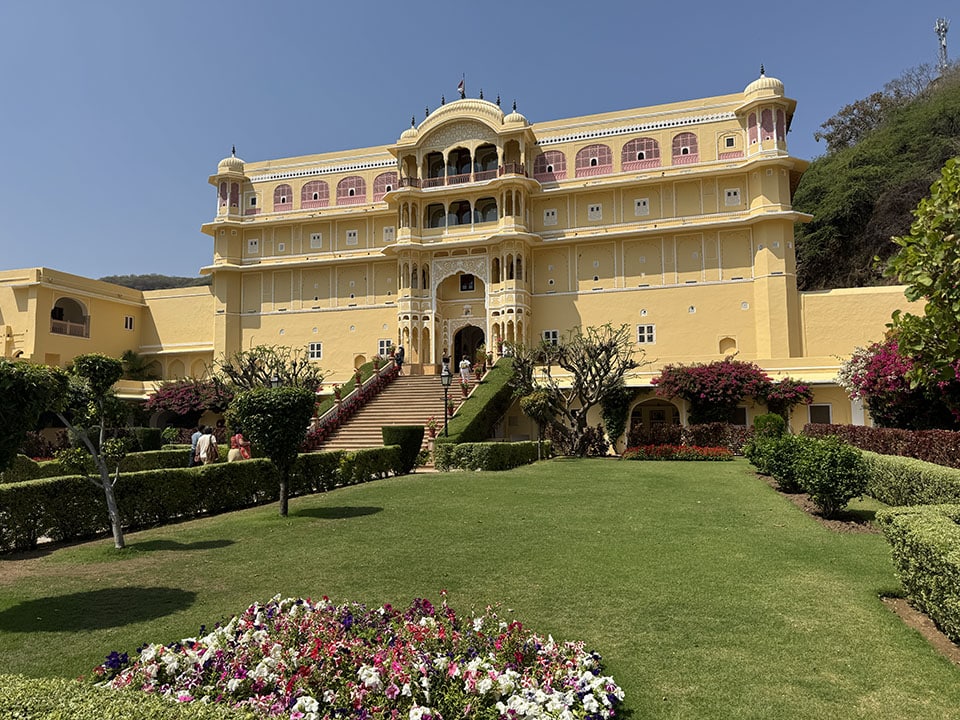
Originally built in the 16th century as a Rajput fort, it was expanded into an lavish palace for Rawal Berisal. Today, his descendants still live in parts of this beautifully preserved palace, which also serves as a luxury heritage hotel and a popular cultural destination. You may recognize Samode Palace from the movies The Far Pavilions or The Best Exotic Marigold Hotel, both of which featured shots of the palace.
Built from a strikingly bright (unpainted) yellow sandstone, it is another wonderful example of Rajput-Mughal architecture (like the Amer Fort), with beautiful courtyards and a grand central staircase often used for events such as weddings. The current royals also had a nice car collection, including a 1956 Chevy just like Kirk’s first car (except his was blue).
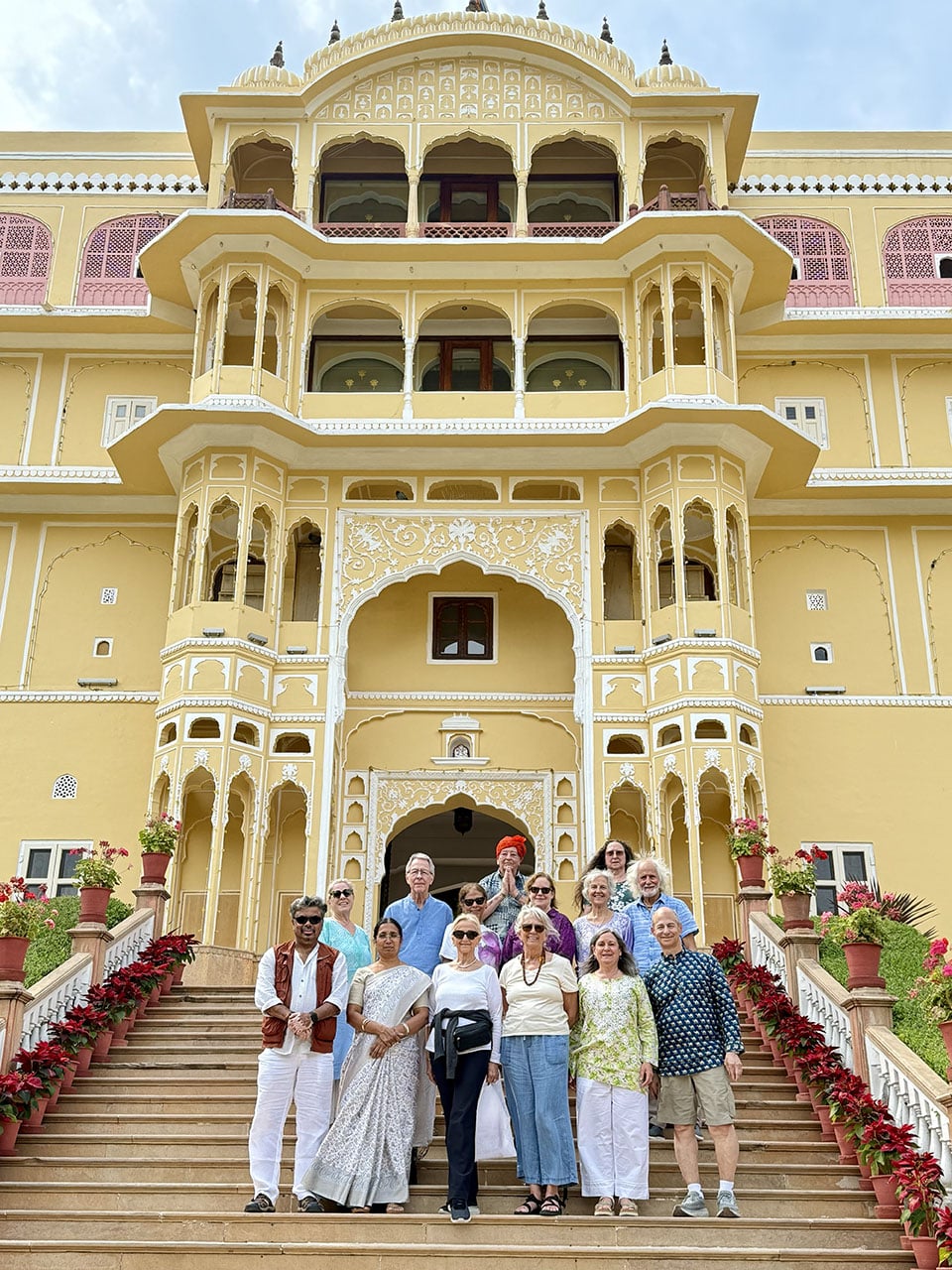


Inside, the palace is best known for its Durbar Hall with hand-painted murals and another Sheesh Mahal (Hall of Mirrors) composed of intricate mirrored mosaics. Every interior surface of this entire palace was hand-painted or decorated with mirrors, carvings, and illustrations, in a rainbow of colors. Of all the palaces we visited in Jaipur, we thought this one was the most beautiful and won hands down for its architectural details, interior design, and decor (for that era). Oh, to have such opulent city homes and summer homes!
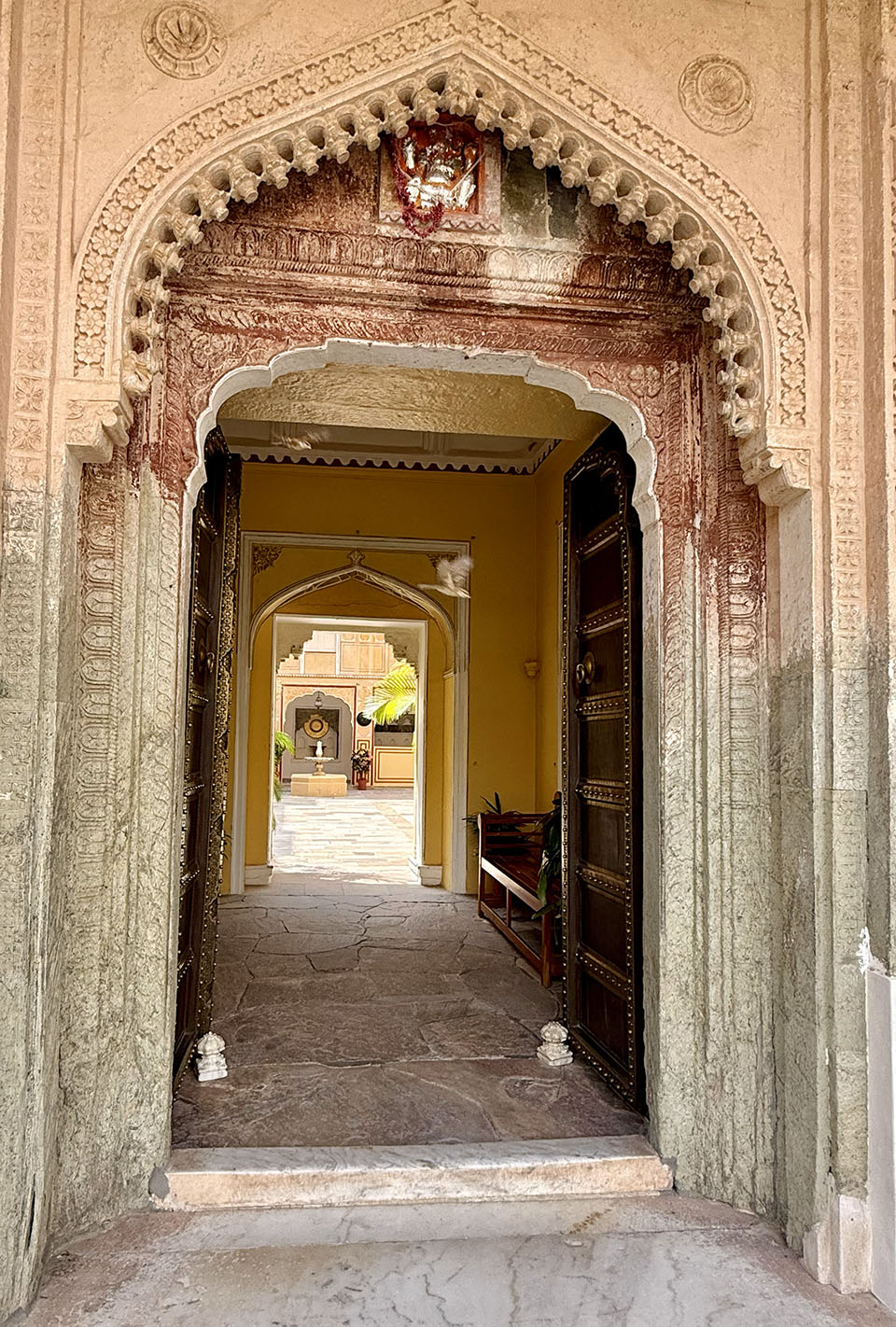
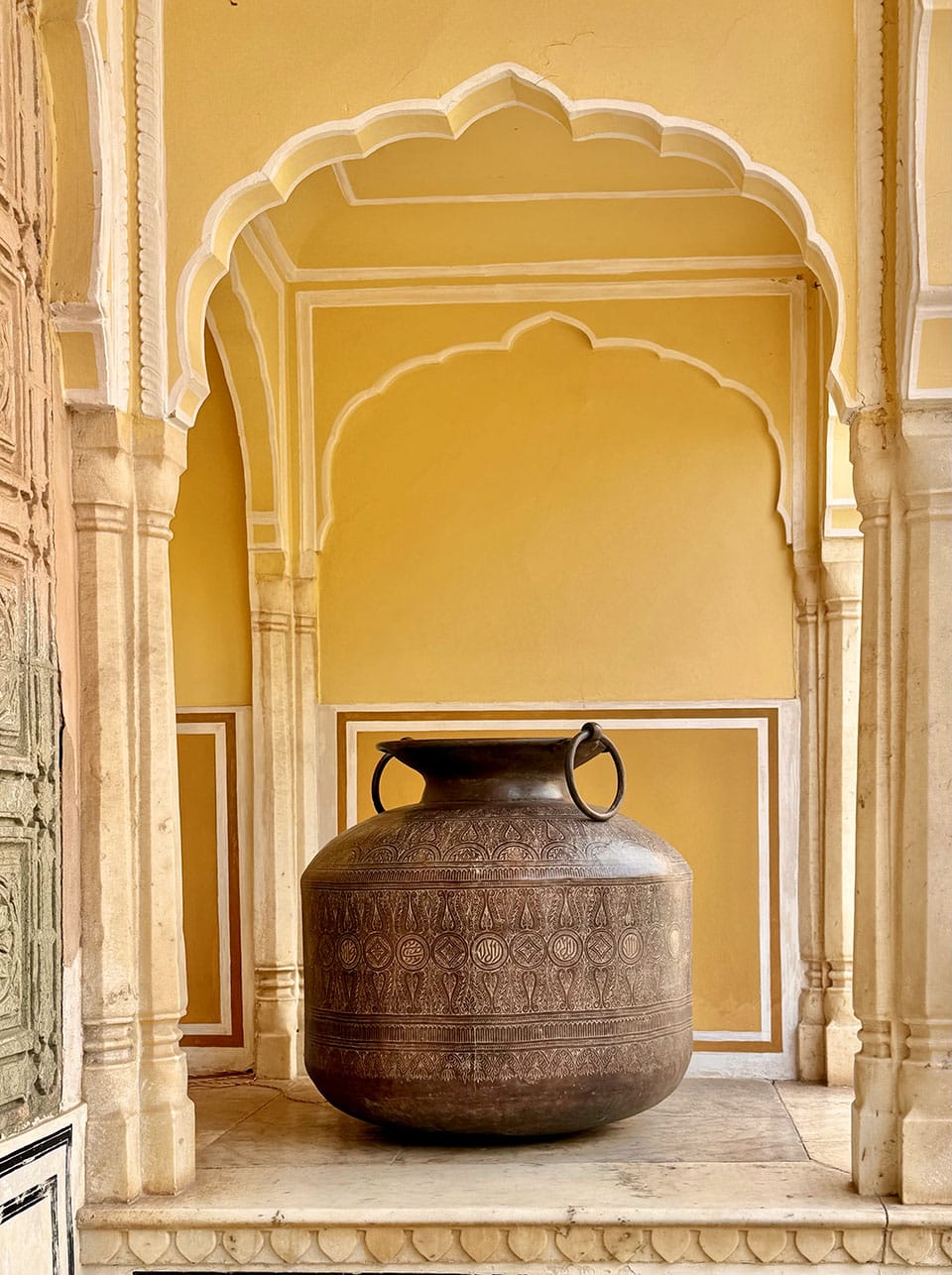
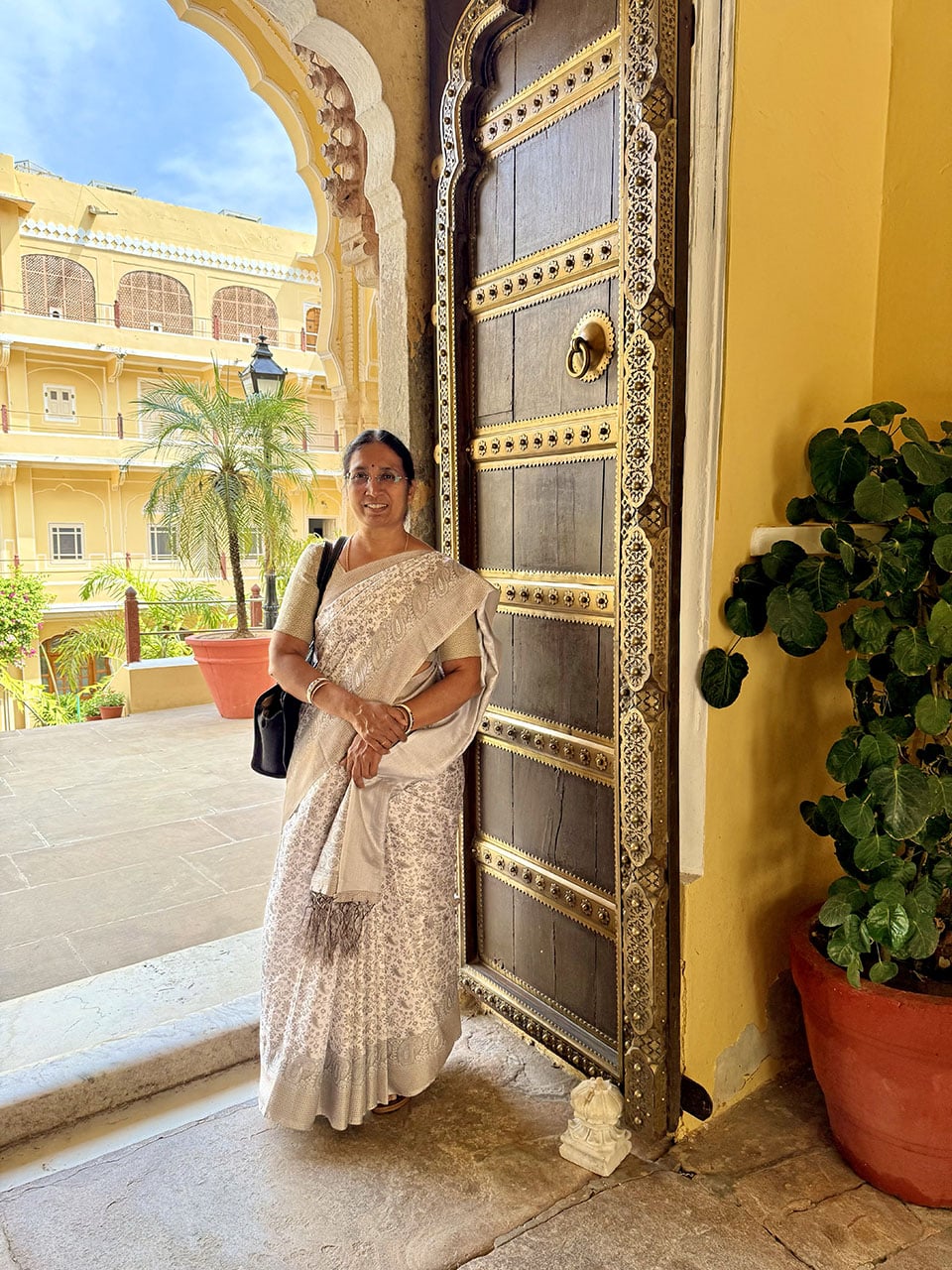
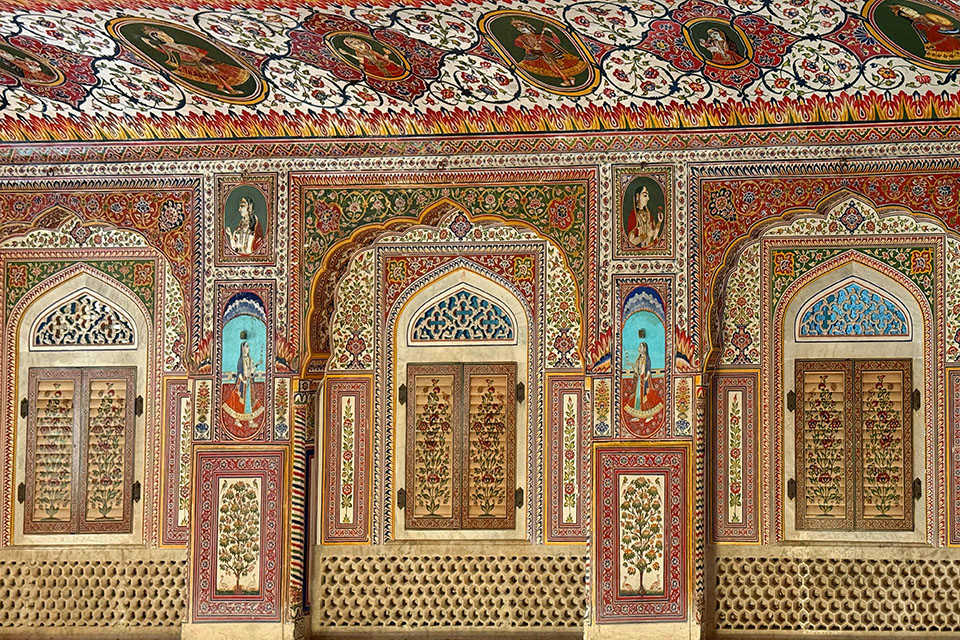
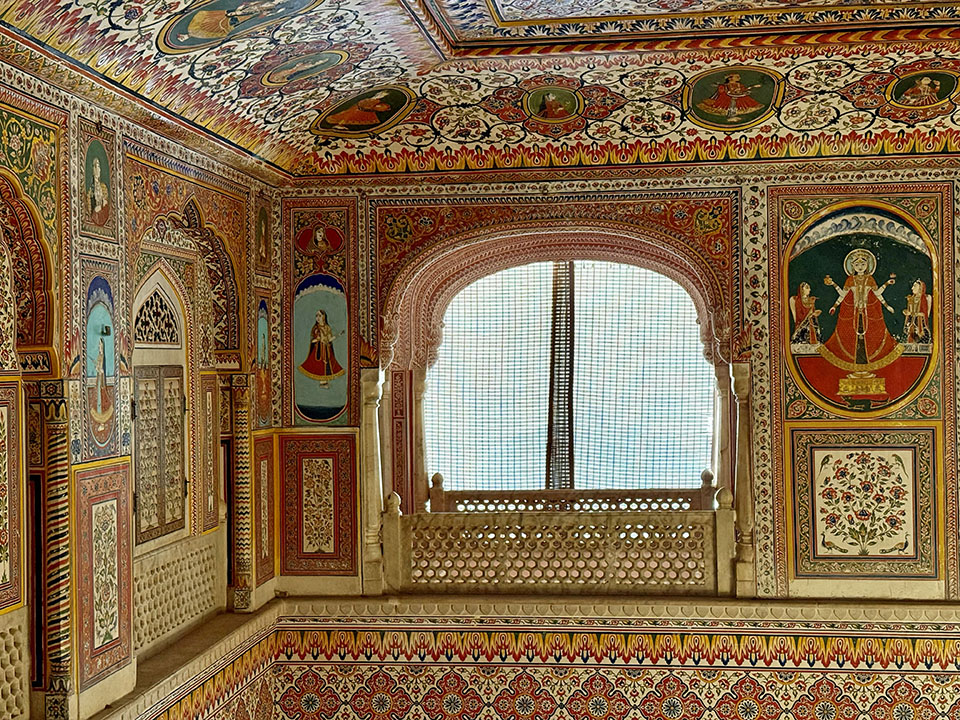

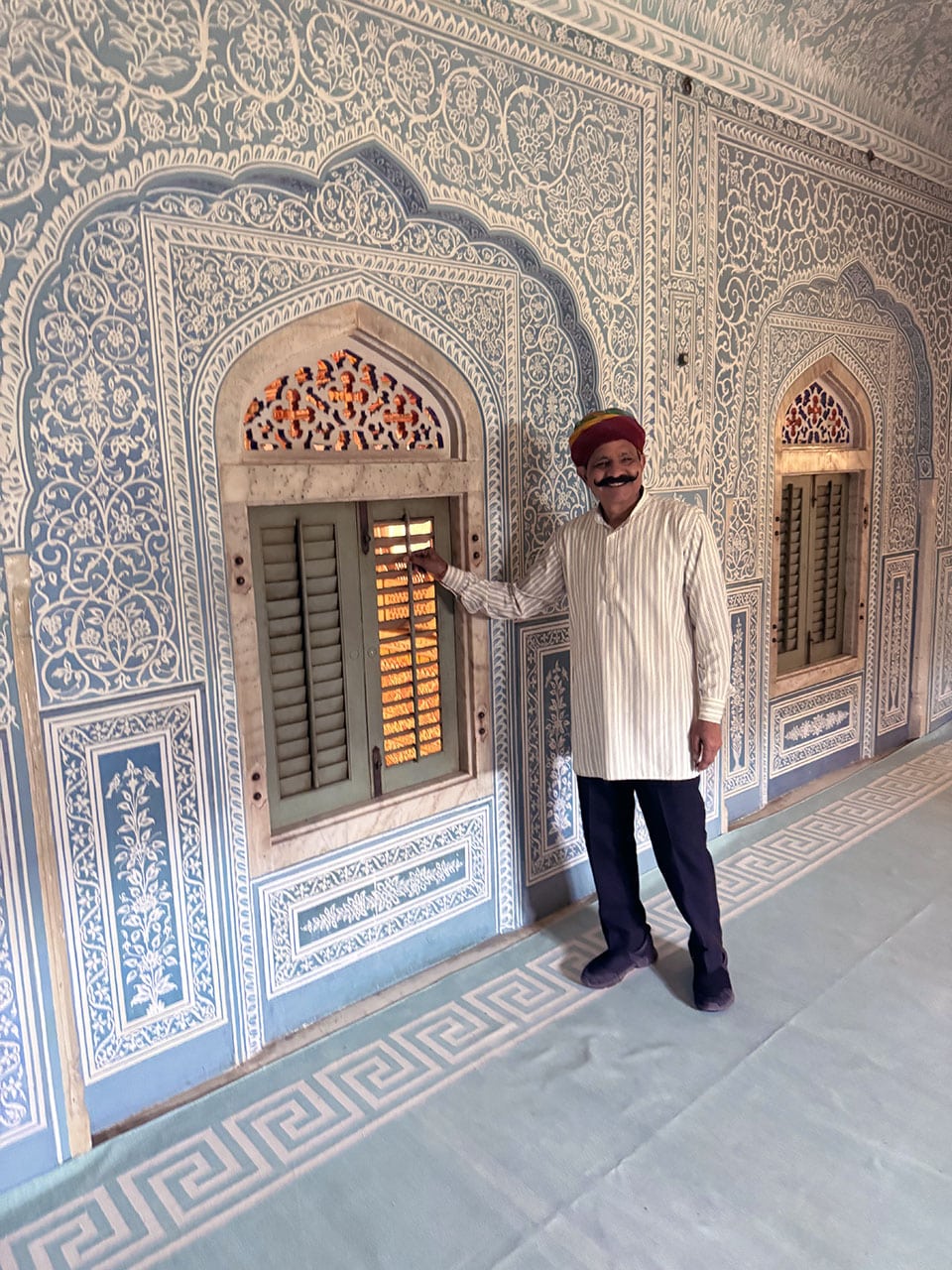
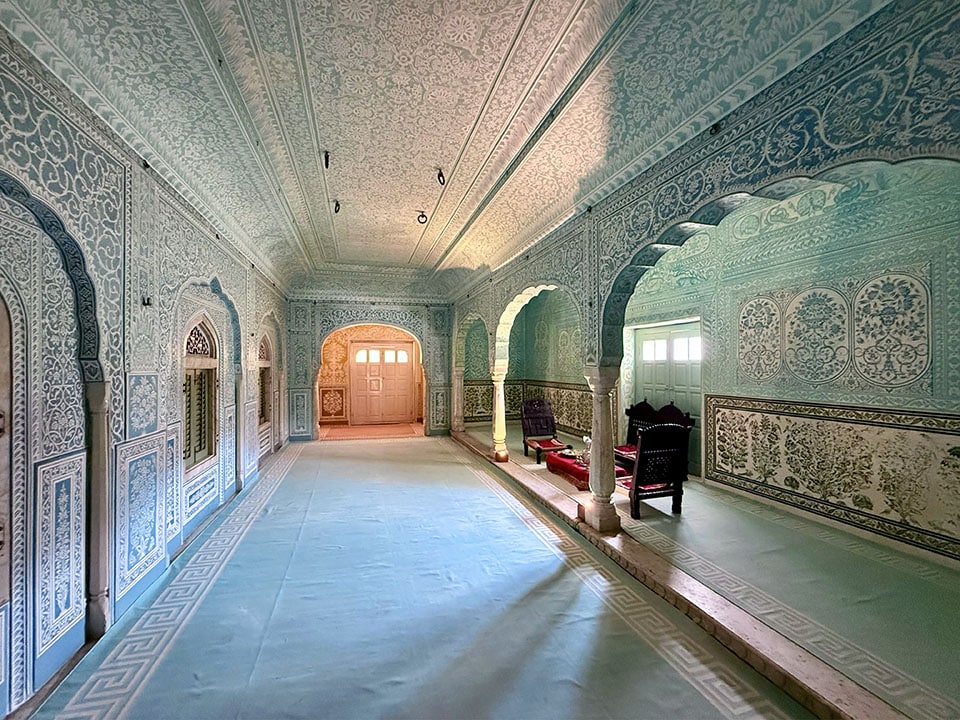
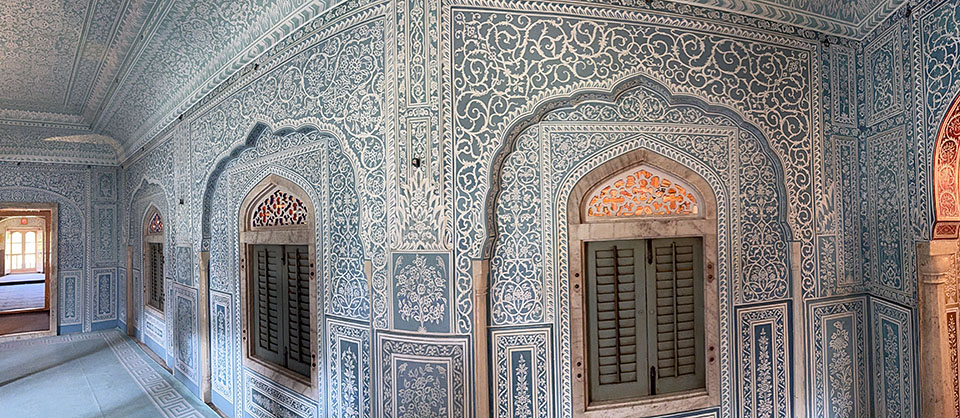
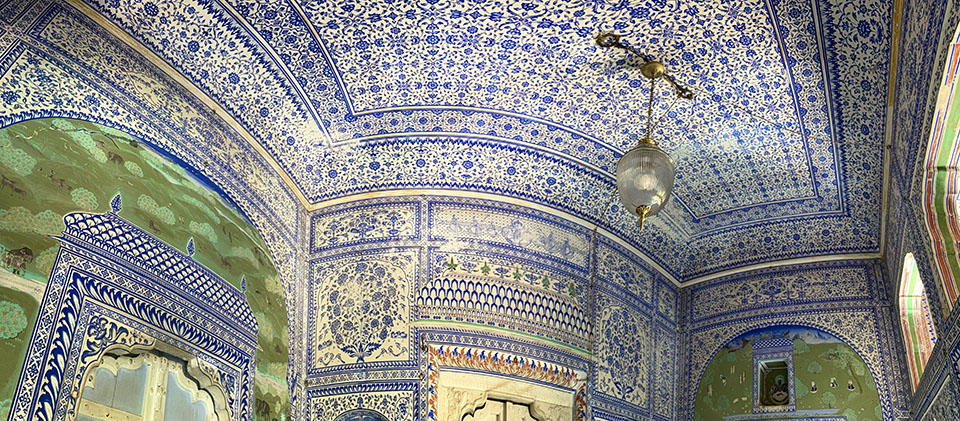
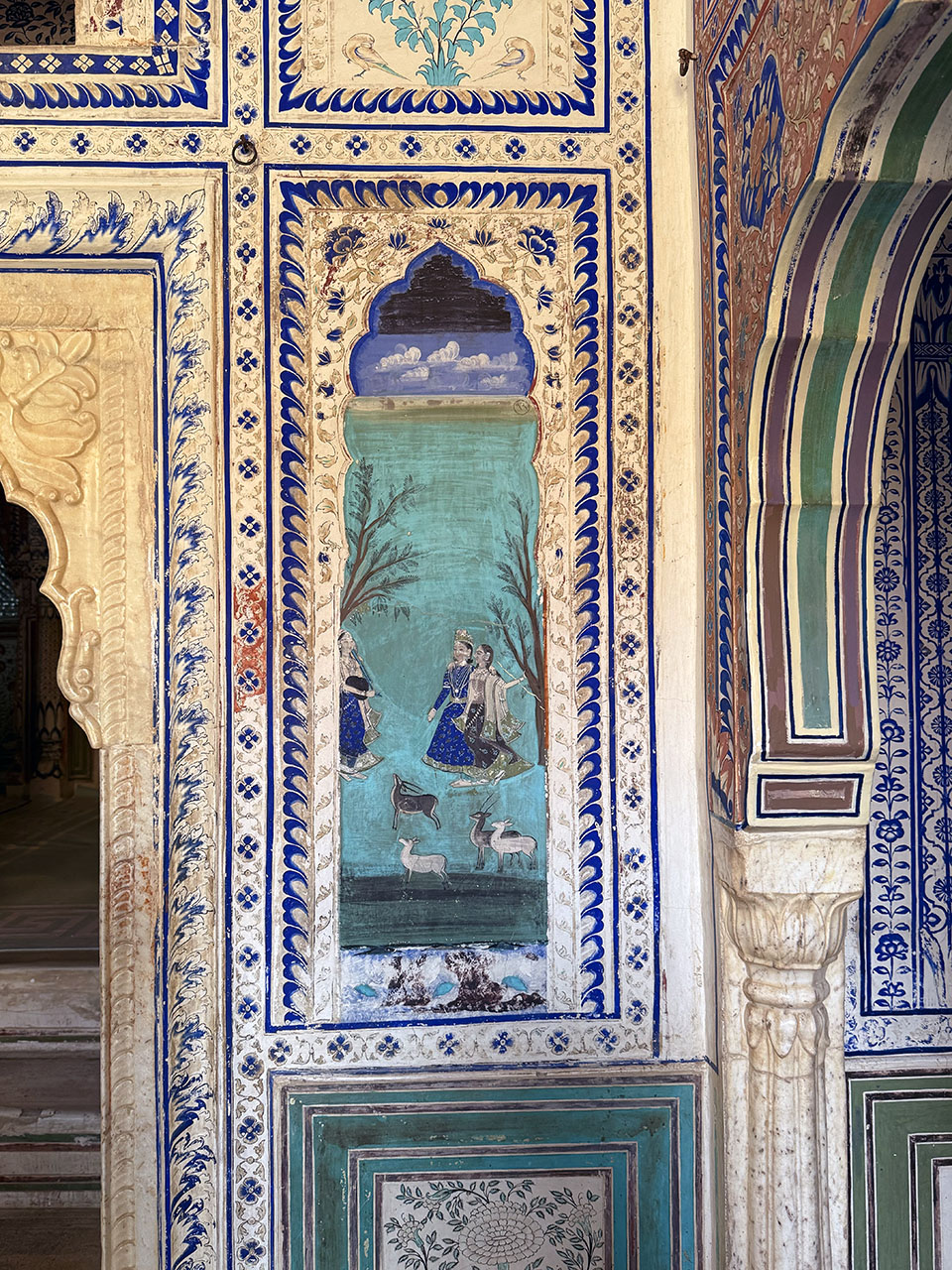
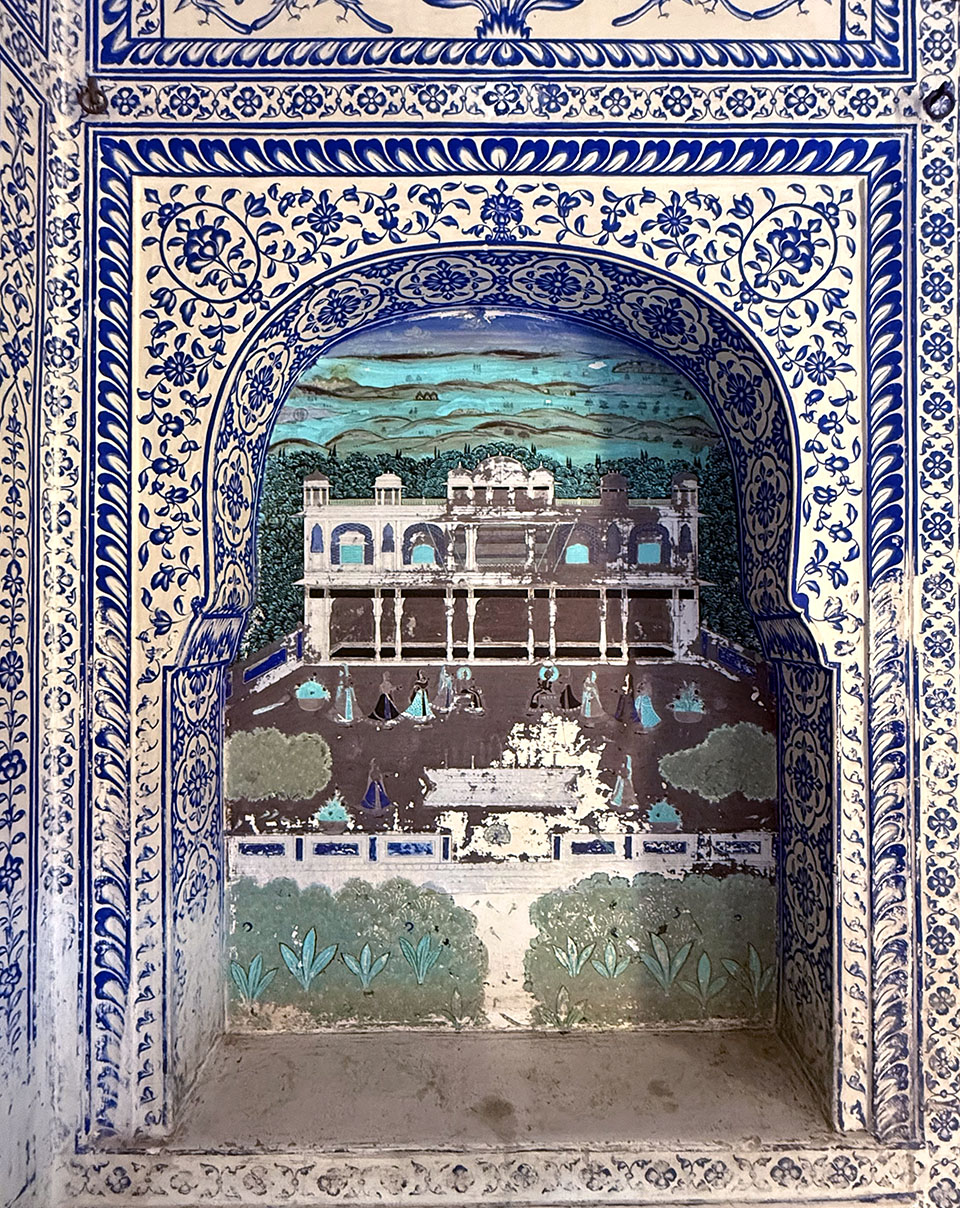

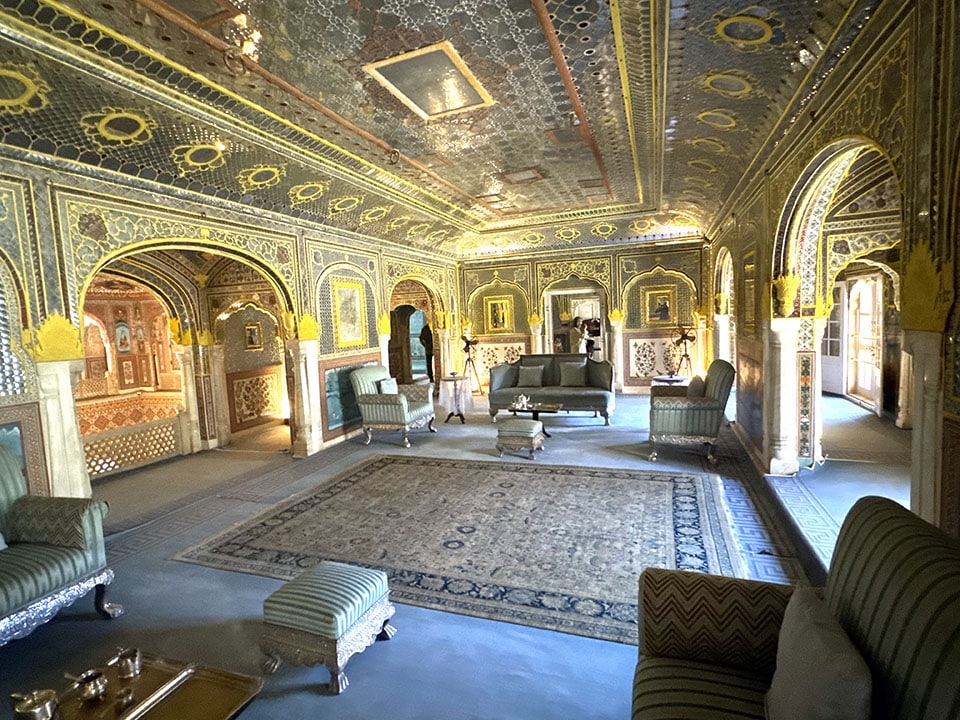
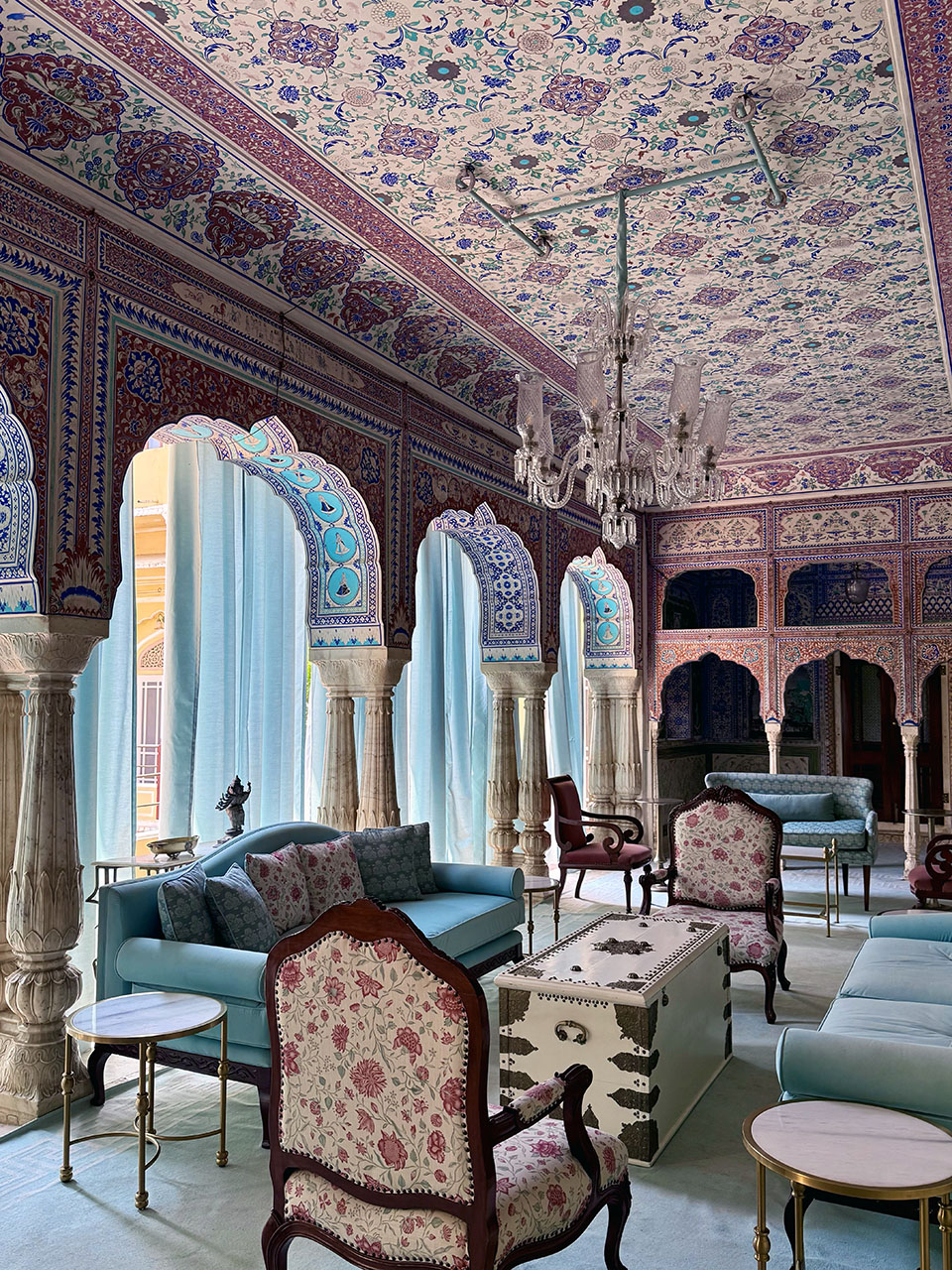
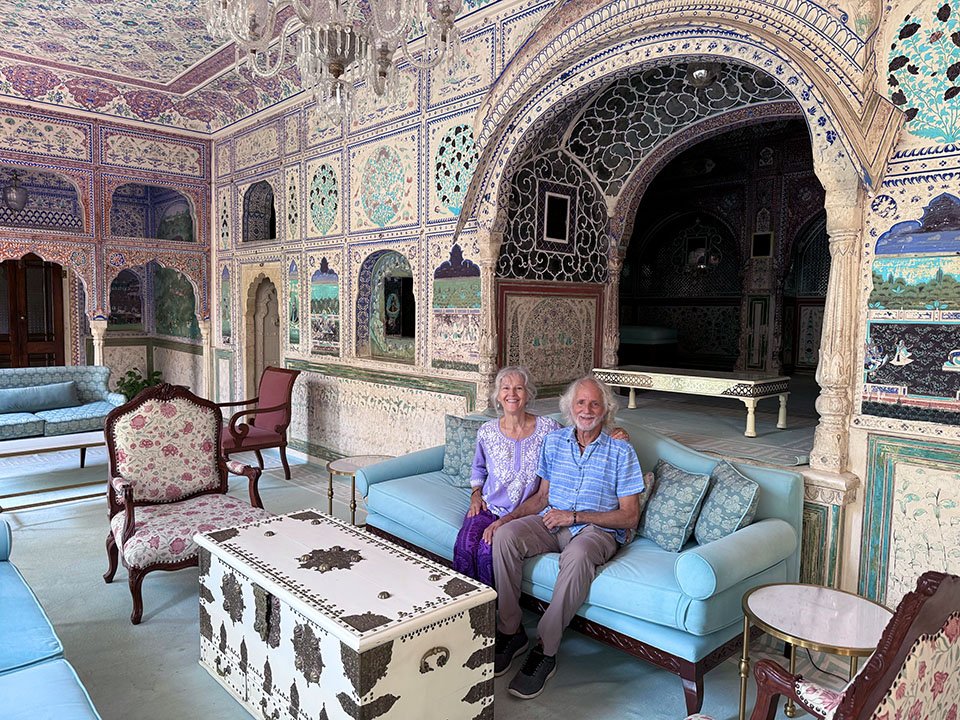
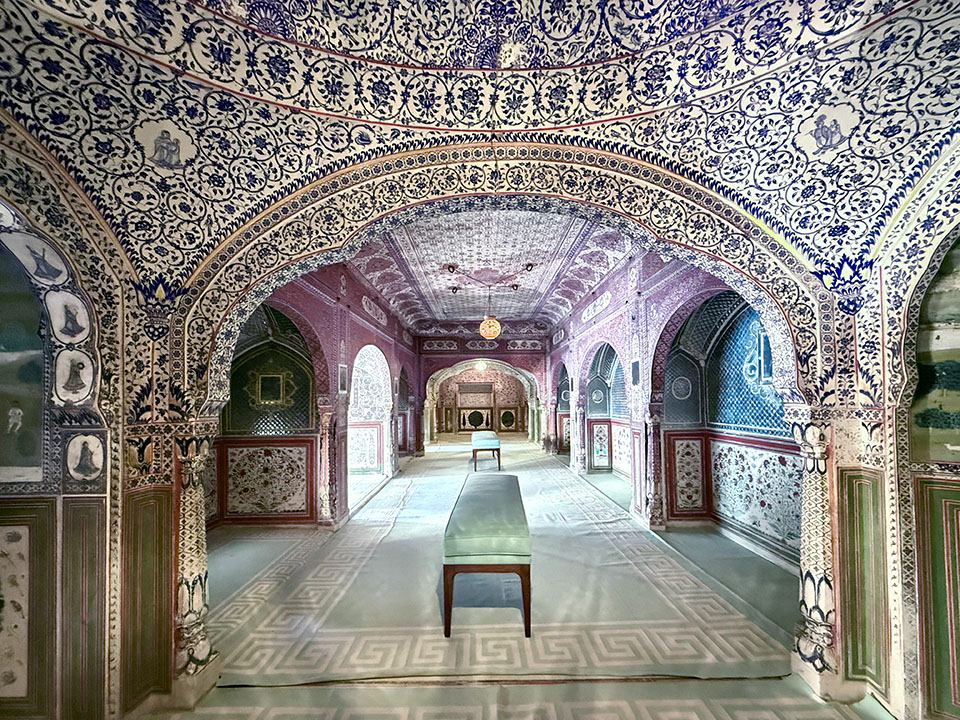
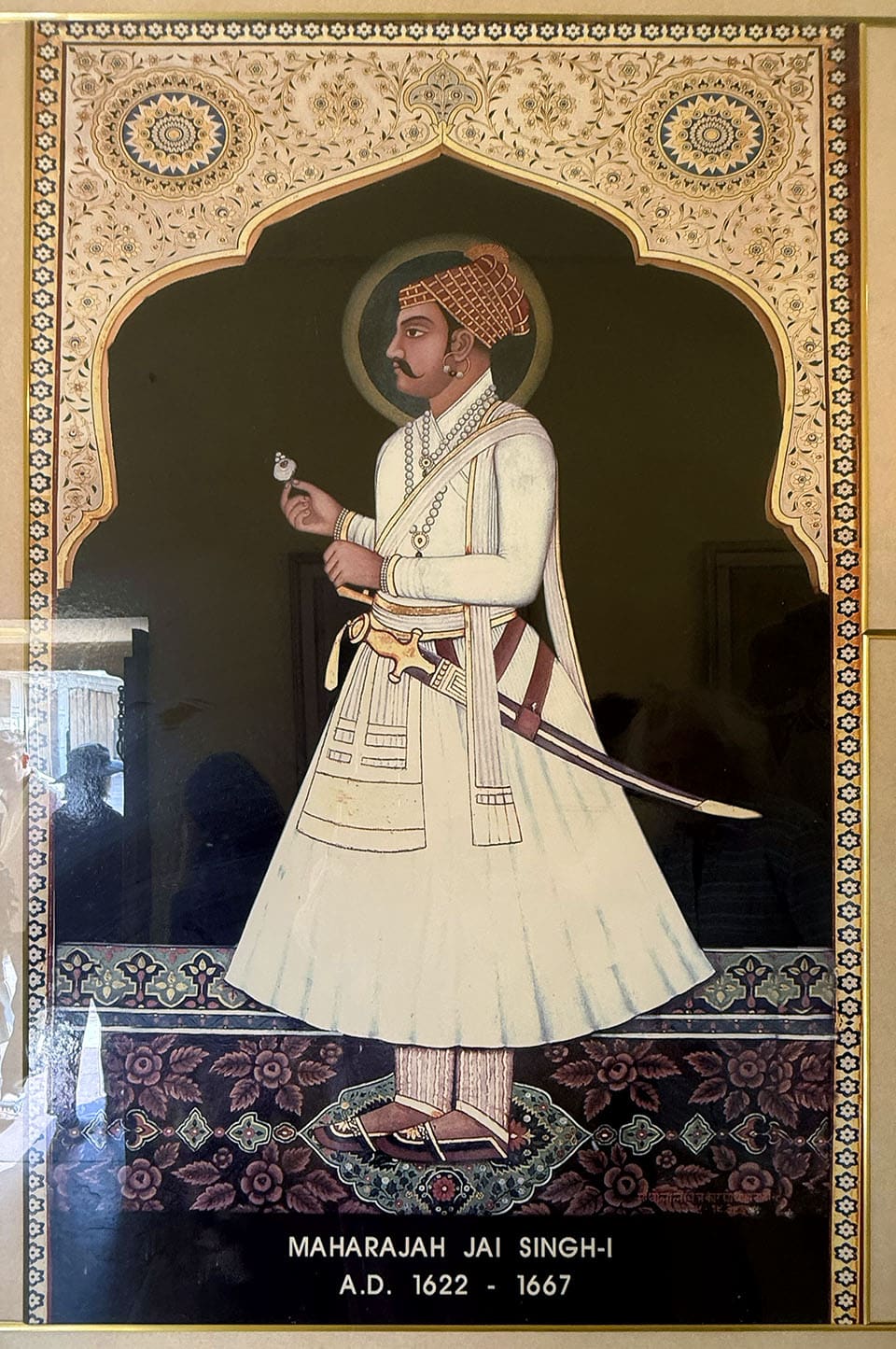
We ate a delicious lunch in their dining room, which was decorated with portraits of many of the past maharajahs who had reigned here.
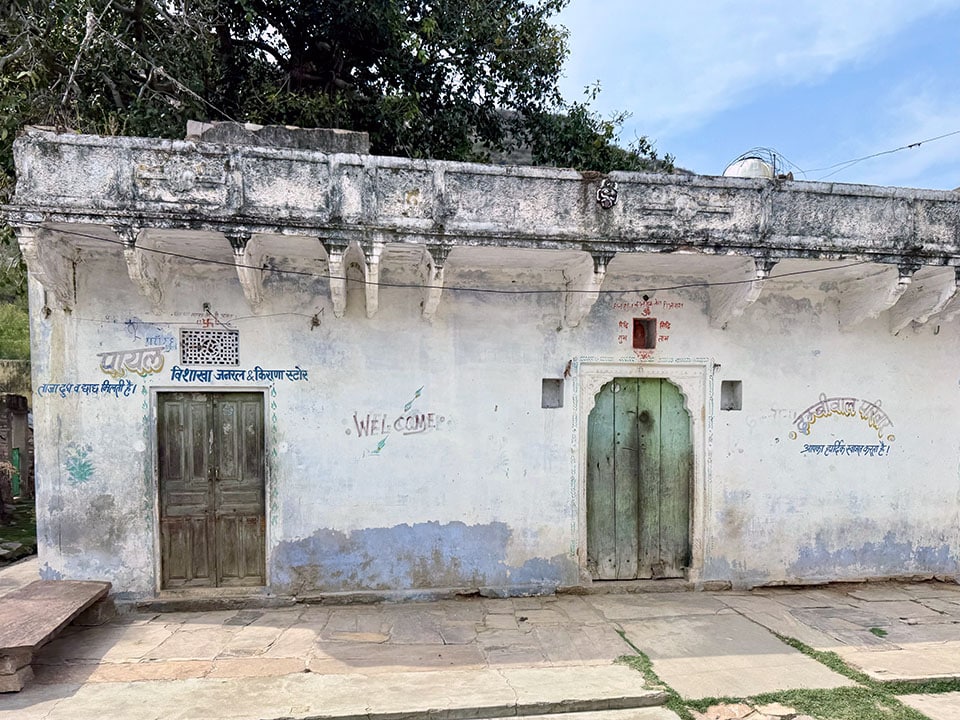
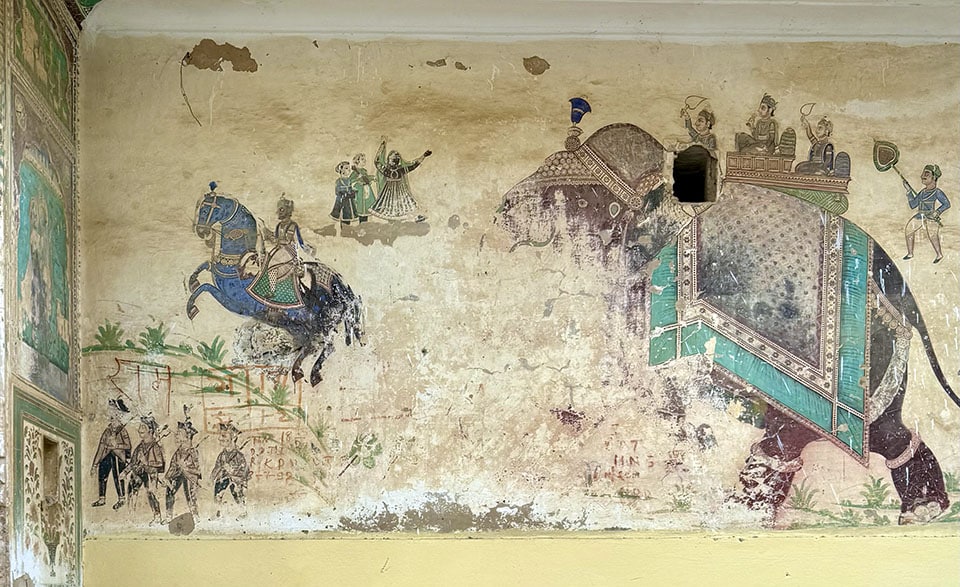
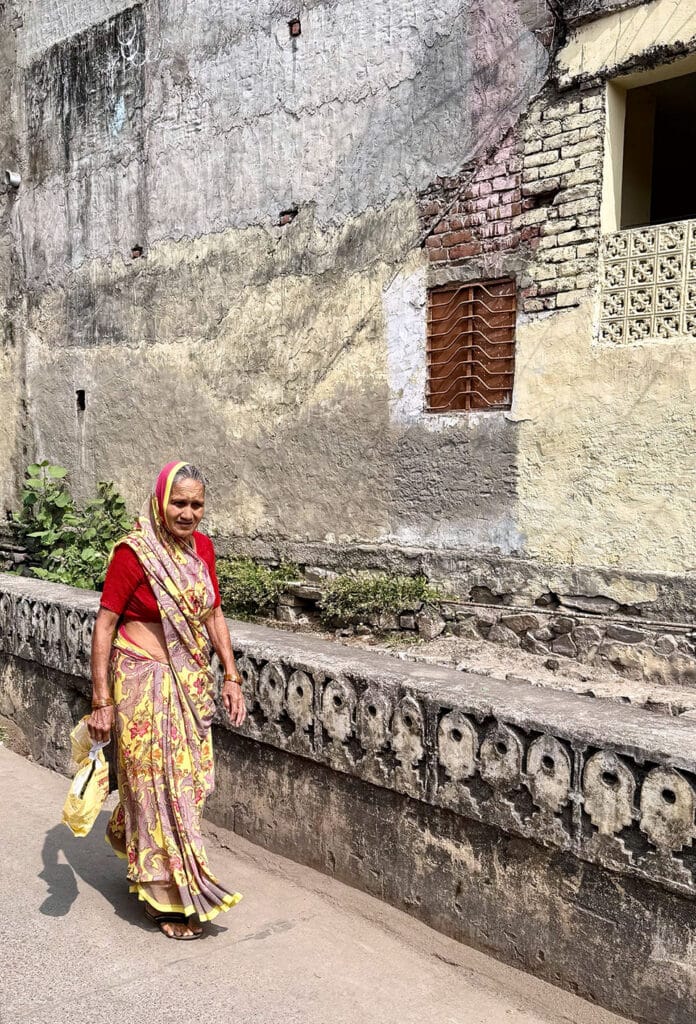
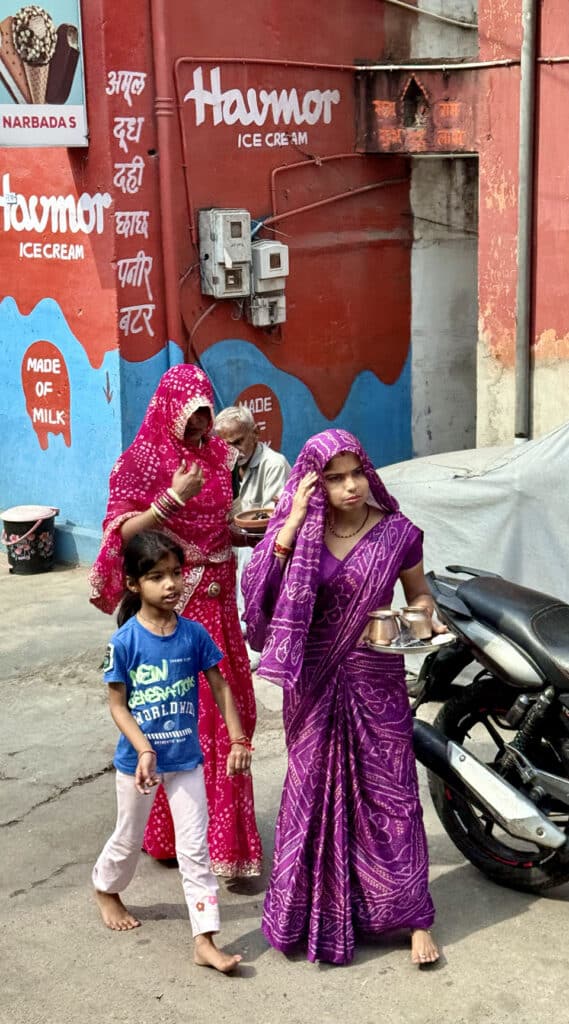
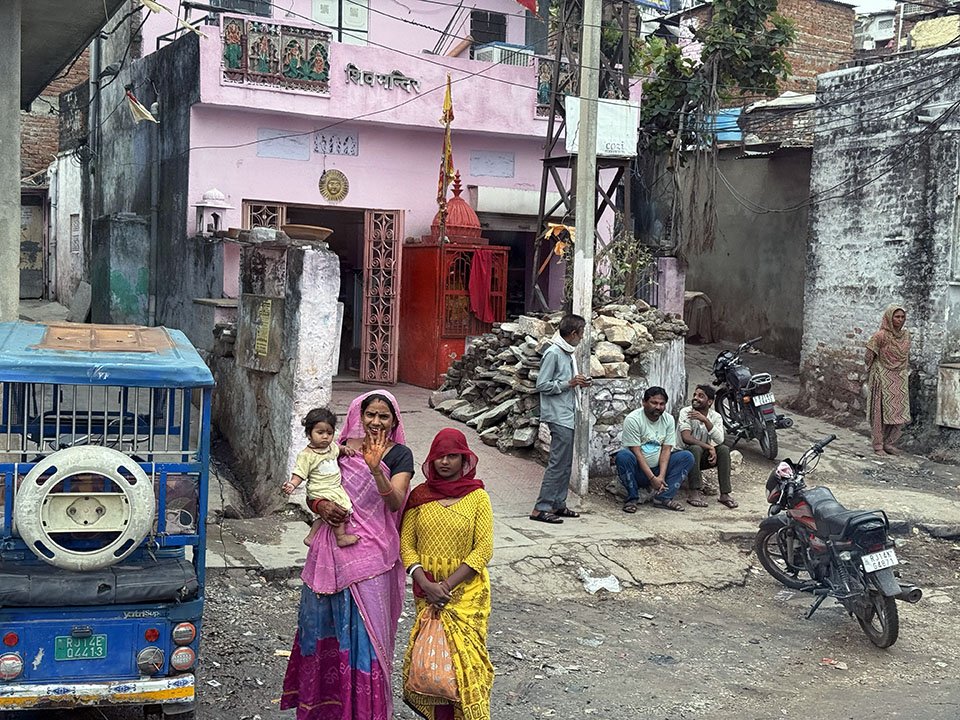
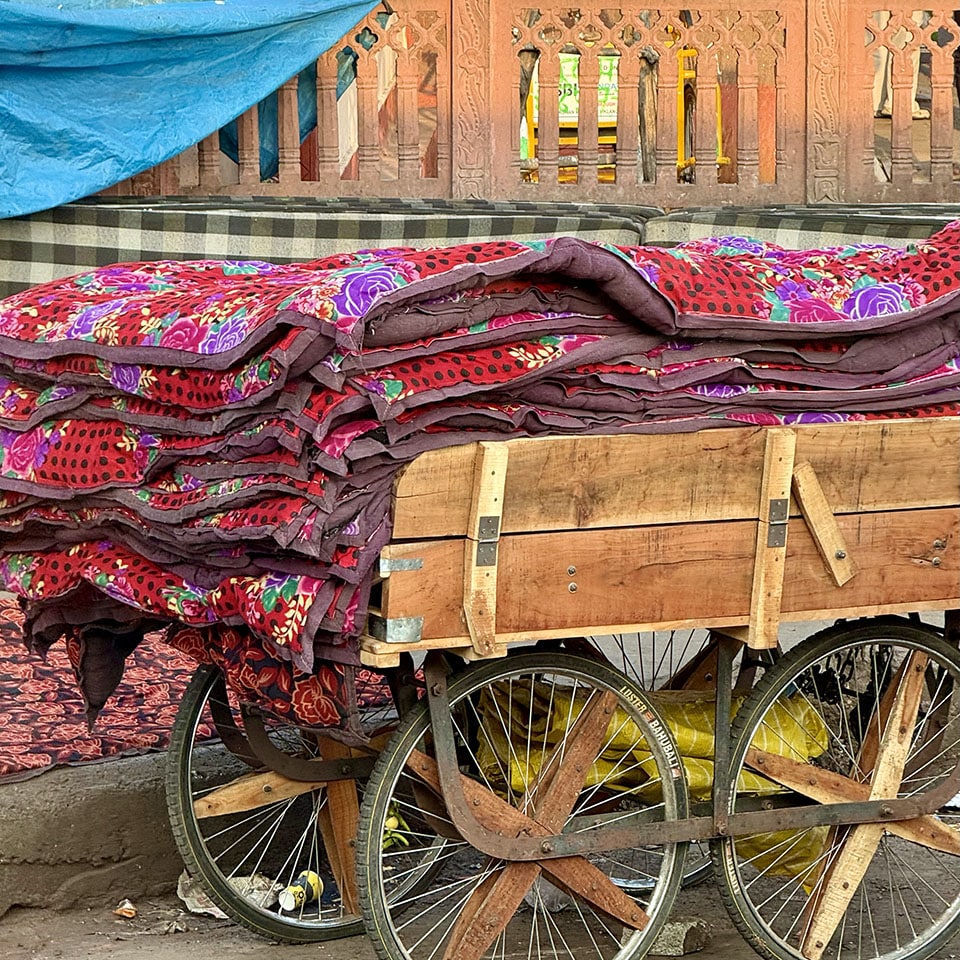
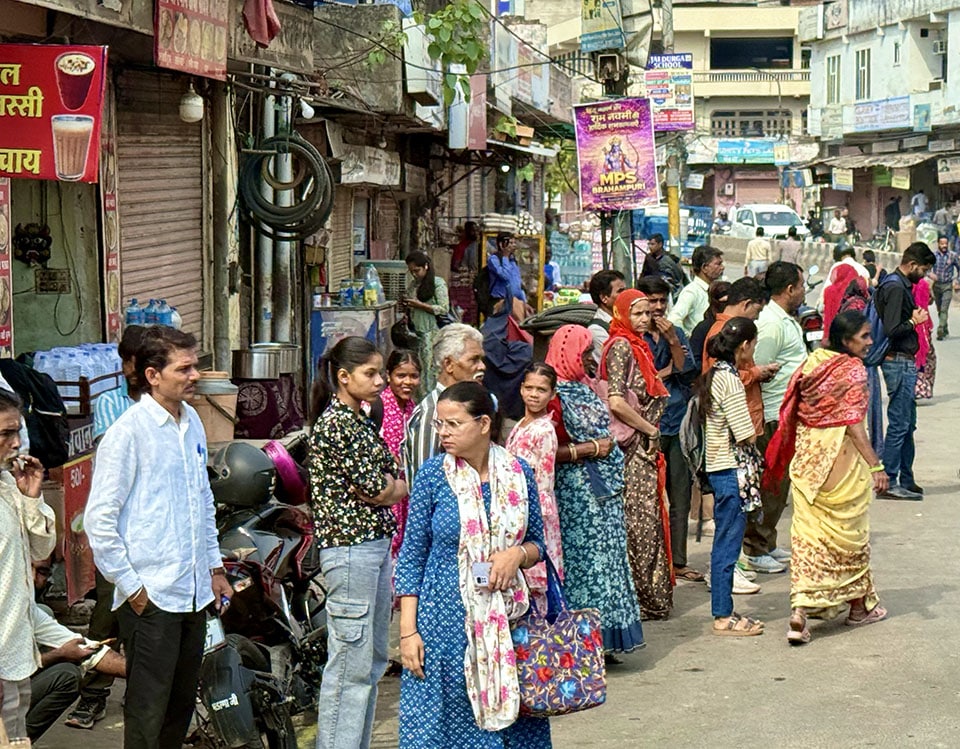
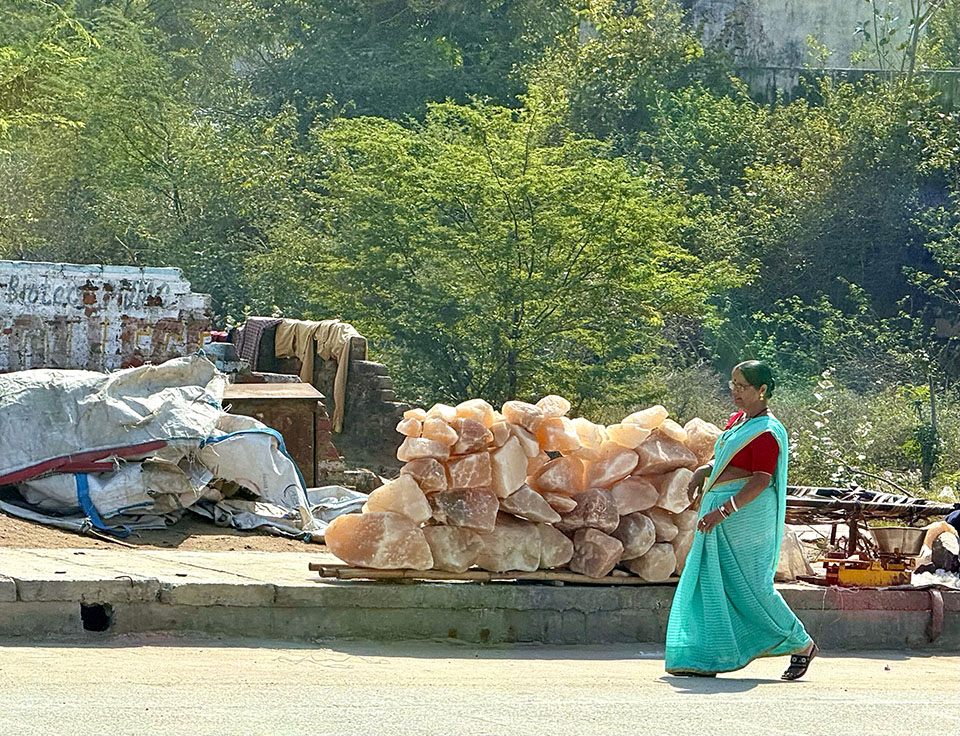
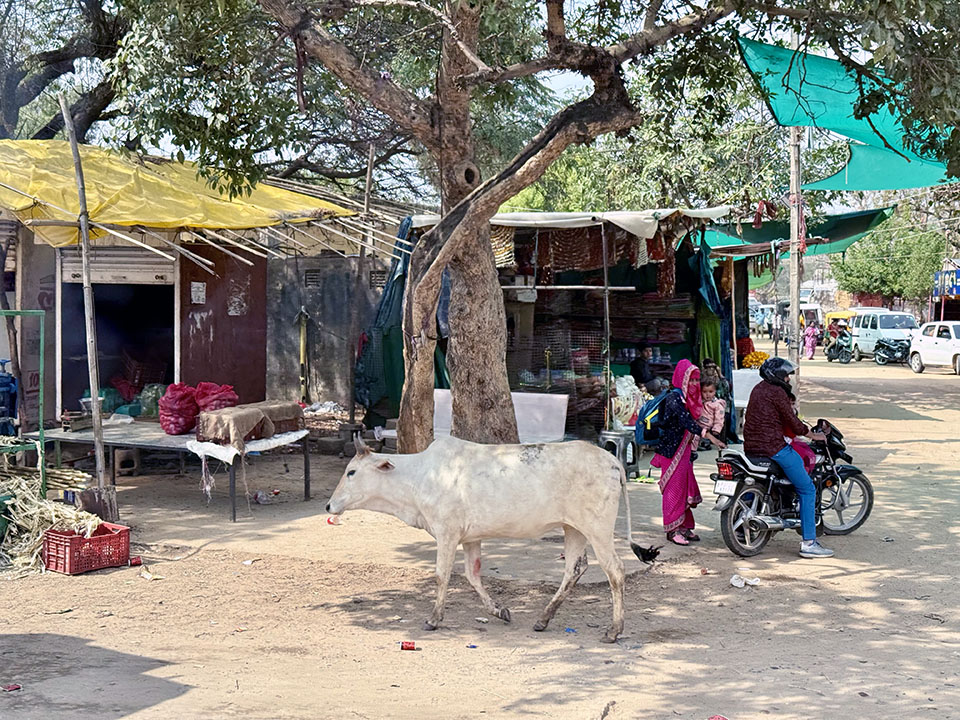
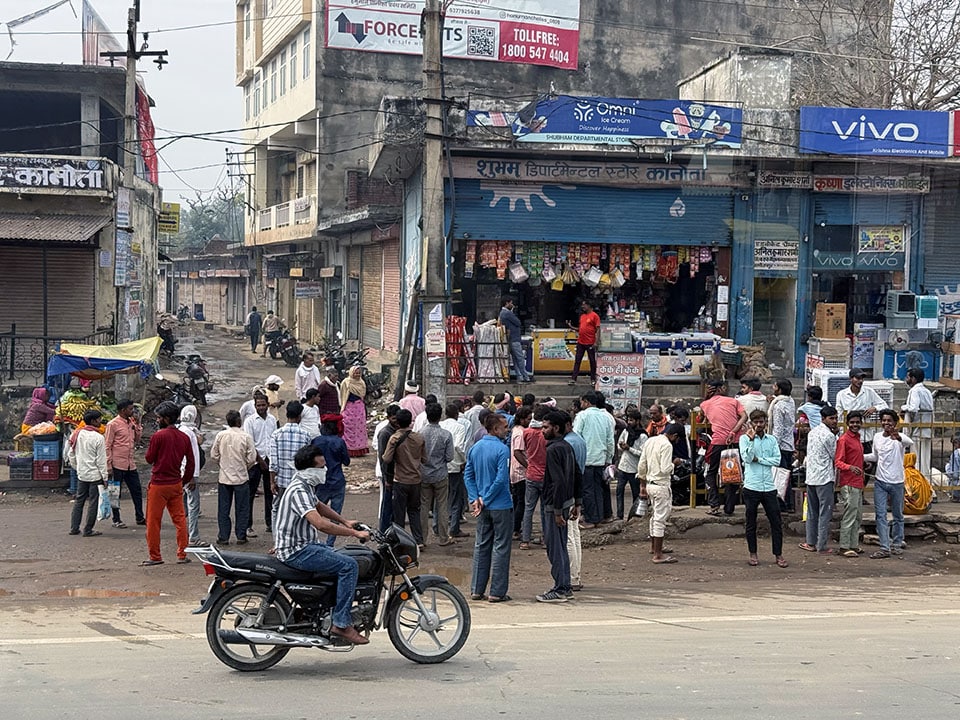
The scenery out the bus windows to and from Samode Palace, as we traveled through the Rajasthan countryside, was visulaly stunning. We wished could have stopped along the way to take more photos (of course, we might still be there taking pictures today!) Everywhere we looked, there were colorful villages, beautiful saris, crumbling buildings with ancient art, camels, monkeys, elephants, and landscapes that took you back to another time.
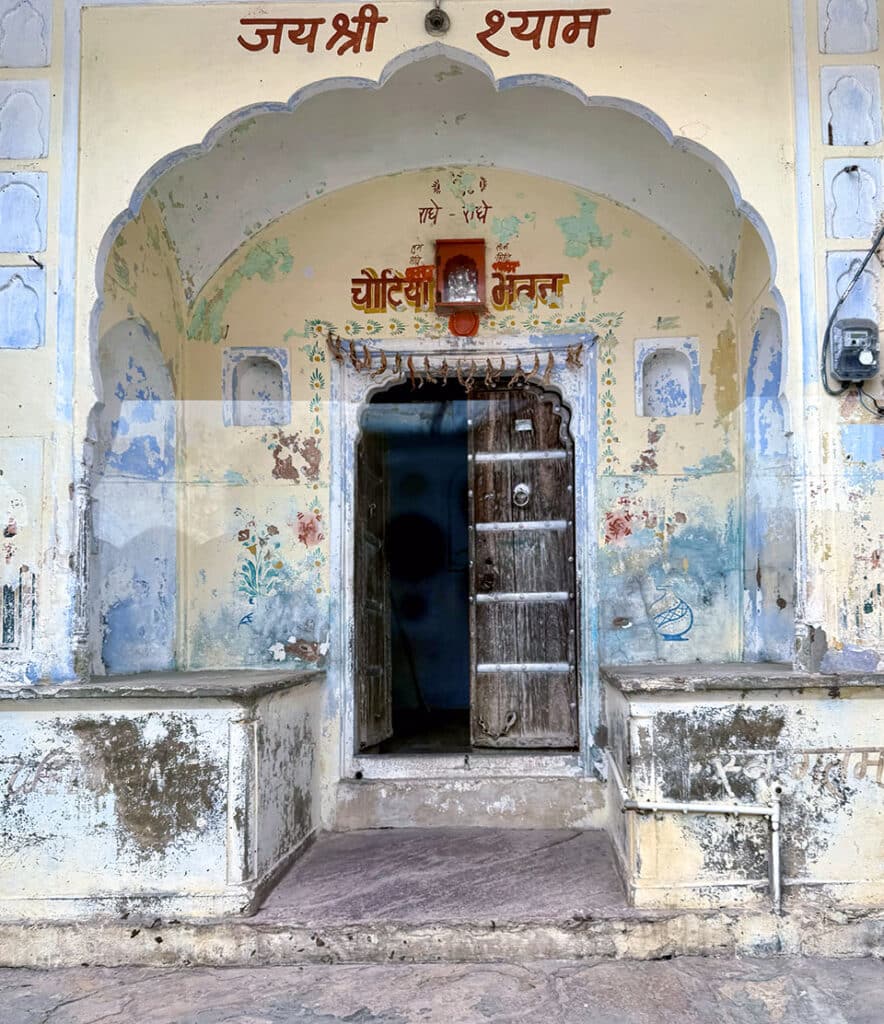
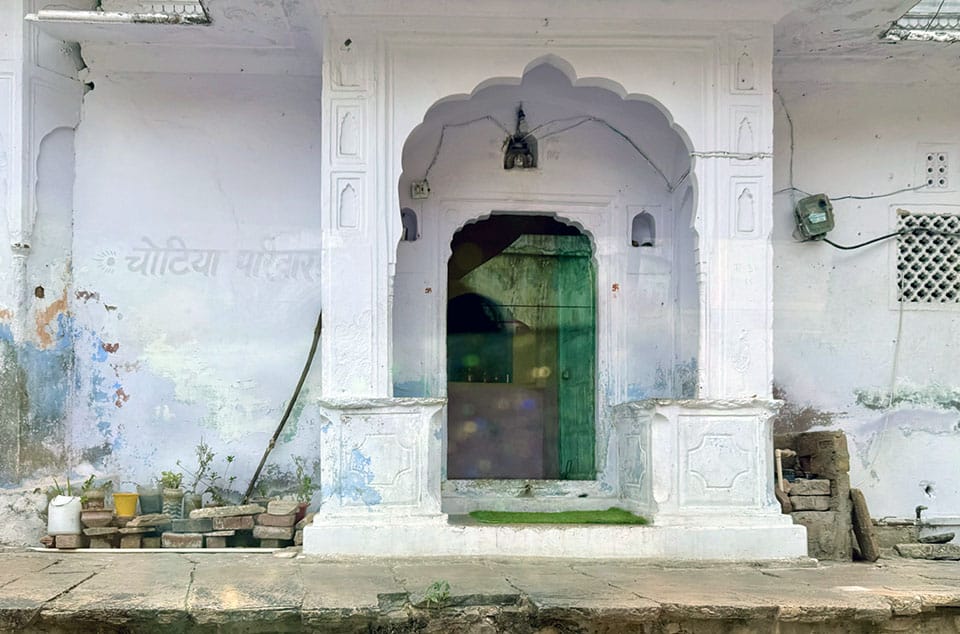
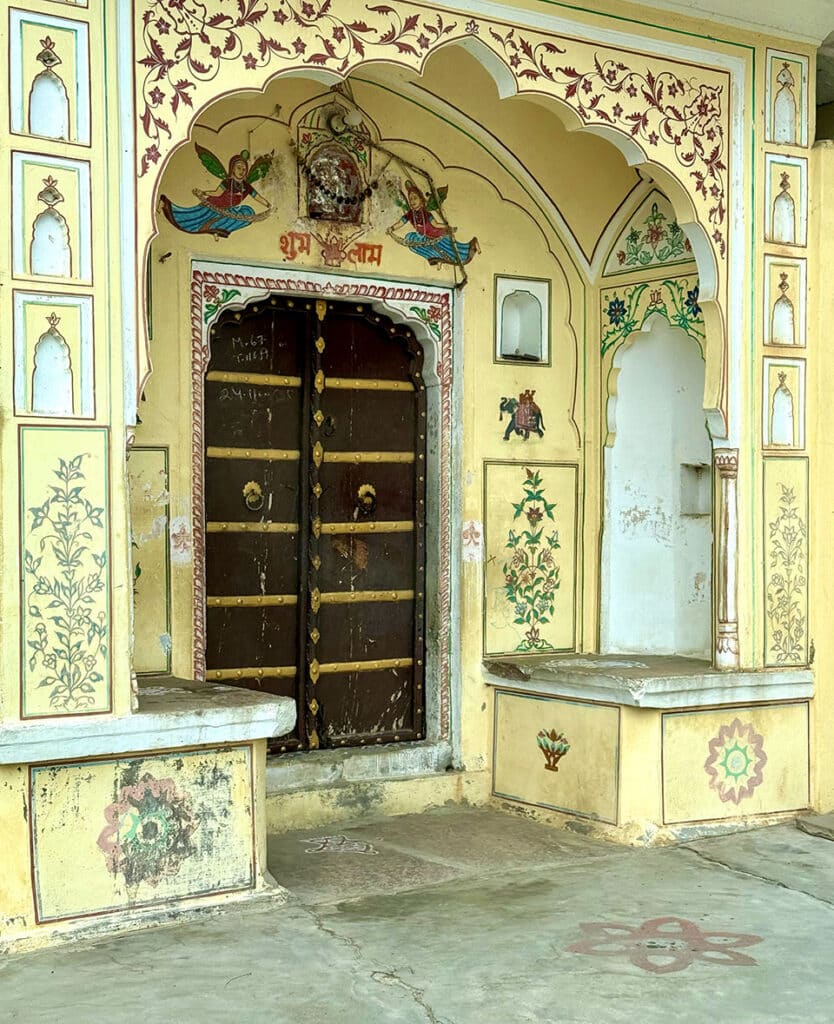


Jaipur’s City Palace
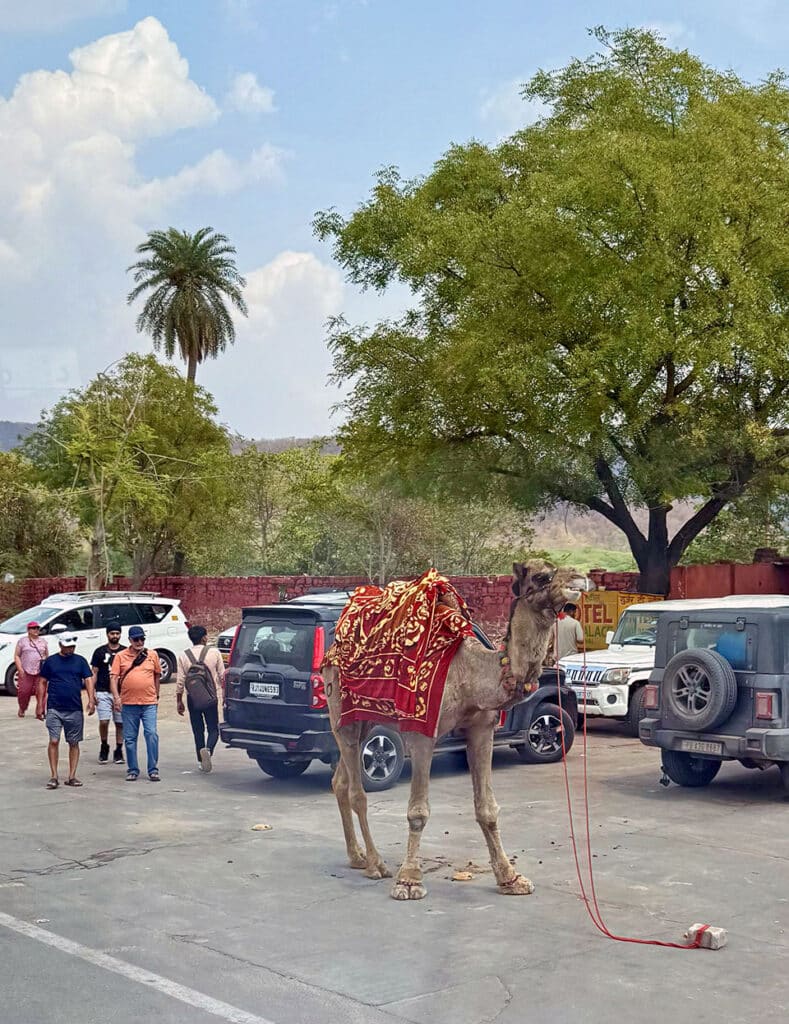
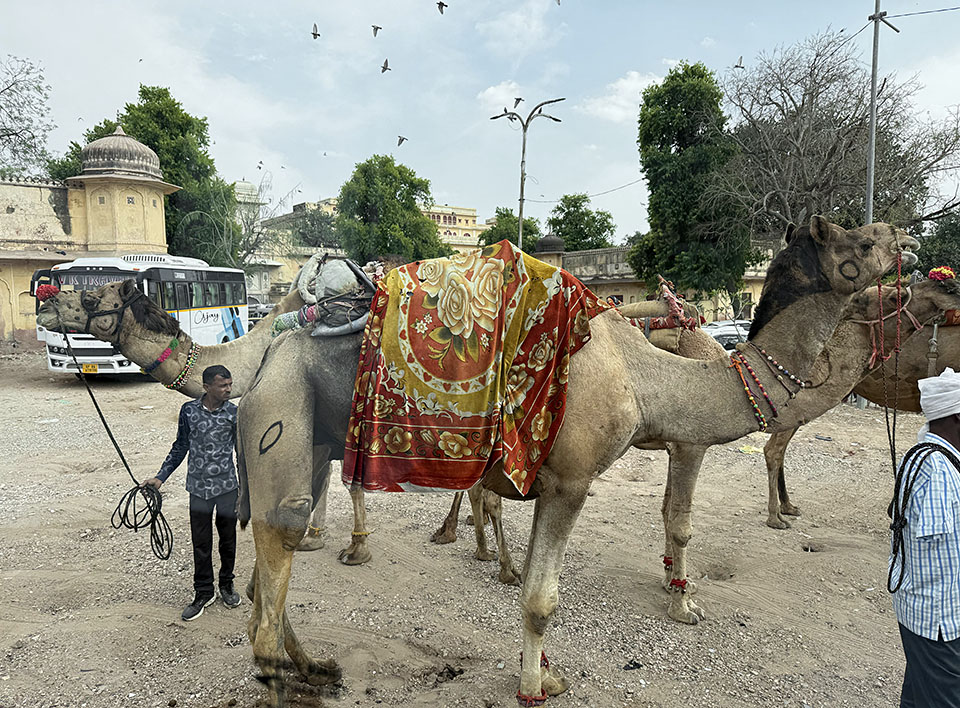
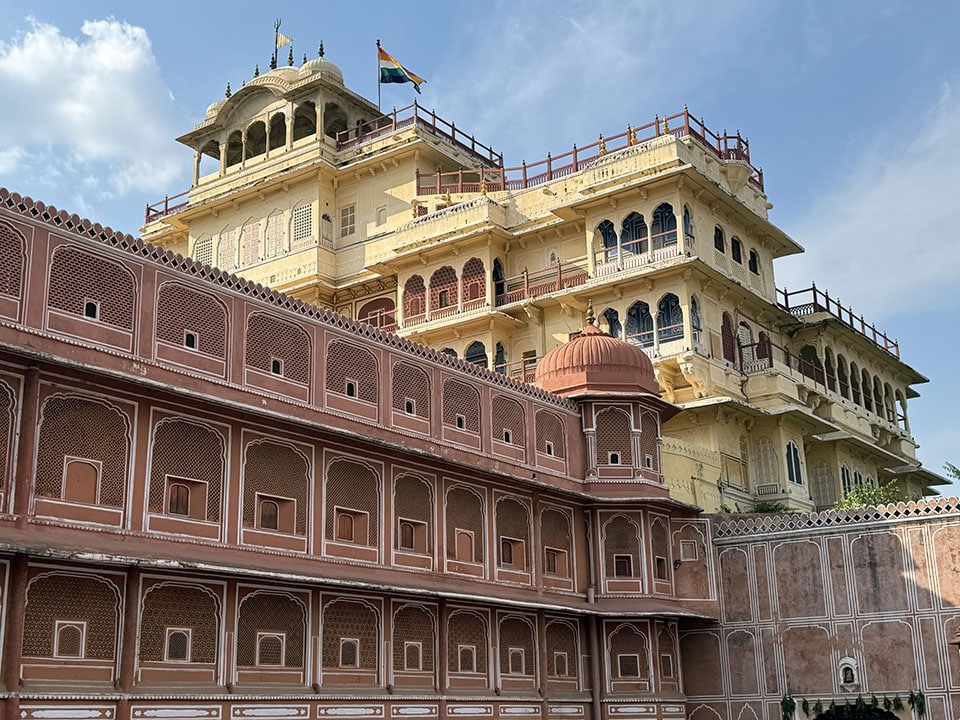
Back in town that afternoon, we visited the City Palace, the historic home of Jaipur’s royal family. Built in the 18th century by Maharaja Sawai Jai Singh II, the founder of Jaipur, the palace complex reflects a blend of Rajput, Mughal, and European influences, complete with camels you could ride from the parking lot into the palace grounds…having ridden camels in Arizona before, we preferred to walk.
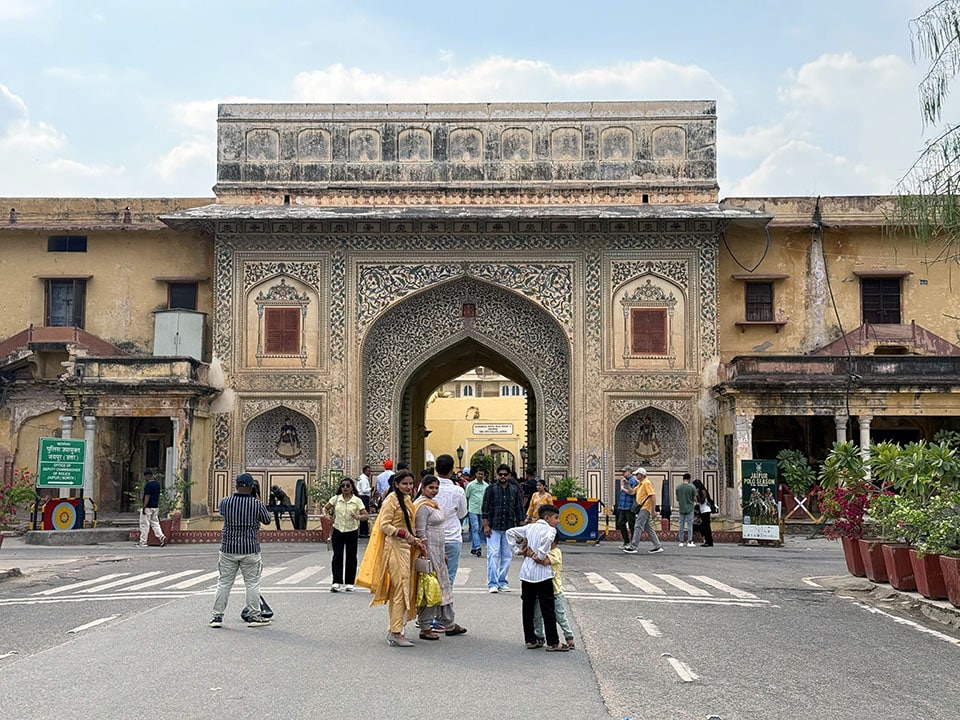
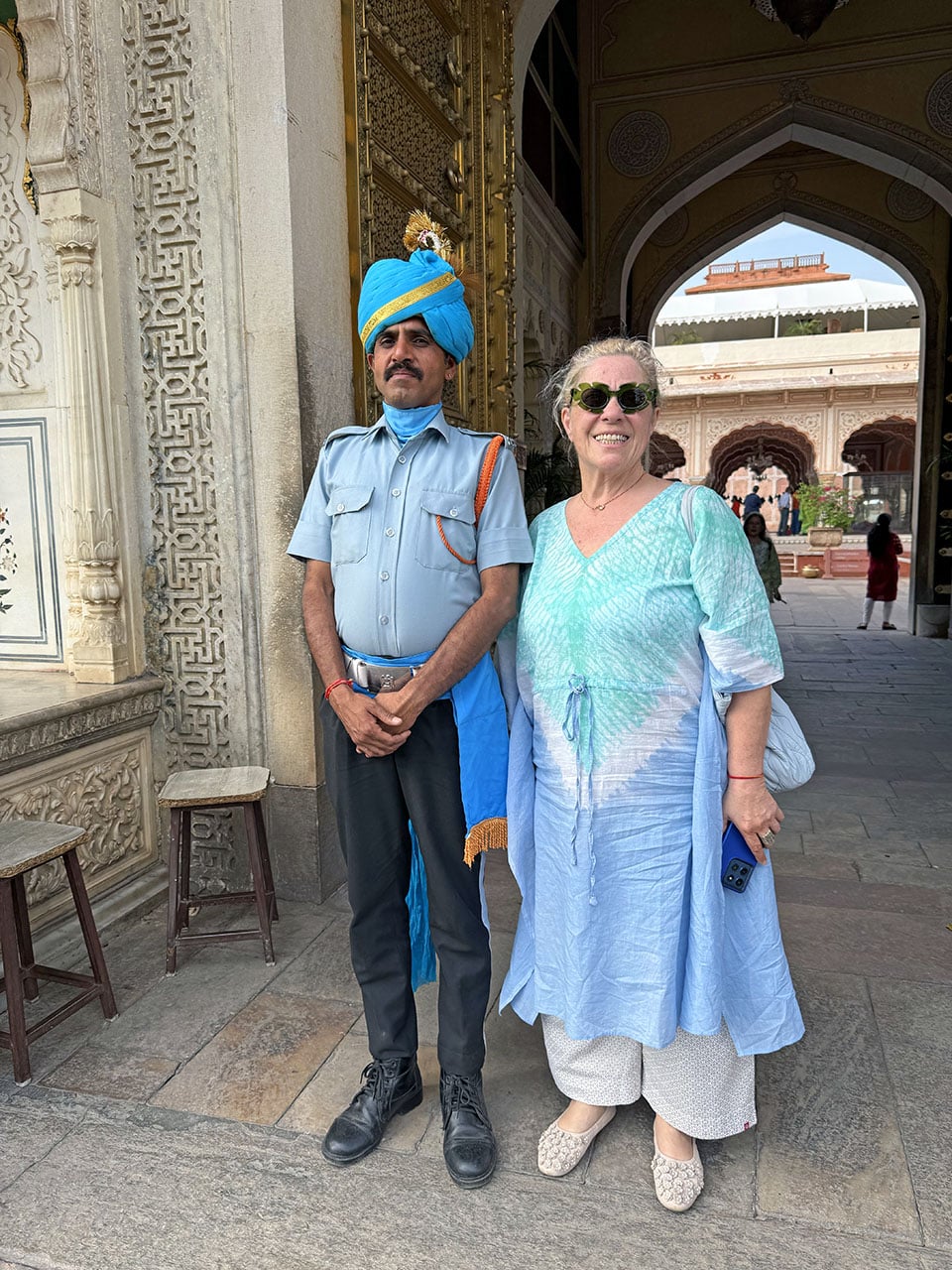
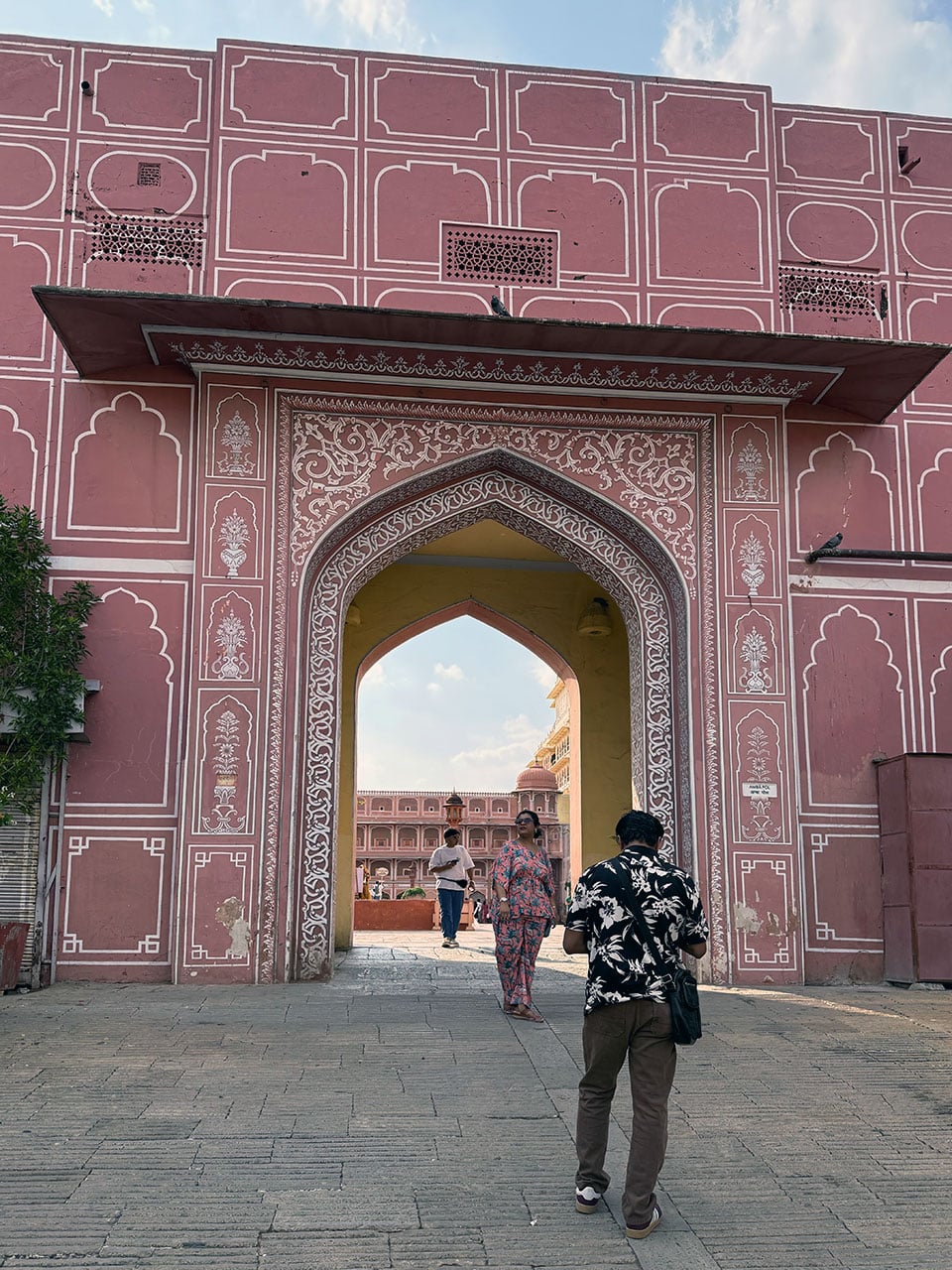
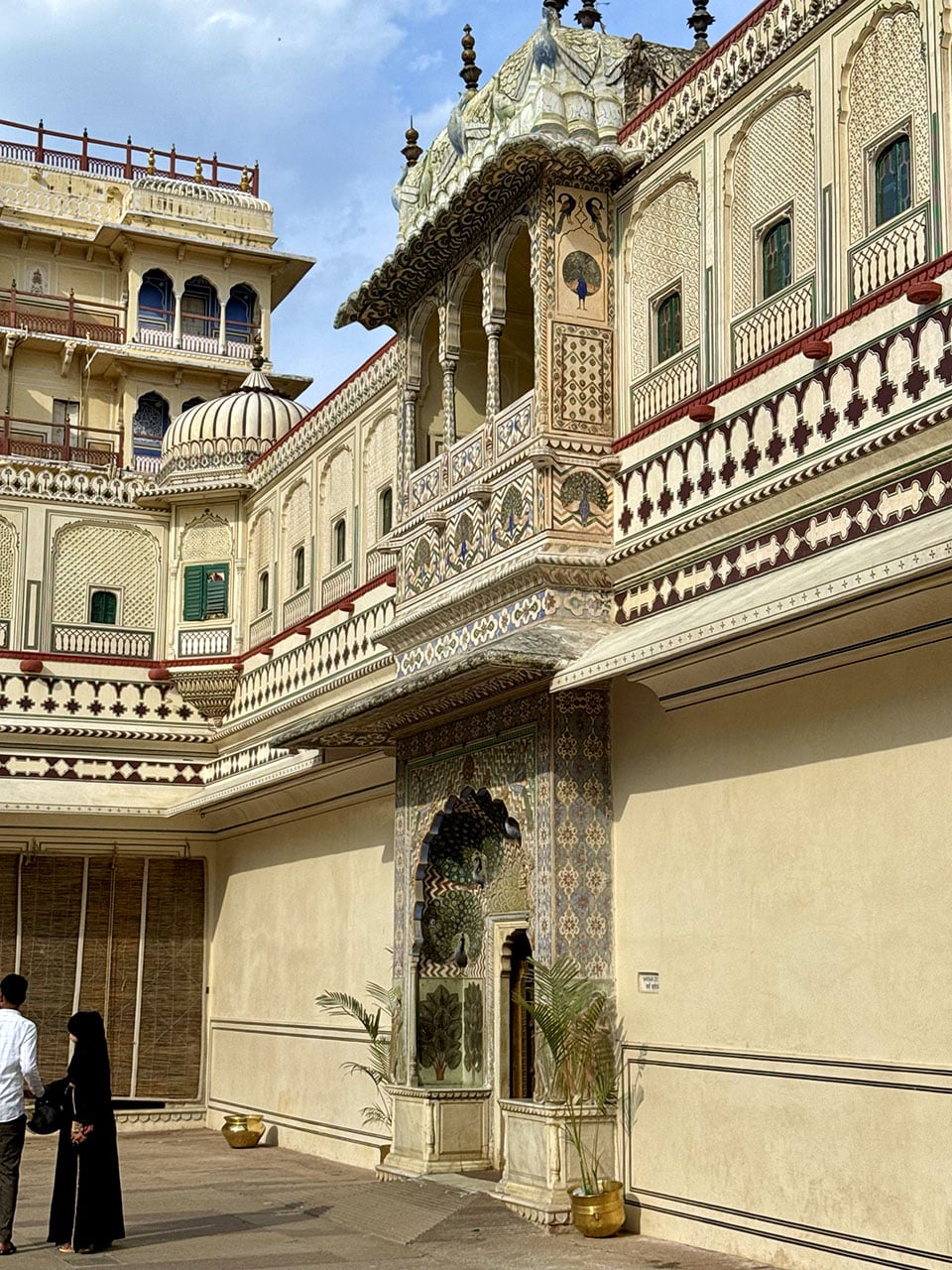
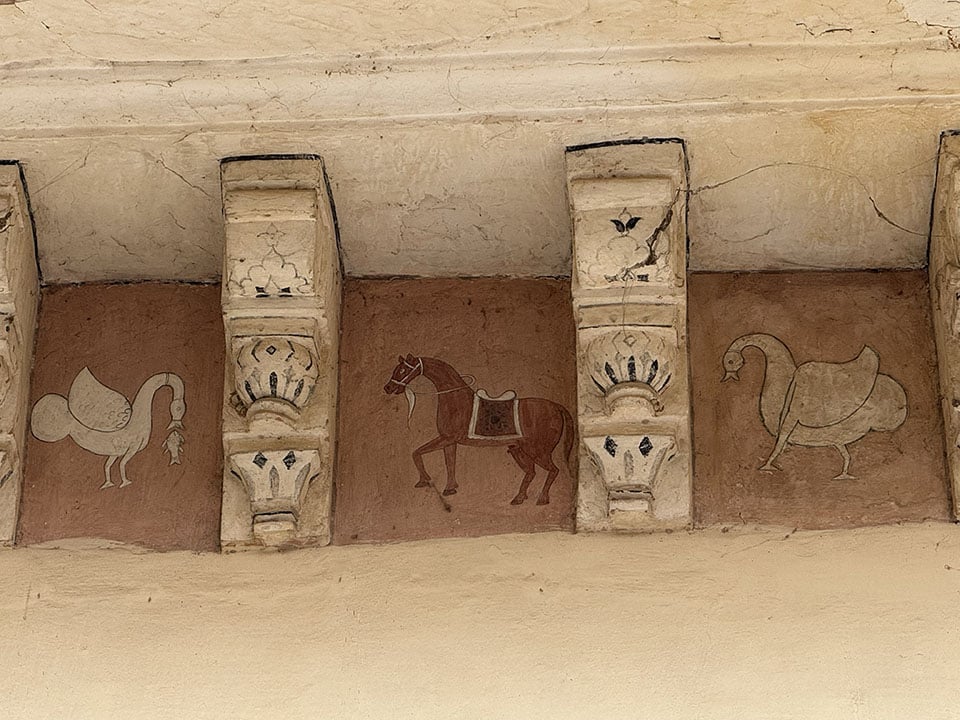
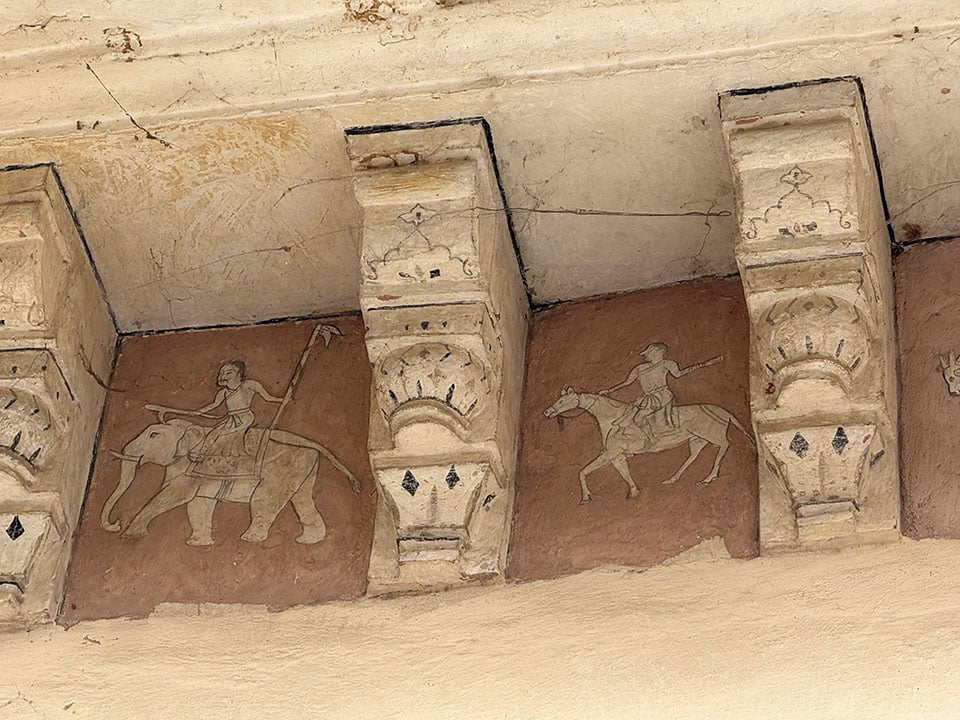
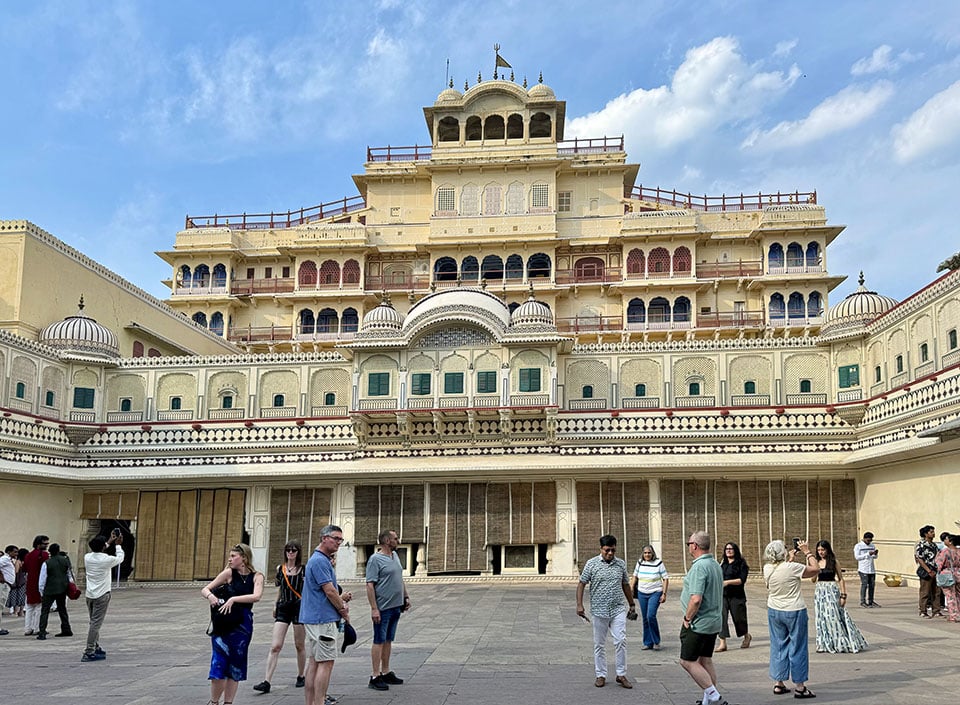
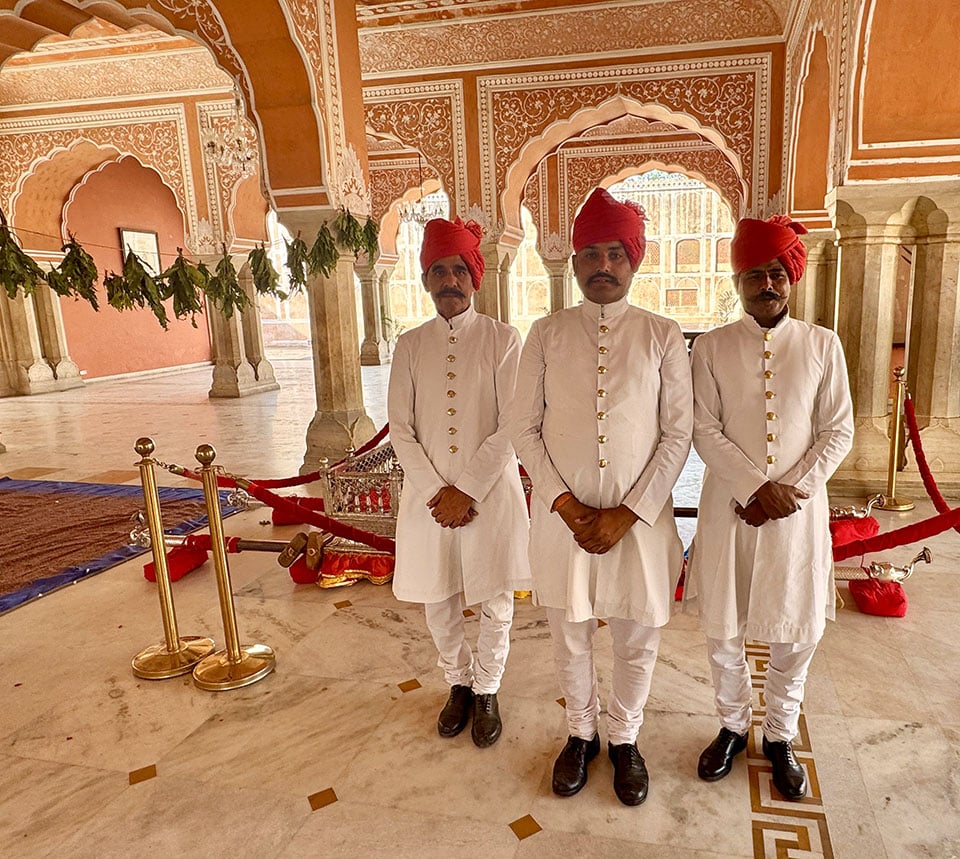
While much of the palace complex is now open to visitors, the royal family still lives in a private section of the palace. A flag flying above their residence indicates when they are home. Apparently, the royal family was there when we were…but sadly, they did not invite us up for tea! However, we did see their “ever vigilant” royal palace guards, keeping a close eye on things… or at least on their phones. This elegant courtyard was used for royal ceremonies and performances, allowing the Maharaja and his family to watch from their balconies above.

One of the highlights of visiting the City Palace was seeing the enormous silver urns, known as Gangajalis. Two massive silver vessels were commissioned by Maharaja Sawai Madho Singh II in 1894 to carry sacred Ganges water on his journey to England for the coronation of King Edward VII.
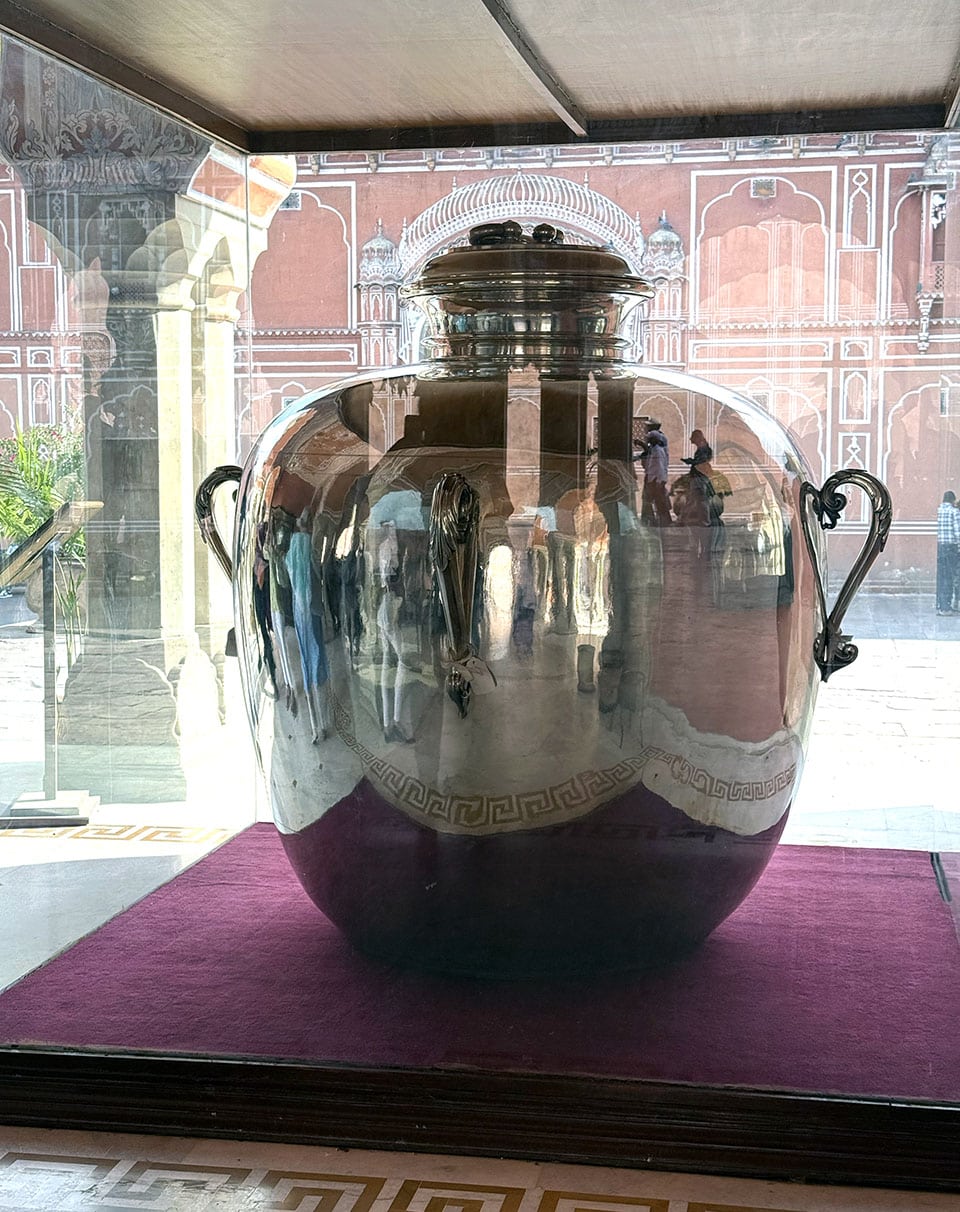
Concerned about maintaining his Hindu traditions while traveling overseas for an extended period, he brought his own supply of Ganges water. Today, these impressive silver urns are recognized as some of the largest silver objects in the world.
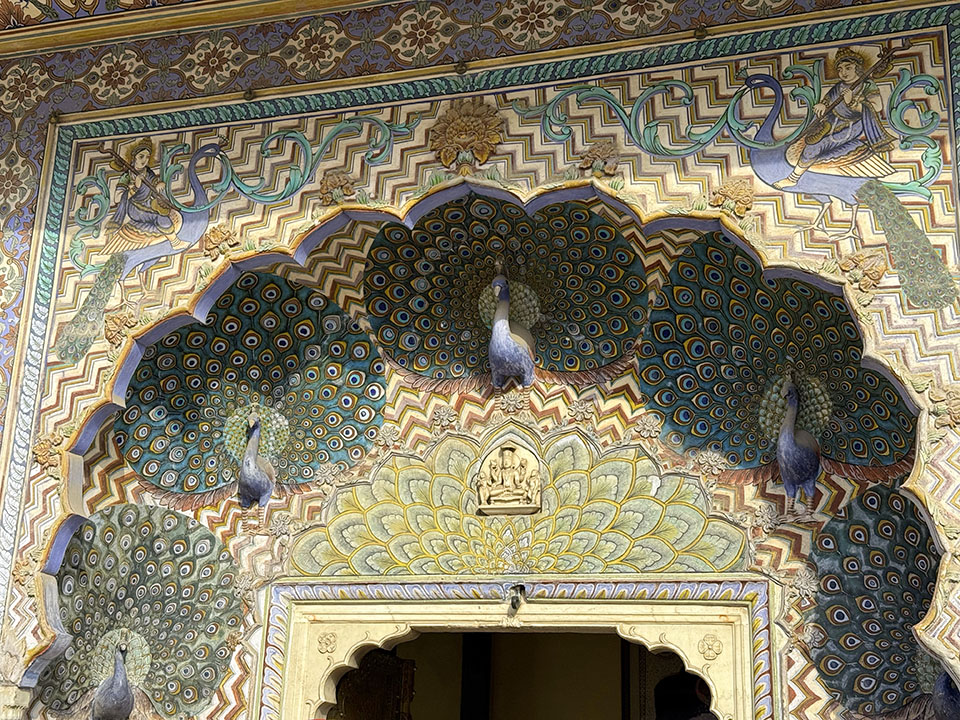
The palace’s ornate Peacock Gate opens into the Courtyard of the Four Seasons. The courtyard’s four beautifully decorated gates represent the changing seasons, with the Peacock Gate symbolizing Autumn and the Lotus gate for Summer (our group at the Lotus gate).
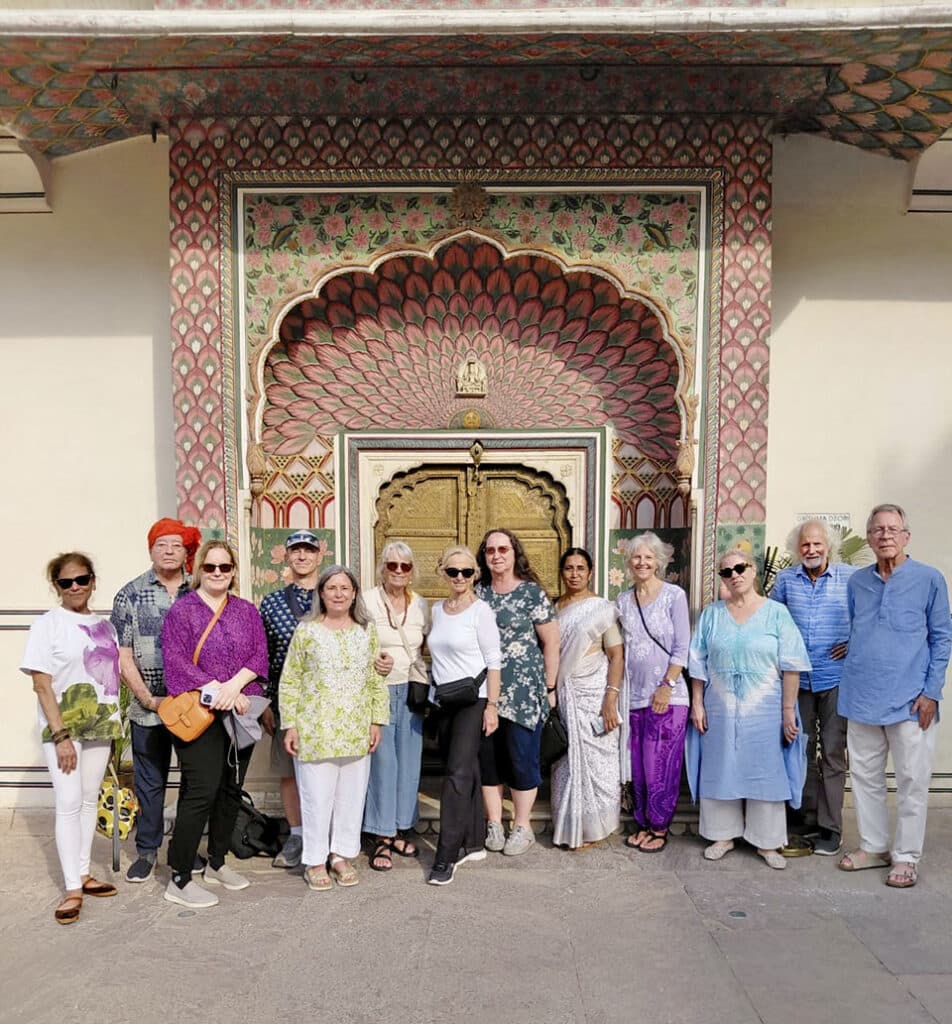
Marge, Tris, Amy, David, Pauline, Donna, Anne Marie, Marie, Mallika, Heidi, Basilica, Kirk and Roger.
We were disappointed that we ran out of time to visit Jantar Mantar. This fascinating UNESCO World Heritage site and 18th-century astronomical observatory was built by Maharaja Sawai Jai Singh II. It features massive stone instruments designed to measure time, track celestial movements, and study the skies with remarkable accuracy long before modern technology existed. This was one of the things we truly had hoped to see, but as the Rolling Stones remind us, “you can’t always get what you want…” so now we have something to come back for.
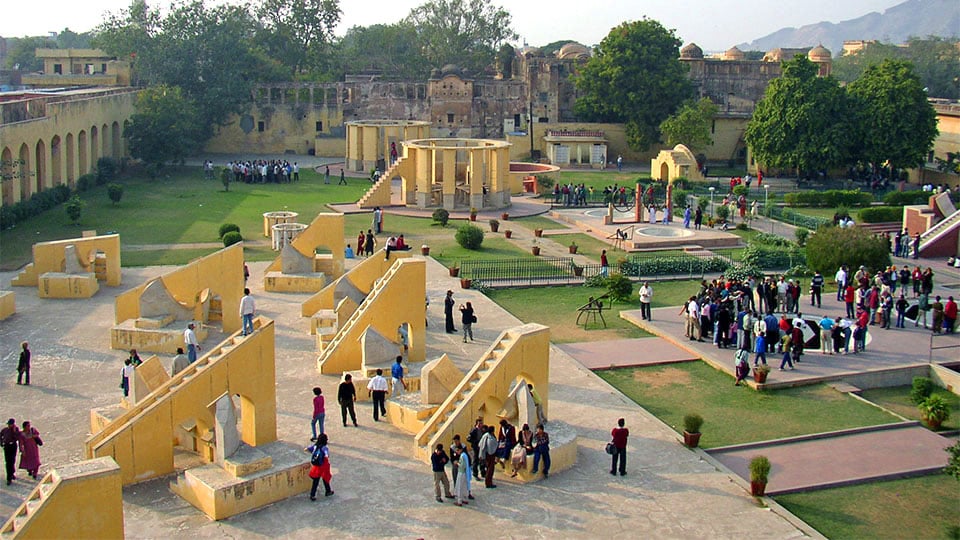
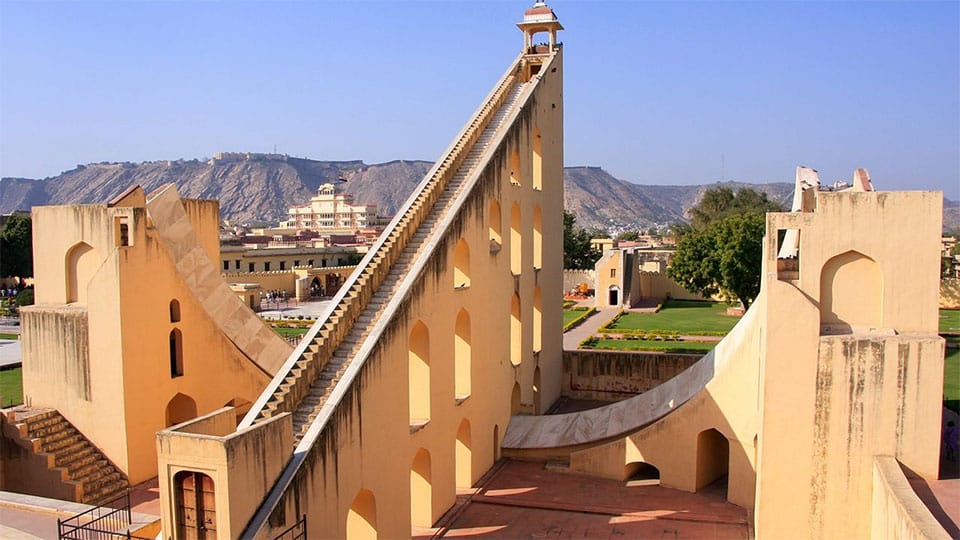
Jantar Mantar observatory, photos found online.
Like everywhere we visited on this trip, Jaipur did not disappoint! We packed in so many things in our 2.5 days there…and this is another place we would definitely revisit, to see the Hawa Mahal, the Jantar Mantar, and spend more time shopping the bazaars.
Next up, our bus is headed to Agra to visit the Taj Mahal, and then on to Delhi before flying home. We can’t believe this 5-week India Adventure is almost over! So many gratitudes to Roger Gabriel, Mallika, Jai, and Athma Tours for all of it!