
Travels to India Part 7: On the Road to Agra, the Taj Mahal, and Delhi
If you missed our last post, Travels to India Part 6: Rajasthan Maharajas and Palaces, Oh My!, be sure to check it out, as it has some of the most iconic “India” photos of our whole trip. After 2.5 days, we were sad to say goodbye to Jaipur, but it was time to move on to Agra and the Taj Mahal!
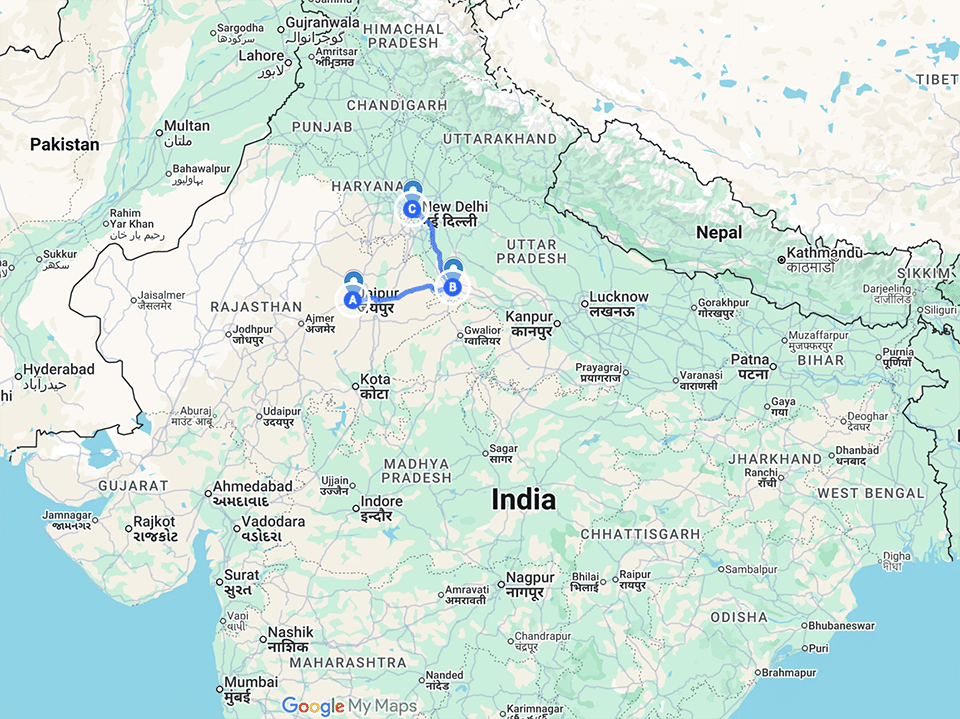

We left Jaipur by bus in gray, clouds, and rain, which cooled things down and cleaned the air but also made the windows fuzzy and foggy, making it harder to take photos along the way. So apologies for a few blurry bus-window photos. The two-day trip from Jaipur to Delhi via Agra was about 300 miles total, or about 4-5 hours of driving each day. And like everywhere else we’d been in India, the roadside attractions and views didn’t disappoint!
Roadside Attractions




Chand Baori
Our first stop was the breathtaking Chand Baori, an 8th-century architectural marvel and one of the world’s largest, deepest stepwells (top photo). Located between Jaipur and Agra, this 13-level deep structure plunges about 65 feet into the earth, with 3,500 perfectly symmetrical, zigzagging steps that form a mesmerizing geometric maze reminiscent of M.C. Escher.


Before modern times, villagers relied on these stepwells for freshwater. During monsoon season, the higher water level meant only a short walk down a few steps, while the dry season required a much deeper trek down the steps to reach the receding water level.
Built by King Chanda of the Nikumbha dynasty, it served as both a vital water-harvesting system in arid Rajasthan and a cool community gathering place, featuring a multi-story royal pavilion at one end adorned with intricate stone carvings.
Unfortunately, “the vandals took the handles”, but thankfully they left the steps behind. The complex suffered repeated vandalism starting in the 11th century when the Central Asian invader Mahmud of Ghazni demolished the adjoining temple and defaced its sculptures. Further damage occurred during the later Mughal era, but miraculously the pavilion and steps remained undamaged.


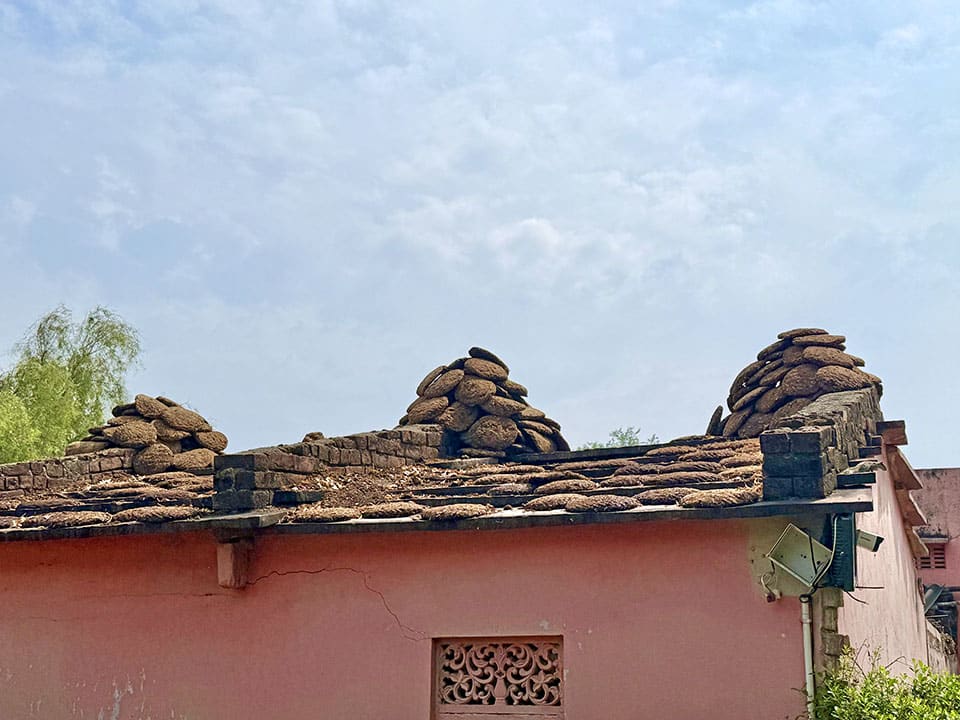
We stopped for a delicious lunch at Abhaneri Village Safari Camp, complete with cows (and cow pies drying on the roof, used for heating and cooking), camels, and parrots.
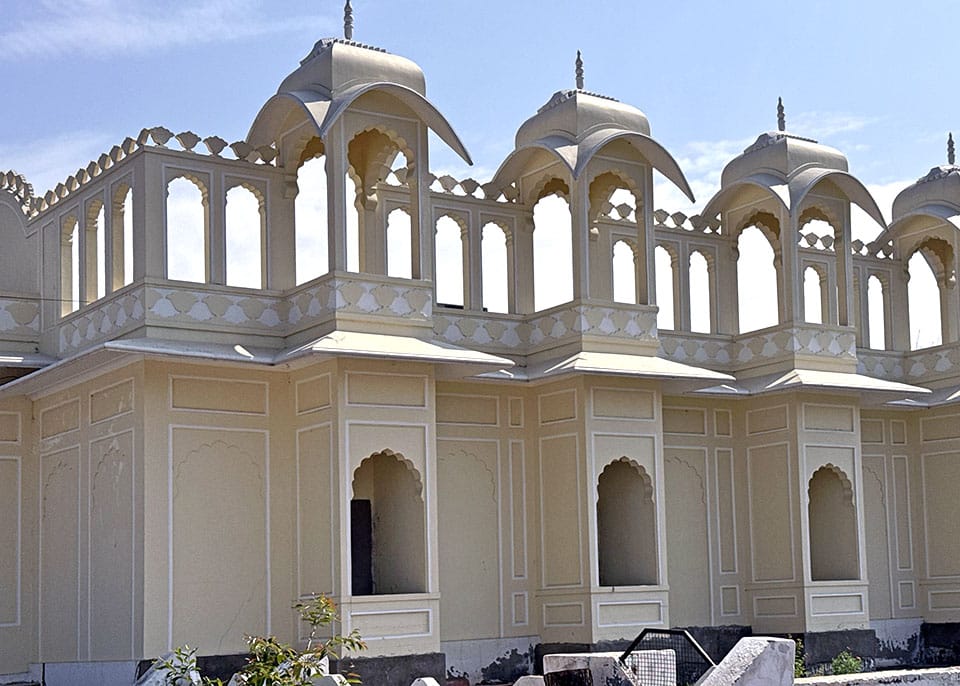
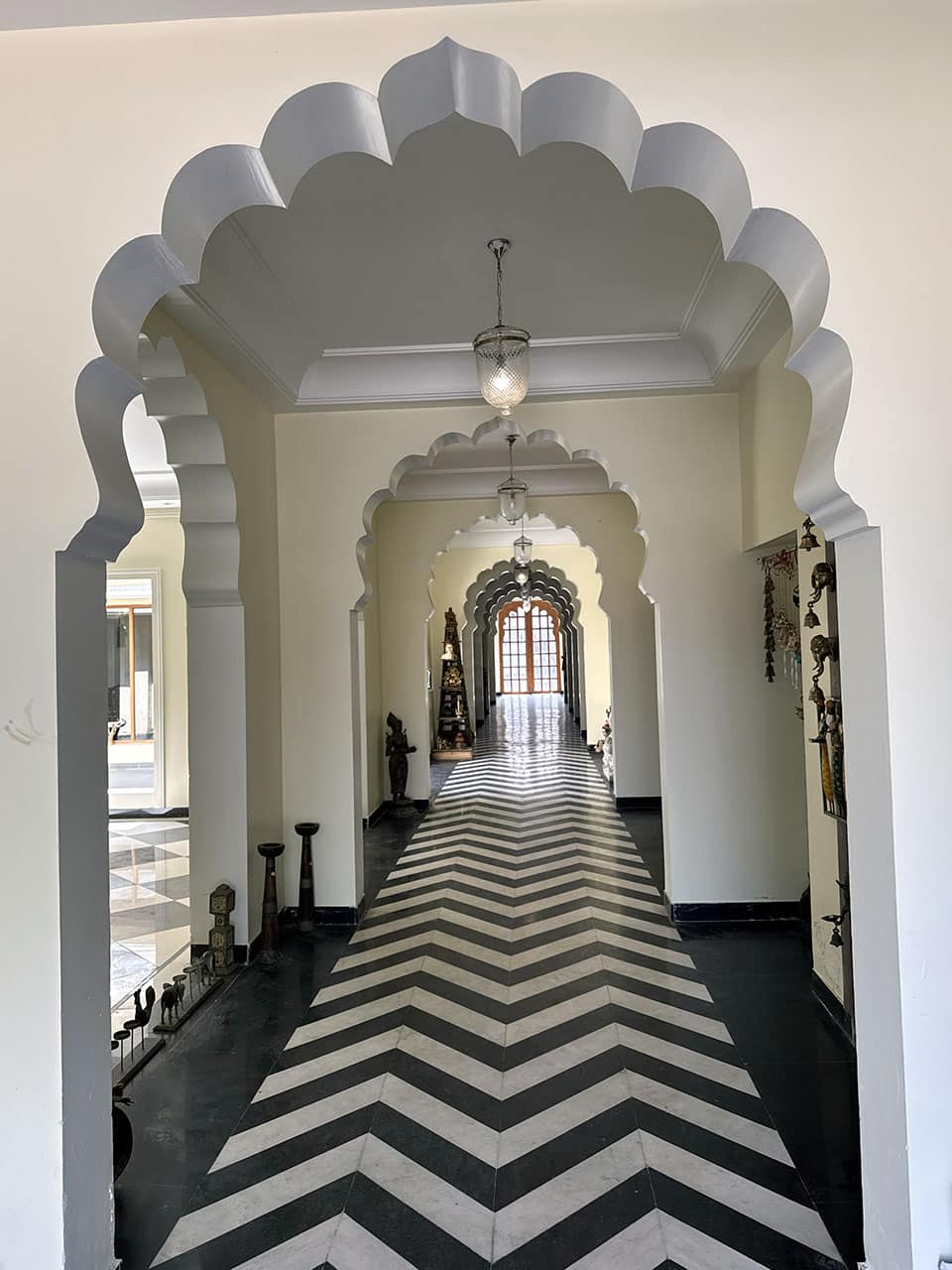
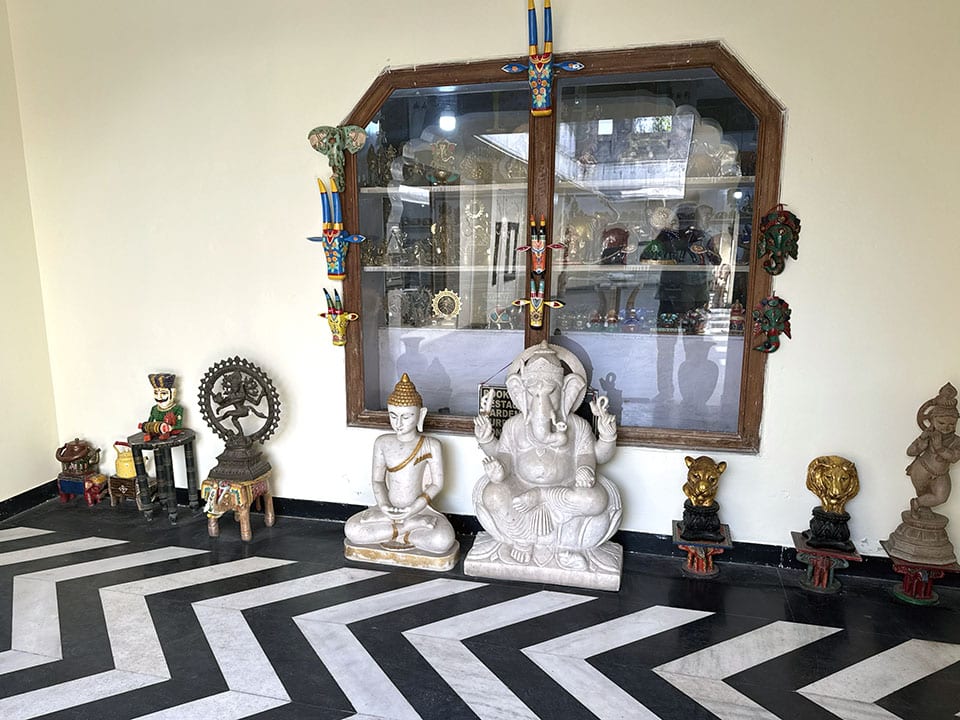
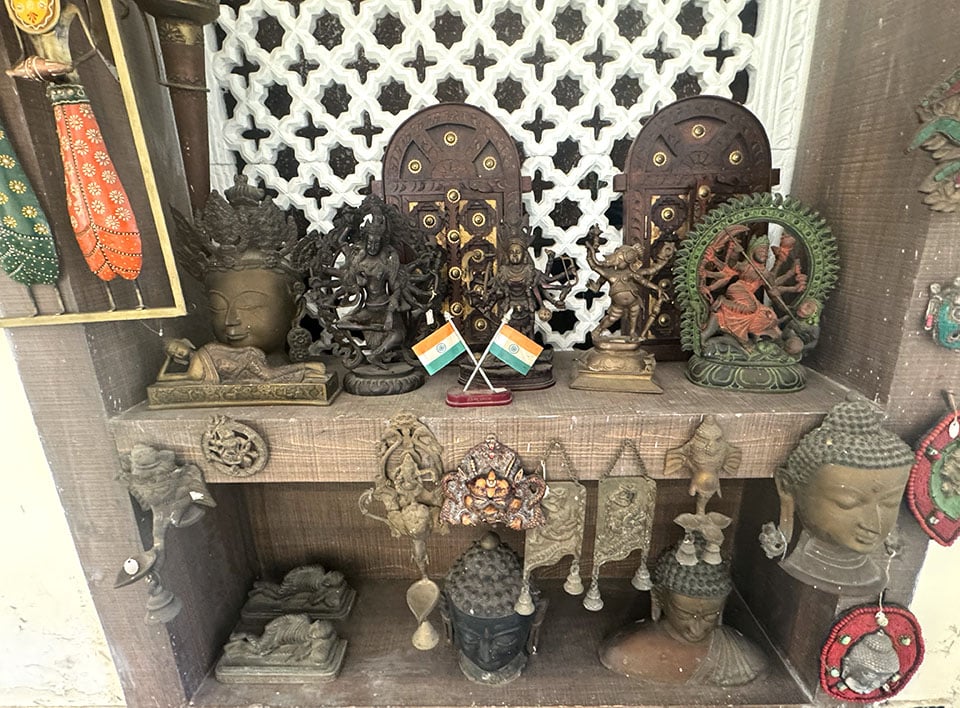
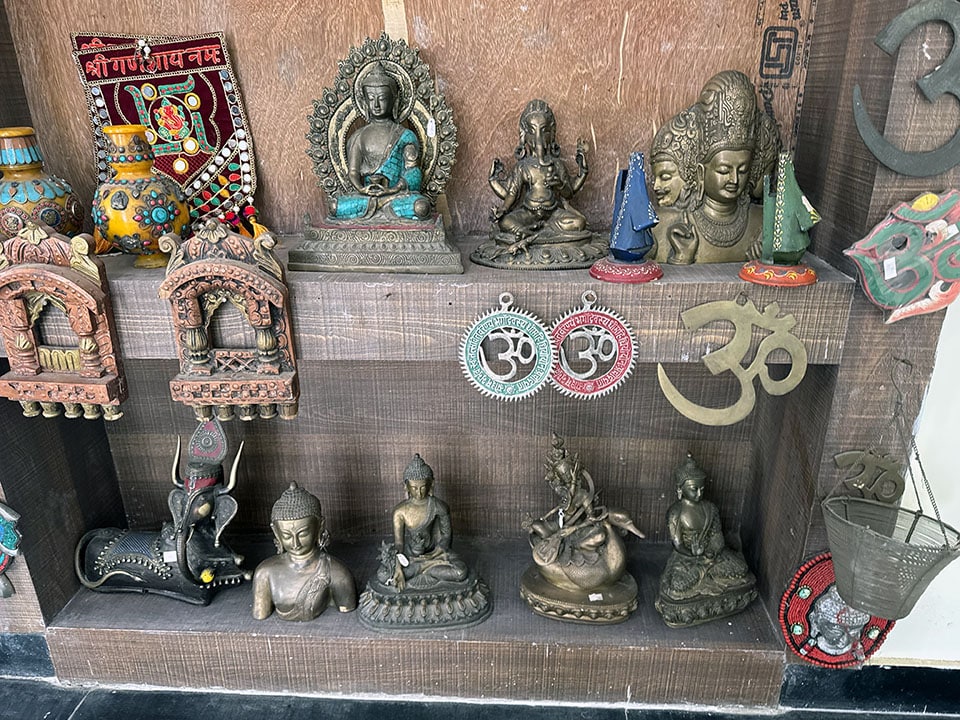
Driving down the road after lunch, in the middle of nowhere, a palatial building suddenly appeared. Turns out it was a rest stop. Along with bathrooms, there were a variety of shops, where a vendor tried to convince us that a little plastic elephant was made of marble. Ha! We did not fall off the turnip truck yesterday, LOL!
Agra
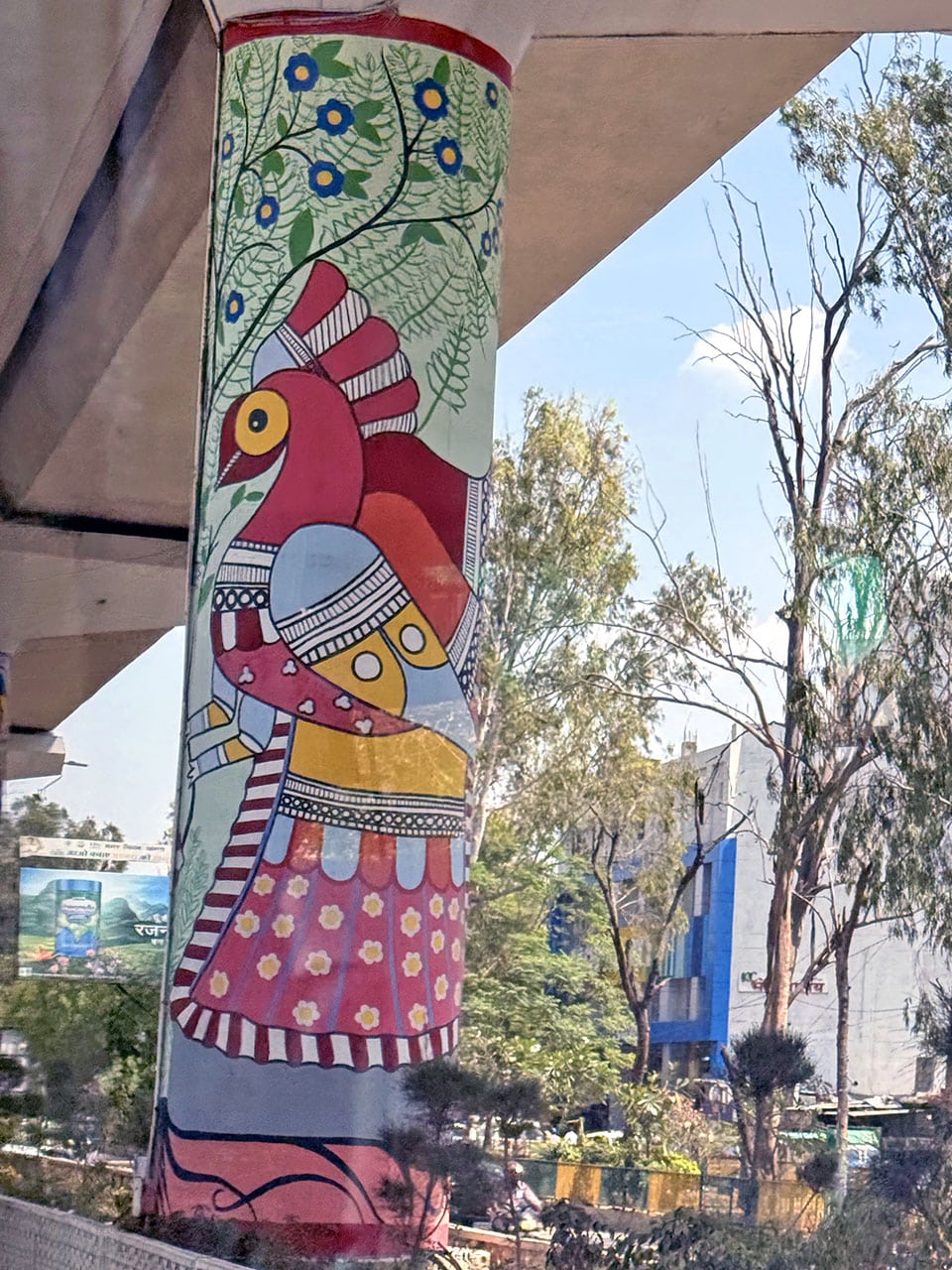
We arrived at Taj View Hotel in Agra later that afternoon. Apparently, from the rooftop restaurant, you could see the Taj Mahal through the smog on a good day— but our room view was of the new light rail system. Luckily, they had beautiful art on the light rail track pilings.

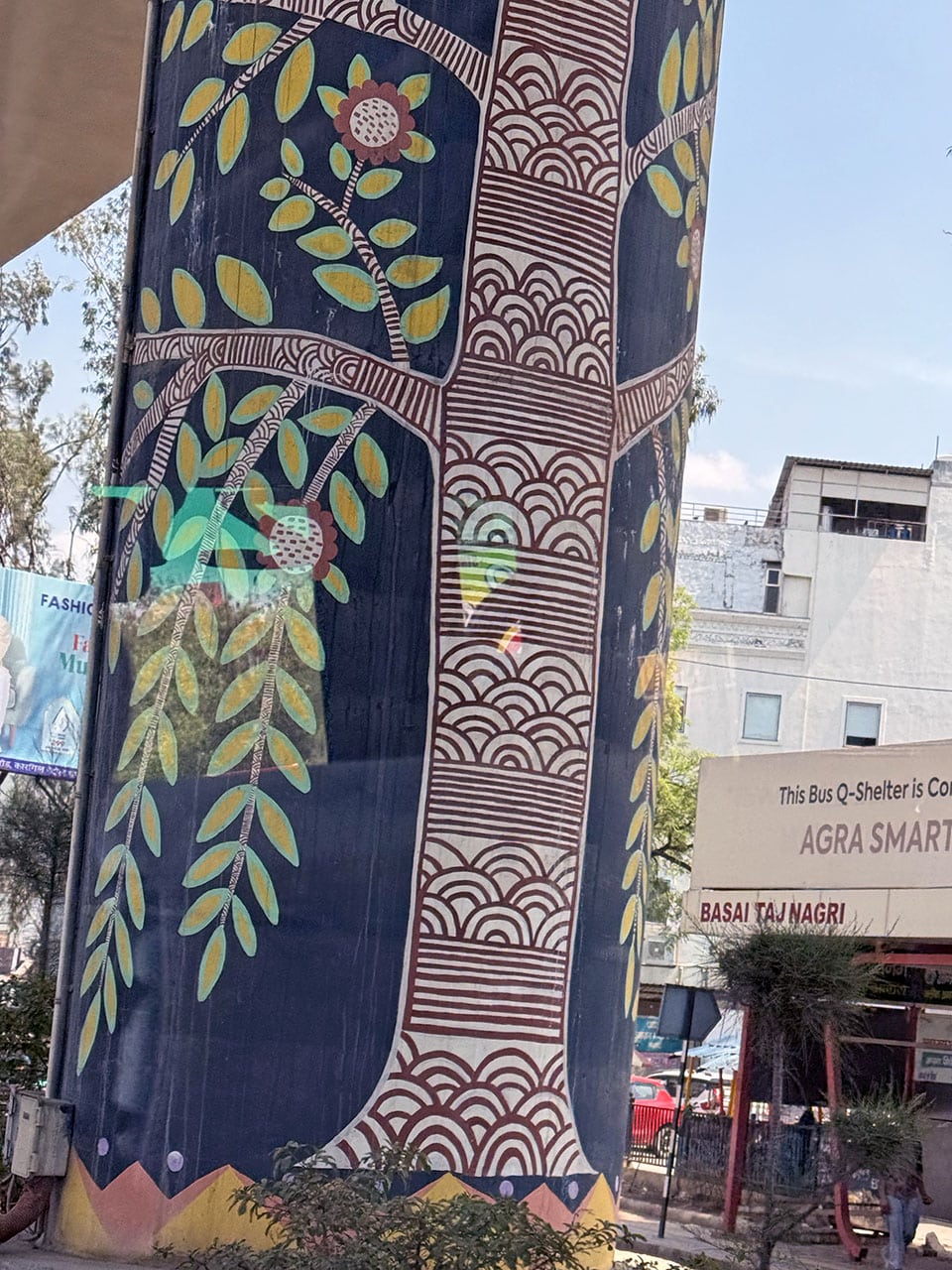

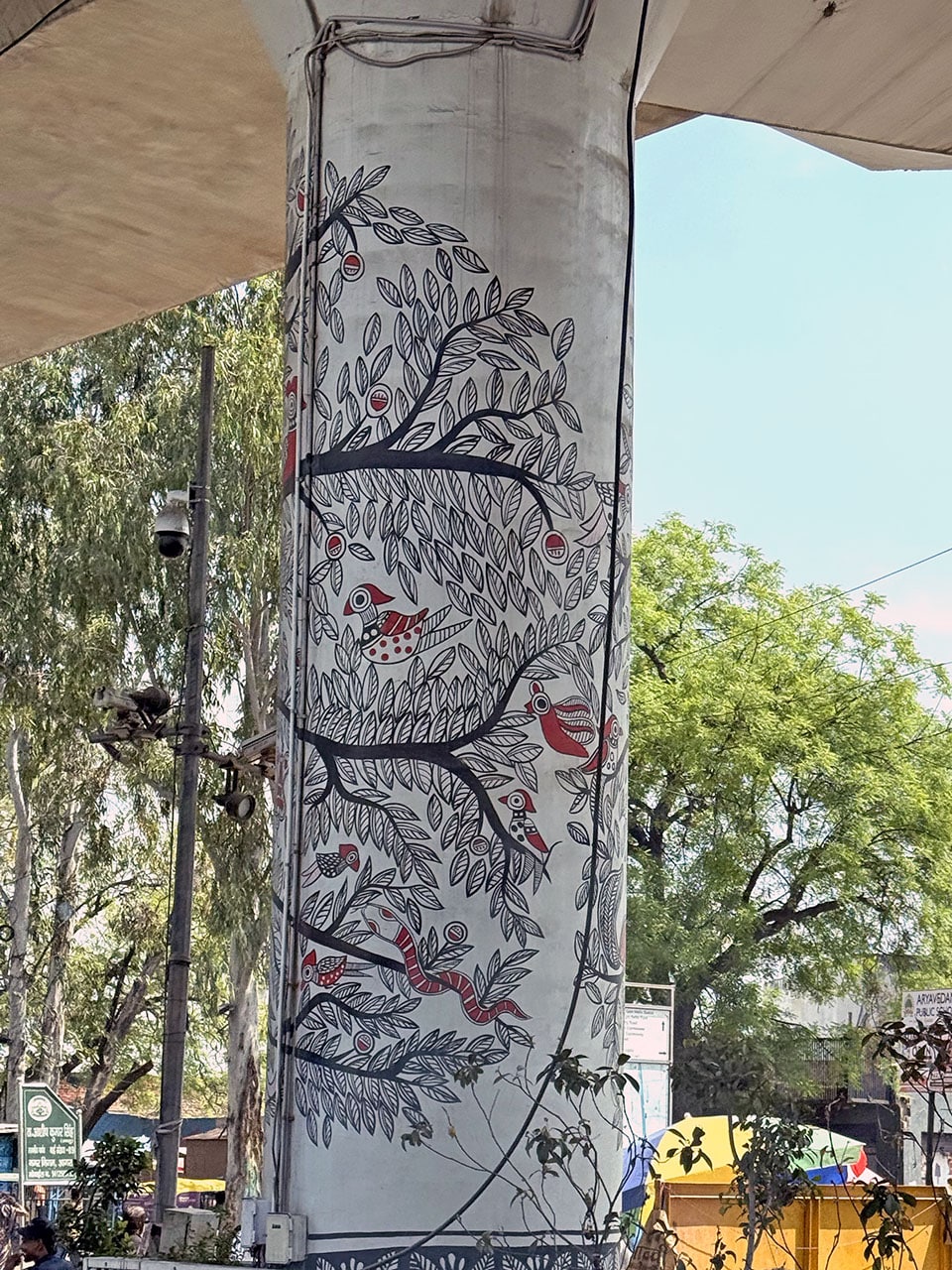

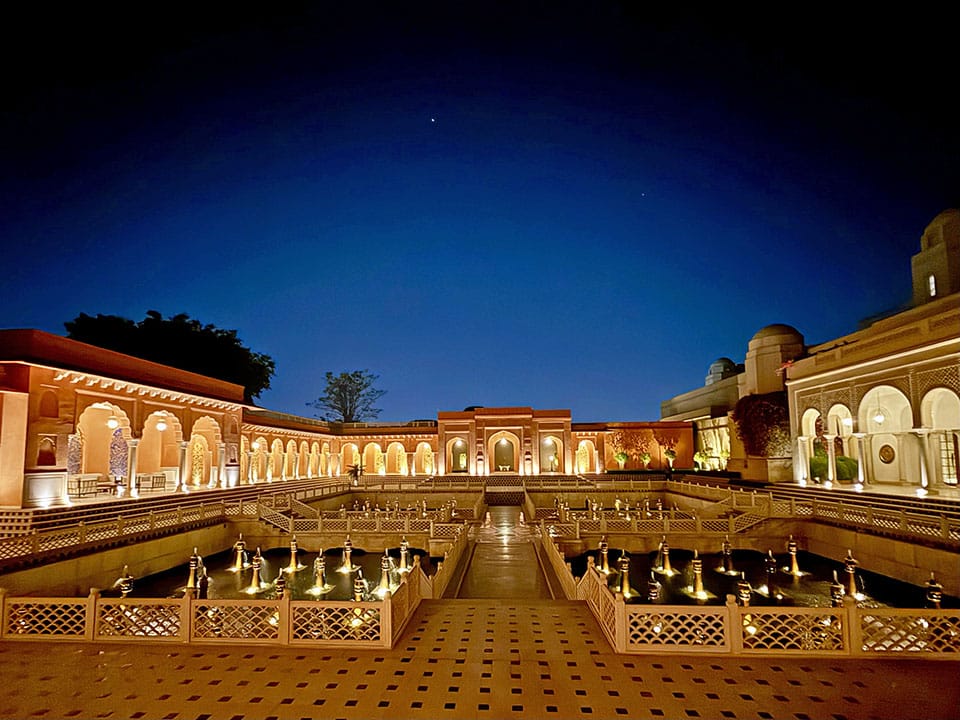
That night, we had a lovely dinner at the five-star Oberoi Amar Villas, where they served Heidi a delicious homemade nut-and-seed-based gluten-free bread. She loved it so much she asked if it was possible to buy a whole loaf and take it with her. We don’t think they had ever had that request before, but they presented her with a beautiful loaf wrapped in tissue paper with a ribbon around it, at no extra charge. Sorry, we forgot to take a photo before she broke into it!
Taj Mahal
The next morning, we were scheduled to head to the Taj Mahal at 5 AM for sunrise, but with many of the group still a bit under the weather, thankfully that was pushed back to 9 AM, so we all got more sleep.
We never thought we’d see the Taj Mahal in person; it was never even on our bucket list, but when in India…
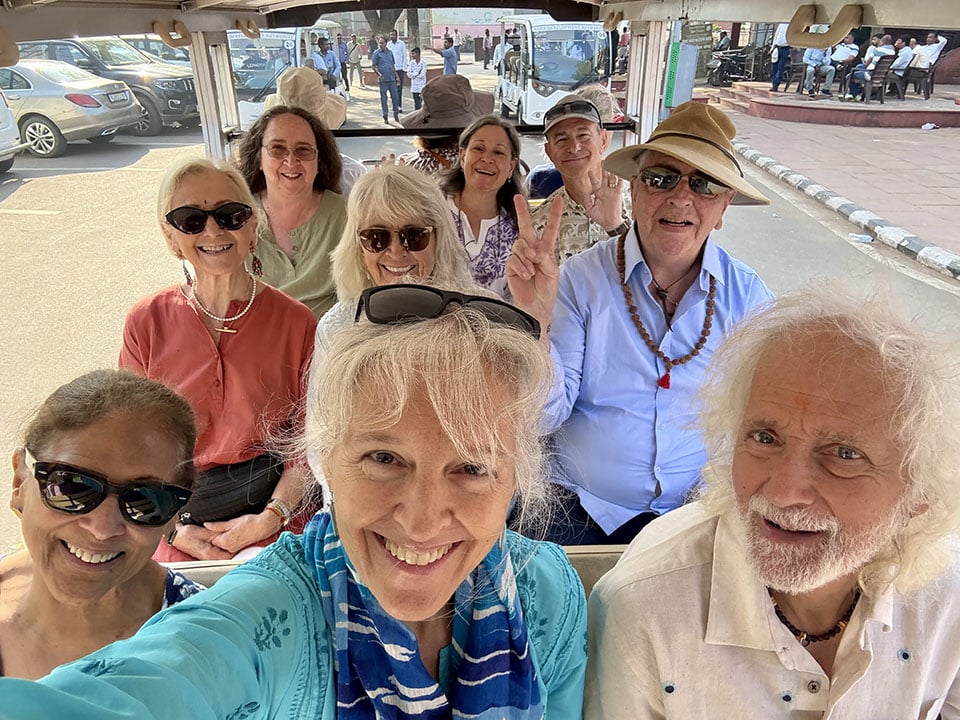
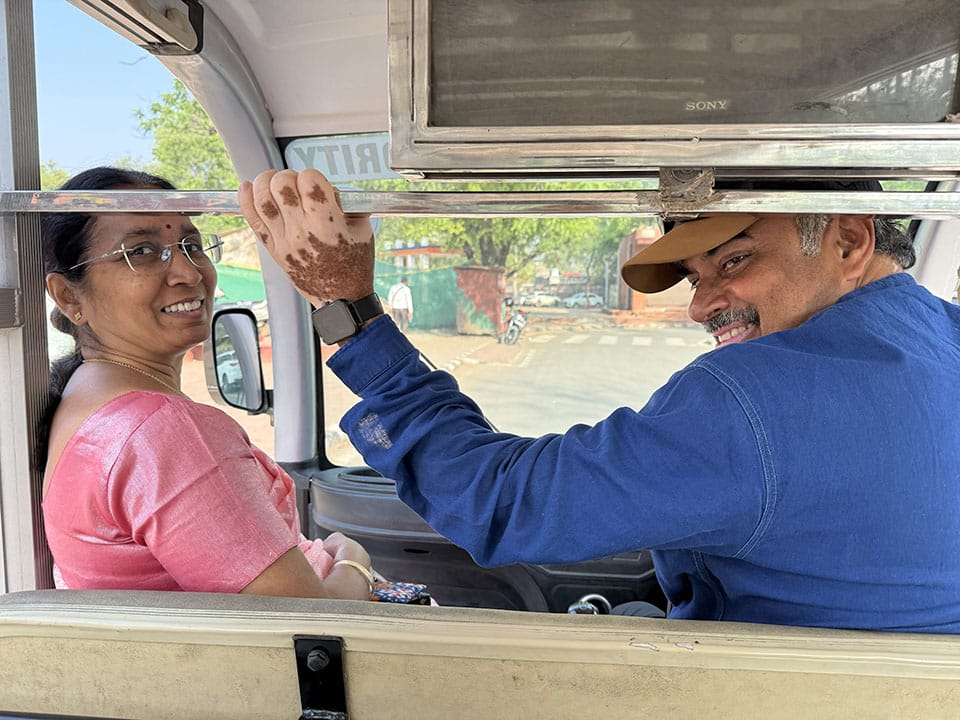
To protect the Taj Mahal’s marble from the damaging effects of vehicle pollution, parking is located some distance away, and electric golf carts shuttle visitors from the parking lot to the main entrance.
We were instructed to leave all belongings on the bus except our cell phones and a bottle of water. No bags are allowed inside the grounds. Anyone who forgot and brought a bag with them had to check it in a locker outside the entrance.


Horse-drawn carriages were found in front of the Taj, along with this iconic soft drink sign—even in Hindi we knew what it said—and we don’t even drink Coke! And a sign listing everything you may NOT bring into the Taj Mahal.
Wow!! Our first view of the Taj Mahal through the darkened entry archway was breathtaking! Ramesh organized several group photos, and then we were free to wander for about an hour before meeting up again at the front entrance.
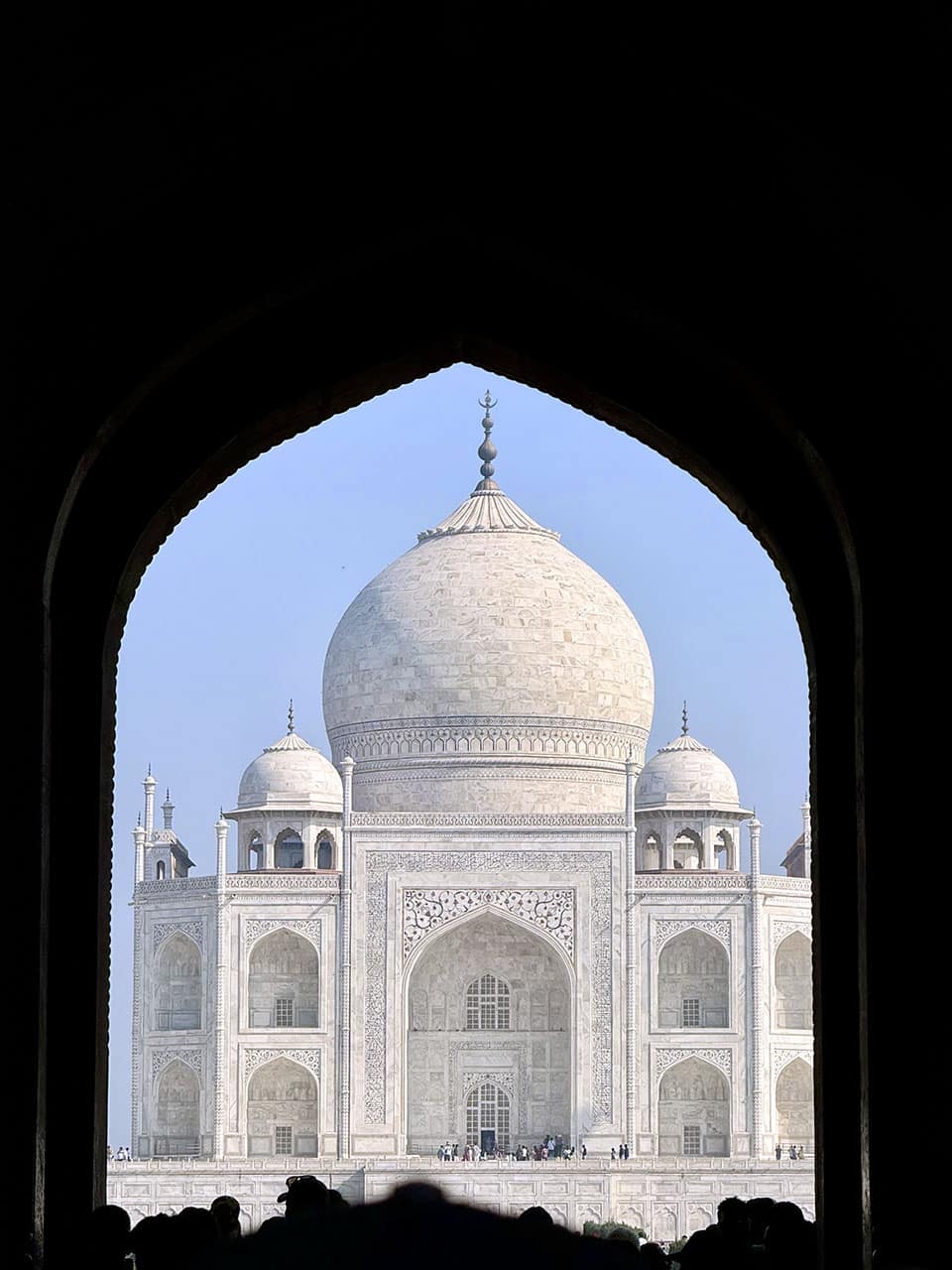


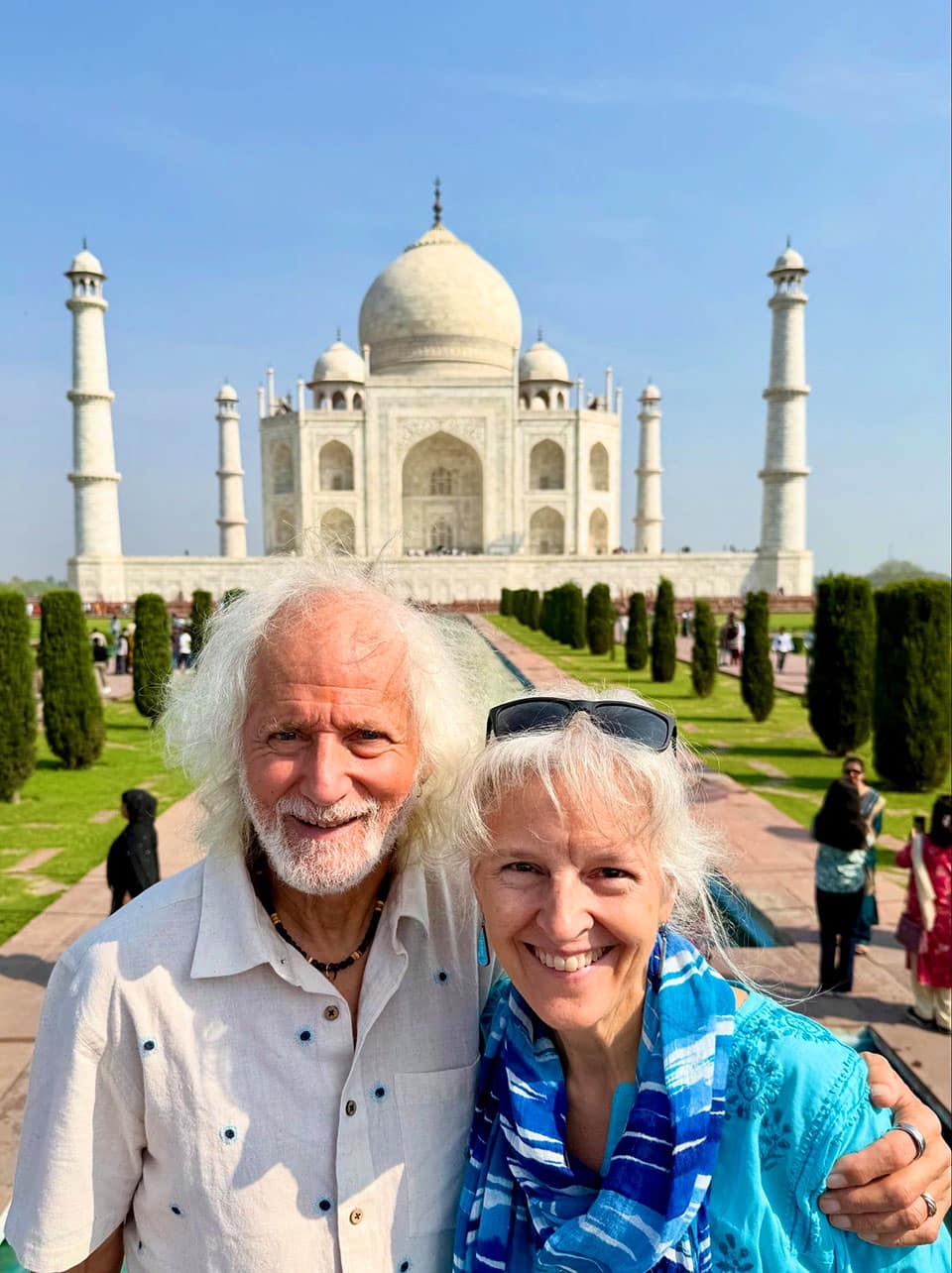
The Taj Mahal is a magnificent masterpiece of Mughal architecture, built between 1631 and 1648 by Emperor Shah Jahan as a monument of eternal love for his favorite wife, Mumtaz Mahal, who died giving birth to their 14th child.
This symmetrical white marble mausoleum is adorned with intricate carvings and inlaid semi-precious and precious stones, creating designs of flowers, birds, and geometric patterns (including optical illusions; take a look at the column), as well as Quranic prayers written in Arabic script.


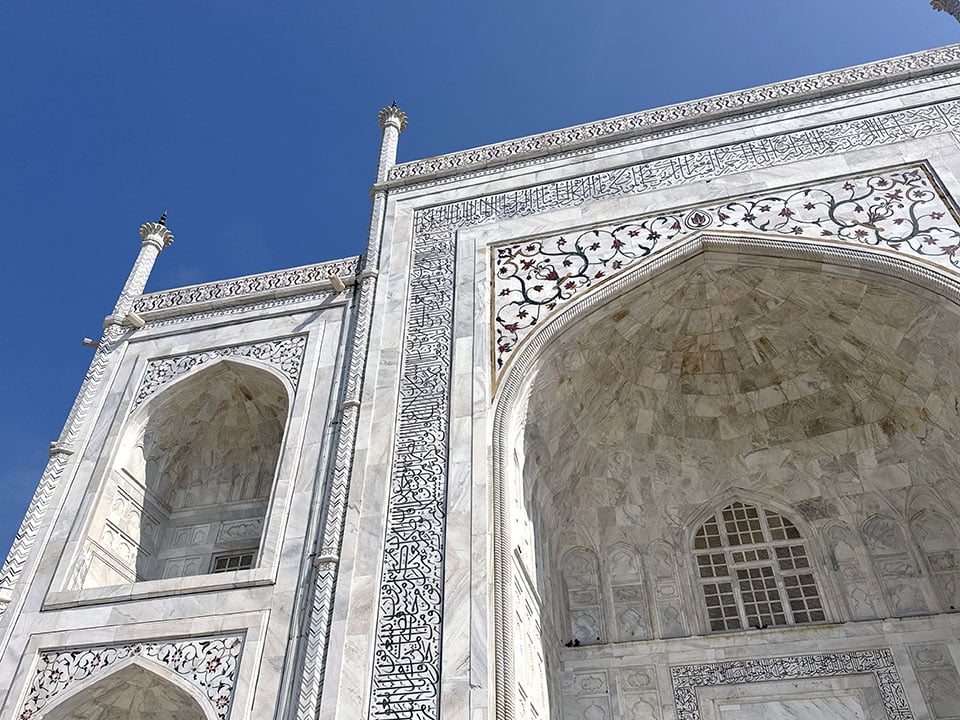
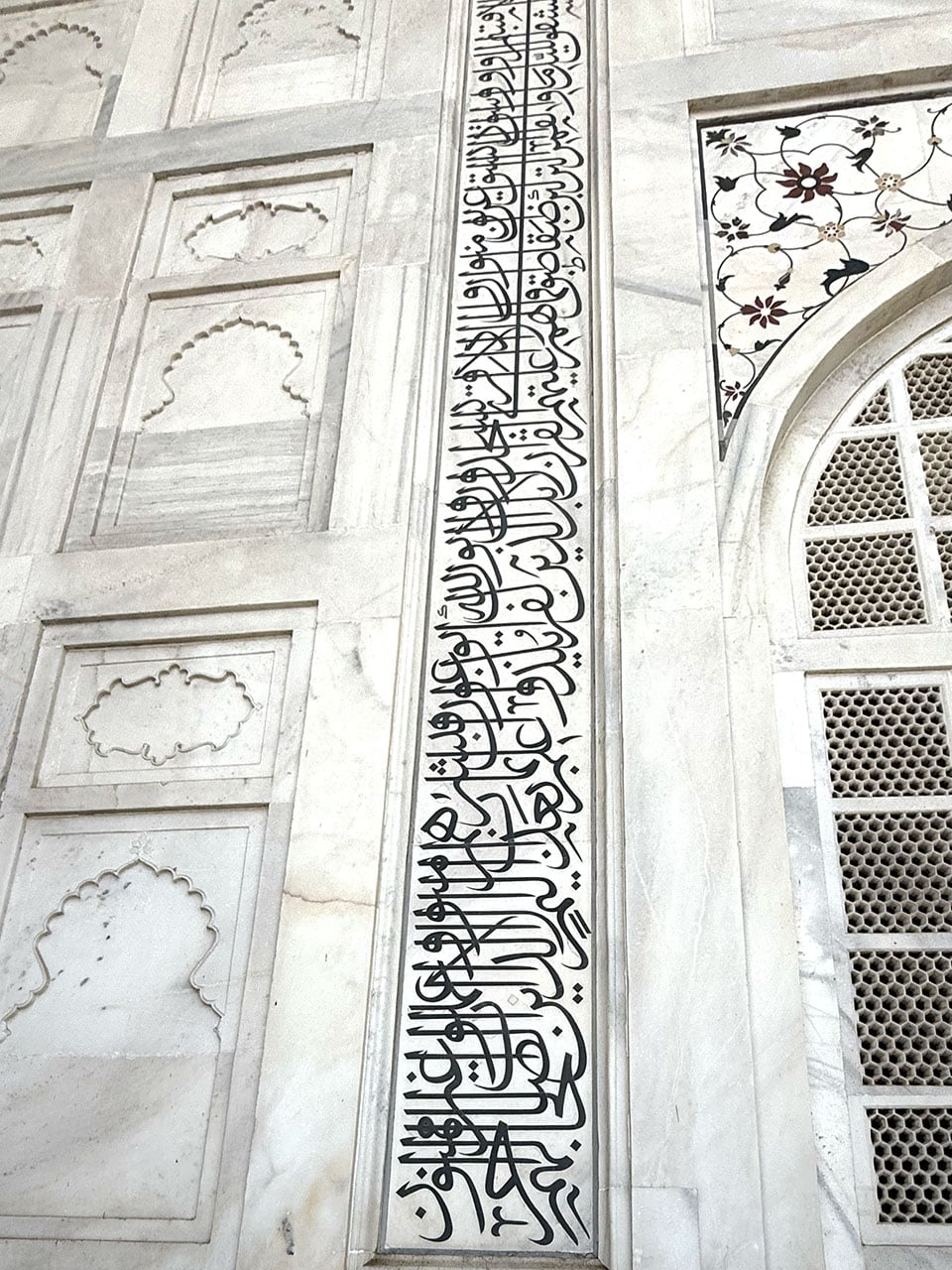
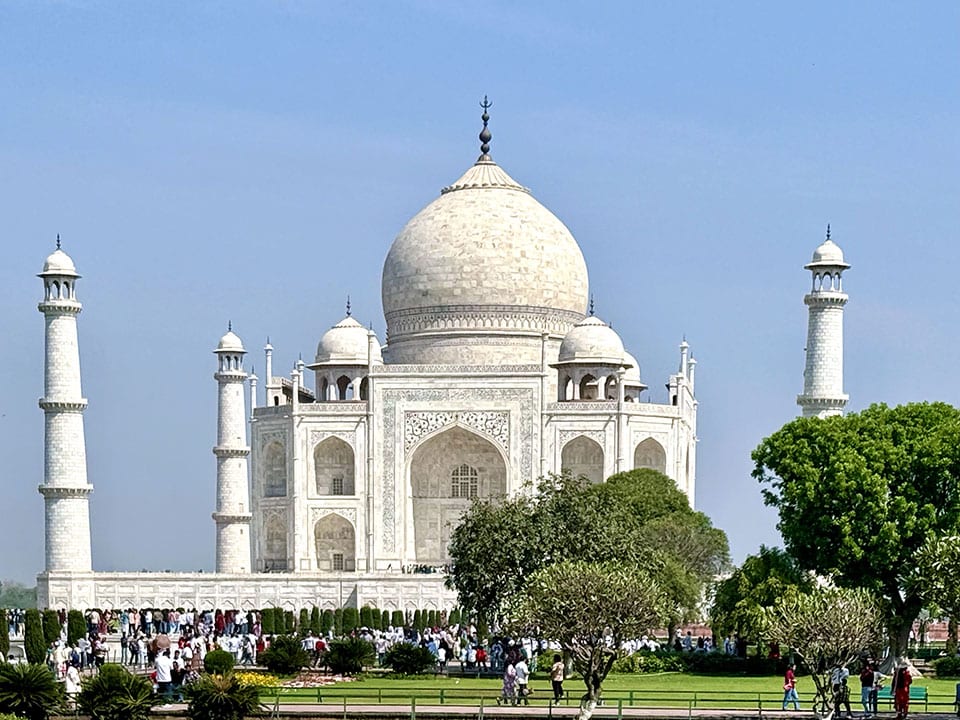
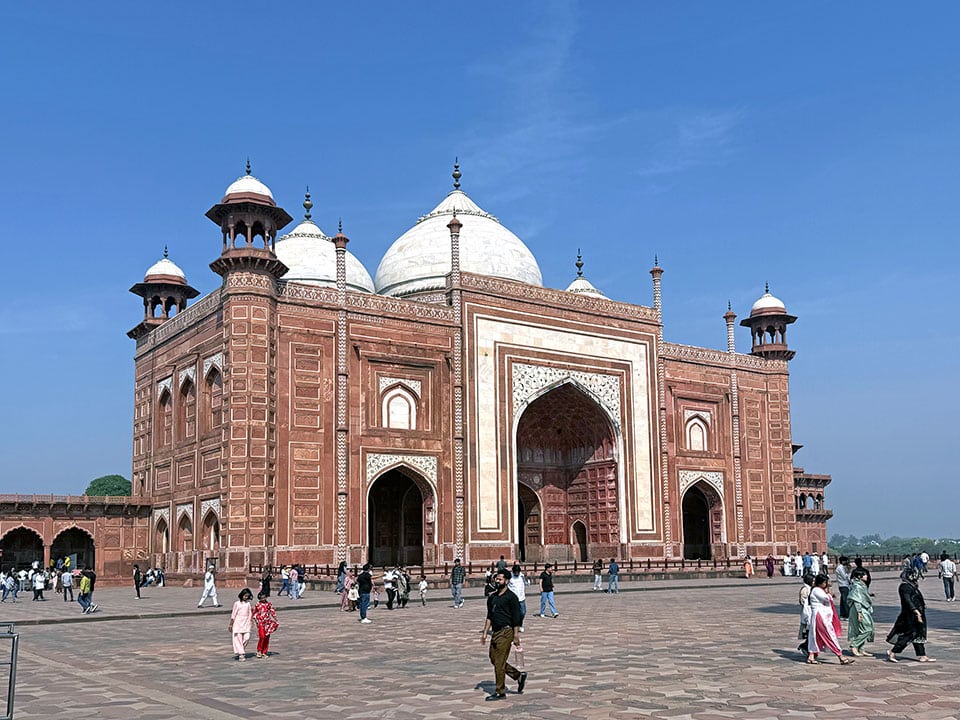
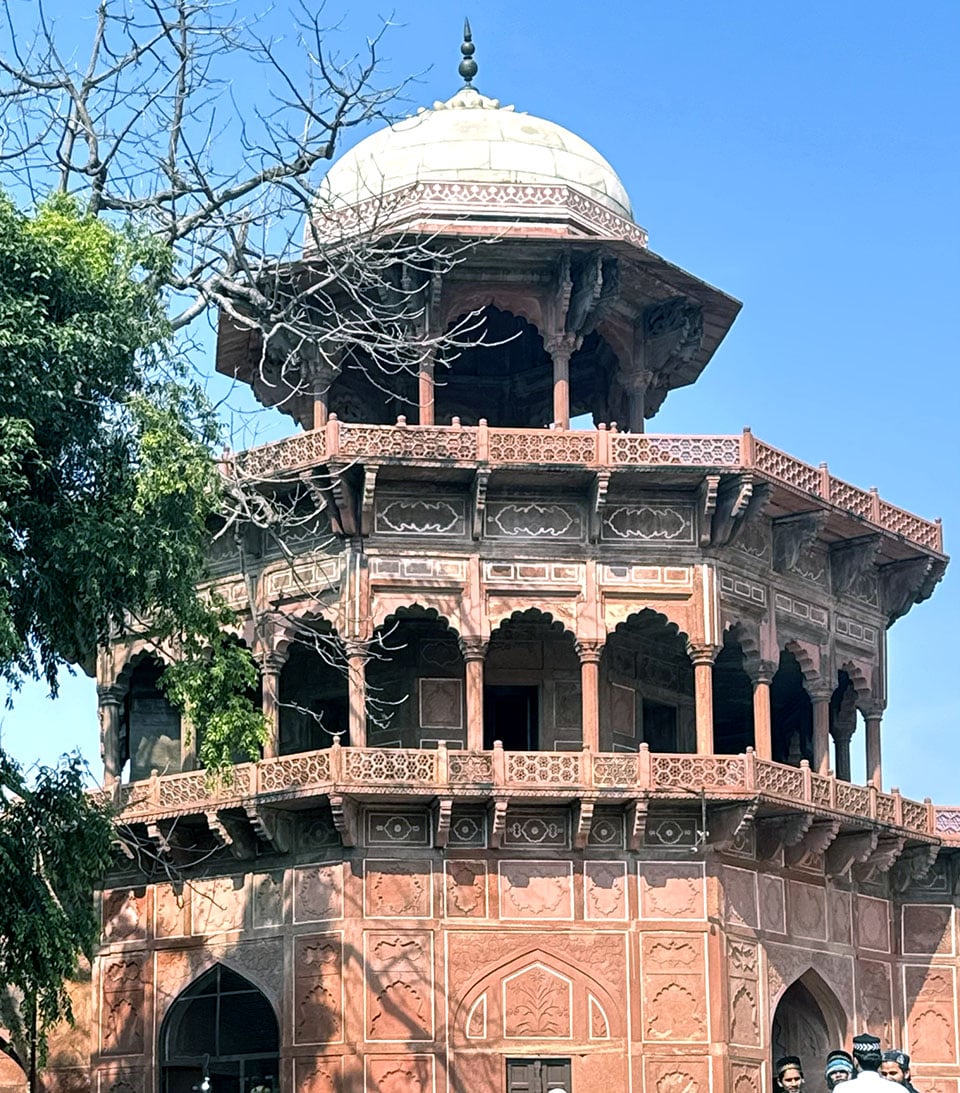
The four minarets surrounding the mausoleum at this UNESCO World Heritage site tilt slightly outward to protect the central dome during earthquakes, and the walls glow in changing colors from pink at dawn to golden under the full moon. Flanking the Taj Mahal are two identical buildings: the one on the left is a mosque, and the one on the right is the guest house.

However, the monument’s beauty is juxtaposed with a tragic history. Shortly after its completion, Shah Jahan’s own son, Aurangzeb, overthrew him and imprisoned him in the nearby Agra Fort. For the final eight years of his life, the deposed emperor was confined to a room where he could only gaze out across the Yamuna River at the spectacular tomb he built, admiring it from afar until the day he died. What a horrible son.

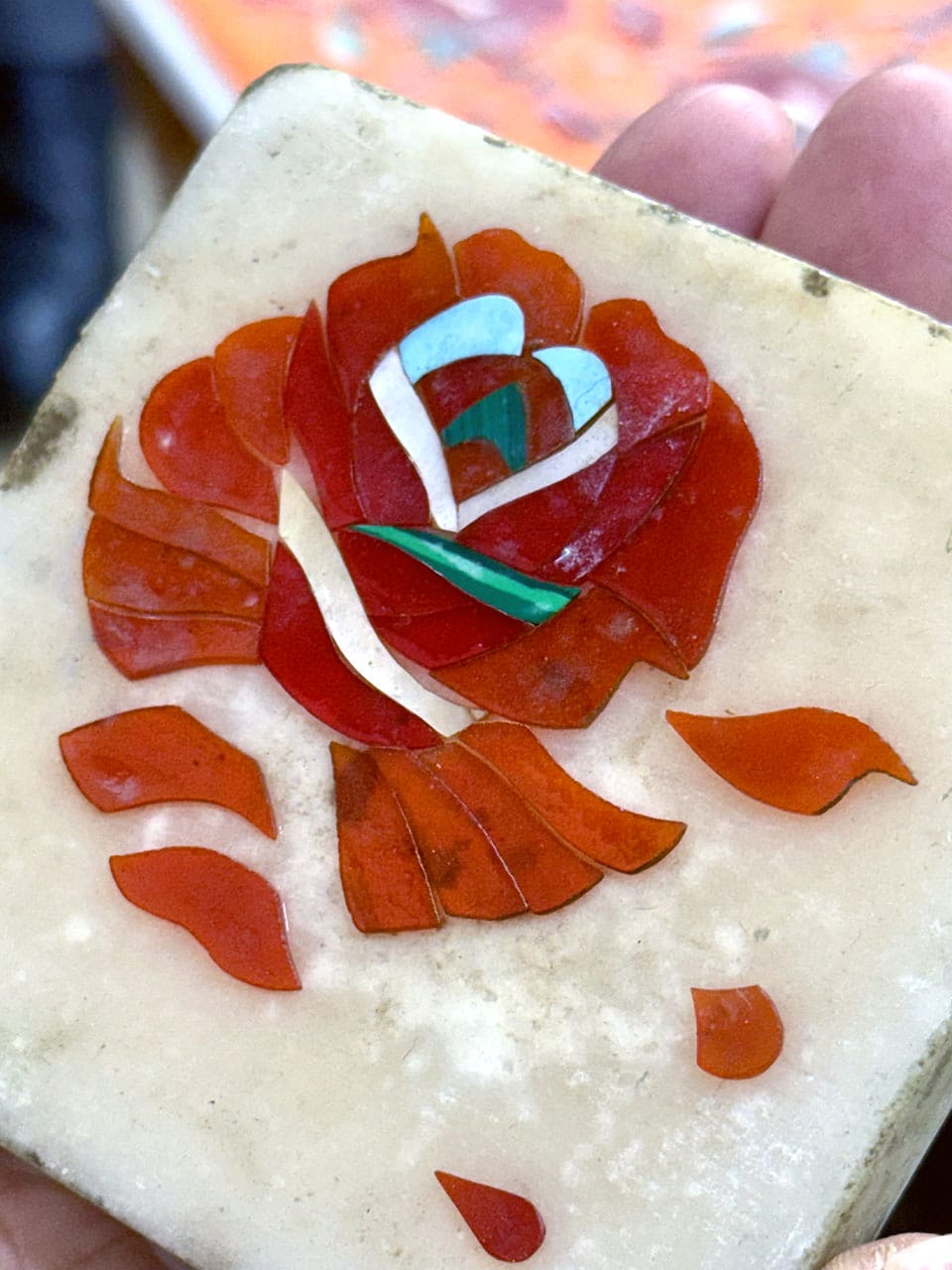
After many photo ops at the Taj, it was time to meet our group and hop back on the bus to visit a marble shop. It was interesting to see them cut the inlaid stone pieces by hand and fit them together in the marble. Many of our group purchased marble tables or other pieces, but really, where would you put marble on a sailboat? Not for us, LOL.




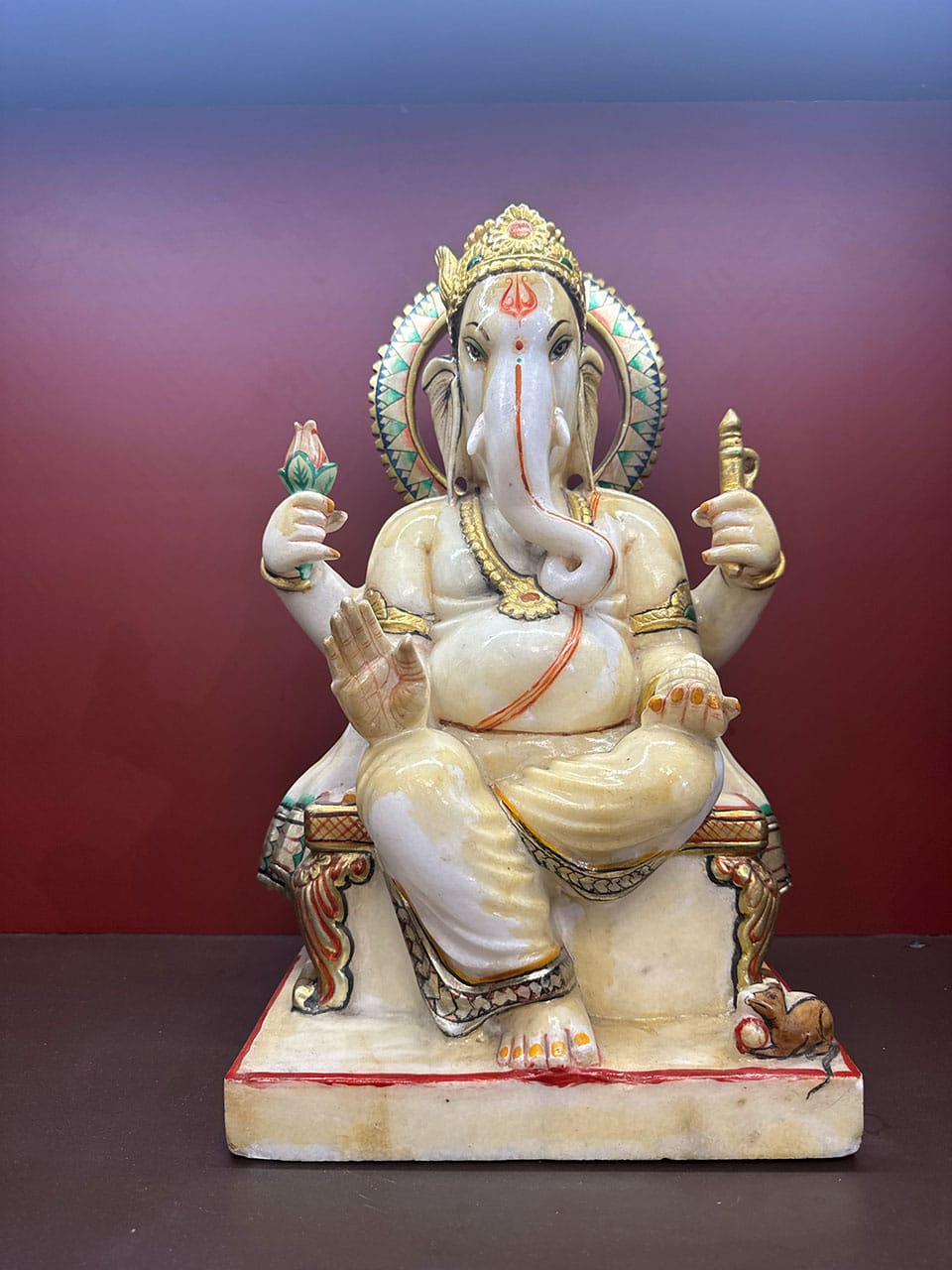
Hanuman (Monkey god) and Ganesh (elephant god) marble figurines.
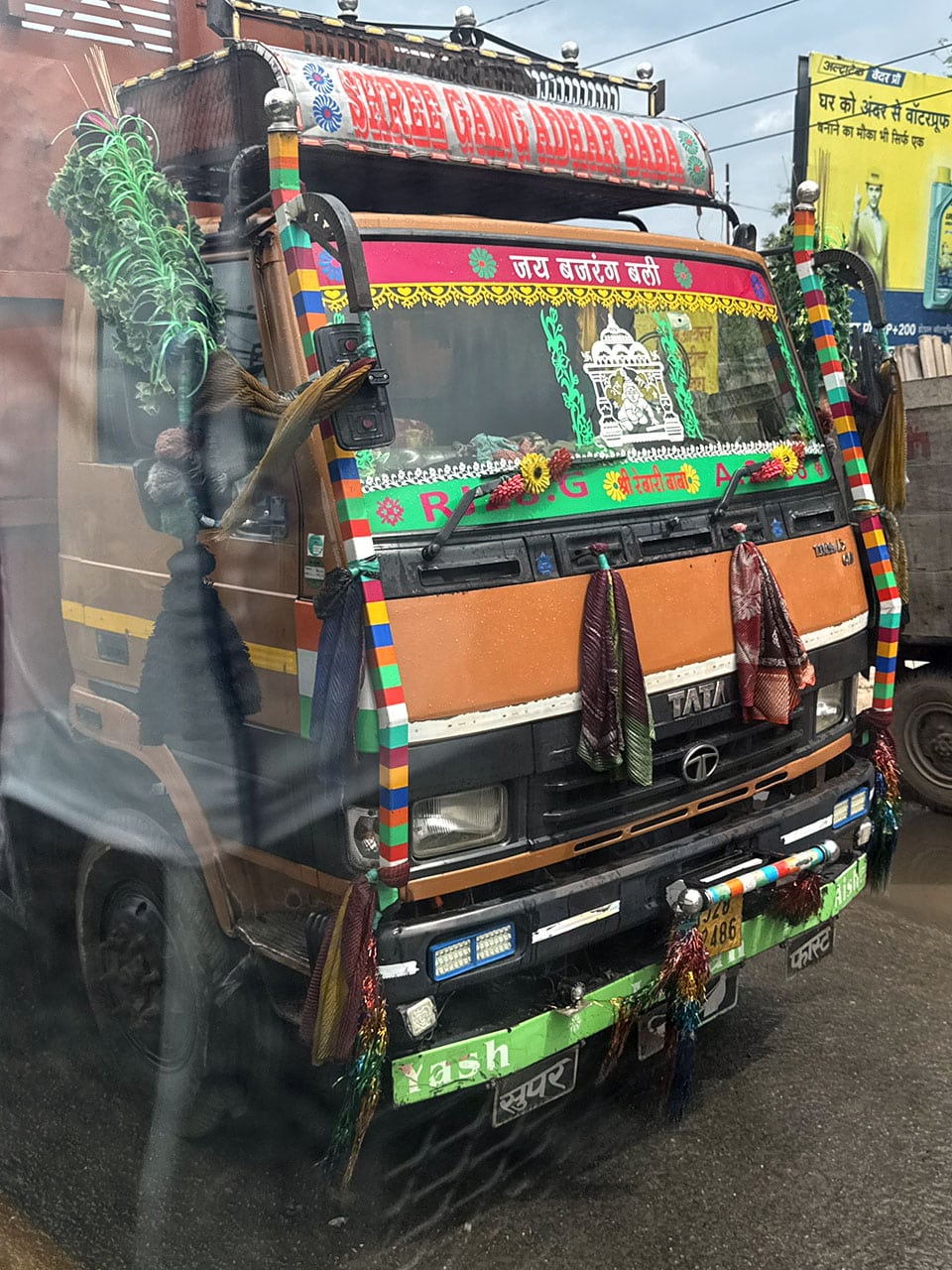
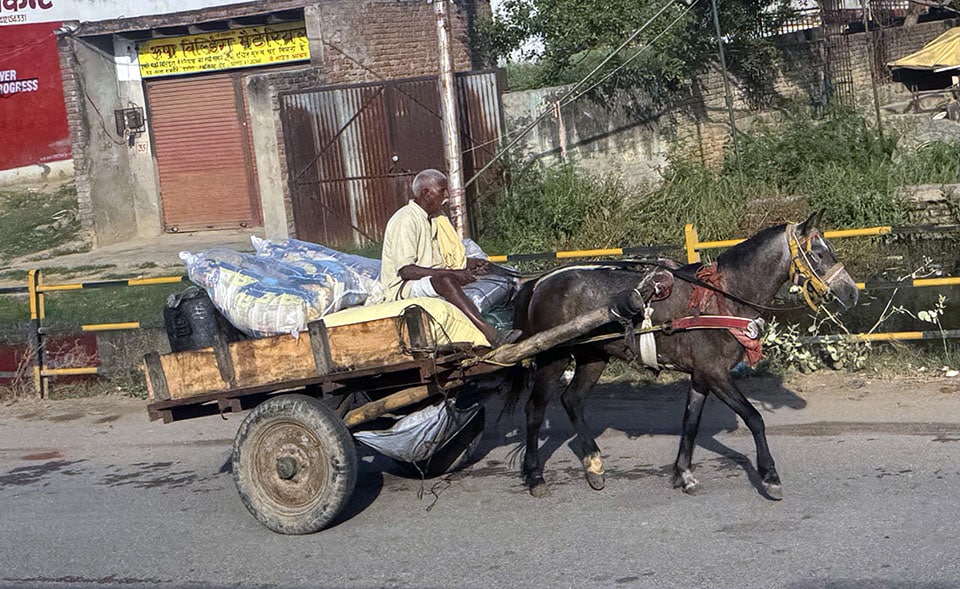
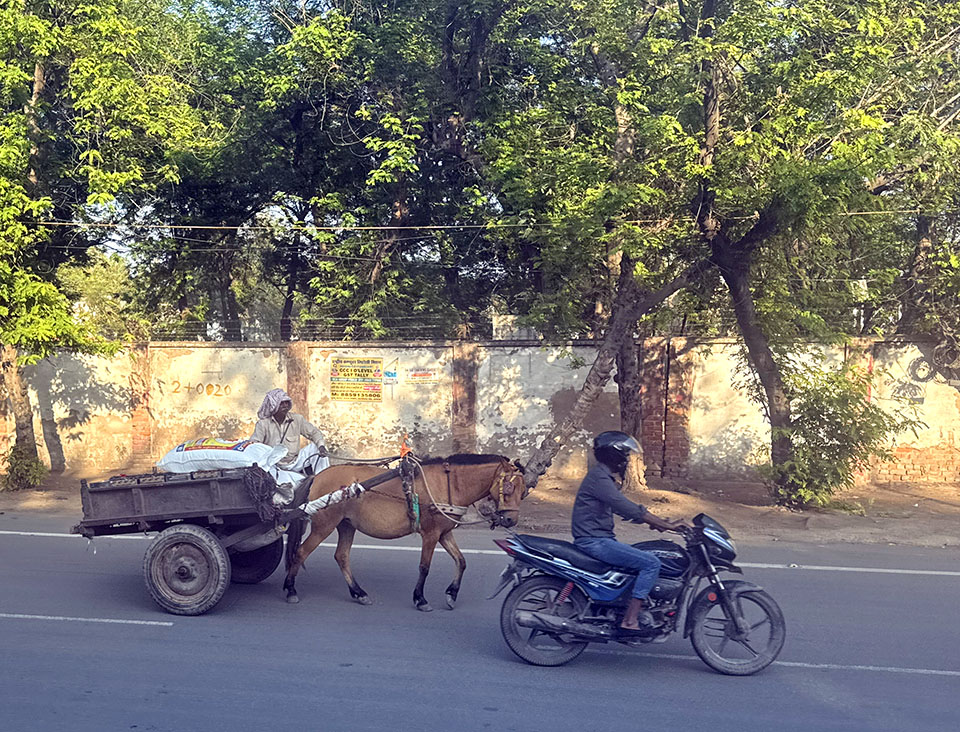
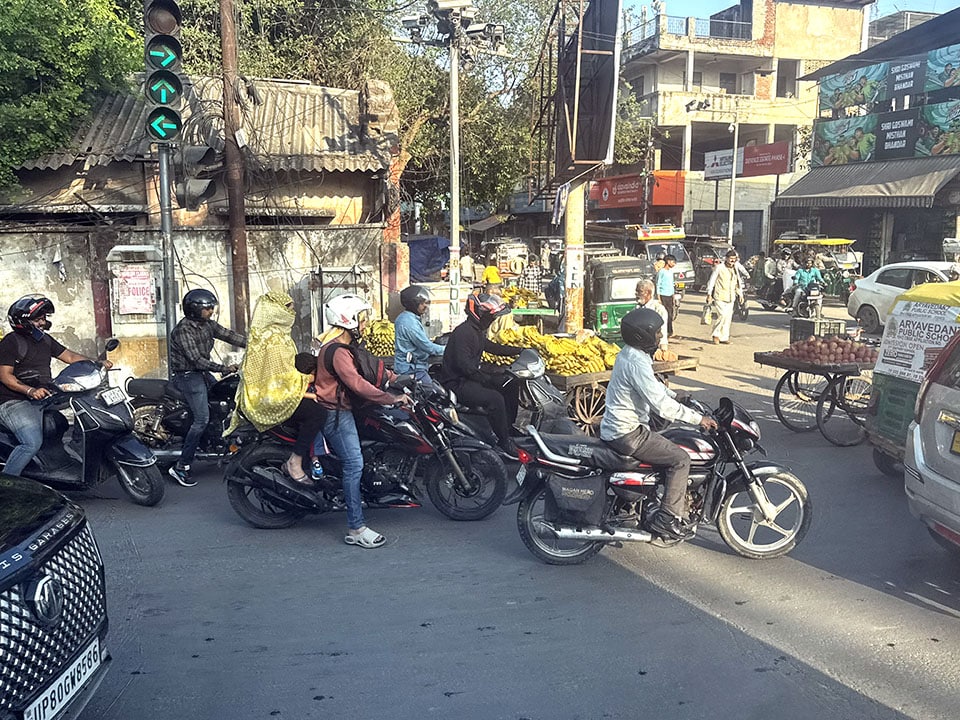
Marble shopping done…we continued our drive for six hours back to Delhi, with more picturesque roadside attractions along the way…from rural scenes to crowded corner markets, it was wonderful to glimpse daily life in India as we drove along.




Dehli
We had only stayed in Delhi briefly between Goa and Varanasi, but even in that short time and again on this return, we were so amazed by the amount of greenery everywhere. There are so many parks, trees, and planted medians dividing boulevards. Somehow, we hadn’t expected to find Delhi so incredibly green! It’s great that they have so much greenery to help combat the smog, which was quite bad while we were there and prompted us to wear face masks much of the time to breathe easier and protect our lungs.


The Imperial Hotel: Where Modern India Was Born
We returned to the Imperial Hotel for a night and to collect the luggage that we had left behind. This was definitely one of our favorite hotels of the whole trip (along with Kumarakom in Kerala, and BrijRama in Varanasi).
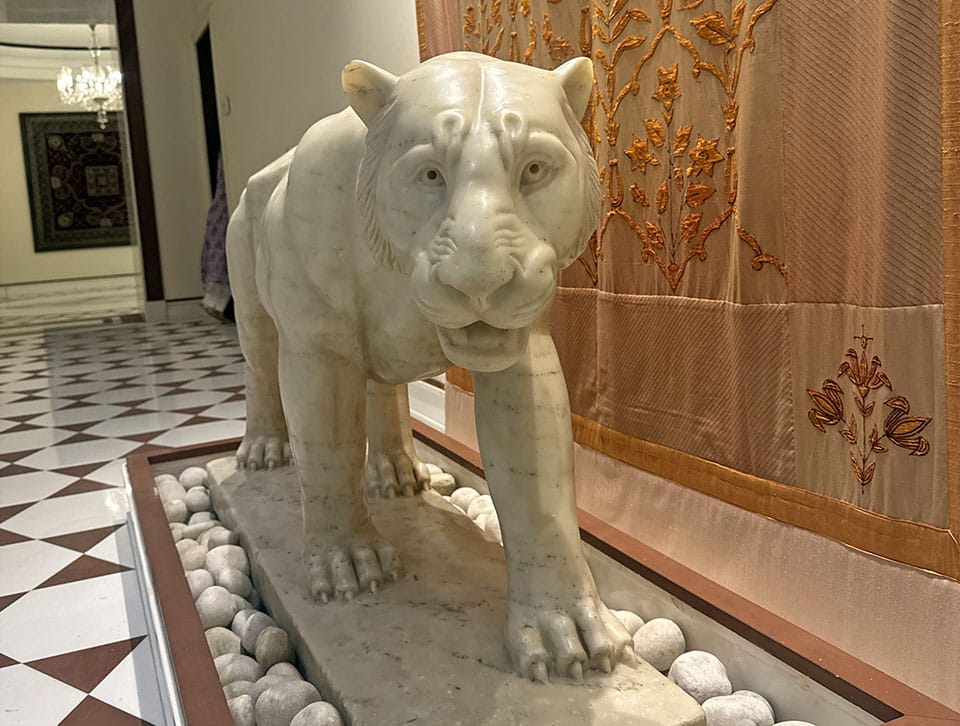
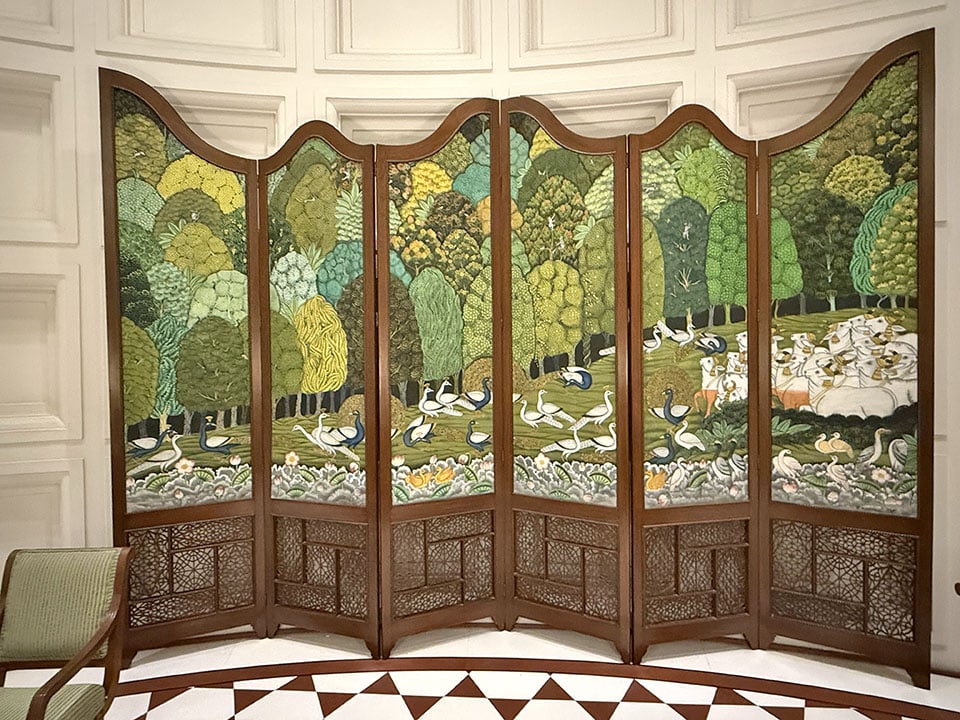
The Imperial Hotel opened in 1936 as an architectural masterpiece and the backdrop for India’s birth as a nation. Conceived as the grandest luxury hotel for the new colonial capital, its walls hold immense history. In the 1940s, its ballroom and courtyards became a tense political boardroom where Mahatma Gandhi, Jawaharlal Nehru, Muhammad Ali Jinnah, and Lord Mountbatten met to negotiate independence and map out India’s Partition. Today, the hotel doubles as a living museum, still retaining its regal colonial aesthetic and housing a massive collection of 18th-century art.

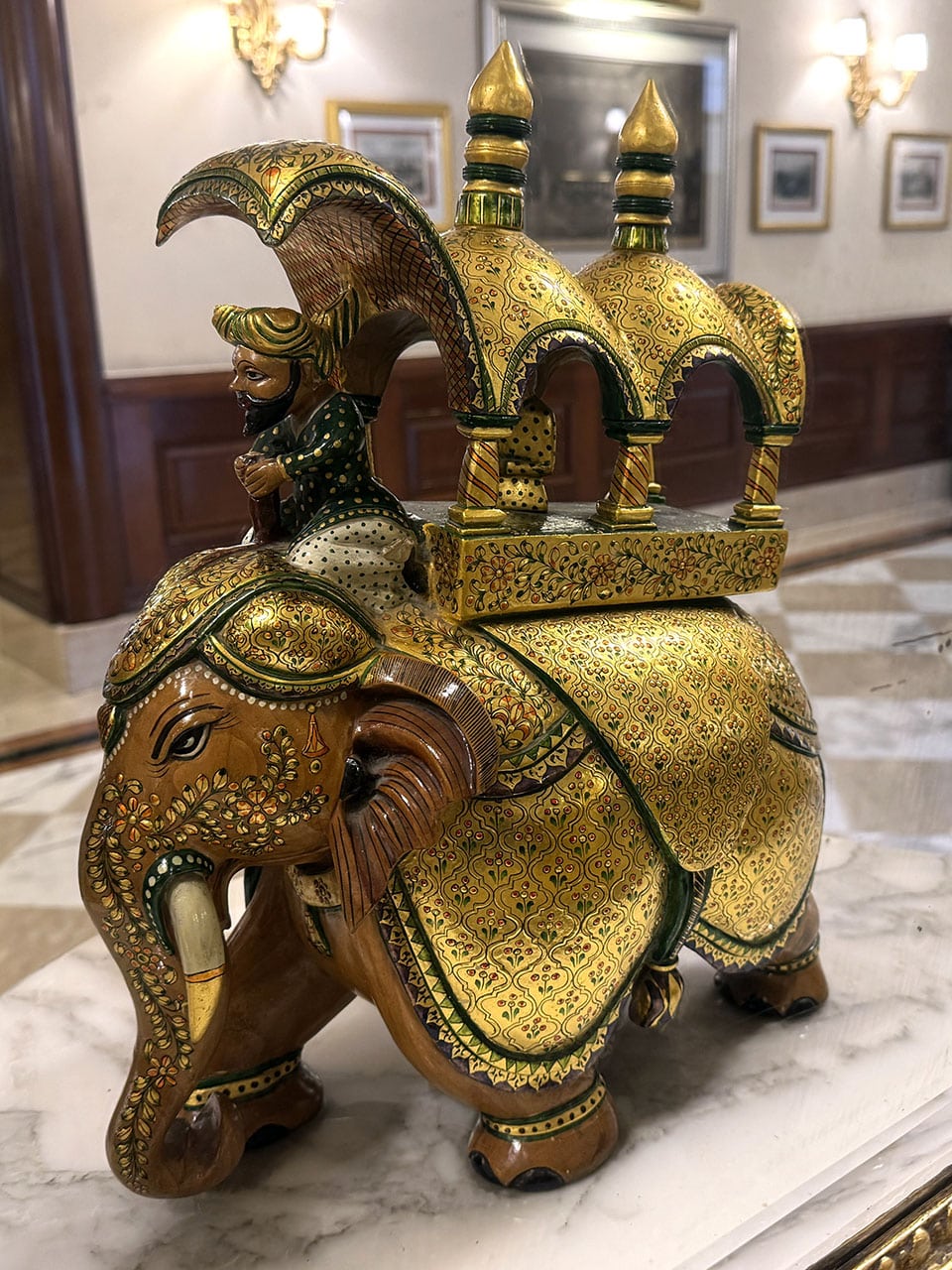

This 8.5’x6′ painting shows British Royals and influential Indian maharajas parading past Delhi’s Red Fort on decorated state elephants during a grand 1903 Royal Court celebrating the coronation of the British monarch.
They also had huge, delicious buffets with everything imaginable, including homemade gluten-free toast that was on par with the bread from Agra. Again, there wasn’t always much in the buffets that Heidi could eat. However, the chef came out to speak with her before each meal and made sure she had plenty of food. Seven-course meals with everything gluten-free/dairy-free/egg-free… she pleaded with them to make less food so it wouldn’t go to waste (it was literally enough for about four people), but they said they couldn’t make smaller amounts. So Kirk would take less from the buffet and try to help her finish the array of delicious dishes.
The next day we had a long day of sightseeing around Delhi, leaving the hotel at 9:30 AM and not returning until 5:30 PM.
Jama Masjid Mosque
Our first stop was Jama Masjid Mosque. One of India’s largest and most famous mosques, it was built by Mughal Emperor Shah Jahan (of Taj Mahal fame) between 1644 and 1656. It is a grand masterpiece of Indo-Islamic architecture, made of red sandstone and white marble, and features a massive courtyard that holds 25,000 worshippers.
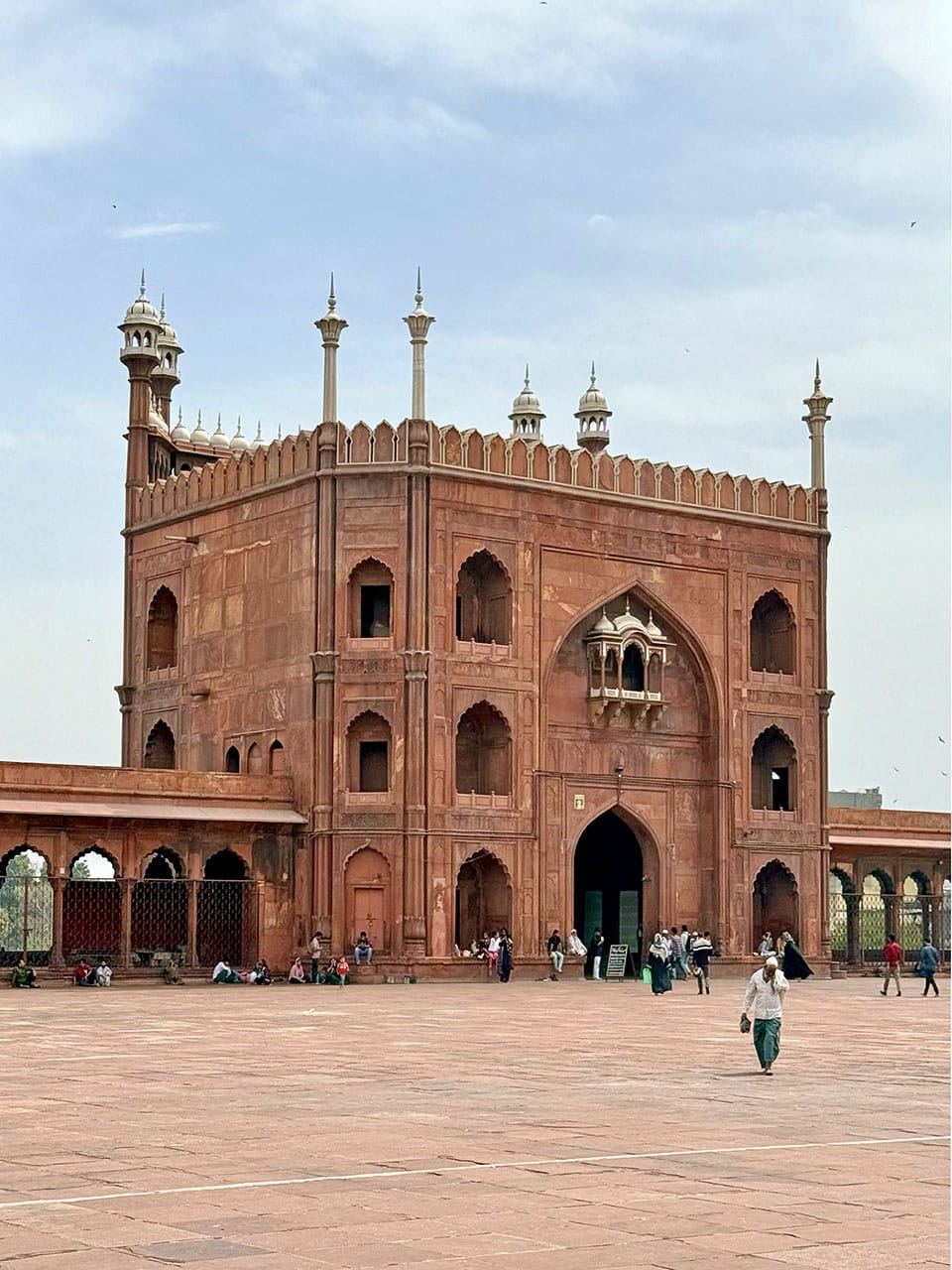
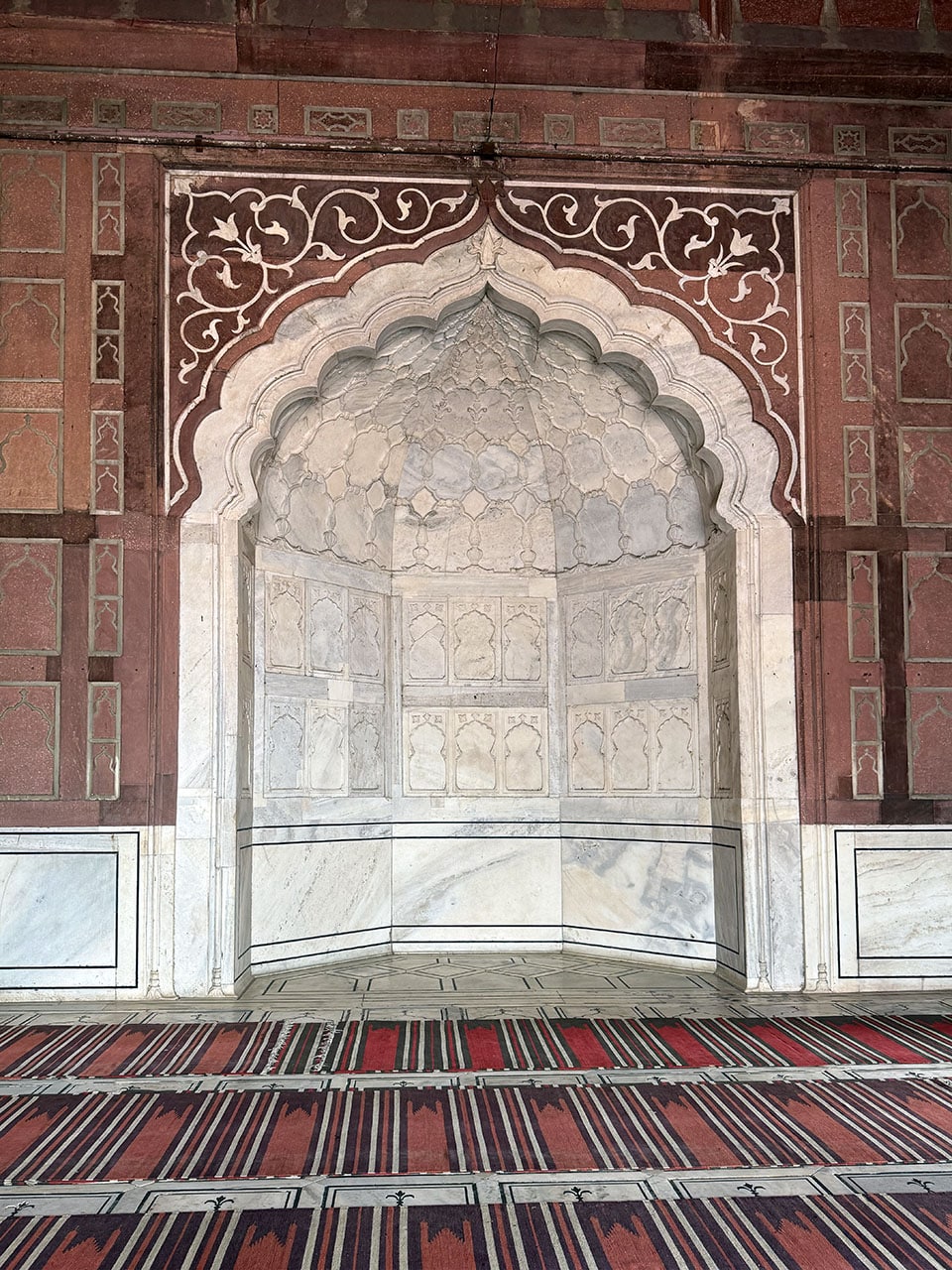
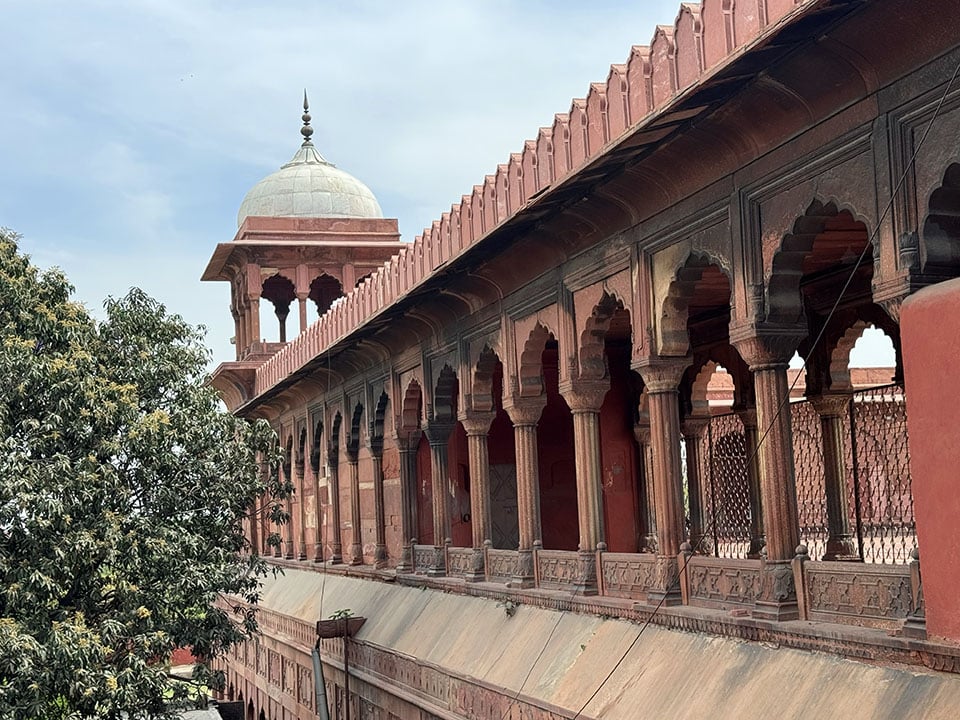

All of the women on our tour had to wear a gray or brown polyester robe over their clothing. Everyone also had to remove their shoes and wear slippers because the stone courtyard was so hot from the sun; it would burn your feet. The guys handing out the slippers were amazing at sizing up your feet and giving you the exact size you needed!
It was a brief visit, and we didn’t take many photos, because honestly, it didn’t really compare to other mosques we’d seen in Istanbul (and would soon visit again).
The Red Fort
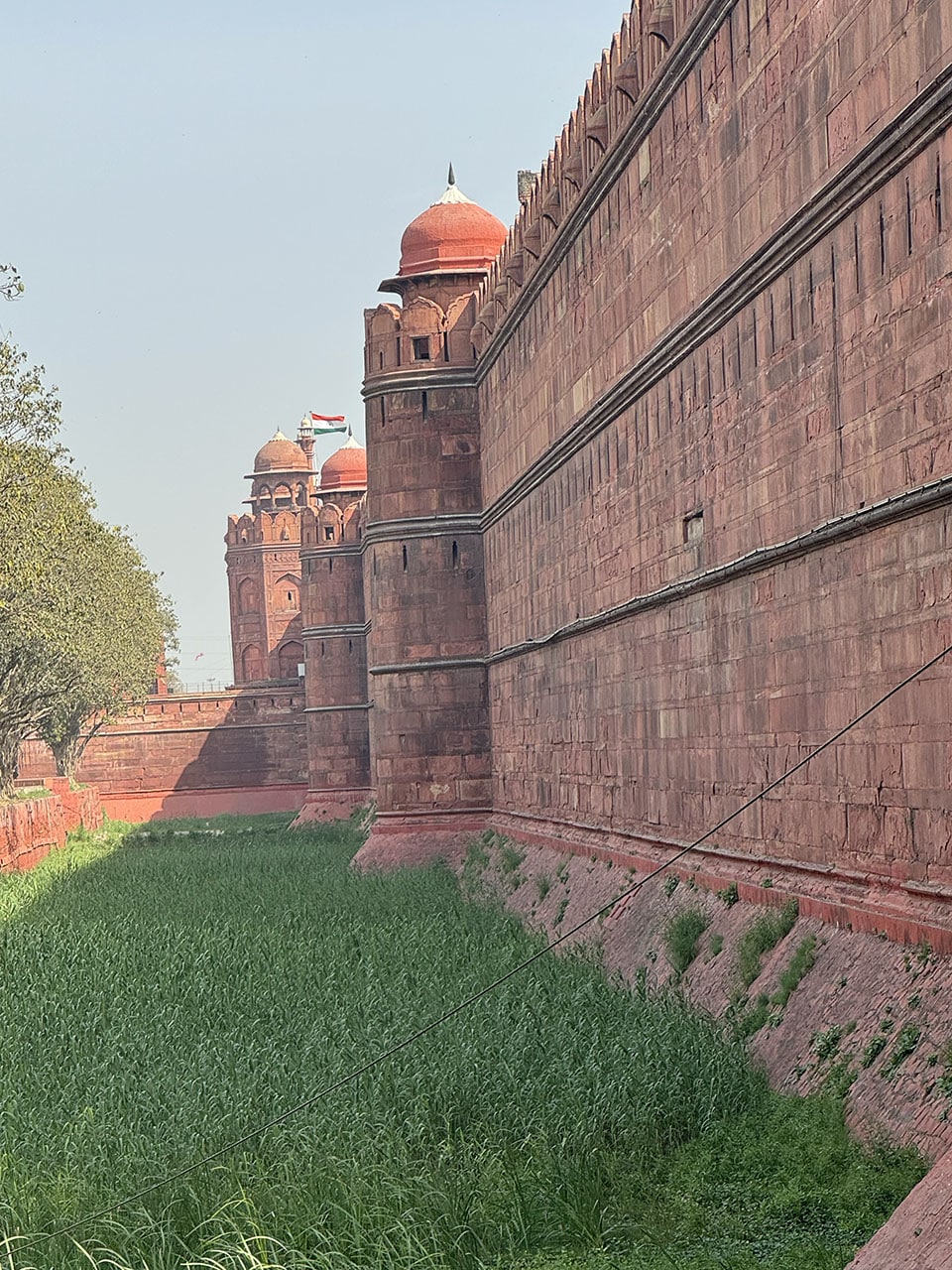
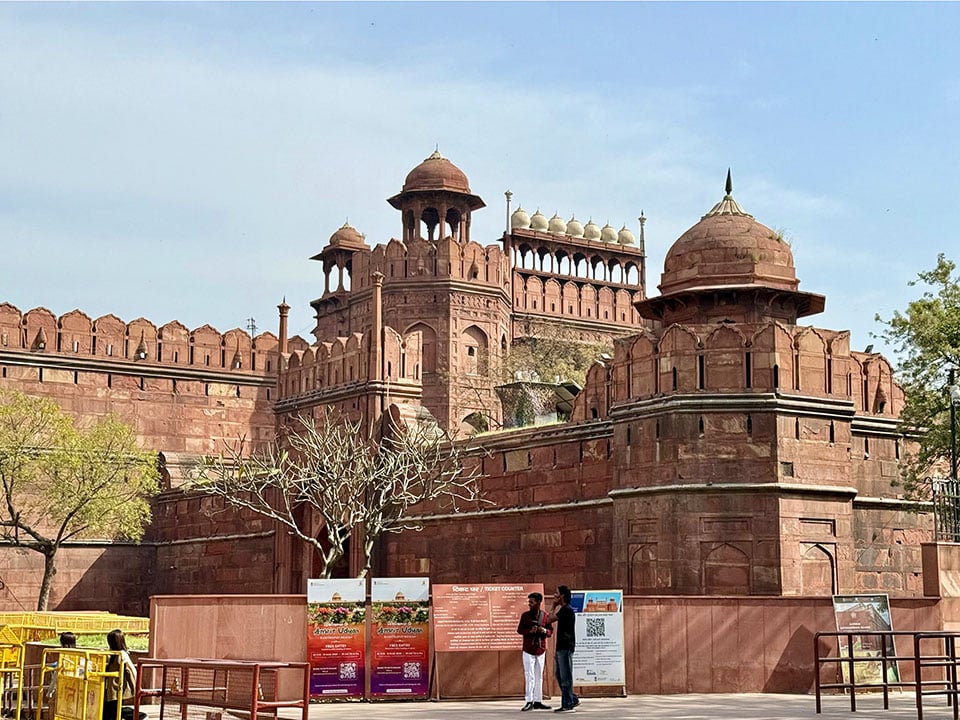
From there, we went to see the outside of the Red Fort (we didn’t go inside). Even from the outside, it is an unforgettable sight. Built by Mughal Emperor Shah Jahan in 1648 (yes, the same guy who built the Taj Mahal), this massive UNESCO World Heritage site is defined by towering 1.5-mile-long red sandstone walls that once protected the Mughal Empire’s epicenter.



Old Delhi and Chandni Chowk by Rickshaw
Across from the Red Fort lies Chandni Chowk (“Moonlight Square”), one of India’s oldest, densest, and most chaotic wholesale markets. Designed in 1650 by Princess Jahanara Begum (the daughter of Mughal Emperor Shah Jahan), it was originally a grand, tree-lined avenue with a central canal that elegantly reflected the moonlight.
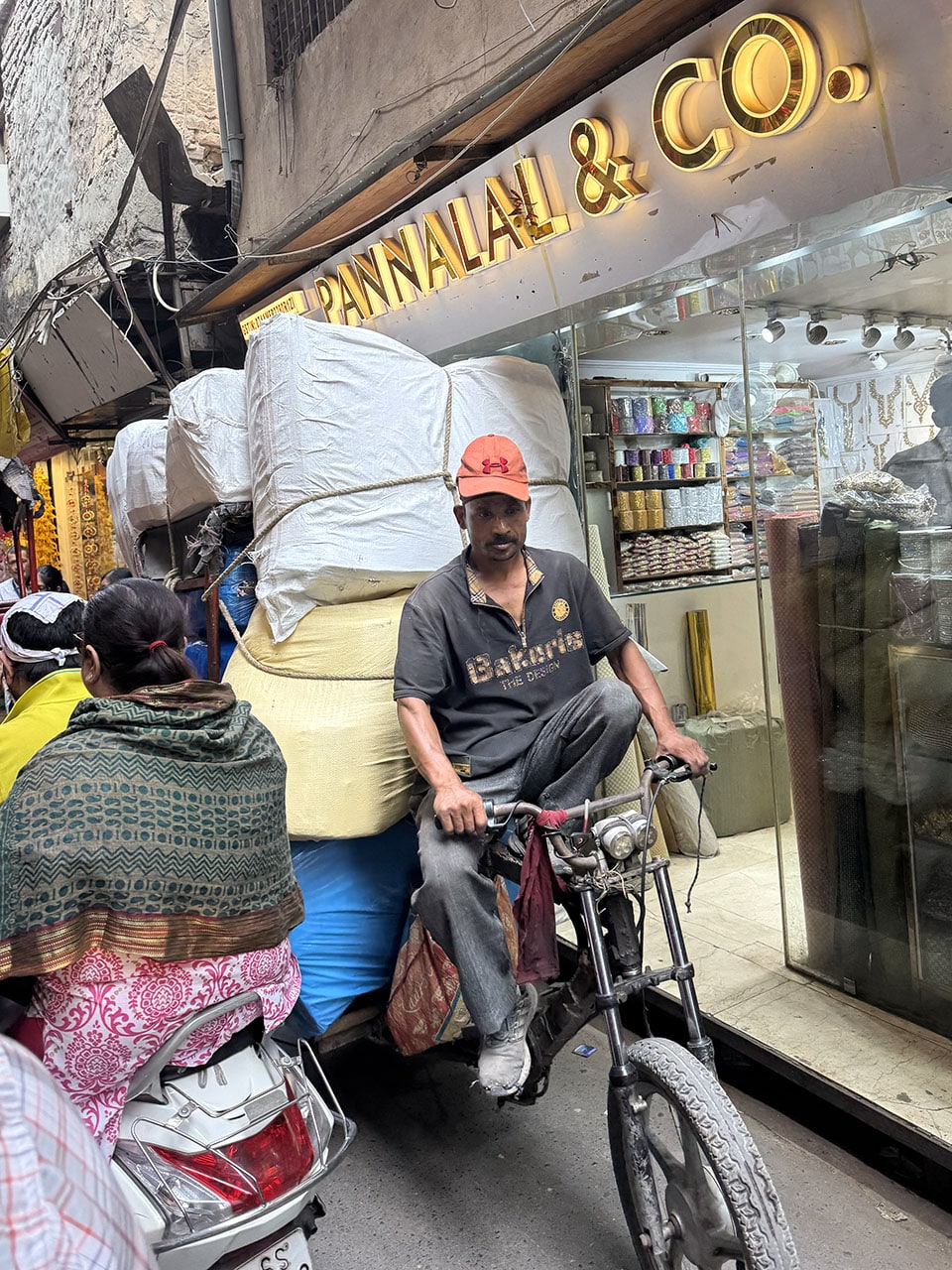
Today, that imperial calm has been transformed into a sensory overload of tangled overhead wires, shouting vendors, and rushing cycle rickshaws, as we experienced.


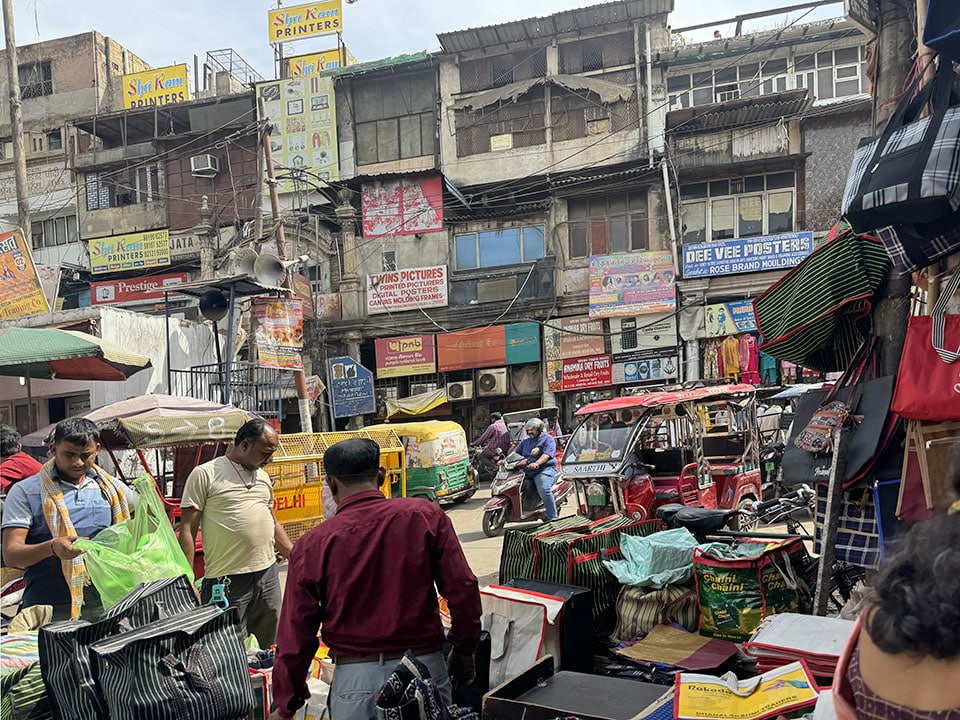
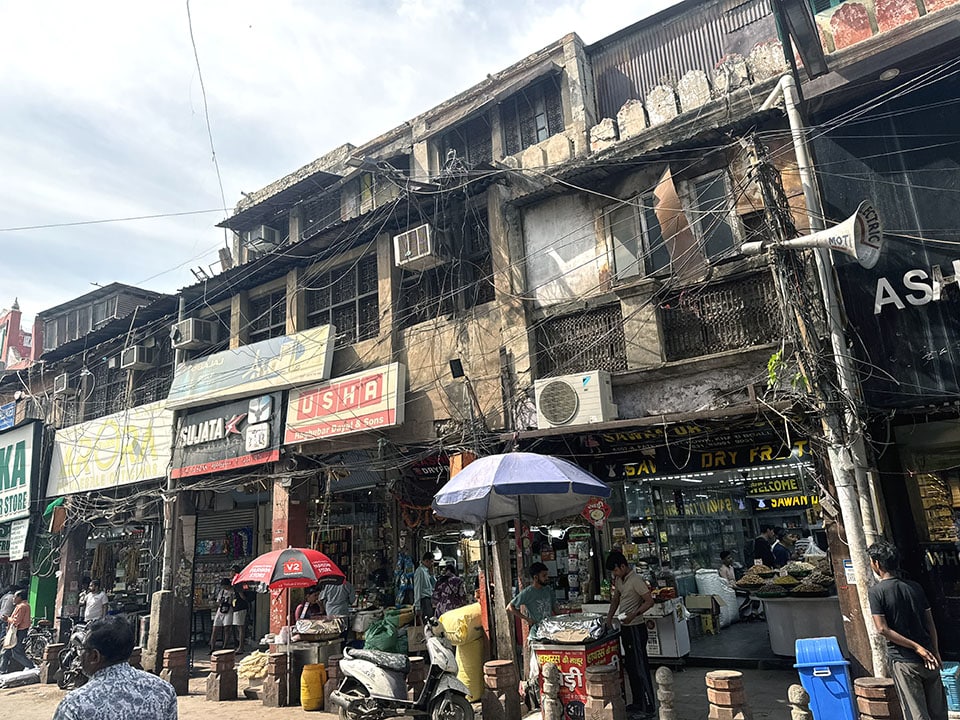

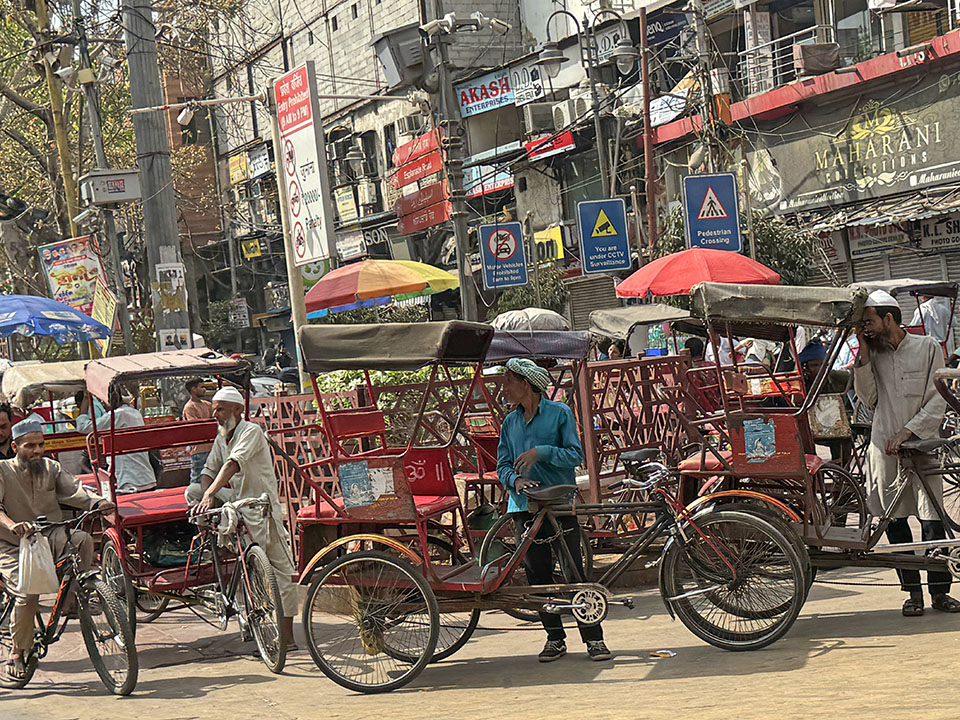
In fact, our group hopped into several cycle rickshaws (two people per driver), as we cruised down the streets and alleyways of this rabbit warren of shops. The market is divided into super-specialized sections, including Asia’s largest wholesale spice market. We stopped at a spice shop and a jewelry store along the way. The rickshaw drivers would all wait for our group to return, then we would set off again to the next stop.



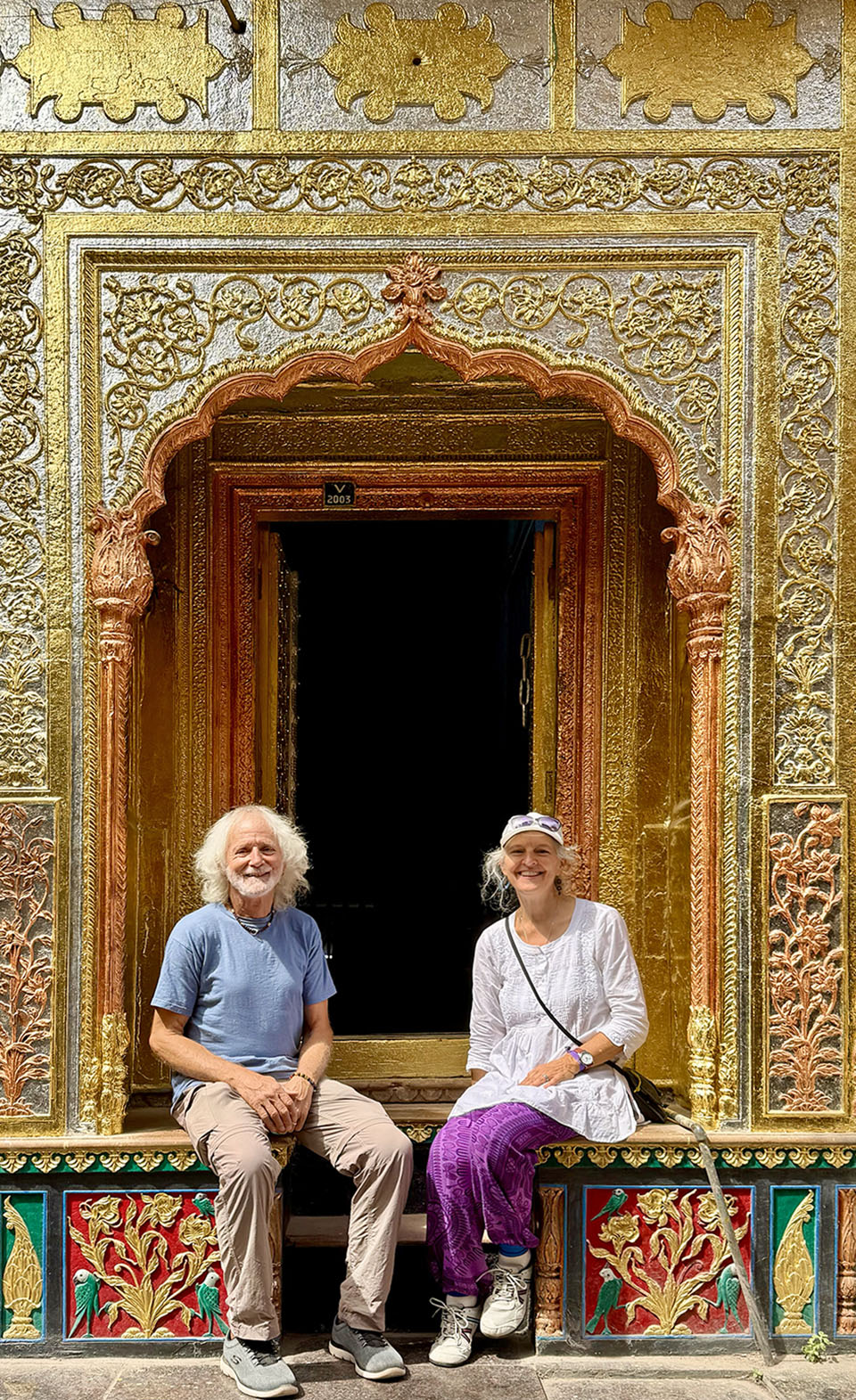
Many shop doorways were elaborately designed, intricately carved, and painted, very reminiscent of the maharaja days. We would’ve loved to have time to wander through the market on our own, but it would’ve been easy to get lost. So we were grateful for the tour guiding.


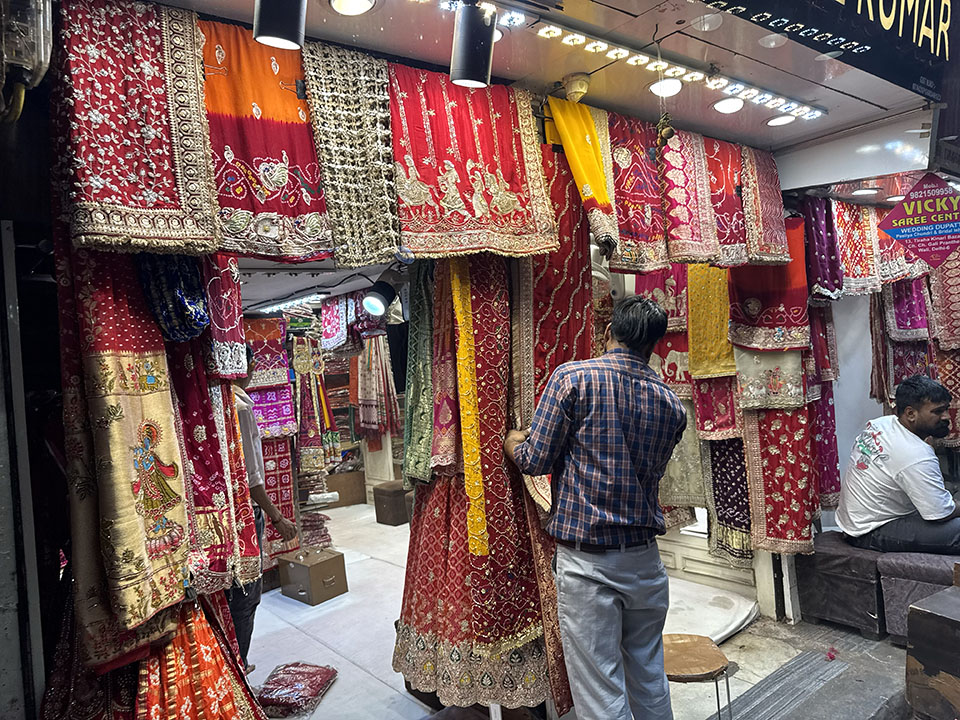
At one point, walking through a narrow aisle between stalls, a motorcycle came driving through, and we were completely taken aback that a motorcycle would drive through a market aisle, until we looked up and could see the sky— and realized we were just on a very narrow street with overlapping awnings, not actually inside of a covered market. The shops included lots of food stalls, sari and clothing stores, stationery stores, party supply stores, and jewelry stores.


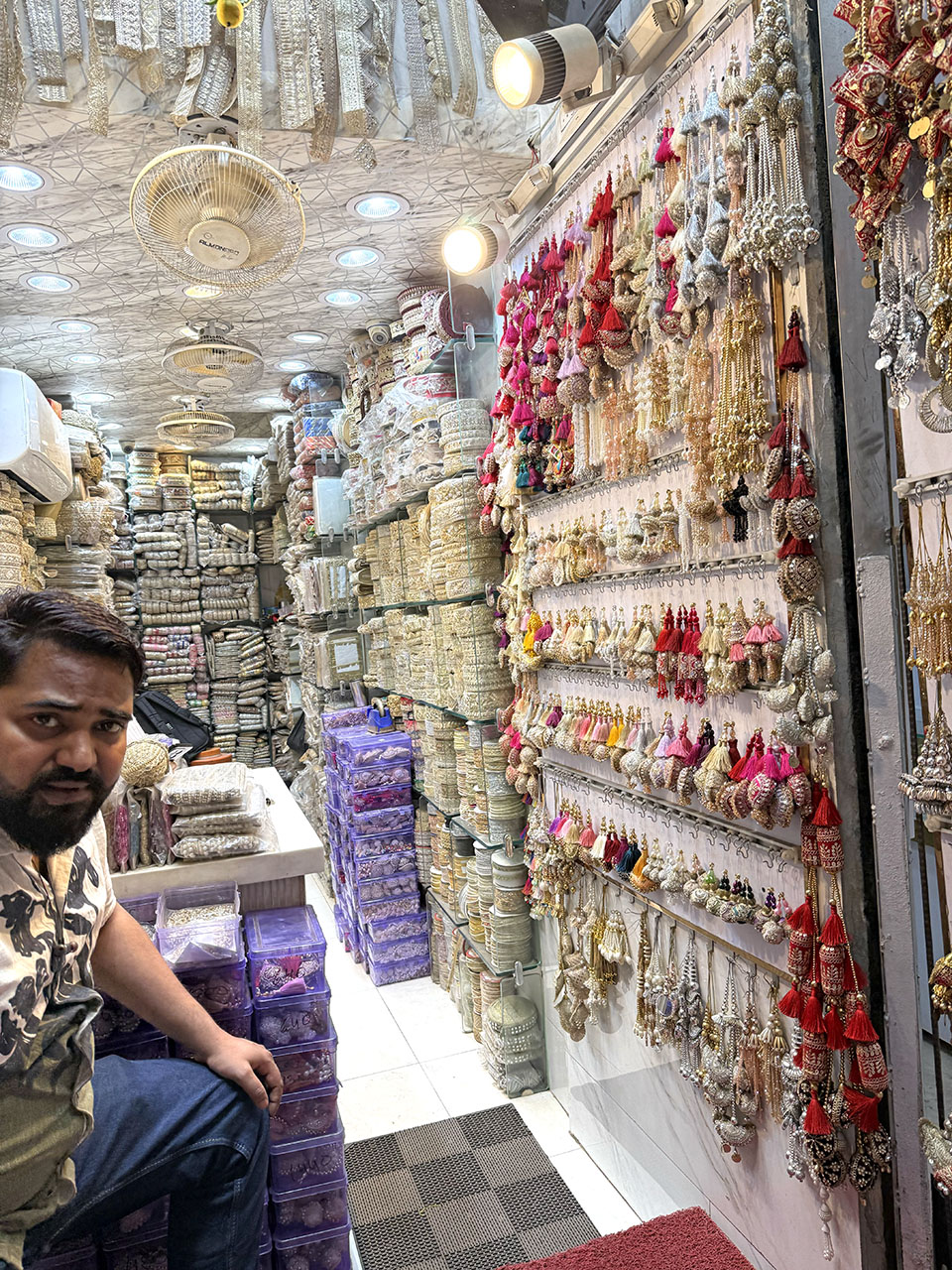

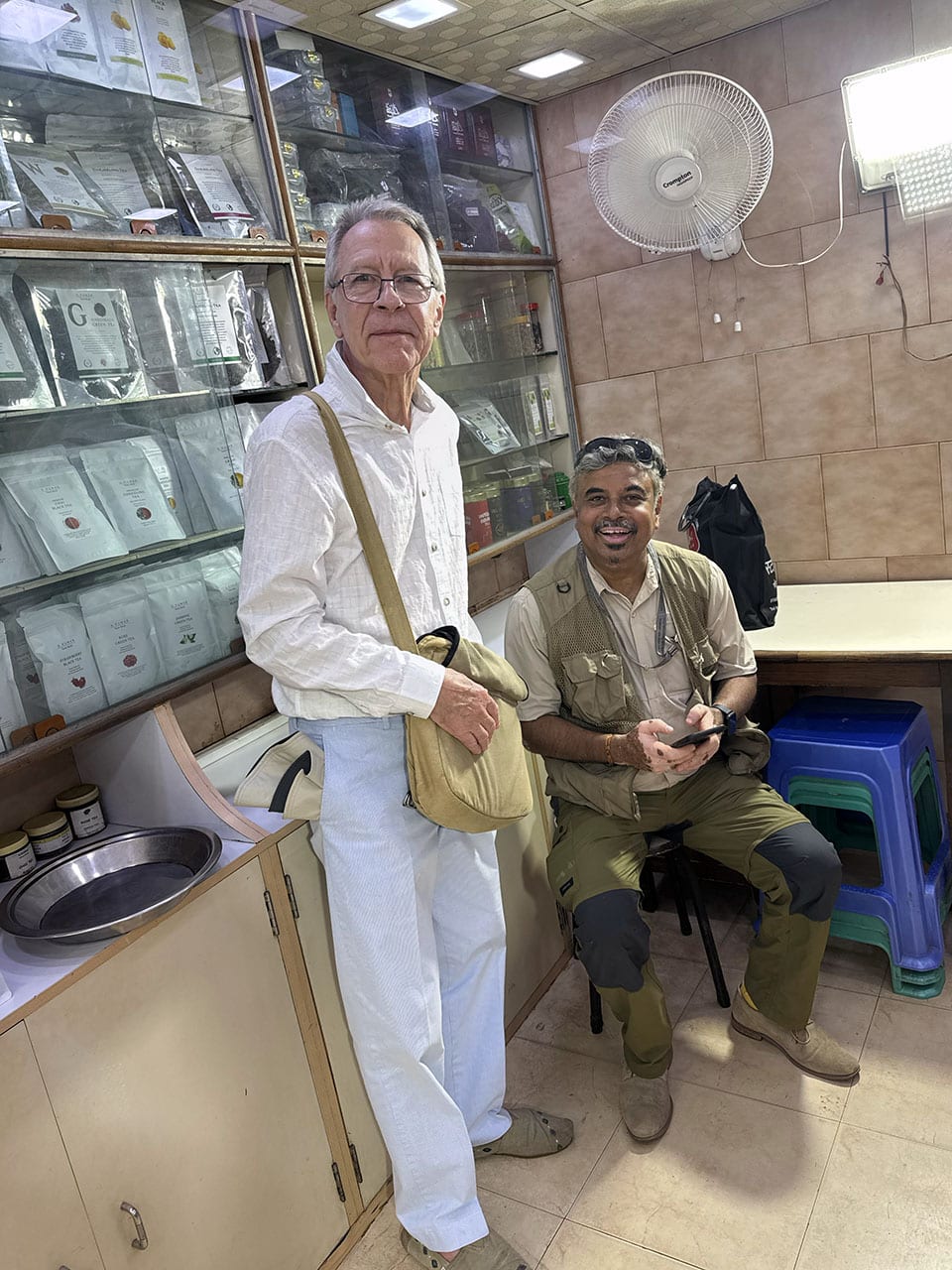
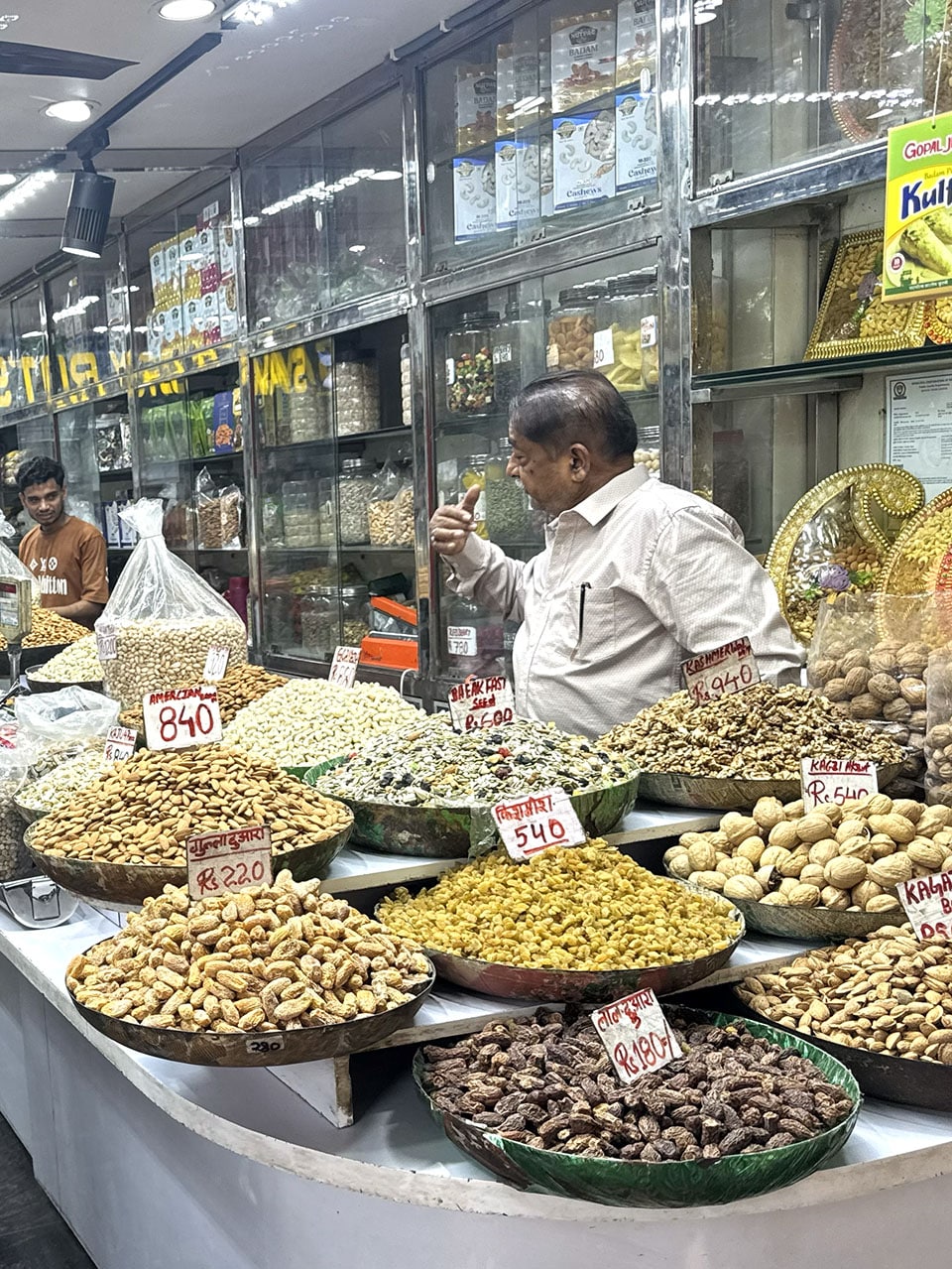


This part of Old Delhi was a beautifully chaotic assault on our senses. One corner reminded us of Home Depot, where you can hire a handyman for the day. Here we saw street-side tire repair vendors and many tradesmen, sitting with all their tools: plumbers, carpenters, painters, camped out waiting for someone to give them a job for the day. And there were SO MANY rickshaws delivering goods to and from the shops.



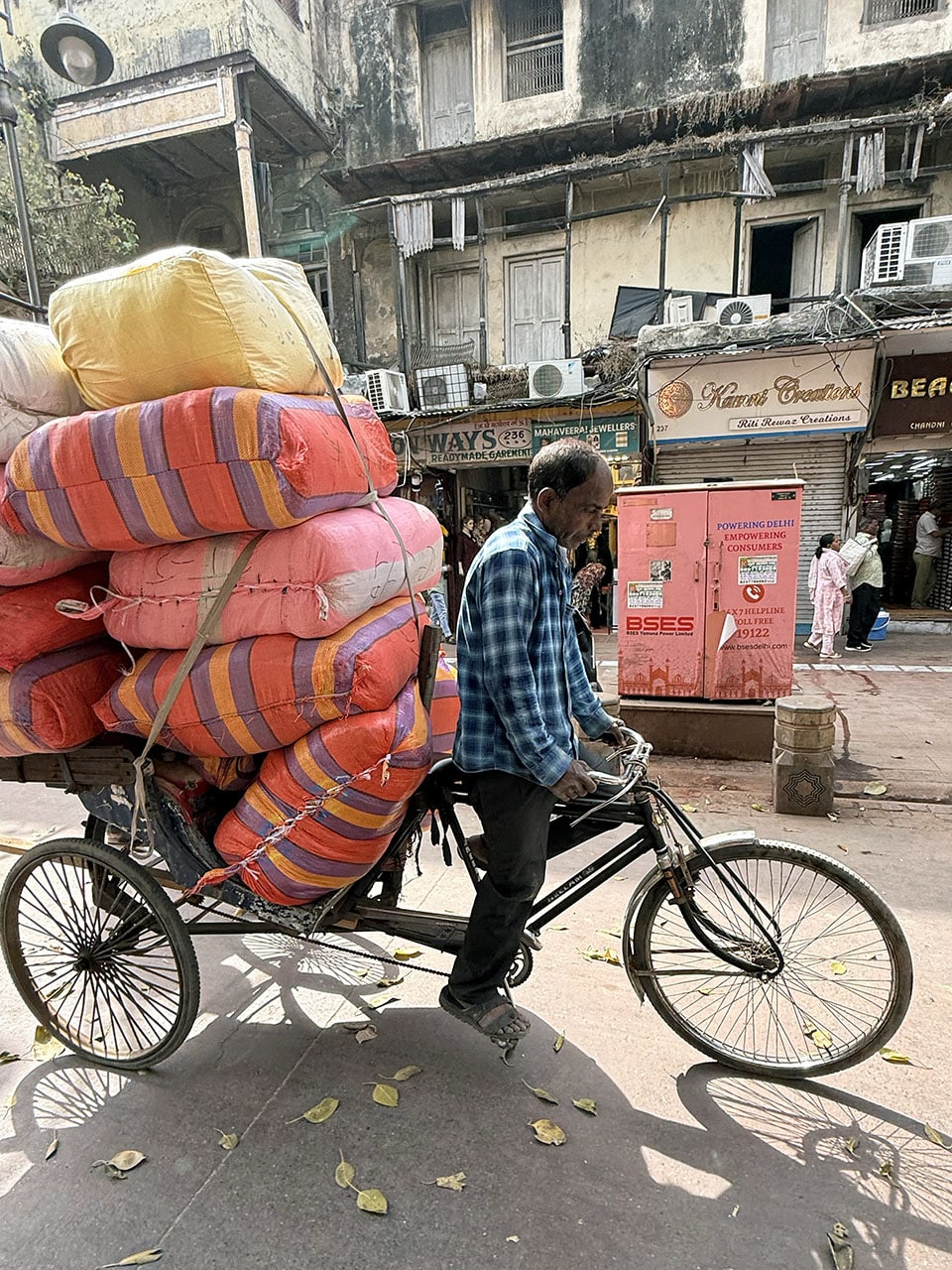


Too soon, it was time to move on, and our rickshaw drivers returned us to our bus. We headed to a microbrewery pub for lunch. It seemed funny to go to a brewpub in India, and they had a lot of American food on their menu. But their food was quite good.
After lunch, we headed to Delhi’s Khan Market for more shopping. Established in 1951, it was originally built to rehabilitate refugees displaced by the 1947 Partition. The iconic U-shaped complex originally featured 154 ground-floor shops to kickstart businesses and 74 residential flats above where families could rebuild their lives. Named after Khan Abdul Jabbar Khan—a leader who saved thousands of families during Partition—the market has transformed from a humble sanctuary into one of the world’s most expensive retail strips, now home to high-end clothing stores, bookstores, organic grocers, and hip restaurants.
Here, we had time to wander on our own for a while and look at more fabrics for our boat decor projects, but we still didn’t find what we had in mind. However, we were grateful for the Starbucks bathroom, once we finally found it!
Back at the Imperial Hotel, Heidi treated herself to one last Ayurvedic massage (one of the best on the whole trip), while Kirk continued on a little architectural bus tour around Delhi, before we said goodbye to India and new friends.
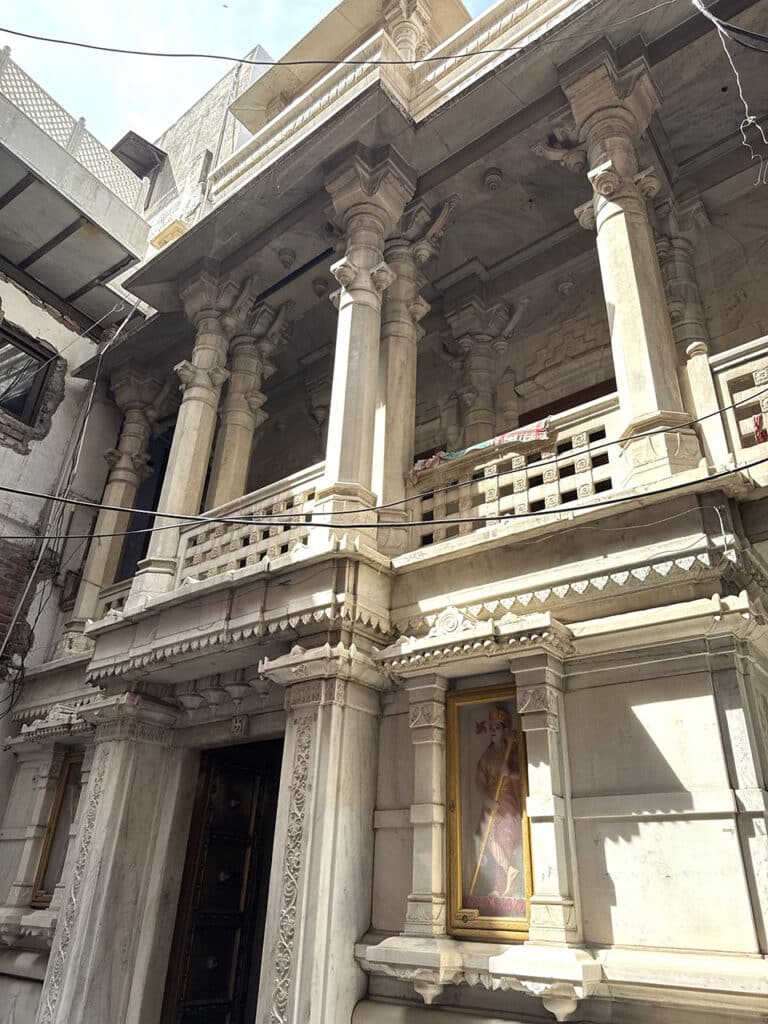
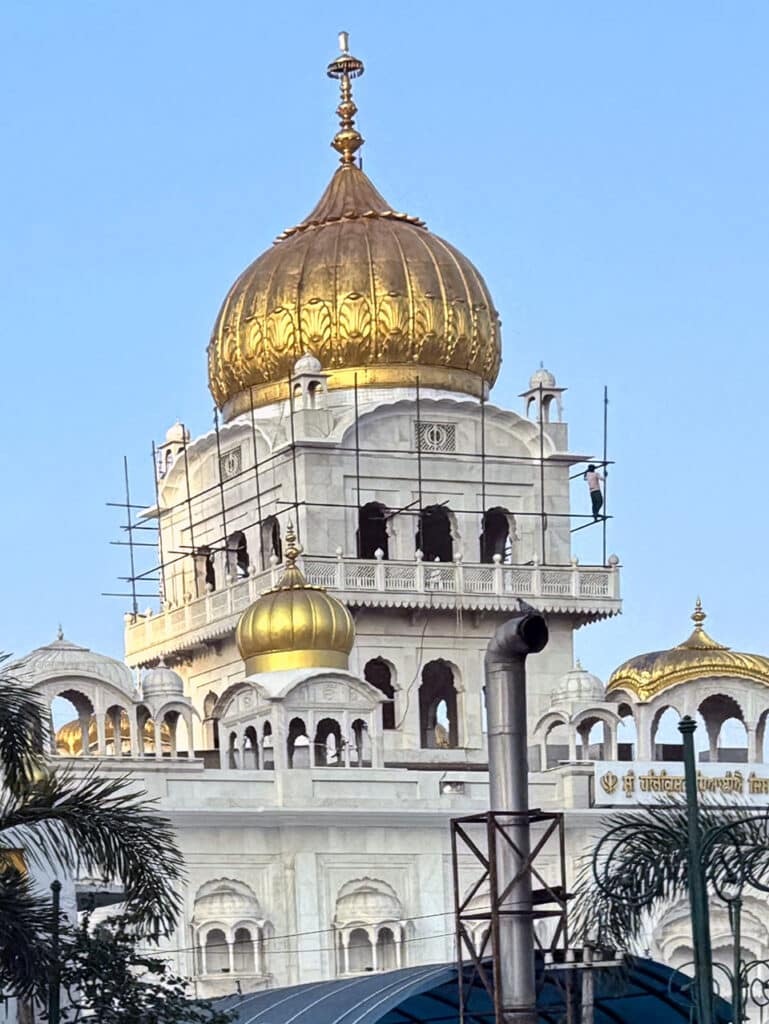


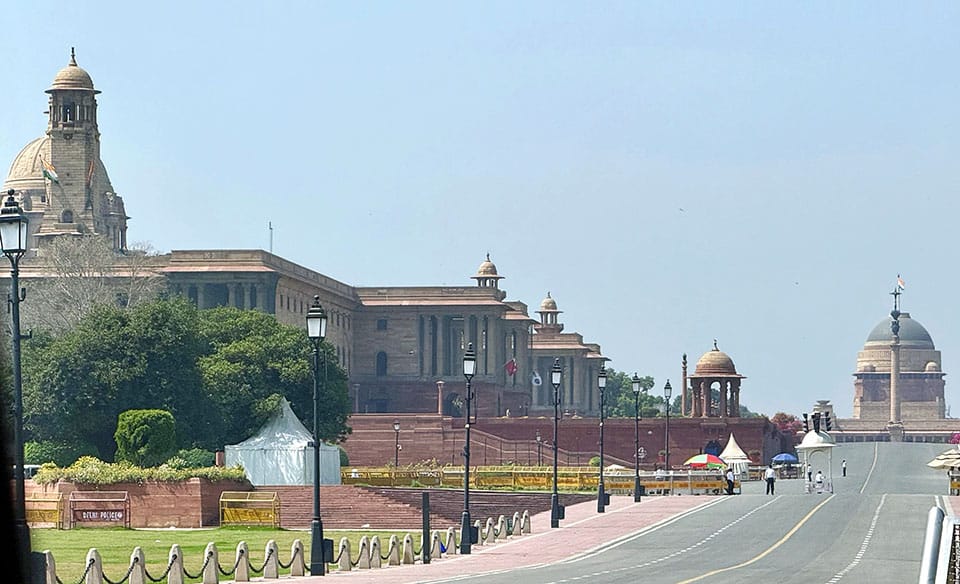
The building on the left is the Secretariat Building (housing the Ministries of Finance and Home Affairs); the building in the distance on the right is the President’s house.
We said goodbye to our group members, who left at various times in the afternoon and evening. We didn’t leave until early the following morning, and were so grateful to Mallika, who got up at 5 AM to see us off to the airport. Our five weeks in India went by waaaaay too fast!
India, you did not disappoint… instead, you thrilled and surprised us in so many wonderful ways… We will return. We cannot thank Roger, Mallika, Jai, and Athma Tours enough. If you have enjoyed our posts on India, we highly encourage you to visit India for yourself. You will not be sorry. And Athma Tours can help you every step of the way. In fact, Roger is leading another tour to South India with Athma Tours in March 2027. You would be wise to sign up and go. (Check out our South India posts here: Part 1, Part 2, and Part 3 of our India Adventures.)
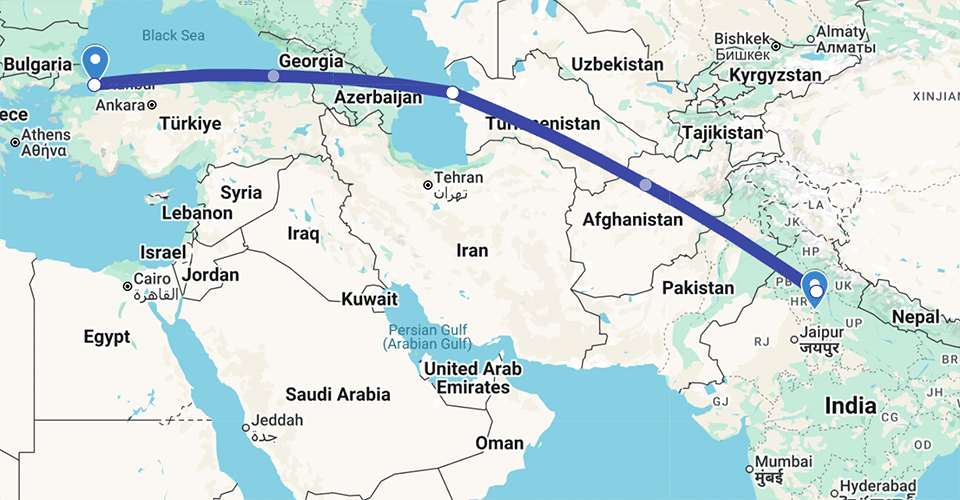
Luckily, our adventures are not quite over! Our return flight from Delhi to Mexico was on Turkish Airways, with an 18-hour layover in Istanbul. Just enough time to revisit some of our favorite spots in one of our favorite cities, full of cats! The Delhi airport was also super cool and quite high-end, complete with sculptures of yoga asanas and elephants. And look at the things you can NOT bring through security…coconuts?!


Thanks to the latest aggression by the US towards Iran while we were in India, our flight was routed further north than usual. But we were grateful to fly via Istanbul, not Dubai or Riyadh like some of our other group members, whose travel was delayed. Istanbul, here we come!